

P0505 on 1995-1999 Mitsubishi Eclipse 420A: Idle Control System Malfunction Causes and Fixes
On a 1995-1999 Eclipse with the 420A engine, P0505 almost always points to a failed Idle Air Control (IAC) valve. This is a critical repair, as a faulty IAC can short out and destroy the engine computer (ECU). Expect to pay $40-$125 for an aftermarket IAC valve, and it's a DIY-friendly job (2/5 difficulty).
- P0505 on a 1995-1999 Eclipse 420A is a serious code that should be addressed immediately.
- The most likely cause is a failed Idle Air Control (IAC) valve.
- CRITICAL: Do not ignore this code. A bad IAC valve can short out and destroy the much more expensive Engine Control Unit (ECU).
- While replacing the IAC valve, it is essential to also replace the gasket to prevent vacuum leaks.
What's Unique About the 1995-1999 Mitsubishi Eclipse
The 1995-1999 Mitsubishi Eclipse (often called the "2G") with the Chrysler-built 420A engine has a well-documented and critical issue related to the P0505 code. The Idle Air Control (IAC) valve used on this engine is prone to failure. More importantly, when it fails, it can create an electrical short that travels back to the Engine Control Unit (ECU) and damages the IAC driver circuit. This turns a relatively inexpensive part replacement into a costly ECU repair or replacement. For this reason, addressing a P0505 code promptly is crucial for any 420A owner, as many forum posts on DSMtuners.com attest to this specific failure pattern.
Symptoms You May Notice
- Engine stalls when coming to a stop or at idle
- Rough, erratic, or 'hunting' idle (RPMs bounce up and down)
- Idle speed is consistently too high or too low
- Difficulty starting the engine without pressing the gas pedal
- Sluggish RPM return to idle after revving
- Engine sputters or stalls when shifting into gear or accelerating from a stop
- Check Engine Light is illuminated
- Replacing the Throttle Position Sensor (TPS) without proper diagnosis. While a bad TPS can cause some similar symptoms, it will typically set its own specific trouble codes. Some owners have replaced the TPS for a P0505 code with no success.
Most Likely Causes
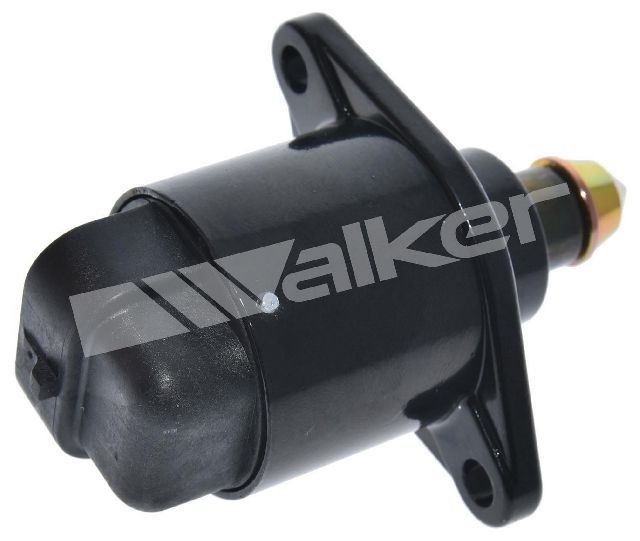
- Faulty Idle Air Control (IAC) Valve 🔴 High Probability → Shop Idle Air Control Valve The stepper motor design of the IAC valve used in this generation of Mitsubishi is a very common failure point. It can fail electrically or get stuck due to carbon buildup.
How to confirm: Test the resistance of the IAC motor's coils with a multimeter. A common specification is around 30 ohms. You can also remove the IAC, keep it plugged in, and turn the key to the 'ON' position to see if the pintle moves. A lack of movement indicates failure.
Typical fix: Replace the Idle Air Control valve. It is mounted to the throttle body with two Phillips head screws. 🎬 Watch: 2G Eclipse 420a IAC valve cleaning and replacement walkthrough
Est. part cost: $40 - $125 - Vacuum Leak 🟡 Medium Probability The vacuum hoses on vehicles of this age can become brittle and crack, leading to unmetered air entering the engine and disrupting the idle.
How to confirm: Visually inspect all vacuum hoses connected to the intake manifold for cracks or loose connections. You can also spray carburetor cleaner or use a smoke machine around suspected areas; a change in idle speed or visible smoke will indicate a leak.
Typical fix: Replace the cracked or leaking vacuum hose(s).
Est. part cost: $5 - $30 - Dirty Throttle Body 🟡 Medium Probability → Shop Fuel Injection Throttle Body Carbon and oil vapor from the crankcase ventilation system can build up in the throttle body and the IAC passages over time, restricting airflow and causing the IAC pintle to stick.
How to confirm: Remove the intake hose from the throttle body and visually inspect for heavy carbon buildup, especially around the throttle plate and the IAC air passages.
Typical fix: Clean the throttle body and IAC passages thoroughly with throttle body cleaner and a soft brush. Some owners on DSMtuners.com report that cleaning the throttle body alone did not resolve the issue, but it is a necessary first step.
Est. part cost: $5 - $15 (for cleaner) - Damaged IAC Valve Wiring or Connector ⚪ Low Probability The wiring harness in the engine bay is exposed to heat and vibration, which can cause wires to become brittle or connections to become loose over time. Wires can fray or melt near the connector.
How to confirm: Visually inspect the wiring and connector for the IAC valve for any signs of damage, corrosion, or loose pins. Check for 12V power at the center pins (terminals 2 and 5) of the connector with the key on. Check for continuity on the driver circuits back to the ECU.
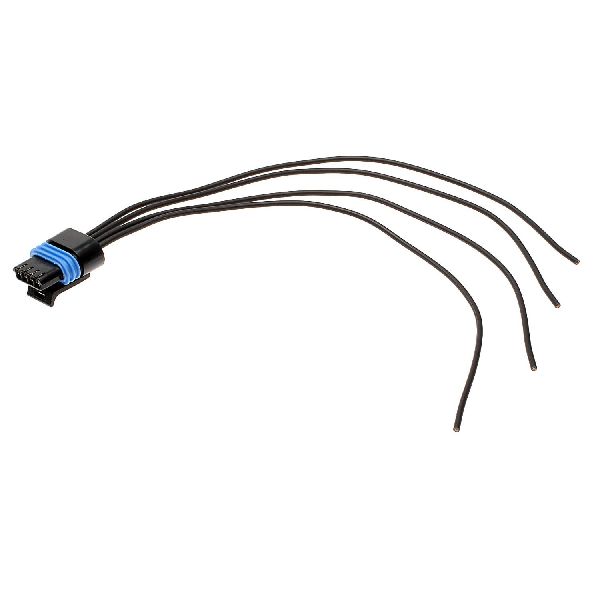
Typical fix: Repair the damaged section of wiring or replace the connector pigtail.
Est. part cost: $15 - $40
Rare But Worth Checking
- Failed Engine Control Unit (ECU): This is almost always a result of a failed IAC valve shorting out the driver circuit in the ECU. If a new IAC valve does not fix the code and the wiring is good, the ECU is the likely culprit. This is a well-known issue on this platform, frequently discussed on forums like DSMtuners.com. Symptoms can also include other sensor codes appearing simultaneously as they may share a common ground within the ECU.
Diagnosis Steps
- Scan for any other stored trouble codes to see if other issues are present.
- Visually inspect all vacuum hoses connected to the intake manifold for any obvious cracks, disconnections, or signs of wear.
- Remove the intake ducting from the throttle body. Inspect the throttle body bore and the IAC passages for heavy carbon buildup. Clean if necessary.
- Inspect the electrical connector and wiring going to the IAC valve for any signs of damage, corrosion, or loose connections.
- Test the IAC valve itself. With a multimeter set to Ohms, check the resistance between the center pin and the outer pins on each of the two coils (terminals 2&1, 2&3, 5&4, 5&6). A common reading should be around 30 ohms. 🎬 Watch: Step-by-step guide on testing an IAC valve
- Verify power to the IAC connector. With the key in the 'ON' position, use a multimeter to check for battery voltage (approx. 12V) at the center pins (terminals 2 and 5) of the harness connector.
- If a known-good IAC valve and confirmed-good wiring do not resolve the P0505 code, the ECU's IAC driver is likely damaged. This is a common failure pattern where the old IAC shorts and damages the computer.
Parts You'll Likely Need
- Idle Air Control Valve
(OEM #4669480)— This is the most frequent failure point for the P0505 code on the 420A engine.
Trusted brands: Mopar, Standard Motor Products (AC4157), Walker Products
OEM price range: $100-$150
Aftermarket price range: $40-$125 - Idle Air Control Valve Gasket/O-Ring
(OEM #MD614417)— This seal should always be replaced when the IAC valve is removed to prevent vacuum leaks.
Trusted brands: Mitsubishi Genuine Parts, Fel-Pro
OEM price range: $5-$15
Aftermarket price range: $2-$8
Related Codes That Often Appear With This One
- P0506 — This code indicates 'Idle Air Control System RPM Lower Than Expected' and points to the same set of root causes as P0505, often an IAC valve that is stuck closed.
- P0507 — This code indicates 'Idle Air Control System RPM Higher Than Expected' and points to the same set of root causes, often an IAC valve stuck open or a significant vacuum leak.
- P0171 — This code for 'System Too Lean (Bank 1)' can be triggered by a vacuum leak, which is also a potential cause for P0505.
Technical Service Bulletins (TSBs) & Recalls
- TSB# TSB9913001 / NHTSA ID: 604262 - Released Feb 01, 1999, regarding 'PCM REPROGRAMMING & REPLACEMENT SUMMARY (420A ENGINE)'. While not directly for P0505, it shows a history of ECU-related service actions for this engine.
Platform-Specific Known Issues
- A short-circuited Idle Air Control (IAC) valve is known to destroy the driver circuit within the Engine Control Unit (ECU), leading to a much more expensive repair. This is a critical, well-documented issue for this platform.
- One user on DSMtuners.com reported that after replacing a fried ECU and a bad Crankshaft Position Sensor, they still had a P0505 code and delayed throttle response, indicating the complexity of diagnosing after an ECU failure.
Mechanic-Grade Diagnostic Values
- Idle Air Control (IAC) Valve Coil Resistance — expected: 28 - 33 Ohms between terminals 1&2, 2&3, 4&5, and 5&6. Failure: A reading of 0 Ohms (short circuit) or OL/infinite Ohms (open circuit) on any coil pair indicates a failed IAC valve.
- IAC Valve Connector Voltage — expected: ~12V (Battery Voltage) at the center pins (terminals 2 and 5) with the key on, engine off.. Failure: No voltage or significantly low voltage points to a problem with the wiring, MFI relay, or fuse, not the IAC valve itself.
Scan Tool Commands That Help
- Mitsubishi MUT-II / MUT-III: Actuator Test - Item 30 (IAC Motor) — This dealer-level function forces the IAC motor into a fixed base position. It is used to determine if an idle problem is mechanical (vacuum leak, throttle stop screw) or electronic by taking the computer's adjustments out of the equation. This is essential for accurately setting the base idle after ruling out other causes.
- No Tool Required: ECU Idle Relearn Procedure — After replacing the IAC valve or disconnecting the battery, the ECU's learned idle values must be reset. A common procedure is: 1. Turn key to ON (do not start) for 2 minutes. 2. Turn key OFF for 10 seconds. 3. Start the engine and let it idle without any accessories on for 10 minutes. 4. Turn engine OFF for 10 seconds. 5. Restart and drive the vehicle normally. This allows the ECU to learn the position of the new IAC valve.
Wiring & Ground Locations
- ECU Ground Pins — On the main Engine Control Unit (ECU) connector, typically located behind the dashboard/center console.. For a 1999 model, pins 10 and 50 are listed as ECU grounds. A poor ground connection at the ECU can cause erratic behavior in multiple systems, including the idle control circuit, leading to a P0505 code that won't be fixed by replacing parts.
- Engine Block Ground — Typically a strap or wire bolted directly to the engine block or transmission case, often near the starter or on the side of the cylinder head.. The entire engine sensor suite relies on a solid ground path back to the battery. A corroded or loose main engine ground can introduce electrical noise and voltage drops, confusing the ECU and preventing it from properly controlling the IAC valve.
- IAC Valve Connector Pins — The 6-pin connector directly on the Idle Air Control valve.. Pins 2 and 5 are the 12V power supply from the MFI relay. Pins 1, 3, 4, and 6 are the control (ground) signals from the ECU to the stepper motor coils. Knowing this pinout is critical for testing the wiring between the ECU and the IAC.
Real Owner Repair Stories
- DSMtuners.com user 'KoolTrix' (Mitsubishi Eclipse 420A) — Car would not idle correctly after engine work.
❌ Tried (didn't work) Initial attempts to diagnose vacuum leaks were confusing due to missing and incorrectly routed lines.
✅ What actually fixed it The user installed a new throttle body gasket and correctly connected a vacuum line from the throttle body to its proper port. This resolved the massive vacuum leak and the car was able to idle at 1000 RPM immediately. - DSMtuners.com user 'zacwegman' (1999 Mitsubishi Eclipse RS (420A) Automatic with 137k miles) — P0505 code, rough idle, sluggish RPM return, sputtering/stalling when shifting or accelerating from a stop, required giving gas to start.
❌ Tried (didn't work) Replaced the IAC valve with no change in symptoms or the code.
✅ What actually fixed it The thread concludes with other users suggesting the next steps are to check the IAC connector/wiring pigtail for damage or to suspect a fried ECU driver, which is the common failure pattern when a new IAC doesn't solve the problem. The final resolution was not posted, but the diagnostic path is the key takeaway.
"I Checked Everything" — The Actual Cause
- The most common scenario fitting this pattern for the 420A engine is a failure of the Engine Control Unit (ECU). A technician can perform a smoke test and find no vacuum leaks, test the IAC wiring and find it has perfect continuity, and even install a brand new IAC valve, yet the P0505 code will persist. This happens because the original failed IAC valve experienced an internal short, sending a voltage spike back to the ECU and destroying the delicate driver circuit that controls the IAC. The rest ofthe system appears perfect, but the ECU itself is no longer capable of commanding the IAC valve correctly.
When the Usual Fixes Don't Work
- While the overwhelming majority of P0505 codes on the 420A are caused by the IAC valve or the subsequent ECU failure, it is not the only possibility. In one documented case, a user's persistent idle problem was ultimately solved by replacing a leaking throttle body gasket and correcting a vacuum line that was connected to the wrong port. This highlights that even with a platform-specific common failure, fundamental checks for vacuum leaks should never be skipped. Assuming it's the IAC without checking for vacuum leaks can lead to replacing a good part and failing to fix the root cause.
Model Year Variations Within This Range
- 1995-1996 (2Ga) vs. 1997-1999 (2Gb): The 1997 facelift introduced subtle but important changes in the engine bay. For vacuum diagnostics, the 97-99 models have a different Fuel Pressure Regulator setup (not on the fuel rail) and a vacuum reservoir behind the intake manifold for cruise control, altering the vacuum line routing compared to 95-96 models. Additionally, forum users consistently report that ECU pinouts changed frequently, sometimes year-to-year, making it critical to use the correct wiring diagram for the specific model year when diagnosing ECU or wiring issues.
Diagnostic Flowchart
Other Known Issues on This Vehicle
Issues unrelated to this code that are worth knowing about as an owner of this generation:
- Head Gasket Failure 🔴 High — A known weakness. Some forum users suggest factory head bolts were undertorqued or bottomed out, leading to poor clamping force. (Ref: TSB# TSB0011001)
- Oil Leaks (Valve Cover, Cam Sensor) 🟠 Medium — Very common for these vehicles due to age. Valve cover gaskets are frequently over-tightened, bending the cover and causing leaks. Cam sensor O-rings also commonly leak.
- Manual Transmission Shifting Difficulty / Clutch Rattle 🟠 Medium — Many owners report difficulty shifting gears or a rattling noise from the clutch area at idle, which can indicate a failing pressure plate.
- Coil Pack Failure 🟠 Medium — The waste-spark coil pack is a common failure item, leading to misfires. Owners often recommend keeping a spare.
- Weak/Bent Wheels 🟡 Low — The factory alloy wheels on this generation are known to be relatively soft and prone to bending from potholes or impacts.
Used vs. New Parts: Buying Guide for This Vehicle
When a used part is the smart pick: Used parts are a smart choice for the Engine Control Unit (ECU), wiring harness connectors (pigtails), and the complete throttle body assembly if the original is physically damaged. These parts have no common wear items that make a used part inherently risky.
Donor-vehicle mileage cap: roughly under 150000 miles for the part to have meaningful remaining life.
What to inspect on the donor part:
- For an ECU, ensure the donor vehicle did NOT have a P0505 code or known IAC failure.
- Check wiring connectors for brittle plastic, corrosion on pins, or previous hack-job repairs.
- Inspect the throttle body for a clean, un-scored bore and ensure the throttle plate stop screw hasn't been tampered with.
Aftermarket brands forum-validated for this vehicle:
- Standard Motor Products (for IAC valve)
- Walker Products (for IAC valve)
- Fel-Pro (for gaskets)
Brands owners have reported issues with on this vehicle:
- Avoid unbranded, 'white-box' IAC valves from online marketplaces. While cheap, their quality control is questionable, and a faulty new part carries the same risk of destroying the ECU as a failing original part.
Real Owner Stories
Aggregated from forums and TSBs cited above. Mileages and costs reflect what owners reported in those sources.
1995-1999 Mitsubishi Eclipse 420A
Symptoms: The owner experienced a P0505 code along with a rough idle, stalling, and the engine required the driver to press the gas pedal just to get it to start.
What fixed it: The owner replaced the IAC valve, but it did not change the symptoms, highlighting the difficulty of diagnosis when the ECU driver may already be damaged.
Source hint: DSMtuners.com - Thread 'P0505 Code help please?'
1995-1999 Mitsubishi Eclipse 420A
Symptoms: The owner dealt with a persistent P0505 idle code and delayed throttle response even after replacing the IAC and TPS.
What fixed it: The issue was suspected to be a fried ECU that also affected other sensors on the same circuit, following a failure of the Crankshaft Position Sensor.
Source hint: DSMtuners.com - Thread '420A - P0505 Idle code keeps appearing'
1995-1999 Mitsubishi Eclipse 420A
Symptoms: The vehicle suffered from a dead ECU, a common failure pattern on this platform often linked to IAC shorts.
What fixed it: The owner discussed the difficulty of repairing the ECU due to the internal potting compound and looked into improving chassis grounds.
Source hint: DSMtuners.com - Thread 'Dead 420A ECU fix?'
Related OBD-II Codes
Frequently Asked Questions
Is there a TSB for ECU issues on my 420A Mitsubishi Eclipse?
Can a bad IAC valve actually damage the computer in my 1995-1999 Eclipse?
How can I test if my IAC valve is failing before it ruins my ECU?
I cleaned my throttle body but the P0505 code is still there. What else should I check?
Where is the IAC valve located on the 2.0L 420A engine?
Are there any preventative measures to protect the ECU from electrical failure?
Helpful Videos
We Have This Part in Stock



The information in this article is provided for general reference and educational purposes only. Vehicle specifications, procedures, and part compatibility can vary by production date, trim level, and region. Always consult your vehicle's factory service manual and verify part numbers before purchasing or performing repairs. Safety-critical components such as airbags, seat belts, and braking systems should be installed by a qualified professional.
- Mitsubishi Eclipse:
- 🧭 Diagnostic Flowchart
- 🎬 Helpful Videos
- 🛍️ Shop This Part
- What's Unique About the 1995-1999 Mitsubishi Eclipse
- Symptoms You May Notice
- Most Likely Causes
- Rare But Worth Checking
- Diagnosis Steps
- Parts You'll Likely Need
- Related Codes That Often Appear With This One
- Technical Service Bulletins (TSBs) & Recalls
- Platform-Specific Known Issues
- Mechanic-Grade Diagnostic Values
- Scan Tool Commands That Help
- Wiring & Ground Locations
- Real Owner Repair Stories
- "I Checked Everything" — The Actual Cause
- When the Usual Fixes Don't Work
- Model Year Variations Within This Range
- Other Known Issues on This Vehicle
- Used vs. New Parts: Buying Guide for This Vehicle
- Real Owner Stories
- 1995-1999 Mitsubishi Eclipse 420A
- 1995-1999 Mitsubishi Eclipse 420A
- 1995-1999 Mitsubishi Eclipse 420A
- Related OBD-II Codes
- Frequently Asked Questions
- 🎟️ Get 5% Off