

P0505 on 2003-2005 Mitsubishi Lancer Evolution: Idle Control System Causes and Fixes
On the Evo VIII, code P0505 is most often a failed Idle Air Control (IAC) valve (OEM Part #1450A069) or a vacuum/boost leak. A new OEM IAC valve costs around $250-$400. Proper diagnosis is critical and must include a boost leak test and correct adjustment of the base idle set screw (BISS) using diagnostic software, as these are common points of failure that cause the code to return.
- Do not just replace the IAC valve. First, perform a boost leak test to rule out vacuum leaks, a very common issue on the Evo.
- If you replace the IAC or clean the throttle body, you MUST properly set the base idle using the BISS screw and diagnostic software.
- Always use a new throttle body gasket after removing it.
- Perform an idle relearn procedure after any repairs by letting the car idle for an extended period.
What's Unique About the 2003-2005 Mitsubishi Lancer Evolution
The Lancer Evolution's 4G63T is a turbocharged engine, which makes it highly susceptible to vacuum leaks that can masquerade as a bad IAC valve. These are often called 'boost leaks' by the community. Furthermore, the Base Idle Set Screw (BISS) is a critical adjustment point that is often tampered with or set incorrectly, which prevents a new IAC valve from working properly and is a common source of recurring P0505 codes even after replacing parts. The small o-ring on the BISS screw itself can also fail, creating a hard-to-diagnose vacuum leak directly at the throttle body.
Symptoms You May Notice
- Check Engine Light is on
- Engine stalls when coming to a stop or at idle
- Rough, unstable, or hunting idle (RPMs fluctuate up and down, sometimes between 1000-2000 RPM).
- Idle speed is consistently too high or too low
- Difficulty starting the engine without pressing the gas pedal
- Audible 'clicking' sound from the engine bay at idle or with the key on, which could be a failing or stuck IAC valve.
- In some cases, the code appears after installing modifications like intercoolers or exhaust systems, pointing towards an induced boost leak.
- Replacing the IAC valve without checking for vacuum leaks first. A significant vacuum leak will cause the P0505 code to return immediately even with a new IAC valve.
- Replacing the IAC valve without properly setting the BISS screw afterward. The car may still idle poorly and throw the code because the new valve is forced to operate outside its intended range.
- Adjusting the BISS screw to compensate for a bad idle without putting the car in SAS mode, which only masks the underlying problem and prevents proper diagnosis.
Most Likely Causes
- Faulty Idle Air Control (IAC) Valve 🔴 High Probability → Shop Idle Air Control Valve The stepper motor inside the IAC valve is a known common failure point on the 4G63 engine due to age, heat cycles, and carbon buildup. The internal windings can fail or the pintle can get stuck.
How to confirm: Listen for a rapid clicking sound from the IAC valve with the ignition on. Test the resistance of the coils with a multimeter. Between terminal 2 and terminals 1 or 3, and between terminal 5 and terminals 4 or 6, the resistance should be 28-33 ohms. A functional test involves removing the valve, plugging it in, and turning the key to 'ON' (do not start) to see if the pintle moves.
Typical fix: Replace the IAC valve. It is highly recommended to use a genuine OEM Mitsubishi part (1450A069) to avoid compatibility issues. After replacement, the BISS screw must be set and an idle relearn procedure performed.
Est. part cost: $250-$400 - Vacuum or Boost Leak 🔴 High Probability The complex turbocharged intake plumbing has many connection points (couplers, clamps, hoses) that can leak over time, especially on modified vehicles. Common leak points include intercooler piping, the throttle body gasket, and even the BISS screw o-ring.
How to confirm: Perform a boost leak test by pressurizing the intake system from the turbo inlet with compressed air (at low PSI) and listening for leaks or spraying soapy water on connections. A smoke machine is also very effective.
Typical fix: Tighten loose clamps or replace cracked silicone couplers, vacuum lines, or gaskets (e.g., throttle body gasket, intake manifold gasket). Replace the BISS o-ring if it is found to be leaking.
Est. part cost: $5-$50 - Incorrect Base Idle Set Screw (BISS) Adjustment 🟡 Medium Probability Many owners or mechanics attempt to adjust the idle using this screw without following the correct procedure, which requires diagnostic software (like EvoScan) to disable the IAC first. This is often done to compensate for another issue, like a vacuum leak or failing IAC.
How to confirm: Using EvoScan or a similar tool, monitor the IAC 'steps' at a warm idle. If the value is maxed out (e.g., over 60) or near zero, the BISS is likely set incorrectly, forcing the IAC to its limit. A healthy warm idle should have IAC steps between 5-30.
Typical fix: Use diagnostic software to enter 'SAS Mode', which freezes the IAC. Then, adjust the BISS screw until the base idle is at the factory specification (typically ~850-900 RPM). This allows the IAC to operate in its intended range (ideally 5-25 steps at warm idle).
Est. part cost: $0 (if you have the software) - Dirty Throttle Body and IAC Passages 🟡 Medium Probability → Shop Fuel Injection Throttle Body Carbon and oil from the PCV system can build up over time, restricting the small air passages the IAC valve uses to control idle. This forces the IAC to work harder than expected.
How to confirm: Visually inspect the throttle body bore and the small air ports for the IAC valve after removing the intake pipe. If they are black with carbon, they are dirty.
Typical fix: Remove the throttle body from the intake manifold. Clean it thoroughly with throttle body cleaner and a soft brush, ensuring all passages are clear. Replace the throttle body gasket (MD184046) upon reinstallation to prevent leaks.
Est. part cost: $15-$25 (for cleaner and OEM gasket)
Rare But Worth Checking
- Damaged IAC wiring or connector: The wiring harness can become brittle from heat and age. Check for chafed wires or corrosion on the 6 pins of the connector at the IAC valve. A poor connection can cause an intermittent circuit fault.
- Faulty Engine Control Unit (ECU): This is very rare, but the driver circuit for the IAC valve within the ECU can fail, often from a shorted IAC valve. This should only be considered after all other possibilities, including wiring, have been exhaustively ruled out. Some forum users report this as the final solution after replacing all other components.
- Leaking BISS Screw O-Ring: The small rubber o-ring that seals the BISS screw can become hard and brittle, creating a vacuum leak. This can be found during a boost leak test where bubbles will form around the screw head. The OEM o-ring part number is MD608806.
Diagnosis Steps
- Read the code with an OBD-II scanner to confirm P0505.
- Visually inspect all intake piping from the air filter to the throttle body for loose clamps or disconnected hoses.
- Perform a smoke test or boost leak test to check for vacuum leaks. This is the most critical step for an Evo. Pay close attention to the throttle body gasket area and the BISS screw itself. Fix any leaks found.
- If no leaks are found, test the IAC valve. Check the resistance of the coils with a multimeter (should be 28-33 ohms). If the resistance is out of spec or the valve is original, replacement is recommended.
- Remove the throttle body. Thoroughly clean the throttle plate, bore, and IAC passages with appropriate cleaner.
- Install a new throttle body gasket (MD184046) and the cleaned throttle body/new IAC valve.
- Connect a diagnostic tool like EvoScan. Warm the engine to operating temperature. Put the ECU in 'SAS mode' to fix the IAC position.
- Adjust the BISS screw until the base idle is stable at the factory specification (approx. 850-900 RPM).
- Take the ECU out of SAS mode and verify the warm idle IAC steps are now within a normal range (e.g., 5-30).
- Clear the trouble codes.
- Perform the idle relearn procedure: let the engine warm up fully and idle for 10-15 minutes with no electrical load, then another 10 minutes with the A/C and headlights on.
Parts You'll Likely Need
- Idle Air Control Valve (Servo Kit)
(OEM #1450A069)— This is the most common part to fail and directly cause the P0505 code. The internal stepper motor wears out, shorts, or gets stuck.
Trusted brands: Mitsubishi (Genuine OEM), Mikuni (OEM Manufacturer)
OEM price range: $250-$400
Aftermarket price range: $50-$150 (Use with caution, OEM is strongly recommended due to high failure rates of aftermarket units) - Throttle Body Gasket
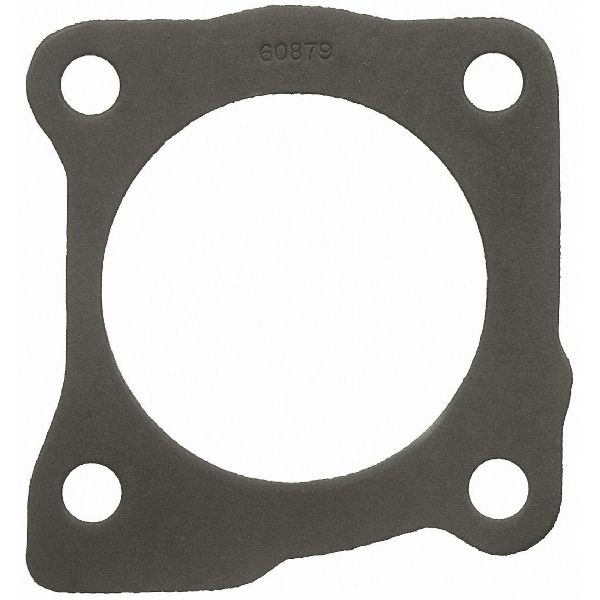
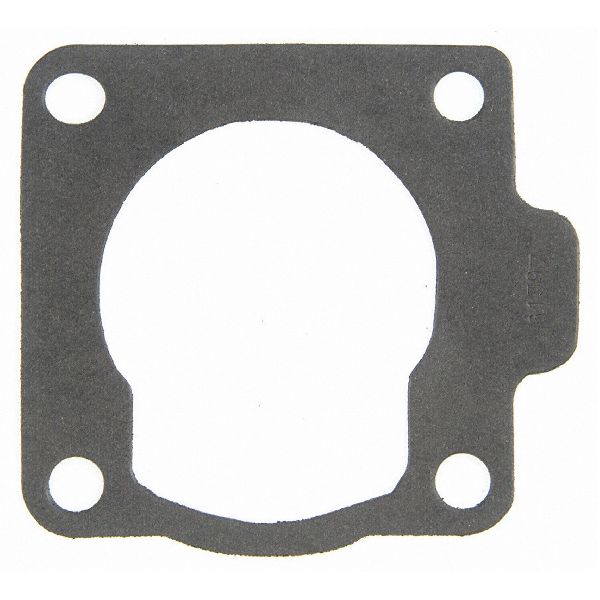
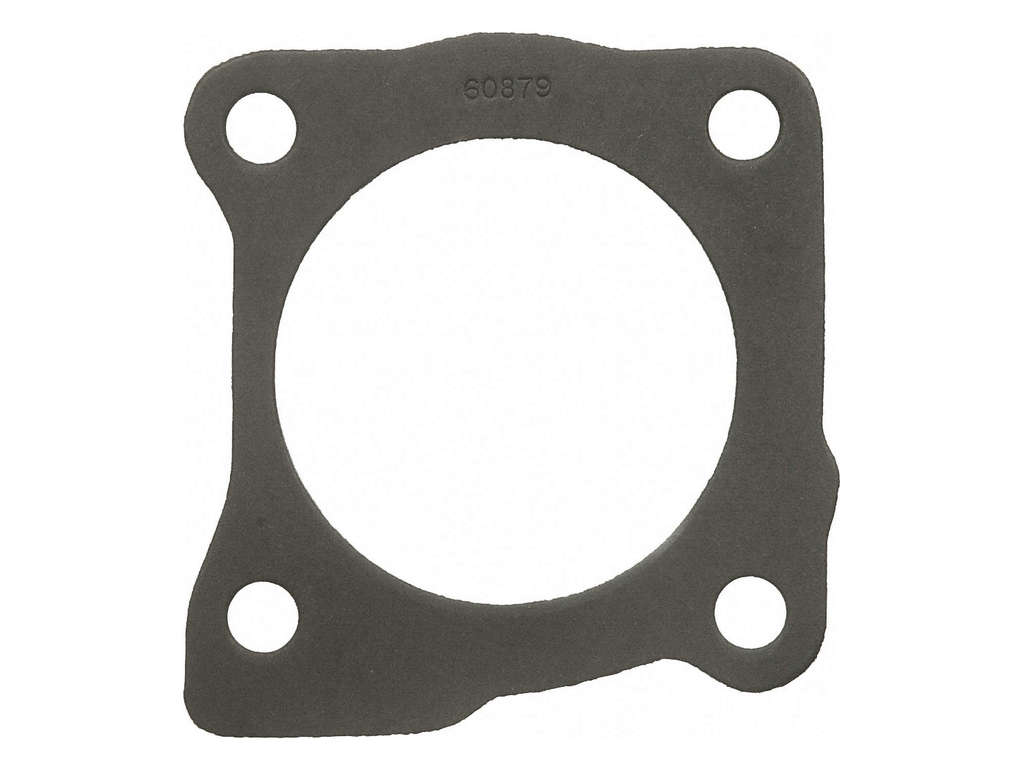
(OEM #MD184046)— Must be replaced whenever the throttle body is removed for cleaning or IAC valve replacement to prevent vacuum leaks.
Trusted brands: Mitsubishi (Genuine OEM), Fel-Pro
OEM price range: $10-$20
Aftermarket price range: $5-$10 - BISS Screw O-Ring
(OEM #MD608806)— The original o-ring can degrade and cause a vacuum leak. Often replaced with a new BISS screw assembly or a matching o-ring from a kit, as the individual part is not commonly sold by Mitsubishi.
Trusted brands: Mitsubishi (OEM Screw Assembly), Generic O-Ring Assortment
OEM price range: $8-$15 (for screw and o-ring)
Aftermarket price range: $1-$5
Platform-Specific Known Issues
- Modifications, especially aftermarket blow-off valves (BOVs) that vent to the atmosphere (VTA), can interfere with the metered air from the MAF sensor and contribute to idle problems and this code. A recirculating BOV is recommended.
- Aftermarket cams with aggressive overlap can cause a naturally lumpy idle that the ECU struggles to control, sometimes requiring adjustments to the idle targets and IAC control tables in the ECU tune itself to prevent this code from appearing.
Mechanic-Grade Diagnostic Values
- IAC Valve Coil Resistance — expected: 28-33 Ohms at approx. 68°F (20°C). Failure: A reading outside this range indicates a faulty coil.
- IAC Valve Connector Voltage (Key On, Engine Off) — expected: Approximately 12V (battery voltage). Failure: No voltage suggests a wiring issue, blown fuse, or faulty ECU driver.
- IAC Steps at Warm Idle (via EvoScan) — expected: 5-30 steps. Failure: Consistently high steps (e.g., >35-60) or very low steps (0-5) suggest a vacuum leak, incorrect BISS setting, or a failing IAC that the ECU is trying to overcompensate for.
Scan Tool Commands That Help
- EvoScan: Actuator Test -> SAS Mode (Speed Adjusting Screw) — This command is essential for properly setting the base idle. It freezes the IAC motor's position, allowing the mechanic to adjust the BISS screw to achieve the correct base RPM (~850-900) without the IAC interfering. This must be done after replacing an IAC or cleaning the throttle body.
Wiring & Ground Locations
- IAC Valve ECU Pins — At the main Engine Control Unit (ECU) harness connectors, typically located behind the glove box.. The ECU controls the IAC stepper motor via four specific pins. For the Evo VIII, these are Pins 14 (Coil 1), 28 (Coil 3), 15 (Coil 4), and 29 (Coil 6). Checking for continuity and voltage at these pins can diagnose a wiring fault between the ECU and the IAC valve or a failed ECU driver.
- IAC Valve Connector Pins — The 6-pin connector that plugs directly into the Idle Air Control valve on the throttle body.. Testing at the connector is the primary way to diagnose the IAC. Pins 2 and 5 are the 12V power feeds. The other four pins (1, 3, 4, 6) are the grounds for the two coils, which the ECU pulses to control the motor.
- ECU Grounds — The main ECU grounds are typically bolted to the chassis behind the dashboard or near the ECU's mounting location. Specific engine grounds are located on the intake manifold and engine block.. A poor ground connection for the ECU (Pins 46 and 58 on the Evo VIII ECU are chassis grounds) can cause erratic behavior in all sensors and actuators it controls, including the IAC valve, leading to idle issues.
Real Owner Repair Stories
- EvolutionM.net user 'Kakihara' (Mitsubishi Lancer Evolution with GSC S2 cams installed.) — Recurring P0505 code, IAC steps would not go below 35 at idle even after cleaning and replacing the IAC valve and adjusting the BISS screw in SAS mode.
❌ Tried (didn't work) Cleaning the original IAC valve, Replacing the IAC valve with a new one, Using EvoScan SAS mode to adjust the BISS screw
✅ What actually fixed it The user determined that after installing aftermarket cams, the engine required more air at idle than the stock ECU tables were programmed for, causing the high IAC steps. The final fix was to modify the ECU's idle control tables ('ISCv demand TPS adder') using tuning software to adjust the IAC's target position, resolving the high step count and the P0505 code. - EvolutionM.net user 'studioface' (Mitsubishi Lancer Evolution) — P0505 code appeared immediately after installing an oil catch can, which involved removing the throttle body and intake manifold.
❌ Tried (didn't work) Initial reassembly
✅ What actually fixed it The user went back and methodically re-checked all work. They unplugged and re-plugged every connector, performed a boost leak test, and ensured all clamps and screws were tight. After finding and fixing a likely connection issue or small leak from the installation, they reset the ECU by disconnecting the battery, and the code did not return.
"I Checked Everything" — The Actual Cause
- In cases with modified engines, particularly with aftermarket camshafts, a boost/smoke test may pass and all mechanical parts may be new, but the P0505 code persists because the engine's fundamental airflow requirement at idle has changed. The stock ECU programming cannot compensate, forcing the IAC to its limits. The actual cause is the ECU tune not matching the hardware, requiring an adjustment to the idle control maps.
OEM Part Supersession History
MD628166, MD628318→1450A069— Updated design by Mitsubishi/Mikuni for improved reliability.
Heads up: While all are for the Evo 7/8/9, some early aftermarket versions of MD628318 were sold with a visually different pintle head. It's critical to ensure the replacement matches the original design. The latest OEM part, 1450A069, is the most reliable replacement.N/A→N/A— N/A
Heads up: A generic 1/4" ID x 3/8" OD x 1/16" W o-ring for the BISS screw has been reported by owners to be slightly too thin and may still leak. The OEM o-ring (MD608806) is slightly thicker and provides a proper seal.
Model Year Variations Within This Range
- 2005: The 2005 Evo VIII received a larger 10.5cm² turbine housing (vs 9.8cm² on 03-04 models), which can slightly alter engine characteristics. More significantly, the Active Center Differential (ACD) became standard on GSR and RS models, adding complexity to the drivetrain and electronics, though it does not directly affect the P0505 cause.
- 2003-2005: While the core 4G63T engine is the same, there were minor ECU tuning changes in 2005, giving a slightly leaner mid-range from the factory. However, the fundamental idle control logic and causes for P0505 remain identical across the 2003-2005 range.
Diagnostic Flowchart
Used vs. New Parts: Buying Guide for This Vehicle
When a used part is the smart pick: A complete, used OEM throttle body assembly can be a cost-effective choice if it comes from a low-mileage, running vehicle. This can be cheaper than a new IAC valve alone and includes the throttle body, TPS, and IAC, reducing the number of potential failure points.
Donor-vehicle mileage cap: roughly under 80000 miles for the part to have meaningful remaining life.
What to inspect on the donor part:
- Check for excessive carbon buildup in the throttle bore and on the plate.
- Ensure the throttle plate moves smoothly without binding.
- Inspect the IAC valve connector for any signs of corrosion or damage.
- Ask the seller if the donor car had any idle issues or related codes.
OEM-only on this vehicle (don't cheap out):
- Idle Air Control (IAC) Valve: Aftermarket IAC valves for the Evo are notoriously unreliable and have a very high failure rate, often failing within weeks or months. It is strongly recommended to only use a genuine Mitsubishi (OEM) or Mikuni (the original manufacturer for Mitsubishi) part to ensure longevity and proper function.
Brands owners have reported issues with on this vehicle:
- Unbranded/generic IAC valves from eBay or Amazon. Forum consensus is overwhelmingly negative, with many users reporting that these parts are a waste of money and time.
Real Owner Stories
Aggregated from forums and TSBs cited above. Mileages and costs reflect what owners reported in those sources.
2003-2005 Mitsubishi Lancer Evolution
Symptoms: P0505 code returned the same day after a mechanic replaced the IAC valve.
What fixed it: The issue was resolved after performing a full ECU reset/relearn and checking for boost leaks, steps the initial mechanic had missed.
Source hint: EvolutionM.net: 'Please help - P0505 returns'
2003-2005 Mitsubishi Lancer Evolution
Symptoms: Idle issues and a P0505 code.
What fixed it: The owner performed a boost leak test and found and repaired leaks at the BISS screw o-ring and another throttle body fitting.
Source hint: EvolutionM.net: 'Boost leak found'
2003-2005 Mitsubishi Lancer Evolution
Symptoms: Struggling with a persistent P0505 code after installing aftermarket cams.
What fixed it: The owner had difficulty getting the IAC steps into the correct range even with a new IAC valve, indicating the solution involved advanced diagnosis using EvoScan to monitor IAC steps and perform a proper BISS adjustment in SAS mode.
Source hint: EvolutionM.net: 'help with p0505 and IAC'
Related OBD-II Codes
Frequently Asked Questions
I just installed an aftermarket blow-off valve on my Evo and now I have a P0505 code. Is this related?
I replaced my IAC valve, but the P0505 code came back almost immediately. What did I miss?
What is the correct electrical resistance for the IAC valve on my 2003-2005 Lancer Evolution?
My Evo has aftermarket cams and a rough idle that triggers P0505. Is this a mechanical problem?
What are the recommended OEM part numbers for the IAC valve and throttle body gasket?
How do I properly set the base idle on my Lancer Evolution?
We Have This Part in Stock


The information in this article is provided for general reference and educational purposes only. Vehicle specifications, procedures, and part compatibility can vary by production date, trim level, and region. Always consult your vehicle's factory service manual and verify part numbers before purchasing or performing repairs. Safety-critical components such as airbags, seat belts, and braking systems should be installed by a qualified professional.
- Mitsubishi Lancer Evolution:
- 🧭 Diagnostic Flowchart
- 🛍️ Shop This Part
- What's Unique About the 2003-2005 Mitsubishi Lancer Evolution
- Symptoms You May Notice
- Most Likely Causes
- Rare But Worth Checking
- Diagnosis Steps
- Parts You'll Likely Need
- Platform-Specific Known Issues
- Mechanic-Grade Diagnostic Values
- Scan Tool Commands That Help
- Wiring & Ground Locations
- Real Owner Repair Stories
- "I Checked Everything" — The Actual Cause
- OEM Part Supersession History
- Model Year Variations Within This Range
- Used vs. New Parts: Buying Guide for This Vehicle
- Real Owner Stories
- 2003-2005 Mitsubishi Lancer Evolution
- 2003-2005 Mitsubishi Lancer Evolution
- 2003-2005 Mitsubishi Lancer Evolution
- Related OBD-II Codes
- Frequently Asked Questions
- 🎟️ Get 5% Off