

P0505 on 1998-2004 Nissan Frontier 2.4L: Idle Control System Causes and Fixes
The P0505 code on a 1998-2004 Nissan Frontier with the 2.4L engine most often points to a faulty Idle Air Control (IAC) valve. A critical and well-documented issue on these Nissans is that the IAC valve can leak coolant internally, short-circuiting and sending a voltage spike to the Engine Control Module (ECM), destroying the STA509A driver chip. This requires replacement of the IAC valve and repair or replacement of the ECM. Replacing the IAC valve costs between $40 for an aftermarket part and
- P0505 on your Frontier is almost always related to the Idle Air Control (IAC) system.
- The most likely cause is a dirty or failed IAC valve, which is located on the throttle body.
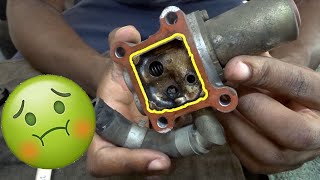
- **CRITICAL**: Before replacing the IAC valve, inspect it for signs of coolant leakage. If coolant is present, your Engine Control Module (ECM) is likely damaged and will need to be repaired or replaced.
- Other potential causes include vacuum leaks from old hoses or a very dirty throttle body.
- After replacing the IAC valve or cleaning the throttle body, you may need to perform an Idle Air Volume Relearn procedure for the engine to idle correctly.
What's Unique About the 1998-2004 Nissan Frontier
On many early 2000s Nissan vehicles with the KA24DE engine, including this generation of Frontier, the IAC valve has a design where engine coolant flows through it to prevent icing. Over time, the gasket between the IAC valve and the throttle body can fail, allowing coolant to leak into the IAC valve's electronic motor. This coolant intrusion causes an electrical short that not only destroys the IAC valve but can also travel up the wiring harness and permanently damage the driver circuit within the Engine Control Module (ECM). Specifically, the STA509A MOSFET chip inside the ECM is known to burn out from this voltage spike, leading to a much more expensive and involved repair. Simply replacing the IAC valve without inspecting and repairing the ECM will often result in the immediate failure of the new valve.
Symptoms You May Notice
- Engine stalling at idle or when coming to a stop
- Rough or fluctuating idle speed (surging between 1,500-2,000 RPM)
- Idle speed is consistently too high or too low
- Difficulty starting the engine without giving it throttle
- Check Engine Light is on
- Replacing the Throttle Position Sensor (TPS) when it is not faulty.
- Replacing spark plugs and ignition coils, which are unlikely to cause a dedicated idle control system code without other misfire codes present.
- Replacing the Mass Airflow (MAF) sensor, although a large vacuum leak in the intake boot could potentially trigger both MAF and idle codes.
Most Likely Causes
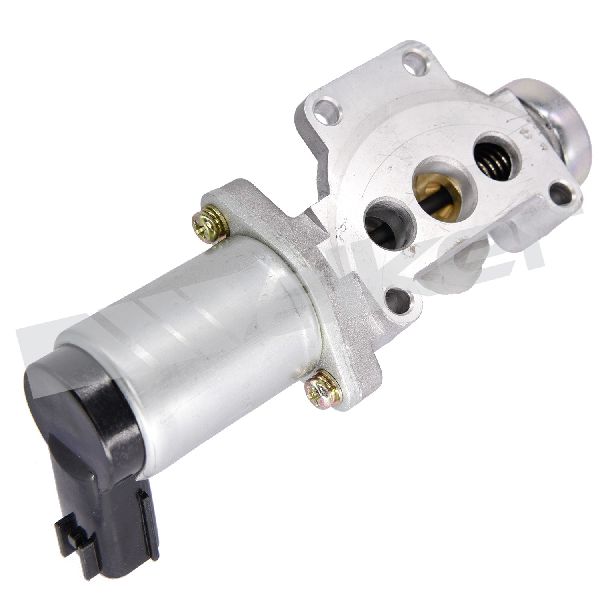
- Faulty Idle Air Control (IAC) Valve 🔴 High Probability → Shop Idle Air Control Valve The IAC valve is prone to failure from carbon buildup, which can cause it to stick. More critically, the internal coolant seal can fail, causing an electrical short that destroys the valve and can also damage the ECM. This is a widely recognized design flaw in this generation of Nissan vehicles.
How to confirm: Unplug the IAC valve connector with the engine running. If the idle speed changes, the valve was working to some degree. Remove the valve and inspect for heavy carbon buildup or signs of coolant (a greenish, crusty residue). Test the motor windings with a multimeter for proper resistance. If coolant contamination is found, assume the ECM is damaged and inspect it for burnt components, specifically the STA509A chip, before installing a new IAC valve.
Typical fix: Replace the Idle Air Control valve and the corresponding gasket. If there is any sign of coolant contamination, it is critical to inspect the ECM for damage. If the ECM is damaged, it must be repaired by a specialist or replaced. Installing a new IAC valve with a damaged ECM will cause the new valve to fail instantly.
Est. part cost: $40-$220 - Vacuum Leaks 🟡 Medium Probability Aging rubber vacuum hoses, the PCV hose, and intake gaskets can crack and split, allowing unmetered air to enter the engine, which disrupts the air-fuel mixture and idle speed. A cracked air intake boot between the MAF sensor and throttle body is also a common culprit.
How to confirm: Visually inspect all vacuum lines connected to the intake manifold for cracks or disconnections. With the engine running, you can carefully spray carburetor cleaner or a propane torch (unlit) around suspected leak areas. If the engine RPM changes, a leak is present. A smoke test is the most effective and safest method for locating leaks.
Typical fix: Replace the leaking vacuum hose or gasket.
Est. part cost: $5-$50 - Dirty Throttle Body 🟡 Medium Probability → Shop Fuel Injection Throttle Body Carbon and oil vapor from the PCV system can build up in the throttle body and around the IAC valve passages, restricting airflow and causing the IAC valve to work harder or stick.
How to confirm: Remove the air intake hose from the throttle body and visually inspect for a thick black coating of carbon around the throttle plate and the air passages for the IAC valve.
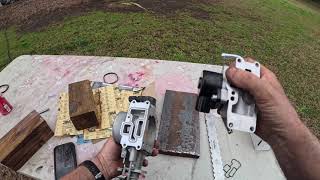
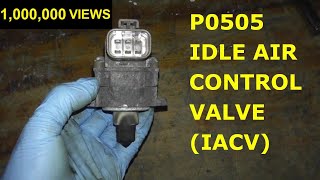
Typical fix: Clean the throttle body and all associated air passages thoroughly with 🎬 See this step-by-step guide to cleaning the IACV a dedicated throttle body cleaner and a soft brush. Be careful not to damage any sensors. An Idle Air Volume Relearn procedure is often required after cleaning.
Est. part cost: $5-$15 - Damaged Wiring or Connectors ⚪ Low Probability Engine bay heat and vibrations can cause wiring insulation to become brittle and crack, or connector pins to corrode over time. The short from a coolant-leaked IAC valve can also melt the connector or wiring.
How to confirm: Visually inspect the wiring harness and connector for the IAC valve for any signs of damage, melting, or corrosion. Use a multimeter to check for proper voltage and ground at the connector with the key on. Check for shorts to ground on the signal wires.
Typical fix: Repair the damaged section of wiring or replace the connector pigtail.
Est. part cost: $10-$30
Rare But Worth Checking
- Failed Engine Control Module (ECM): → Shop Engine Control Module (ECM) This is often a consequence of a coolant-leaked IAC valve. If a new IAC valve doesn't fix the issue or fails immediately, the ECM is the likely culprit. The STA509A driver chip for the IAC valve gets shorted out by the coolant leak. The ECM must be removed, opened, and inspected for visible burn marks on the circuit board. It can often be repaired by a specialist service for a few hundred dollars, which is much cheaper than a new unit from the dealer.
Diagnosis Steps
- Scan the vehicle for any other stored trouble codes. Address other codes first if they are present.
- Visually inspect the engine bay for obvious issues like disconnected vacuum hoses, a cracked air intake boot, or damaged wiring.
- Inspect the throttle body and IAC valve passages for heavy carbon buildup. Clean if necessary.
- Test the IAC valve. Unplug the electrical connector while the engine is idling to see if the RPM changes. If it does not, remove the valve for bench testing.
- Inspect the removed IAC valve for signs of coolant contamination (green or white crusty residue). If coolant is present, assume the ECM is damaged and proceed with ECM inspection.
- Test the IAC valve's electrical circuits for resistance using a multimeter.
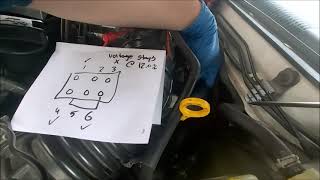
- Check for power and ground at the IAC valve connector with the ignition on. Check the four signal wires for shorts to ground using a test light connected to the positive battery terminal; the light should 🎬 Watch: How to probe the harness and diagnose the ECM not illuminate with the ECM disconnected.
- If coolant was found in the old valve, REMOVE and open the ECM. Visually inspect the circuit board for burnt components, specifically the STA509A chip.
- If the IAC valve and wiring test good and no coolant leak is found, perform an Idle Air Volume Relearn procedure. This often requires a capable scan tool, though some manual procedures exist.
- If a new IAC valve is installed and the problem persists, or if coolant was found in the old valve, the ECM must be tested and repaired or replaced.
Parts You'll Likely Need
- Idle Air Control Valve
(OEM #23781-3S510)— This is the most common failure point for the P0505 code, either from carbon buildup or internal failure, including the notorious coolant leak.
Trusted brands: Hitachi (OEM), Standard Motor Products, Walker, A-Premium
OEM price range: $180-$270
Aftermarket price range: $40-$120 - Idle Air Control Valve Gasket — A new gasket is required when replacing the IAC valve to ensure a proper seal and prevent vacuum leaks. Many new IAC valves include one.
Trusted brands: Fel-Pro, Mahle, OEM Nissan
OEM price range: $5-$15
Aftermarket price range: $2-$10 - ECM Repair Service — If the IAC valve failed due to a coolant leak, the ECM is very likely damaged. Repairing the existing ECM is a common and cost-effective solution compared to buying a new one.
Trusted brands: UpFix, Circuit Board Medics, Various eBay sellers
OEM price range: $1000+
Aftermarket price range: $100-$500
Platform-Specific Known Issues
- A known and critical failure mode involves the IAC valve's gasket failing, allowing engine coolant to leak into the valve's motor. This shorts the valve and sends a voltage spike to the Engine Control Module (ECM), often destroying the IAC driver circuit (STA509A chip) inside the ECM. If you replace a failed IAC valve without checking and potentially repairing the ECM, the new valve may fail instantly. This issue is
Documented NHTSA Reports
- An owner of a similar Nissan model reported in NHTSA ODI #10227925 that an ECU breakdown resulted in the car shutting off at any given time, with a P0505 code triggering an "insane repair cost."
- NHTSA ODI #10185642 describes a scenario where the engine raced to approximately 1600 to 1900 RPMs at idle, with the OBD-II system indicating codes P0505 for the Idle Air Control Valve and P0420 for the Three Way Catalyst.
- A diagnostic report cited in NHTSA ODI #10258630 for a related Nissan vehicle showed P0505 appearing alongside multiple O2 sensor and emissions codes, indicating a total emissions failure.
Mechanic-Grade Diagnostic Values
- IAC Valve Winding Resistance — expected: Approximately 10 ohms at 68°F (20°C). Failure: A reading significantly higher or lower than 10 ohms, or an open circuit (infinite resistance), indicates a failed valve.
- Voltage at IAC Valve Connector — expected: 9 - 14 V (Battery Voltage) at terminals RSO and RSC with Key On, Engine Off.. Failure: No voltage suggests a problem with the power supply to the valve, potentially a blown fuse or a wiring issue upstream.
Scan Tool Commands That Help
- Nissan CONSULT-II or capable aftermarket scanner: Idle Air Volume Learn — This function is required after cleaning the throttle body or replacing the IAC valve to reset the base idle. It commands the ECM to learn the new parameters for maintaining the target idle speed.
- Nissan CONSULT-II: Data Monitor — To observe live data such as 'Target Idle Speed' vs. 'Actual Engine Speed'. A large, persistent discrepancy that the system cannot correct indicates a fault and helps confirm the P0505 condition.
Wiring & Ground Locations
- ECM (Engine Control Module) — Inside the passenger cabin, behind the glove box. The floor mat may need to be turned up and two bolts removed to access it.. The ECM contains the STA509A driver chip that is notoriously damaged by a coolant-leaking IAC valve. Physical inspection of the ECM board is required if coolant is found in the old IAC valve.
- Main Engine Ground — A primary ground strap runs from the intake manifold to the negative battery terminal.. A poor engine ground can cause a host of electrical issues, including erratic sensor readings and incorrect actuator operation, potentially contributing to idle control problems.
- Secondary Engine Ground — A smaller, braided ground strap typically runs from the cylinder head (exhaust side) to the firewall.. This ground is essential for ensuring that sensors and components mounted on the engine have a stable reference to the chassis ground. A faulty ground here can lead to incorrect signals being sent to the ECM.
- Main Body Ground — Located on the passenger-side inner fender panel, where the negative battery cable is strapped to the body.. Corrosion at this point can cause a voltage drop across the entire vehicle's electrical system, leading to dim lights, slow accessories, and erratic behavior of electronic modules, including the ECM.
Real Owner Repair Stories
- NICOclub Forums User (2001 Nissan Pathfinder (uses a similar IACV/ECM design)) — Erratic idle.
❌ Tried (didn't work) Initially replacing only the IACV did not solve the problem.
✅ What actually fixed it The user identified that the ECM was also damaged. After repairing the damaged component on the ECM circuit board and reinstalling, the idle became stable. However, the P0505 code remained stored (without an active Check Engine Light) until a dealer used a CONSULT-II scan tool to perform the Idle Air Volume Relearn procedure, which finally cleared the issue.
OEM Part Supersession History
23781-3S500→23781-3S510— Unspecified, but part updates are common to address design flaws or improve manufacturing. Given the known coolant leak issue, the update may have involved improved seals.STA509A (Chip in ECM)→STA508A (Alternative Chip)— The STA508A is cited in forums as a more robust, plug-compatible replacement chip that can handle higher current than the original STA509A.
Heads up: While physically compatible (10-SIP package), using an alternative electronic component should be done with caution. This is a common recommendation among electronics repair specialists and forum users for a more durable ECM repair.
Diagnostic Flowchart
Other Known Issues on This Vehicle
Issues unrelated to this code that are worth knowing about as an owner of this generation:
- Timing Chain Guide Wear/Failure 🔴 High — Common on high-mileage (100k+) engines. A rattling noise on startup is the primary symptom.
- Cracked Exhaust Manifold 🟠 Medium — Fairly common, especially in regions with large temperature swings. Often presents as a ticking noise when the engine is cold, which may quiet down as the manifold heats up and expands.
- Failing Crankshaft Position Sensor 🔴 High — Very common failure item. Often causes stalling when the engine is hot, followed by a no-start condition until it cools down. (Ref: NHTSA Campaign ID: 07V527000)
- Frame and Body Rust 🔴 High — Very common in regions that use road salt. Frames are known to rust severely, particularly near the leaf spring mounts and under the bed.
Used vs. New Parts: Buying Guide for This Vehicle
When a used part is the smart pick: A used throttle body assembly (without the IAC valve) or a used ECM from a junkyard can be a cost-effective choice. For the ECM, it is critical to source it from a vehicle that was not scrapped due to a P0505 code or coolant leak (e.g., a vehicle with rear-end damage).
Donor-vehicle mileage cap: roughly under 150000 miles for the part to have meaningful remaining life.
What to inspect on the donor part:
- For a used ECM: Inspect the connector pins for any signs of corrosion or water damage. Ask the seller for the donor vehicle's VIN to check its history if possible.
- For a used throttle body: Inspect the IAC valve mounting area and coolant passages for any signs of green or white crusty residue, which indicates a past coolant leak. Ensure the throttle plate moves smoothly without binding.
OEM-only on this vehicle (don't cheap out):
- Idle Air Control Valve (IAC): Given the catastrophic failure chain, purchasing a used IAC valve is highly risky. A new OEM (Hitachi) or a reputable aftermarket part is strongly recommended to avoid immediate failure and a repeat ECM burnout.
Aftermarket brands forum-validated for this vehicle:
- Hitachi (OEM supplier)
- Standard Motor Products
- Carquest Premium
Brands owners have reported issues with on this vehicle:
- Unbranded, low-cost IAC valves from online marketplaces have been reported by users to fail prematurely, sometimes causing repeat damage to the ECM.
Real Owner Stories
Aggregated from forums and TSBs cited above. Mileages and costs reflect what owners reported in those sources.
2001 Nissan Pathfinder
Symptoms: Code P0505 present, involving the IAC Valve.
What fixed it: Diagnosis of the coolant leak issue and subsequent ECM frying.
Source hint: NICOclub Forums: Multiple threads, such as '01 PF Code P0505 - IAC Valve'
Nissan Maxima
Symptoms: P0505 code and failure of the STA509A MOSFET chip.
What fixed it: ECM repair services were used as a cost-effective alternative to dealership replacement.
Source hint: Maxima.org Forums: In a thread titled 'Does anyone know how much an ECM cost?'
Nissan Xterra 2.4L KA24DE
Symptoms: Idle air control valve issues threatening to short out the ECM.
What fixed it: Replacing the IAC valve before it could short out the ECM.
Source hint: XterraNation Forums: A thread titled 'p0505 - idle air control valve. replace before shorts out your ecm'
Related OBD-II Codes
Frequently Asked Questions
Why is it dangerous to just replace the IAC valve on my 2001 Frontier without checking the ECM?
I have a 2002 Xterra with the 2.4L engine; is it prone to the same P0505 issues as the Frontier?
What should I look for on the IAC valve to see if it has 'fried' my computer?
Can a dirty throttle body cause the P0505 code on my KA24DE engine?
Is there a specific chip I should look for if I open my ECM to check for damage?
My Frontier has a rattling noise on startup along with the idle issue; are they related?
Helpful Videos
We Have This Part in Stock


The information in this article is provided for general reference and educational purposes only. Vehicle specifications, procedures, and part compatibility can vary by production date, trim level, and region. Always consult your vehicle's factory service manual and verify part numbers before purchasing or performing repairs. Safety-critical components such as airbags, seat belts, and braking systems should be installed by a qualified professional.
- Nissan Frontier:
- 🧭 Diagnostic Flowchart
- 🎬 Helpful Videos
- 🛍️ Shop This Part
- What's Unique About the 1998-2004 Nissan Frontier
- Symptoms You May Notice
- Most Likely Causes
- Rare But Worth Checking
- Diagnosis Steps
- Parts You'll Likely Need
- Platform-Specific Known Issues
- Documented NHTSA Reports
- Mechanic-Grade Diagnostic Values
- Scan Tool Commands That Help
- Wiring & Ground Locations
- Real Owner Repair Stories
- OEM Part Supersession History
- Other Known Issues on This Vehicle
- Used vs. New Parts: Buying Guide for This Vehicle
- Real Owner Stories
- 2001 Nissan Pathfinder
- Nissan Maxima
- Nissan Xterra 2.4L KA24DE
- Related OBD-II Codes
- Frequently Asked Questions
- 🎟️ Get 5% Off