

P0505 on 2008-2010 Toyota Highlander 3.5L V6: Idle Control System Fault Causes and Fixes
On a 2008-2010 Highlander with the 3.5L V6, code P0505 is most often caused by a faulty electronic throttle body assembly. A Toyota TSB recommends replacing the throttle body if no vacuum leaks are found. Before replacement, check for vacuum leaks and ensure the throttle plate is clean. Expect to pay $400-$600 for an OEM replacement part.
- This guide applies specifically to 2008-2010 Highlanders with the 3.5L 2GR-FE V6 engine.
- P0505 means the computer can't control the idle speed correctly using the electronic throttle body.
- Before buying parts, thoroughly check for cracked or loose vacuum hoses, especially the PCV hose and air intake boot.
- If no vacuum leaks are found, the most common fix is replacing the entire electronic throttle body assembly, as recommended by a Toyota TSB.
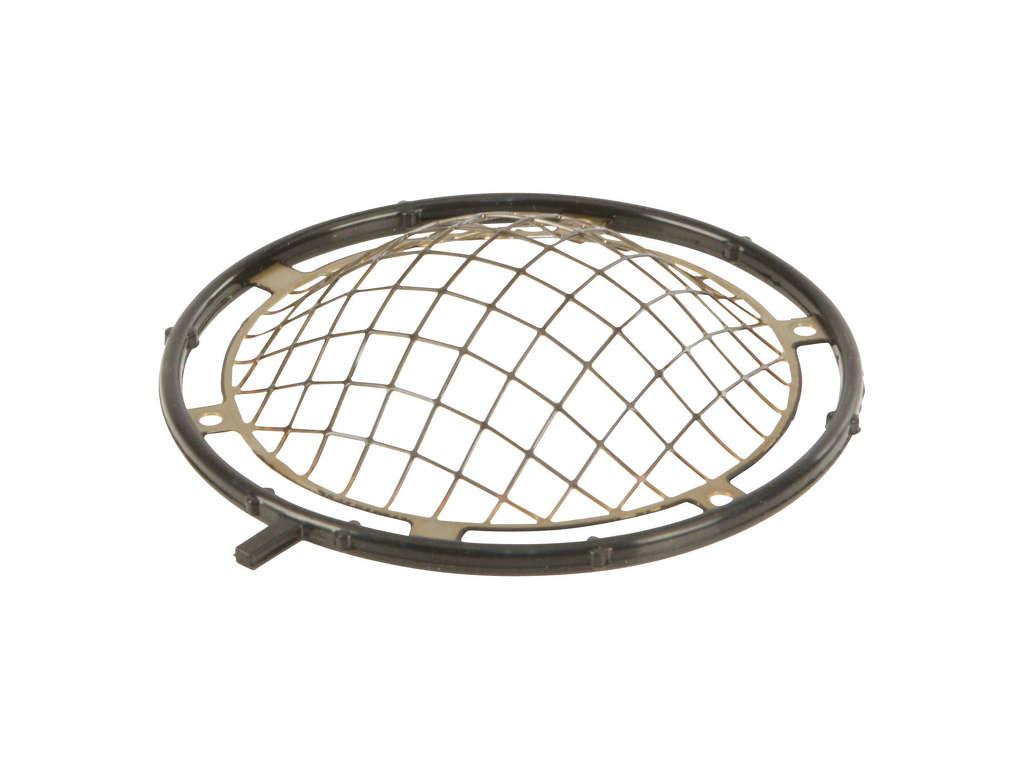
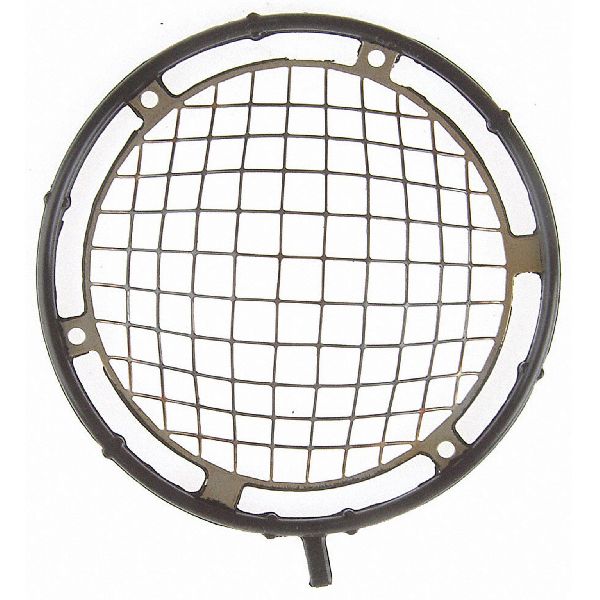
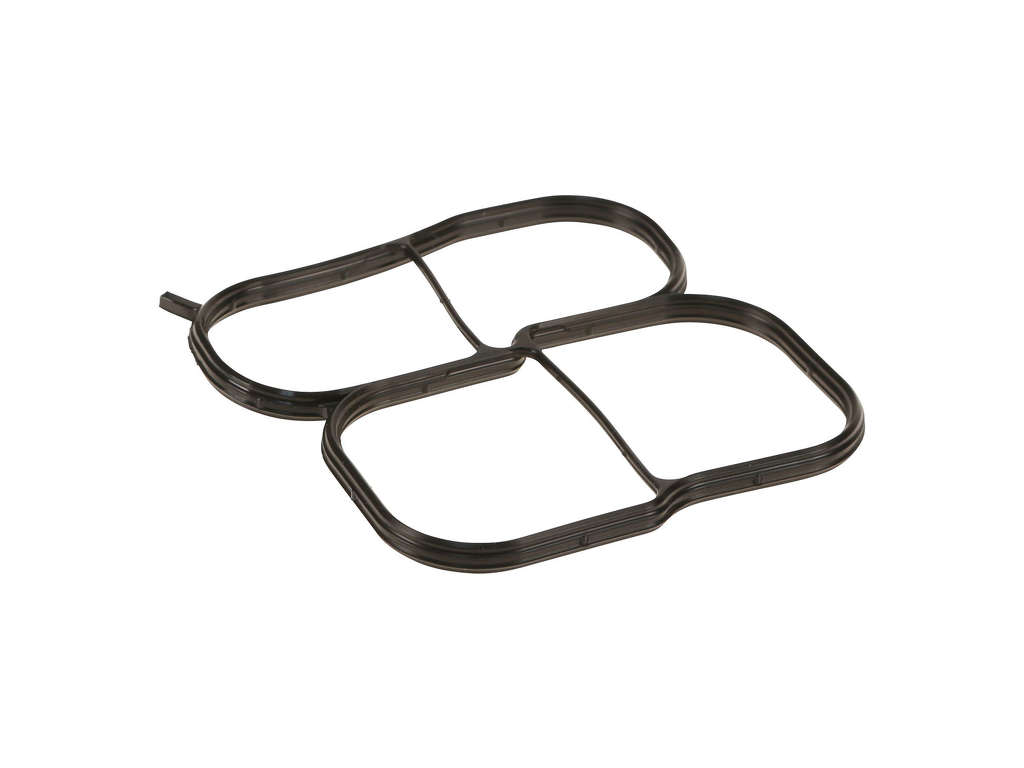
- Always use a new gasket when replacing the throttle body.
What's Unique About the 2005-2010 Toyota Highlander
The user-specified year range (2005-2010) covers two Highlander generations, but the 2GR-FE 3.5L V6 engine was only available from 2008-2010. These models use a 'drive-by-wire' throttle system with no separate IAC valve. Toyota issued a Technical Service Bulletin (T-SB-0184-09) for this exact issue on the 2GR-FE engine, which points to a high failure rate of the electronic throttle body assembly itself, making it the most likely culprit after ruling out simple vacuum leaks. This issue is also common on platform mates like the Lexus ES350.
Generation note: The specified range 2005-2010 covers the end of the first generation (2001-2007) and the beginning of the second generation (2008-2013). However, the 2GR-FE 3.5L V6 engine was only installed in the second-generation 2008, 2009, and 2010 models. This guide is specific to those 2008-2010 models.
Symptoms You May Notice
- Check Engine Light is on
- Engine stalls when coming to a stop
- Idle speed is too high or too low
- Rough or fluctuating idle speed
- Difficulty starting the engine
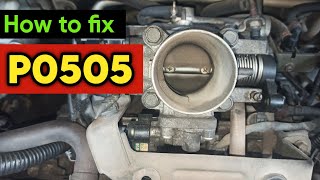
- Engine may feel like it wants to jump forward at a stop 🎬 See a breakdown of P0505 symptoms, causes, and common fixes.
- Replacing the Mass Airflow (MAF) sensor. While a dirty MAF can cause performance issues, it does not typically trigger an isolated P0505 code.
- Looking for a separate Idle Air Control (IAC) valve. This engine does not have one; idle is controlled by the electronic throttle body.
- Floor mat interference. An improperly placed floor mat can prevent the accelerator pedal from returning to its fully released position, which can cause idle issues and potentially set a P0505 code.
Most Likely Causes
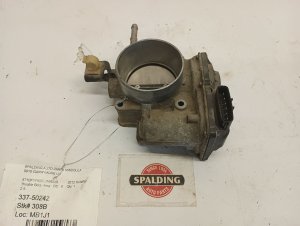
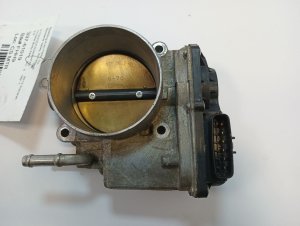
- Faulty Electronic Throttle Body Assembly 🔴 High Probability → Shop Fuel Injection Throttle Body A Toyota Technical Service Bulletin (T-SB-0184-09) was issued specifically for this problem on the 2GR-FE engine, recommending throttle body replacement as the primary fix. This is a widely acknowledged failure point for the 2GR-FE engine across multiple Toyota and Lexus models.
How to confirm: After confirming no vacuum leaks exist and the throttle plate is clean, this becomes the most likely cause. A scan tool may show that the ECM is commanding idle changes but the RPM is not responding correctly. The TSB procedure is to replace it if no other faults are found.
Typical fix: Replace the entire throttle body assembly, which includes the motor and position sensor, along with a new gasket.
Est. part cost: $400-$600 - Vacuum Leak in Air Induction System 🟡 Medium Probability Hoses, particularly the PCV hose and intake air duct, can become brittle and crack over time, allowing unmetered air to enter the engine and disrupt the idle-to-fuel ratio. In some cases, this code appears alongside evaporative emission system leaks; for instance, NHTSA ODI #11703613 notes P0505 occurring with P0441 (incorrect purge flow) and lean bank codes.
How to confirm: Visually inspect all vacuum hoses, especially the PCV hose and the main air intake duct, for cracks, loose fittings, or damage. You can also carefully spray brake cleaner or use a smoke machine around suspected areas with the engine running; a change in idle RPM or the appearance of smoke indicates a leak.
Typical fix: Replace the cracked or leaking hose.
Est. part cost: $15-$50 - Dirty Throttle Body ⚪ Low Probability → Shop Fuel Injection Throttle Body Carbon and oil vapor from the PCV system can build up around the throttle plate, restricting its movement and preventing the fine adjustments needed for stable idle control. This is more of a maintenance item but can trigger the code if severe.
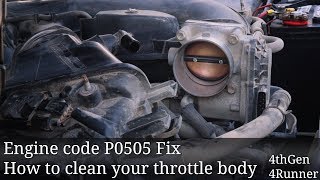
How to confirm: Remove the air intake duct from the throttle body and visually inspect the throttle plate and bore for black carbon deposits.
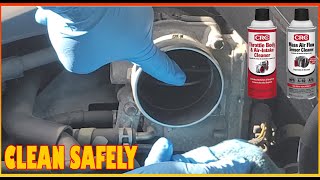
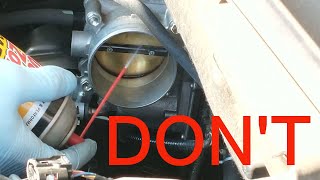
Typical fix: Clean the throttle body bore and plate carefully with a dedicated throttle body cleaner and a soft cloth. Do not spray cleaner directly into the electronic components or move the plate by hand aggressively. An idle relearn procedure may be needed after cleaning.
Est. part cost: $5-$10
Rare But Worth Checking
- Faulty Engine Control Module (ECM): → Shop Engine Control Module (ECM) This is very rare. The ECM should only be considered after all other possibilities, including the throttle body, wiring, and vacuum leaks, have been thoroughly ruled out.
- Wiring Harness Issue: A damaged wire or poor connection in the circuit between the ECM and the throttle body can mimic a failed throttle body. Inspect the harness for any signs of damage, melting, or corrosion at the connector.
- Fuel System Performance: While less common, fuel delivery issues can coincide with idle faults. NHTSA ODI #11667285 describes a scenario where P0505 was stored alongside P0171 (System Too Lean) and P117B (Fuel Performance/Direct Injector), suggesting the idle control system may struggle when fuel mixture is compromised.
Diagnosis Steps
- Use an OBD-II scanner to confirm P0505 is the only code present. If other codes exist, diagnose them first. Note that NHTSA ODI #11331260 reports P0505 appearing with P0441 and P0455, indicating that multiple leaks in the air or fuel systems can trigger complex diagnostic scenarios.
- Review freeze-frame data to understand the engine conditions (speed, temperature, load) when the code was set.
- Check for simple issues first: ensure the floor mat is not obstructing the accelerator pedal.
- Visually inspect the entire air intake system, from the air filter box to the throttle body, for any cracks, loose clamps, or disconnected hoses.
- Specifically check the PCV hose and its connections, as this is a common source of vacuum leaks mentioned in the Toyota TSB.
- If no leaks are found, remove the intake duct from the throttle body and inspect for heavy carbon buildup. Clean if necessary, following proper procedures.
- If the code persists after cleaning and confirming no vacuum leaks, the most likely cause is a faulty throttle body assembly.
- Following Toyota's TSB T-SB-0184-09, replace the throttle body assembly and gasket.
- After replacement, clear the DTC and perform an idle relearn procedure. This can often be done by disconnecting the battery for 15 minutes or letting the engine idle for 10-15 minutes to allow the ECM to adapt.
Parts You'll Likely Need
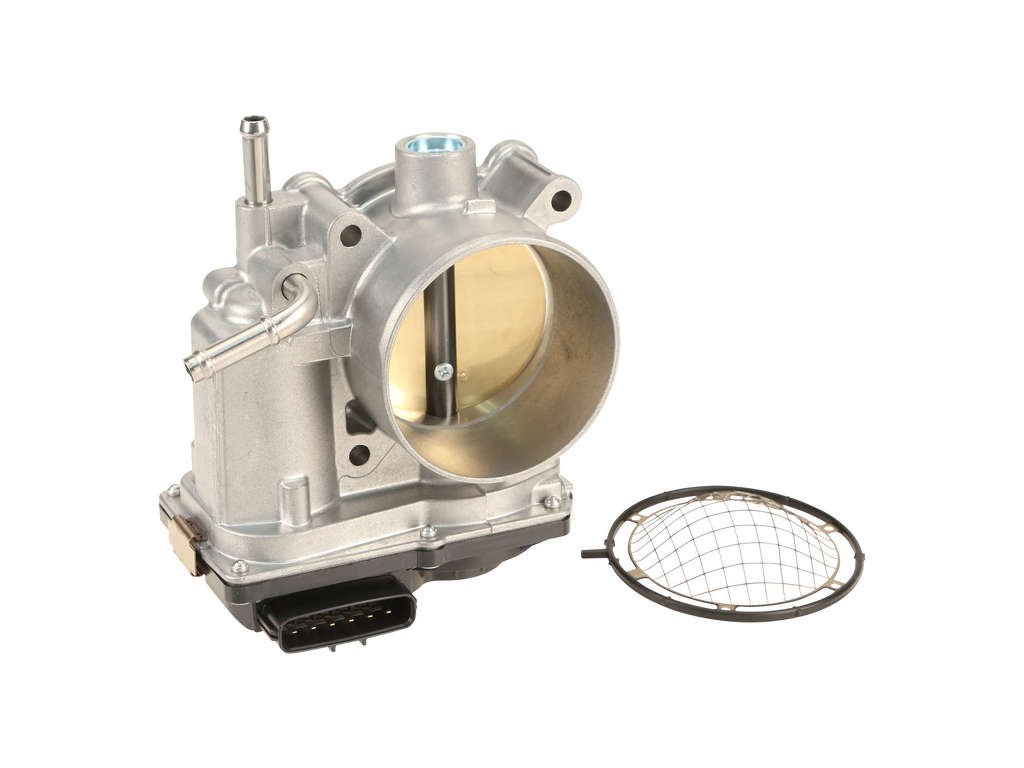
- Throttle Body Assembly (w/ Motor)
(OEM #22030-31030)— This is the primary fix recommended by Toyota's own Technical Service Bulletin (T-SB-0184-09) for a P0505 code on this engine when no vacuum leaks are present.
Trusted brands: Aisin, Denso, Hitachi, Standard Motor Products
OEM price range: $400-$600
Aftermarket price range: $150-$300 - Throttle Body Gasket
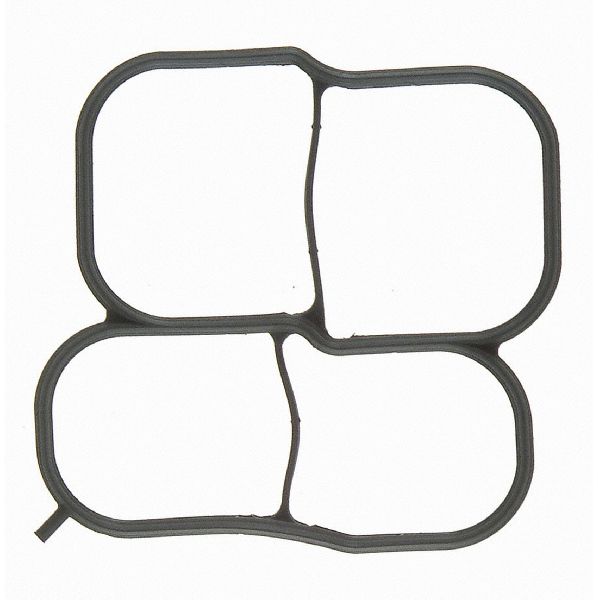
(OEM #22271-0P020)— This gasket must be replaced anytime the throttle body is removed to ensure a proper seal and prevent vacuum leaks.
Trusted brands: Fel-Pro, Mahle, Toyota OE
OEM price range: $10-$20
Aftermarket price range: $5-$10
Technical Service Bulletins (TSBs) & Recalls
- T-SB-0184-09: Addresses a MIL ON condition with DTC P0505 for 2008-2009 Highlanders with the 2GR-FE engine. Recommends inspecting for vacuum leaks and, if none are found, replacing the throttle body assembly.
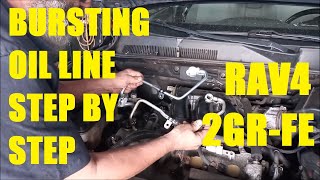
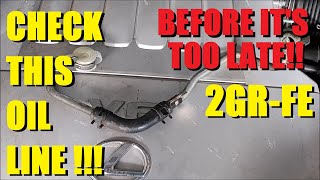
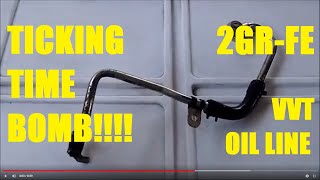
- LSC 90K (Extension of TSB-0047-10): A Limited Service Campaign to replace a rubber VVT-i oil supply hose with an all-metal line to prevent a catastrophic oil leak. This is not related to P0505 but is a critical issue for this engine. 🎬 Watch: How to replace the critical VVT-i oil line step-by-step.
- T-SB-0034-13: Addresses a clunk, pop, or knock noise from the steering column when turning by replacing the intermediate steering shaft. Unrelated to P0505.
Mechanic-Grade Diagnostic Values
- Throttle Control Motor Resistance — expected: 0.3 to 100 Ω at 20°C (68°F). Failure: A reading outside this range indicates a faulty motor coil within the throttle body assembly.
- Scan Tool Live Data: 'THROTTLE POS' — expected: 60% or more. Failure: If the value is less than 60% when the accelerator pedal is fully depressed, the throttle body assembly may be faulty.
- ECM to Throttle Position Sensor Voltage (VTA1, VTA2) — expected: VTA1: 0.5 - 1.1V (throttle closed) to 3.2 - 4.8V (throttle open). VTA2: 2.1 - 3.1V (throttle closed) to 4.8 - 5.0V (throttle open).. Failure: Voltages that are stuck, out of range, or do not change smoothly when the throttle is moved indicate a sensor or wiring fault.
- ECM to Throttle Motor Voltage (M+, M-) — expected: Pulsating DC voltage when throttle is commanded to move.. Failure: No voltage when the pedal is pressed, or constant voltage with no motor sound, suggests a wiring or ECM driver issue.
Scan Tool Commands That Help
- Toyota Techstream: Data List > Powertrain / Engine and ECT / THROTTLE POS — Used during diagnosis to verify that the throttle position sensor is reporting the correct opening percentage as the accelerator pedal is depressed. A reading below 60% at full depression indicates a fault.
- Toyota Techstream: Clear DTCs — This is a required step in the idle relearn/initialization procedure after the throttle body has been cleaned or replaced.
- Manual Procedure: Throttle Body Initialization (Idle Relearn) — Required after cleaning, replacing, or disconnecting the throttle body. Disconnect the EFI MAIN and ETCS fuses for at least 60 seconds, reconnect them, turn the ignition ON (without touching the accelerator), then use a scan tool to clear DTCs.
Wiring & Ground Locations
- Engine Harness Ground (Head) — On the side of the front cylinder head, located down underneath the throttle body assembly.. A poor ground at this location can cause erratic sensor readings and incorrect operation of the electronic throttle control system, mimicking a faulty throttle body.
- Engine Harness Ground (Valve Cover) — There are two ground straps from the valve covers to the frame, typically near the strut towers.. These are main engine grounds; corrosion or a loose connection can cause a host of electrical issues, including problems with the ETCS that could trigger a P0505.
- Throttle Body Connector — 6-pin connector directly on the electronic throttle body assembly.. This is the single point of connection for both the throttle motor and the dual throttle position sensors. Corrosion or damage to pins for the motor (M+, M-) or sensors (VTA1, VTA2, VC, E2) will cause a P0505 or related codes.
OEM Part Supersession History
22030-31030→22030-0P050— Part revision or manufacturer change. Both part numbers are often listed for the same application.
Diagnostic Flowchart
Other Known Issues on This Vehicle
Issues unrelated to this code that are worth knowing about as an owner of this generation:
- VVT-i Oil Line Rupture 🔴 High — Common on 2005-2010 models with the original rubber hose. Failure can occur at any mileage and leads to rapid, catastrophic oil loss and engine seizure. (Ref: LSC 90K (Limited Service Campaign). Toyota issued a campaign to replace the rubber/metal hose (Part No. 15772-31010) with an all-metal line (Part No. 15772-31030).)
- Timing Cover Oil Leak 🟠 Medium — Very common on 2007-2009 models, though it can affect later years. It is a slow leak that becomes a messy and expensive repair, often requiring the engine to be removed.
- Water Pump Failure 🟠 Medium — A known weak point on the 2GR-FE. Leaks often develop from the weep hole. Failure rate increases after 80,000 miles. It is often replaced preventatively during other major services.
- Intermediate Steering Shaft Clunk 🟡 Low — A clunking or popping noise may be heard when turning the steering wheel at low speeds. Not a safety issue, but an annoyance. (Ref: T-SB-0034-13. Toyota released a redesigned intermediate shaft (Part No. 45220-48171) to fix the noise.)
Used vs. New Parts: Buying Guide for This Vehicle
When a used part is the smart pick: A used part is a risky choice for this specific repair. Given that the electronic throttle body is a known high-failure item documented in a Toyota TSB, a used part from a junkyard may have limited remaining life or could be faulty already. A remanufactured OEM unit is a more viable budget-friendly option than a junkyard part.
Donor-vehicle mileage cap: roughly under 50000 miles for the part to have meaningful remaining life.
What to inspect on the donor part:
- Verify the part number on the housing (22030-31030 or 22030-0P050) matches the original.
- Inspect the connector pins for any signs of corrosion, moisture, or damage.
- Check the throttle plate for excessive carbon buildup or scoring on the bore, which might indicate a hard life.
- If possible, get the mileage and history of the donor vehicle.
OEM-only on this vehicle (don't cheap out):
- Electronic Throttle Body Assembly
Aftermarket brands forum-validated for this vehicle:
- Aisin (often the original OEM manufacturer)
- Denso (another primary Toyota OEM supplier)
Brands owners have reported issues with on this vehicle:
- Unbranded, 'white box' parts from online marketplaces. The complex electronics and motor control in the ETCS require precise manufacturing that cheap alternatives often fail to replicate, leading to repeat failures or other drivability issues.
Real Owner Stories
Aggregated from forums and TSBs cited above. Mileages and costs reflect what owners reported in those sources.
2007 Lexus ES350 2GR-FE
Symptoms: The P0505 code returned three times even after replacing the throttle body twice and fixing a disconnected hose.
What fixed it: The owner described a complex diagnosis involving multiple throttle body replacements and addressing vacuum leaks, highlighting that the code can persist if all induction leaks aren't resolved.
Source hint: Reddit r/AskMechanics
2007-2012 Lexus ES350 (Platform Mate)
Symptoms: Idle control issues and a P0505 code appearing after recent engine work was performed.
What fixed it: Checking for vacuum leaks in the intake system that may have been disturbed during service.
Source hint: ClubLexus Forums
Toyota Tundra Owner Report
Symptoms: After the vehicle was started, the check engine light appeared and registered a code of P0505.
What fixed it: NHTSA ODI #10108854 describes the vehicle being checked and identifying the idle control system as the possible cause.
Source hint: NHTSA ODI #10108854
Related OBD-II Codes
Frequently Asked Questions
Does Toyota TSB T-SB-0184-09 apply to my 2008 Highlander with the 3.5L V6?
Can I just clean the throttle body on my 2GR-FE engine to fix the P0505 code?
Is there a specific hose I should check for vacuum leaks on my Highlander?
What is the recommended replacement part if my throttle body is faulty?
Are there any other critical engine issues I should be aware of on my 2005-2010 Highlander?
Why does my Highlander feel like it wants to jump forward at a stop light?
Helpful Videos

Used OEM Parts in Stock
New Aftermarket Parts Available


The information in this article is provided for general reference and educational purposes only. Vehicle specifications, procedures, and part compatibility can vary by production date, trim level, and region. Always consult your vehicle's factory service manual and verify part numbers before purchasing or performing repairs. Safety-critical components such as airbags, seat belts, and braking systems should be installed by a qualified professional.
- Toyota Highlander:
- 🧭 Diagnostic Flowchart
- 🎬 Helpful Videos
- 🛍️ Shop This Part
- What's Unique About the 2005-2010 Toyota Highlander
- Symptoms You May Notice
- Most Likely Causes
- Rare But Worth Checking
- Diagnosis Steps
- Parts You'll Likely Need
- Technical Service Bulletins (TSBs) & Recalls
- Mechanic-Grade Diagnostic Values
- Scan Tool Commands That Help
- Wiring & Ground Locations
- OEM Part Supersession History
- Other Known Issues on This Vehicle
- Used vs. New Parts: Buying Guide for This Vehicle
- Real Owner Stories
- 2007 Lexus ES350 2GR-FE
- 2007-2012 Lexus ES350 (Platform Mate)
- Toyota Tundra Owner Report
- Related OBD-II Codes
- Frequently Asked Questions
- 🎟️ Get 5% Off