

P0505 on 2005-2012 Toyota RAV4 3.5L V6: Idle Control System Malfunction Causes and Fixes
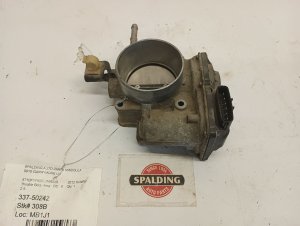
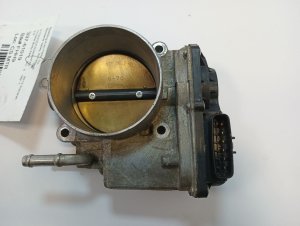
On a 2005-2012 RAV4 with the 3.5L V6, code P0505 is most often caused by a failing electronic throttle body assembly, especially on 2006-2009 models. After checking for vacuum leaks (especially the PCV hose), expect to replace the entire throttle body for around $200-$400 for the part. The updated OEM part number is 22030-31030.
- P0505 on this V6 RAV4 points to a problem with the electronic throttle body
What's Unique About the 2005-2012 Toyota RAV4
For the 2GR-FE engine in this RAV4, the key difference is the absence of a separate Idle Air Control (IAC) valve, a common failure point on older Toyota engines. Idle control is managed entirely by the electronic throttle body. Toyota issued a Technical Service Bulletin (T-SB-0184-09) for early production models (2006-2009) because of a higher-than-normal failure rate of the throttle body assembly, making it the most likely culprit for this specific code on this platform. This issue is not unique to the RAV4 and affects numerous other Toyota and Lexus models using the same 2GR-FE V6 engine.
Symptoms You May Notice
- Check Engine Light is on
- Engine stalls when coming to a stop or at idle
- Idle speed is erratically high or low
- Rough or fluctuating idle
- Difficulty starting the engine
- Engine hesitates or surges when accelerating from a stop
- Replacing a separate Idle Air Control (IAC) Valve. This engine does not have one; the function is built into the electronic throttle body. Any attempt to locate or replace a standalone IAC valve is incorrect for the 2GR-FE engine.
Most Likely Causes
- Faulty Electronic Throttle Body Assembly 🔴 High Probability → Shop Fuel Injection Throttle Body A known issue acknowledged by Toyota TSB T-SB-0184-09 for 2006-2009 models, indicating a design or manufacturing flaw in the original part. The internal motor or position sensor fails over time, preventing the throttle plate from maintaining the correct idle position.
How to confirm: After confirming no vacuum leaks, this is the most likely cause. A scan tool may show the actual idle RPM significantly deviating from the target RPM. Visually inspect the throttle plate for heavy carbon buildup that could impede movement. A worn internal throttle body shaft can also cause an air leak that a smoke test may not detect.
Typical fix: Replace the entire throttle body assembly and the corresponding gasket. The Aisin brand is the original equipment manufacturer and is highly recommended. After replacement, clear the ECM memory by disconnecting the battery for several minutes to allow for a new idle learn procedure.
Est. part cost: $200-$450 - Vacuum Leak 🟡 Medium Probability The PCV hose on the 2GR-FE engine is known to become hard, brittle, and crack over time due to engine heat, creating a common source for a vacuum leak. In some instances, as noted in NHTSA ODI #11703613, the P0505 code may appear alongside evaporative emission system leaks (P0441) and lean conditions (P0171/P0174), suggesting a broader intake or vacuum system compromise.
How to confirm: Visually inspect all air intake hoses, the air duct, and especially the PCV hose for cracks, loose connections, or deterioration. A smoke test is the most effective method to find small, hard-to-see leaks in the intake system. Spraying soapy water or a small amount of carburetor cleaner near suspected leak points while the engine is running can also help; a change in engine idle indicates a leak.
Typical fix: Replace the cracked or leaking hose. Ensure all clamps are secure.
Est. part cost: $15-$75 - Heavy Carbon Buildup in Throttle Body ⚪ Low Probability → Shop Fuel Injection Throttle Body
How to confirm: Remove the air intake duct from the throttle body and visually inspect the throttle bore and plate for a thick layer of black carbon. This buildup can cause the throttle plate to stick or not close properly.
Typical fix: Clean the throttle body thoroughly with a dedicated throttle body cleaner and a soft brush or rag. Be careful not to damage the electronic components or the special coating on the throttle plate. While cleaning can sometimes resolve the issue, if the code returns, the throttle body itself is likely faulty internally.
Est. part cost: $10-$20
Rare But Worth Checking
- Obstructed Accelerator Pedal: Toyota service manuals note that a floor mat bunched up under the accelerator pedal can prevent it from fully returning to the idle position, which can trigger a P0505 code. Always check for this simple obstruction first.
- Faulty Engine Control Module (ECM): → Shop Engine Control Module (ECM) This is extremely rare. The ECM should only be considered after all other possibilities, including the throttle body, vacuum leaks, and wiring, have been definitively ruled out.
- Fuel System Performance Issues: While less common, NHTSA ODI #11667285 describes a scenario where P0505 was stored alongside P117B (Fuel Performance/Direct Injector) and P0171, indicating that fuel delivery issues can sometimes correlate with idle control faults.
Diagnosis Steps
- Use an OBD-II scanner to confirm P0505 is the only code present. If other codes exist, diagnose them first.
- Check the driver's side floor mat to ensure it is not interfering with the accelerator pedal.
- Visually inspect the air intake system, including the large air duct and all vacuum lines. Pay close attention to the PCV hose that connects to the valve cover, as it is a common failure point.
- For a definitive check, perform a smoke test on the intake system to identify any vacuum leaks that are not visually apparent.
- If no vacuum leaks are found, remove the intake duct from the throttle body. Inspect the throttle bore and plate for heavy carbon buildup. Clean if necessary, using a throttle-body-safe cleaner.
- If the code persists after cleaning and confirming no vacuum leaks, the electronic throttle body assembly is the most likely cause and should be replaced per TSB T-SB-0184-09.
- After replacement, disconnect the negative battery terminal for at least 90 seconds to clear the ECM's learned values and force a new idle relearn.
- Start the engine, allow it to reach operating temperature without touching the accelerator, and let it idle for several minutes to complete the relearn process. Test drive to verify the repair.
Parts You'll Likely Need
- Throttle Body Assembly
(OEM #22030-31030)— This is the most common failure for code P0505 on this engine, as documented in Toyota TSB T-SB-0184-09. The original, failure-prone part number was 22030-0P050, which was superseded by 22030-31030.
Trusted brands: Toyota (OEM), Aisin (OEM Supplier), Hitachi, Dorman
OEM price range: $350-$500
Aftermarket price range: $150-$300 - Throttle Body Gasket
(OEM #22271-0P020)— This gasket must be replaced any time the throttle body is removed to ensure a proper seal and prevent vacuum leaks. It is not always included with a new throttle body.
Trusted brands: Toyota (OEM), Fel-Pro, Mahle
OEM price range: $10-$20
Aftermarket price range: $5-$15
Technical Service Bulletins (TSBs) & Recalls
- T-SB-0184-09 (USA): Addresses a MIL 'ON' condition with DTC P0505 on 2006-2009 RAV4s (and other 2GR-FE models). The procedure is to inspect for vacuum leaks and, if none are found, replace the throttle body assembly with the updated part number.
Platform-Specific Known Issues
- Early production 2006-2009 RAV4 models with the 2GR-FE engine are particularly prone to this code due to a faulty original throttle body, as identified in Toyota TSB T-SB-0184-09.
Mechanic-Grade Diagnostic Values
- Throttle Body Motor Resistance — expected: 0.3 to 100 Ω at 20°C (68°F) between terminals M- and M+. Failure: A reading outside this range indicates a fault in the throttle motor.
- Accelerator Pedal Position Sensor #1 (VPA) Voltage — expected: 0.5V - 1.1V with pedal released; 2.5V - 4.5V with pedal fully depressed.. Failure: Voltage outside of these ranges, or that doesn't change smoothly with pedal movement, indicates a faulty APP sensor.
- Accelerator Pedal Position Sensor #2 (VPA2) Voltage — expected: 1.2V - 2.0V with pedal released; 3.4V - 5.0V with pedal fully depressed.. Failure: Voltage outside of these ranges, or that doesn't correlate with the VPA signal, indicates a faulty APP sensor.
- Freeze Frame Data Analysis — expected: N/A. Failure: Reviewing the freeze frame data is critical. It shows engine conditions (coolant temp, RPM, vehicle speed) when the P0505 fault was triggered, helping to isolate the conditions that cause the idle deviation.
Scan Tool Commands That Help
- Toyota Techstream: Active Test: Control the Throttle Opening Angle — Allows a technician to command the throttle motor to open to specific angles while the engine is off (key on). This directly tests the functionality of the throttle motor and position sensors, verifying if the throttle body responds to ECM commands.
- Toyota Techstream: Data List Monitoring — Used to simultaneously monitor 'Target Idle Speed' and 'Engine Speed'. A large, persistent discrepancy between these two values confirms the condition that sets the P0505 code.
- Toyota Techstream: Utility: Reset Memory — After replacing the throttle body, this function can be used to clear the old idle learn values from the ECM. While disconnecting the battery also works on this model year, using the scan tool is the professional procedure.
Wiring & Ground Locations
- Throttle Body Connector (B26) — On the electronic throttle body assembly, located at the rear of the engine attached to the intake manifold.. This 6-pin connector provides power and signal lines for the throttle motor (M+, M-) and the dual throttle position sensors (VTA1, VTA2, VC, E2). Corrosion or damage here can directly cause P0505.
- Engine Ground (Valve Cover to Chassis) — There are two primary engine-to-chassis grounds on the 2GR-FE. They are wires running from bolts on top of each valve cover to points on the chassis frame near the strut towers.. A poor ground connection can cause erratic voltage readings from sensors, including the throttle position sensor, leading the ECM to misinterpret data and potentially set a P0505 code.
- Engine Harness Ground — A main engine harness ground point is located on a boss on the side of the front cylinder head, underneath the throttle body assembly.. This is a critical ground for the engine harness. A loose or corroded connection here can affect multiple engine management systems and cause spurious trouble codes.
"I Checked Everything" — The Actual Cause
- In some cases, a vehicle can pass a smoke test (indicating no external vacuum leaks) but still have a P0505 code caused by the throttle body. This can happen when the shaft for the internal throttle butterfly valve becomes worn. This wear creates a small, unmetered air leak past the throttle plate itself that a smoke test of the intake manifold and hoses will not reveal.
OEM Part Supersession History
22030-0P050→22030-31030— The original part had a high failure rate as noted in TSB T-SB-0184-09. The updated design is more robust.
Heads up: The updated part (22030-31030) eliminates a lower vacuum/drain port. When installing the new part, the corresponding port on the intake manifold must be capped with a 7/32" vacuum boot to prevent a vacuum leak.
Model Year Variations Within This Range
- 2006-2009: These model years are specifically called out in TSB T-SB-0184-09 as being prone to throttle body failure, making it the highest probability cause for P0505.
- 2011-2012: These models received a minor facelift based on the Toyota Vanguard styling, but the 2GR-FE engine and its idle control system remained fundamentally the same. They are less likely to have the original failure-prone throttle body.
Diagnostic Flowchart
Other Known Issues on This Vehicle
Issues unrelated to this code that are worth knowing about as an owner of this generation:
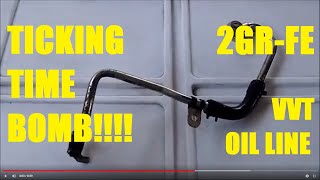
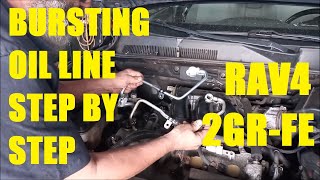
- VVT-i Oil Line Rupture 🔴 High — Common on early production models (approx. 2005-2009) with the original rubber hose. Can fail at any mileage, leading to rapid oil loss and catastrophic engine failure if not shut down immediately. (Ref: Toyota Limited Service Campaign (LSC) to replace the rubber hose with an all-metal line (part 15772-31030).)
- Premature Water Pump Failure 🟠 Medium — Known to fail earlier than expected, sometimes around 60,000-100,000 miles. Symptoms include coolant leaks from the front of the engine, overheating, or a grinding/whining noise.
- Steering Intermediate Shaft Clunk 🟡 Low — A clunking or popping noise may be heard from the steering column when turning. It is caused by a worn intermediate steering shaft. While not a safety-critical failure, it is a common and annoying noise.
- Rear Suspension Arm Corrosion 🔴 High — Affects 2006-2011 models. Improperly tightened lock nuts could allow water intrusion, leading to corrosion and potential failure of the rear suspension arm, causing a loss of vehicle control. (Ref: Toyota Safety Recall (multiple issued) to replace the rear suspension arms and apply sealant.)
Used vs. New Parts: Buying Guide for This Vehicle
When a used part is the smart pick: A used throttle body can be a cost-effective option, but it is risky for this specific repair due to the known high failure rate of the original part on 2006-2009 models. It only makes sense if the used part can be verified as the updated OEM part number (22030-31030) or if it is sourced from a low-mileage 2010-2012 donor vehicle.
Donor-vehicle mileage cap: roughly under 75000 miles for the part to have meaningful remaining life.
What to inspect on the donor part:
- Verify the part number is the updated 22030-31030.
- Inspect the throttle plate for deep scoring or signs of physical damage.
- Check the electrical connector pins for any corrosion or damage.
- Ask for the mileage of the donor vehicle if possible; lower is always better.
- Ensure a warranty or return period is offered by the seller.
OEM-only on this vehicle (don't cheap out):
- Electronic Throttle Body: Due to the TSB and the critical nature of this part for idle control, using a new OEM (Toyota) or OEM-supplier (Aisin) part is very strongly recommended over aftermarket or unverified used parts.
Aftermarket brands forum-validated for this vehicle:
- Aisin (This is the Original Equipment Manufacturer and is equivalent to Toyota OEM quality.)
Brands owners have reported issues with on this vehicle:
- Unbranded or 'white-box' parts from online marketplaces should be avoided, as their internal electronics and motor quality can be inconsistent, leading to a quick return of the P0505 code.
Real Owner Stories
Aggregated from forums and TSBs cited above. Mileages and costs reflect what owners reported in those sources.
2008 Toyota RAV4 2GR-FE 3.5L V6
Symptoms: The owner experienced an erratic idle and the Check Engine Light was on with code P0505. Initial advice suggested checking for vacuum leaks around the throttle body and cleaning carbon buildup.
What fixed it: Cleaning carbon buildup was the recommended initial step, though the TSB indicates replacement is often necessary if the internal motor fails.
Source hint: MechanicAdvice on Reddit - '2008 Rav4 4cyl code P0505'
2006-2009 Toyota RAV4 2GR-FE 3.5L V6
Symptoms: MIL 'ON' condition with DTC P0505; the throttle plate fails to maintain the correct idle position due to an internal motor or position sensor failure.
What fixed it: Inspect for vacuum leaks; if none are found, replace the throttle body assembly with the updated part number and clear ECM memory.
Source hint: T-SB-0184-09 (USA)
Toyota Owner Report
Symptoms: An owner reported that after starting the vehicle, the check engine light appeared and registered a code of P0505 for a possible idle control system fault.
Source hint: NHTSA ODI #10108854
Toyota Owner Report
Symptoms: A technician provided a diagnostic test showing code P0505 (Stored and Pending Idle Control System) alongside P0171 (System Too Lean Bank 1) and P117B (Fuel Performance/Direct Injector).
Source hint: NHTSA ODI #11667285
Toyota Owner Report
Symptoms: An owner noted the car was not performing properly and used a scanner to find multiple codes including P0171, P0505, P117B, P0441, and P0455, while also hearing fuel pump noise.
Source hint: NHTSA ODI #11331260
Related OBD-II Codes
Frequently Asked Questions
Does Toyota TSB T-SB-0184-09 apply to my 2008 RAV4 with the V6 engine?
What brand of replacement throttle body should I use for my RAV4 3.5L V6?
Can I just clean the carbon buildup to fix the P0505 code on my 2GR-FE engine?
Is there a specific vacuum hose I should check on my RAV4 V6 for this code?
How do I reset the idle after replacing the throttle body on my 2007 RAV4?
Could my floor mat be causing the P0505 idle control code?
Helpful Videos
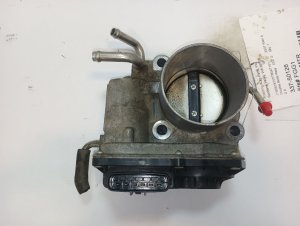
We Have This Part in Stock

The information in this article is provided for general reference and educational purposes only. Vehicle specifications, procedures, and part compatibility can vary by production date, trim level, and region. Always consult your vehicle's factory service manual and verify part numbers before purchasing or performing repairs. Safety-critical components such as airbags, seat belts, and braking systems should be installed by a qualified professional.
- Toyota RAV4:
- 🧭 Diagnostic Flowchart
- 🎬 Helpful Videos
- 🛍️ Shop This Part
- What's Unique About the 2005-2012 Toyota RAV4
- Symptoms You May Notice
- Most Likely Causes
- Rare But Worth Checking
- Diagnosis Steps
- Parts You'll Likely Need
- Technical Service Bulletins (TSBs) & Recalls
- Platform-Specific Known Issues
- Mechanic-Grade Diagnostic Values
- Scan Tool Commands That Help
- Wiring & Ground Locations
- "I Checked Everything" — The Actual Cause
- OEM Part Supersession History
- Model Year Variations Within This Range
- Other Known Issues on This Vehicle
- Used vs. New Parts: Buying Guide for This Vehicle
- Real Owner Stories
- 2008 Toyota RAV4 2GR-FE 3.5L V6
- 2006-2009 Toyota RAV4 2GR-FE 3.5L V6
- Toyota Owner Report
- Toyota Owner Report
- Toyota Owner Report
- Related OBD-II Codes
- Frequently Asked Questions
- 🎟️ Get 5% Off