

P0506 on 2016-2021 Chevrolet Camaro: Low Idle Causes and Fixes
P0506 means the engine idle speed is too low. On the 2016-2021 Camaro, this can be a simple fix like cleaning the throttle body, but it can also indicate a serious internal engine problem like a broken valve spring, which is a known issue. Diagnosis is key before buying parts.
- P0506 on a 2016-2021 Camaro means the idle is too low.
- While a dirty throttle body is a possible cause, a broken valve spring is a significant and documented concern for this specific car.
- The presence of other codes like P0300 (misfire) or P0106 (MAP sensor) strongly points towards the valve spring issue.
- Do not ignore this code. Stalling is a safety risk, and a broken valve spring can lead to major engine damage if not addressed promptly.
- Professional diagnosis is highly recommended to differentiate between a simple cleaning and a more complex mechanical repair.
What's Unique About the 2016-2021 Chevrolet CAMARO
While P0506 is a generic code, its implications for the 6th generation Camaro, particularly V8 models, can be more severe than for other vehicles. Numerous Technical Service Bulletins (TSBs) from GM directly link this code to broken valve springs. This issue was especially prevalent in vehicles with 6.2L engines (LT1, LT4, LT2) built between June 1, 2020, and October 7, 2020, due to a bad batch of springs from a supplier. This transforms a common idle issue into a potential major engine repair. Owners should be aware that symptoms like misfires or a ticking/clattering engine noise 🎬 Listen: What a cracked Camaro valve spring sounds like alongside a P0506 code warrant immediate and serious mechanical inspection.
Diagnostic Flowchart
Tap your situation to follow the diagnostic path that matches what you're seeing on this vehicle.
Symptoms You May Notice
- Check Engine Light is on
- Engine idles roughly or vibrates excessively
- Engine speed is noticeably lower than normal at idle (e.g., below 600 RPM)
- Stalling when coming to a stop or when the A/C is turned on
- Engine misfires or unusual engine noise (ticking, clattering) indicating a possible valve spring issue.
- Service Stabilitrak message may appear on the dash along with a flashing check engine light.
- Replacing the throttle body when it only needed cleaning.
- Replacing spark plugs or ignition coils for a rough idle without first checking for the more common causes of P0506.
- Attributing the low idle solely to a vacuum leak or dirty throttle body when a broken valve spring is the true underlying cause, especially if a misfire code (P0300) is also present.
Most Likely Causes
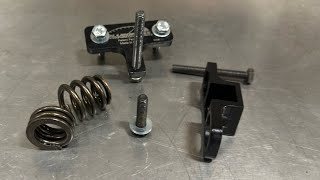
- Broken Valve Spring 🔴 High Probability → Shop Engine Valve Spring GM has issued multiple Technical Service Bulletins (TSBs) for the 2016-2021 Camaro, specifically mentioning P0506 in conjunction with broken valve springs on V8 engines (LT1, LT4). TSB #PIP5752M identifies a bad batch of springs affecting vehicles built from June to October 2020. This is a well-documented failure point.
How to confirm: A technician will need to remove the valve covers to visually inspect the valve springs. A cylinder leakage or compression test on the affected cylinder can also confirm a valve sealing issue, which is a required step per the TSB.
Typical fix: Replace the broken valve spring. Per TSB #PIP5752M, for 6.2L engines in vehicles built between June 1, 2020, and October 7, 2020, all valve springs on both cylinder banks should be replaced even if only one is found broken. For other vehicles, only the affected spring may need replacement.
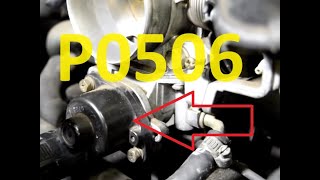
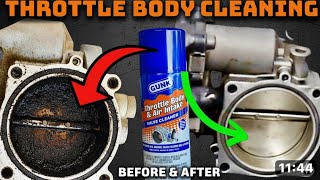
Est. part cost: $15-$30 for a single spring, $200-$450 for a full set of OEM springs. - Dirty Throttle Body 🟡 Medium Probability → Shop Fuel Injection Throttle Body All engines with electronic throttle control can accumulate carbon and oil deposits in the throttle body over time. This buildup restricts the small amount of air needed to maintain a stable idle, causing the RPM to drop.
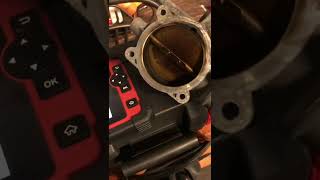
How to confirm: Visually inspect the throttle body bore and plate for black, sticky carbon buildup after removing the air intake tube.
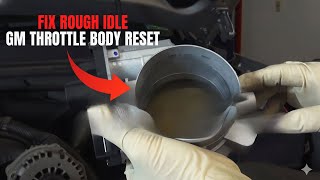
Typical fix: Clean the throttle body plate and bore using a dedicated throttle body cleaner and a soft cloth or brush. A throttle relearn procedure may be needed afterward.
Est. part cost: $5-$15 for a can of cleaner. - Vacuum Leak ⚪ Low Probability
How to confirm: A technician can perform a smoke test, which involves feeding pressurized smoke into the intake system to see where it escapes. Listening for hissing sounds around the intake manifold and vacuum hoses can also sometimes locate a leak.
Typical fix: Replace the cracked hose, failed gasket (e.g., intake manifold gasket), or faulty component (e.g., PCV valve) that is causing the leak.
Est. part cost: $10-$200 depending on the source of the leak.
Rare But Worth Checking
- Faulty PCV Valve: → Shop PCV Valve A Positive Crankcase Ventilation (PCV) valve that is stuck open can create a vacuum leak, leading to idle issues.
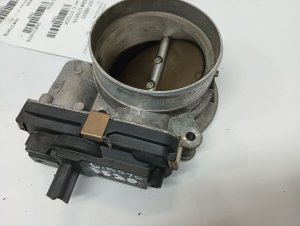
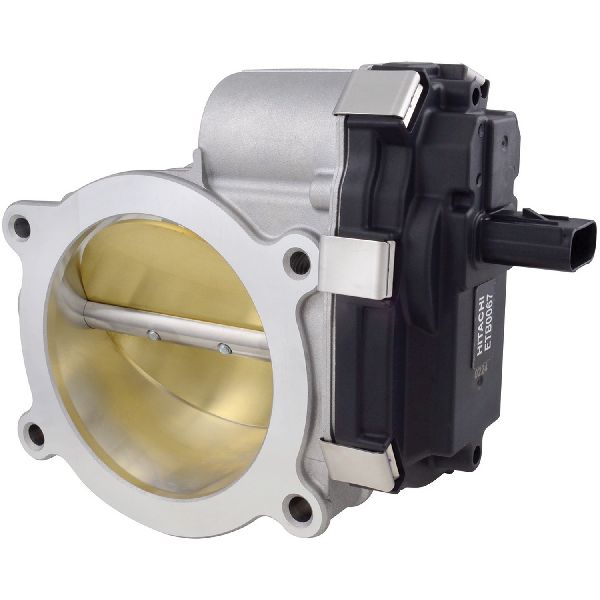
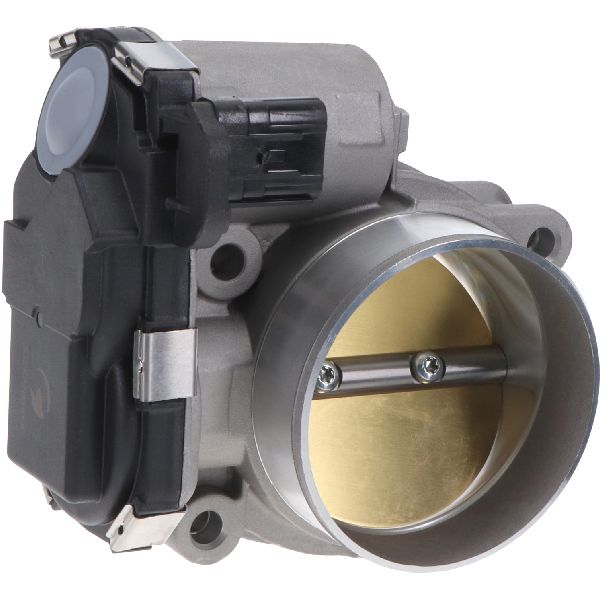
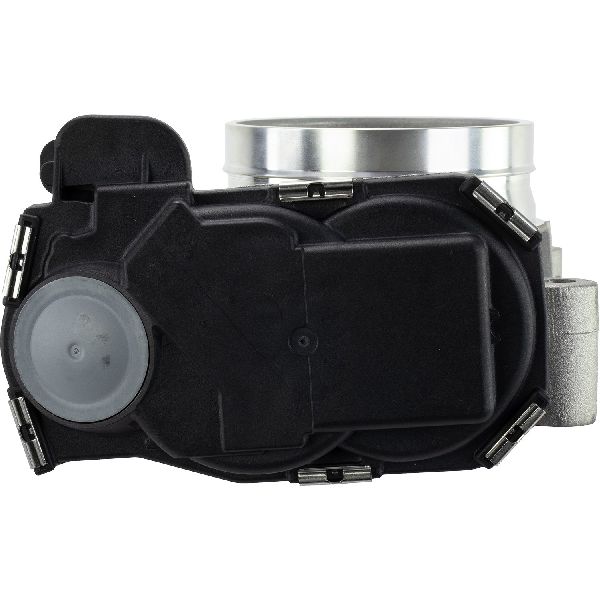
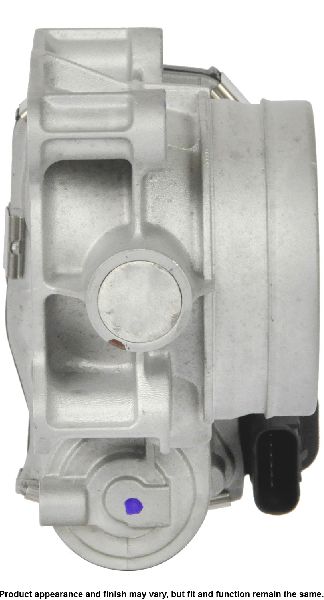
- Failing Electronic Throttle Body: → Shop Fuel Injection Throttle Body The internal motor or position sensor in the electronic throttle body can fail, preventing it from maintaining the correct idle position.
- Improper Aftermarket Camshaft Tune: Installing an aftermarket camshaft without properly adjusting the tune can cause the engine to hunt for idle and dip below the threshold, triggering a P0506 code. Owners on forums report needing tune adjustments to resolve the code after a cam install.
Diagnosis Steps
- Read all stored fault codes with an OBD-II scanner. Note any other codes present, especially P0300 or P0106, as this combination strongly points to a valve spring issue.
- Observe live data on the scanner, focusing on the desired idle RPM vs. the actual idle RPM.
- Inspect the air intake system for any restrictions or loose connections from the air filter to the throttle body.
- Remove the air intake tube and inspect the throttle body for carbon buildup. Clean it thoroughly if it's dirty.
- Perform a throttle relearn procedure if the throttle body was cleaned.
- If the idle is still low and especially if misfire codes (P0300) are present, proceed to a mechanical inspection.
- Listen for unusual engine noises like ticking or clattering that could indicate a valvetrain problem.
- Remove the valve covers to visually inspect all valve springs for breakage. This is a critical step for this specific vehicle and is the primary diagnostic step listed in TSBs #PIP5423B and #PIP5752M.
- If a broken spring is found, perform a cylinder leak-down test on that cylinder to check for further damage (e.g., bent valve, damaged piston) before replacing the spring(s). This is a mandatory step per GM's service bulletins.
- If a broken spring is found, also inspect the intake manifold runner for the affected cylinder for damage or collapse, as instructed in TSB #PIP5423.
Parts You'll Likely Need
- Valve Spring
(OEM #12691120)— A known failure point on this platform that directly causes a P0506 code, as documented in multiple GM service bulletins. This part number is the updated spring for 6.2L engines and replaces previous versions like 12629515.
Trusted brands: ACDelco (GM Genuine)
OEM price range: $15-$30
Aftermarket price range: $10-$20 - Throttle Body Cleaner — The most common and least expensive fix is often cleaning carbon buildup that restricts airflow at idle.
Trusted brands: CRC, Berryman
Aftermarket price range: $5-$15 - Electronic Throttle Body — If cleaning doesn't resolve the issue and the electronics have failed, the entire unit must be replaced.
Trusted brands: ACDelco, Bosch
OEM price range: $250-$400
Aftermarket price range: $150-$250
Related Codes That Often Appear With This One
- P0300 — A random/multiple cylinder misfire code. This is frequently seen with a broken valve spring, as the affected cylinder cannot operate correctly. TSB #PIP5752M explicitly links P0300 with P0506.
- P0106 — Manifold Absolute Pressure (MAP) Sensor Performance. A broken valve spring can cause erratic pressure in the intake manifold, confusing the MAP sensor. TSBs #PIP5752M and #PIP5423B both cite this code alongside P0506.
Technical Service Bulletins (TSBs) & Recalls
- PIP5752M: Links P0506, P0300, and P0106 to a possible valve spring concern, specifying a build date range of June-Oct 2020 for mandatory replacement of all springs on 6.2L engines.
- PIP5423B: Instructs technicians to inspect for a broken valve spring when P0106 and P0506 are present and to check the intake manifold runner for damage.
- PIP5529B / PIP5529A: Lists P0506 among a group of DTCs that can illuminate the malfunction indicator lamp.
Platform-Specific Known Issues
- A known issue with broken valve springs, particularly on 6.2L V8 engines (LT1, LT4), can cause P0506 along with misfires (P0300) and MAP sensor codes (P0106). This is documented in GM TSBs #PIP5752M and #PIP5423B.
- TSB #PIP5752M specifies that 6.2L engines in vehicles built between June 1, 2020 and October 7, 2020 are particularly susceptible due to a bad batch of springs and require all 16 valve springs to be replaced if one fails.
Mechanic-Grade Diagnostic Values
- Throttle Body Opening Angle at Idle — expected: 1-5%. Failure: A higher percentage indicates the ECM is attempting to compensate for an airflow restriction or vacuum leak.
- Mass Air Flow (MAF) Sensor Reading at Idle — expected: 2-5 g/s. Failure: A lower reading can indicate a clogged air filter or restriction in the intake/throttle body.
- Intake Manifold Absolute Pressure (MAP) at Idle — expected: 10-15 psi. Failure: A lower reading suggests a vacuum leak; a higher reading suggests an airflow restriction.
Scan Tool Commands That Help
- GDS2 / Professional Scan Tool (e.g., Autel): Idle Learn Reset / Throttle Learn Reset — This function, typically found in the Engine Control Module's 'Service' or 'Hot Functions' menu, is used to force the ECM to relearn the throttle's idle and closed positions. It is required after cleaning or replacing the throttle body to prevent an unstable or incorrect idle speed.
- No Tool Required: Manual Idle Relearn Procedure — If a professional scan tool is not available, a manual relearn can be performed. After warming the engine, let it idle in Park for 3 minutes, turn the ignition off for 60 seconds, then restart and idle for another 3 minutes. This allows the ECM to learn the new idle values.
Wiring & Ground Locations
- Engine Block to Chassis Ground — A ground cable runs from near the underhood fuse block to the engine block, attaching underneath the passenger side exhaust manifold near the starter.. This ground bolt is reportedly often not fully tightened from the factory and can cause numerous electrical issues, including erratic tachometer behavior and poor sensor readings that could contribute to idle problems. Access is difficult and may require working from underneath the vehicle.
- G103 / Main Engine Ground — Typically located on the left (driver's) side front of the engine block, as part of the main negative battery cable harness.. This is a primary ground for the engine management system. A poor connection here can affect the Engine Control Module (ECM) and its ability to properly control the electronic throttle body and read sensor data.
- Cylinder Head Grounds — Two smaller ground wires are located on the back of the passenger side cylinder head.. These grounds are for various sensors and components on the engine. A loose or corroded connection can cause intermittent sensor faults that may affect idle control.
Real Owner Repair Stories
- Camaro6.com user 'MP3BOOSTED' (2017 Camaro SS 1LE) — P0506 code and hesitation/lag during normal acceleration after installing a TSP VVT-3 aftermarket camshaft.
❌ Tried (didn't work) Initial tuning attempts did not resolve the code.
✅ What actually fixed it The issue was resolved through further ECU tuning. The tuner adjusted the ignition timing, and the owner also lowered the commanded idle speed from 1000 RPM to 850 RPM, which tamed the surging idle and resolved the P0506 code.
"I Checked Everything" — The Actual Cause
- In cases where a smoke test reveals no vacuum leaks and the throttle body is clean, the root cause may be mechanical. A failing Active Fuel Management (AFM) lifter can become stuck or collapsed, causing low compression in a cylinder. This results in a rough, low idle that can trigger P0506, but it would not be detected by a smoke test as it is an internal engine issue, not an unmetered air leak.
OEM Part Supersession History
12629515, 12661339, 12678635→12691120— Updated design to address failures. This is the part number most associated with the TSB repairs for broken valve springs.12691120→12728729— Further revision/latest available version of the OEM valve spring.
Heads up: This is the current replacement for 12691120 and should be used for repairs.
Model Year Variations Within This Range
- 2019-2021: The automatic transmission was upgraded from the 8-speed 8L90 to the 10-speed 10L80 for SS models starting in 2019. V6 models received the 10-speed option in 2020.
- 2019: The front-end styling of the Camaro SS was significantly revised for the 2019 model year, though this does not affect the mechanical causes of P0506.
- 2020-2021: A new 'LT1' trim was introduced, offering the 6.2L V8 engine in a more basic package. Most critically, vehicles with 6.2L engines built between June and October 2020 are subject to TSB #PIP5752M for defective valve springs.
Helpful Videos
Used OEM Parts in Stock
New Aftermarket Parts Available


The information in this article is provided for general reference and educational purposes only. Vehicle specifications, procedures, and part compatibility can vary by production date, trim level, and region. Always consult your vehicle's factory service manual and verify part numbers before purchasing or performing repairs. Safety-critical components such as airbags, seat belts, and braking systems should be installed by a qualified professional.
- Chevrolet CAMARO:
- 🧭 Diagnostic Flowchart
- 🎬 Helpful Videos
- 🛍️ Shop This Part
- What's Unique About the 2016-2021 Chevrolet CAMARO
- Symptoms You May Notice
- Most Likely Causes
- Rare But Worth Checking
- Diagnosis Steps
- Parts You'll Likely Need
- Related Codes That Often Appear With This One
- Technical Service Bulletins (TSBs) & Recalls
- Platform-Specific Known Issues
- Mechanic-Grade Diagnostic Values
- Scan Tool Commands That Help
- Wiring & Ground Locations
- Real Owner Repair Stories
- "I Checked Everything" — The Actual Cause
- OEM Part Supersession History
- Model Year Variations Within This Range
- 🎟️ Get 5% Off