

P0506 on 2014-2021 Chevrolet Corvette: Idle Speed Low Causes and Fixes
On a 2014-2021 Corvette, code P0506 means the engine idle speed is lower than expected. While this can be a simple issue like a dirty throttle body, it is critically important to rule out a known issue with broken valve springs, which is a serious mechanical problem documented in GM Technical Service Bulletins. This issue is especially prevalent in 2020 models built between June and September.
- P0506 on a 2014-2021 Corvette means the idle is too low.
- Do not ignore this code. While it could be a simple dirty throttle body, it is a known symptom of a broken valve spring on this specific car.
- The presence of codes P0300 (misfire) or P0106 (MAP sensor) alongside P0506 dramatically increases the likelihood of a serious mechanical fault.
- Immediate professional diagnosis is recommended to prevent catastrophic engine damage.
- Driving the vehicle with this code is unsafe and risks destroying the engine.
What's Unique About the 2014-2021 Chevrolet CORVETTE
For most cars, a P0506 code points to common issues like a dirty throttle body or a vacuum leak. However, on the C7 (LT1/LT4 engines) and C8 (LT2 engine) generation Corvettes, this code has a more serious potential cause. General Motors has issued Technical Service Bulletins (TSBs) for these vehicles specifically linking P0506 to broken valve springs. This transforms the diagnosis from a simple intake cleaning to a potential internal engine repair, making it crucial to investigate beyond the usual causes, especially if accompanied by codes P0300 (misfire) and P0106 (MAP sensor).
Diagnostic Flowchart
Tap your situation to follow the diagnostic path that matches what you're seeing on this vehicle.
Generation note: This range covers the C7 generation (2014-2019) with LT1 and LT4 engines, and the early C8 generation (2020-2021) with the LT2 engine. Technical Service Bulletins regarding broken valve springs associated with this code have been issued for models in both generations. TSB #PIP5752M specifically calls out a bad batch of valve springs in 2020 models built from June 1, 2020, to September 15, 2020.
Symptoms You May Notice
- Rough or unstable idle
- Engine stalling, especially when stopped
- Check Engine Light is on
- Audible engine noise (ticking, clattering, or a sound like a 'thrown rod') [9, Bulletin #PIP5752M]
- Engine misfiring or running poorly [15, Bulletin #PIP5752M, Bulletin #PIP5423B]
- Reduced engine power mode may activate
- Replacing the throttle body without checking for valve spring damage first. Given the known TSBs, assuming it's just a dirty throttle body can lead to ignoring a much more severe mechanical issue, especially if P0300 or P0106 are also present.
- Replacing the MAP sensor when P0106 is present, without first investigating the root cause. A broken valve spring can cause the MAP sensor code, but the sensor itself is not the fault.
Most Likely Causes
- Broken Valve Spring 🔴 High Probability → Shop Engine Valve Spring GM has issued multiple Technical Service Bulletins (TSBs) for Corvettes (and other LT-powered vehicles) that directly link P0506 to broken valve springs. TSB #PIP5752M and #PIP5423B both cite this as a primary cause to investigate when P0506 appears, often alongside codes P0300 and P0106. Forum discussions are filled with owner experiences confirming this failure on both C7 and C8 models.
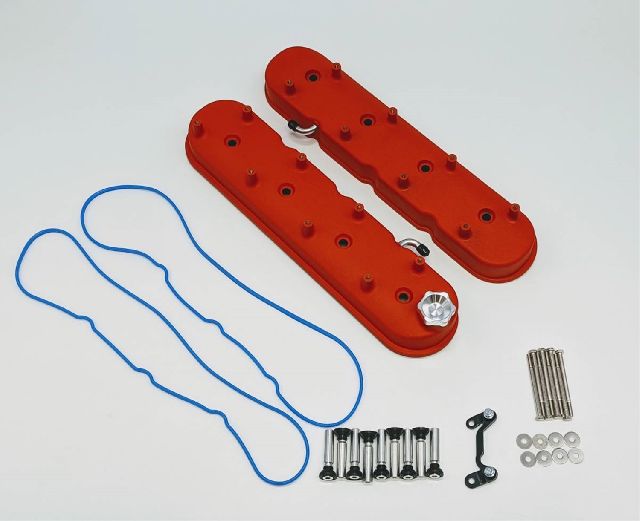
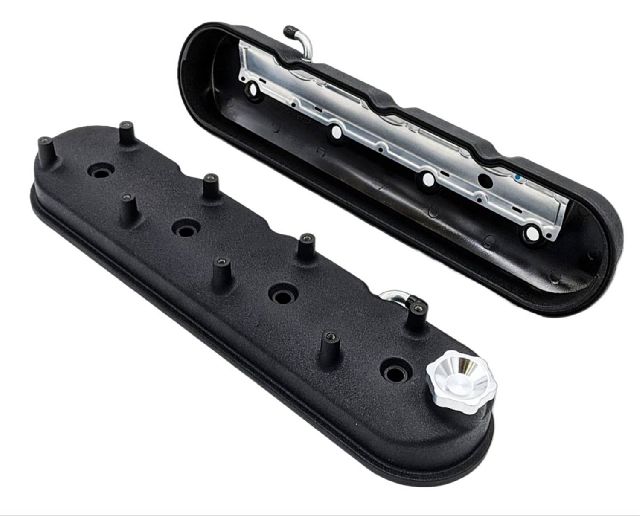
How to confirm: A physical inspection is required. This involves removing the valve covers to visually check for broken springs. A loose or wobbly rocker arm is a clear indicator of a broken spring underneath. A cylinder leak-down test is also mandated by the TSB to check for further internal engine damage (e.g., bent valves) before proceeding with repair.
Typical fix: Replacement of the broken valve spring. Per TSB #PIP5752M, if the vehicle is a 2020 model with a 6.2L engine (LT1, LT2, LT4, L87) built between June 1, 2020, and September 15, 2020, all valve springs on both cylinder banks must be replaced, even if only one is found broken. For other instances, replacing only the affected spring may be what a dealer does, but many owners on forums recommend replacing all 16 as a preventative measure, as one failure can be a sign of more to come.
Est. part cost: $10-$30 per spring, $150-$400 for a full set - Dirty or Faulty Electronic Throttle Body 🟡 Medium Probability → Shop Fuel Injection Throttle Body The PCV (Positive Crankcase Ventilation) system can introduce oil vapor and other blow-by gases into the intake manifold. These vapors can condense and mix with dust to form carbon deposits around the throttle plate and bore. This buildup restricts the small amount of air needed to maintain a stable idle, causing the idle speed to drop below the target RPM.
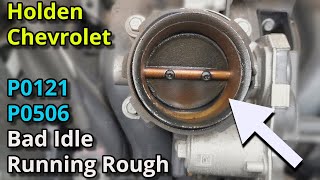
How to confirm: Remove the air intake tube from the throttle body and visually inspect the throttle plate and bore for a black, sticky ring of carbon buildup. The plate should be clean and shiny.
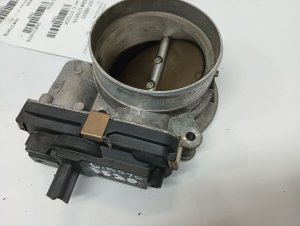
Typical fix: Clean the throttle body thoroughly with a dedicated throttle body cleaner and a soft cloth or brush. Do not spray cleaner directly into the electronics. If cleaning doesn't resolve the issue or if the electronic components have failed, the entire throttle body assembly must be replaced.
Est. part cost: $5-$15 for cleaner, $200-$500 for a new throttle body - Vacuum Leak ⚪ Low Probability While not specific to this platform, vacuum leaks from aged hoses (especially PCV lines), cracked intake components, or faulty gaskets can disrupt the air-fuel mixture and affect idle on any vehicle. However, this is a less common cause for P0506 on this platform compared to the valve spring and throttle body issues.
How to confirm: A smoke test is the most effective method. This involves feeding pressurized, non-flammable smoke into the intake system with the engine off and watching for where it escapes. One can also sometimes find leaks by carefully spraying short bursts of brake cleaner or starter fluid around suspected areas with the engine running and listening for a change in idle speed.
Typical fix: Replace the leaking hose, gasket, or component.
Est. part cost: $10-$150 depending on the source of the leak
Rare But Worth Checking
- Internal Engine Problem: As mentioned in generic code descriptions and confirmed by the valve spring TSBs, P0506 can be an indicator of a mechanical engine fault beyond just the valve springs. If a valve spring has broken and the valve has dropped, further damage to the cylinder head, piston, or cylinder wall could have occurred, requiring extensive engine repair or replacement.
- Incorrect ECM/PCM Software Tune: In at least one documented case, a P0506 on a C7 Corvette was caused by an aftermarket engine tune. The modified software altered idle parameters and disabled oxygen sensors, leading to an unstable low idle that could not be fixed by mechanical repairs. The solution was to re-flash the ECM with the original factory software.
Diagnosis Steps
- Scan the PCM for all stored trouble codes. Note if P0300 or P0106 are present with P0506, as this combination strongly suggests a mechanical valve train issue.
- Listen carefully to the engine at idle for any ticking, clattering, or distinct misfire sounds.
- If engine noise is present or other codes point to a misfire, immediately proceed to inspect the valve train. Remove both valve covers and visually inspect each valve spring for breakage. Check for loose rocker arms.
- If a broken spring is found, perform a cylinder leak-down test on the affected cylinder to check for bent valves or piston damage before replacing the spring(s).
- If no valve spring damage is found, inspect the electronic throttle body for carbon buildup. If dirty, clean it carefully according to manufacturer procedures.
- If the throttle body has been replaced or cleaned, perform an Idle Learn Reset procedure using a compatible scan tool or the manual relearn process.
- Inspect the entire air intake system for restrictions or leaks, from the air filter to the intake manifold.
- Perform a smoke test to definitively check for vacuum leaks from hoses, the PCV system, or intake gaskets.
- Ask the owner if the vehicle has had any recent aftermarket performance tuning. If so, the ECM software may be the cause and may need to be returned to the factory calibration.
- If all else fails, the issue could be a faulty throttle body assembly or, in very rare cases, a problem with the Powertrain Control Module (PCM).
Parts You'll Likely Need
- Valve Spring(s)
(OEM #12691172 (This is a common replacement part number, verify for specific engine LT1/LT2/LT4))— This is a documented weak point on some C7 and C8 Corvettes that directly causes the P0506 code, as per GM TSBs.
Trusted brands: ACDelco
OEM price range: $20-$40 per spring
Aftermarket price range: $10-$30 per spring - Electronic Throttle Body
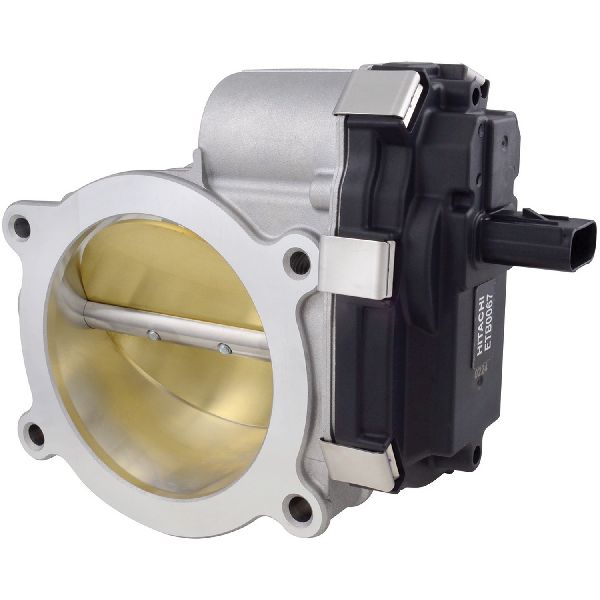
(OEM #12678223)— If not caused by a valve spring, the next most likely cause is a dirty or electronically failed throttle body.
Trusted brands: ACDelco, Bosch, Hitachi
OEM price range: $350-$500
Aftermarket price range: $150-$400 - Valve Cover Gaskets
(OEM #12619787)— These must be replaced anytime the valve covers are removed to inspect the valve springs to prevent oil leaks.
Trusted brands: ACDelco, Fel-Pro
OEM price range: $50-$80 per set
Aftermarket price range: $30-$60 per set
Related Codes That Often Appear With This One
- P0300 — Stands for 'Random/Multiple Cylinder Misfire Detected.' A broken valve spring will prevent a valve from closing properly, causing the affected cylinder to misfire. This is a very common companion code and strongly points to the valve spring issue. [15, Bulletin #PIP5752M]
- P0106 — Stands for 'Manifold Absolute Pressure (MAP)/Barometric Pressure Sensor Range/Performance.' A broken valve spring causes erratic pressure pulses in the intake manifold as compression is lost back into the intake. This directly affects the MAP sensor reading, causing this code to be set along with P0506. [17, 22, Bulletin #PIP5752M, Bulletin #PIP5423B]
Technical Service Bulletins (TSBs) & Recalls
- PIP5752M: Links P0506, P0300, and P0106 to a possible valve spring concern on 2020 models with 6.2L engines (LT1, LT2, LT4, L87). Mandates replacement of all valve springs on both banks if the vehicle was built between June 1, 2020, and September 15, 2020.
- PIP5423B: Connects P0506 and P0106 to a broken valve spring, requiring inspection and replacement as needed.
Platform-Specific Known Issues
- A known issue with broken valve springs, particularly from a bad batch affecting 2020 models built between June 1 and Sept 15, can trigger code P0506. This issue often presents with companion codes P0300 and P0106 and is documented by GM in TSBs #PIP5752M and #PIP5423B.
Mechanic-Grade Diagnostic Values
- Engine Idle Speed (Actual vs. Desired) — expected: Target idle is typically 600-900 RPM; should remain stable between 750-1000 RPM.. Failure: Code P0506 may set if actual idle is persistently 100-200 RPM below the desired target, or drops below 750 RPM.
- MAP Sensor Reading at Idle (with misfire) — expected: A healthy engine should have a low kPa reading at idle (e.g., around 30 kPa).. Failure: A reading as high as 65 kPa at idle, especially with a P0300 misfire code, strongly suggests a mechanical issue like a broken valve spring causing loss of vacuum.
- Throttle Position Angle (Indicated vs. Desired) — expected: At idle, both values should be well below 10%. A normal reading is around 5%.. Failure: A significant deviation between indicated and desired angle, or a high percentage at idle, can indicate a throttle body or sensor issue.
- Throttle Body Connector Voltage (Key On, Engine Off) — expected: On a typical 5-wire connector: Pin 1 (Reference Voltage): ~5V. Other pins (Signal/Motor): ~0V.. Failure: Absence of the 5V reference voltage indicates a wiring or PCM issue. Incorrect voltages on other pins can point to a faulty throttle body.
- Stock LT1 Valve Spring Installed Height — expected: 1.900 inches.. Failure: Incorrect installed height can lead to improper spring pressure and valve train instability.
Scan Tool Commands That Help
- GDS2 / Tech 2 or equivalent professional scan tool: Idle Learn Reset — This function must be used after cleaning or replacing the throttle body. It resets the learned idle airflow values. The scan tool will show a 'TB Idle Airflow Compensation' parameter, which should return to 0% after a successful reset.
- GDS2 / Tech 2 or equivalent professional scan tool: Throttle Body Adaptation / Relearn — Used to recalibrate the electronic throttle body's position sensors after service. The tool guides the user through steps to learn the new closed and open throttle positions.
- Any OBD-II Scanner with Live Data: Monitor Live Data (Desired RPM vs. Actual RPM) — During diagnosis, this is the primary data to watch. It confirms if the PCM is commanding a normal idle speed but the engine is failing to achieve it, which is the definition of the P0506 fault.
Wiring & Ground Locations
- G104 — Typically located on the engine block, often at a top bell housing bolt on the driver's side, or near the oil temperature sensor.. This is a primary grounding point for the ECM and multiple engine sensors. A loose or corroded G104 can cause erratic sensor readings and incorrect ECM calculations, potentially leading to idle control problems.
- Throttle Body Connector — On the electronic throttle body at the front of the intake manifold.. This 5-wire connector provides power and signal lines for the throttle motor and position sensors. A poor connection, broken wire, or corrosion here will directly cause idle control faults. Check for the 5V reference signal and solid ground connections at this connector.
- Fuse #17 (in Underhood Fuse Block) — Located in the underhood fuse block.. On some models, this fuse supplies power to the Throttle Actuator Control (TAC) module, which controls the throttle body. If this fuse is blown, the throttle body will be inoperative.
Real Owner Repair Stories
- YouTube video 'P0506-00 FALLA DE RPM DEMASIADO BAJA' (2015 Chevrolet Corvette C7) — P0506 (idle too low), engine stalling, unstable idle. Also caused transmission shifting issues at low speed.
❌ Tried (didn't work) Replacing the electronic throttle body., Performing a throttle body relearn procedure.
✅ What actually fixed it The vehicle had an aftermarket performance tune that altered engine parameters. The fix was to use the GM Service Programming System (SPS) to re-flash the Engine Control Module (ECM) back to the original factory software. After the re-flash, the oxygen sensors began functioning correctly and the idle became stable. - CorvetteForum user post (2020 Chevrolet Corvette C8) — Codes P0106, P0300, and P050D (similar to P0506). Car nearly stalled, ran on few cylinders, bad rotten egg smell.
✅ What actually fixed it The dealership diagnosed and replaced a broken valve spring under warranty. This occurred at 4,600 miles, confirming that the valve spring issue can happen on low-mileage C8s and is a direct cause for this group of codes.
"I Checked Everything" — The Actual Cause
- In a documented case on a C7 Corvette, the P0506 code persisted after replacing the throttle body and presumably checking for vacuum leaks. The actual cause was not a physical leak but an improper aftermarket engine tune. A smoke test would have come back clean, leading a technician to chase mechanical parts when the root cause was software. The fix was to reprogram the ECM to factory specifications.
When the Usual Fixes Don't Work
- While the TSBs heavily point towards broken valve springs as the cause for P0506 when paired with P0300 and P0106, it is not the only possibility. In one documented case on a similar LS3 engine, a driver experienced these codes after an aggressive downshift and over-rev event. A physical inspection revealed the valve springs were intact. The diagnostic data pointed to a very high MAP sensor reading (65 KPA at idle), suggesting a different mechanical or sensor issue was at play. This serves as a reminder to complete the full diagnosis and not to assume the valve spring is the cause without physical inspection.
OEM Part Supersession History
12678635→12691172— GM often updates part numbers to reflect design improvements or supplier changes. Given the known issues with valve springs, later part numbers are likely improved revisions.
Heads up: While physically interchangeable, it is highly recommended to use the latest available part number and to replace all 16 springs as a set, especially on vehicles identified in TSB #PIP5752M.
Model Year Variations Within This Range
- 2020: A specific batch of 2020 Corvettes built between June 1, 2020, and September 15, 2020, are known to have defective valve springs per TSB #PIP5752M. For these vehicles, if one spring is found broken, all 16 must be replaced.
- 2014-2021: The idle relearn procedure may vary slightly depending on the specific throttle body installed (e.g., 'silver blade' vs 'gold blade' types used across the GM family). Always refer to the service manual for the specific model year before performing a manual or scan tool relearn.
Helpful Videos
![How to Clean The Air Intake System on a C5/C6/C7 Corvette [1997-2019]](https://img.youtube.com/vi/GW0azAu17LU/mqdefault.jpg)
Used OEM Parts in Stock
New Aftermarket Parts Available


The information in this article is provided for general reference and educational purposes only. Vehicle specifications, procedures, and part compatibility can vary by production date, trim level, and region. Always consult your vehicle's factory service manual and verify part numbers before purchasing or performing repairs. Safety-critical components such as airbags, seat belts, and braking systems should be installed by a qualified professional.
- Chevrolet CORVETTE:
- 🧭 Diagnostic Flowchart
- 🎬 Helpful Videos
- 🛍️ Shop This Part
- What's Unique About the 2014-2021 Chevrolet CORVETTE
- Symptoms You May Notice
- Most Likely Causes
- Rare But Worth Checking
- Diagnosis Steps
- Parts You'll Likely Need
- Related Codes That Often Appear With This One
- Technical Service Bulletins (TSBs) & Recalls
- Platform-Specific Known Issues
- Mechanic-Grade Diagnostic Values
- Scan Tool Commands That Help
- Wiring & Ground Locations
- Real Owner Repair Stories
- "I Checked Everything" — The Actual Cause
- When the Usual Fixes Don't Work
- OEM Part Supersession History
- Model Year Variations Within This Range
- 🎟️ Get 5% Off