

P0506 on 2011-2016 Chevrolet Cruze 1.4L Turbo: Low Idle Causes and Fixes
On the 2011-2016 Cruze 1.4L Turbo, code P0506 is almost always caused by a complex PCV system failure. A check valve inside the intake manifold fails, which then causes a diaphragm in the valve cover to rupture, creating a large vacuum leak. The correct fix requires replacing both the intake manifold and the valve cover, costing between $150-$300 in parts for a DIY repair. This issue is so common that GM issued a special coverage bulletin (14744C) for it.
- P0506 on a 1.4L Cruze is not a simple fix; it almost always indicates a two-part failure in the PCV system.
- The root cause is a bad check valve inside the intake manifold, which then destroys a diaphragm in the valve cover.
- To fix the problem correctly, you MUST replace both the intake manifold and the valve cover assembly.
- Listen for a hissing noise from the top of the engine and check for strong vacuum at the oil cap—these are tell-tale signs of this specific issue.
- Ignoring this code can lead to stalling in traffic and potentially other engine oil leaks due to excessive crankcase pressure.
What's Unique About the 2011-2016 Chevrolet Cruze
The 1.4L Turbo engine in the first-generation Cruze has a very specific and widespread design issue with its Positive Crankcase Ventilation (PCV) system that directly causes code P0506. A failed check valve inside the intake manifold allows turbo boost pressure to enter the crankcase, which then ruptures a PCV diaphragm built into the valve cover. This sequence of failures creates a significant vacuum leak that the system cannot overcome, leading to a low, rough idle. Unlike many cars where P0506 points to a simple dirty throttle body, on this specific platform, it almost always points to this complex PCV system failure. The issue is identical on platform mates like the Chevy Sonic, Trax, and Buick Encore.
Generation note: The 2011-2016 year range covers the first generation of the Chevrolet Cruze. However, a new second generation was also introduced in 2016. This guide specifically applies to the first-generation models (2011-2015 and first-gen 2016 'Limited' models) equipped with the 1.4L LUJ engine. The second-generation Cruze (2016+) uses a different 1.4L engine (LE2) with a different block and valve cover design.
Symptoms You May Notice
- Engine idle is rough, unstable, or lower than normal
- Engine stalls when coming to a stop or while idling
- A distinct hissing or whistling sound from the top of the engine when running, especially from the PCV port on the valve cover. 🎬 Watch: Identifying the hissing sound and PCV diaphragm failure.
- Check Engine Light is on
- Poor acceleration or hesitation from a stop.
- Service StabiliTrak or Traction Control warnings may appear on the dash.
- Replacing only the valve cover without replacing the intake manifold. The new valve cover diaphragm will quickly fail again if the faulty intake manifold check valve is not also replaced.
- Visually confirming the orange check valve 'nipple' is still in the intake manifold and assuming it's functional. The flap portion of the valve can erode and fail while the center nipple remains in place, making a visual check misleading.
Most Likely Causes
- Failed Intake Manifold Check Valve and Ruptured Valve Cover PCV Diaphragm 🔴 High Probability → Shop Engine Intake Manifold This is a well-documented, widespread design flaw in the 1.4L LUJ/LUV engine's PCV system. The internal intake manifold check valve (a small orange rubber nipple) gets dislodged or deteriorates, allowing boost pressure to destroy the diaphragm in the valve cover, creating a vacuum leak.
How to confirm: With the engine running, listen for a distinct hissing sound from the valve cover. You can often stop the hissing by placing your finger over the small hole on the PCV diaphragm cap, and the idle may smooth out. You can also try to remove the oil filler cap; if a strong vacuum holds it down, the diaphragm is ruptured. A smoke test will show smoke being drawn into the PCV orifice on the valve cover.
Typical fix: Replace both the intake manifold assembly and the valve cover (camshaft cover) assembly. Replacing only the valve cover will result in a repeat failure, as the root cause (bad intake check valve) is not addressed.
Est. part cost: $150-$300 - Dirty or Carbon-Fouled Throttle Body 🟡 Medium Probability → Shop Fuel Injection Throttle Body While often overshadowed by the PCV issue, direct injection engines are prone to carbon buildup. However, on this platform, this is a much less likely cause for P0506 than the PCV failure.
How to confirm: Remove the intake air duct from the throttle body and visually inspect the throttle plate and bore for significant carbon buildup that could restrict airflow when the plate is nearly closed at idle.
Typical fix: Clean the throttle body bore and plate thoroughly with a dedicated throttle body cleaner and a soft brush. An idle relearn procedure may be required after cleaning.
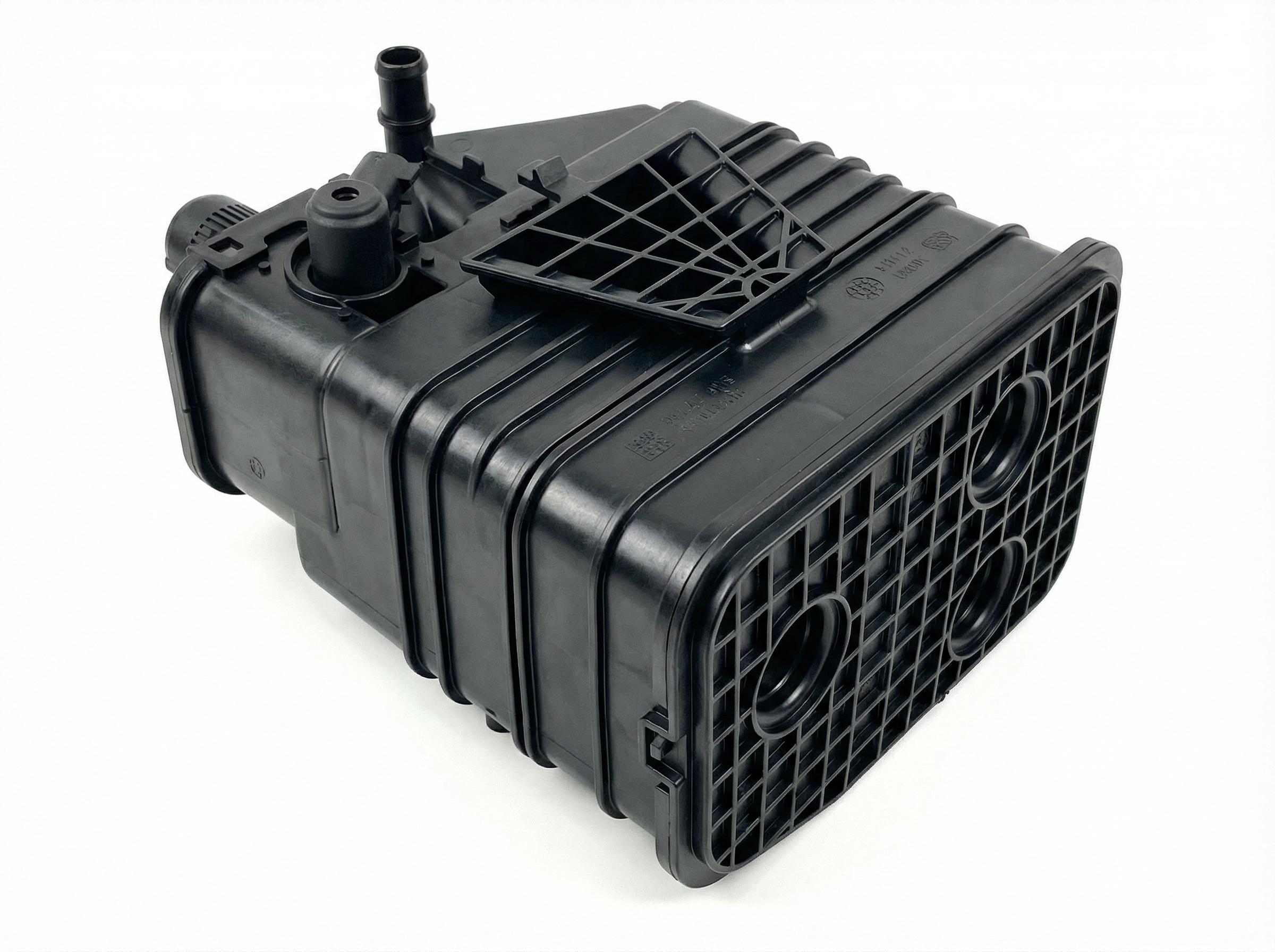
Est. part cost: $5-$15 - Stuck-Open EVAP Purge Solenoid ⚪ Low Probability → Shop Vapor Canister This is a common failure part on many GM vehicles, but less likely to be the primary cause of P0506 compared to the PCV system.
How to confirm: This issue typically sets code P0496. With the engine off, disconnect the purge line from the solenoid and try to blow through it. If air passes through, the valve is stuck open and needs to be replaced.
Typical fix: Replace the EVAP purge solenoid valve.
Est. part cost: $20-$50
Rare But Worth Checking
- Other Vacuum Leaks: While the PCV system is the most common source, leaks can also occur from other sources like cracked hoses (especially the corrugated PCV hose to the turbo) or a failed brake booster. A smoke test is the best way to find other, less obvious leaks. Manufacturer TSB #PIP5651G and TSB #PIP5710A note that a charge air cooler tube becoming disconnected from the throttle body can also cause P0506 along with reduced engine power.
- Failed Main Crank Seal: The excessive crankcase pressure caused by the PCV system failure can force oil past the main crank seal, and in some cases, cause the seal itself to fail. This often presents as a high-pitched chirp or squeal at idle, which may disappear if you pull the oil dipstick. This is typically a consequence of the primary PCV failure, not a root cause of P0506 itself.
Diagnosis Steps
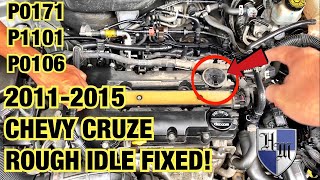
- Scan for all stored trouble codes. Note if P0171, P1101, or other related codes 🎬 See this walkthrough for diagnosing and fixing common PCV codes. are present with P0506. Manufacturer TSB #22-NA-224 indicates that P0506 often sets alongside P0101, P0172, P0299, and P1101 when there is a need for specific engine power repairs.
- With the engine running at idle, listen carefully for a hissing or whistling noise coming from the top of the engine, specifically from the round PCV diaphragm area on the valve cover.
- Perform a simple vacuum check: With the engine idling, try to remove the oil filler cap. If there is a very strong vacuum making it difficult to remove, it confirms a ruptured PCV diaphragm.
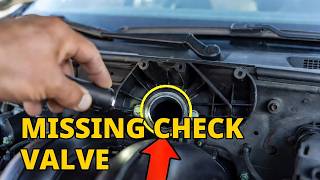
- Confirm the intake manifold's internal check valve has failed. Remove the PCV hose from the port on the intake manifold. Shine a light into the port. You should see a small orange rubber piece. If it is missing, the manifold must be replaced. You can use your phone's video camera with the flash on to see inside the port more easily.
- Important Caveat: Even if the orange nipple is visible, the valve can still be bad. The 'flap' part of the valve can erode away, rendering it useless. Therefore, if the valve cover diaphragm has failed, it is safest to assume the intake manifold check valve is the root cause and replace both.
- If the cause is still not found, perform a smoke test on the intake system to definitively locate the source of the vacuum leak. 🎬 Watch: A simple diagnosis for P0171 and vacuum leak issues. This will confirm a leak at the valve cover or any other hose/gasket.
- Inspect the air intake system between the air filter and the throttle body for any cracks or loose connections.
- Remove the intake duct from the throttle body and inspect for heavy carbon buildup. Clean if necessary.
Parts You'll Likely Need
- Intake Manifold
(OEM #55573171)— The original manifold contains a faulty check valve that fails. The entire manifold must be replaced with an updated design to permanently fix the issue. Aftermarket versions like the Dorman 615-380 are redesigned to prevent the check valve from dislodging.
Trusted brands: ACDelco, Dorman (PN: 615-380)
OEM price range: $200-$250
Aftermarket price range: $100-$150 - Valve Cover (Camshaft Cover)
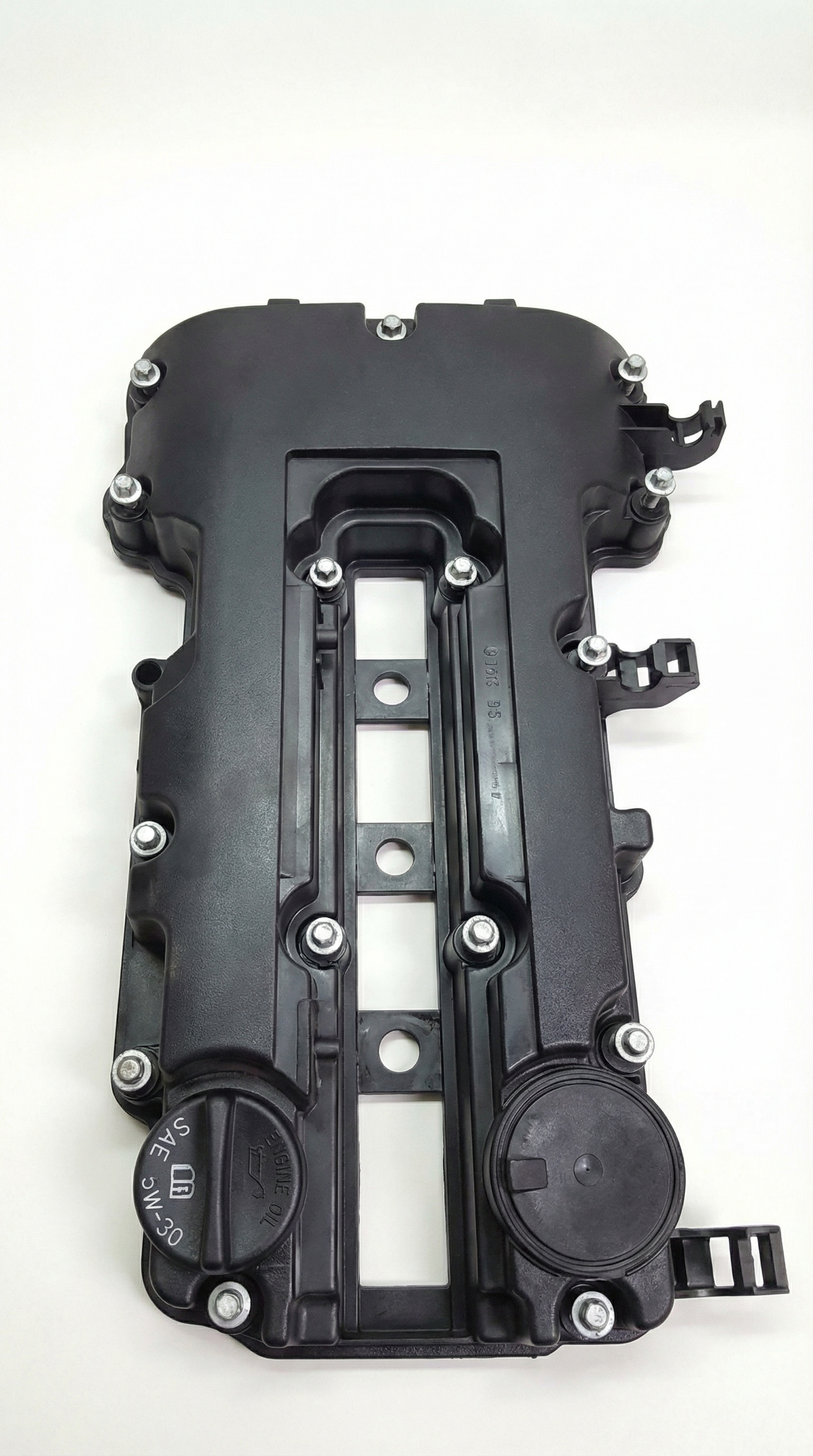
(OEM #25198874 (superseded by 25205393))— The integrated PCV diaphragm ruptures due to over-pressurization from the failed intake manifold check valve, causing a major vacuum leak.
Trusted brands: ACDelco, Dorman
OEM price range: $100-$150
Aftermarket price range: $40-$80 - EVAP Canister Purge Valve
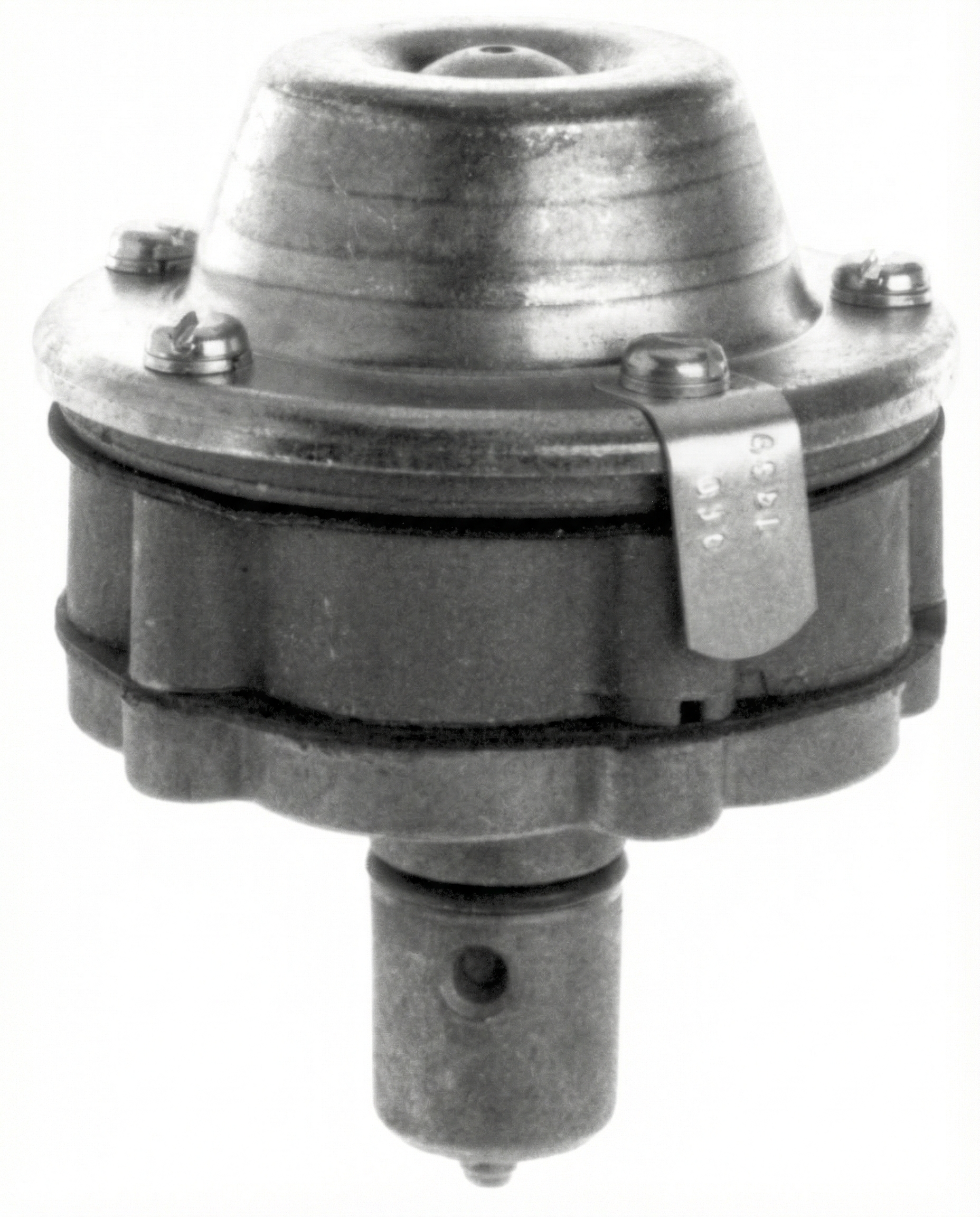
(OEM #55573017)— A less common cause, this valve can stick open, creating a vacuum leak that leads to a rough/low idle.
Trusted brands: Bosch, ACDelco
OEM price range: $40-$60
Aftermarket price range: $20-$40
Related Codes That Often Appear With This One
- P0171 — System Too Lean. The ruptured PCV diaphragm creates a large, unmetered vacuum leak, allowing excess air into the engine that the computer registers as a lean condition.
- P1101 — Intake Airflow System Performance. This code is often set in conjunction with the PCV failure, as the actual airflow detected by the sensors does not match what the computer expects.
- P0299 — Turbocharger Underboost. The same vacuum leaks that cause P0506 can affect the turbo system's ability to build and hold boost pressure.
- P0106 — MAP Sensor Performance. The erratic vacuum signal caused by the PCV leak can lead to implausible readings from the Manifold Absolute Pressure (MAP) sensor.
Technical Service Bulletins (TSBs) & Recalls
- GM Preliminary Information Bulletin PIP5094
- GM Special Coverage 14744C / N202299080
- GM Bulletin #PIP5651G: Notes P0506 can occur if the intake section becomes disconnected from the throttle body.
- GM Bulletin #PIP5710A: Indicates the possibility of the charge air cooler tube becoming disconnected from the throttle body, causing P0506 and reduced power.
- GM Bulletin #22-NA-224: Provides repair procedures for reduced engine power and MIL illumination involving DTC P0506.
Platform-Specific Known Issues
- The primary vehicle-specific issue is the systemic failure of the PCV system, involving a faulty check valve inside the intake manifold that subsequently causes the PCV diaphragm in the valve cover to rupture. This is the number one cause of P0506 on this platform.
- GM issued Special Coverage bulletin 14744C, extending the warranty on the valve cover and intake manifold for this issue to 10 years or 120,000 miles on some vehicles. Owners should check with a dealer to see if their vehicle is covered.
Mechanic-Grade Diagnostic Values
- Crankcase Vacuum at Idle — expected: 11-18 inches of water column (in-wc). Failure: Significantly higher vacuum (strong enough to hold the oil cap down) indicates a ruptured valve cover diaphragm. No vacuum or positive pressure indicates other blockages.
- Short Term Fuel Trim (STFT) on Scan Tool — expected: Close to 0%, typically within +/- 10%. Failure: A high positive value (e.g., over 25-30%) indicates the ECM is adding a large amount of fuel to compensate for unmetered air from a vacuum leak.
- Throttle Position Angle at Idle (Scan Tool) — expected: Greater than 7%. Failure: A value below 7% can indicate a problem that may trigger a P1101 code, often related to the same vacuum leaks that cause P0506.
Scan Tool Commands That Help
- GDS2 / Professional Scan Tool: Throttle Body Idle Airflow Compensation Reset — Must be performed after cleaning or replacing the throttle body, or after fixing a major vacuum leak, to allow the ECM to relearn the correct idle airflow baseline. Failure to do so can cause continued idle issues.
- GDS2 / Professional Scan Tool: Intake System Learned Values Reset — After repairing the PCV system (replacing intake and valve cover), this function clears the old adaptive fuel and airflow values, helping the ECM adapt to the fixed system more quickly.
Wiring & Ground Locations
- G101 — Located at the lower front of the engine, on the engine block.. This is a primary ground for the Engine Control Module (ECM). A poor connection here could cause erratic ECM behavior, potentially affecting its ability to control idle speed.
- G103 — Located on the left front shock tower in the engine compartment.. This ground point serves the underhood fuse block. While not a direct ECM ground, poor connections here can cause various electrical issues.
- G102 — Located at the lower right rear of the engine block.. This ground is for the ignition coil module. A bad ground could contribute to poor spark and a rough idle, confusing the diagnosis.
Real Owner Repair Stories
- YouTube channel Hidalgo Motors (2014 Chevrolet Cruze 1.4L) — Rough idle, Check Engine Light with codes P0171, P1101, and P0106.
❌ Tried (didn't work) The diagnosis immediately pointed to the PCV system, so no other parts were tried first.
✅ What actually fixed it The PCV diaphragm on the valve cover was found to be ruptured (creating suction). Replacing the entire valve cover assembly resolved the codes and the rough idle. The video confirms this is the common failure point for these related codes. - Reddit user in r/cruze (2013 Chevrolet Cruze) — Check Engine Light with P0171, then after a fix, P0171, P1101, and P0507 (high idle, but related to the same fault). Rough idle at stops.
❌ Tried (didn't work) Replacing only the valve cover. The codes returned.
✅ What actually fixed it The user was advised by the community that the root cause was the failed check valve inside the intake manifold, and that replacing only the valve cover is an incomplete repair that will fail again. The correct fix required replacing the intake manifold as well.
Documented NHTSA Reports
- An owner reported in NHTSA ODI #11701612 that the charge-air hose repeatedly blew off the throttle body while driving, causing a sudden loss of power and triggering codes P0506, P0299, P0101, and P1101.
- NHTSA ODI #10822698 describes an instance where a service advisor was able to read error code P0506 even though the check engine light was not illuminated.
OEM Part Supersession History
25198874→25198877, 25205393— The original valve cover design contained a PCV regulator diaphragm prone to rupturing. While not officially stated by GM, subsequent part numbers are presumed to have material or design improvements to increase durability.
Heads up: All listed part numbers (25198874, 55573746, 25198498, 25198877) are generally interchangeable for the Gen 1 1.4L engine, but it is always best to use the latest available revision.
Model Year Variations Within This Range
- 2011-2016 (Gen 1): The primary engine for this generation was the LUJ, later joined by the nearly identical LUV. Both share the same cast-iron block and problematic PCV design.
- 2016+ (Gen 2): The second-generation Cruze (introduced in 2016, sold alongside the Gen 1 'Limited') uses the LE2 engine. The LE2 has an all-aluminum block and a redesigned aluminum valve cover with a different PCV setup, making it not susceptible to this specific intake/valve cover failure mode.
Diagnostic Flowchart
Real Owner Stories
Aggregated from forums and TSBs cited above. Mileages and costs reflect what owners reported in those sources.
Chevrolet Cruze 1.4L Turbo
Symptoms: Found the PCV diaphragm was ruptured and sucking air through the little vent hole during troubleshooting.
What fixed it: Ordered a replacement valve cover, which included a tech note warning to also inspect and replace the intake manifold to prevent a repeat failure of the new part.
Source hint: YouTube comment - G Auto Repair
2013 Chevy Cruze 1.4L Turbo
Symptoms: Vehicle threw codes P0171 and P2096 shortly after purchasing the car.
What fixed it: Community members immediately pointed to the valve cover PCV port as the likely vacuum leak source requiring replacement.
Source hint: Reddit r/MechanicAdvice - 'Hey guys I recently bought a 2013 Chevy Cruze turbo 1.4L engine and I got the codes p0171 and p2096 any advice...'
2015 Chevy Cruze 1.4L Turbo
Symptoms: Engine had a lean code, a missing intake check valve, and a ruptured valve cover diaphragm.
What fixed it: Replaced both the valve cover and the intake manifold under GM's special coverage.
Source hint: YouTube - '2015 Chevy Cruze 1.4 Lean Code = Valve Cover & Intake Manifold'
Gen1 Chevy Cruze 1.4L Turbo
Symptoms: Intake manifold check valve failed, causing PCV issues, even though the orange nipple was still visibly present in the port.
What fixed it: Discovered that the visual check is not foolproof and replaced the intake manifold because the internal flap had failed.
Source hint: Reddit r/ChevyCruze - 'Gen1 1.4L Turbo Intake Manifold check valve testing discovery'
Related OBD-II Codes
Frequently Asked Questions
Is there a warranty extension or recall for the PCV valve cover issue on my 2011-2016 Cruze?
I hear a loud hissing sound from the top of my 1.4L engine. Is this related to P0506?
Can I just replace the valve cover to fix the PCV vacuum leak?
I checked the intake manifold port and the orange rubber nipple is still there. Does that mean my intake manifold is good?
Why is my oil filler cap so hard to remove while the engine is idling?
Does this PCV issue affect other GM vehicles besides the Cruze?
Helpful Videos
Used OEM Parts in Stock
New Aftermarket Parts Available


The information in this article is provided for general reference and educational purposes only. Vehicle specifications, procedures, and part compatibility can vary by production date, trim level, and region. Always consult your vehicle's factory service manual and verify part numbers before purchasing or performing repairs. Safety-critical components such as airbags, seat belts, and braking systems should be installed by a qualified professional.
- Chevrolet Cruze:
- 🧭 Diagnostic Flowchart
- 🎬 Helpful Videos
- 🛍️ Shop This Part
- What's Unique About the 2011-2016 Chevrolet Cruze
- Symptoms You May Notice
- Most Likely Causes
- Rare But Worth Checking
- Diagnosis Steps
- Parts You'll Likely Need
- Related Codes That Often Appear With This One
- Technical Service Bulletins (TSBs) & Recalls
- Platform-Specific Known Issues
- Mechanic-Grade Diagnostic Values
- Scan Tool Commands That Help
- Wiring & Ground Locations
- Real Owner Repair Stories
- Documented NHTSA Reports
- OEM Part Supersession History
- Model Year Variations Within This Range
- Real Owner Stories
- Chevrolet Cruze 1.4L Turbo
- 2013 Chevy Cruze 1.4L Turbo
- 2015 Chevy Cruze 1.4L Turbo
- Gen1 Chevy Cruze 1.4L Turbo
- Related OBD-II Codes
- Frequently Asked Questions
- 🎟️ Get 5% Off