

P0506 on 2018-2022 Chevrolet Equinox: Idle Speed Low Causes and Fixes
On 2018-2022 Equinox models with a turbo engine, P0506 almost always points to the charge air cooler (CAC) outlet pipe disconnecting from the throttle body. Before suspecting other parts, visually inspect this connection. GM has issued multiple Technical Service Bulletins (TSBs) and an updated retainer clip to fix this known issue, which also affects platform mates like the GMC Terrain and Chevrolet Malibu.
- For a 2018-2022 Equinox with a turbo engine, P0506 is most likely caused by the charge air cooler pipe blowing off the throttle body.
- Always check this connection visually before buying any parts. It is an easy, no-cost inspection.
- The proper fix involves reconnecting the pipe and installing an updated retainer clip, GM Part #13434668.
- This issue will almost always be accompanied by other codes like P0101, P1101, and P0299. Do not replace the MAF sensor; these codes are symptoms of the main air leak.
- The repair is simple and can be performed by a DIYer with basic tools in under 30 minutes.
What's Unique About the 2018-2022 Chevrolet EQUINOX
Unlike many vehicles where P0506 points to a dirty throttle body or a small vacuum leak, on the third-generation Equinox with the 1.5L or 2.0L turbo engine, this code is a strong indicator of a specific, well-documented problem. Multiple GM Technical Service Bulletins (TSBs) confirm that the charge air cooler (CAC) outlet pipe is prone to disconnecting from the throttle body, causing a massive air leak that leads to a low, unstable idle and reduced engine power. This is the first place you should look.
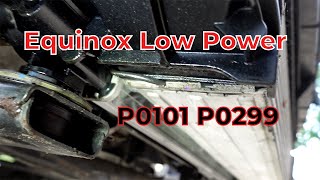
🎬 Watch: Diagnosing low power and common codes on the EquinoxDiagnostic Flowchart
Tap your situation to follow the diagnostic path that matches what you're seeing on this vehicle.
Symptoms You May Notice
- Check Engine Light is on
- Reduced Engine Power message displayed on the dash
- Engine stalls or nearly stalls when coming to a stop
- Rough or unstable idle
- Hesitation or sluggishness during acceleration
- Audible whooshing, hissing, or a loud 'pop' noise from the engine bay when the failure occurs
- Car will not accelerate past a certain speed (e.g., 45 mph)
- Replacing the Mass Airflow (MAF) sensor. MAF-related codes (P0101, P1101) are almost always triggered as a *result* of the unmetered air from the disconnected CAC pipe, not because the sensor itself has failed. TSBs explicitly warn against replacing the MAF unless it is proven to be the cause.
- Replacing the throttle body assembly before cleaning it or checking for the disconnected CAC pipe.
Most Likely Causes
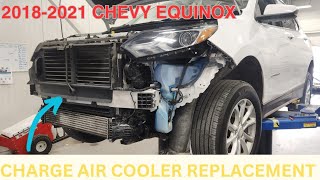
- Charge Air Cooler (CAC) Outlet Pipe Disconnected from Throttle Body 🔴 High Probability → Shop Intercooler The original retainer clip design was insufficient, leading GM to issue multiple TSBs (e.g., 22-NA-224, N192266090) and an updated part (P/N 13434668) to secure the connection more reliably.
How to confirm: Visually inspect the large diameter hose connecting to the engine's throttle body. It will be visibly disconnected. Check if the O-ring seal is still present inside the tube's end; it can be dislodged when the pipe blows off. TSB PIP5651E provides images of normal vs. abnormal wear on the throttle body flange if the pipe has repeatedly disconnected.
Typical fix: Reconnect the pipe to the throttle body and install the updated retainer clip kit (P/N 13434668). Ensure the connection is secure by pushing down until it snaps into place. If the O-ring seal is missing or damaged, it must be replaced. Clear codes after repair.
Est. part cost: $10-$25 - Dirty Throttle Body 🟡 Medium Probability → Shop Fuel Injection Throttle Body Carbon and oil vapor buildup from the PCV system is common on direct-injected engines and can restrict the throttle plate's movement, especially at idle. While common, on this platform it's often a secondary issue or misdiagnosed when the real problem is the CAC pipe.
How to confirm: After confirming the CAC pipe is secure, remove the intake ducting from the throttle body and inspect for a ring of black carbon buildup around the throttle plate and bore.
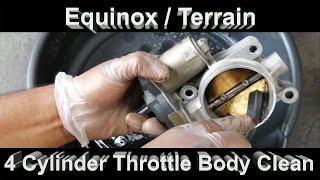
Typical fix: Clean the throttle body bore and plate with a dedicated throttle body cleaner and a soft cloth or brush. An idle relearn procedure may be needed afterward. 🎬 Watch: How to properly clean the 4-cylinder throttle body
Est. part cost: $5-$15 - Vacuum Leak (other than CAC pipe) ⚪ Low Probability
How to confirm: With the engine running, listen for hissing sounds. A smoke test, where smoke is fed into the intake system, is the most effective way to find hidden leaks from cracked hoses (like PCV lines) or bad gaskets.
Typical fix: Replace the cracked vacuum hose or faulty gasket. An intake manifold gasket leak is a rare possibility.
Est. part cost: $10-$50
Rare But Worth Checking
- Frozen Charge Air Cooler: → Shop Intercooler In extremely cold climates, moisture from the PCV system can accumulate in the charge air cooler and freeze, causing a blockage. A TSB (N222372590) addresses this issue, which can also trigger code P0299.
- Damaged Throttle Body or CAC Pipe: → Shop Fuel Injection Throttle Body In some cases, the force of the CAC pipe blowing off can damage the plastic flange on the throttle body or the end of the pipe itself, requiring replacement of the affected component. TSB 22-NA-224 provides photographic examples of damage that warrants throttle body replacement.
Diagnosis Steps
- Scan the ECM for all stored trouble codes. Note the presence of P0299, P0101, P1101, or P0172, as they strongly point to the common cause.
- Open the hood and visually inspect the large air duct (charge air cooler outlet pipe) where it connects to the throttle body. This is the most critical step and the cause over 90% of the time.
- Confirm if the pipe is fully seated and the retainer clip is secure. Attempt to wiggle the pipe; it should be firm. If it has popped off, it will be obvious.
- If the pipe is disconnected, inspect the pipe end and the throttle body flange for cracks or damage. Also check for the presence of the rubber O-ring seal inside the pipe's connector.
- If no damage is found, reconnect the pipe. It is highly recommended to replace the original clip with the updated retainer kit from GM (P/N 13434668) to prevent a recurrence.
- If the pipe is secure, proceed to inspect the throttle body for heavy carbon buildup. If dirty, clean it thoroughly with appropriate cleaner.
- If no issues are found with the CAC pipe or throttle body, inspect all other vacuum lines and the air intake system for cracks or loose connections. A smoke test is the most definitive method for finding hidden leaks.
- After repairs, clear all diagnostic trouble codes and perform a test drive, including some moderate acceleration to build boost, to ensure the issue is resolved.
Parts You'll Likely Need
- Charge Air Cooler Retainer Kit
(OEM #13434668)— This is the updated part specified by GM in service bulletins to permanently fix the issue of the CAC pipe disconnecting from the throttle body.
Trusted brands: ACDelco, GM Genuine Parts
OEM price range: $10-$25
Aftermarket price range: $5-$15 - Charge Air Cooler Outlet Pipe Seal
(OEM #12652909)— This O-ring seal inside the pipe connector can be lost or damaged when the pipe blows off the throttle body. It must be in place for a proper seal.
Trusted brands: ACDelco, GM Genuine Parts
OEM price range: $5-$15 - Throttle Body Cleaner — Needed if the secondary cause is a dirty throttle body, which can cause sticking and incorrect idle airflow.
Trusted brands: CRC, Berryman, WD-40
Aftermarket price range: $5-$15
Related Codes That Often Appear With This One
- P0299 — Engine Underboost. The turbocharger is producing boost, but it's escaping through the disconnected pipe instead of reaching the engine. This is one of the most common companion codes.
- P0101 / P1101 — Mass Air Flow (MAF) / Intake Air Flow System Performance. The ECM sees a massive discrepancy between the air measured by the MAF sensor and what it expects based on engine speed and throttle position, because a large volume of air is entering the system *after* the sensor.
- P0172 — System Too Rich. This may seem counterintuitive for an air leak, but the ECM's frantic attempts to compensate for the erratic sensor readings can lead to incorrect fuel trims. This code is explicitly mentioned alongside P0506 in multiple TSBs.
Technical Service Bulletins (TSBs) & Recalls
- N192271200: Mentions P0506 and instructs dealers to install an improved charge air cooler retainer.
- PIP5710A: Links a disconnected charge air cooler tube to reduced power and DTC P0506, and advises checking for the O-ring seal before reattachment.
- 22-NA-224: Replaces PIP5651G. Provides a repair procedure for reduced power and a group of DTCs including P0506, and includes photos to help technicians identify when a throttle body is damaged versus showing normal wear.
- PIE0569B: An engineering information request to gather data on vehicles with loss of power and DTC P0506, pointing to the CAC connection.
- PIP5651G: Cites the charge air cooler connection disconnecting from the throttle body as the cause for reduced power and code P0506.
- N192266090: A Service Update for dealers to install the retainer kit on certain 2019 models, noting the vehicle may run rough or stall at low speed.
Platform-Specific Known Issues
- A known design issue with the charge air cooler outlet pipe connection at the throttle body can cause it to disconnect, leading to a sudden loss of power and multiple DTCs, including P0506. This is documented in GM TSBs #PIP5710A, #22-NA-224, #PIP5651G, and #N192271200.
- Service Update N192266090 was released for certain 2019 models to proactively install an improved charge air cooler retainer kit (P/N 13434668) to prevent the failure.
Mechanic-Grade Diagnostic Values
- Mass Air Flow (MAF) Sensor at idle — expected: 2-5 g/s. Failure: Readings significantly outside this range can indicate a sensor issue or a large unmetered air leak.
- Throttle Body Opening Angle at idle — expected: 1-5%. Failure: A higher percentage (e.g., over 10%) at idle suggests the ECM is trying to compensate for a dirty throttle body or other airflow restrictions.
- Throttle Position Sensor (TPS) Voltage — expected: Approximately 0.5V at closed throttle to 4.5V at wide-open throttle.. Failure: Voltage that is erratic, jumps, or has dead spots as the throttle is slowly opened indicates a failing sensor. Since the TPS is integrated, this requires throttle body replacement.
- Desired vs. Actual Idle RPM — expected: Actual RPM should be within ~50 RPM of the Desired RPM (typically 600-800 RPM).. Failure: A P0506 sets when the actual RPM is consistently 150+ RPM below the target. Freeze frame data may show an actual RPM of 300-400 when the desired is 700-800.
Scan Tool Commands That Help
- Manual Procedure (No Scan Tool) or GDS2/Professional Scan Tool: Idle Learn / Throttle Relearn Procedure — This procedure is required after cleaning or replacing the throttle body, or after disconnecting the vehicle's battery for an extended period. It allows the ECM to recalibrate the closed-throttle position and learn the new baseline for idle airflow control. Failure to perform this can result in a continued or new P0506 code, or a high/unstable idle.
Wiring & Ground Locations
- G112 — Located on the engine block/cylinder head, often near the intake manifold. This is a primary ground point for the ECM.. A poor connection at this ground can cause erratic behavior from the ECM and the sensors it controls, including the electronic throttle body. Resistance between the PCM ground pins (large black/white wires in the connectors) and the negative battery terminal should be less than 1 ohm.
- G103 — Typically found on the left side of the engine compartment (driver's side), sometimes under the battery tray or on the cowl near the brake booster.. This is a major chassis ground that provides a ground path for multiple modules, including the Body Control Module (BCM) and the Data Link Connector (DLC). A fault here can cause widespread communication and sensor issues.
- G105 — Typically located on the top rear or left rear of the engine.. This is another critical engine ground point. Ensuring it is clean and tight is a key step when troubleshooting any unexplained electronic or sensor-related DTCs.
OEM Part Supersession History
Unknown (original clip)→13434668— The original retainer clip for the charge air cooler pipe at the throttle body had an insufficient design, leading to the pipe disconnecting under boost pressure.
Heads up: Part number 13434668 is the official fix. GM issued Service Update N192266090 in August 2019 to proactively install this kit on affected vehicles in dealer inventory.
Model Year Variations Within This Range
- 2018-2020: The 2.0L Turbo LTG engine was an available option alongside the standard 1.5L Turbo. The P0506 diagnosis related to the charge air cooler pipe applies to both turbo engines, though part numbers for the piping may differ.
- 2018-2022: The standard 1.5L Turbo engine in the Equinox is code LYX. This engine is a higher-output version compared to the similar 1.5L LFV engine used in some Chevrolet Malibu models of the same era. For the 2023 model year, the Equinox switched to the updated 1.5L LSD engine.
Helpful Videos
Used OEM Parts in Stock
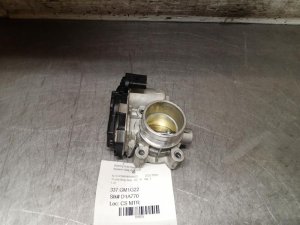
New Aftermarket Parts Available


The information in this article is provided for general reference and educational purposes only. Vehicle specifications, procedures, and part compatibility can vary by production date, trim level, and region. Always consult your vehicle's factory service manual and verify part numbers before purchasing or performing repairs. Safety-critical components such as airbags, seat belts, and braking systems should be installed by a qualified professional.
- Chevrolet EQUINOX:
- 🧭 Diagnostic Flowchart
- 🎬 Helpful Videos
- 🛍️ Shop This Part
- What's Unique About the 2018-2022 Chevrolet EQUINOX
- Symptoms You May Notice
- Most Likely Causes
- Rare But Worth Checking
- Diagnosis Steps
- Parts You'll Likely Need
- Related Codes That Often Appear With This One
- Technical Service Bulletins (TSBs) & Recalls
- Platform-Specific Known Issues
- Mechanic-Grade Diagnostic Values
- Scan Tool Commands That Help
- Wiring & Ground Locations
- OEM Part Supersession History
- Model Year Variations Within This Range
- 🎟️ Get 5% Off