

P0506 on 2006-2010 Ford Explorer 4.0L: Causes and Fixes for Low Idle RPM
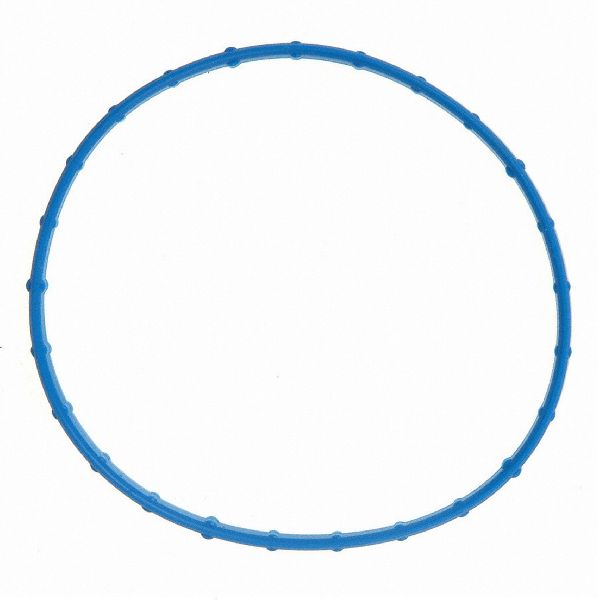
On a 2006-2010 Explorer with the 4.0L V6, code P0506 is almost always caused by a dirty electronic throttle body. Carbon and oil from the PCV system build up, restricting airflow at idle. The fix is typically cleaning the throttle body and replacing its gasket (Motorcraft P/N: CM-5083), a DIY job costing under $25 for supplies.
- For a 2006-2010 Explorer 4.0L, P0506 almost always means 'clean the throttle body.'
- Do not look for or buy an Idle Air Control (IAC) valve; this engine does not have one.
- Always replace the throttle body gasket after cleaning to prevent future vacuum leaks.
- After cleaning, you must perform a simple 'relearn' procedure to allow the computer to adjust to the clean throttle body.
- If cleaning doesn't fix it, the next step is to check for vacuum leaks, not to immediately replace the throttle body.
What's Unique About the 2006-2010 Ford Explorer
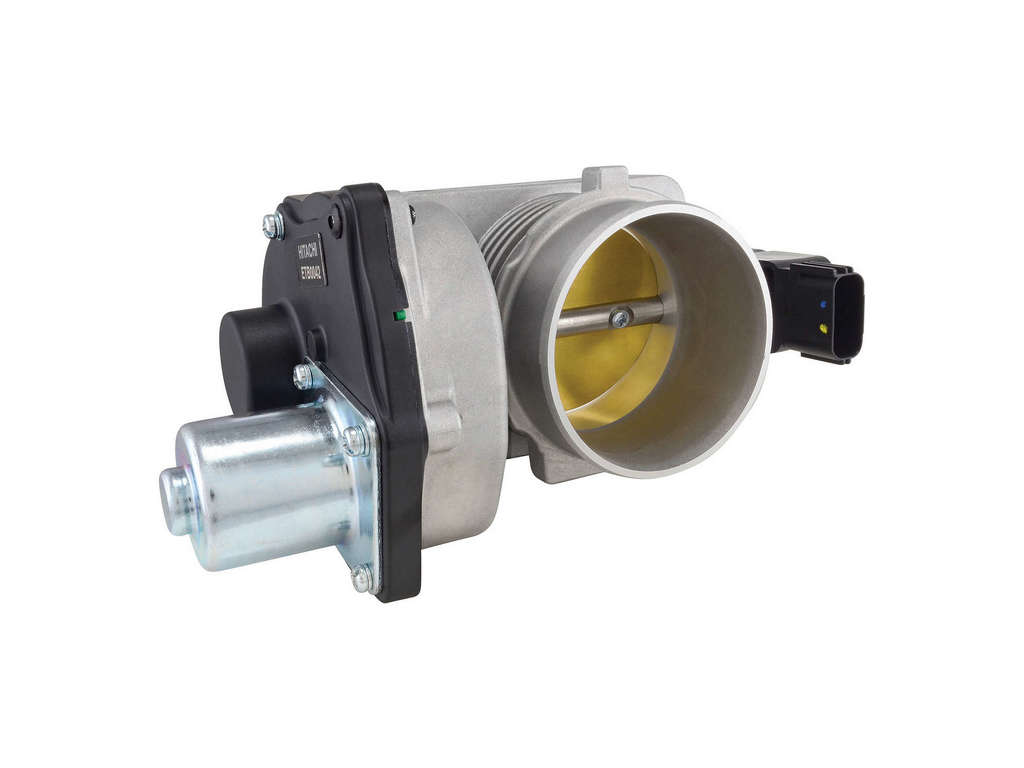
The 2006-2010 Ford Explorer with the 4.0L V6 engine uses an electronic 'drive-by-wire' throttle body and does NOT have a separate Idle Air Control (IAC) valve. Many generic repair guides for P0506 will incorrectly advise replacing an IAC valve. On this specific vehicle, the problem is overwhelmingly caused by a sticky film of carbon and oil vapor from the PCV system building up inside the electronic throttle body, which restricts the small air gap needed for the engine to idle correctly.
Symptoms You May Notice
- Engine idle is lower than normal
- Rough, shaking, or unstable idle
- Engine stalling when coming to a stop, especially after highway driving
- Engine may be difficult to start without pressing the accelerator
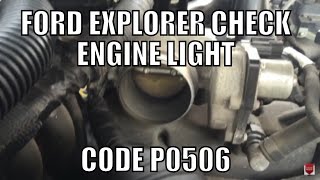
- Check Engine Light is illuminated 🎬 Watch: Diagnosing the P0506 code on a Ford Explorer
- Replacing the Idle Air Control (IAC) Valve. This vehicle does not have a separate IAC valve; idle is controlled by the electronic throttle body. Attempting to buy or replace one is a common mistake based on generic advice.
Most Likely Causes
- Dirty Electronic Throttle Body 🔴 High Probability → Shop Fuel Injection Throttle Body The 4.0L SOHC V6 engine's PCV (Positive Crankcase Ventilation) system routes oil vapors and combustion byproducts back into the intake. These deposits bake onto the throttle plate and bore, creating a sticky black film that physically blocks the tiny air gap the PCM commands for idle.
How to confirm: Remove the air intake hose connected to the throttle body and visually inspect the throttle plate and bore for a black, sticky film of carbon buildup. The back side of the plate is often the dirtiest.
Typical fix: Remove, thoroughly clean the throttle body with a dedicated throttle body cleaner and a soft brush, and reinstall with a new gasket. A throttle relearn procedure is required afterward.
Est. part cost: $15-$25 - Vacuum Leak 🟡 Medium Probability Rubber vacuum hoses and intake gaskets can become brittle and crack with age. On the 4.0L, common leak points include the intake manifold gaskets, PCV hoses, and the EGR valve gasket, allowing unmetered air to enter the engine and disrupt the air-fuel mixture, affecting idle stability.
How to confirm: A mechanic can perform a smoke test, which involves feeding pressurized smoke into the intake system to see where it leaks out. Visually inspect all accessible vacuum lines for obvious cracks or disconnections. Spraying carb cleaner near suspected areas while listening for an engine RPM change is another diagnostic method.
Typical fix: Replace the cracked vacuum hose or leaking gasket (e.g., intake manifold gasket, EGR valve gasket).
Est. part cost: $10-$150 - Failing Electronic Throttle Body ⚪ Low Probability → Shop Fuel Injection Throttle Body
How to confirm: This is typically diagnosed after a thorough cleaning and a smoke test have failed to resolve the code. The internal motor may be weak or the position sensor may be providing incorrect data to the PCM.
Typical fix: Replace the entire electronic throttle body assembly. The Motorcraft part number is often a variant of 9W7Z-9E926-A or 3L5E-9F991-AC.
Est. part cost: $150-$350
Rare But Worth Checking
- Failing Fuel Rail Pressure Sensor (FRPS): In at least one documented case on an Explorerforum.com thread, a faulty FRPS caused the engine to run lean at idle, resulting in a stall that the PCM incorrectly logged as a P0506 code after throttle body cleaning and replacement failed to fix the issue.
- Powertrain Control Module (PCM) Issue: This is extremely rare and should only be considered after all other possibilities have been exhaustively ruled out by a professional.
Diagnosis Steps
- Scan the vehicle for P0506 and any other stored codes. Note any codes like P0171 or P0174, which strongly suggest a vacuum leak.
- Visually inspect the air filter and intake duct for any blockages or collapse.
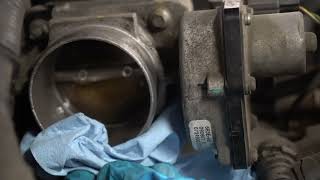
- Remove the air intake duct from the throttle body. Inspect the throttle plate and bore for heavy carbon buildup.
- If dirty, disconnect the negative battery terminal. Remove the four 8mm bolts holding the throttle body. A 10mm bolt may hold a bracket on one of them.
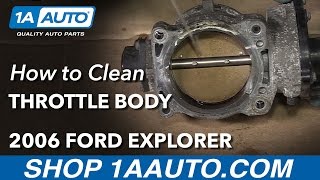
- Thoroughly clean both sides of the throttle plate and the entire throttle body bore using a dedicated throttle body cleaner and a soft brush or cloth. Do not spray cleaner directly into the electronic components. Manually open the plate to clean the edges, but do not let it snap shut. 🎬 Watch: Step-by-step guide to cleaning your throttle body correctly
- Install a new throttle body gasket (e.g., Motorcraft CM-5083) and reinstall the throttle body. Torque bolts to specification (typically 89 in-lbs).
- Reconnect the battery. Perform the throttle body relearn procedure: Turn the key to 'ON' (engine off) for one minute. Turn key 'OFF' for one minute. Start the engine without touching the gas pedal and let it idle for at least 10 minutes to warm up and allow the PCM to learn the new idle position.
- If the code returns, perform a smoke test to check for vacuum leaks from hoses, the intake manifold gasket, or the EGR system.
- If no vacuum leaks are found and the throttle body is clean, the electronic throttle body assembly itself may be faulty and require replacement.
Parts You'll Likely Need
- Throttle Body Gasket
(OEM #Motorcraft CM-5083)— Must be replaced whenever the throttle body is removed for cleaning to prevent vacuum leaks.
Trusted brands: Motorcraft, Fel-Pro (61347), Mahle
OEM price range: $10-$15
Aftermarket price range: $5-$10 - Electronic Throttle Body Assembly
(OEM #9W7Z-9E926-A (Motorcraft))— Replaced only if a thorough cleaning and vacuum leak check do not resolve the issue, indicating a failure of the internal motor or sensor.
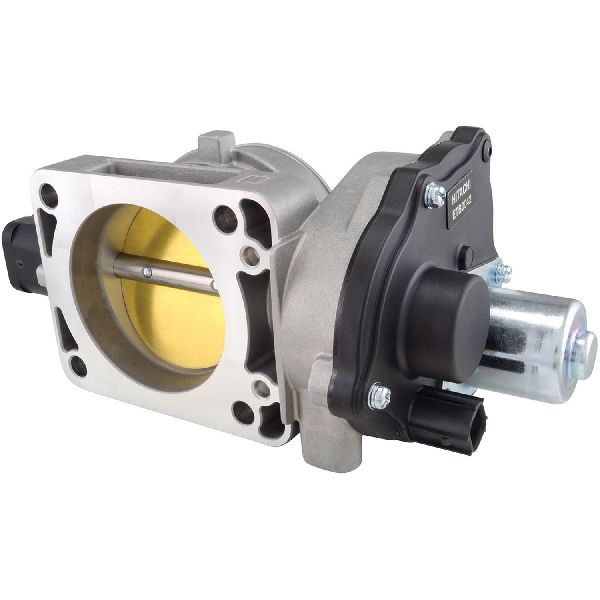
Trusted brands: Motorcraft, Hitachi (ETB0065), Bosch
OEM price range: $250-$400
Aftermarket price range: $150-$250
Related Codes That Often Appear With This One
- P0171 — System Too Lean (Bank 1). A vacuum leak can cause both a lean condition and an idle control problem, so P0171 and P0506 may appear together.
- P0174 — System Too Lean (Bank 2). Similar to P0171, a vacuum leak affecting both cylinder banks can trigger this code alongside P0506.
- P1000 — OBD Systems Readiness Test Not Complete. This code often appears after the battery has been disconnected or codes have been cleared, which is a common but ineffective first step people take to fix P0506. The P1000 code will clear itself after a complete drive cycle.
Technical Service Bulletins (TSBs) & Recalls
- TSB 12-7-4 / 12-8-1: Addresses DTCs P0505, P0506, and engine idle fluctuation. This TSB supersedes several older bulletins and provides service procedures that include cleaning the throttle body and checking the ETC_TRIM PID value.
Platform-Specific Known Issues
- Ford issued Technical Service Bulletin (TSB) 12-7-4, which addresses this code and idle fluctuations. It notes the problem can become apparent after a battery disconnect or code clear, as the PCM's learned adjustments for a progressively dirtying throttle body are erased, causing the engine to stall with the now-clean idle parameters.
Mechanic-Grade Diagnostic Values
- ETC_TRIM PID Value — expected: Less than 3.5 degrees at warm idle with throttle closed.. Failure: A value greater than 3.5 degrees indicates the PCM is commanding the throttle plate to open further to compensate for a restriction, strongly suggesting excessive sludge in the throttle body.
- IACTRIM + IACKAM2 PID Sum — expected: Less than 0.5 lb/min at warm idle.. Failure: A total value greater than 0.5 lb/min indicates the PCM is struggling to control idle air and points towards a throttle body sludge issue, per TSB 12-8-1.
- Throttle Position Sensor 1 (TP1) Voltage — expected: Approximately 0.9V - 1.2V at closed throttle, increasing smoothly to ~4.5V at wide-open throttle.. Failure: Voltage is out of range, does not change smoothly, or has dropouts when the throttle is moved. This indicates a failing sensor within the ETB assembly.
- Throttle Body Connector Pin 5 (VREF) Voltage — expected: Approximately 5 Volts (Reference Voltage from PCM).. Failure: No voltage or low voltage indicates a wiring or PCM issue, preventing the TPS from functioning correctly.
Scan Tool Commands That Help
- Ford IDS (or equivalent professional scanner): Clear PCM Keep Alive Memory (KAM) — This should be performed after cleaning or replacing the throttle body to erase the old learned adaptive values that were compensating for the dirty throttle body.
- Ford IDS (or Forscan): Reset Intake Air Throttle Learned Values — A specific function to reset the throttle's learned minimum and maximum positions, which is a required step after cleaning or replacement to ensure the PCM knows the new baseline.
- Bidirectional Scan Tool: Throttle Plate Actuator Test — To diagnose a suspected faulty throttle body motor. The tool commands the throttle plate to open to specific percentages (e.g., 25%, 50%) while the tech observes if the plate responds smoothly and accurately.
Wiring & Ground Locations
- Electronic Throttle Body Connector — The 6-pin connector plugged directly into the electronic throttle body assembly.. Corrosion or damage to the pins for the throttle motor (TAC+/TAC-) or the Throttle Position Sensors (Pin 5 VREF, Pin 6 Signal Return) can cause P0506 or other throttle-related codes. A poor connection here can mimic a failed throttle body.
- G103 — On the driver's side inner fender, near the power distribution box/brake booster.. This is a primary body and PCM ground point. Corrosion or a loose connection here can cause erratic behavior in the PCM's ability to accurately control and monitor the electronic throttle body, potentially leading to incorrect idle control.
- G104 — On the passenger side (RH) of the engine compartment, on the fender.. This is a main engine harness ground. A poor connection at G104 can disrupt sensor readings and actuator commands related to the engine, including the electronic throttle control system.
Real Owner Repair Stories
- Go-Parts Repair Database / Forum Aggregation (2006 Ford Explorer 4.0L V6) — Persistent P0506 code, stalling at idle.
❌ Tried (didn't work) Thoroughly cleaning the original throttle body., Replacing the throttle body with a new unit., Performing a smoke test which showed no vacuum leaks.
✅ What actually fixed it Replacing the Fuel Rail Pressure Sensor (FRPS). The faulty sensor was causing a lean condition at idle, leading to a stall. The PCM misinterpreted the stall as an idle control system failure and set the P0506 code.
"I Checked Everything" — The Actual Cause
- A failing Fuel Rail Pressure Sensor (FRPS) can cause a lean stall at idle that the PCM misinterprets as a P0506, even with a perfectly sealed intake system.
- A PCV valve with a small crack can pass a smoke test when the engine is cold, but the crack can open up when the engine reaches operating temperature, creating a vacuum leak that only manifests when hot. This can cause the idle to drop and trigger a P0506 after a period of driving.
When the Usual Fixes Don't Work
- While cleaning the throttle body is the most common fix, there are documented cases where it provides no relief. In these instances, the root cause was found to be unrelated to the throttle body itself. One owner replaced a faulty Fuel Rail Pressure Sensor (FRPS) which was causing a lean stall that the PCM misidentified as an idle control problem. Another potential issue is a hairline crack in a PCV component that only opens and creates a vacuum leak when the engine is hot, causing it to pass a standard 'cold' smoke test.
Model Year Variations Within This Range
- 2006-2010: Unlike the previous generation (2002-2005) which had a separate, replaceable Throttle Position Sensor (TPS), these models use an Electronic Throttle Body (ETB) where the TPS is integrated and not serviced separately. If the sensor fails, the entire throttle body assembly must be replaced.
Diagnostic Flowchart
Other Known Issues on This Vehicle
Issues unrelated to this code that are worth knowing about as an owner of this generation:
- Timing Chain Cassette Failure 🔴 High — Very common, often presenting as a rattling noise on startup or at idle ('death rattle'), typically after 90,000 miles. Repair is engine-out and extremely labor-intensive.
- Cracked Plastic Thermostat Housing 🔴 High — Extremely common failure point, typically between 75,000 and 120,000 miles. Leads to coolant leaks, overheating, and potential engine damage if not addressed. An aluminum aftermarket housing is a popular upgrade.
- 5R55S/W Transmission Failure 🔴 High — Widespread issues including harsh shifting, delayed engagement, and shift flares, often appearing after 50,000 miles. Common causes are worn servo bores in the transmission case and solenoid pack failure.
- Leaking Intake Manifold Gaskets 🟠 Medium → Shop Engine Intake Manifold — The gaskets can harden and fail over time, causing vacuum leaks that lead to rough idle, stalling, and lean codes (P0171/P0174).
- Cracked Exhaust Manifold 🟠 Medium — Can develop cracks, causing an audible ticking noise, especially when the engine is cold. This can also allow exhaust fumes to enter the engine bay.
Used vs. New Parts: Buying Guide for This Vehicle
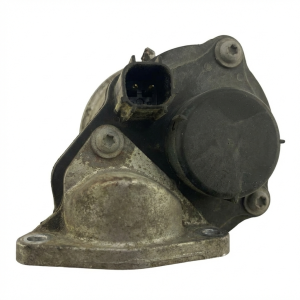
When a used part is the smart pick: A used OEM (Motorcraft) electronic throttle body from a junkyard is a reasonable choice for this repair, as the failure mode is usually carbon buildup, not electronic failure. A used part can be thoroughly cleaned before installation, offering OEM quality for a fraction of the price.
Donor-vehicle mileage cap: roughly under 120000 miles for the part to have meaningful remaining life.
What to inspect on the donor part:
- Look for a donor vehicle with lower mileage and no front-end collision damage.
- Inspect the electrical connector pins for any signs of corrosion (green or white powder) or damage.
- Manually move the throttle plate (with fingers, gently); it should move smoothly and return crisply when released.
- Avoid parts that are already exceptionally dirty, as this may indicate other engine issues on the donor vehicle.
OEM-only on this vehicle (don't cheap out):
- While not strictly required, many forum members and technicians strongly recommend sticking with an OEM Motorcraft throttle body (new or used) over aftermarket options to avoid potential calibration and longevity issues.
Aftermarket brands forum-validated for this vehicle:
- Bosch
- Hitachi
Brands owners have reported issues with on this vehicle:
- Unbranded or 'white-box' parts from online marketplaces have a higher reported failure rate and can cause diagnostic headaches.
Real Owner Stories
Aggregated from forums and TSBs cited above. Mileages and costs reflect what owners reported in those sources.
2006 Ford Explorer 4.0L V6
Symptoms: Extremely dirty throttle body causing carbon buildup that restricted airflow, leading to stalling symptoms especially after highway driving.
What fixed it: Removing and thoroughly cleaning the throttle body to remove carbon buildup.
Source hint: YouTube (Falcon's Hobbies) - 2006 Explorer P0506 Fix
2006 Ford Explorer 4.0L V6
Symptoms: P0506 code persisted even after cleaning the throttle body, replacing the throttle body, and checking for vacuum leaks; the vehicle was experiencing a lean condition at idle.
What fixed it: Replacing a faulty Fuel Rail Pressure Sensor (FRPS).
Source hint: ExplorerForum.com - P0506 Fixed by FRPS
2005 Ford Explorer 4.0L V6
Symptoms: P0506 and P1000 codes present.
What fixed it: Cleaning the throttle body (and ignoring the non-existent IAC valve).
Source hint: Reddit (r/MechanicAdvice) - 2005 Explorer P0506 and P1000
Related OBD-II Codes
Frequently Asked Questions
Does Ford have a Technical Service Bulletin for P0506 on my 2006-2010 Explorer?
Should I replace the Idle Air Control (IAC) valve on my 4.0L V6 to fix this?
What specific part number should I look for if I need to replace the electronic throttle body?
Is there a specific gasket I should use when reinstalling the throttle body after cleaning?
How do I perform the idle relearn procedure after cleaning the throttle body?
Why does the 4.0L SOHC V6 engine seem so prone to this carbon buildup?
Helpful Videos
Used OEM Parts in Stock
New Aftermarket Parts Available


The information in this article is provided for general reference and educational purposes only. Vehicle specifications, procedures, and part compatibility can vary by production date, trim level, and region. Always consult your vehicle's factory service manual and verify part numbers before purchasing or performing repairs. Safety-critical components such as airbags, seat belts, and braking systems should be installed by a qualified professional.
- Ford Explorer:
- 🧭 Diagnostic Flowchart
- 🎬 Helpful Videos
- 🛍️ Shop This Part
- What's Unique About the 2006-2010 Ford Explorer
- Symptoms You May Notice
- Most Likely Causes
- Rare But Worth Checking
- Diagnosis Steps
- Parts You'll Likely Need
- Related Codes That Often Appear With This One
- Technical Service Bulletins (TSBs) & Recalls
- Platform-Specific Known Issues
- Mechanic-Grade Diagnostic Values
- Scan Tool Commands That Help
- Wiring & Ground Locations
- Real Owner Repair Stories
- "I Checked Everything" — The Actual Cause
- When the Usual Fixes Don't Work
- Model Year Variations Within This Range
- Other Known Issues on This Vehicle
- Used vs. New Parts: Buying Guide for This Vehicle
- Real Owner Stories
- 2006 Ford Explorer 4.0L V6
- 2006 Ford Explorer 4.0L V6
- 2005 Ford Explorer 4.0L V6
- Related OBD-II Codes
- Frequently Asked Questions
- 🎟️ Get 5% Off