

P0506 on 2005-2007 Ford Five Hundred 3.0L: Low Idle Causes and Fixes
On a 2005-2007 Ford Five Hundred, code P0506 is almost always caused by carbon and sludge buildup inside the Electronic Throttle Body (ETB). The fix, outlined in Ford TSB 11-10-21, involves first reprogramming the PCM, then removing and thoroughly cleaning the throttle body, which is a low-cost DIY job. If cleaning doesn't work, the ETB assembly needs to be replaced.
- For code P0506 on a 2005-2007 Ford Five Hundred, the problem is almost certainly the Electronic Throttle Body (ETB).
- Do not look for or buy an Idle Air Control (IAC) valve; this car does not have one.
- The first, cheapest, and most effective step is to remove and thoroughly clean the throttle body and plate with a dedicated cleaner.
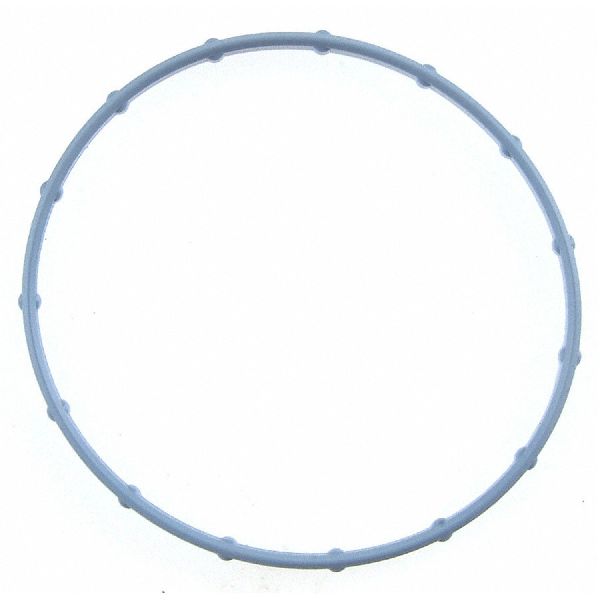
- Always use a new gasket when reinstalling the throttle body to prevent new vacuum leaks.
- If cleaning does not fix the stalling or low idle, the entire ETB assembly needs to be replaced.
What's Unique About the 2005-2007 Ford Five Hundred
The Ford Five Hundred and its platform-mates (Freestyle, Montego) with the 3.0L V6 are well-known for this specific problem. The design of the intake and PCV system can lead to oil vapor and carbon accumulating as a sticky sludge inside the electronic throttle body. This issue is so common that Ford issued Technical Service Bulletin (TSB) 11-10-21, which directly links codes P0506 and P0505 to this sludge buildup and recommends reprogramming the PCM and then cleaning the throttle body as the primary repair. NHTSA ODI Investigation #PE11018 further confirms that idle instability and surge conditions on these vehicles are attributed to changes in idle air flow resulting from the progressive buildup of deposits. Unlike many other cars where this code might point to a vacuum leak or a failed sensor, on the Five Hundred, a dirty throttle body is the first and most probable cause.
Symptoms You May Notice
- Check Engine Light is on
- Wrench light may be illuminated on the dashboard
- Engine idle speed is lower than normal (e.g., below 650 RPM)
- Rough or fluctuating idle, sometimes described as 'hunting'
- Engine stalls when coming to a stop, especially in gear
- Hesitation or stumbling when accelerating from a stop
- In some cases, the throttle may become unresponsive
- Replacing the Idle Air Control (IAC) Valve. This vehicle does not have a separate IAC valve; this function is integrated into the electronic throttle body. Replacing a non-existent part is a common point of confusion based on generic advice for this code.
Most Likely Causes
- Dirty/Sticking Electronic Throttle Body (ETB) 🔴 High Probability → Shop Fuel Injection Throttle Body The 3.0L Duratec engine in this platform is susceptible to carbon and oil sludge buildup in the throttle body bore and on the throttle plate, as acknowledged by Ford in TSB 11-10-21. This buildup restricts airflow and makes the throttle plate stick, preventing the PCM from making the small adjustments needed to maintain the correct idle speed.
How to confirm: Remove the air intake hose from the throttle body and visually inspect the throttle plate and bore for a thick, black, sticky residue. The plate may feel sticky or sluggish if you move it by hand (with the engine off). The buildup is often worst on the back side of the plate and where the plate edges meet the bore.
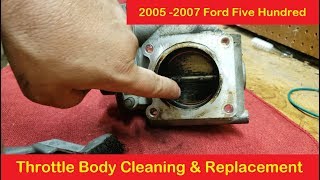
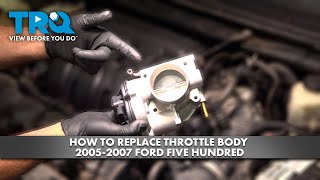
Typical fix: Remove the four 8mm bolts holding the ETB to the intake manifold, unplug the electrical connector, and clean it thoroughly on a workbench using a dedicated throttle body cleaner and a soft brush or cloth. 🎬 Watch: Step-by-step throttle body cleaning guide Always replace the throttle body gasket upon reinstallation to prevent vacuum leaks.
Est. part cost: $10-$25 for cleaner and a new gasket. - Vacuum Leak 🟡 Medium Probability As vehicles age, rubber vacuum hoses and plastic intake manifold gaskets can become brittle, crack, and leak. A vacuum leak introduces unmetered air into the engine, which can confuse the PCM's idle control strategy and potentially lead to a low idle if the PCM overcorrects.
How to confirm: Perform a smoke test by introducing smoke into the intake system and watching for leaks from hoses, the intake manifold gaskets, or the PCV system. You can also sometimes hear a hissing sound at idle near the source of the leak.
Typical fix: Replace the cracked hose or faulty gasket that is causing the leak.
Est. part cost: $5-$50 depending on the leaking component. - Failed Electronic Throttle Body (ETB) ⚪ Low Probability → Shop Fuel Injection Throttle Body While less common than being dirty, the internal electronics or motor of the throttle body can fail. This is usually the cause only if a thorough cleaning and PCM reprogram does not resolve the P0506 code. A YouTube video by 'FordTechMakuloco' shows a case where cleaning was insufficient and replacement was necessary to fix a 'Forced Idle' condition.
How to confirm: If reprogramming the PCM, cleaning the throttle body, and confirming there are no vacuum leaks does not fix the issue, the ETB itself is the likely culprit. Diagnostic codes for the throttle position sensor or actuator (like P2111 or P2112) may also be present.
Typical fix: Replace the entire electronic throttle body assembly. A relearn procedure is required after installation.
Est. part cost: $120-$400
Rare But Worth Checking
- Powertrain Control Module (PCM) Software/Fault: This is very rare as a hardware fault. However, outdated software is a primary factor according to Ford. TSB 11-10-21 requires reprogramming the PCM to the latest calibration as the very first step. Before condemning the PCM hardware, all other possibilities must be ruled out.
Diagnosis Steps
- Scan the PCM for codes to confirm P0506 and check for any other related codes like P0505 or P061B.
- Per Ford TSB 11-10-21, the first step is to reprogram the PCM to the latest calibration using a Ford-specific scan tool (like IDS). This should be done by a dealer or a well-equipped independent shop.
- After reprogramming, perform the initial idle relearn procedure (see below). If the problem persists, continue with physical diagnosis.
- Visually inspect the air intake ducting between the air filter box and the throttle body for any cracks or loose connections.
- Remove the intake duct from the throttle body. Inspect the throttle plate and bore for heavy carbon/sludge buildup.
- If significant buildup is found, disconnect the battery. Remove the electronic throttle body (held by four 8mm bolts).
- Thoroughly clean the throttle plate (front and back) and the throttle bore using a dedicated throttle body cleaner and a soft cloth/brush. Do not spray cleaner directly into the electrical components.
- Reinstall the throttle body using a NEW gasket to prevent vacuum leaks.
- Reconnect the battery. Perform a full idle relearn procedure: Start the engine and let it idle in Park with the A/C off for at least one minute until it reaches normal operating temperature (over 170°F). Turn the A/C on and let it idle for at least one minute. With the A/C on and foot on the brake, place the car in Drive and let it idle for at least one minute. Drive the vehicle for at least 10 miles to allow the PCM to fully adapt.
- If the issue persists, perform a smoke test to check for vacuum leaks from the intake manifold, PCV hoses, or other vacuum lines.
- If no vacuum leaks are found and the PCM reprogram and cleaning did not work, the electronic throttle body assembly has likely failed and requires replacement.
Parts You'll Likely Need
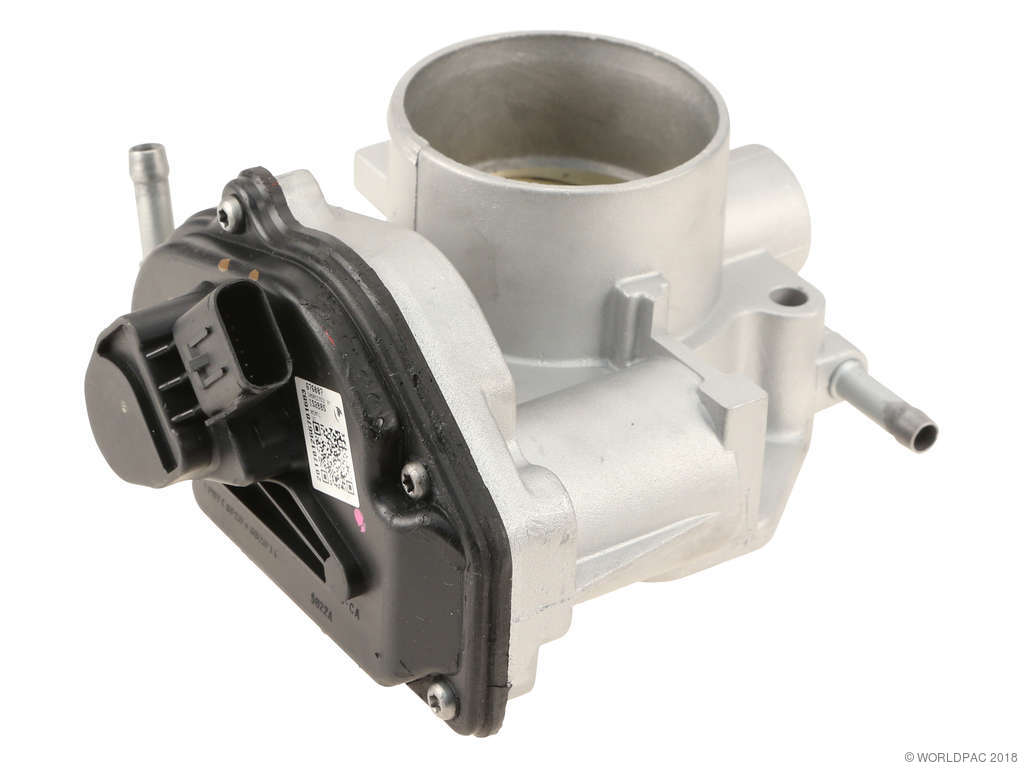
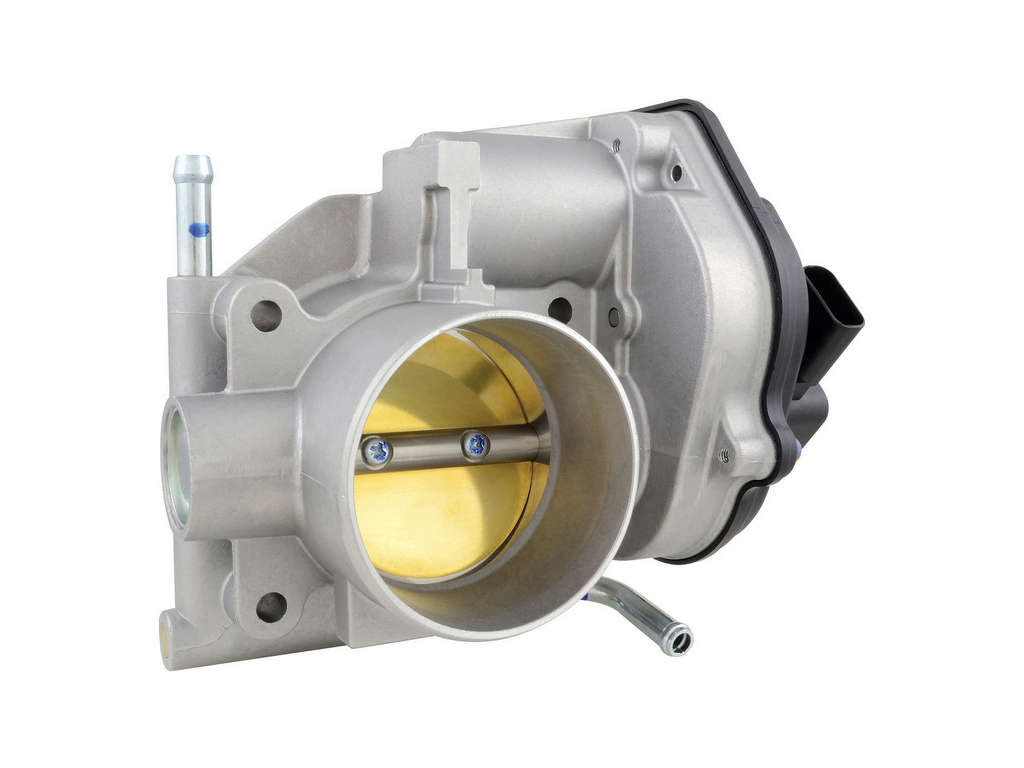
- Electronic Throttle Body (ETB)
(OEM #6F9Z-9E926-A (supersedes 5F9Z-9E926-B))— This is the part to replace if a thorough cleaning and PCM reprogram does not solve the low idle and P0506 code. The internal motor or position sensor fails over time.
Trusted brands: Motorcraft, Standard Motor Products (SMP), Hitachi, SKP
OEM price range: $250-$400
Aftermarket price range: $120-$250 - Throttle Body Gasket
(OEM #XF2Z-9F670-AA)— This must be replaced anytime the throttle body is removed for cleaning or replacement to ensure there are no vacuum leaks.
Trusted brands: Fel-Pro (P/N 61377), Victor Reinz, Mahle, Motorcraft
OEM price range: $10-$20
Aftermarket price range: $5-$15 - Throttle Body Cleaner — This is the required chemical for the most common fix: cleaning the sludge from the throttle body.
Trusted brands: CRC, Berryman, Gumout
Aftermarket price range: $8-$15
Related Codes That Often Appear With This One
- P0505 — This code for 'Idle Control System Malfunction' is triggered by the exact same root cause—a dirty or failing electronic throttle body. Ford's TSB 11-10-21 groups P0505 and P0506 together for this issue.
- P061B — This code for 'Internal Control Module Torque Calculation Performance' is also mentioned in Ford's TSB for the dirty throttle body issue. It indicates the PCM is struggling to match engine torque to driver demand, which can be caused by a sticking throttle plate.
Technical Service Bulletins (TSBs) & Recalls
- TSB 11-10-21: Addresses idle RPM fluctuation and DTCs P0505, P0506, and P061B. The official procedure is to first reprogram the PCM to the latest calibration. If the issue persists or specific trim values are met, the next step is to remove and thoroughly clean the electronic throttle body.
- TSB 12-7-4 & 12-8-1: Superseding bulletins that contain similar diagnostic and cleaning procedures for the same idle control issues.
Platform-Specific Known Issues
- In a detailed repair video on YouTube ('2005-2007 Ford Five Hundred Throttle Body Problems' by FordTechMakuloco), the technician first attempts to clean the throttle body to resolve a hunting idle and wrench light. When cleaning alone did not fix the 'Forced Idle' condition, he verified the wiring and proceeded to replace the entire throttle body assembly, which ultimately resolved the problem.
Mechanic-Grade Diagnostic Values
- Throttle Position Sensor (TPS) Desired vs. Actual Angle — expected: The difference between the desired and actual throttle plate position should be less than 3-5 degrees.. Failure: A difference greater than 5 degrees will typically set a throttle performance code (like P2111 or P2112) and can indicate a failing ETB motor or binding plate.
- Throttle Position Sensor (TPS) Closed Throttle Voltage — expected: Approximately 0.2V to 1.0V with the throttle plate fully closed.. Failure: Voltage outside of this range at closed throttle can indicate a sensor or wiring issue.
- ETB Throttle Trim Value (Ford IDS/FORScan) — expected: After a KAM reset and idle relearn, this value should start higher (e.g., 0.74) and gradually drop to a stable, lower value (e.g., 0.57) as the PCM adapts.. Failure: If the value does not stabilize or remains maxed out, it indicates a problem with the relearn process or a fault in the ETB/wiring.
Hidden / Shadow Codes Worth Checking
- Mode $06 Test Data: While not a specific shadow code, Ford's diagnostic strategy involves numerous internal self-tests for the Electronic Throttle Control system. A technician can use a professional scan tool like Ford IDS to view the raw results of these non-continuous monitors, which appear as binary flags (pass/fail or 1/0). A failure here can point to an intermittent problem with the ETB even before a hard DTC is set. (see via Ford IDS or an advanced scan tool with Mode $06 capabilities.)
Scan Tool Commands That Help
- Ford IDS / FORScan: Keep Alive Memory (KAM) Reset — This function should be performed immediately after cleaning or replacing the throttle body. It forces the PCM to erase all learned adaptive memory for fuel trims and idle position, ensuring the subsequent relearn procedure starts from a true baseline. This is more effective than simply disconnecting the battery.
- Ford IDS / FORScan: Throttle Body Relearn / Calibration — After a KAM reset, this procedure (often guided by the scan tool or performed manually) allows the PCM to sweep the throttle plate and learn the new fully open and fully closed positions. This is mandatory after cleaning or replacement to prevent erratic idle.
Wiring & Ground Locations
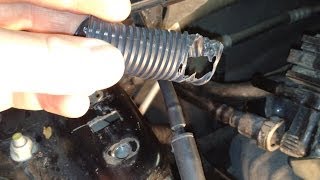
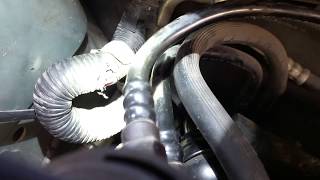
- Engine Harness Chafe Point — The main engine wiring harness that runs over the top of the engine, near the power steering reservoir, can rest on and rub against a silver aluminum A/C line.. Vibrations can cause the A/C line to chafe through the harness loom and wire insulation, causing intermittent shorts to ground for critical sensor wires, including those for the electronic throttle body. This can cause P0506 and other throttle-related codes even if the throttle body itself is perfectly clean and functional.
- G102 / G104 — Located on the right rear of the engine compartment, near the firewall or battery area.. These are primary ground points for the Powertrain Control Module (PCM). A loose or corroded connection at these grounds can cause an unstable ground reference for the PCM, leading to erratic sensor readings and incorrect idle control commands.
- ETB Connector (C145) — The 6-pin electrical connector on the electronic throttle body itself.. This is the primary connection point for testing ETB motor and sensor circuits. The connector contains two wires for the throttle motor and four wires for the two redundant throttle position sensors. Corrosion or loose pins here will directly cause ETB-related codes.
Real Owner Repair Stories
- YouTube user Daryl Turcott, referencing FordTechMakuloco (2005-2007 Ford Five Hundred (exact year not specified)) — No crank/no start, multiple misfires, PCM communication faults, stalling, and rich running conditions (P0107, P0108).
❌ Tried (didn't work) The owner spent $1,275 on incorrect diagnoses and parts, including a new catalytic converter and tune-up parts.
✅ What actually fixed it The main engine wiring harness was found to be chafing against an A/C line, causing multiple wires to short out. The fix was to repair the damaged wires with electrical tape and reposition the harness away from the A/C line to prevent future contact. - Ford Forums user 'aldark' (2005 Ford Five Hundred) — Engine fault shutdown, codes P2104 and P2111.
❌ Tried (didn't work) Thoroughly cleaning the original throttle body made the issue less frequent but did not solve it., Replacing the original throttle body with a used (junkyard) unit made the problem worse; the car would not run at all and set additional code P2112 (Throttle Actuator Control System - Stuck Closed).
✅ What actually fixed it The user was advised to put the original, cleaned throttle body back on as it was more functional than the faulty used part. The thread highlights the significant risk and potential for failure when using a used electronic throttle body. - NHTSA ODI #11052150 — An owner reported symptoms including a check engine light and diagnostic codes P0505, P0506, or P061B. The report notes that Ford issued TSB 11-10-21 to address this condition with an updated powertrain control calibration.
"I Checked Everything" — The Actual Cause
- A common scenario for this vehicle is for a technician to find no vacuum leaks after a smoke test and for the P0506 code to persist even after cleaning the throttle body. The actual cause is often the main engine wiring harness chafing against an A/C line near the power steering reservoir. This creates an intermittent electrical short that the PCM interprets as a throttle body or idle control problem, but it will not be detected by a smoke test.
When the Usual Fixes Don't Work
- While cleaning the throttle body is the most common fix, a significant number of owners have found this provides only a temporary solution or no solution at all. In these cases, the root cause was often not the throttle body itself, but rather an external factor. The most frequently cited alternative cause is a chafed main wiring harness shorting against an A/C line, which produces symptoms identical to a failing throttle body. Before spending money on a new ETB, inspecting this harness is a critical, mechanic-grade diagnostic step.
OEM Part Supersession History
5F9Z-9E926-B (also 5f9z9e926aa)→6F9Z-9E926-A— The original design was heated by engine coolant running through passages in the throttle body housing. The new design eliminates this feature, likely for cost reduction and to remove a potential failure point (coolant leaks).
Heads up: This is not a direct swap. When replacing a heated throttle body with the non-heated 6F9Z-9E926-A, the two coolant lines must be disconnected from the old throttle body and bypassed, typically by connecting them together or capping them. Failure to do this will result in an open coolant circuit.
Model Year Variations Within This Range
- 2005-2007: There are no significant mechanical or systemic differences between the model years that affect the diagnosis of P0506. The 3.0L V6 engine and electronic throttle control system remained consistent. The only notable variation is that earlier production units are guaranteed to have the water-heated throttle body, while a service replacement at any point may have installed the non-heated version.
Diagnostic Flowchart
Other Known Issues on This Vehicle
Issues unrelated to this code that are worth knowing about as an owner of this generation:
- CVT Transmission Failure (AWD Models) 🔴 High — A very common and well-documented point of failure. Issues like shuddering, slipping, and complete failure can occur, often before 100,000 miles.
- Premature Water Pump Failure 🔴 High — The unique camshaft-driven water pump can fail, causing overheating. A significant issue is that many aftermarket replacement pumps are poorly designed and can fail very quickly, sometimes damaging the camshaft. It is highly recommended to use only the OEM Ford part for replacement.
- Rear Brake Wear 🟡 Low — Owners frequently report that the rear brake pads and rotors wear out abnormally fast compared to other vehicles.
- Lower Control Arm Ball Joint Failure 🟠 Medium — Failure of the front lower ball joints is a common issue that can cause clunking noises and unsafe handling conditions.
Used vs. New Parts: Buying Guide for This Vehicle
When a used part is the smart pick: For this specific repair, purchasing a used Electronic Throttle Body from a junkyard is strongly discouraged. The ETB is a known high-failure item combining mechanical wear and sensitive electronics. Forum reports indicate that used parts are a significant gamble and may be non-functional or fail shortly after installation.
What to inspect on the donor part:
- Not applicable, as used purchase is not recommended.
OEM-only on this vehicle (don't cheap out):
- Electronic Throttle Body (ETB) - Due to the electronic complexity and the critical nature of the part for engine operation, a new OEM (Motorcraft) part is the safest choice to ensure compatibility and longevity.
Aftermarket brands forum-validated for this vehicle:
- While OEM is preferred, reputable brands like Standard Motor Products (SMP) or Hitachi are generally considered reliable alternatives to no-name online parts.
Brands owners have reported issues with on this vehicle:
- Avoid generic, unbranded parts from online marketplaces. One forum user mentioned BBK as an option but noted it had quirks like a stiff pedal feel. The primary part to avoid is any used ETB, regardless of brand.
Real Owner Stories
Aggregated from forums and TSBs cited above. Mileages and costs reflect what owners reported in those sources.
2007 Ford Five Hundred 3.0L V6
Symptoms: The vehicle was experiencing a hunting idle and the wrench light was illuminated on the dashboard. It eventually entered a 'Forced Idle' condition.
What fixed it: The technician first attempted to clean the throttle body, but when that failed to resolve the 'Forced Idle' condition, the entire electronic throttle body assembly was replaced.
Source hint: YouTube video '2005-2007 Ford Five Hundred Throttle Body Problems' by FordTechMakuloco
2005 Ford Five Hundred 3.0L V6
Symptoms: The owner reported a P0506 code and was looking for the location of the IAC valve to fix a low idle.
What fixed it: Following advice regarding the vehicle's drive-by-wire system and TSB references, the fix involved removing and cleaning the electronic throttle body.
Source hint: Ford Truck Enthusiasts Forums - 'CODE P0506' thread
Related OBD-II Codes
Frequently Asked Questions
Does TSB 11-10-21 apply to my 2005 Ford Five Hundred with the 3.0L Duratec?
My 2006 Five Hundred has a P0506 code; do I need to replace the Idle Air Control (IAC) valve?
What is the first step Ford recommends for fixing a P0506 on this specific vehicle?
Can I just spray cleaner into the throttle body while it's still on the engine?
Is there a specific procedure I need to follow after cleaning the throttle body on my Duratec 3.0L?
If cleaning doesn't work, what is the estimated cost for a new throttle body for a 2007 Five Hundred?
Helpful Videos
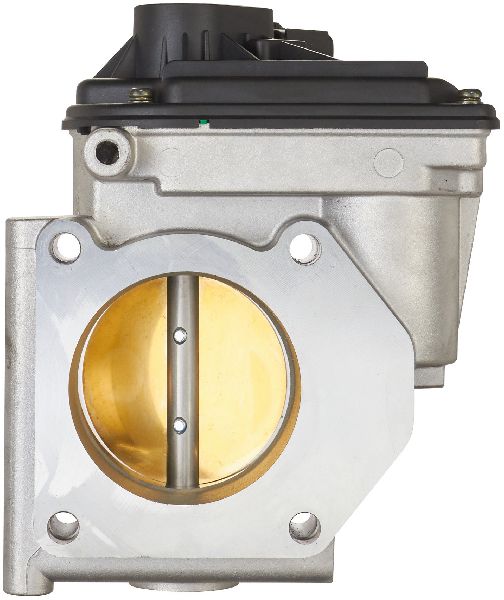
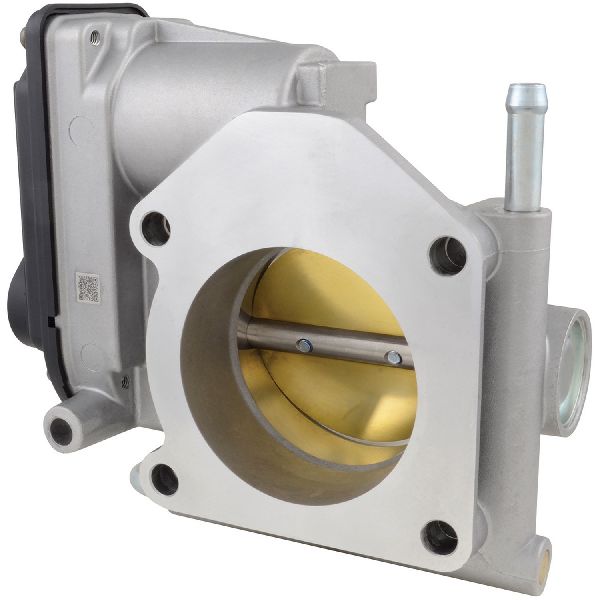
We Have This Part in Stock


The information in this article is provided for general reference and educational purposes only. Vehicle specifications, procedures, and part compatibility can vary by production date, trim level, and region. Always consult your vehicle's factory service manual and verify part numbers before purchasing or performing repairs. Safety-critical components such as airbags, seat belts, and braking systems should be installed by a qualified professional.
- Ford Five Hundred:
- 🧭 Diagnostic Flowchart
- 🎬 Helpful Videos
- 🛍️ Shop This Part
- What's Unique About the 2005-2007 Ford Five Hundred
- Symptoms You May Notice
- Most Likely Causes
- Rare But Worth Checking
- Diagnosis Steps
- Parts You'll Likely Need
- Related Codes That Often Appear With This One
- Technical Service Bulletins (TSBs) & Recalls
- Platform-Specific Known Issues
- Mechanic-Grade Diagnostic Values
- Hidden / Shadow Codes Worth Checking
- Scan Tool Commands That Help
- Wiring & Ground Locations
- Real Owner Repair Stories
- "I Checked Everything" — The Actual Cause
- When the Usual Fixes Don't Work
- OEM Part Supersession History
- Model Year Variations Within This Range
- Other Known Issues on This Vehicle
- Used vs. New Parts: Buying Guide for This Vehicle
- Real Owner Stories
- 2007 Ford Five Hundred 3.0L V6
- 2005 Ford Five Hundred 3.0L V6
- Related OBD-II Codes
- Frequently Asked Questions
- 🎟️ Get 5% Off