

P0506 on 2014-2021 GMC Sierra 1500: Low Idle Causes and Fixes
On a 2014-2021 GMC Sierra, P0506 often points to a dirty throttle body causing a low, rough idle. However, be aware of GM Technical Service Bulletins (TSBs) that link this code to a more serious issue: a broken valve spring, especially if accompanied by misfire (P0300) or MAP sensor (P0106) codes. This is a known issue for the Gen V V8 engines in these trucks.
- P0506 means the idle speed is too low. The most common and simple fix is cleaning the throttle body.
- Before buying parts, check for other codes. If you also have P0300 (Misfire) or P0106 (MAP Sensor), the problem is very likely a more serious mechanical issue.
- Be aware of TSBs #PIP5752M and #PIP5423B, which point to broken valve springs as a known cause for this code on your truck.
- Do not immediately replace the expensive throttle body. A simple cleaning often resolves the issue if it's not related to the valve springs.
- Due to the risk of a serious internal engine problem, it is wise to have the vehicle professionally diagnosed if a throttle body cleaning does not fix the issue.
What's Unique About the 2014-2021 Gmc SIERRA 1500

While a dirty throttle body is a common cause for this code on many vehicles, the 2014-2021 GMC Sierra has a documented history of a more severe underlying problem. Manufacturer TSBs explicitly connect P0506 to broken valve springs. [TSB #PIP5752M, TSB #PIP5423B] This means what appears to be a simple idle control issue could actually be a symptom of a mechanical failure within the engine's valvetrain, a known issue on this platform's 5.3L and 6.2L Gen V engines. A class-action lawsuit also cited these valve spring failures, further highlighting the prevalence of the issue.
Diagnostic Flowchart

Tap your situation to follow the diagnostic path that matches what you're seeing on this vehicle.
Generation note: This year range covers the third generation (K2XX, 2014-2019) and the fourth generation (T1XX, 2019-2021) of the GMC Sierra 1500. The valve spring issues noted in TSBs are relevant to engines used across both generations, specifically the 5.3L (L83, L82, L84) and 6.2L (L86, L87) V8s.
Symptoms You May Notice
- Rough, stumbling, or unstable idle.
- Engine speed drops very low when coming to a stop, sometimes causing a shudder.
- Engine may stall at idle, especially when accessories like the A/C are turned on.
- Illuminated Check Engine Light.
- Audible ticking or tapping noise from the engine bay, which may increase with RPM (if related to valve springs).
- Engine misfires (if related to valve springs). [TSB #PIP5752M]
- Replacing the entire electronic throttle body assembly when only a cleaning is needed.
- Focusing solely on intake and air issues (throttle body, vacuum leaks) and failing to investigate the possibility of a mechanical engine problem like a broken valve spring, especially when P0300 or P0106 are also present.
- Replacing the MAP sensor when the erratic pressure readings are actually caused by the mechanical valve spring issue.
Most Likely Causes

- Dirty Throttle Body 🔴 High Probability → Shop Fuel Injection Throttle Body Carbon and oil vapor from the PCV system can build up around the throttle plate, restricting the small amount of air needed for a stable idle. This prevents the throttle blade from closing to its proper learned position.
How to confirm: Visually inspect the throttle body bore and plate for a thick, black layer of carbon buildup after removing the air intake duct.
Typical fix: Remove the throttle body and clean it thoroughly with a dedicated throttle body cleaner and a soft brush or microfiber towel. Do not use harsh tools that could scratch the bore. A throttle relearn procedure is highly recommended after reinstallation to reset the learned idle values. 🎬 Watch: How to clean the throttle body and perform a relearn.
Est. part cost: $5-$15 for cleaner - Broken Valve Spring 🟡 Medium Probability → Shop Engine Valve Spring Manufacturer TSBs #PIP5752M and #PIP5423B directly identify broken valve springs as a cause for P0506, often with P0106 and P0300. This is a known weakness in the valvetrain of some Gen V GM engines of this era.
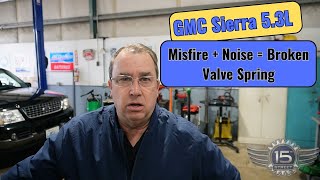
How to confirm: If throttle body cleaning doesn't work, a technician will need to perform further diagnosis. This involves a cylinder compression test and a leak-down test to identify a weak cylinder. The definitive confirmation is removing the valve covers for visual inspection of the springs. 🎬 See what a broken valve spring sounds and looks like. A broken spring may be in multiple pieces or show a visible fracture.
Typical fix: Replace the broken valve spring, valve stem seal, and potentially the pushrod if it is bent. It is often recommended to replace all valve springs on the affected cylinder head or the entire engine as a preventative measure. The OEM springs can be replaced with upgraded aftermarket 'beehive' style springs.
Est. part cost: $10-$50 for a single spring kit, $150-$400 for a full set - Vacuum Leak ⚪ Low Probability While vacuum leaks typically cause a high idle (P0507), a malfunctioning PCV valve or a leak in the PCV system (cracked hoses, bad valve cover gaskets) can sometimes disrupt idle stability enough to contribute to a low or erratic idle.
How to confirm: Inspect all vacuum hoses, the intake manifold gaskets, and the PCV system for cracks, loose connections, or damage. A smoke test is the most effective way to find a hard-to-see leak.
Typical fix: Replace the cracked hose, faulty gasket, or defective PCV valve.
Est. part cost: $10-$100
Rare But Worth Checking
- Faulty PCV Valve/System: → Shop PCV Valve
- Mass Airflow (MAF) Sensor Issues:
Diagnosis Steps
- Verify the code with an OBD-II scanner. Note any other codes present, especially P0300 or P0106, as this strongly points towards the valve spring issue.
- Inspect the air intake system for any restrictions or a dirty air filter.
- Remove the intake duct and visually inspect the throttle body for heavy carbon buildup.
- If dirty, clean the throttle body thoroughly. After reinstallation, perform an idle relearn procedure. There are several methods: one involves idling the engine for 3 minutes, turning it off for 60 seconds, and repeating the 3-minute idle.
- If the problem persists, check for vacuum leaks using a smoke machine, paying close attention to the PCV system hoses and intake manifold gaskets.
- If no vacuum leaks are found and other codes like P0300 are present, proceed with mechanical engine diagnosis.
- Perform a cylinder compression test and/or a cylinder leak-down test to identify a weak cylinder. A cylinder with a broken valve spring will show very low or zero compression.
- Remove the valve cover(s) on the suspect cylinder bank(s) to visually inspect for broken valve springs. This is the definitive diagnostic step for this issue.
Parts You'll Likely Need
- Throttle Body Cleaner — This is the most common and least expensive first step to fix a low idle caused by carbon buildup.
Trusted brands: CRC, ACDelco
OEM price range: $10-$20
Aftermarket price range: $5-$15 - Engine Valve Spring
(OEM #12728729 (for LT1, may vary))— A documented cause of P0506 on this specific vehicle according to GM TSBs. Failure leads to low idle, misfires, and potential engine damage.
Trusted brands: ACDelco (OEM), Melling, Michigan Motorsports, Brian Tooley Racing (BTR)
OEM price range: $10-$25 (per spring)
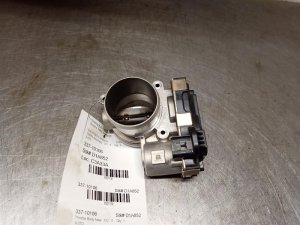
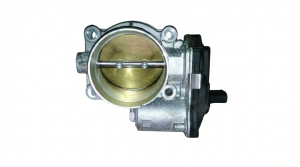
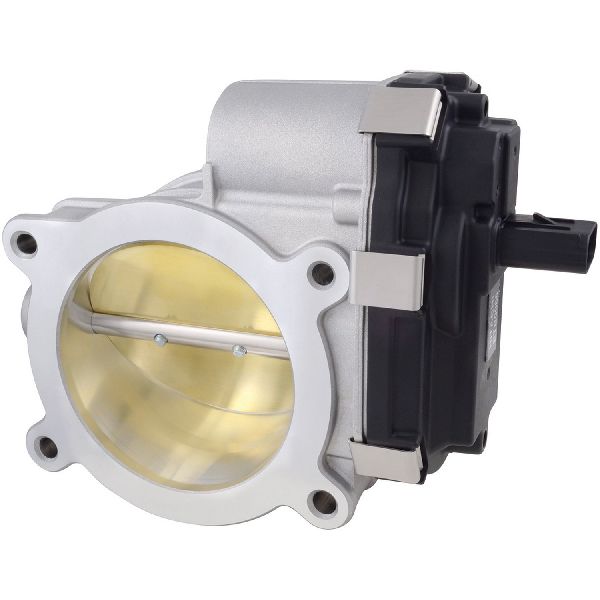
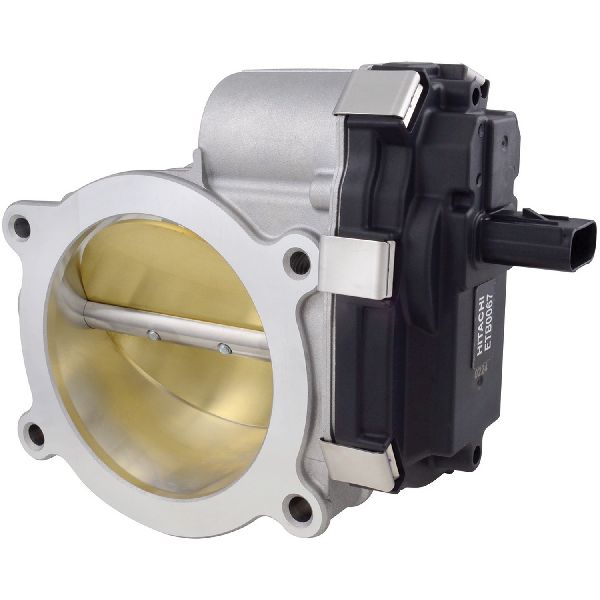
Aftermarket price range: $5-$20 (per spring), $80-$180 (full set) - Electronic Throttle Body
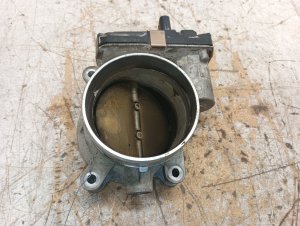
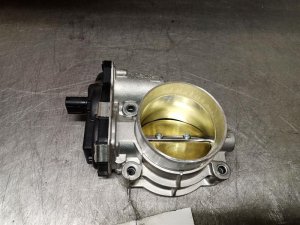
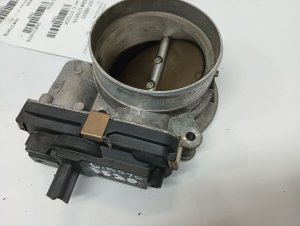
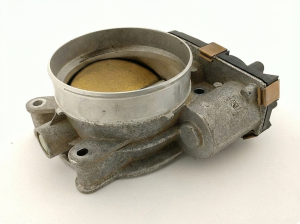
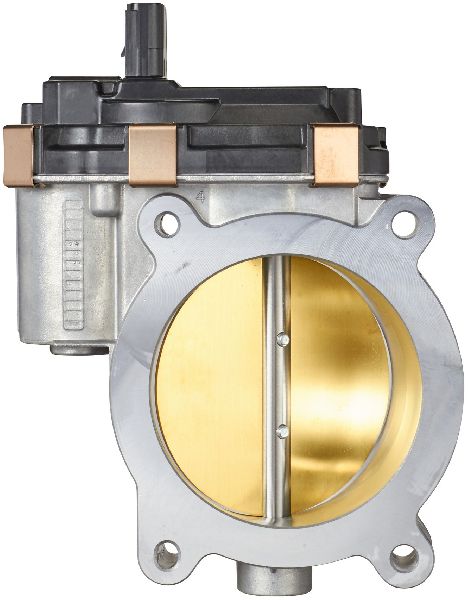
(OEM #12670839, 12631186 (Varies by engine/year))— Replaced only if it has an internal electronic failure, which is less common than being dirty. Usually replaced after cleaning fails to solve the problem and mechanical issues are ruled out.
Trusted brands: ACDelco, Bosch, Hitachi
OEM price range: $250-$400
Aftermarket price range: $150-$250
Related Codes That Often Appear With This One
- P0106 — Manifold Absolute Pressure (MAP) Sensor Performance. A broken valve spring causes erratic pressure pulses in the intake manifold as the valve fails to seat properly, confusing the MAP sensor. TSBs #PIP5752M and #PIP5423B both mention this code appearing with P0506.
- P0300 — Random/Multiple Cylinder Misfire. A broken valve spring will prevent the valve from seating correctly, leading to a loss of compression and causing a misfire in that cylinder. TSB #PIP5752M explicitly links P0300 with P0506.
Technical Service Bulletins (TSBs) & Recalls

- PIP5752M: Service engine light, misfire, engine noise with DTCs P0300, P0106, P0506 due to possible valve spring concern.
- PIP5423B: Service Engine Soon lamp with DTCs P0106 and P0506, instructing technicians to inspect
Platform-Specific Known Issues
- Technical Service Bulletin #PIP5752M notes that a service engine light with DTCs P0300, P0106, and P0506 can be due to a valve spring concern. [TSB #PIP5752M]
- Technical Service Bulletin #PIP5423B also points to a broken valve spring as the cause when codes P0106 and P0506 are present. [TSB #PIP5423B, 30]
- A class-action lawsuit filed against GM alleged defects in the valvetrain of these engines, including premature failure of valve springs, specifically mentioning the link to P0506.
- Owner forums contain numerous first-hand accounts of this failure. One owner of a 2021 Trail Boss with a 6.2L engine reported a sudden loss of power, ticking noise, and smoke from the exhaust, which was diagnosed as a broken valve spring and bent pushrod.
Mechanic-Grade Diagnostic Values
- Throttle Position Sensor 1 (TP1) Voltage — expected: ~0.5V at closed throttle, sweeping smoothly to ~4.5V at wide-open throttle.. Failure: Voltage that is erratic, has dropouts, or does not change when the throttle plate moves.
- P0506 Set Condition — expected: Actual engine speed should be within ~90 RPM of the desired idle speed.. Failure: The actual idle speed is approximately 90 RPM lower than the desired idle speed for more than 10 seconds.
- Diagnostic Run Conditions — expected: Engine Coolant Temperature (ECT) > 60°C (140°F) and Intake Air Temperature (IAT) > -20°C (-4°F).. Failure: The code will not run its check until the engine reaches these minimum operating temperatures.
Scan Tool Commands That Help
- GDS2 / Professional Scan Tool: Idle Learn Reset — Located in the 'Special Functions' menu, this command is used to force the ECM to relearn the throttle's base idle position after cleaning or replacing the throttle body. This is often required to resolve a high or low idle after service.
Wiring & Ground Locations
- Electronic Throttle Body Connector Pigtail — The 6-pin electrical connector on the electronic throttle body assembly.. Damage to the connector or wiring from heat, vibration, or improper disconnection can cause erratic signals between the ECM and throttle body, leading to idle control faults. Replacement pigtails are available under part numbers like WPT-1063, AU2Z-14S411-MA, and PT2706.
Real Owner Repair Stories
- Reddit user 'puddinface808' in r/askcarguys (Not specified, but general P0506 diagnosis) — P0506 code, rough idle, worse after cold start, stalling when in gear.
✅ What actually fixed it The user confirmed that thoroughly cleaning the throttle body resolved the issue completely. They posted an update stating, "it worked" and later clarified, "Just pull the throttle body and spend some time cleaning it carefully... Haven't had a problem since."
OEM Part Supersession History
12640406→12670839— Standard part update or revision by the manufacturer (ACDelco/GM).
Heads up: The replacement part 12670839 may require programming or a special setup/relearn procedure to function correctly in the vehicle.
Model Year Variations Within This Range
- 2014-2018 (L83 Engine): These engines primarily use Active Fuel Management (AFM), which deactivates four cylinders. They are equipped with a variable displacement oil pump and an offset water pump design.
- 2019-2021 (L84 Engine): These engines use the more advanced Dynamic Fuel Management (DFM), which can deactivate any number of cylinders in various patterns. GM reverted to a more traditional, single-stage vein-style oil pump and a centered water pump on the L84.
Helpful Videos
Used OEM Parts in Stock
New Aftermarket Parts Available


The information in this article is provided for general reference and educational purposes only. Vehicle specifications, procedures, and part compatibility can vary by production date, trim level, and region. Always consult your vehicle's factory service manual and verify part numbers before purchasing or performing repairs. Safety-critical components such as airbags, seat belts, and braking systems should be installed by a qualified professional.
- Gmc SIERRA 1500:
- 🧭 Diagnostic Flowchart
- 🎬 Helpful Videos
- 🛍️ Shop This Part
- What's Unique About the 2014-2021 Gmc SIERRA 1500
- Symptoms You May Notice
- Most Likely Causes
- Rare But Worth Checking
- Diagnosis Steps
- Parts You'll Likely Need
- Related Codes That Often Appear With This One
- Technical Service Bulletins (TSBs) & Recalls
- Platform-Specific Known Issues
- Mechanic-Grade Diagnostic Values
- Scan Tool Commands That Help
- Wiring & Ground Locations
- Real Owner Repair Stories
- OEM Part Supersession History
- Model Year Variations Within This Range
- 🎟️ Get 5% Off