

P0506 on 2014-2018 GMC Sierra 2500: Low Idle Causes and Fixes
On a 2014-2018 GMC Sierra 2500, P0506 means the idle is too low. The most common cause is a dirty throttle body, which is a simple cleaning fix. However, if accompanied by misfire (P0300) or MAP sensor (P0106) codes, it strongly points to a more serious, known issue of a broken valve spring requiring engine repair.
- P0506 on your Sierra 2500 means the idle RPM is too low.
- Always check for other codes first. If you only have P0506, the most likely fix is cleaning the throttle body.
- If P0506 is paired with P0300 (misfire) or P0106 (MAP sensor), you should suspect a more serious mechanical problem like a broken valve spring, which is a known issue on these trucks.
- Do not replace the expensive throttle body assembly unless cleaning it fails to solve the problem and you have ruled out mechanical issues.
- Driving with a stalling condition is a safety risk; address this code promptly.
What's Unique About the 2014-2018 Gmc SIERRA 2500
While a dirty throttle body is a universal cause for a low idle, this generation of GMC heavy-duty trucks has a well-documented, more severe potential issue. Manufacturer Technical Service Bulletins (TSBs) directly link P0506 to broken valve springs, a mechanical failure within the engine. This means that what might seem like a simple maintenance issue could be a symptom of a significant internal engine problem. The issue was prevalent enough across multiple GM platforms that it was noted in TSBs covering a wide range of vehicles with similar engine architecture, not just the HD trucks. This known weakness was also cited in class-action lawsuits.
Diagnostic Flowchart
Tap your situation to follow the diagnostic path that matches what you're seeing on this vehicle.
Symptoms You May Notice
- Check Engine Light is on
- Low, rough, or unstable idle, sometimes feeling like it's about to stall
- Engine stalling when coming to a stop or at idle
- A noticeable ticking, tapping, or metallic noise from the engine bay (if a valve spring is broken)
- Hesitation or stumbling during acceleration from a stop
- In some cases with vacuum leaks, a hissing sound may be audible from the engine bay.
- Replacing the throttle body when it only needs cleaning.
- Replacing the MAP sensor when its code (P0106) is being triggered by the erratic manifold pressure from a broken valve spring.
- Assuming it's a simple tune-up issue and replacing spark plugs/wires without investigating the root cause, especially when misfire codes are present.
Most Likely Causes
- Dirty Throttle Body 🔴 High Probability → Shop Fuel Injection Throttle Body The PCV (Positive Crankcase Ventilation) system routes oil vapors and combustion byproducts back into the intake. Over time, this creates a sticky carbon and oil sludge buildup around the throttle plate, restricting the small amount of air needed to maintain a stable idle.
How to confirm: Remove the air intake duct from the throttle body and visually inspect for a dark, gummy ring of carbon buildup where the throttle plate closes. The inside of the throttle body bore will be black and sticky.
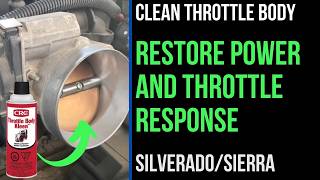
Typical fix: Clean the throttle body bore and plate thoroughly with a dedicated throttle body cleaner and a soft cloth or brush. 🎬 Watch: A simple walkthrough on cleaning your throttle body. An idle relearn procedure is often required after cleaning.
Est. part cost: $5-$15 - Broken Engine Valve Spring 🟡 Medium Probability → Shop Engine Valve Spring This is a known issue documented in GM Technical Service Bulletins #PIP5423 and #PIP5752M. The valvetrain components on these engines, particularly on the 6.0L and related Gen V engines, can fail prematurely due to material composition issues.
How to confirm: This is the most likely cause if P0506 is present with codes P0300 (Random Misfire) and/or P0106 (MAP Sensor Performance). A cylinder power balance test using a professional scan tool can help identify the misfiring cylinder. A physical inspection is then required, which involves removing the valve cover of the affected cylinder bank to check the springs on each valve. 🎬 See the diagnostic process for a broken valve spring.
Typical fix: Requires replacing the broken valve spring, its seals, and any related damaged components. It is often recommended to replace all valve springs on the affected cylinder head (or both heads) at the same time as a preventative measure.
Est. part cost: $20-$100 for springs and seals - Vacuum Leak ⚪ Low Probability Intake manifold gaskets, PCV hoses, and the brake booster vacuum hose can degrade, crack, or become dislodged over time, causing unmetered air to enter the engine. While this often causes a high idle (P0507), a malfunctioning or stuck-open PCV valve can sometimes lead to a low, stumbling idle.
How to confirm: Listen for hissing sounds around the engine bay at idle. A smoke test, where low-pressure smoke is fed into the intake system, is the most effective way to pinpoint the exact location of a leak. Spraying carburetor cleaner around suspected areas can also work; a change in idle RPM indicates the leak's location.
Typical fix: Replace the leaking gasket, hose, or PCV valve.
Est. part cost: $10-$150
Rare But Worth Checking
- Failing Electronic Throttle Body: → Shop Fuel Injection Throttle Body While carbon buildup is common, the internal electronics or motor of the throttle body can fail. This is usually a last resort after cleaning doesn't work and mechanical issues like valve springs are ruled out.
- Failing Alternator: A failing alternator can cause low voltage under load, leading to erratic engine behavior that mimics an idle control problem. One owner reported that a P0506 code accompanied by dimming lights and stalling under load was ultimately resolved by replacing the alternator, which was only producing ~11.2V under load.
Diagnosis Steps
- Read all stored DTCs with an OBD-II scanner. Pay close attention to whether P0300 or P0106 are also present, as this combination strongly points to a valve spring.
- If P0300 is present, use a scan tool with a cylinder power balance test to identify the specific misfiring cylinder. This will narrow down your physical inspection to one cylinder head.
- If no other codes are present, start with the most common cause. Inspect the air intake system from the filter to the throttle body for any restrictions or loose connections.
- Remove the intake duct and visually inspect the throttle body for carbon buildup. If dirty, clean it thoroughly with throttle body cleaner and a soft cloth. Do not force the throttle plate open manually; unplug the connector if you need to move it.
- After cleaning, perform an idle relearn procedure. There are several methods: a) The simplest is to start the engine, let it idle for 3 minutes, turn it off for 60 seconds, and repeat the cycle. b) A more robust method may require a scan tool to perform an 'Idle Learn Reset'. c) Some sources suggest a drive cycle is necessary.
- If the code returns, or if P0300/P0106 were present from the start, proceed with a mechanical inspection. Remove the valve cover on the suspect cylinder bank and inspect each valve spring for visible fractures. A broken spring is often clearly snapped in two.
- If no broken springs are found, perform a smoke test to check for vacuum leaks, paying close attention to the intake manifold gaskets, PCV hoses, and brake booster line.
- Check alternator output voltage at idle and under load. Voltage should be stable around 13.8-14.5V. A significant drop under load could indicate a failing alternator.
- If all else fails, the electronic throttle body itself may be faulty and require testing or replacement.
Parts You'll Likely Need
- Throttle Body Cleaner
(OEM #ACDelco 19379139 (X66-P))— This is the most common and inexpensive first step to fix a low idle caused by carbon buildup restricting airflow.
Trusted brands: CRC, Berryman, ACDelco
OEM price range: $10-$15
Aftermarket price range: $5-$10 - Engine Valve Spring
(OEM #12706568 (replaces 12589774))— A documented cause of P0506 on this specific vehicle according to GM TSBs. Failure leads to low idle, misfires, and potential engine damage.
Trusted brands: ACDelco (OEM), Melling, Elgin
OEM price range: $10-$20 per spring
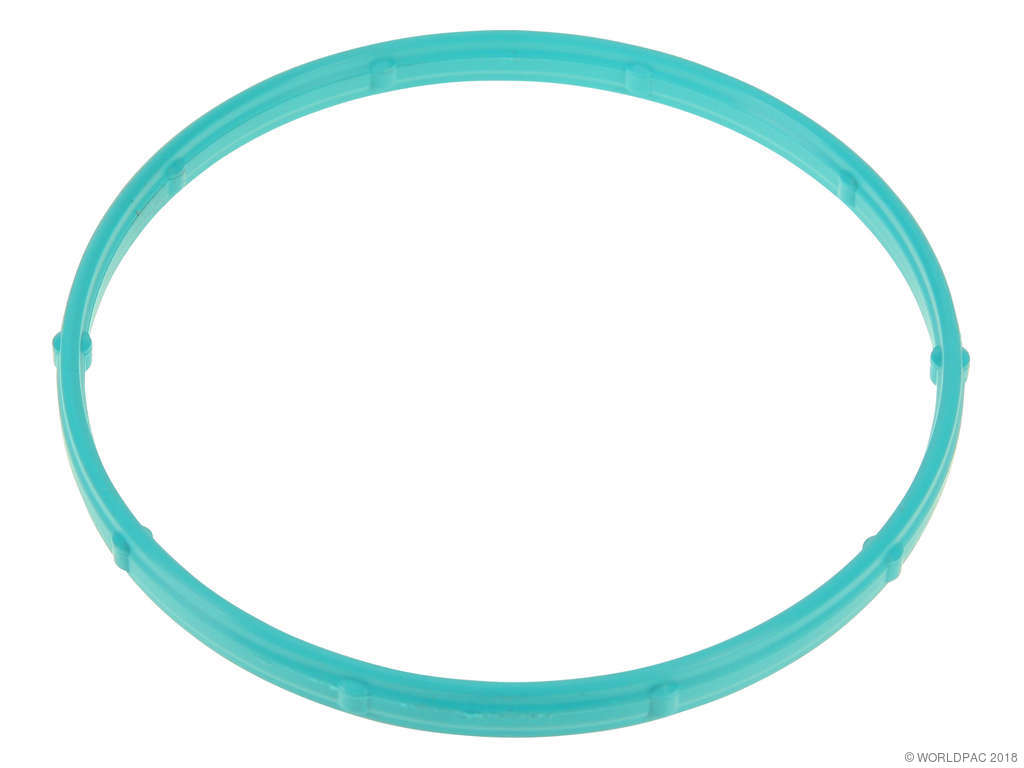
Aftermarket price range: $5-$15 per spring - Throttle Body Gasket
(OEM #12629992 (for 6.0L L96))— It is best practice to replace this gasket whenever the throttle body is removed for cleaning to prevent a vacuum leak.
Trusted brands: ACDelco (OEM), Fel-Pro, Mahle
OEM price range: $10-$20
Aftermarket price range: $5-$15 - Electronic Throttle Body
(OEM #12670839)— Replaced only if it has an internal electronic failure, which is less common than being dirty. Usually replaced after cleaning fails to solve the problem and mechanical issues are ruled out.
Trusted brands: ACDelco, Bosch, Hitachi
OEM price range: $250-$400
Aftermarket price range: $150-$250
Related Codes That Often Appear With This One
- P0300 — A broken valve spring will prevent a valve from closing properly, causing that cylinder to misfire. This is a primary indicator that P0506 is not just a dirty throttle body.
- P0106 — The erratic cylinder operation and loss of seal from a broken valve spring disrupts the air pressure in the intake manifold, causing the MAP sensor to report performance outside its expected range. TSBs link this code directly to the valve spring issue.
Technical Service Bulletins (TSBs) & Recalls
- PIP5423 / PIP5423A: Addresses codes P0106 and P0506, pointing to inspection for a broken valve spring. It covers 2014-2017 model year trucks and SUVs.
- PIP5752M: Mentions a combination of codes including P0506 as a possible valve spring concern, affecting a wide range of GM vehicles and engines.
Platform-Specific Known Issues
- Technical Service Bulletin #PIP5423 specifically calls out DTCs P0106 and P0506 on 2014-2017 models and instructs technicians to inspect for a broken valve spring and a potentially collapsed intake manifold runner as a result.
- Technical Service Bulletin #PIP5752M notes that a combination
Mechanic-Grade Diagnostic Values
- P0506 Set Condition — expected: Actual engine speed should be within ~90 RPM of the desired idle speed.. Failure: The actual idle speed is approximately 90 RPM lower than the desired idle speed for more than 10 seconds.
- Throttle Position Sensor 1 (TP1) Voltage — expected: ~0.5V at closed throttle, sweeping smoothly to ~4.5V at wide-open throttle.. Failure: Voltage that is erratic, has dropouts, or does not change when the throttle plate moves.
- MAP Sensor Voltage (Key On, Engine Off) — expected: Around 5 volts, corresponding to atmospheric pressure.. Failure: Significantly lower voltage, indicating a sensor or wiring issue.
- MAP Sensor Voltage (Engine Idling) — expected: Drops to 1 to 2 volts due to engine vacuum.. Failure: Voltage stays high or does not respond to changes in engine RPM, suggesting a vacuum leak or faulty sensor.
- Long Term Fuel Trim (LTFT) — expected: Ideally close to 0%, but within +/- 10% is generally acceptable.. Failure: High positive values (e.g., >10%) can indicate a vacuum leak the ECM is trying to compensate for, which could contribute to an unstable idle.
Scan Tool Commands That Help
- GDS2 / Tech2 / Professional Scan Tool (e.g., Autel, Launch): Idle Learn Reset / Idle Learn — This function must be used after cleaning or replacing the throttle body. It erases the old learned idle airflow values from the ECM and forces it to relearn the new correct throttle plate position for a stable idle.
- GDS2 / Tech2 / Professional Scan Tool: Cylinder Power Balance Test — Use this when P0300 (Random Misfire) is present with P0506. This test identifies which specific cylinder(s) are not contributing power, pinpointing the location of the likely broken valve spring before removing any parts.
- GDS2 / Tech2 / Professional Scan Tool: Throttle Position Control — This is a bidirectional test that allows the technician to command the throttle plate to specific angles (e.g., 10%, 20%, 30%) while monitoring the desired vs. indicated throttle angle PIDs. It helps confirm if the throttle body motor and sensors are responding correctly.
Wiring & Ground Locations
- Throttle Body Connector (X87) — Directly on the electronic throttle body at the front of the intake manifold.. This 6-pin connector provides power, ground, and signal lines for the two throttle position sensors (APP) and the throttle actuator motor. A loose connection, corrosion, or damaged wire here will directly cause idle control faults and other throttle-related codes.
- Engine Control Module (ECM) Grounds — Key grounds for the engine harness are typically located on the engine block or cylinder heads (e.g., G103, G107 on some GM trucks).. A poor ECM ground can cause erratic sensor readings and unpredictable behavior from actuators like the electronic throttle body, leading to incorrect idle speed calculations and codes like P0506.
Real Owner Repair Stories
- Reddit user in r/Justrolledintotheshop (2016 Chevrolet Silverado 5.3L (mechanically similar to Sierra)) — Hesitation, poor gas mileage, and a persistent P0106 code. No misfire codes initially.
❌ Tried (didn't work) Replaced MAP sensor, Replaced MAP sensor connector/harness, Replaced air filter, Cleaned the throttle body, A professional shop performed a smoke test (passed) and replaced the MAP and MAF sensors again.
✅ What actually fixed it The shop's next recommendation, despite the passing smoke test and lack of misfire codes, was to inspect the valve springs, which is the known TSB-documented root cause for the P0106/P0506 combination.
"I Checked Everything" — The Actual Cause
- In a documented case on a similar GM V8, a vehicle presented with P0106 (often paired with P0506) and passed a smoke test, leading mechanics to replace multiple sensors without success. The final diagnosis, as suggested by a shop and supported by TSBs, pointed toward inspecting the valve springs as the next logical step, indicating that the mechanical fault can exist even when a vacuum leak test is negative.
OEM Part Supersession History
12589774, 12553696→12706568— The original valve springs were prone to premature failure and breaking. The updated part number is a revised design with improved durability.12627217, 12669073→12670839— GM regularly updates part designs to integrate new materials and technologies. This is the supersession for the electronic throttle body.
Heads up: A replacement throttle body requires an idle learn reset procedure with a scan tool to function correctly.
Model Year Variations Within This Range
- 2017-2018 (L5P Duramax only): The 6.6L Duramax diesel engine was updated from the LML to the L5P in 2017. While they can still experience idle-related issues, the specific valvetrain problems (broken valve springs) are primarily documented for the gasoline V8 engines (6.0L L96 and the 5.3L/6.2L in the 1500 series).
Helpful Videos
Used OEM Parts in Stock
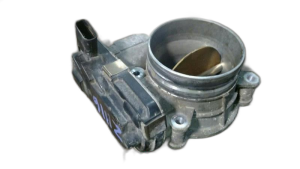
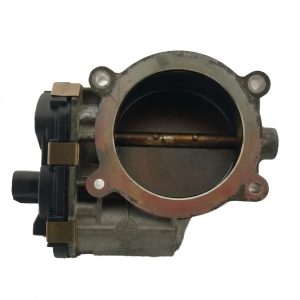
New Aftermarket Parts Available


The information in this article is provided for general reference and educational purposes only. Vehicle specifications, procedures, and part compatibility can vary by production date, trim level, and region. Always consult your vehicle's factory service manual and verify part numbers before purchasing or performing repairs. Safety-critical components such as airbags, seat belts, and braking systems should be installed by a qualified professional.
- Gmc SIERRA 2500:
- 🧭 Diagnostic Flowchart
- 🎬 Helpful Videos
- 🛍️ Shop This Part
- What's Unique About the 2014-2018 Gmc SIERRA 2500
- Symptoms You May Notice
- Most Likely Causes
- Rare But Worth Checking
- Diagnosis Steps
- Parts You'll Likely Need
- Related Codes That Often Appear With This One
- Technical Service Bulletins (TSBs) & Recalls
- Platform-Specific Known Issues
- Mechanic-Grade Diagnostic Values
- Scan Tool Commands That Help
- Wiring & Ground Locations
- Real Owner Repair Stories
- "I Checked Everything" — The Actual Cause
- OEM Part Supersession History
- Model Year Variations Within This Range
- 🎟️ Get 5% Off