

P0506 on 2007-2018 Jeep Wrangler (JK): Low Idle Causes and Fixes
On a 2007-2018 Jeep Wrangler JK, code P0506 means the engine idle speed is lower than expected. The most common cause is a dirty electronic throttle body, which can be cleaned. Other likely causes include a vacuum leak from a failed PCV valve or cracked hoses, particularly on the 3.8L engine.
- P0506 on a Jeep Wrangler JK almost always points to an issue with unmetered air or restricted air at idle.
- Start your diagnosis by thoroughly cleaning the electronic throttle body; this is the most common and cheapest fix.
- If cleaning the throttle body doesn't work, your next step should be to check for vacuum leaks, paying special attention to the PCV valve and its hoses.
- Be aware of which engine your JK has (3.8L or 3.6L), as some parts and common failure points differ between them.
- Don't immediately replace expensive sensors or the throttle body without ruling out simple fixes like cleaning and checking for leaks.
What's Unique About the 2007-2018 Jeep Wrangler (JK)
The Jeep Wrangler JK was produced with two different V6 engines: the 3.8L EGH (2007-2011) and the 3.6L Pentastar (2012-2018). While a dirty throttle body is a common cause for P0506 on both, the 3.8L engine is particularly known for vacuum leaks from a failed PCV valve and deteriorating intake manifold gaskets, which can also trigger this code. The 3.6L model can also suffer from vacuum leaks, but issues with the EVAP purge valve are sometimes linked to this code as well, often in conjunction with other codes like P0441.
Generation note: The 2007-2018 Jeep Wrangler (JK) spans two engine types. The 2007-2011 models have the 3.8L V6, while the 2012-2018 models have the 3.6L Pentastar V6. Some causes, like PCV valve and intake manifold gasket failures, are more prevalent on the 3.8L engine.
Symptoms You May Notice
- Check Engine Light is on
- Engine idles lower than normal
- Rough or unstable idle
- Engine stalling, especially when coming to a stop
- Hesitation or poor acceleration from a stop
- Delayed throttle response or a hard pedal feel.
- Replacing the throttle body assembly when only a cleaning is needed.
- Replacing sensors without first checking for vacuum leaks or a dirty throttle body.
- Assuming a rough idle is from spark plugs or ignition coils without checking for P0506 first.
Most Likely Causes
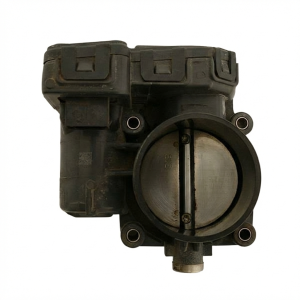
- Dirty Electronic Throttle Body 🔴 High Probability → Shop Fuel Injection Throttle Body Carbon and oil vapor from the PCV system can build up on the throttle plate and in the throttle bore over time, restricting the small amount of air needed to maintain a proper idle.
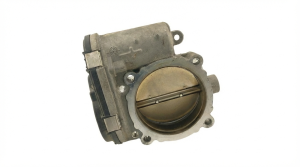
How to confirm: Remove the air intake hose from the throttle body and visually inspect the throttle plate and bore for black carbon buildup. The buildup is often most significant on the back side of the plate.
Typical fix: Clean the throttle body thoroughly with a dedicated throttle body cleaner and a soft cloth or brush. Do not spray cleaner directly into the electronic components. An idle relearn procedure may be necessary afterward.
Est. part cost: $10-$25 - Vacuum Leak 🟡 Medium Probability Rubber and plastic vacuum hoses can become brittle and crack over time due to heat cycles in the engine bay. The 3.8L engine is also known for intake manifold gasket leaks.
How to confirm: Listen for a hissing sound at idle. A more effective method is to use a smoke machine to introduce smoke into the intake system and watch for where it escapes. Pay close attention to the PCV hoses and intake manifold gaskets.
Typical fix: Replace the cracked or broken vacuum hose or gasket. This can range from a simple hose swap to a more involved intake manifold gasket replacement.
Est. part cost: $15-$150 - Faulty PCV Valve 🟡 Medium Probability → Shop PCV Valve The PCV valve is a known failure point, especially on the 3.8L V6 engine. It can get stuck open, creating a significant, unmetered vacuum leak that the PCM cannot compensate for at idle.
How to confirm: Inspect the PCV valve and its connecting hoses for cracks or damage. On the 3.8L, the valve is located on the driver's side valve cover near the firewall. A stuck-open valve may not be visually apparent and testing may be required.
Typical fix: Replace the PCV valve. It is highly recommended to use an OEM Mopar part as some aftermarket parts have been reported to cause similar issues or fail prematurely.
Est. part cost: $15-$50
Rare But Worth Checking
- Faulty EVAP Purge Solenoid: → Shop Vapor Canister A stuck-open EVAP purge solenoid can create a vacuum leak large enough to cause an idle issue and may be accompanied by code P0441. This is a documented issue on many Jeep models.
- PCM Software Issue: While no specific TSB for P0506 on the JK was found, some forum users have reported that a PCM software update resolved erratic idle issues. This is typically a last resort after all mechanical causes are ruled out. Manufacturer Bulletin #1801320 notes that technicians may find P0506 set alongside P0607 (ECU Internal Performance) in some Jeep models.
- Restricted Exhaust: In one forum instance, a user reported the P0506 code appeared after off-roading where the exhaust tip was bent/crushed, restricting flow. Straightening the exhaust resolved the code.
Diagnosis Steps
- Check for any other stored trouble codes. If other codes are present, diagnose them first as P0506 can be a secondary code.
- Inspect the air intake system between the air filter and the throttle body for any loose clamps or cracked hoses.
- Remove the intake duct from the throttle body and inspect for carbon buildup. If dirty, clean it thoroughly with throttle body cleaner.
- Inspect all accessible vacuum lines for cracks, brittleness, or disconnection, paying close attention to the PCV valve and its hoses, especially the elbows.
- If a vacuum leak is suspected but not visible, perform a smoke test to pinpoint the source of the leak.
- On 3.8L engines, pay close attention to the upper and lower intake manifold gaskets as a potential source of a vacuum leak.
- If no vacuum leaks are found and the throttle body is clean, consider testing the EVAP purge solenoid for proper function. You can often feel for suction at the valve's port when it should be closed.
- After any repairs, clear the codes and perform a throttle relearn procedure. This can be done by disconnecting the negative battery terminal for 15-30 minutes, or by following a specific key-on/pedal-press sequence.
Parts You'll Likely Need
- PCV Valve (3.8L V6)
(OEM #04648973AD)— This is a very common failure item on the 2007-2011 3.8L engine that causes a vacuum leak, leading to idle issues.
Trusted brands: Mopar, Crown Automotive
OEM price range: $15-$30
Aftermarket price range: $10-$20 - PCV Valve (3.6L V6)
(OEM #68083202AC)— While less common to fail than on the 3.8L, a faulty PCV valve on the 2012-2018 3.6L engine can still cause idle problems.
Trusted brands: Mopar, Crown Automotive, Gates
OEM price range: $25-$40
Aftermarket price range: $15-$30 - Throttle Body (3.8L V6)
(OEM #04593858AB)— If cleaning does not resolve the issue, the electronic components of the throttle body may have failed, requiring replacement.
Trusted brands: Mopar, SKP, Dorman
OEM price range: $600-$700
Aftermarket price range: $150-$250 - Throttle Body (3.6L V6)
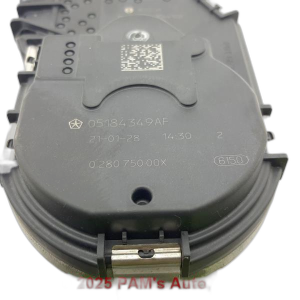
(OEM #5184349AC)— A failure of the internal electronics can necessitate replacement if cleaning does not fix the low idle.
Trusted brands: Mopar, Bosch, Crown Automotive
OEM price range: $200-$300
Aftermarket price range: $100-$180 - Throttle Body Cleaner — This is the first and most crucial part needed for the most common fix: cleaning carbon buildup from the throttle plate.
Trusted brands: CRC, Berryman, Gumout
Aftermarket price range: $10-$25
Related Codes That Often Appear With This One
- P0507 — This code for 'Idle RPM Higher Than Expected' can be caused by the same root issues, such as vacuum leaks or throttle body problems, but the PCM's reaction is different.
- P2172 — This code for 'High Airflow/Vacuum Leak Detected' often appears with P0506, as a significant vacuum leak is a common cause for both.
- P0441 — This code for 'EVAP Purge System Performance' can be triggered by a faulty purge valve, which can also cause a vacuum leak leading to P0506.
Technical Service Bulletins (TSBs) & Recalls
- While no specific TSB for P0506 on the Jeep Wrangler JK was found during research, TSBs for newer Jeep models indicate that P0506 is often a secondary code caused by vacuum leaks (P2172) or EVAP system faults (P0441). Additionally, TSB 09-008-07 for 2007-2008 Wranglers addresses oil seepage from front timing cover porosity, which could potentially contribute to vacuum issues, though it's not a direct cause of P0506
- Manufacturer Bulletin #1807023 and Bulletin #1805322REVA list P0506 (Idle Speed Performance Lower Than Expected) alongside P2172 (High Airflow/Vacuum Leak Detected) and P0441 (EVAP Purge System Performance), suggesting these systems are frequently linked when idle issues occur.
- Bulletin #1801922REVA and Bulletin #1805322 also confirm that P0506 may be found in conjunction with ECU internal performance codes (P0607) or injector circuit performance issues.
Platform-Specific Known Issues
- source — A user on Reddit with a 2014 Wrangler reported getting a P0506 code. The dealership took several days to diagnose the issue, highlighting that while the common causes are simple, diagnosis can sometimes be prolonged if the issue is not immediately obvious. Other users in the thread confirmed that a dirty throttle body or an intake leak are the most common culprits.
- source — Across multiple forum threads, owners of both 3.8L and 3.6L JKs report that a thorough cleaning of the electronic throttle body is the most effective and common first step to resolving a P0506 code. One user on JK-Forum.com shared a photo of their throttle body at 48,000 miles, showing significant carbon buildup, and confirmed cleaning it resolved their rough idle.
Mechanic-Grade Diagnostic Values
- Long-Term Fuel Trim (LTFT) at Idle — expected: Within +/- 10%. Failure: A large negative value (e.g., -15% or more) can indicate an unmetered air leak that the PCM is trying to compensate for by reducing fuel, which can lead to a low idle.
- Manifold Absolute Pressure (MAP) Sensor Voltage at Idle — expected: 1.0V - 2.0V. Failure: Voltage significantly outside this range at idle can indicate a vacuum leak or sensor issue, affecting the PCM's ability to calculate engine load and control idle.
- Throttle Body Bolt Torque — expected: 80 in-lbs (9 N·m). Failure: Over-tightening can crack the plastic throttle body housing, creating a vacuum leak. Under-tightening can allow the gasket to leak.
Scan Tool Commands That Help
- wiTECH (or equivalent): Throttle Body Relearn / ETC Relearn — This function must be performed after cleaning or replacing the electronic throttle body. It forces the PCM to relearn the closed and wide-open positions of the throttle plate, which is critical for correct idle speed control. Failing to do this can cause P0506 to return even after the physical repair is complete.
- Manual Procedure (No Scan Tool): Throttle Pedal Calibration / Relearn — After disconnecting the battery or replacing the throttle body, a manual relearn can be attempted. Turn the ignition to 'ON' (engine off), wait for dash lights to settle, then slowly press the accelerator pedal to the floor and slowly release it. Turn the key off, then start the engine. This helps sync the pedal position sensor with the throttle body.
Wiring & Ground Locations
- G101 / G104 — On the back of the engine, under the heat shield on the passenger side.. These are main engine grounds. Corrosion or looseness here can cause a variety of sensor and actuator problems, including erratic throttle body operation.
- G102 — In the engine bay, just to the left of the passenger side headlamp assembly, near the power steering reservoir.. A poor ground here has been known to cause issues with various accessories and instrument cluster readings. While not a direct engine control ground, electrical noise can affect PCM operation.
- G103 / G105 — On the passenger side of the engine bay, near the battery and fuse box.. These are primary body grounds. A bad connection can affect the entire vehicle's electrical system, including the PCM and its sensor inputs.
- G201 / G203 — Under the kick panel in the passenger footwell, behind the glove box area.. These are interior grounds. While less likely to be the cause, they ground various modules inside the cabin that communicate with the PCM.
Real Owner Repair Stories
- JK-Forum.com user 'Rubichronic' (Jeep Wrangler JK (year not specified)) — P0506 code appeared immediately after off-roading where skid plates took a beating.
❌ Tried (didn't work) Initially suspected vacuum leaks or dirty throttle body.
✅ What actually fixed it The exhaust tailpipe had been crushed, restricting flow. Straightening the exhaust tip and disconnecting the battery to clear the code resolved the issue. - JK-Forum.com user (2008 Jeep Wrangler JK X, 6-speed manual) — ETC and Traction Control lights on, limp mode, stalling when engine bogged below 1,000 RPM, pre-ignition detonation.
❌ Tried (didn't work) Thoroughly cleaning the throttle body., Applying dielectric grease to the electrical connector.
✅ What actually fixed it Replacing the entire electronic throttle body assembly with a new Cardone-brand unit from NAPA. This not only cleared the codes but also fixed the stalling and pre-ignition issues.
OEM Part Supersession History
5184349AC→5184349AD, 5184349AE, 5184349AF— Part has been revised and updated by the manufacturer over time for improvements in performance and reliability.
Heads up: The latest part number (5184349AF) is the recommended replacement for all previous versions on the 3.6L engine.
Diagnostic Flowchart
Other Known Issues on This Vehicle
Issues unrelated to this code that are worth knowing about as an owner of this generation:
- Death Wobble 🔴 High — Common on both stock and lifted JKs, often triggered by hitting a bump at 45-65 mph. Caused by worn front-end components like the track bar, ball joints, or tie rod ends. (Ref: No recall, but a widely acknowledged issue. Fix involves inspecting and replacing worn suspension/steering parts.)
- TIPM (Totally Integrated Power Module) Failure 🔴 High — A very common issue on 2007-2013 models. Causes a wide range of random electrical problems, including fuel pump failure (crank-no-start), horn honking, wipers activating, and battery drain. (Ref: No recall, but numerous complaints led to class-action lawsuits. The fix is a costly replacement or repair of the TIPM.)
- 3.8L (2007-2011) Engine Oil Consumption 🟠 Medium — Many 3.8L engines are known to consume significant amounts of oil (e.g., 1 quart per 1000-1500 miles), often due to issues with piston rings. (Ref: TSB 09-008-07 addressed oil seepage from the timing cover, but widespread consumption is often attributed to internal engine issues.)
- 3.6L (2012-2013) Left Cylinder Head Failure 🔴 High — Early 3.6L Pentastar engines were prone to a failure of the left cylinder head due to valve seat issues, causing ticking noises and misfire codes (P0300, P0302, P0304, P0306). (Ref: Chrysler extended the warranty on the left cylinder head for affected vehicles to 10 years/150,000 miles (Warranty Extension X56, related to TSB 09-002-14).)
- 3.6L (2012-2018) Oil Filter Housing / Oil Cooler Leaks 🟠 Medium — The plastic oil filter housing, located in the engine valley, is prone to cracking and developing oil and/or coolant leaks. This is one of the most common problems on the 3.6L engine.
- Cracked Exhaust Manifolds 🟠 Medium — Both the 3.8L and 3.6L engines are known for developing cracks in the exhaust manifolds, which results in an audible ticking sound, especially when the engine is cold.
- Water Leaks (Hardtop and Soft Top) 🟡 Low — Very common issue where water leaks into the cabin, typically from the Freedom Panels, door seals, or A-pillar area, often resulting in wet floorboards.
Used vs. New Parts: Buying Guide for This Vehicle
When a used part is the smart pick: A used OEM throttle body can be a cost-effective option if the donor vehicle has low mileage and the part is confirmed to be in good working order. Given the high cost of a new OEM unit, a used part from a reputable salvage yard can be a reasonable gamble.
Donor-vehicle mileage cap: roughly under 75000 miles for the part to have meaningful remaining life.
What to inspect on the donor part:
- Check for physical damage, especially cracks around the mounting holes where the plastic can be fragile.
- Ensure the throttle plate moves smoothly by hand (with the unit unplugged) and isn't binding.
- Look for excessive carbon buildup; while it can be cleaned, heavy buildup may indicate a hard life.
- Verify the part number matches your original or its supersessions.
OEM-only on this vehicle (don't cheap out):
- PCV Valve: Forum users across multiple platforms strongly advise against aftermarket PCV valves for both the 3.8L and 3.6L engines. Aftermarket units may have incorrect spring rates or orifice sizes, leading to improper crankcase ventilation, oil consumption, or persistent idle issues.
Aftermarket brands forum-validated for this vehicle:
- Cardone (Throttle Body): One user reported success resolving limp-mode and idle issues with a Cardone replacement throttle body from NAPA after cleaning the original failed to work.
- Bosch (Throttle Body): Bosch is an OEM supplier for many components and is generally considered a high-quality alternative to Mopar for the 3.6L.
Brands owners have reported issues with on this vehicle:
- Generic/No-Name PCV Valves: Unbranded or store-brand PCV valves are frequently reported to fail quickly or not perform to OEM specifications, making the cheap price not worth the potential for continued problems.
Real Owner Stories
Aggregated from forums and TSBs cited above. Mileages and costs reflect what owners reported in those sources.
2014 Jeep Wrangler 3.6L Pentastar V6
Symptoms: The owner reported a P0506 error code. The dealership took several days to diagnose the issue, noting that while causes are often simple, diagnosis can be prolonged if the issue isn't immediately obvious.
What fixed it: Diagnosis focused on a dirty throttle body or an intake leak as the most probable causes.
Source hint: Reddit (r/Jeep) - A user with a 2014 Wrangler reported a P0506 code
2007-2011 Jeep Wrangler 3.8L V6 — 48000 miles
Symptoms: Rough idle and significant carbon buildup visible on the throttle body.
What fixed it: A thorough cleaning of the electronic throttle body.
Source hint: JK-Forum.com - One user on JK-Forum.com shared a photo of their throttle body at 48,000 miles
2007-2018 Jeep Wrangler JK
Symptoms: P0506 code appearing after heavy off-roading.
What fixed it: Repairing a crushed exhaust pipe.
Source hint: JK-Forum.com - One thread details a user getting the code after heavy off-roading
Related OBD-II Codes
Frequently Asked Questions
Is there a specific TSB for the P0506 code on my 2007-2018 Wrangler JK?
I have a 3.8L V6 Wrangler; is there a specific part I should check for this idle issue?
How can I perform an idle relearn on my JK after cleaning the throttle body?
Could my off-roading trip have caused the P0506 code?
Where is the PCV valve located on the 3.8L Wrangler engine?
What is the most common first step for fixing a low idle on a 2014 Wrangler?
Helpful Videos
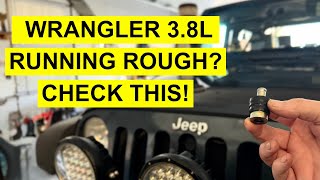
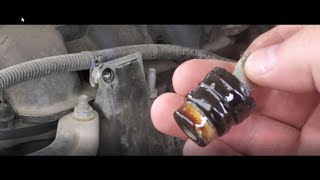
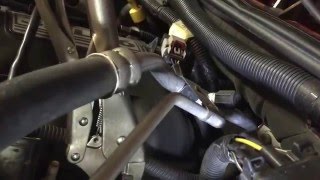
We Have This Part in Stock

The information in this article is provided for general reference and educational purposes only. Vehicle specifications, procedures, and part compatibility can vary by production date, trim level, and region. Always consult your vehicle's factory service manual and verify part numbers before purchasing or performing repairs. Safety-critical components such as airbags, seat belts, and braking systems should be installed by a qualified professional.
- Jeep Wrangler (JK):
- 🧭 Diagnostic Flowchart
- 🎬 Helpful Videos
- 🛍️ Shop This Part
- What's Unique About the 2007-2018 Jeep Wrangler (JK)
- Symptoms You May Notice
- Most Likely Causes
- Rare But Worth Checking
- Diagnosis Steps
- Parts You'll Likely Need
- Related Codes That Often Appear With This One
- Technical Service Bulletins (TSBs) & Recalls
- Platform-Specific Known Issues
- Mechanic-Grade Diagnostic Values
- Scan Tool Commands That Help
- Wiring & Ground Locations
- Real Owner Repair Stories
- OEM Part Supersession History
- Other Known Issues on This Vehicle
- Used vs. New Parts: Buying Guide for This Vehicle
- Real Owner Stories
- 2014 Jeep Wrangler 3.6L Pentastar V6
- 2007-2011 Jeep Wrangler 3.8L V6 — 48000 miles
- 2007-2018 Jeep Wrangler JK
- Related OBD-II Codes
- Frequently Asked Questions
- 🎟️ Get 5% Off