

P0506 on 1995-2002 Kia Sportage: Low Idle Causes and Fixes
On a first-generation Kia Sportage, P0506 is almost always caused by a dirty or failing Idle Air Control (IAC) valve. Cleaning the IAC valve and the throttle body is the most common fix and is a simple, low-cost DIY job. This issue is highly prevalent due to the engine's PCV system design, which allows carbon and oil vapor to clog these components.
- P0506 on a 1995-2002 Sportage means the engine idle speed is too low.
- The most common cause by far is a dirty Idle Air Control (IAC) valve and/or throttle body.
- The fix is often as simple as cleaning these components, which is a very beginner-friendly DIY task.
- Before buying any parts, invest in a can of throttle body cleaner and perform a thorough cleaning.
- Driving with this code can lead to annoying and potentially unsafe stalling in traffic.
What's Unique About the 1995-2002 Kia Sportage
The first-generation Kia Sportage (1995-2002) uses a straightforward, cable-actuated throttle body with a separate, bolt-on Idle Air Control (IAC) valve. This design is based on a Mazda FE-DOHC engine from the era. Unlike modern cars with integrated electronic throttle bodies, troubleshooting idle issues on this Sportage is very direct. The P0506 code almost always points to a simple mechanical issue with the IAC valve or related air passages, making it a common and highly DIY-friendly repair.
Symptoms You May Notice
- Check Engine Light is on
- Engine idles lower than normal (e.g., below 600 RPM) 🎬 Watch: How to adjust the idle RPM on a 1st Gen Sportage
- Rough, unstable, or surging idle
- Engine stalling when coming to a stop, shifting into gear, or when accessories like the A/C are turned on
- Difficulty starting the engine, especially when cold
- Engine may hesitate or stumble on initial acceleration from a stop
- Replacing the throttle position sensor (TPS). The TPS reports the throttle angle to the PCM but does not control the idle speed itself. A faulty TPS will typically cause different codes and drivability issues, though Kia did issue an improved TPS part for early models due to other issues.
Most Likely Causes
- Dirty or Sticking Idle Air Control (IAC) Valve 🔴 High Probability → Shop Idle Air Control Valve Over time, carbon and oil vapor from the PCV system build up on the IAC valve's plunger and in its air passages. This buildup restricts movement and prevents it from allowing enough air into the engine at idle. This is the most common reason for P0506 on this engine.
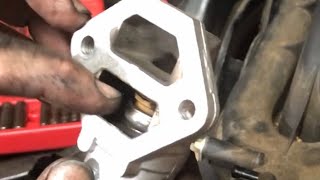
How to confirm: Remove the IAC valve from the throttle body (typically held by two screws). Visually inspect the valve and its air passages for a thick layer of black carbon buildup. The plunger should move freely. A faulty IAC is a very common cause of rough idle on this specific vehicle.
Typical fix: Thoroughly clean the IAC valve and the corresponding ports on the throttle body with throttle body cleaner and a soft brush. Reinstall with a new gasket if the old one is damaged. If cleaning does not resolve the issue, the IAC valve motor may have failed and will require replacement.
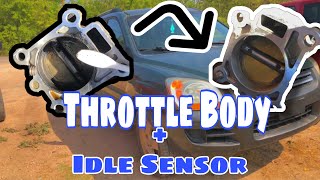
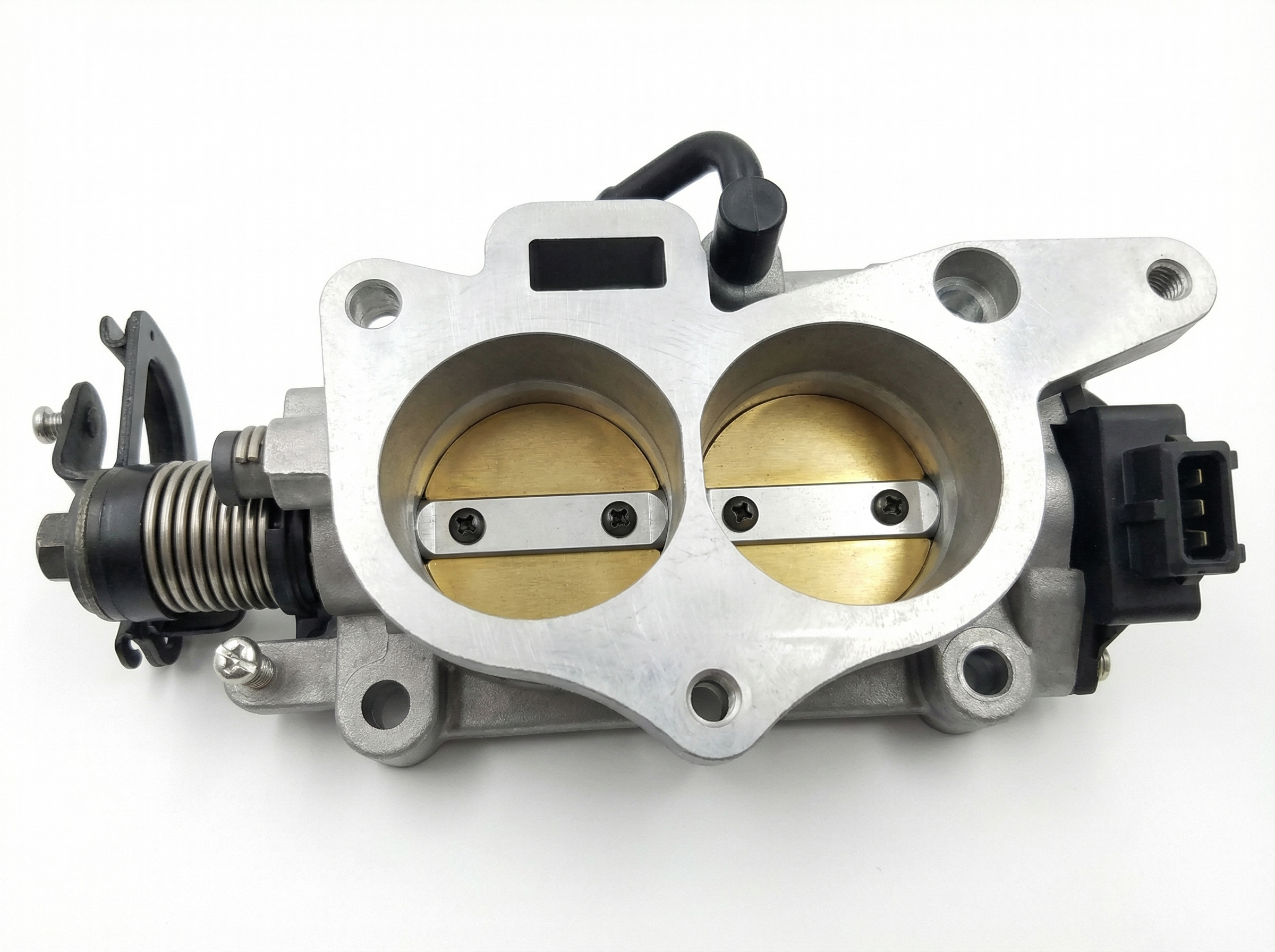
Est. part cost: $5 - $15 (cleaner), $40 - $120 (new valve) - Dirty Throttle Body 🟡 Medium Probability → Shop Fuel Injection Throttle Body Similar to the IAC valve, the throttle body bore and the edges of the throttle plate can accumulate carbon, restricting the small amount of air that is designed to pass through when closed. This can be enough to lower the idle speed below the target.
How to confirm: Remove the air intake hose from the throttle body. Visually inspect for a ring of black carbon buildup around the throttle plate and inside the bore.
Typical fix: With the engine off, spray throttle body cleaner on a rag and carefully wipe the inside of the throttle body and the edges of the throttle plate until clean. Ensure no debris falls into the intake manifold.
Est. part cost: $5 - $15 - Vacuum Leak ⚪ Low Probability While more commonly associated with a high idle (P0507), a significant vacuum leak can sometimes confuse the PCM's idle strategy, leading to instability that may manifest as a low or stalling idle. The rubber vacuum hoses on these older vehicles become brittle and crack over time.
How to confirm: With the engine running, listen for hissing sounds around the intake manifold. You can also spray short bursts of brake cleaner or starting fluid around vacuum lines and gaskets; a change in engine RPM indicates a leak. A smoke test is the most definitive method.
Typical fix: Replace the cracked or broken vacuum hose or leaking gasket.
Est. part cost: $5 - $50
Rare But Worth Checking
- Faulty Power Steering Pressure Switch:
- Failing Alternator or Weak Battery:
Diagnosis Steps
- Check for other stored diagnostic trouble codes that could be contributing to the idle issue.
- Visually inspect the air intake hose between the air filter box and the throttle body for any cracks or loose connections.
- Inspect all accessible vacuum hoses connected to the intake manifold for cracks, brittleness, or disconnection. Pay close attention to the PCV and brake booster hoses.
- Remove the air intake hose from the throttle body. Inspect the throttle bore and plate for carbon buildup.
- Remove the Idle Air Control (IAC) valve from the throttle body. Inspect the valve and its passages for heavy carbon buildup.
- Clean the throttle body and the IAC valve thoroughly with a dedicated throttle body cleaner. Reinstall the components, using a new gasket for the IAC if necessary.
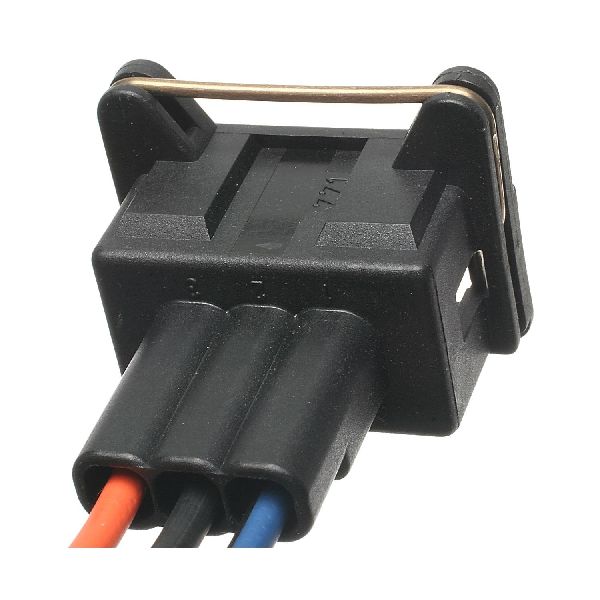
- If cleaning does not resolve the issue, test the IAC valve's motor. With a multimeter set to Ohms, check the resistance between the center power pin and the two outer control pins. You should get a reading on both coils (e.g., 12-16 Ohms). An open or shorted coil indicates a failed valve.
- You can also perform a functional test. With the ignition on (engine off), unplugging and replugging the IAC connector should produce an audible click or buzzing sound as the pintle moves.
- If the IAC valve tests faulty or the problem persists after cleaning, replace the IAC valve.
- If the issue remains, perform a smoke test to definitively rule out any hard-to-find vacuum leaks.
Parts You'll Likely Need
- Idle Air Control Valve
(OEM #0K01120660)— This valve is the primary component responsible for controlling idle speed, and it is highly susceptible to carbon buildup, which causes it to stick and fail. It is the most frequent cause of P0506.
Trusted brands: Standard Motor Products, Walker Products, Airtex/Wells
OEM price range: $150-$250
Aftermarket price range: $40-$120 - Throttle Body Cleaner — Often, the only thing needed is a thorough cleaning of the IAC valve and throttle body passages to restore proper function.
Trusted brands: CRC, Gumout, Berryman
Aftermarket price range: $5-$15
Related Codes That Often Appear With This One
- P0505 — P0505 indicates a general Idle Air Control System Malfunction. It can appear alongside P0506 if the PCM detects an electrical fault (like a bad circuit or failed motor) in the IAC valve in addition to the performance problem of low RPM.
- P0507 — P0507 indicates Idle Control System RPM Higher Than Expected. This code might appear intermittently if the IAC valve is sticking, causing the idle to fluctuate wildly between too high and too low before settling on one fault.
Platform-Specific Known Issues
- Owner Experience: Cleaning is Usually Sufficient: Numerous owner accounts on forums confirm that a thorough cleaning of the IAC valve and throttle body passages resolves the P0506 code and associated stalling symptoms in the vast majority of cases. Replacement of the valve is often unnecessary unless the internal motor has failed electrically.
Documented NHTSA Reports
While P0506 is a common code for this generation of Sportage, reports from other vehicles in the manufacturer's lineup highlight how this code often appears alongside a cascade of other issues. For instance, NHTSA ODI #11513767 describes a situation where P0506 appeared with several other codes including P0087 and P2096, though the owner noted the codes would sometimes disappear. Similarly, NHTSA ODI #11499800 notes an instance where P0506 and P0087 were followed by a series of misfire codes (P0300-P0306), illustrating that idle speed issues can sometimes be part of a broader fuel or propulsion system failure.
Diagnostic Flowchart
Other Known Issues on This Vehicle
Issues unrelated to this code that are worth knowing about as an owner of this generation:
- Interference Engine Timing Belt Failure 🔴 High — The service interval is every 60,000 miles or 5 years. Failure to replace the belt is very likely to cause catastrophic engine damage as the pistons will hit the valves.
- Failure-Prone Vacuum-Actuated 4WD Hubs 🟠 Medium — The vacuum hubs and the steel lines that control them are known to fail due to rust and water/dirt ingress, causing the 4WD system to not engage. Many owners convert to more reliable manual locking hubs. (Ref: A recall was issued for 1998-1999 models to replace steering knuckles due to water ingress causing wheel bearing failure, which was related to the vacuum hub design.)
- Rear Main Seal Oil Leak 🟠 Medium — This is a common oil leak point on higher-mileage engines. The repair is labor-intensive as the transmission must be removed to access the seal.
- Corroded Fuel Tanks 🔴 High — In regions with road salt, the fuel tanks are prone to corrosion, which can lead to fuel leaks. This was common enough that Kia extended the warranty on fuel tanks for 1996-2002 models. (Ref: Kia Service Bulletin 059)
- Defective A/C Compressor Clutch 🟡 Low — The A/C compressor clutch assembly is a common failure point, leading to noise or vibrations when the A/C is on. The compressor itself is often fine, but the clutch must be replaced.
Real Owner Stories
Aggregated from forums and TSBs cited above. Mileages and costs reflect what owners reported in those sources.
2000 Kia Sportage
Symptoms: Idle air control system RPM lower than expected, engine stalling and rough idle.
What fixed it: Cleaning the IAC and throttle body as the first and most likely fix.
Source hint: upkeep.us/forums/t/231/2000-kia-sportage-p0506-idle-air-control-system-rpm-lower-than-expected
1994-2002 Kia Sportage
Symptoms: P0506 code and associated stalling symptoms.
What fixed it: A thorough cleaning of the IAC valve and throttle body passages; replacement of the valve was found to be unnecessary as the motor had not failed electrically.
Source hint: Owner Experience: Cleaning is Usually Sufficient
Related OBD-II Codes
Frequently Asked Questions
Is there a recall or service bulletin for the fuel tank on my 1996-2002 Kia Sportage?
My 1998 Sportage has a P0506 code and the 4WD won't engage. Are these related?
How much does it cost to fix the P0506 idle issue on this Sportage?
Can I just clean the IAC valve on my Sportage, or do I have to replace it?
Why does my Sportage stall when I turn on the A/C or shift into gear?
Is the timing belt a concern while I'm diagnosing this idle code?
Helpful Videos
Used OEM Parts in Stock
New Aftermarket Parts Available


The information in this article is provided for general reference and educational purposes only. Vehicle specifications, procedures, and part compatibility can vary by production date, trim level, and region. Always consult your vehicle's factory service manual and verify part numbers before purchasing or performing repairs. Safety-critical components such as airbags, seat belts, and braking systems should be installed by a qualified professional.
- Kia Sportage:
- 🧭 Diagnostic Flowchart
- 🎬 Helpful Videos
- 🛍️ Shop This Part
- What's Unique About the 1995-2002 Kia Sportage
- Symptoms You May Notice
- Most Likely Causes
- Rare But Worth Checking
- Diagnosis Steps
- Parts You'll Likely Need
- Related Codes That Often Appear With This One
- Platform-Specific Known Issues
- Documented NHTSA Reports
- Other Known Issues on This Vehicle
- Real Owner Stories
- 2000 Kia Sportage
- 1994-2002 Kia Sportage
- Related OBD-II Codes
- Frequently Asked Questions
- 🎟️ Get 5% Off