

P0506 on 2002-2006 Nissan Altima (QR25DE & VQ35DE): Low Idle Causes and Fixes
On a 2002-2006 Nissan Altima with either the 2.5L or 3.5L engine, code P0506 is most often caused by a dirty electronic throttle body that needs cleaning. After cleaning, a specific and often tricky 'Idle Air Volume Relearn' procedure is mandatory. This is a common, low-cost DIY fix if the relearn procedure is performed correctly.
- P0506 on a 2002-2006 Altima almost always points to a dirty throttle body.
- You MUST perform the Idle Air Volume Relearn procedure after cleaning the throttle body or disconnecting the battery.
- The relearn procedure requires very specific timing and may take several tries to get right.
- Before replacing any parts, invest in a can of throttle body cleaner and attempt the cleaning and relearn procedure first.
- If the problem persists, check for vacuum leaks, particularly from the intake manifold gasket, before condemning the expensive throttle body assembly.
What's Unique About the 2002-2006 Nissan Altima
The 2002-2006 (L31 generation) Altima is known for being very sensitive to carbon buildup in the electronic throttle body. Unlike many other vehicles, simply cleaning the throttle body is not enough. You MUST perform a precise, and often frustrating, 'Idle Air Volume Relearn' procedure afterward. Many owners report needing multiple attempts to get the timing of the pedal-and-key sequence just right for the computer to relearn the proper idle position. Success is often indicated by the Check Engine Light flashing in a specific pattern during the procedure. Failure to perform this step correctly is the most common reason the P0506 code (or a new P0507 code for high idle) returns after cleaning.
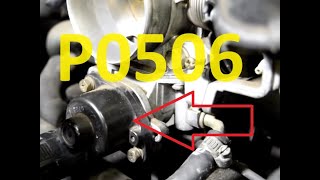
🎬 Watch: Understanding the P0506 code and how to fix it.Symptoms You May Notice
- Engine idle is lower than normal (e.g., below 600 RPM).
- Rough, shaking, or vibrating idle, sometimes mistaken for bad engine mounts.
- Engine stalls when coming to a stop or idling in gear.
- Hesitation when accelerating from a stop.
- Illuminated Check Engine Light.
- Difficulty starting the engine, may require giving it gas to start.
- Replacing the throttle body when it only needed to be cleaned and have the idle relearned.
- Replacing spark plugs or ignition coils, which are unlikely to cause a consistent low idle issue without other misfire-related codes.
- Replacing engine mounts due to a rough idle, when the roughness is caused by the low RPM itself.
Most Likely Causes
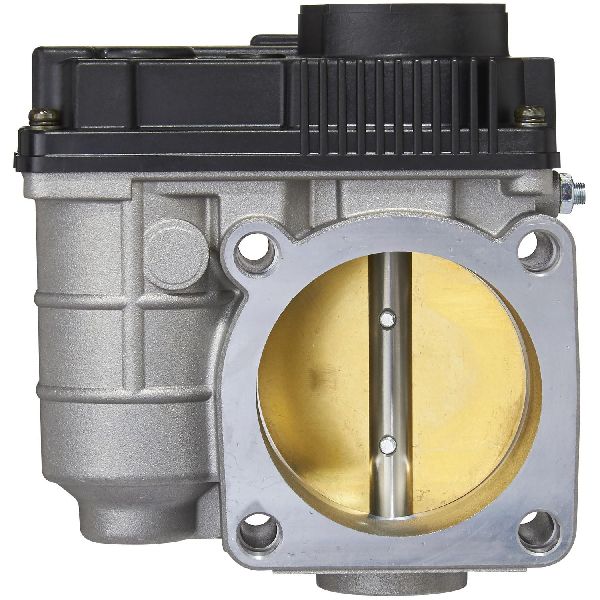
- Dirty Electronic Throttle Body 🔴 High Probability → Shop Fuel Injection Throttle Body The PCV system introduces oil vapor and crankcase gases into the intake manifold. Over time, these vapors bake onto the back of the throttle plate and the throttle bore, creating a thick carbon layer that restricts the small amount of air needed for idle.
How to confirm: Visually inspect the throttle plate and bore for a thick, black layer of carbon or oily sludge. The engine may idle normally if you slightly press the gas pedal, as this manually opens the throttle plate beyond the restricted idle position.
Typical fix: Remove the intake air duct from the throttle body and clean the throttle plate and bore thoroughly with a dedicated throttle body cleaner and a soft, lint-free cloth or brush. Manually open the plate to clean the edges. It is critical to perform the Idle Air Volume Relearn procedure after cleaning.
Est. part cost: $5-$15 for cleaner - Idle Air Volume Relearn Required 🔴 High Probability The ECM loses its learned value for the throttle's closed position if the battery is disconnected or after the throttle body is cleaned or replaced. It cannot idle correctly until it is recalibrated. This platform is notoriously picky about the timing for the manual relearn procedure. 🎬 See this easy walkthrough of the 2005 Altima relearn process.
How to confirm: This issue will be present immediately after cleaning the throttle body, disconnecting the battery, or replacing the throttle body. The idle will be erratic, too high (P0507), or too low (P0506).
Typical fix: Perform the specific, timed Idle Air Volume Relearn procedure. This involves a sequence of key turns and accelerator pedal presses that must be timed precisely. A professional scan tool like Nissan's CONSULT can perform this function instantly but is expensive.
Est. part cost: $0 - Vacuum Leak 🟡 Medium Probability With age and countless heat cycles, rubber vacuum hoses and plastic intake components become brittle and crack. The intake manifold gaskets are a known weak point, especially if the manifold has been removed for other service (like spark plug replacement on the V6) and the gasket was reused.
How to confirm: Listen for a hissing sound near the engine. A mechanic can perform a smoke test to pinpoint the leak. You can also carefully spray brake cleaner or starter fluid around gasket areas and vacuum lines; a change in engine idle indicates you've found the leak.
Typical fix: Replace the leaking gasket or hose. The upper intake manifold gasket is a common failure point on the VQ35DE engine.
Est. part cost: $10-$100
Rare But Worth Checking
- Faulty Electronic Throttle Body Assembly: → Shop Fuel Injection Throttle Body If cleaning the throttle body and performing the relearn procedure does not resolve the issue, and no vacuum leaks are found, the throttle body's internal motor or position sensor may have failed. This is a replacement scenario.
- Faulty PCV Valve: → Shop PCV Valve A PCV valve that is stuck open can create a significant vacuum leak, disrupting the air-fuel mixture and leading to idle control problems.
- Dirty or Faulty Mass Air Flow (MAF) Sensor: A contaminated MAF sensor can provide inaccurate airflow data to the ECM, causing it to command an incorrect idle speed. Cleaning the MAF sensor with a dedicated MAF cleaner can sometimes resolve this.
Diagnosis Steps
- Verify the code with a scanner and check for any other stored codes. Address other codes first.
- Warm the engine to full operating temperature. The coolant temperature should be above 158°F (70°C). This is critical for the relearn procedure.
- Visually inspect the air intake hose for cracks and ensure it is securely connected.
- Remove the intake hose from the throttle body. Inspect the throttle plate and bore for carbon buildup.
- If dirty, disconnect the battery negative terminal. Clean the throttle body thoroughly using a dedicated throttle body cleaner and a soft rag. Manually open the plate to clean the edges and bore. Do NOT spray directly into the electronics.
- Reassemble the intake, reconnect the battery, and start the engine. Let it idle and see if the code returns. If the idle is now high or still low, proceed to the relearn procedures.
- Perform the 'Accelerator Pedal Released Position Learning' and 'Throttle Valve Closed Position Learning'. This is a prerequisite for the idle relearn. A common method is: Turn ignition ON (engine off), wait 2 seconds, turn ignition OFF, wait 10 seconds. Repeat this 2-3 times.
- Perform the 'Idle Air Volume Learning' procedure. This is the most critical step and requires exact timing. A widely cited manual method is:
- a. Ensure engine is fully warm, all electrical loads (A/C, radio, lights, defroster) are OFF, and the steering wheel is straight.
- b. Turn ignition OFF and wait at least 10 seconds.
- c. Turn ignition ON (engine off) and wait 3 seconds.
- d. Fully press and release the accelerator pedal 5 times within 5 seconds.
- e. Wait exactly 7 seconds.
- f. Press and hold the accelerator pedal down. After about 10 seconds, the Check Engine Light (MIL) will start to blink slowly. Continue holding the pedal.
- g. After about another 10 seconds, the MIL will stop blinking and stay solid. Within 3 seconds of the light going solid, release the pedal and start the engine.
- h. Let the engine idle for at least 20-30 seconds. The idle should settle to the target RPM (around 650). If it works, you're done. If not, repeat the procedure, paying close attention to the timing. 🎬 Watch: A visual guide to mastering the idle relearn timing.
- If the idle is still low after multiple relearn attempts, check for vacuum leaks using a smoke machine, which is the most effective method. Pay close attention to the intake manifold gaskets and PCV hoses.
- If no leaks are found and the relearn procedure fails repeatedly, the electronic throttle body itself may be faulty and require replacement.
Parts You'll Likely Need
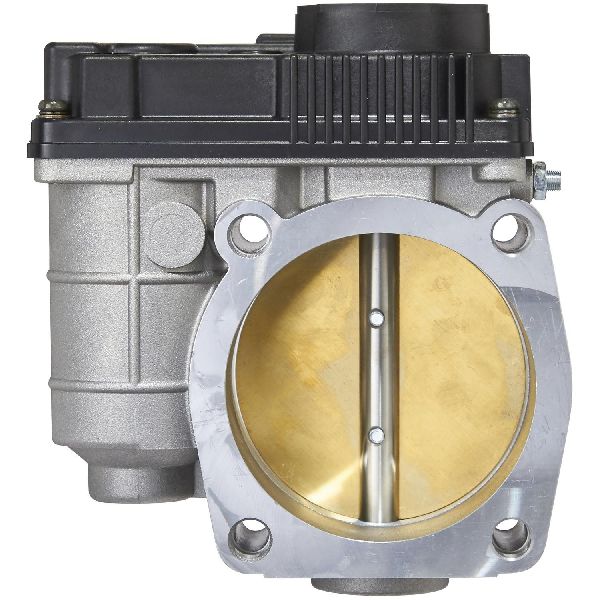
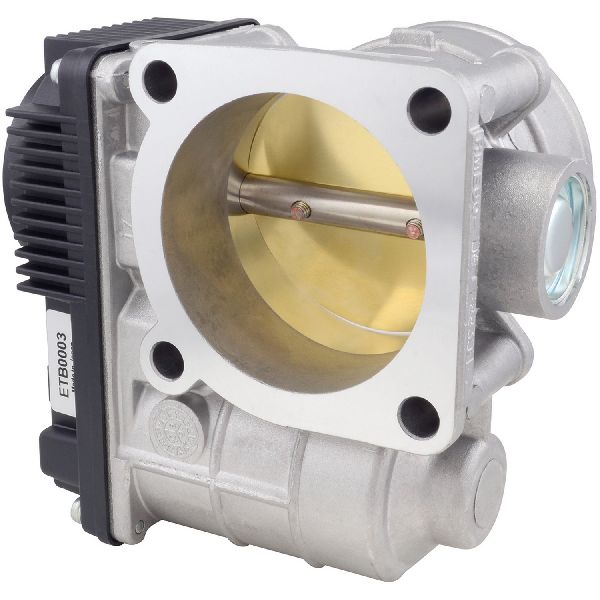
- Electronic Throttle Body
(OEM #QR25DE (2.5L): 16119-AE013 (superseded by 16119-AE01A, 16119-AE01B, 16119-AE01C). VQ35DE (3.5L): 16119-8J103 (or SERA576-01).)— This part is replaced only if cleaning and relearning fail to fix the problem, indicating an internal failure of the unit's motor or position sensor.
Trusted brands: Hitachi (OEM supplier), Bosch, Aisin, Standard Motor Products
OEM price range: $300-$500
Aftermarket price range: $100-$250 - Intake Manifold Gasket — A common source of vacuum leaks that can cause the P0506 code, especially on the V6 after other service.
Trusted brands: Fel-Pro, Mahle, Victor Reinz
OEM price range: $20-$40
Aftermarket price range: $10-$25
Related Codes That Often Appear With This One
- P0507 — If a cleaning or repair attempt is made without a successful relearn, the idle may become too high, triggering the 'Idle RPM Higher Than Expected' code. This is very common on this platform.
Platform-Specific Known Issues
- Engine-Specific Part Numbers: The 2.5L (QR25DE) and 3.5L (VQ35DE) engines use different throttle bodies. Ensure you purchase the correct part for your engine. The 2.5L part is often 16119-AE013 or a successor, while the 3.5L part is often 16119-8J103.
- Real-World Relearn Frustration: Owner forums are filled with stories of the manual relearn procedure taking 5, 10, or even more attempts to work. The timing must be perfect. A common point of failure is not waiting the full 7 seconds after the pedal pumps, or not starting the engine within 3 seconds of the MIL going solid. Using a stopwatch is highly recommended.
Mechanic-Grade Diagnostic Values
- Throttle Position Sensor (TPS) 1 & 2 Voltage at Closed Throttle — expected: ~0.4V - 0.6V (Key On, Engine Off). Failure: Voltage significantly higher or lower than this range, or 0V, indicates a faulty sensor or wiring issue. The two sensors should have a corresponding inverse relationship as the throttle opens.
- Throttle Position Sensor (TPS) 1 Voltage at Wide Open Throttle (WOT) — expected: > 4.0V (Key On, Engine Off). Failure: Voltage that does not reach approximately 4.0V indicates a sensor with a limited range or a fault.
- Mass Air Flow (MAF) Sensor Reading at Hot Idle — expected: QR25DE (2.5L): 1.5 - 3.5 g/s. VQ35DE (3.5L): 2.5 - 5.0 g/s.. Failure: A reading significantly outside this range can indicate a dirty MAF sensor, a vacuum leak (if higher), or an intake restriction (if lower).
- Charging System Voltage at Idle — expected: 13.2V - 14.8V. Failure: Voltage below 13.0V at idle can cause the ECM and throttle body motor to behave erratically, potentially setting a P0506 code. This indicates a failing alternator or poor battery/ground connections.
Scan Tool Commands That Help
- Nissan CONSULT-II / CONSULT-III or compatible aftermarket scanner: Idle Air Volume Learn (IAVL) — This is the mandatory final step after cleaning or replacing the electronic throttle body, or after disconnecting the vehicle's battery for an extended period. It resets and calibrates the base idle position for the ECM.
Wiring & Ground Locations
- ECM Location — Behind the glove box compartment.. The ECM controls the electronic throttle body. A visual inspection for water intrusion or connector damage at the ECM is a valid, though rare, diagnostic step.
- Grounds: F14, F15, F16, F17 — Located on the front of the engine.. These are primary engine grounds. The Electric Throttle Control Actuator relies on a solid ground connection. A loose or corroded ground here can cause erratic voltage and unpredictable throttle behavior, leading to idle codes.
- Throttle Control Motor Relay — Located in the IPDM E/R (Intelligent Power Distribution Module Engine Room), which is the main fuse/relay box in the engine compartment, near the battery.. This relay provides power to the throttle motor. A failure of this relay will cause a complete loss of throttle control and can set various throttle-related codes, including P0506 if the failure mode results in a closed throttle.
Real Owner Repair Stories
- NissanClub forum user discussion (2005 Nissan Altima 2.5S) — P0506 code, low and rough idle, occasional stalling at stops. The car would sometimes struggle to stay running unless the A/C was on, which raises the idle.
❌ Tried (didn't work) Cleaned the throttle body (no change)., Performed the idle air volume relearn procedure multiple times (no change)., Replaced the throttle body with a new unit (no change)., Performed a smoke test to check for vacuum leaks (no leaks found).
✅ What actually fixed it The alternator was failing. Its voltage output at idle was dropping below 13.0V, causing the ECM and electronic throttle body to function incorrectly. Replacing the alternator and then performing the idle relearn procedure one final time resolved the P0506 code and all idle issues.
"I Checked Everything" — The Actual Cause
- In one documented case, a 2005 Altima with P0506 passed a smoke test, indicating no vacuum leaks. After replacing the throttle body and repeatedly failing the relearn procedure, the root cause was identified as a failing alternator. The low and unstable voltage at idle was not sufficient for the electronic throttle control system to maintain the target RPM, even though no alternator-specific codes were present.
OEM Part Supersession History
16119-AE010, 16119-AE011, 16119-AE013→16119-AE01A, then 16119-AE01B, then 16119-AE01C— Standard revisions by the manufacturer to improve reliability, address minor flaws, or change suppliers over the production run.
Heads up: All parts in this supersession chain (AE01x series) are for the QR25DE 2.5L engine and are considered interchangeable. However, it is always best to install the latest available revision (16119-AE01C).
Model Year Variations Within This Range
- 2005-2006: The 2005 model year introduced a mid-generation facelift. This included a new front grille, redesigned interior, and all-red taillights. The VQ35DE V6 received a minor power increase from 245hp to 250hp. While the fundamental cause of P0506 (dirty throttle body) remains the same, there could be minor differences in ECM software or wiring harness connectors compared to the 2002-2004 models. Always verify part numbers by VIN.
Diagnostic Flowchart
Used vs. New Parts: Buying Guide for This Vehicle
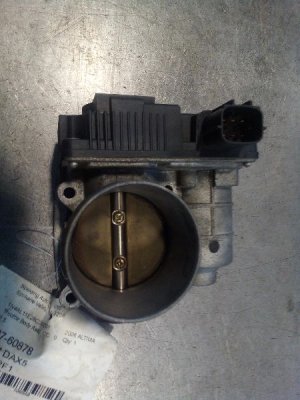
When a used part is the smart pick: A used throttle body is generally NOT recommended for this repair. The primary cause of P0506 is carbon buildup, which a used part will also have. The cost of a can of throttle body cleaner ($10-$15) is far less than a used part, and cleaning is the most likely fix. A used part only makes sense if you have definitively diagnosed an electronic failure of your current throttle body and a new OEM part is not financially viable.
Donor-vehicle mileage cap: roughly under 50000 miles for the part to have meaningful remaining life.
What to inspect on the donor part:
- Ask for the VIN of the donor car to verify compatibility and check its history.
- Inspect the throttle plate and bore for any deep scratches or scoring; light carbon is expected, but physical damage is a red flag.
- Ensure the electrical connector pins are straight, clean, and free of corrosion.
- If possible, check that the throttle plate moves smoothly by hand (with gentle pressure) and returns to its closed position without sticking.
OEM-only on this vehicle (don't cheap out):
- While not strictly OEM-only, the Electronic Throttle Body is a critical component. The OEM supplier is Hitachi. Using a Hitachi-branded part is the safest bet for compatibility and avoiding issues with the sensitive relearn procedure.
Aftermarket brands forum-validated for this vehicle:
- Hitachi (OEM)
- Aisin
- Bosch
- Standard Motor Products (SMP)
Brands owners have reported issues with on this vehicle:
- Unnamed, no-brand 'white box' parts from online marketplaces. These often have lower quality control for the internal electronics and may fail to calibrate correctly during the relearn procedure, causing more frustration than the original problem.
Real Owner Stories
Aggregated from forums and TSBs cited above. Mileages and costs reflect what owners reported in those sources.
2002-2008 Nissan Maxima (3.5L VQ35DE)
Symptoms: Experienced a very low idle and code P0506 immediately after removing the intake manifold to change the spark plugs.
What fixed it: The issue was diagnosed as a likely vacuum leak caused by reusing the old intake manifold gasket. Replacing the gasket resolved the problem.
Source hint: Maxima Forums - 'Very low idle - Code p0506'
2002-2006 Nissan Altima
Symptoms: Low or erratic idle after servicing the throttle body, which required the relearn procedure.
What fixed it: The manual Idle Air Volume Relearn procedure eventually worked, but it took over 10 attempts due to the strict timing requirements. Using a stopwatch and watching for the check engine light to go solid were key to success.
Source hint: vehicle_specific_issues - 'Real-World Relearn Frustration'
Related OBD-II Codes
Frequently Asked Questions
Why is the Idle Air Volume Relearn procedure so difficult on my 2002-2006 Altima?
I just cleaned my throttle body and now the idle is worse. What happened?
I have the V6 Altima. Is there anything specific I should check for a P0506 code?
What is the most common cause for P0506 on this specific Altima?
Is there a trick to know if the manual relearn procedure is working correctly?
Do I have to do the relearn procedure if I only clean the throttle body?
Helpful Videos
Used OEM Parts in Stock
New Aftermarket Parts Available


The information in this article is provided for general reference and educational purposes only. Vehicle specifications, procedures, and part compatibility can vary by production date, trim level, and region. Always consult your vehicle's factory service manual and verify part numbers before purchasing or performing repairs. Safety-critical components such as airbags, seat belts, and braking systems should be installed by a qualified professional.
- Nissan Altima:
- 🧭 Diagnostic Flowchart
- 🎬 Helpful Videos
- 🛍️ Shop This Part
- What's Unique About the 2002-2006 Nissan Altima
- Symptoms You May Notice
- Most Likely Causes
- Rare But Worth Checking
- Diagnosis Steps
- Parts You'll Likely Need
- Related Codes That Often Appear With This One
- Platform-Specific Known Issues
- Mechanic-Grade Diagnostic Values
- Scan Tool Commands That Help
- Wiring & Ground Locations
- Real Owner Repair Stories
- "I Checked Everything" — The Actual Cause
- OEM Part Supersession History
- Model Year Variations Within This Range
- Used vs. New Parts: Buying Guide for This Vehicle
- Real Owner Stories
- 2002-2008 Nissan Maxima (3.5L VQ35DE)
- 2002-2006 Nissan Altima
- Related OBD-II Codes
- Frequently Asked Questions
- 🎟️ Get 5% Off