

P0506 on 2019-2020 Ram 2500 6.7L Cummins: Low Idle Causes and Fixes
On a 2019-2020 Ram 2500 with the 6.7L Cummins, code P0506 is most often caused by a needed Powertrain Control Module (PCM) software update or a dirty intake air throttle valve. Before replacing parts, check for applicable TSBs, as a dealer reflash is the official fix for many related issues. Cleaning the soot-caked throttle valve is a common and effective first mechanical step. This code is frequently accompanied by other DTCs, which strongly indicates a software update is the required solution.
- For the 2019-2020 Ram 2500 6.7L Cummins, P0506 is very often a software issue that requires a dealer to reflash the Powertrain Control Module (PCM).
- Always check for other trouble codes. P0506 is frequently accompanied by emissions and turbo codes (P0299, P20EE), which strongly indicates a software update is the correct fix.
- The most common mechanical cause is a dirty intake air throttle valve due to soot buildup. Cleaning this part is a simple and effective first diagnostic step before considering replacement.
- Do not ignore this code. While the truck is drivable, the engine may stall at stops, creating a potential safety hazard.
What's Unique About the 2019-2020 Ram 2500
On the 5th generation Ram 2500 with the 6.7L Cummins, P0506 is rarely an isolated fault. It is frequently a symptom of a broader powertrain calibration issue that requires a software update. Manufacturer Technical Service Bulletins (TSBs) confirm that P0506 often appears with a cluster of other codes related to the turbo, emissions, and fuel systems (like P0299, P20EE, and P1451). This large grouping of codes points to a required PCM software update rather than a single faulty mechanical part, as the updates often contain improved logic for idle stability, especially when the A/C compressor cycles or when shifting into reverse in cold weather.
Diagnostic Flowchart
Tap your situation to follow the diagnostic path that matches what you're seeing on this vehicle.
Symptoms You May Notice
- Check Engine Light (MIL) is on
- Low or rough idle, sometimes described as an idle fluctuation or tachometer bounce.
- Engine stalling when coming to a stop or shifting into reverse, especially in cold ambient temperatures.
- Unstable idle when the A/C compressor cycles.
- Hesitation or stumble on acceleration, particularly during engine warm-up.
- Harsh downshift clunk during exhaust brake deceleration.
- Replacing the throttle body when only a cleaning is needed.
- Replacing sensors without checking for vacuum leaks or required software updates first.
- Replacing the accelerator pedal position sensor; P0506 relates to the PCM's control of idle, not the driver's input.
Most Likely Causes
- Powertrain Control Module (PCM) Software Update Needed 🔴 High Probability Ram has issued multiple TSBs for 2019-2020 models that specifically address P0506 and other codes via a PCM reflash. TSB 18-066-23 (for 2019 models) and TSB 18-067-23 (for 2020 models, superseding 18-102-22REVA) are the primary fixes. These updates correct logic for a wide range of issues including idle instability, idle fluctuation, and stalling when shifting to reverse.
How to confirm: A Ram dealership or a properly equipped independent shop can check your vehicle's current software calibration number against the latest available version using a wiTECH scan tool. The presence of multiple codes listed in the TSBs alongside P0506 is a strong indicator.
Typical fix: Reprogramming the PCM with the latest manufacturer software. This is a dealer-level or specialist repair that addresses a large batch of potential DTCs and drivability complaints.
Est. part cost: $0-$250 (Labor for reflash) - Dirty or Sticking Intake Air Throttle Valve 🔴 High Probability → Shop Fuel Injection Throttle Body The 6.7L Cummins routes exhaust gas for the EGR system, which can cause soot and carbon to build up on the intake throttle valve. This buildup restricts the movement of the throttle plate, preventing it from managing idle airflow correctly. This is a very common first mechanical check for this code.
How to confirm: Remove the intake tube connected to the throttle body. Visually inspect the throttle plate and bore for black, sooty buildup. You can also use a scan tool with bidirectional controls (like wiTECH) to command the valve open and closed to see if it moves smoothly or sticks.
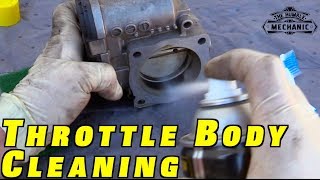
Typical fix: Remove the throttle valve and clean it thoroughly with throttle body cleaner and a soft brush or rag. Ensure the engine is cold before cleaning. If cleaning doesn't resolve the issue or the internal motor has failed (confirmed via scan tool test), the entire unit must be replaced. An idle relearn procedure may be required after cleaning or replacement.
Est. part cost: $5-$20 (cleaner) or $200-$500 (replacement part) - Vacuum or Intake Air Leak 🟡 Medium Probability The complex air intake system on a turbo-diesel, including charge air cooler boots and various gaskets, can develop leaks over time from heat and vibration, allowing unmetered air to enter the engine. This disrupts the air-fuel ratio and can cause the idle to drop.
How to confirm: Visually inspect all vacuum lines and the intake system from the air filter to the engine for obvious cracks, loose clamps, or damage. A smoke test is the most effective method, where a machine fills the intake with smoke to reveal the precise location of any leaks.
Typical fix: Replace the cracked hose, failed gasket, or tighten loose connections. The intake manifold gasket is a common source of such leaks.
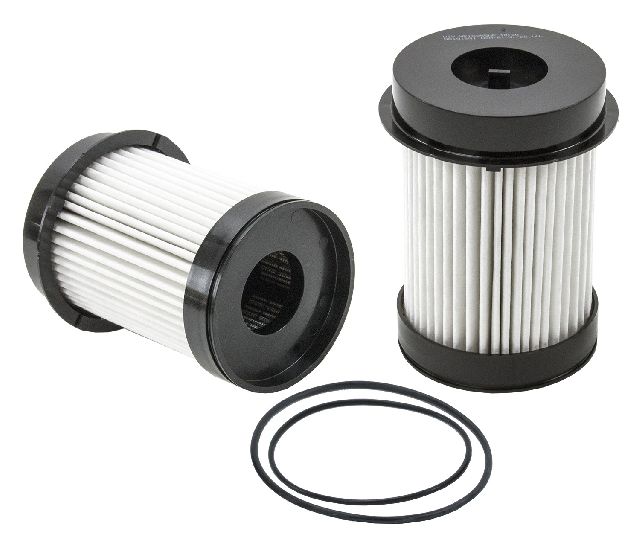
Est. part cost: $10-$80 - Clogged Fuel Filters ⚪ Low Probability → Shop Fuel Water Separator Filter Restricted fuel flow from clogged filters is a routine maintenance issue that can starve the engine for fuel at idle, causing the RPM to drop below the target. While less common than software or throttle body issues for this specific code, it should not be overlooked.
How to confirm: Check the vehicle's maintenance history to see when the fuel filters were last replaced. Monitoring fuel pressure with a scan tool can also indicate a restriction. A sudden loss of power under load is another symptom.
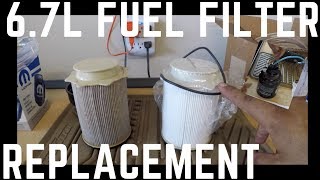
Typical fix: Replace both the chassis-mounted and engine-mounted fuel filters using OEM Mopar or Fleetguard filters for best results.
Est. part cost: $80-$150
Rare But Worth Checking
- Failing Exhaust Gas Recirculation (EGR) Valve:
Diagnosis Steps
- Scan the PCM for all stored trouble codes. Note any other codes that appear with P0506, as they are critical clues pointing towards a software update.
- Check with a dealer or online database for any open recalls or TSBs (like TSB 18-066-23 for 2019 models or TSB 18-067-23 for 2020 models) that apply to your vehicle's VIN. A software update is the most probable fix if multiple codes are present.
- Visually inspect the entire air intake system, from the air filter to the throttle body, for loose connections, cracks, or disconnected hoses.
- Perform a smoke test to definitively identify any vacuum or intake air leaks, which are common on these engines.
- Remove the intake tube and inspect the electronic throttle valve for heavy soot or carbon buildup. The plate should move freely.
- If dirty, clean the throttle valve thoroughly. Reinstall and perform an idle relearn procedure if required, which can be done with a scan tool or by a specific drive cycle.
- If the problem persists, check fuel filter service history and consider replacing them if they are overdue, using quality OEM or Fleetguard filters.
- If all mechanical checks pass, the issue is highly likely to be software-related, requiring a PCM reflash at a dealership or qualified shop.
Parts You'll Likely Need
- Intake Air Throttle Valve
(OEM #68253198AA)— This valve gets clogged with soot from the EGR system, causing it to stick and disrupt idle airflow. While often just needing a cleaning, the unit must be replaced if the internal motor fails.
Trusted brands: Mopar, Bosch, Dorman
OEM price range: $400-$800
Aftermarket price range: $200-$350 - Fuel Filter Set
(OEM #68436631AA (Engine Mounted), 68157291AA (Chassis Mounted))— Clogged fuel filters are a routine maintenance item that can restrict fuel flow, leading to a low idle condition. Using quality filters is critical.
Trusted brands: Mopar, Fleetguard
OEM price range: $100-$150
Aftermarket price range: $80-$120 - Intake Manifold Gasket — If an intake air leak is detected via a smoke test, the intake manifold gasket is a potential source of the leak and would need to be replaced.
Trusted brands: Mopar, Mahle, Fel-Pro
OEM price range: $40-$80
Aftermarket price range: $20-$50
Related Codes That Often Appear With This One
- P0299 — Turbocharger Underboost. This code is explicitly listed in TSBs 18-066-23 and 18-067-23 alongside P0506, indicating a common software-related root cause.
- P20EE — SCR NOx Catalyst Efficiency Below Threshold. This emissions-related code is also frequently grouped with P0506 in manufacturer TSBs, suggesting a PCM software update is needed to address the monitoring logic for both systems.
- P1451 — Diesel Particulate Filter System Performance. Like P20EE, this code's appearance with P0506 points towards a comprehensive software calibration issue that a PCM reflash is designed to fix.
- P242F / P2463 — DPF Restriction (Ash or Soot). These codes are also mentioned in the same TSBs. An engine struggling with aftertreatment issues can sometimes have unstable idle.
Technical Service Bulletins (TSBs) & Recalls
- 1810222REVA: For 2020 models, lists P0506 with other DTCs that can be resolved with a PCM software update. Addresses idle instability and stalling.
- 1806623: For 2019 models, lists P0506 with other powertrain codes, indicating a likely software fix.
- 1810122REVA: Also for 2019 models, groups P0506 with emissions codes, reinforcing the software connection.
- 18-067-23: Supersedes TSB 18-102-22 REV. A for 2020 models and lists P0506 as one of over 20 DTCs addressed by a PCM software update.
Platform-Specific Known Issues
- TSB #18-067-23 (supersedes 18-102-22REVA) is the most significant issue for 2020 models. It involves a PCM software update to fix P0506 along with over 20 other codes and addresses symptoms like 'Idle Instability', 'Idle fluctuation', and 'Stall when putting in reverse in cold ambient temps'.
- TSB #18-066-23 is the equivalent bulletin for 2019 models, also pointing to a comprehensive software calibration fix for P0506 and a long list of other DTCs and symptoms like 'Rough idle'.
- Emissions Recall VB6 was issued for some 2019 models to update engine control software, which can be related to idle control issues.
Mechanic-Grade Diagnostic Values
- Fuel Rail Pressure during Cranking/Start — expected: Approximately 4,000 PSI. Failure: Significantly lower pressure can prevent starting or cause stalling at idle.
- Manually Commanded High Idle RPM via Scan Tool — expected: 1100 to 1500 RPM. Failure: If the engine fails to respond to a commanded high idle, it points to a problem in the idle control system (throttle valve, fuel delivery) rather than a simple sensor issue.
- Battery System Voltage (Engine Running) — expected: 13.5 - 14.5 Volts. Failure: Low or unstable voltage can cause the PCM and other modules to behave erratically, potentially triggering false codes.
Scan Tool Commands That Help
- wiTECH: Intake Air Throttle Valve Actuator Test — Use this bidirectional control to command the throttle plate open and closed while visually inspecting it. A failure to move smoothly or achieve the commanded position confirms a faulty throttle body.
- wiTECH: Fuel Injector Cutoff Test — If P0506 is accompanied by a rough idle, this test can be used to disable one injector at a time to see if the idle quality changes, helping to isolate a single faulty injector that may be causing the instability. TSBs 18-066-23 and 18-067-23 note a 'fix' for this test, improving its reliability.
- wiTECH: Oil Life Restore — This procedure must be performed after reprogramming the PCM, as the flash process can reset the oil life monitor. This is noted in TSBs 18-066-23 and 18-067-23.
- wiTECH: Quicklearn — This transmission adaptation procedure is required after a PCM reflash on vehicles with the 68RFE transmission, as noted in TSBs 18-066-23 and 18-067-23.
Wiring & Ground Locations
- G104 — Located in the left front of the engine compartment.. This is a primary engine ground point. A loose or corroded connection here can cause unstable voltage and communication issues for the PCM and its sensors, potentially leading to incorrect idle control calculations and codes like P0506.
- PCM Connectors — Located on the driver's side of the engine block, below the intake horn.. All power, ground, and sensor signals for the PCM, including those for the electronic throttle control system, pass through these main connectors. Inspecting them for corrosion or pushed-out pins is a critical step in diagnosing electrical faults.
- Electronic Throttle Body Connector — Directly on the intake air throttle valve assembly.. A damaged connector or wiring pigtail at the throttle body itself can interrupt the signal between the PCM and the throttle motor, causing idle control faults.
Model Year Variations Within This Range
- 2019: The primary software update to address P0506 and a cluster of other codes is TSB 18-066-23. This TSB supersedes a previous version (18-101-22 REV. A) and contains numerous software enhancements for idle stability, cold weather performance, and shift quality.
- 2020: The primary software update for this model year is TSB 18-067-23, which supersedes TSB 18-102-22 REV. A. It addresses a similar list of codes as the 2019 TSB but is a different calibration. This update was also released as Rapid Service Update (RSU) 21-027 and is contingent on the vehicle having the updated CP3 fuel pump installed (Recall Y78).
Helpful Videos

We Have This Part in Stock


The information in this article is provided for general reference and educational purposes only. Vehicle specifications, procedures, and part compatibility can vary by production date, trim level, and region. Always consult your vehicle's factory service manual and verify part numbers before purchasing or performing repairs. Safety-critical components such as airbags, seat belts, and braking systems should be installed by a qualified professional.
- Ram 2500:
- 🧭 Diagnostic Flowchart
- 🎬 Helpful Videos
- 🛍️ Shop This Part
- What's Unique About the 2019-2020 Ram 2500
- Symptoms You May Notice
- Most Likely Causes
- Rare But Worth Checking
- Diagnosis Steps
- Parts You'll Likely Need
- Related Codes That Often Appear With This One
- Technical Service Bulletins (TSBs) & Recalls
- Platform-Specific Known Issues
- Mechanic-Grade Diagnostic Values
- Scan Tool Commands That Help
- Wiring & Ground Locations
- Model Year Variations Within This Range
- 🎟️ Get 5% Off