

P0506 on 2024-2026 Ram 2500: Causes and Fixes for Low Idle RPM
On a 2024-2026 Ram 2500 with the 6.7L Cummins, code P0506 means the engine's idle speed is too low. This is often caused by a dirty electronic throttle body or a vacuum leak. However, on the Cummins, it's frequently a secondary code pointing to issues in the fuel or emissions systems. Cleaning the throttle body is a common first step, but always check for other DTCs and relevant TSBs.
- P0506 on your Ram 2500 Cummins means the idle is too low, most often due to a dirty throttle body.
- Before replacing parts, a thorough cleaning of the throttle body is the most common and cost-effective fix.
- Always check for other trouble codes; on this truck, P0506 is often a symptom of a larger issue in the fuel or emissions system.
- Check for vacuum leaks around the intake manifold and hoses, as this is another frequent cause.
- Consult a dealer or qualified shop to see if your vehicle's software is up to date, as a PCM flash can sometimes resolve this code.
What's Unique About the 2024-2026 Ram 2500
On the 6.7L Cummins engine, P0506 is frequently not an isolated issue but a symptom of a broader problem within the complex fuel and emissions systems. Manufacturer Technical Service Bulletins (TSBs) often show P0506 appearing alongside codes for the low-pressure fuel system (P2540), turbocharger underboost (P0299), and the diesel aftertreatment system (P20EE, P242F). This indicates that a low idle may be the result of issues like poor fuel delivery, a restricted DPF, or even a simple software glitch requiring a PCM update, rather than just a simple vacuum leak or dirty throttle body.
Diagnostic Flowchart
Tap your situation to follow the diagnostic path that matches what you're seeing on this vehicle.
Symptoms You May Notice
- Rough or shaky idle
- Engine RPM dipping below normal at a stop
- Stalling when coming to a stop or when shifting into gear, especially in cold weather.
- Hesitation when accelerating from a stop.
- Illuminated Check Engine Light.
- Unstable idle when the A/C compressor cycles.
- Long engine crank times, particularly after a fuel filter change.
- Replacing the accelerator pedal position sensor (APPS). While the APPS is part of the throttle control system, it's less likely to cause a low idle issue than a dirty throttle body or vacuum leak.
- Focusing only on the P0506 code. On the 6.7L Cummins, this code is very often a symptom of another problem. Failing to diagnose other codes first can lead to unnecessary repairs.
Most Likely Causes
- Dirty Electronic Throttle Body 🔴 High Probability → Shop Fuel Injection Throttle Body The 6.7L Cummins uses a throttle valve as part of its EGR and emissions system. Over time, soot and oil vapor from the crankcase ventilation system can build up around the throttle plate, restricting the small amount of air needed for a stable idle. This buildup can cause the butterfly valve to stick or not close properly.
How to confirm: Visually inspect the throttle body bore and plate for a layer of black carbon buildup. The plate may not close smoothly or may be physically held open slightly by the gunk. The throttle body is located between the intercooler pipe and the intake manifold on the driver's side of the engine.
Typical fix: Remove the throttle body and clean it thoroughly with a dedicated throttle body cleaner and a soft brush or cloth. Do not use chlorinated cleaners, as they can damage electronics. A throttle relearn procedure may be required after reinstallation. This can sometimes be done without a scan tool by turning the key on (engine off), slowly pressing the accelerator to the floor, slowly releasing it, and then turning the key off.
Est. part cost: $5-$20 for cleaner - Vacuum Leak 🟡 Medium Probability The complex network of hoses and gaskets on a modern diesel engine provides many potential failure points. Hoses can crack with age and heat, and gaskets can become brittle, disrupting the air-fuel mixture.
How to confirm: A smoke test is the most effective method. This involves introducing smoke into the intake system and looking for where it escapes. You can also listen for hissing sounds around the engine bay at idle or carefully spray short bursts of brake cleaner near suspected leak points (like the intake manifold gasket) and listen for a change in engine RPM.
Typical fix: Identify and replace the leaking hose, gasket, or seal. Common culprits include intake manifold gaskets, vacuum lines, and the PCV hose.
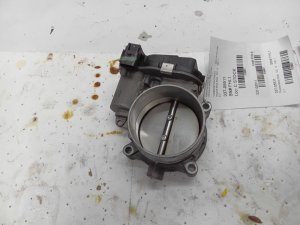
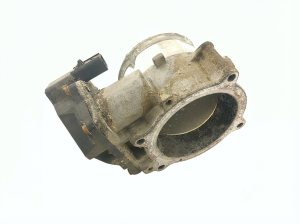
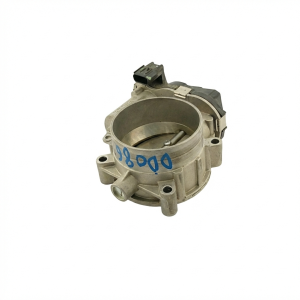
Est. part cost: $10-$150 depending on the component - Faulty Electronic Throttle Body ⚪ Low Probability → Shop Fuel Injection Throttle Body
How to confirm: If cleaning the throttle body doesn't resolve the issue, and there are no vacuum leaks, the internal motor or position sensor may have failed. This can be tested with a high-end scan tool (like wiTECH or a capable Snap-on scanner) by commanding the throttle plate to move and observing its actual position and sensor data. A failure to move when commanded indicates a faulty valve.
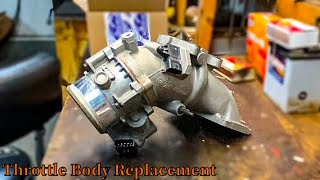
Typical fix: Replacement of the entire throttle body assembly. 🎬 See this walkthrough on how to replace the throttle body. The Mopar part number for many 2013-2024 models is 68253198AA.
Est. part cost: $200-$500
Rare But Worth Checking
- Low-Pressure Fuel System Fault: As cited in TSB #18-025-26, a fault in the low-pressure fuel system (e.g., a failing lift pump or sensor) can starve the engine of fuel, causing a low and unstable idle. This would typically be accompanied by other fuel-related DTCs like P2540. Clogged fuel filters are a basic but critical check.
- Exhaust Aftertreatment System Fault: TSB #18-025-26 also links P0506 to a stuck aftertreatment fuel injector (P20CF). A significant exhaust restriction or malfunction in the DPF/SCR system can create backpressure, impacting engine performance and idle stability. This is often seen with codes like P242F (DPF restriction).
- Powertrain Control Module (PCM) Software Issue: Several TSBs for Ram trucks, including #1810222REVA and #18-025-26, involve updating the PCM software to address a list of DTCs that includes P0506. This is often done to refine engine operating parameters, improve cold start performance, and correct logic errors that falsely trigger the code.
Diagnosis Steps
- Check for other DTCs. P0506 is often a symptom of another problem. Address any other codes first, especially those related to fuel (P2540), emissions (P20EE, P242F), or turbo systems (P0299).
- Check for Technical Service Bulletins (TSBs). Use your VIN to see if a PCM software update is available to fix this issue, as this is a common solution noted in multiple TSBs.
- Inspect Fuel and Air Filters. Check the service history of the fuel filters and air filter. Clogged filters can cause low idle and related codes. Replace if their condition is unknown or they are due for service.
- Visually inspect the air intake system from the air filter to the throttle body for any cracks, loose connections, or obstructions.
- Inspect the throttle body for carbon buildup. If dirty, remove and clean it thoroughly using a dedicated throttle body cleaner. Perform a throttle relearn procedure afterward.
- Perform a vacuum leak test. Use a smoke machine to check for leaks in all vacuum hoses, the intake manifold, and related gaskets.
- If the problem persists, further diagnosis of the electronic throttle control system (using a scan tool to command the throttle), fuel delivery system, and diesel aftertreatment system may be necessary, likely requiring a professional.
Parts You'll Likely Need
- Electronic Throttle Body
(OEM #68253198AA (or 68253197AA))— While often just needing a cleaning, the entire unit must be replaced if the internal motor or sensor fails. This part is also called the Throttle Control Valve.
Trusted brands: Mopar, Bosch, Dorman
OEM price range: $350-$500
Aftermarket price range: $200-$350 - Intake Manifold Gasket — A common source of vacuum leaks that can cause the P0506 code.
Trusted brands: Mopar, Fel-Pro, Mahle
OEM price range: $50-$80
Aftermarket price range: $25-$50 - Fuel Filters — Clogged fuel filters are a primary maintenance item that can restrict fuel flow and cause a low idle condition.
Trusted brands: Mopar, Fleetguard
OEM price range: $80-$150 for a set
Aftermarket price range: $50-$100 for a set
Related Codes That Often Appear With This One
- P2540 — Indicates a Low Pressure Fuel System issue, which can cause insufficient fuel delivery and lead to a low idle.
- P0299 — Indicates a Turbocharger Underboost condition. Poor turbo performance can lead to inefficient combustion and a resulting low or rough idle.
- P20EE — Relates to NOx Catalyst Efficiency. This points to issues within the diesel aftertreatment system, which can affect engine performance and idle stability.
- P242F — Indicates Diesel Particulate Filter (DPF) restriction. A clogged DPF increases exhaust backpressure, which can choke the engine and cause a low idle.
- P20CF — Indicates the Exhaust Aftertreatment Fuel Injector is stuck. This can directly impact the emissions system's function and engine performance, triggering a low idle.
Technical Service Bulletins (TSBs) & Recalls
- 18-025-26: Links P0506 with fuel system and aftertreatment codes, recommends PCM software update.
- 1810222REVA: Includes P0506 in a list of DTCs addressed by a PCM software update.
- 1806623: Lists P0506 as a potential DTC on 2019 models that can be fixed with a software flash.
- 1810122REVA: Lists P0506 as a potential DTC on 2019 models. (Superseded by 1806623)
- 18-007-24: Lists P0506 among many codes addressed by a PCM update for 2019 Cab Chassis models.
- 18-055-22: Notes P0506 and symptoms like 'Stall when putting in reverse in cold ambient temps' can be fixed with a PCM update on 2020 Cab Chassis models.
Platform-Specific Known Issues
- TSB #18-025-26 for 2026 models notes that P0506 can be set along with codes for the low-pressure fuel system (P2540) and exhaust aftertreatment fuel injector (P20CF), indicating a PCM software update is the required fix.
- TSB #1810222REVA for 2020 models lists P0506 as one of several codes that can be resolved with a PCM software update to correct issues like stalling in reverse in cold temps and unstable idle when the A/C cycles.
Mechanic-Grade Diagnostic Values
- Electronic Throttle Body Connector Pin 1 Voltage (Key On) — expected: ~12V (Battery Voltage). Failure: Low or no voltage indicates a power supply issue to the throttle motor.
- Electronic Throttle Body Connector Pin 4 Voltage (Key On) — expected: 5V Reference. Failure: Low or no voltage points to a problem with the 5V reference circuit from the PCM.
- Electronic Throttle Body Connector Pin 3 and Pin 5 — expected: Good ground connection. Failure: High resistance to ground indicates a bad ground, which can cause erratic operation.
- Low-Side Fuel Pressure at Idle — expected: 40-50 psi. Failure: Pressure below this range indicates a problem with the lift pump or clogged fuel filters.
Scan Tool Commands That Help
- wiTECH or equivalent professional scanner: Intake Air Throttle Valve Actuator Test — Use this bidirectional control to command the throttle plate open and closed. Visually inspect the throttle plate (by removing the intake tube or using a borescope through the MAP sensor port) to confirm it moves smoothly through its full range. A lack of movement when commanded confirms a faulty throttle body.
- wiTECH: Fuel Injector Cutoff Test — When P0506 is accompanied by rough idle and potential misfire codes, this test can help isolate a problematic injector that might be causing the unstable idle. This is mentioned as a diagnostic function in TSB #18-102-22 REV. A.
- wiTECH or Manual Procedure: Throttle Body Relearn / Adaptation Reset — After cleaning or replacing the electronic throttle body, this procedure must be performed to reset the learned closed-position values in the PCM. It can be done via a scan tool function or a manual key-on, pedal-press sequence.
Wiring & Ground Locations
- Electronic Throttle Body Connector (5-pin) — On the electronic throttle body, located between the intercooler pipe and the intake horn on the driver's side of the engine.. This is the primary connection for power, ground, and signal to the component that directly controls idle airflow. Testing voltages and grounds at these pins is a critical step in diagnosing a faulty throttle body vs. a wiring issue. Pinout: Pin 1 - Motor Power (12V), Pin 2 - Position Sensor Signal, Pin 3 - Sensor Ground, Pin 4 - 5V Supply, Pin 5 - Motor Ground.
Real Owner Repair Stories
- Reddit user in r/Diesel (2009 Ram 2500 6.7L Cummins) — Low fuel pressure codes, rough running, stalling.
❌ Tried (didn't work) Replaced the lift pump, Replaced the fuel filter, Replaced the fuel pressure regulator
✅ What actually fixed it The actual cause was massive voltage fluctuations. Cleaning all four battery terminals and properly clearing the original codes from the PCM resolved the issue. The dealership had quoted $16,500 to replace the entire fuel system. - YouTube channel 'Projects with Holden' (2015 Ram 2500 6.7L Cummins) — Check engine light with code P02E7 (Diesel Intake Air Flow Position Sensor Circuit Performance), which is directly related to the throttle body's function.
❌ Tried (didn't work) Cleaning the throttle body assembly.
✅ What actually fixed it Replacing the entire electronic throttle body assembly with a new part from RockAuto finally resolved the check engine light. The fix was confirmed 6 months after the repair.
"I Checked Everything" — The Actual Cause
- In a documented case, symptoms mirroring a fuel system failure (low pressure codes, stalling) which would not be found by a smoke test were ultimately traced to a poor electrical connection at the battery terminals. The resulting voltage fluctuations caused erratic sensor readings and performance, leading to a misdiagnosis focused on the fuel system itself.
When the Usual Fixes Don't Work
- While cleaning the throttle body is a very common fix, there are many owner-reported cases where the issue was not mechanical (dirt/buildup) or a vacuum leak, but rather electrical or software-based. One owner replaced multiple fuel system components based on codes, but the final fix was cleaning corroded battery terminals that caused system-wide voltage drops, tricking the PCM. Another owner found that even after cleaning the throttle body, the internal electronics had failed, requiring a full replacement to solve a related code. This highlights that for P0506, one must look beyond the throttle body itself and consider the entire system, including electrical supply and software, as directed by TSBs.
OEM Part Supersession History
68253197AA, 68210508AA, 68205987AA→68253198AA— Standard part revision and consolidation by the manufacturer.
Heads up: The new part number (68253198AA) is the correct replacement for the older numbers on vehicles from 2013-2024.
Helpful Videos
We Have This Part in Stock

The information in this article is provided for general reference and educational purposes only. Vehicle specifications, procedures, and part compatibility can vary by production date, trim level, and region. Always consult your vehicle's factory service manual and verify part numbers before purchasing or performing repairs. Safety-critical components such as airbags, seat belts, and braking systems should be installed by a qualified professional.
- Ram 2500:
- 🧭 Diagnostic Flowchart
- 🎬 Helpful Videos
- 🛍️ Shop This Part
- What's Unique About the 2024-2026 Ram 2500
- Symptoms You May Notice
- Most Likely Causes
- Rare But Worth Checking
- Diagnosis Steps
- Parts You'll Likely Need
- Related Codes That Often Appear With This One
- Technical Service Bulletins (TSBs) & Recalls
- Platform-Specific Known Issues
- Mechanic-Grade Diagnostic Values
- Scan Tool Commands That Help
- Wiring & Ground Locations
- Real Owner Repair Stories
- "I Checked Everything" — The Actual Cause
- When the Usual Fixes Don't Work
- OEM Part Supersession History
- 🎟️ Get 5% Off