

P0506 on 2019-2020 Ram 3500 6.7L Cummins: Low Idle Causes and Fixes
On a 2019-2020 Ram 3500 with the 6.7L Cummins, P0506 is often a symptom of a larger issue, not a simple idle problem. The most likely causes are software-related, requiring a dealer PCM update per multiple TSBs, or issues with the fuel and emissions systems. Before replacing parts, check for other codes and any applicable TSBs, as symptoms like stalling in reverse are specifically addressed by software flashes.
- On the 2019-2020 Ram 3500 6.7L Cummins, P0506 is rarely a standalone problem. It usually points to a software issue or a fault in the fuel or emissions systems.
- Always check for other trouble codes first. Resolving codes for the turbo, DPF, or fuel system will likely clear the P0506 as well.
- Before performing any expensive repairs, check with a Ram dealer for applicable software updates, as multiple TSBs indicate a PCM reflash is a common fix.
- Start with basic maintenance: inspect the air filter and replace clogged fuel filters before assuming a more complex component has failed.
What's Unique About the 2019-2020 Ram 3500
Unlike gasoline engines where P0506 often points to a simple vacuum leak or a dirty throttle body, on the 6.7L Cummins in a 2019-2020 Ram 3500, the code is frequently a secondary flag for more complex problems. Multiple manufacturer Technical Service Bulletins (TSBs) show that P0506 is commonly triggered by primary faults in the high-pressure fuel system, the exhaust aftertreatment (emissions) system, or the turbocharger. Diagnosing P0506 in isolation often misses the root cause, which can sometimes be resolved with a PCM software update from a dealer that specifically targets idle stability issues.
Diagnostic Flowchart
Tap your situation to follow the diagnostic path that matches what you're seeing on this vehicle.
Symptoms You May Notice
- Check Engine Light (MIL) is on
- Engine idle is lower than normal or rough
- Engine may stall when coming to a stop or shifting into reverse, especially in cold weather
- Stumbling or unstable idle when the A/C compressor cycles
- Engine hesitation or stumble during warm-up
- Hesitant acceleration from a stop
- Replacing the electronic throttle body when it only needs cleaning.
- Focusing only on the P0506 code and ignoring other, more critical DTCs that are the root cause.
- Assuming a no-start after a fuel filter change is a major component failure, when it is most likely air in the fuel lines that needs to be purged.
Most Likely Causes
- Powertrain Control Module (PCM) Software Update Needed 🔴 High Probability Multiple TSBs (including #18-055-22 for 2020 models and #18-056-22 REV. A for 2019 models) have been issued by Ram to address this code via a software reflash. These updates specifically fix logic flaws that cause P0506 and other codes, and address customer complaints like stalling in reverse, rough idle during warmup, and unstable idle with the A/C on.
How to confirm: A dealership can check the vehicle's VIN against their database for open recalls or applicable TSBs that involve a PCM update. The TSBs often require the Y78 recall (CP4 fuel pump replacement) to have been completed first.
Typical fix: Reprogramming the PCM with the latest available software at a Ram dealership.
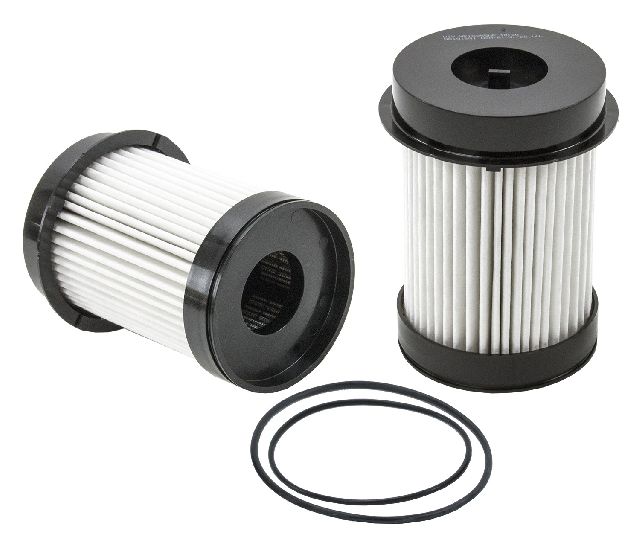
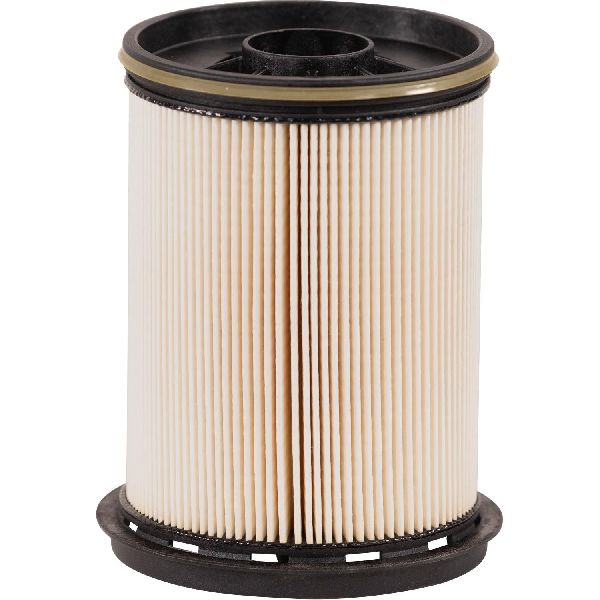
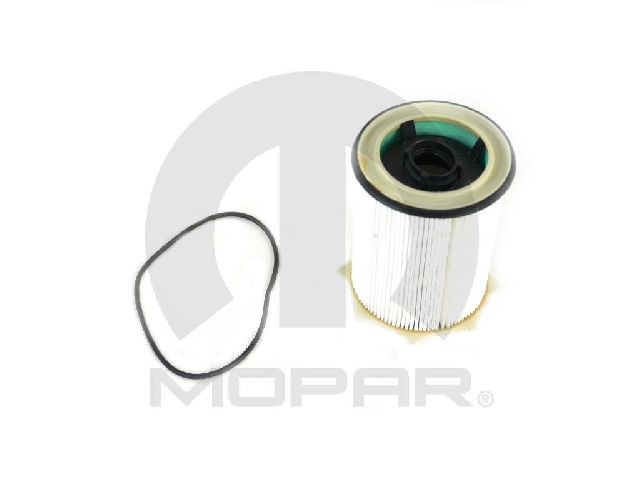
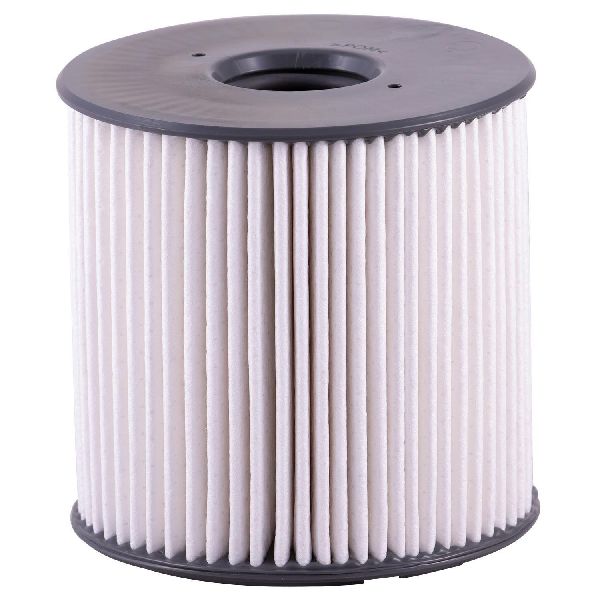
Est. part cost: $0-$200 - Restricted Fuel Filters 🟡 Medium Probability → Shop Fuel Water Separator Filter Diesel fuel systems are sensitive to contamination, and clogged filters are a common maintenance item that restricts fuel flow, causing the engine to struggle to maintain idle.
How to confirm: Check the vehicle's service history to see when the fuel filters were last replaced. If overdue, replacement is recommended as a first step. A no-start or long-crank condition after replacement strongly points to air in the system or an installation issue.
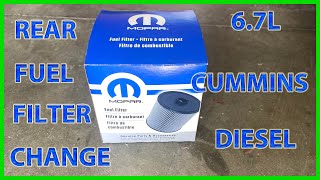
Typical fix: Replace both the chassis-mounted and engine-mounted fuel filters. It is critical to properly prime the system by cycling the key to the 'ON' position (without starting) 10-15 times to allow the lift pump to purge all air from the lines.
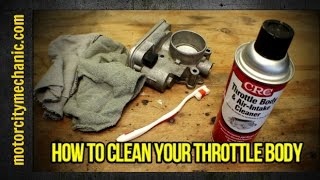
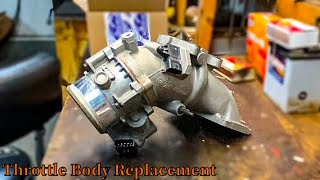
Est. part cost: $50-$150 - Carbon Buildup in the Air Induction System / Throttle Body 🟡 Medium Probability → Shop Fuel Injection Throttle Body The EGR (Exhaust Gas Recirculation) system on diesel engines can cause soot and carbon to build up in the intake and on the electronic throttle valve, restricting the small amount of air needed for a stable idle.
How to confirm: Remove the intake tube connected to the throttle body and visually inspect the throttle plate and bore for heavy black soot or carbon buildup, which may cause the plate to stick.
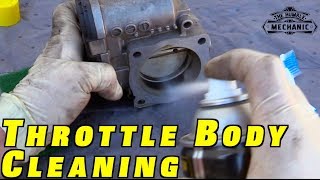
Typical fix: Clean the throttle body and intake passages with a suitable cleaner designed for diesel intakes and a soft brush. Ensure the engine is cold before cleaning.
Est. part cost: $10-$25 - Faults in the Exhaust Aftertreatment System ⚪ Low Probability The provided TSBs frequently link P0506 with codes for the emissions system, such as P20E8 (Reductant Pressure Too Low) and P20EE (NOx Catalyst Efficiency). A problem here can affect engine performance and idle stability.
How to confirm: Scan for other DTCs. If codes related to the DPF, SCR, or DEF systems are present, they must be diagnosed first as they are the likely root cause.
Typical fix: Repair depends on the specific code. It could involve replacing a NOx sensor, a DEF injector, or servicing the DPF.
Est. part cost: $200-$1000+
Rare But Worth Checking
- Turbocharger Underboost: TSBs #1806623, #1810222REVA, and #1810122REVA all list P0506 alongside P0299 (Turbocharger Underboost). An issue with the variable geometry turbo (VGT) or a boost leak could potentially affect idle stability.
- ECU Internal Performance Fault: TSB #1800824 and #18-056-22 REV. A list P0506 with P0607 (ECU Internal Performance). In this case, the PCM itself may be flagged as faulty, though a software update is the more likely fix prescribed by the TSB.
- Cylinder Misfire: TSBs #18-056-22 REV. A and #18-055-22 list P0506 along with a full range of cylinder misfire codes (P0301-P0306). A misfiring cylinder would directly cause a rough, low idle, but the software update is intended to correct the misfire detection logic.
Diagnosis Steps
- Scan the PCM for all stored Diagnostic Trouble Codes (DTCs). If other codes are present, diagnose and repair them first, as P0506 is often a secondary code.
- Check with a Ram dealer if there are any open recalls (like Y78) or Technical Service Bulletins (like #18-055-22 or #18-056-22 REV. A) for your vehicle's VIN that address P0506 with a software update.
- Inspect the air induction system for any restrictions, such as a dirty air filter or blockages in the intake tube.
- Remove the intake piping from the electronic throttle body and inspect for heavy carbon and soot buildup. Clean if necessary.
- Check the fuel filter life monitor or service records. If the fuel filters are near the end of their service life, replace them with genuine Mopar or OEM-quality parts.
- If fuel filters were just replaced and the engine cranks but won't start, cycle the ignition to the 'ON' position for 10-15 seconds, then 'OFF'. Repeat this process 10-15 times to fully prime the fuel system before attempting to start again.
- If no other codes are present and the above steps don't resolve the issue, perform a smoke test on the intake and charge air system to check for leaks, though this is a less common cause on this engine.
- If the problem persists, professional diagnosis of the fuel and emissions systems may be required.
Parts You'll Likely Need
- Fuel Filter Kit (Engine and Chassis)
(OEM #68436631AA)— Restricted fuel flow from clogged filters is a primary and common maintenance-related cause for low idle on a diesel engine. Using genuine OEM parts is critical to avoid installation and priming issues.
Related Codes That Often Appear With This One
- P0299 — Turbocharger Underboost. Listed together in TSBs #1806623, #1810222REVA, and #1810122REVA, suggesting a related issue in the air management system.
- P20EE — NOx Catalyst Efficiency Below Threshold. Listed in TSBs #1806623, #1810222REVA, and #1810122REVA, pointing to a primary fault in the emissions aftertreatment system.
- P0607 — ECU Internal Performance. Seen with P0506 in TSB #1800824, indicating a potential PCM software or hardware issue.
- P20E8 — Reductant (DEF) Pressure Too Low. Paired with P0506 in TSB #1800824, linking the idle issue to the DEF system.
- P242F — Diesel Particulate Filter Restriction. Mentioned with P0506 in TSB #1810222REVA, indicating a clogged DPF could be the underlying cause.
- P0301-P0306 — Cylinder Misfire. Listed in TSBs #18-056-22 REV. A and #18-055-22 as codes that are resolved by the same PCM software update.
- P2002 — Diesel Particulate Filter Efficiency Below Threshold. Included in TSB #18-056-22 REV. A, further linking idle issues to the DPF system.
Technical Service Bulletins (TSBs) & Recalls
- 1800824: Links P0506 with ECU performance and reductant pressure codes on 2020 models.
- 1806623: Links P0506 with turbo underboost and NOx catalyst codes on 2019 models.
- 1810222REVA: Connects P0506 with underboost and DPF restriction codes for 2020 models.
- 1810122REVA: Connects P0506 with underboost and DPF codes for 2019 models.
- 18-055-22: A PCM flash for 2020 models to resolve P0506 and symptoms like stalling and rough idle.
- 18-056-22 REV. A: A PCM flash for 2019 models to resolve P0506 and symptoms like stalling in reverse and unstable idle.
Platform-Specific Known Issues
- TSB #1800824, #1806623, #1810222REVA, and #1810122REVA all document P0506 appearing alongside a variety of other codes, indicating a PCM software update is often required to fix the logic that sets these codes.
- TSB #18-055-22 for 2020 models and #18-056-22 REV. A for 2019 models specifically list P0506 as a code that can be resolved by reprogramming the PCM. These TSBs also address symptoms like 'Stall when putting in reverse in cold ambient temps', 'Engine stumble during engine warm up', and 'Unstable idle when AC compressor cycles'.
Mechanic-Grade Diagnostic Values
- Battery Voltage (Engine Off) — expected: ~12.4V or higher. Failure: Voltage below 12.4V indicates a weak or discharged battery, which can cause various module and sensor errors.
- Charging System Voltage (Engine Running at Idle) — expected: ~13.5V - 14.5V. Failure: Voltage outside this range points to a problem with the alternator or the PCM's voltage regulation circuit. The PCM commands a target voltage, and if the alternator doesn't respond correctly, it can cause system-wide electrical issues.
- PCM Ground Pin Resistance — expected: Below 0.1 Ω. Failure: A reading higher than 0.1 Ohms indicates a poor ground connection, which can cause erratic PCM behavior and set various codes, including performance codes.
- Idle RPM (Scan Tool Live Data) — expected: 750-850 RPM (in Drive, at operating temp). Failure: Consistently below 750 RPM. Compare 'Desired Idle RPM' to 'Actual Idle RPM' PIDs; a large discrepancy indicates the PCM is commanding a higher idle but the engine cannot achieve it.
Scan Tool Commands That Help
- wiTECH, AlfaOBD, or other capable scan tool: Throttle Body Relearn / ETC Reset — After cleaning or replacing the electronic throttle body. This function forces the PCM to relearn the fully closed and fully open positions of the throttle plate, which is critical for correct idle air management.
- wiTECH or capable scan tool: VGT Turbo Actuator Pre-Align / Self-Calibrate — If P0506 is present with turbo-related codes like P0299 or U010C. This function is used after replacing the turbo actuator to ensure it is calibrated to the turbo's geometry, which can affect engine performance at all speeds, including idle.
Wiring & Ground Locations
- GND (Frame Rail) — Located on the frame rail, typically on the driver's side. The upfitter schematics for 2019 and 2020 models show a designated ground point with a total maximum load of 50A.. A poor main ground connection can cause fluctuating voltage to the PCM and other modules, leading to incorrect sensor readings and erratic behavior that could manifest as a low idle or stalling.
- PCM Connector C2 — This is one of the main connectors at the Powertrain Control Module, which is bolted to the side of the engine block on the driver's side, behind the fuel filter housing.. When diagnosing potential wiring issues, this is the termination point for many critical sensor and actuator circuits, including the Electronic Throttle Control (ETC) motor pins (e.g., K124 DB/GY for ETC Motor + and K126 DB/GN for ETC Motor - on some 2.4L engines, specific 6.7L wiring would need to be verified). A poor connection here can directly cause idle control problems.
Real Owner Repair Stories
- HD Rams Forum User (2019 Ram 3500 6.7L Cummins) — Check engine light on with code P0506, engine would intermittently stall when put into reverse.
❌ Tried (didn't work) Replaced fuel filters, Cleaned throttle body and intake system
✅ What actually fixed it The dealership performed a PCM software update as specified by a Technical Service Bulletin. The TSB directly addressed the symptom of stalling in reverse and the P0506 code. The update resolved the issue completely.
Model Year Variations Within This Range
- 2019+: Starting in 2019, the 6.7L Cummins block was changed to compacted graphite iron (CGI) and the valvetrain was updated to use hydraulic roller lifters. This was intended to make the engine quieter. This is a significant internal engine design change from prior generations.
- 2020: For the 2020 model year, Ram made Lane Keep Assist and adaptive steering available on all trim levels, along with optional blind-spot monitoring. A 50-gallon fuel tank became standard on crew cab models with the 8-foot bed. These changes are primarily feature-based and do not directly affect the root causes of P0506 but are notable differences from the 2019 launch year.
Helpful Videos

We Have This Part in Stock


The information in this article is provided for general reference and educational purposes only. Vehicle specifications, procedures, and part compatibility can vary by production date, trim level, and region. Always consult your vehicle's factory service manual and verify part numbers before purchasing or performing repairs. Safety-critical components such as airbags, seat belts, and braking systems should be installed by a qualified professional.
- Ram 3500:
- 🧭 Diagnostic Flowchart
- 🎬 Helpful Videos
- 🛍️ Shop This Part
- What's Unique About the 2019-2020 Ram 3500
- Symptoms You May Notice
- Most Likely Causes
- Rare But Worth Checking
- Diagnosis Steps
- Parts You'll Likely Need
- Related Codes That Often Appear With This One
- Technical Service Bulletins (TSBs) & Recalls
- Platform-Specific Known Issues
- Mechanic-Grade Diagnostic Values
- Scan Tool Commands That Help
- Wiring & Ground Locations
- Real Owner Repair Stories
- Model Year Variations Within This Range
- 🎟️ Get 5% Off