

P0506 on 2007-2009 Saturn Aura: Causes and Fixes for Low Idle Speed
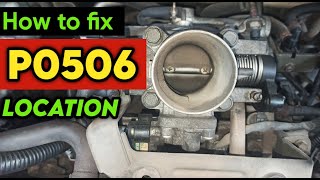
On a 2007-2009 Saturn Aura, code P0506 is almost always caused by a dirty electronic throttle body. The most common fix is to clean the throttle body and perform an idle relearn procedure, a low-cost repair that can be done with a can of throttle body cleaner and basic tools.
- Code P0506 on your Saturn Aura almost certainly points to an issue with airflow at idle.
- The first, most common, and cheapest fix is to thoroughly clean the electronic throttle body.
- An idle relearn procedure is a mandatory step after cleaning or replacing the throttle body.
- If cleaning doesn't work, check for vacuum leaks before spending money on a new throttle body.
- This is a very DIY-friendly repair that requires minimal tools and can save hundreds of dollars.
What's Unique About the 2007-2009 Saturn Aura
The Saturn Aura of this generation uses a drive-by-wire electronic throttle body, meaning it does not have a separate Idle Air Control (IAC) valve like older vehicles. Therefore, troubleshooting for P0506 focuses on the throttle body itself and its ability to manage airflow at idle. Carbon buildup around the throttle plate is a very common issue on these GM vehicles, restricting the small amount of air needed for a stable idle and directly leading to this code. This platform was also subject to a GM Special Coverage Adjustment (No. 11273) for high failure rates of the throttle position sensor, confirming it as a known weak point.
Symptoms You May Notice
- Engine idles at a lower RPM than normal
- Rough or shaky idle
- Engine stalls when coming to a stop, shifting to neutral, or shortly after starting
- Difficulty starting the engine
- Illuminated Check Engine Light
- Replacing the throttle body when it only needed to be cleaned.
- Replacing spark plugs or ignition coils, which would typically cause a misfire code (P030x) in addition to a rough idle.
Most Likely Causes
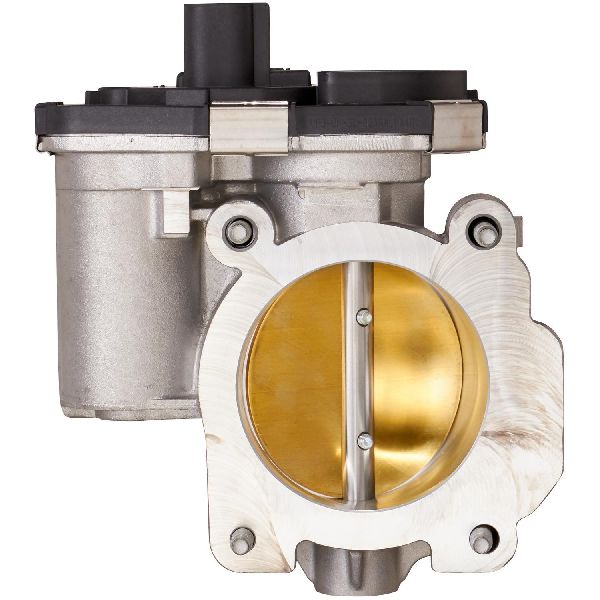
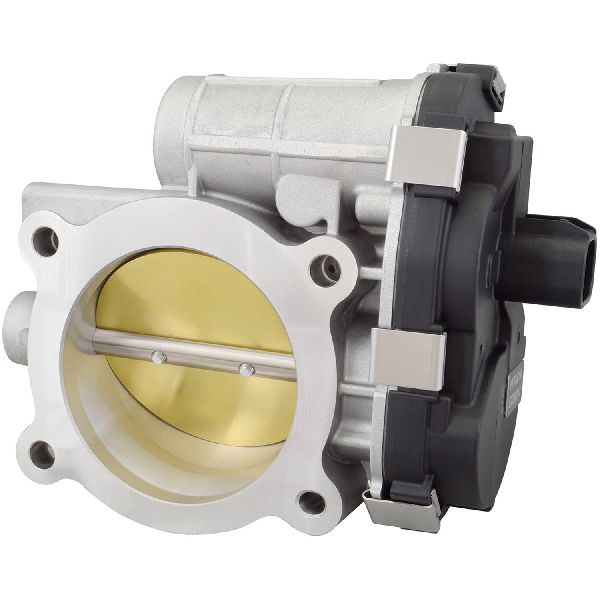
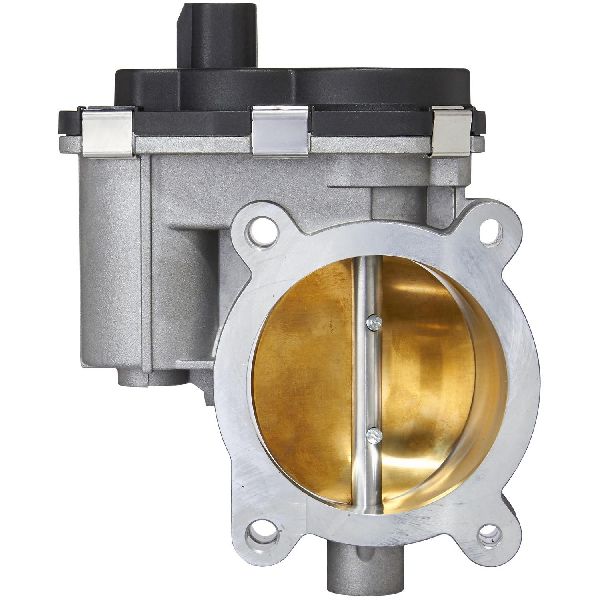
- Dirty Throttle Body 🔴 High Probability → Shop Fuel Injection Throttle Body Carbon and oil vapor from the PCV system can build up on the inside of the throttle body and around the throttle plate. This accumulation restricts the tiny air gap needed for the engine to idle correctly, causing the RPM to drop below the target.
How to confirm: Remove the air intake hose from the throttle body and visually inspect for a black, sticky layer of carbon buildup on the throttle plate and bore.
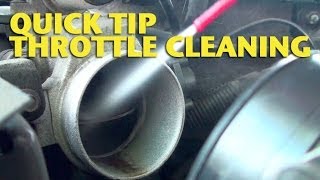
Typical fix: Thoroughly clean the throttle body bore and plate using a dedicated throttle body cleaner and a soft cloth or brush. 🎬 See this quick tip for properly cleaning your throttle body. An idle relearn procedure must be performed afterward.
Est. part cost: $5-$15 for cleaner - Vacuum Leak 🟡 Medium Probability Aging rubber hoses and plastic intake components can crack or become disconnected, allowing unmetered air to enter the engine, which disrupts the air-fuel ratio and can cause idle issues. On the 2.4L Ecotec engine, a failed PCV diaphragm inside the valve cover is a common source of a large, unmetered air leak.
How to confirm: Visually inspect all vacuum hoses connected to the intake manifold for cracks or disconnections. Listen for a hissing sound at idle. A smoke test is the most effective way to find a leak. For a failed PCV diaphragm, a loud sucking or whistling noise may come from the valve cover itself.
Typical fix: Replace the cracked hose, leaking gasket, or damaged intake component. If the PCV diaphragm has failed, the entire valve cover assembly must be replaced.
Est. part cost: $10-$150 - Failing Electronic Throttle Body ⚪ Low Probability → Shop Fuel Injection Throttle Body While less common than being dirty, the electronic motor or internal position sensors of the throttle body can fail over time. This was a known issue acknowledged by GM via a special warranty extension for the throttle position sensor.
How to confirm: This is typically diagnosed after cleaning the throttle body and checking for vacuum leaks has failed to resolve the code. A diagnostic scan tool can be used to monitor throttle angle and check for erratic behavior.
Typical fix: Replace the entire throttle body assembly.
Est. part cost: $100-$250
Rare But Worth Checking
- Clogged Air Filter: → Shop Air Cleaner Assembly A severely restricted air filter can starve the engine of air, contributing to a low idle. It's a simple and important maintenance item to check first.
- Wiring Issue to Throttle Body: → Shop Fuel Injection Throttle Body A damaged wire or loose connector at the throttle body can cause intermittent loss of control, leading to idle problems. Check the harness for any visible damage.
Diagnosis Steps
- Read the code with an OBD-II scanner to confirm P0506 is present.
- Inspect the air intake system between the air filter and the throttle body for any obstructions or a collapsed air duct.
- Remove the air intake duct from the throttle body. Visually inspect the throttle plate and bore for carbon buildup.
- If dirty, thoroughly clean the throttle body with a dedicated throttle body cleaner and a soft cloth. Do not use harsh tools that could scratch the bore.
- Reassemble the intake duct.
- Perform an idle relearn procedure. A common GM method is to start the engine and let it idle in Park for 3 minutes, turn the engine off for 60 seconds, then restart and let it idle for another 3 minutes. Alternatively, disconnecting the battery for 15-20 minutes may also work. 🎬 Watch: How to perform an idle relearn without a scanner.
- If the code returns, check for vacuum leaks. Listen for hissing noises at idle and inspect all vacuum hoses. A smoke test is the most definitive method. Pay special attention to the PCV system and valve cover on 2.4L models.
- If no vacuum leaks are found and the throttle body is clean, monitor the throttle position sensor data with a scan tool for erratic readings that would indicate a failing throttle body.
- If the throttle body is suspected to be faulty, replace it with a new unit and perform the idle relearn procedure again.
Parts You'll Likely Need
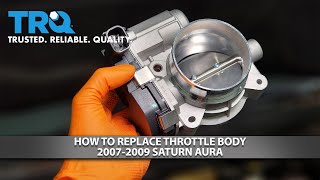
- Electronic Throttle Body — If a thorough cleaning does not resolve the low idle and stalling, the electronic components of the throttle body itself may have failed and the entire unit needs to be replaced.
Trusted brands: ACDelco, Delphi, Bosch
OEM price range: $150-$250
Aftermarket price range: $80-$150 - Throttle Body Gasket — It is recommended to replace the gasket anytime the throttle body is removed for cleaning or replacement to prevent vacuum leaks.
Trusted brands: Fel-Pro, ACDelco
OEM price range: $10-$20
Aftermarket price range: $5-$10
Mechanic-Grade Diagnostic Values
- Throttle Position Sensor (TPS) 5V Reference — expected: Approximately 5.0 volts with key on, engine off.. Failure: Voltage significantly higher or lower than 5.0V indicates a wiring or PCM issue.
- Scan Tool: Throttle Body Opening Angle at Idle — expected: 1-5%. Failure: A reading of 0% or an unusually high percentage at idle suggests a problem with the sensor or PCM's compensation.
- Scan Tool: MAF Sensor Airflow at Idle — expected: 2-5 g/s at normal operating temperature.. Failure: A lower reading can indicate a restriction (like a dirty throttle body), while a higher reading could suggest an unmetered air leak.
- Scan Tool: Desired vs. Actual Idle RPM — expected: Actual RPM should be within ~50 RPM of Desired RPM.. Failure: When Actual RPM is consistently 100-200 RPM below Desired RPM, it confirms the condition for setting code P0506.
Scan Tool Commands That Help
- Tech2 / GDS2 or equivalent professional scan tool: Reset ECM Learned Values / Reset Adaptive Values — This command should be used after cleaning or replacing the throttle body. It forces the Engine Control Module (ECM) to erase its stored idle trim values, which is a crucial part of the idle relearn procedure and can prevent stalling or persistent codes.
- Tech2 / GDS2: Idle Learn / Throttle Body Relearn — This is a guided function to perform the idle relearn procedure. It walks the technician through the steps and confirms when the process is complete. It is the most reliable method to ensure the new idle position is learned correctly.
Wiring & Ground Locations
- G105 / G106 — G105 is located under the left intake manifold, on the rear of the cylinder head. G106 is located at the rear of the engine, above the oil filter (3.5L) or near the PNP switch (2.4L).. These are primary engine grounds. The Engine Control Module (ECM) relies on these grounds for stable operation. A loose or corroded connection here can cause erratic sensor readings and faulty actuator control, potentially mimicking a throttle body failure.
- G103 — Located at the left rear of the engine compartment on the cowl, above the brake booster.. This ground serves the Body Control Module (BCM) and the Data Link Connector (DLC). A poor connection here can cause communication issues between modules and problems during diagnosis with a scan tool.
- Throttle Body Connector (6-pin) — Directly on the electronic throttle body assembly.. This is the single point of connection for both the throttle motor and the dual throttle position sensors. The pins include a 5V reference, low reference (ground), and two signal wires for the sensors, plus two wires for the motor. Any corrosion or damage here will directly cause throttle control issues.
Real Owner Repair Stories
- Chevrolet Forum user (2011 Equinox 2.4L Ecotec (engine shared with Aura)) — Random stalling and dying, no initial codes. Then a pending P0506 appeared.
❌ Tried (didn't work) Cleaned MAF sensor, Cleaned throttle body, Replaced throttle body, Replaced MAF sensor
✅ What actually fixed it The issue was not resolved in the thread. After replacing the throttle body, the P0506 was replaced by P0171 (System Too Lean), P0131, and P0137 (O2 sensor codes), indicating the root cause was likely a vacuum leak or fuel delivery issue, not the throttle body itself. This highlights a common diagnostic dead end where the initial code is a symptom, not the cause.
"I Checked Everything" — The Actual Cause
- On the 2.4L Ecotec engine, a common cause of a massive, hard-to-diagnose vacuum leak is the failure of the integrated PCV diaphragm located inside the valve cover. This will not be found with a typical smoke test applied to the intake boot. The symptom is often a loud sucking or whistling noise from the top of the engine and a strong vacuum at the oil fill cap when the engine is running. The fix is to replace the entire valve cover assembly.
OEM Part Supersession History
Varies by engine (2.4L, 3.5L, 3.6L use different parts)→N/A— Known Defect
Heads up: GM issued a Special Coverage Adjustment (No. 11273) extending the warranty on the throttle body assembly due to a high failure rate of the internal throttle position sensor. This confirms it's a known weak point. Aftermarket companies like Dorman have released 'OE FIX' versions (e.g., Part No. 977-357) that replace the original contact-style sensor with a more durable non-contact Hall effect sensor to prevent the common failure mode.
Model Year Variations Within This Range
- 2007-2009: The throttle body is specific to the engine size. The 2.4L I4, 3.5L V6, and 3.6L V6 engines all use different, non-interchangeable throttle bodies. It is critical to order the correct part for your specific engine.
Diagnostic Flowchart
Used vs. New Parts: Buying Guide for This Vehicle
When a used part is the smart pick: A used throttle body from a junkyard can be a cost-effective option, especially if it's from a low-mileage, rear-ended donor vehicle. Since the primary failure is electronic wear, a lower-mileage part has a higher chance of having significant life left. However, it still carries the original, flawed sensor design.
Donor-vehicle mileage cap: roughly under 80000 miles for the part to have meaningful remaining life.
What to inspect on the donor part:
- Verify the engine size (2.4L, 3.5L, 3.6L) of the donor vehicle matches yours exactly.
- Inspect the throttle bore for cleanliness. A very dirty part may suggest a poorly maintained engine.
- Check the connector pins for any signs of corrosion or damage.
- Ask for the donor vehicle's VIN to check its mileage and history if possible.
Aftermarket brands forum-validated for this vehicle:
- ACDelco (Professional or GM Genuine line)
- Hitachi
- Standard Motor Products (SMP)
Brands owners have reported issues with on this vehicle:
- While Dorman is a reputable brand and their 'OE FIX' version with an improved sensor is a good concept, some forum discussions report inconsistent quality with their standard replacement parts. Unbranded, 'white-box' parts from online marketplaces carry a higher risk of premature failure.
Real Owner Stories
Aggregated from forums and TSBs cited above. Mileages and costs reflect what owners reported in those sources.
2008 Saturn Aura
Symptoms: car starts then immediately dies. Code P0506.
What fixed it: No solution reported by the user.
Source hint: RepairPal
Related OBD-II Codes
Frequently Asked Questions
Was there a recall or warranty extension for the throttle body on my 2007-2009 Saturn Aura?
I have the 2.4L engine in my Aura. Are there any common P0506 causes specific to this engine?
How do I perform the idle relearn procedure on my Saturn Aura after cleaning the throttle body?
Is cleaning the throttle body likely to fix the P0506 code on my Saturn Aura?
If I need to replace the throttle body, which aftermarket brands are recommended for my Aura?
What's the most reliable way to find a vacuum leak that could be causing P0506?
Helpful Videos

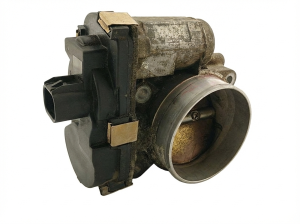
Used OEM Parts in Stock
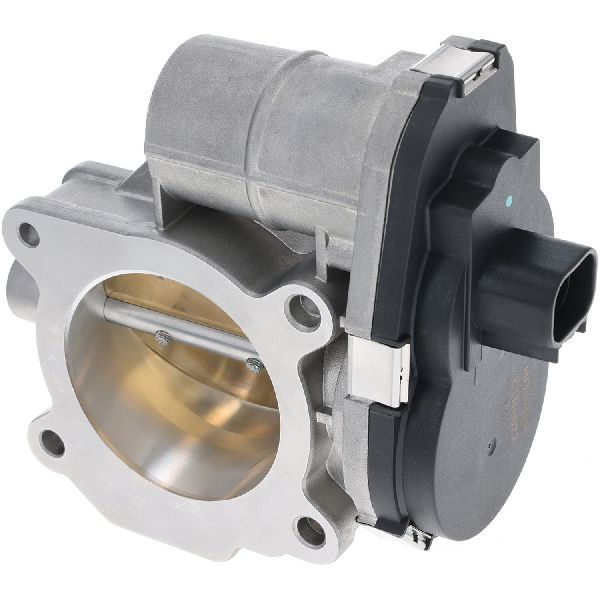
New Aftermarket Parts Available


The information in this article is provided for general reference and educational purposes only. Vehicle specifications, procedures, and part compatibility can vary by production date, trim level, and region. Always consult your vehicle's factory service manual and verify part numbers before purchasing or performing repairs. Safety-critical components such as airbags, seat belts, and braking systems should be installed by a qualified professional.
- Saturn Aura:
- 🧭 Diagnostic Flowchart
- 🎬 Helpful Videos
- 🛍️ Shop This Part
- What's Unique About the 2007-2009 Saturn Aura
- Symptoms You May Notice
- Most Likely Causes
- Rare But Worth Checking
- Diagnosis Steps
- Parts You'll Likely Need
- Mechanic-Grade Diagnostic Values
- Scan Tool Commands That Help
- Wiring & Ground Locations
- Real Owner Repair Stories
- "I Checked Everything" — The Actual Cause
- OEM Part Supersession History
- Model Year Variations Within This Range
- Used vs. New Parts: Buying Guide for This Vehicle
- Real Owner Stories
- 2008 Saturn Aura
- Related OBD-II Codes
- Frequently Asked Questions
- 🎟️ Get 5% Off