

P0506 on 2005-2009 Subaru Outback 2.5L: Low Idle Causes and Fixes
On a 2005-2009 Subaru Outback, P0506 is almost always caused by a dirty electronic throttle body. A thorough cleaning followed by a specific idle relearn procedure usually fixes it. This is a low-cost DIY job requiring only a few basic tools and cleaner.
- Do not look for an Idle Air Control (IAC) valve on your 2005-2009 Outback 2.5L; it does not have one. Idle is controlled by the electronic throttle body.
- The most likely fix is cleaning the carbon buildup from the throttle body plate and bore.
- After cleaning the throttle or disconnecting the battery, you MUST perform the idle relearn procedure for the ECU to find the correct idle position.
- Before buying any parts, invest in a can of throttle body cleaner and perform the cleaning and relearn steps.
- Check for simple, cracked vacuum hoses before assuming a more complex problem.
What's Unique About the 2005-2009 Subaru Outback
The 2005-2009 Subaru Outback with the 2.5L EJ253 engine uses an Electronic Throttle Body (ETB), also known as Drive-by-Wire. This is a critical detail because it means there is no separate Idle Air Control (IAC) valve like on older vehicles. The idle is controlled directly by the throttle plate. Therefore, the most common cause is not a failed IAC valve, but rather carbon buildup inside the throttle body restricting airflow. Additionally, these Subarus are very sensitive to memory loss from the ECU; disconnecting the battery or clearing codes often requires a specific 'idle relearn procedure' to restore a stable idle.
Symptoms You May Notice
- Engine idles lower than normal (e.g., below 600 RPM, sometimes as low as 400-500 RPM).
- Rough or vibrating idle, feels like the car is about to shut off.
- Engine stalling when coming to a stop, at traffic lights, or shortly after starting.
- Hesitation or sluggish acceleration when accelerating from a stop.
- Illuminated Check Engine Light (and often a flashing 'CRUISE' light on the dashboard).
- Difficulty starting the engine in some cases.
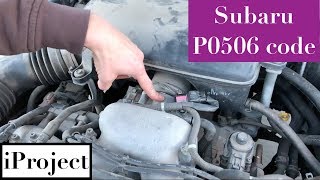
- Replacing the Idle Air Control (IAC) Valve. This vehicle does not have a separate IAC valve; the function is integrated into the electronic throttle body. Replacing a non-existent part is a common point of confusion based on generic advice for this code. 🎬 Watch: Troubleshooting P0506 and idle air control system issues.
Most Likely Causes
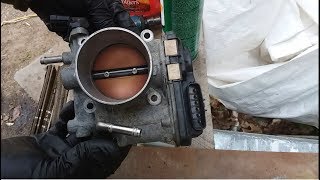
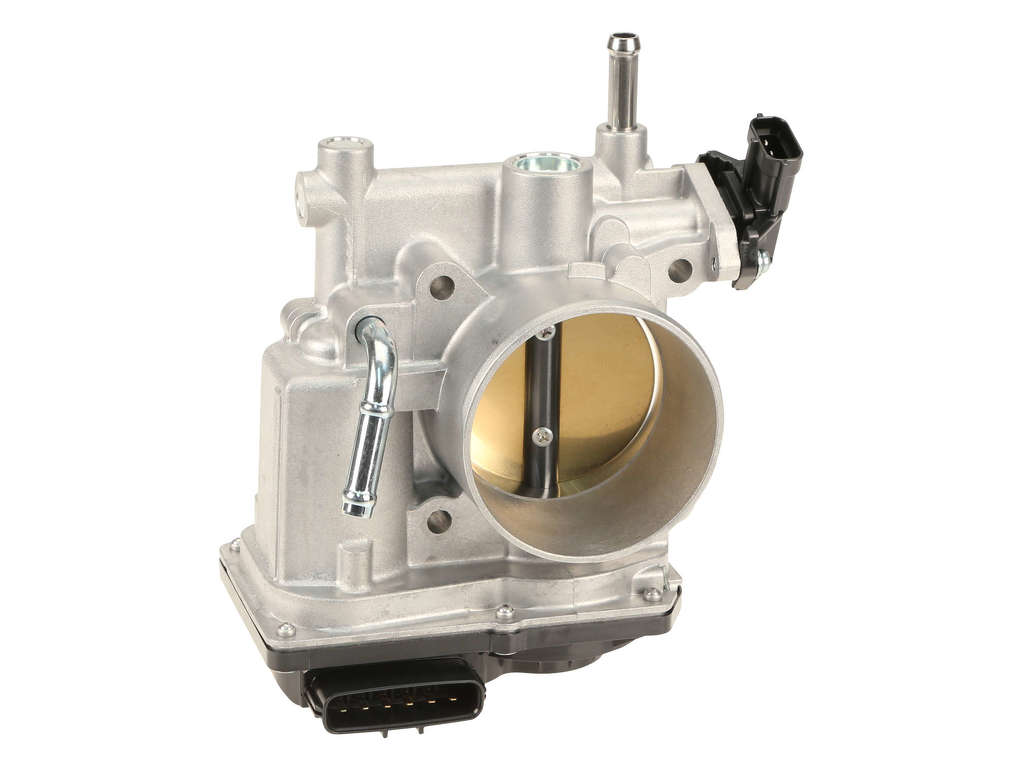
- Dirty Electronic Throttle Body 🔴 High Probability → Shop Fuel Injection Throttle Body The electronic throttle body controls idle by allowing a very small amount of air past the throttle plate. Over time, carbon and oil vapor from the PCV system build up, particularly around the edges of the throttle plate and bore. This restriction is enough to starve the engine of the air it needs to maintain the target idle speed.
How to confirm: Visually inspect the throttle body bore and the edges of the throttle plate for a black, sticky film of carbon. The buildup is often heaviest on the back side of the plate. The car may have run perfectly fine until a battery disconnect, which erased the ECU's compensation for this gradual buildup, suddenly revealing the problem.
Typical fix: Remove the air intake duct from the throttle body. With the key on (engine off), have a helper press the gas pedal to open the plate, or remove the throttle body for a more thorough cleaning. Carefully clean the bore and both sides of the plate with a dedicated throttle body cleaner and a soft, lint-free cloth or brush. 🎬 Watch: How to clean your Subaru drive-by-wire throttle body. Do not spray cleaner directly into any electronics. A new gasket is highly recommended if the throttle body is removed.
Est. part cost: $5-$15 for cleaner and a gasket - ECU Idle Memory Lost / Needs Relearn 🔴 High Probability This often occurs immediately after the battery has been disconnected or replaced, or after clearing trouble codes with a scan tool. The ECU 'forgets' the learned throttle position for a stable idle and reverts to a base setting that may be too low for an engine with even minor accumulated deposits.
How to confirm: The problem started immediately after the battery was disconnected or codes were cleared. The car ran fine before this event.
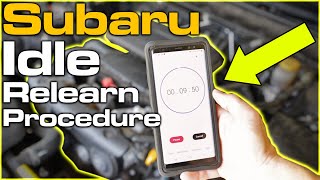
Typical fix: Perform the Subaru Idle Relearn Procedure. While several variations exist, a common method is: 1) Disconnect the battery for 30 minutes. 2) Reconnect. 3) Turn key to 'ON' (not start) for 15 seconds. 4) Start the engine without touching the throttle. 5) Let it idle for 10-20 minutes, with no accessories on, until the radiator fans cycle on and off. 6) Turn off for 20 seconds, then restart. This allows the ECU to find the new correct idle position. 🎬 See a step-by-step walkthrough of the Subaru idle relearn procedure.
Est. part cost: $0 - Vacuum Leak 🟡 Medium Probability With age, rubber vacuum hoses can become brittle and crack, especially the PCV hoses and the main intake air duct (the large corrugated tube) between the MAF sensor and the throttle body. A leak introduces unmetered air, confusing the ECU's calculations.
How to confirm: Visually inspect all vacuum lines for cracks or loose connections. A smoke test is the most effective method. Alternatively, you can carefully spray short bursts of brake cleaner or starter fluid around suspected areas with the engine running; a change in idle RPM indicates a leak. Pay close attention to the PCV valve hose and the brake booster hose.
Typical fix: Replace the cracked or leaking hose or gasket. The PCV valve and its associated hoses are common culprits and are relatively inexpensive to replace.
Est. part cost: $10-$50 for hoses
Rare But Worth Checking
- Dirty Mass Air Flow (MAF) Sensor: A contaminated MAF sensor can under-report the amount of air entering the engine, causing the ECU to provide insufficient fuel for a stable idle. It's located on the air intake tract after the air filter and is easy to clean with a dedicated MAF sensor cleaner as a preliminary step.
- Failing Electronic Throttle Body: → Shop Fuel Injection Throttle Body In rare cases, the electronic motor or position sensor within the throttle body assembly can fail. This is uncommon and usually accompanied by other codes like P2101 or P2138. This should only be considered after all other causes have been ruled out, as it is an expensive part.
- Faulty PCV Valve: → Shop PCV Valve A PCV (Positive Crankcase Ventilation) valve that is stuck open or closed can behave like a vacuum leak or cause improper crankcase pressure, affecting idle stability. Given its low cost and location, it's sometimes replaced as preventative maintenance during a throttle body cleaning.
Diagnosis Steps
- Check if the P0506 code appeared immediately after a battery change or ECU reset. If so, perform the Idle Relearn Procedure first.
- Visually inspect the large, ribbed air intake hose between the air filter box and the throttle body for any cracks or loose clamps.
- Inspect all visible vacuum hoses connected to the intake manifold for cracks, especially the PCV valve and its hoses, which are located near the throttle body.
- If no leaks are found, remove the intake duct from the throttle body and inspect for carbon buildup. A dirty throttle plate is the most likely culprit.
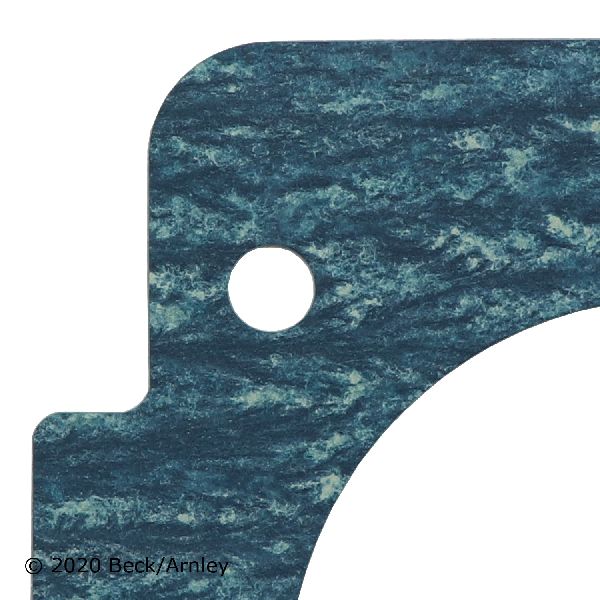
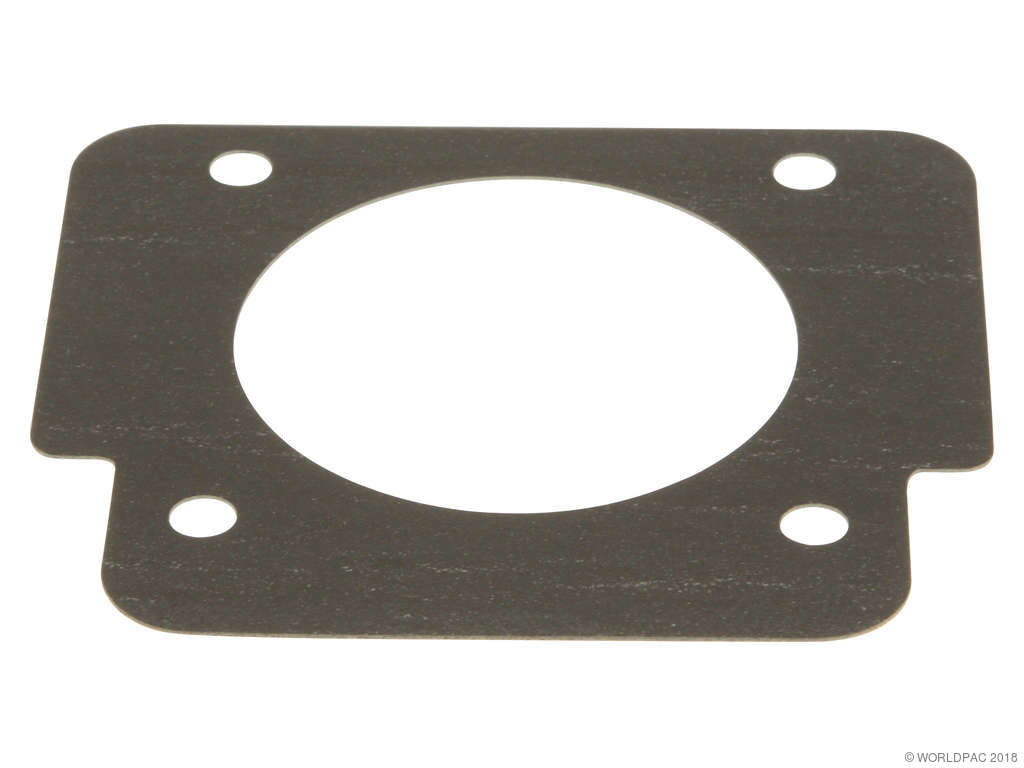
- Thoroughly clean the throttle body bore and plate using throttle body cleaner and a soft rag. A new throttle body gasket is recommended if you remove the throttle body for cleaning.
- After cleaning, perform the complete Idle Relearn Procedure. This step is critical and should not be skipped.
- If the problem persists, consider cleaning the MAF sensor with a dedicated MAF sensor cleaner. Do not touch the sensor wires.
- As a final step, if all else fails, the issue may be a faulty electronic throttle body assembly, which may require professional diagnosis.
Parts You'll Likely Need
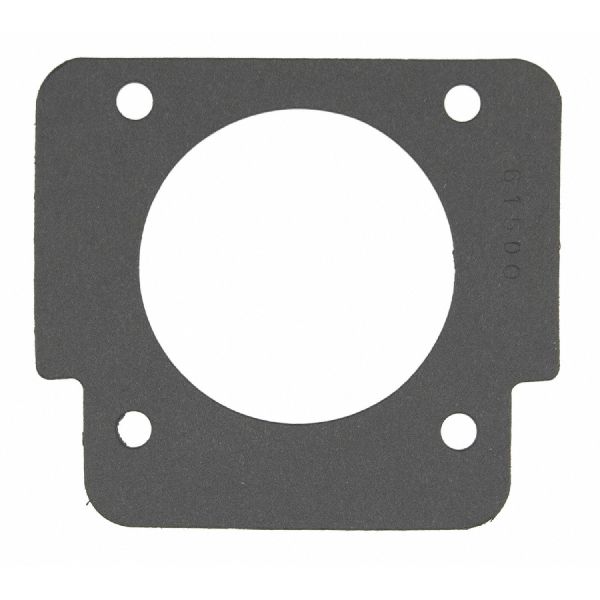
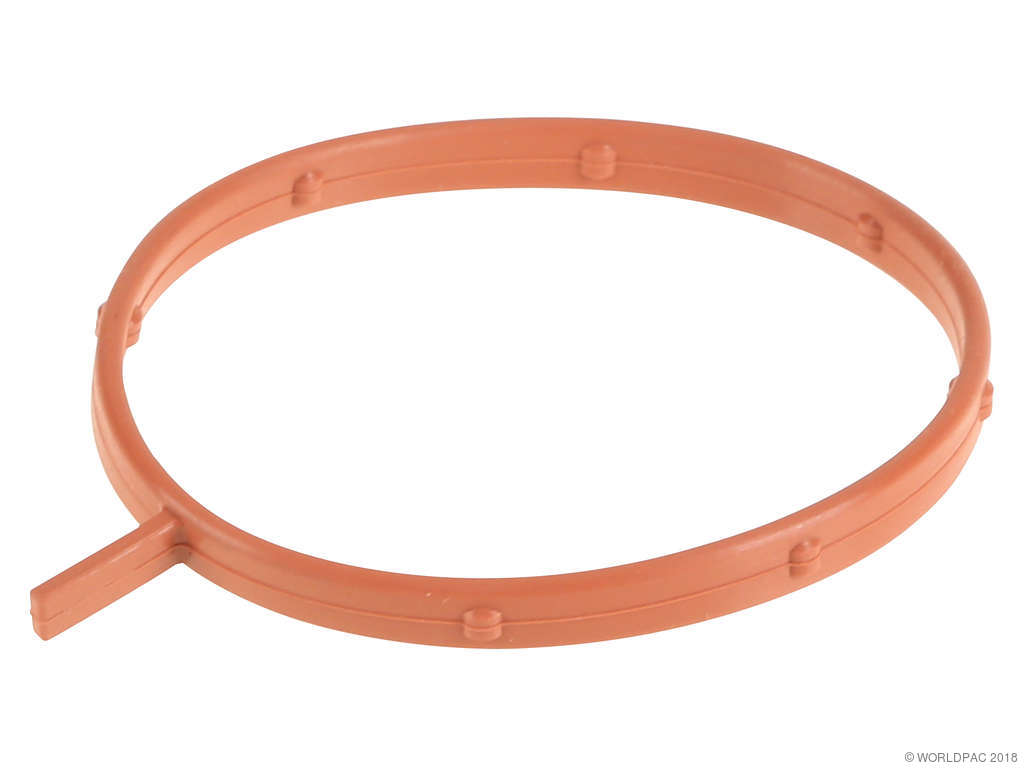
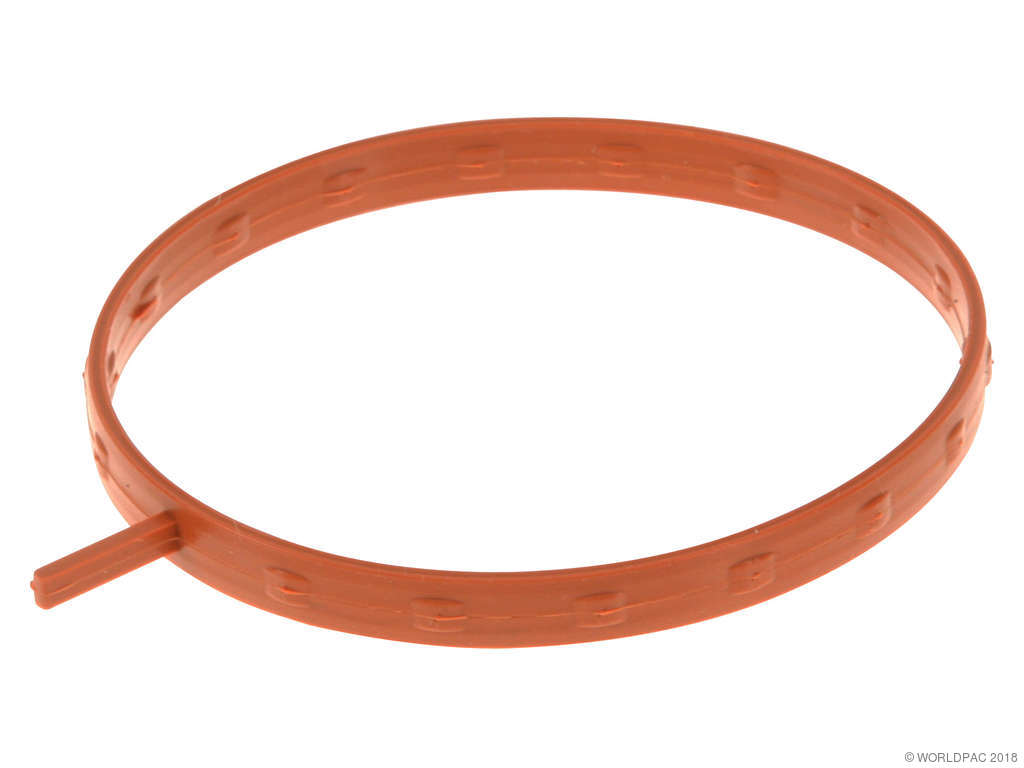
- Electronic Throttle Body Gasket
(OEM #16175AA321)— This should be replaced whenever the throttle body is removed from the intake manifold for a thorough cleaning to prevent vacuum leaks. Part number 16175AA310 or 16175AA341 may also be applicable depending on the specific production date and model year; it's best to verify with VIN.
Trusted brands: Fel-Pro, Mahle, Subaru OE
OEM price range: $8-$15
Aftermarket price range: $3-$10 - Throttle Body Cleaner — Specifically formulated to dissolve carbon buildup without damaging the sensitive coatings on the throttle plate and bore or the plastic components.
Trusted brands: CRC, WD-40 Specialist, Berryman
Aftermarket price range: $5-$10 - Electronic Throttle Body Assembly
(OEM #16112AA180)— This is only needed in the rare case that the throttle body itself has failed electronically and cleaning does not resolve the issue. It is the last resort.
Trusted brands: Hitachi (often the OE supplier), Bosch, Subaru OE
OEM price range: $500-$750
Aftermarket price range: $150-$300
Technical Service Bulletins (TSBs) & Recalls
- While no TSBs specifically for P0506 on this model were found, TSB 11-204-23 exists for newer turbo models regarding a PCV hose design change to address smells, highlighting Subaru's attention to the PCV system which contributes to throttle body deposits.
Platform-Specific Known Issues
- Stalling Immediately After Battery Replacement: A very common owner experience is the car running perfectly, replacing an old battery, and then immediately having the car stall at stops and throw a P0506 code. This is because the ECU lost its memory that was compensating for a dirty throttle body. The fix is almost always to clean the throttle body and perform the idle relearn.
- Flashing Cruise Control Light: On many Subarus of this era, a Check Engine Light for a powertrain fault like P0506 will also trigger the 'CRUISE' light on the dashboard to flash. This is normal behavior designed to get the driver's attention and does not indicate a separate problem with the cruise control system.
Mechanic-Grade Diagnostic Values
- Throttle Position Sensor 1 (Main) Voltage — expected: 0.6V at fully closed to 3.96V at fully open.. Failure: Voltage outside this range or not changing smoothly with throttle application.
- Throttle Position Sensor 2 (Sub) Voltage — expected: 1.48V at fully closed to 4.17V at fully open.. Failure: Voltage outside this range or not changing smoothly. Note that the sub sensor voltage moves opposite to the main sensor.
- Electronic Throttle Control Motor Power Supply Voltage at ECU — expected: 10V - 13V (Key On, Engine Off), 13V - 14V (Engine Idling). Failure: No voltage or significantly lower voltage, indicating a wiring or relay issue.
- Mass Air Flow (MAF) Sensor Reading at Idle — expected: 2 - 5 grams/second at warm idle.. Failure: Readings that are significantly higher or lower can indicate a dirty sensor or a vacuum leak.
- Live Data RPM Comparison — expected: Actual Engine RPM should be within ~50 RPM of Target Idle RPM.. Failure: A persistent gap where Actual RPM is 100+ below Target RPM will trigger the P0506 code.
Scan Tool Commands That Help
- Subaru Select Monitor (SSM) or equivalent professional scan tool: Throttle Learning Value Reset / Idle Relearn Procedure Initiation — This command forces the ECU to discard old idle trim data and begin a new learning cycle. It should be used after cleaning or replacing the throttle body to ensure the manual relearn procedure is effective and to avoid a lengthy battery disconnect.
Wiring & Ground Locations
- Engine Control Module (ECM) — Located on the floor under the front passenger's seat, accessible by removing a protective metal plate.. This is where all sensor inputs are processed and throttle commands originate. Voltage and resistance tests are often performed at the ECM connectors (B135, B136, B137) to diagnose wiring issues without accessing the sensors directly.
- Intake Manifold Grounds — Two primary ground points are bolted directly to the top of the intake manifold.. Crucially, the ECU receives its main ground reference through these points. Corrosion or a loose connection here can cause erratic sensor readings, including from the throttle body, leading to various codes and drivability problems.
- Chassis Ground — The main chassis ground is where the negative battery cable bolts to the vehicle's frame, near the battery.. A poor main ground connection creates electrical resistance for the entire vehicle, which can cause low voltage issues for modules like the ECM and electronic throttle body, potentially affecting idle control.
- Electronic Throttle Body Connector (E57 / B315) — The 6-pin connector directly on the electronic throttle body assembly.. This is the interface for the throttle motor and the dual throttle position sensors. Checking for power, ground, and signal voltage at this connector is a key diagnostic step. A pinout for a generic Subaru ETB is: Pins 1&2 for the motor, Pins 3-5 for one TPS, and Pins 4-6 for the second TPS (varies by specific model).
Real Owner Repair Stories
- Reddit user in r/cruze (describing an identical issue on another platform) (Chevrolet Cruze (demonstrates a universal issue)) — P0506, stalling at idle.
❌ Tried (didn't work) Changed Spark Plugs, Changed Valve Cover, Cleaned throttle body, Cleaned MAF Sensor, Replaced coil pack, Passed a smoke test for vacuum leaks, Replaced air intake hose, Replaced vapor canister purge valve
✅ What actually fixed it The brake booster vacuum hose was not properly seated on the intake manifold, creating a large, intermittent vacuum leak that the smoke test missed. Properly seating the hose resolved the code. - YouTube user 'Fix It All' (Subaru Outback (year not specified, but with ETB)) — P0506, engine dying when put into gear, rough idle after battery replacement.
❌ Tried (didn't work) Performing the battery-disconnect idle relearn procedure multiple times.
✅ What actually fixed it A thorough cleaning of both the electronic throttle body (which was very dirty) and the Mass Air Flow (MAF) sensor. After cleaning both components and reconnecting, the car started and idled correctly without issue.
"I Checked Everything" — The Actual Cause
- In one documented case, a vehicle passed a smoke test, leading the owner to replace numerous parts. The actual cause was found to be the brake booster hose not being fully seated on the intake manifold. This type of leak at a connection point may not show up during a low-pressure smoke test but can open up under engine vacuum and vibration, causing a P0506 code.
OEM Part Supersession History
16112AA180→16112AA300— Standard revision and update by the manufacturer. The new part is a direct replacement.
Model Year Variations Within This Range
- 2005-2006: The 2005 model year was a transition year for the EJ253. While the core engine is the same, there can be differences in the wiring harness and the implementation of the Active Valve Lift System (AVLS) compared to 2006-2009 models. When sourcing a used engine or major components, it is critical to match the model year or be prepared to swap over the entire intake manifold, wiring harness, and all sensors from the original engine to ensure compatibility.
Diagnostic Flowchart
Used vs. New Parts: Buying Guide for This Vehicle
When a used part is the smart pick: A used Electronic Throttle Body (ETB) from a reputable auto recycler or junkyard is a very sensible choice, as a new OEM unit is costly. Since the most common failure is carbon buildup (a cleaning issue) and not electronic failure, a used part has a high chance of success.
Donor-vehicle mileage cap: roughly under 120000 miles for the part to have meaningful remaining life.
What to inspect on the donor part:
- Check for low mileage on the donor vehicle if possible.
- Inspect the throttle bore for deep scratches or scoring; light carbon is normal and can be cleaned.
- Ensure the electrical connector pins are straight and free of corrosion.
- If possible, manually move the throttle plate (with the unit off the car) to feel for any binding or roughness; it should move smoothly.
- Ask for a short warranty (e.g., 30-90 days) from the seller.
OEM-only on this vehicle (don't cheap out):
- For this specific repair, no parts are strictly 'OEM-only'. The primary components (throttle body, gasket) have reliable aftermarket options.
Aftermarket brands forum-validated for this vehicle:
- Hitachi: Often the original equipment manufacturer for the throttle body. A Hitachi-branded part is functionally identical to the Subaru OEM part at a lower cost.
- Fel-Pro, Mahle: Well-regarded brands for the throttle body gasket.
Brands owners have reported issues with on this vehicle:
- Unbranded, no-name electronic throttle bodies from online marketplaces. While tempting due to low price, they often have higher failure rates, poor calibration, and can cause new, different drivability problems.
Real Owner Stories
Aggregated from forums and TSBs cited above. Mileages and costs reflect what owners reported in those sources.
2005 Subaru Outback 4-cylinder
Symptoms: After a battery was replaced at Costco, the engine would start but would die as soon as it was put into gear or under any load. The check engine light came on with code P0506, indicating RPM was lower than expected.
What fixed it: Cleaned the throttle body.
Source hint: youtube_comment from iProject
2005-2009 Subaru Outback EJ253
Symptoms: The car ran perfectly fine until the battery was replaced. Immediately after, it began to stall at stops and triggered the P0506 code.
What fixed it: The fix was to clean the throttle body and then perform the idle relearn procedure.
Source hint: vehicle_specific_issues: Stalling Immediately After Battery Replacement
2005-2009 Subaru Outback
Symptoms: Owner experienced a P0506 code with a low and rough idle, which often appeared after the battery had been disconnected for another repair.
What fixed it: The consensus fix was cleaning the dirty throttle body, followed by the mandatory idle relearn procedure.
Source hint: forum_citations: subaruoutback.org
Related OBD-II Codes
Frequently Asked Questions
Why did my 2006 Outback suddenly start stalling at stops right after I replaced the battery?
My Check Engine Light is on for P0506, and the 'CRUISE' light is flashing. Is my cruise control broken too?
I cleaned the throttle body on my Outback, but the idle is still rough and low. What did I miss?
Is it safe to spray cleaner directly into the electronic throttle body on my EJ253 engine?
My mechanic suggested a smoke test to diagnose P0506. Is that a valid step?
I have a 2008 Subaru Forester with the 2.5L engine. Does this P0506 information apply to my car?
Helpful Videos

We Have This Part in Stock

The information in this article is provided for general reference and educational purposes only. Vehicle specifications, procedures, and part compatibility can vary by production date, trim level, and region. Always consult your vehicle's factory service manual and verify part numbers before purchasing or performing repairs. Safety-critical components such as airbags, seat belts, and braking systems should be installed by a qualified professional.
- Subaru Outback:
- 🧭 Diagnostic Flowchart
- 🎬 Helpful Videos
- 🛍️ Shop This Part
- What's Unique About the 2005-2009 Subaru Outback
- Symptoms You May Notice
- Most Likely Causes
- Rare But Worth Checking
- Diagnosis Steps
- Parts You'll Likely Need
- Technical Service Bulletins (TSBs) & Recalls
- Platform-Specific Known Issues
- Mechanic-Grade Diagnostic Values
- Scan Tool Commands That Help
- Wiring & Ground Locations
- Real Owner Repair Stories
- "I Checked Everything" — The Actual Cause
- OEM Part Supersession History
- Model Year Variations Within This Range
- Used vs. New Parts: Buying Guide for This Vehicle
- Real Owner Stories
- 2005 Subaru Outback 4-cylinder
- 2005-2009 Subaru Outback EJ253
- 2005-2009 Subaru Outback
- Related OBD-II Codes
- Frequently Asked Questions
- 🎟️ Get 5% Off