

P0506 on 2004-2009 Toyota Prius: Low Idle Causes and Fixes
On a 2004-2009 (Gen 2) Prius, code P0506 is almost always caused by a dirty electronic throttle body. A thorough cleaning of the throttle plate and bore, along with cleaning the MAF sensor, usually resolves the low, rough idle and stalling for under $30 in materials.
- P0506 on a Gen 2 Prius is most likely due to a dirty throttle body, not a failed part.
- The fix is typically low-cost, requiring only cleaning sprays and possibly a new gasket.
- Cleaning the MAF sensor at the same time is a good preventative measure.
- Crucially, you must disconnect the 12V battery after cleaning the throttle body to reset the engine computer's learned idle values.
- Do not replace the expensive throttle body assembly unless cleaning and checking for vacuum leaks fails to solve the problem.
What's Unique About the 2004-2009 Toyota Prius
The 2004-2009 Toyota Prius uses an Electronic Throttle Control System (ETCS-i), meaning it does not have a separate, older-style Idle Air Control (IAC) valve. Instead, the electronic throttle body itself makes tiny adjustments to the throttle plate to manage idle speed. Over time, carbon and oil vapor from the PCV system can build up inside the throttle body, restricting the small amount of air needed for a stable idle. This makes cleaning the throttle body a very common and effective fix for this specific vehicle, a fact corroborated by countless owner experiences on forums like PriusChat.
Symptoms You May Notice
- Engine idles at a lower RPM than normal
- Rough or shaky idle, especially when stopped in gear
- Engine stalling when coming to a stop or after starting
- Difficulty starting the engine (may start and immediately stall)
- Check Engine Light is on.
- Hesitation upon light acceleration from a stop.
- Replacing the throttle body assembly before attempting to clean it. Cleaning is effective in the vast majority of cases and is significantly cheaper.
Most Likely Causes
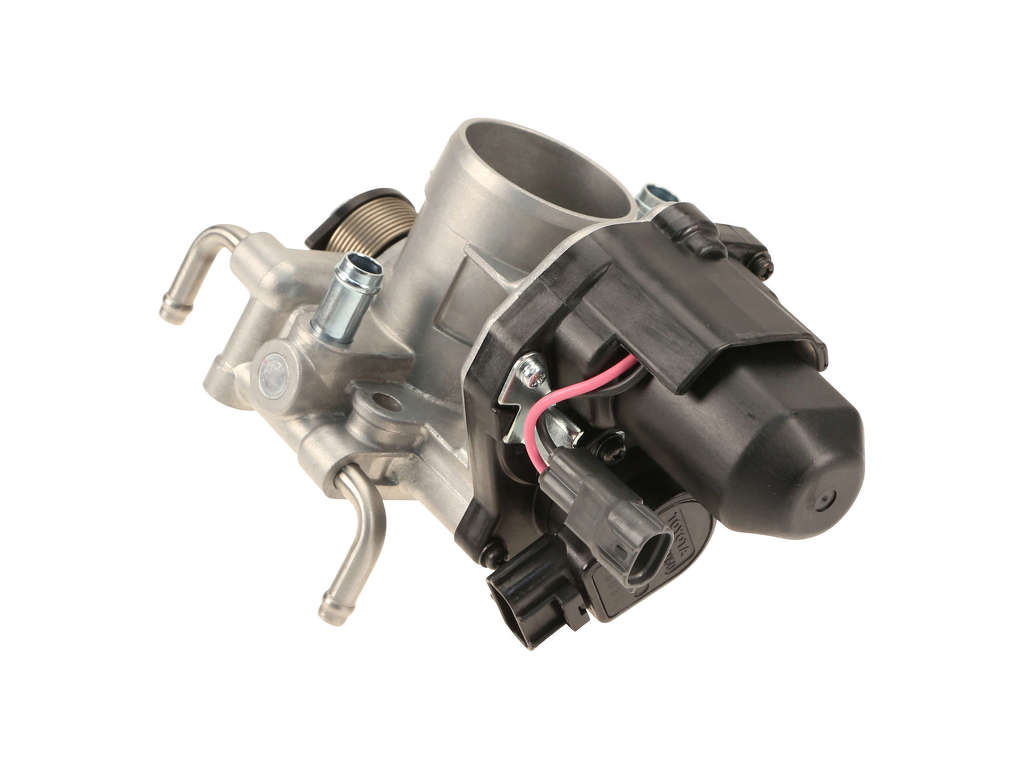
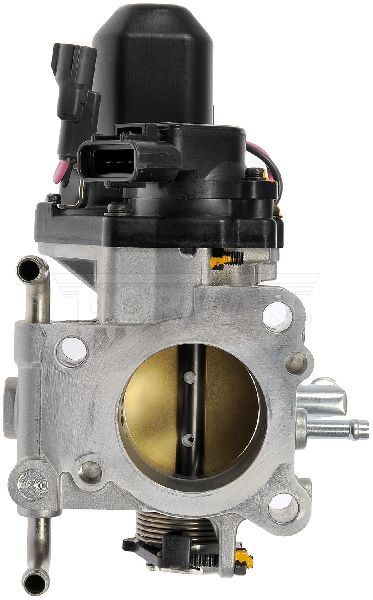
- Dirty Electronic Throttle Body 🔴 High Probability → Shop Fuel Injection Throttle Body The PCV (Positive Crankcase Ventilation) system routes oil vapors back into the intake, which can bake onto the throttle plate and bore over many miles, restricting idle airflow. This is the most common cause by a wide margin.
How to confirm: Remove the air intake hose connected to the throttle body. Visually inspect the throttle plate and the inside of the bore for a black, sticky layer of carbon buildup. The buildup is often heaviest on the back side of the plate and the bore area where the plate rests when closed.
Typical fix: Remove the throttle body from the intake manifold 🎬 Watch this step-by-step guide to cleaning your Prius throttle body. for a thorough cleaning. Use a dedicated throttle body cleaner and a soft brush or microfiber towel to remove all carbon deposits from the plate (both sides) and the bore. Replace the throttle body gasket upon reinstallation.
Est. part cost: $10-$25 for cleaner and a new gasket. - Dirty Mass Air Flow (MAF) Sensor 🟡 Medium Probability While not the primary cause, a MAF sensor contaminated with dirt or oil can send inaccurate airflow data to the computer, leading to incorrect idle speed calculations. It's easy to clean during a throttle body service and is a common maintenance item.
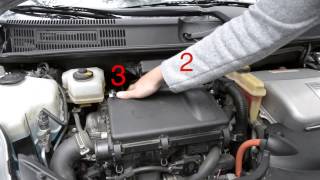
How to confirm: The MAF sensor is located in the air filter housing lid. If the throttle body is dirty, the MAF sensor may be as well. A visual inspection may reveal a film on the sensor's delicate wires.
Typical fix: Carefully remove the sensor and spray the sensing elements with a dedicated MAF sensor cleaner. 🎬 See how to safely remove and clean the MAF sensor. Do not touch the wires with anything. Allow it to dry completely before reinstalling.
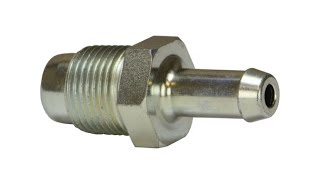
Est. part cost: $10-$15 for MAF sensor cleaner. - Clogged or Faulty PCV Valve ⚪ Low Probability → Shop PCV Valve The PCV valve can become clogged with sludge over time. A stuck-open valve can create a vacuum leak, while a stuck-closed valve can increase crankcase pressure. Both can negatively affect idle stability.
How to confirm: Remove the PCV valve and shake it. If it rattles, it is likely functioning. If it is silent or feels gummy, it is clogged and should be replaced. Given its low cost, many owners replace it as preventative maintenance.
Typical fix: Replace the PCV valve and its grommet. 🎬 Watch this quick walkthrough for replacing the PCV valve. It is an inexpensive and simple maintenance item.
Est. part cost: $10-$20 - Vacuum Leak ⚪ Low Probability
How to confirm: Listen for a hissing sound around the engine bay at idle. A more definitive method is to have a mechanic perform a smoke test, which feeds smoke into the intake system to reveal the source of any leaks from cracked hoses or bad gaskets.
Typical fix: Replace the cracked vacuum hose, intake manifold gasket, or other leaking component.
Est. part cost: $5-$100 depending on the source of the leak.
Rare But Worth Checking
- Failing Electronic Throttle Body Assembly: → Shop Fuel Injection Throttle Body If a thorough cleaning does not resolve the issue and there are no vacuum leaks, the motor or position sensor within the throttle body itself may be failing. This is uncommon but possible on higher-mileage vehicles.
- Rodent Damage / Debris: In a rare but documented case on a Prius forum, seeds and debris left by rodents physically jammed the throttle plate, holding it open and causing erratic behavior that was initially diagnosed as a failed throttle body.
Diagnosis Steps
- Scan for any other trouble codes. If other codes are present, diagnose them first as they may be the root cause.
- Inspect the air intake tube between the air filter box and the throttle body for any cracks or loose connections.
- Remove the intake tube from the throttle body and inspect the throttle plate and bore for carbon buildup. This is the most likely cause.
- While the intake is apart, locate and inspect the Mass Air Flow (MAF) sensor. If it appears dirty, clean it with dedicated MAF sensor cleaner.
- If significant carbon is found, remove the four bolts holding the throttle body, disconnect the electrical connector, and gently move it for cleaning. It is not necessary to disconnect the coolant lines; there is enough slack in the hoses. Clean it thoroughly using throttle body cleaner and a rag.
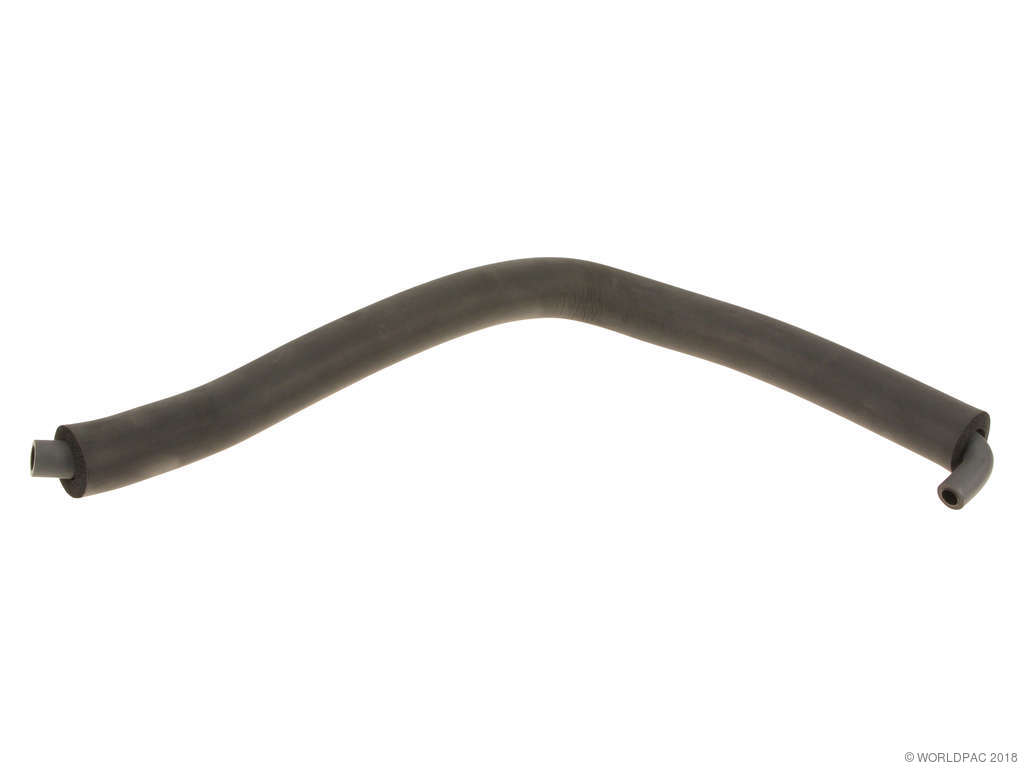
- Inspect vacuum hoses, especially the PCV hose, for cracks or softness. Check the PCV valve itself to ensure it rattles when shaken.
- After cleaning and reassembly, disconnect the 12-volt battery in the trunk for at least 15 minutes. This is a critical step that erases the computer's learned idle trim values, forcing it to relearn the new, correct closed-throttle position. Failure to do this may result in a high idle after cleaning.
- Reconnect the battery, start the vehicle, and allow it to idle for several minutes to complete the relearn process. Some owners report needing a short drive cycle with stop-and-go to fully stabilize the idle.
- If the problem persists, consider a professional smoke test to check for hard-to-find vacuum leaks.
Parts You'll Likely Need
- Throttle Body Cleaner — This is required to remove the carbon buildup from the throttle body, which is the most common cause of P0506.
Trusted brands: CRC, Gumout
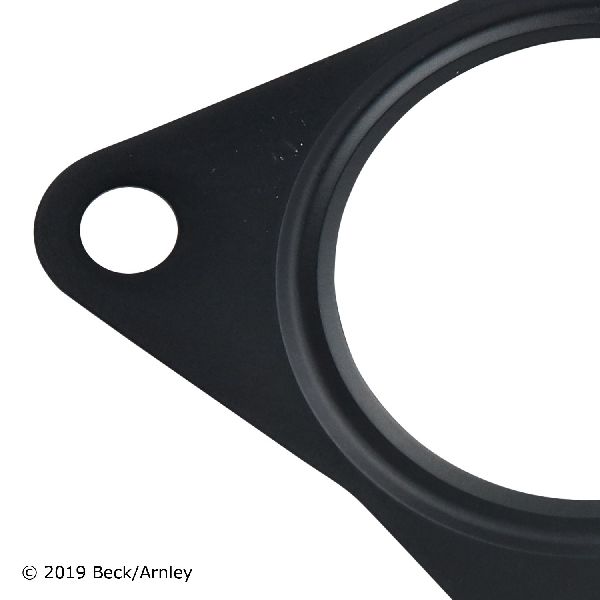
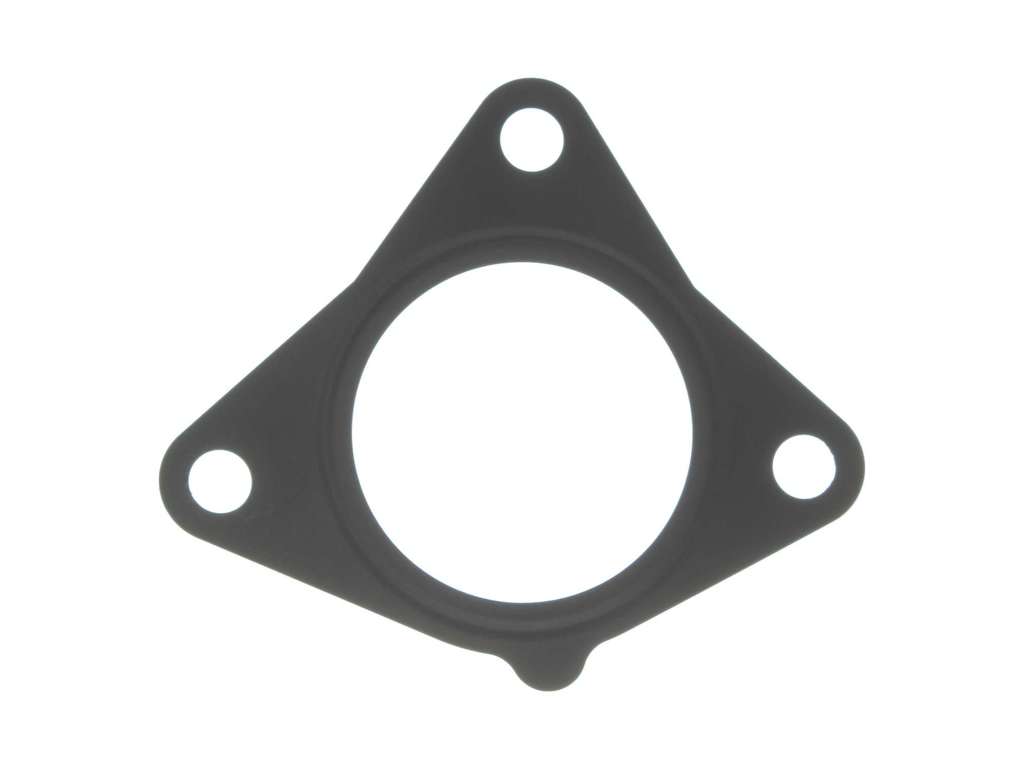
Aftermarket price range: $8-$12 - Throttle Body Gasket
(OEM #22271-21030)— The gasket should be replaced whenever the throttle body is removed to prevent future vacuum leaks. This part number is confirmed to fit 2001-2009 Prius models.
Trusted brands: Toyota OE, Fel-Pro, Mahle
OEM price range: $8-$15
Aftermarket price range: $4-$8 - PCV Valve
(OEM #12204-21011)— A preventative maintenance part that can cause idle issues if it gets stuck. It's inexpensive and easy to replace while working in the area. This part number fits the 2001-2008 Prius, as well as the Echo, Yaris, and Scion xA/xB.
Trusted brands: Toyota OE, Standard Motor Products
OEM price range: $12-$20
Aftermarket price range: $5-$10
Related Codes That Often Appear With This One
- P0507 — This code indicates 'Idle RPM Higher Than Expected.' It can sometimes appear if the computer over-corrects for a sticking throttle body or if a different issue like a large vacuum leak is present.
- P0505 — This code for 'Idle Air Control System Malfunction' is a more general idle system fault. On a Prius, it often points to the same root cause: a dirty or failing electronic throttle body.
Technical Service Bulletins (TSBs) & Recalls
- No Toyota-specific TSBs were found for trouble code P0506 on this vehicle. The issue is widely considered a maintenance task. TSBs for other common Gen 2 issues, like the Combination Meter (T-SB-0172-09), are well-documented but unrelated to this code.
Platform-Specific Known Issues
- Stall after starting: An owner on PriusChat with a 2007 model reported that the car would start but immediately stall. After cleaning the throttle body, the issue was resolved. This highlights how severe the airflow restriction can become.
- Rough idle and acceleration after cleaning: A PriusChat user experienced a very high idle after a mechanic cleaned the throttle body for a P0505 code. The mechanic had to perform a 'reset' with a scan tool. This underscores the importance of resetting the ECU's learned values (either by scan tool or battery disconnect) after cleaning the throttle body to allow it to relearn the new idle position.
Mechanic-Grade Diagnostic Values
- Throttle Position Sensor (TPS) Resistance — expected: 1.2 to 3.5 kΩ at 25°C (77°F) between terminals 1 and 4 of the sensor connector.. Failure: Resistance outside of this range indicates a faulty sensor, requiring throttle body replacement.
- Throttle Position Sensor (TPS) Voltage - VTA1 — expected: Varies between ~0.7V (closed) and ~4.6V (fully open). A fully closed throttle should read between 10% and 22% on a scan tool.. Failure: Voltage that is stuck, erratic, or does not correspond smoothly with throttle plate movement. A reading of 0V or 5V indicates a circuit fault.
- Throttle Position Sensor (TPS) Voltage - VTA2 — expected: Varies between ~2.25V (closed) and ~5.0V (fully open). VTA2 is a redundant safety signal. The ECM expects the relationship (VTA2 * 0.8) to be approximately equal to (VTA1 + 1.11V).. Failure: If VTA1 is within 0.02V of VTA2, the ECM determines a short circuit and sets a fault code.
- Scan Tool Live Data - Calculated Load at Idle — expected: 10% to 30%. Failure: A significantly higher value at idle could indicate a vacuum leak or other unmetered air entering the engine.
- Scan Tool Live Data - MAF at Idle — expected: Approximately 1.0 to 3.0 g/sec at normal operating temperature.. Failure: Readings that are unusually low or high can indicate a dirty/faulty MAF sensor or a significant vacuum leak.
Hidden / Shadow Codes Worth Checking
- Mode 6, TID $81, CID $0B: This refers to the non-continuous monitor test results for the Electronic Throttle Control (ETC) system. It can show test values and pass/fail status for throttle correlation checks before a full-blown DTC is set. (see via A professional scan tool capable of displaying OBD-II Mode 6 data.)
Scan Tool Commands That Help
- Toyota Techstream: Utility -> Learning Value Reset — This function should be used after cleaning or replacing the throttle body. It clears the old learned idle and fuel trim values stored in the ECM's EEPROM, forcing a faster and more accurate relearn process to prevent high or unstable idle.
- Toyota Techstream: Active Test -> Control the Idle Speed — This bidirectional command allows a technician to manually command the idle RPM up or down to test the response and range of the electronic throttle body's idle control function, helping to confirm if the motor is responding correctly.
Wiring & Ground Locations
- E4 (Engine Control Module) — The ECM is located behind the glove box in the passenger compartment.. This is the central computer that monitors all sensors and controls the throttle body. Poor connections or internal faults here can cause any number of codes, including P0506.
- Ground Point 'EB' — Located on the left side of the cylinder head.. This is a primary ground point for engine-mounted components. A loose or corroded 'EB' ground can cause erratic sensor readings and poor performance of the electronic throttle body.
- Ground Point 'IC' — Located on the intake manifold.. This ground point is critical for sensors connected to the intake manifold, including potentially the throttle body assembly itself. A poor connection here can lead to incorrect sensor data being sent to the ECM.
Real Owner Repair Stories
- Reddit user in r/prius (2005 Toyota Prius, 170k miles) — Check engine light on, stalling on the highway. Code P0121 (Throttle/Pedal Position Sensor/Switch "A" Circuit Range/Performance Problem) was present.
❌ Tried (didn't work) Cleaning the throttle body. The check engine light returned after cleaning.
✅ What actually fixed it The dealer recommended replacing the entire throttle body assembly. The user was contemplating this repair due to the high cost ($1100). Other forum members suggested it is an easy DIY replacement and to use a used part from a junkyard to save money.
OEM Part Supersession History
12204-21012→12204-21013— Standard part revision and update by the manufacturer.
Heads up: The new part number (12204-21013) is a direct replacement for the old one and is backward compatible.
Diagnostic Flowchart
Other Known Issues on This Vehicle
Issues unrelated to this code that are worth knowing about as an owner of this generation:
- Combination Meter (Speedometer) Failure 🟠 Medium — Very common, especially in colder climates or at higher mileage. Often starts intermittently before failing completely. (Ref: TSB T-SB-0172-09 issued, but original warranty was only 3yr/36k. Toyota later offered a Warranty Enhancement Program (ZEE), but it has since expired.)
- Inverter Coolant Pump Failure 🔴 High — Common failure item, often occurring after 100k miles. Failure can lead to inverter overheating and catastrophic damage. (Ref: Subject of Safety Recall C0U for 2004-2009 models. Owners can check VIN to see if the recall was performed.)
- Brake Actuator Assembly Failure 🔴 High — Less common than other issues but a significant and expensive failure. Can cause loss of braking assist. (Ref: No specific recall for Gen 2, but a major issue in later generations (Gen 3 had a warranty extension, some 2019-2020 models were recalled).)
- Excessive Oil Consumption 🟠 Medium — Becomes more prevalent at high mileage (150k+ miles). Often attributed to piston ring design.
- Hybrid Battery (HV) Degradation 🔴 High — Inevitable with age and mileage, typically after 10-15 years or 150k-200k miles. Symptoms include poor fuel economy and the 'red triangle of death'. (Ref: Standard hybrid system warranty is 8 years/100,000 miles (10yr/150k in CARB states).)
Used vs. New Parts: Buying Guide for This Vehicle
When a used part is the smart pick: A used throttle body from a junkyard or online seller is a very sensible choice for this repair, especially given the high cost of a new OEM unit (often over $400). Since the most common failure is dirt/carbon buildup, even a used part can often be cleaned to restore function. Electronic failure is rare, making used parts a good gamble.
Donor-vehicle mileage cap: roughly under 80000 miles for the part to have meaningful remaining life.
What to inspect on the donor part:
- Source from a lower-mileage, later-model-year (e.g., 2008-2009) Gen 2 Prius if possible.
- Visually inspect the throttle bore and plate. If it's exceptionally clean, it may have been replaced recently. If it's black with carbon, factor in the need for a thorough cleaning.
- Ensure the electrical connector and pins are not damaged or corroded.
- Buy from a reputable seller with a return policy in case the unit has an electronic fault.
OEM-only on this vehicle (don't cheap out):
- Electronic Throttle Body Assembly (if buying new) - While aftermarket units exist, their long-term reliability with the Prius hybrid system can be questionable. A new OEM or a reliable used OEM part is the safest bet.
Aftermarket brands forum-validated for this vehicle:
- Fel-Pro, Mahle (for gaskets)
- Standard Motor Products (for PCV valve)
Brands owners have reported issues with on this vehicle:
- No-name, unbranded electronic throttle bodies from online marketplaces should be avoided due to potential calibration and longevity issues.
Real Owner Stories
Aggregated from forums and TSBs cited above. Mileages and costs reflect what owners reported in those sources.
2007 Toyota Prius 1.5L
Symptoms: The car would start but immediately stall.
What fixed it: Cleaning the throttle body to remove severe airflow restriction.
Source hint: vehicle_specific_issues: 'Stall after starting'
2004-2009 Toyota Prius 1.5L
Symptoms: Very high idle after a mechanic cleaned the throttle body.
What fixed it: The mechanic had to perform a 'reset' with a scan tool to allow the ECU to relearn the new idle position.
Source hint: PriusChat: 'rough @ idle and acceleration after Throttle body cleaning.....!'
Related OBD-II Codes
Frequently Asked Questions
Does TSB T-SB-0172-09 for the Gen 2 Prius address the P0506 idle issue?
Why did my Prius develop a very high idle after I cleaned the throttle body?
Is the P0506 code related to the Inverter Coolant Pump recall (Safety Recall C0U)?
Can I clean the MAF sensor on my 2005 Prius to fix this, and what should I use?
Do I need to drain the engine coolant to remove the throttle body for cleaning?
Is the PCV valve on my 2008 Prius a shared part with other Toyota models?
Helpful Videos


We Have This Part in Stock


The information in this article is provided for general reference and educational purposes only. Vehicle specifications, procedures, and part compatibility can vary by production date, trim level, and region. Always consult your vehicle's factory service manual and verify part numbers before purchasing or performing repairs. Safety-critical components such as airbags, seat belts, and braking systems should be installed by a qualified professional.
- Toyota Prius:
- 🧭 Diagnostic Flowchart
- 🎬 Helpful Videos
- 🛍️ Shop This Part
- What's Unique About the 2004-2009 Toyota Prius
- Symptoms You May Notice
- Most Likely Causes
- Rare But Worth Checking
- Diagnosis Steps
- Parts You'll Likely Need
- Related Codes That Often Appear With This One
- Technical Service Bulletins (TSBs) & Recalls
- Platform-Specific Known Issues
- Mechanic-Grade Diagnostic Values
- Hidden / Shadow Codes Worth Checking
- Scan Tool Commands That Help
- Wiring & Ground Locations
- Real Owner Repair Stories
- OEM Part Supersession History
- Other Known Issues on This Vehicle
- Used vs. New Parts: Buying Guide for This Vehicle
- Real Owner Stories
- 2007 Toyota Prius 1.5L
- 2004-2009 Toyota Prius 1.5L
- Related OBD-II Codes
- Frequently Asked Questions
- 🎟️ Get 5% Off