

P0506 on 2007-2016 Volvo S80 3.2L: Causes and Fixes for Low Idle RPM
On a 2007-2016 Volvo S80 3.2L, code P0506 is most often caused by a dirty Electronic Throttle Body (ETB). Carbon buildup from the PCV system restricts airflow at idle. A thorough cleaning of the throttle plate and bore with a new gasket (Volvo P/N 30650730) is the most likely fix and costs under $30 for DIY materials. If cleaning doesn't work, suspect a vacuum leak, often from the PCV system itself.
- Start by cleaning the Electronic Throttle Body; this is the most common and cheapest fix.
- Always use a new throttle body gasket (Part No. 30650730) after cleaning to avoid new problems.
- If cleaning doesn't work, your next step should be a smoke test to check for vacuum leaks, paying close attention to the PCV breather box and hoses.
- Do not replace the expensive throttle body or MAF sensor until the simpler, more common causes have been ruled out.
What's Unique About the 2007-2016 Volvo S80
The Volvo 3.2L I6 (B6324S), like most modern engines, uses a 'drive-by-wire' throttle system where idle is controlled by the main throttle plate. This design is highly sensitive to carbon and oil vapor deposits that accumulate in the throttle body from the PCV system. This buildup restricts the small amount of air needed for idle, causing the RPM to drop below the target and trigger code P0506. While many cars suffer from this, it's a very common and well-documented first diagnostic step for this specific Volvo P3 platform engine.
Symptoms You May Notice
- Check Engine Light is on
- Engine idle speed is lower than normal (e.g., 500-600 RPM)
- Rough or vibrating idle
- Engine may stall when coming to a stop or when shifting into gear
- Slightly rougher ride than usual
- Engine may be difficult to start when warm
- Replacing the throttle body without cleaning it first. Cleaning is effective in a majority of cases and is significantly cheaper.
- Replacing spark plugs or ignition coils. While these can cause a rough idle, they typically trigger misfire codes (P030x) rather than a specific low idle code like P0506.
- Assuming the MAF sensor is the primary cause. While possible, a dirty throttle body is far more common on this engine for this specific code.
Most Likely Causes
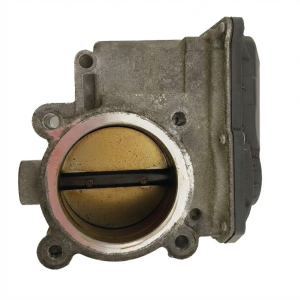
- Dirty Electronic Throttle Body (ETB) 🔴 High Probability → Shop Fuel Injection Throttle Body The PCV (Positive Crankcase Ventilation) system routes oil vapors and combustion byproducts into the intake. These vapors condense and form a sticky black layer of carbon on the throttle plate and bore over time. This is a very common issue on the 3.2L engine and directly restricts the small amount of air needed for stable idle.
How to confirm: Visually inspect the throttle body bore and the edges of the throttle plate for a black, sticky layer of carbon buildup after removing the intake hose. The engine may idle correctly for a short time after manually pushing the throttle plate, which dislodges some carbon.
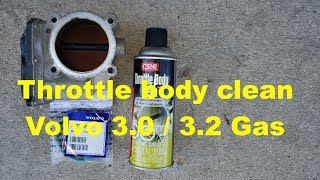
Typical fix: Remove the four bolts holding the throttle body to the intake manifold and clean it thoroughly with a dedicated throttle body cleaner and a soft brush or cloth. 🎬 Watch: Step-by-step guide to cleaning your Volvo 3.2L throttle body. It is critical to replace the throttle body gasket (Volvo P/N 30650730) during reinstallation to prevent a vacuum leak.
Est. part cost: $10-$25 (for cleaner and a new gasket) - Vacuum Leak 🟡 Medium Probability With age, rubber hoses and plastic components in the engine bay can become brittle and crack. A common failure point on the 3.2L engine is the PCV system's breather box or associated hoses, which can split or crack, creating a significant unmetered air leak.
How to confirm: The most reliable method is a smoke test, which feeds low-pressure smoke into the intake system and reveals leaks wherever smoke escapes. A less precise method involves carefully spraying starter fluid or brake cleaner around vacuum lines and gaskets with the engine running; a change in idle RPM indicates a leak. Pay close attention to the PCV breather box area.
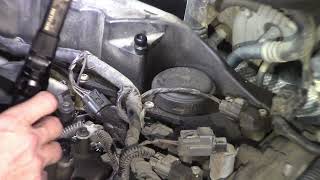
Typical fix: Identify and replace the leaking hose, gasket, or component. If the PCV breather box is at fault, it should be replaced as a unit. 🎬 See this DIY walkthrough for replacing the PCV oil trap.
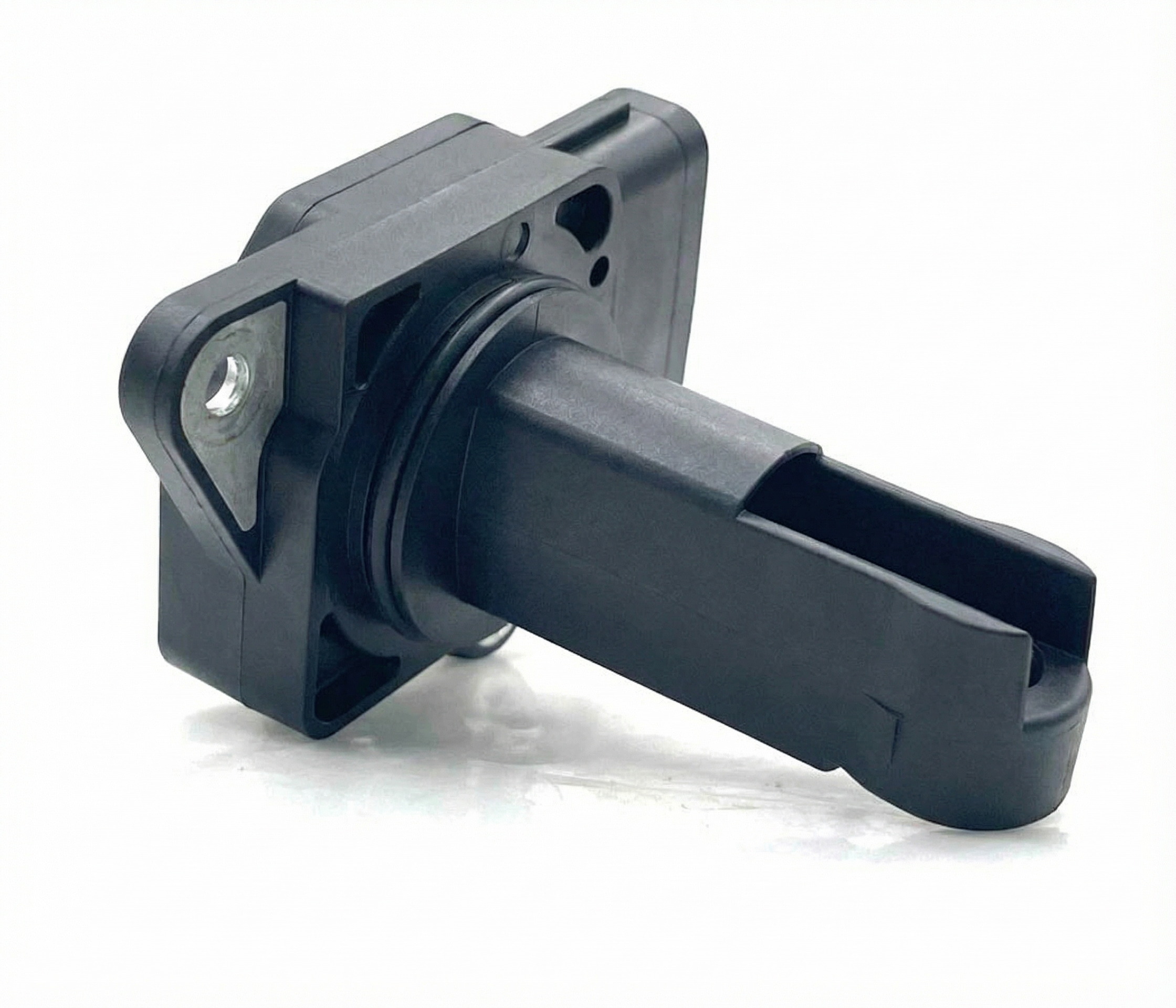
Est. part cost: $15-$200 (depending on the specific part that failed, with the PCV box being more expensive) - Dirty or Failed Mass Airflow (MAF) Sensor ⚪ Low Probability Oiled air filters or debris bypassing a poorly-seated air filter can contaminate the MAF sensor's delicate hot wire, causing it to under-report airflow to the ECM. This leads to an incorrect fuel mixture and can contribute to a low idle.
How to confirm: A failing MAF sensor often causes the engine to run rough, stall, and can trigger lean or rich codes. Visually inspect the sensor wires for contamination. A diagnostic test involves disconnecting the MAF sensor; if the idle improves, the sensor is likely faulty.
Typical fix: Carefully remove the MAF sensor and spray the sensing elements with a dedicated MAF sensor cleaner. Do not touch the sensor wires. Allow it to dry completely before reinstalling. If cleaning doesn't work, the sensor may need replacement (Volvo P/N 30713512).
Est. part cost: $10-$15 (for MAF sensor cleaner) or $200-$350 (for a new OEM sensor)
Rare But Worth Checking
- Failed Electronic Throttle Body (ETB): → Shop Fuel Injection Throttle Body If a thorough cleaning does not resolve the issue and no vacuum leaks are present, the internal motor or position sensor of the throttle body itself may have failed. This is uncommon on the Bosch units used in these models compared to earlier Volvo ETMs, but it can happen. Diagnosis should confirm no wiring issues exist before replacing the unit.
- Clogged Exhaust System: A severely clogged catalytic converter can create excessive backpressure, preventing the engine from idling correctly. This is usually accompanied by other codes (like P0420) and a significant loss of power, especially at higher RPMs.
Diagnosis Steps
- Scan for any other stored DTCs with an OBD-II scanner. Address other codes first, as P0506 can be a symptom of another problem.
- Inspect the air intake system from the air filter to the throttle body. Ensure the air filter is clean and that all hoses and connections are secure and free of cracks.
- Remove the intake hose from the throttle body and inspect for heavy carbon buildup. The presence of a thick, black, oily film is a strong indicator of the likely cause.
- Perform a thorough cleaning of the Electronic Throttle Body (ETB). It is highly recommended to remove it from the vehicle for proper cleaning. Use a dedicated throttle body cleaner and a new gasket (P/N 30650730) upon reinstallation.
- While the intake is apart, clean the Mass Airflow (MAF) sensor with a dedicated cleaner as a preventative maintenance step.
- If the idle is still low after cleaning, perform a smoke test to check for vacuum leaks. Pay special attention to the PCV breather box, intake manifold gaskets, and all connected vacuum hoses.
- If cleaning and confirming no vacuum leaks does not solve the problem, further testing of the throttle body's electronic circuits may be necessary, potentially indicating a failed ETB unit.
Parts You'll Likely Need
- Electronic Throttle Body Gasket
(OEM #30650730)— A new gasket is required whenever the throttle body is removed for cleaning to prevent creating a vacuum leak.
Trusted brands: Volvo (OEM), Mahle, Victor Reinz
OEM price range: $10-$15
Aftermarket price range: $5-$10 - Electronic Throttle Body
(OEM #31216328)— Replaced only if cleaning and other diagnostics fail to resolve the low idle issue, indicating an internal failure of the unit.
Trusted brands: Bosch (OEM supplier), A1 Cardone (remanufactured), Genuine Volvo
OEM price range: $400-$550
Aftermarket price range: $250-$400 - Mass Airflow (MAF) Sensor
(OEM #30713512)— Replaced if cleaning does not resolve MAF-related symptoms or if diagnostic tests confirm its failure.
Trusted brands: Genuine Volvo, Bosch
OEM price range: $250-$350
Aftermarket price range: $150-$220
Related Codes That Often Appear With This One
- P0171 — System Too Lean. This code often appears with P0506 if a vacuum leak is the root cause. The unmetered air leans out the air/fuel mixture, causing both a lean condition and an unstable, low idle.
Platform-Specific Known Issues
- Throttle Body Cleaning Technique: → Shop Fuel Injection Throttle Body Owners on forums emphasize removing the throttle body completely for cleaning rather than attempting to clean it on the car. This allows for proper cleaning of both sides of the throttle plate and the bore without spraying chemicals into the intake manifold.
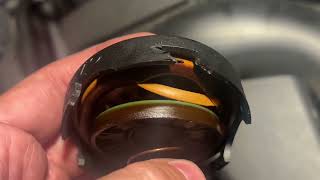
- PCV Breather Box Failure: The PCV system (sometimes called the oil trap or breather box) on the 3.2L engine is a known failure point. A torn diaphragm inside the box creates a large vacuum leak, which can cause a loud whistling or howling noise at idle in addition to the P0506 code. 🎬 Watch: How to fix a squealing PCV valve on your S80. This is a more involved repair than cleaning the throttle body.
Mechanic-Grade Diagnostic Values
- Mass Airflow (MAF) Sensor Live Data at warm idle — expected: 3.0 - 4.5 g/s. Failure: Readings significantly outside this range, or readings that are frozen or fluctuate wildly at a steady idle.
- Long Term Fuel Trim (LTFT) at idle — expected: Within +/- 10%. Failure: A high positive value (e.g., > +10%) suggests a vacuum leak; a high negative value suggests it's running rich for another reason.
- Short Term Fuel Trim (STFT) at idle — expected: Fluctuating near 0%, typically within +/- 5%. Failure: Sustained high positive or negative values indicate the ECM is actively trying to correct a mixture issue.
- MAF Sensor Voltage (Key-On, Engine-Off) — expected: 0.2V to 0.3V. Failure: A reading of 0V or a value significantly outside this range points to a sensor or wiring issue.
- Fuel Rail Pressure at Idle — expected: ~380 kPa (~55 PSI). Failure: Significantly low or high pressure can affect idle stability, though it would likely set other codes first.
Hidden / Shadow Codes Worth Checking
- ETM Internal Faults: The Electronic Throttle Module (ETM) can store its own internal, manufacturer-specific fault codes related to the motor, position sensors, or communication that are not visible with a standard OBD-II scanner. (see via A Volvo-specific diagnostic tool like VIDA (Vehicle Information and Diagnostics for Aftersales) is required to read these proprietary codes from the Engine Control Module (ECM).)
Scan Tool Commands That Help
- Volvo VIDA: Adaptation of the throttle unit — This function should be performed after cleaning or replacing the Electronic Throttle Body. It forces the ECM to relearn the closed and open positions of the throttle plate, ensuring accurate idle control. The path is typically: Vehicle Communication > ECM > Advanced > Adaptation of the throttle unit.
- Volvo VIDA: Resetting control module adaptations — After replacing a major component affecting air/fuel mixture, like the MAF sensor or PCV assembly, this reset clears the long-term fuel trims. This forces the ECM to create new fuel maps based on the new, correct sensor data, rather than applying old learned adjustments.
- Generic Scan Tool / Manual Procedure: Throttle Body Relearn/Reset — If VIDA is unavailable, some success may be achieved with a simpler reset. Disconnecting the battery for at least 30 minutes can clear the ECM's volatile memory. After reconnecting, starting the engine and letting it idle for 10-15 minutes may allow the system to begin the relearning process on its own. Some advanced generic scan tools also offer this function.
Wiring & Ground Locations
- G88 / G89 — G88 is on the top front of the engine; G89 is in the left front of the engine compartment.. These are primary engine and chassis ground points. A loose or corroded connection here can create an unstable ground reference for the ECM, leading to incorrect sensor readings and erratic behavior of components like the electronic throttle body.
- 31/xx (Designator) — Various locations on the engine block and chassis, detailed in Volvo wiring diagrams.. This is the standard Volvo designation for a ground connection. The primary ECM ground is the most critical. A voltage drop test on this circuit is essential to rule out a bad ground, which can mimic a failed component and cause persistent, hard-to-diagnose issues.
- Engine Bay Fuse Box Fuses — Located in the engine compartment distribution box, left side of the engine bay.. The ECM and throttle body are powered by several fuses. Specifically check F20 (ECM), F39 (ECM and throttle body), and F44 (ECM). A corroded or blown fuse will cut power and cause immediate failure.
Real Owner Repair Stories
- Volvo Forums user post (2012 Volvo S80 3.2L) — Engine turned over, revved to ~1600 RPM, then immediately died. Stalling issue.
❌ Tried (didn't work) Initial diagnosis was difficult as the problem was intermittent.
✅ What actually fixed it Found a loose hose clamp on the intake tube between the air filter housing and the intake manifold. Tightening the clamp secured the seal, preventing unmetered air from bypassing the MAF sensor and resolving the stalling issue. - Volvo workshop blog post (Volvo S80 with over 200,000 km) — Engine idle was constantly rough. Fault codes pointed to the air throttle.
❌ Tried (didn't work) Checked continuity of the six wires between the throttle plug and the ECM; they were all good., Measured voltages at the throttle plug terminals, which appeared normal at first.
✅ What actually fixed it A careful inspection of the throttle body wiring harness revealed that a previous repair had been done poorly. Two wires were twisted together and wrapped in tape. When the engine was warm or vibrating, these wires would make intermittent contact, causing a voltage signal difference that confused the ECM. Properly soldering the wires and insulating them fixed the rough idle.
"I Checked Everything" — The Actual Cause
- A smoke test would likely have missed the cause in one documented repair where a loose intake hose clamp after the MAF sensor was the culprit. The clamp was just loose enough to let in unmetered air under specific engine vacuum conditions, causing stalling, but might appear sealed during a static, low-pressure smoke test.
- In another case, a persistent rough idle was caused by a poorly repaired wiring harness to the throttle body. All vacuum systems would have tested perfectly, but the intermittent electrical fault from the bad wiring was the true root cause, which can only be found by a physical harness inspection or advanced electrical testing.
OEM Part Supersession History
30713183→31216328— Standard part revision and improvement by the manufacturer.
Model Year Variations Within This Range
- 2011-2016: Starting with the 2011 model year, the 3.2L engine was updated to the B6324S5 variant (from the original B6324S/S2). This revised engine featured internal changes to reduce friction and slightly increase power. While the fundamental causes of P0506 (dirty throttle body, vacuum leaks) remain the same, technicians should be aware of the engine code difference when ordering parts or consulting service data.
Diagnostic Flowchart
Other Known Issues on This Vehicle
Issues unrelated to this code that are worth knowing about as an owner of this generation:
- Alternator Decoupler Pulley / Drive Gear Failure 🔴 High — Common failure item. The one-way clutch in the pulley can seize, which can damage the alternator drive gear, leading to a no-charge condition. Often misdiagnosed as a bad alternator itself.
- Power Steering System Leaks 🟠 Medium — Leaks from the power steering reservoir (cracking plastic) or hoses are relatively common. A recall (NHTSA #11V378000) was issued for 2007 models for incorrectly routed return hoses causing high pressure and potential failure. (Ref: Recall R246 / NHTSA 11V378000 for 2007 models.)
- PCV Breather Box / Oil Trap Failure 🟠 Medium — The diaphragm in the PCV breather box can tear, causing a loud whistling or howling noise, high oil consumption, and vacuum leaks that can trigger various codes.
- Oil Consumption 🟡 Low — Some 3.2L engines can consume oil, though it is generally considered less severe than on other Volvo engines of the era. Owners report consumption of up to 1 quart between oil changes, which Volvo may consider within spec. Frequent oil changes can help mitigate this.
- Outdated Infotainment System 🟡 Low — A very common complaint on later models is the non-touchscreen infotainment system, which is considered slow and unintuitive by modern standards.
Used vs. New Parts: Buying Guide for This Vehicle
When a used part is the smart pick: For the Bosch electronic throttle body on this specific vehicle, a used part from a reputable salvage yard can be a viable cost-saving measure. Unlike the earlier Magneti-Marelli ETMs on older Volvos, these Bosch units are generally not VIN-coded to the vehicle and are often plug-and-play, sometimes requiring only a simple relearn procedure.
Donor-vehicle mileage cap: roughly under 100000 miles for the part to have meaningful remaining life.
What to inspect on the donor part:
- Source from a vehicle with verifiable low mileage.
- Prioritize parts from vehicles involved in rear-end collisions, as the engine components are less likely to be damaged.
- Inspect the connector pins for any signs of corrosion, water damage, or physical damage.
- If possible, check the throttle plate for excessive play or scoring, which could indicate internal wear.
OEM-only on this vehicle (don't cheap out):
- Electronic Throttle Body
- Mass Airflow (MAF) Sensor
Aftermarket brands forum-validated for this vehicle:
- Bosch (OEM supplier for both ETB and MAF sensor)
- Cardone (Remanufactured ETB)
Brands owners have reported issues with on this vehicle:
- Unbranded, no-name electronic sensors from online marketplaces are frequently cited as unreliable and a common cause of persistent issues.
Real Owner Stories
Aggregated from forums and TSBs cited above. Mileages and costs reflect what owners reported in those sources.
2007-2016 Volvo S80 3.2L I6
Symptoms: The engine had a low idle and the owner was troubleshooting a P0506 code.
What fixed it: A thorough cleaning of the Electronic Throttle Body (ETB) resolved the issue.
Source hint: Reddit r/askcarguys
2007-2016 Volvo S80 3.2L I6
Symptoms: The owner noted the necessity of removing the throttle unit entirely to clean both sides of the plate and the bore properly.
What fixed it: Removing the throttle body for cleaning and replacing the gasket.
Source hint: volvoXC.com thread titled 'cleaning throttle body'
2007-2016 Volvo S80 3.2L I6
Symptoms: Loud whistling or howling noise at idle accompanied by a vacuum leak.
What fixed it: Replacement of the PCV breather box (oil trap) as a unit due to a torn internal diaphragm.
Source hint: vehicle_specific_issues: PCV Breather Box Failure
Related OBD-II Codes
Frequently Asked Questions
Is there a recall for the power steering system on my 2007 Volvo S80 3.2L?
Can I clean the throttle body while it is still attached to the intake manifold?
What specific gasket do I need when reinstalling the throttle body on my 3.2L I6?
My engine is making a loud whistling noise at idle along with the P0506 code. What could it be?
If cleaning the throttle body doesn't work, what is the part number for a new MAF sensor?
Why is the 3.2L engine specifically prone to carbon buildup on the throttle plate?
Helpful Videos

We Have This Part in Stock

The information in this article is provided for general reference and educational purposes only. Vehicle specifications, procedures, and part compatibility can vary by production date, trim level, and region. Always consult your vehicle's factory service manual and verify part numbers before purchasing or performing repairs. Safety-critical components such as airbags, seat belts, and braking systems should be installed by a qualified professional.
- Volvo S80:
- 🧭 Diagnostic Flowchart
- 🎬 Helpful Videos
- 🛍️ Shop This Part
- What's Unique About the 2007-2016 Volvo S80
- Symptoms You May Notice
- Most Likely Causes
- Rare But Worth Checking
- Diagnosis Steps
- Parts You'll Likely Need
- Related Codes That Often Appear With This One
- Platform-Specific Known Issues
- Mechanic-Grade Diagnostic Values
- Hidden / Shadow Codes Worth Checking
- Scan Tool Commands That Help
- Wiring & Ground Locations
- Real Owner Repair Stories
- "I Checked Everything" — The Actual Cause
- OEM Part Supersession History
- Model Year Variations Within This Range
- Other Known Issues on This Vehicle
- Used vs. New Parts: Buying Guide for This Vehicle
- Real Owner Stories
- 2007-2016 Volvo S80 3.2L I6
- 2007-2016 Volvo S80 3.2L I6
- 2007-2016 Volvo S80 3.2L I6
- Related OBD-II Codes
- Frequently Asked Questions
- 🎟️ Get 5% Off