

P0507 on 2009-2016 Audi A4 2.0T: Causes for High Idle and PCV Valve Fixes
On the 2009-2016 Audi A4 with the 2.0T EA888 engine, P0507 is almost always caused by a failed PCV valve creating a large vacuum leak. The internal diaphragm tears, leading to excessive, unmetered air entering the intake. The fix involves replacing the PCV valve assembly, which costs around $150-$250 for an OEM part and is a straightforward DIY job. Using the latest revised OEM part is critical for a lasting repair.
- For a P0507 code on a 2009-2016 Audi A4 2.0T, the PCV valve is the most likely culprit.
- A simple diagnostic test is to check for strong vacuum at the oil filler cap while the engine is running; if present, the PCV valve has failed.
- This code is often accompanied by lean codes (P0171, P2187) and/or misfire codes, all pointing to the same root cause: a vacuum leak.
- When replacing the PCV valve, use the latest revised OEM part or a quality OEM supplier like Hengst to avoid repeat failures.
- Do not ignore this code, as a prolonged high-pressure condition in the crankcase can lead to more expensive oil seal failures.
What's Unique About the 2009-2016 Audi A4
The 2.0T EA888 engine (Gen 1 and Gen 2) is notorious for PCV (Positive Crankcase Ventilation) valve failures. The rubber diaphragm inside the valve is a known weak point that frequently tears, creating a massive internal vacuum leak directly into the intake manifold. This design flaw is so common that the PCV valve is considered a regular maintenance or wear item by many owners and technicians, often failing every 50,000-60,000 miles. While other issues can cause a high idle, a failed PCV valve is the primary suspect by a wide margin for a P0507 code on this specific vehicle and engine.
Symptoms You May Notice
- Check Engine Light is on
- High, surging, or fluctuating idle speed, sometimes bouncing between 800 and 2000 RPM.
- Audible whistling or squealing sound from the engine bay at idle, often described as a 'tea kettle' noise coming from the PCV valve area.
- Excessive suction on the oil filler cap when the engine is running, making it very difficult to remove. When removed, a loud whoosh of air is heard and the engine idle will stumble or stall.
- Harsh shifting or clunking when putting an automatic transmission into gear
- Rough running or engine misfires, especially at idle (P0300, P0301, etc.).
- Lean-related fault codes, such as P0171 (System Too Lean) or P2187 (System Too Lean at Idle).
- Replacing the Mass Airflow (MAF) sensor. A MAF sensor issue is unlikely to be the primary cause of P0507 on this engine; the problem is almost always unmetered air entering after the MAF sensor.
- Replacing oxygen sensors. While a lean code (P0171) often accompanies P0507, the O2 sensor is correctly reporting the lean condition caused by the vacuum leak; it is not the cause of the problem.
Most Likely Causes
- Failed PCV Valve / Oil Separator 🔴 High Probability → Shop PCV Valve The internal diaphragm of the factory PCV valve is made of rubber that is prone to tearing over time, creating a large, unmetered vacuum leak directly into the intake manifold. This is a well-documented weak point on the EA888 Gen 2 engine.
How to confirm: With the engine idling, carefully try to remove the oil filler cap. If there is a very strong vacuum holding the cap down, or you hear a loud whoosh of air when it's removed and the engine idle changes drastically, the PCV valve has failed. A loud whistling noise from the PCV valve itself is also a definitive sign of failure.
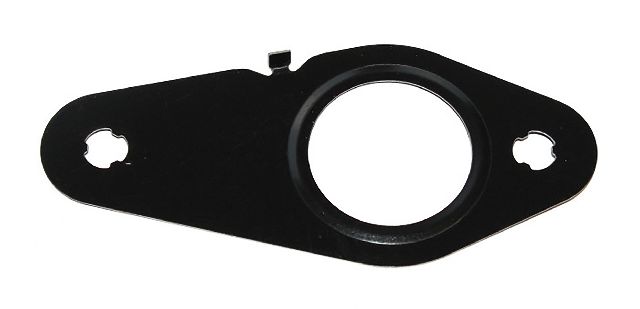
Typical fix: Replace the entire PCV valve assembly and its gasket. It is critical to use the latest revised OEM part number (e.g., 06H103495AK or newer) or a high-quality OEM supplier like Hengst to ensure longevity.
Est. part cost: $150-$250 - Other Vacuum Leaks 🟡 Medium Probability The engine bay contains numerous plastic and rubber hoses that can become brittle and crack with age and heat cycles. A less common but known failure point is a small cap on the intake manifold that can pop off.
How to confirm: Perform a smoke test on the intake system. This involves feeding low-pressure smoke into the intake and watching for smoke to escape from cracked hoses, bad gaskets, or loose connections. Pay close attention to the intake manifold area, brake booster vacuum hose, and all connected breather hoses.
Typical fix: Identify the leaking hose or gasket and replace it. Common culprits include small vacuum lines, the intake manifold gasket, or the brake booster vacuum hose.
Est. part cost: $20-$150 - Dirty Throttle Body ⚪ Low Probability → Shop Fuel Injection Throttle Body Direct injection engines like the EA888 can be prone to carbon buildup. Vapors from the PCV system can deposit oil and carbon around the throttle plate, preventing it from closing completely at idle.
How to confirm: Remove the intake tube connected to the throttle body and visually inspect the throttle plate and bore for a thick layer of black carbon buildup. Check if the plate feels sticky or doesn't move smoothly.
Typical fix: Clean the throttle body using a dedicated throttle body cleaner and a soft brush or microfiber towel. After cleaning, a throttle body adaptation (TBA) using a compatible scan tool (like VCDS or OBDeleven) is required to reset the idle parameters.
Est. part cost: $10-$20
Rare But Worth Checking
- Failed Rear Main Seal: This is typically a consequence of a long-neglected PCV valve failure. Excessive crankcase vacuum (from a torn PCV diaphragm) can pull the rear main seal inward, or excessive pressure (from a clogged PCV) can push it outward, causing a major oil leak between the engine and transmission. If you have P0507 and a significant oil leak in that area, this is a strong possibility and a much more expensive repair.
Diagnosis Steps
- Scan the ECM for fault codes and record any codes that appear alongside P0507. Note fuel trim values (Short Term and Long Term); high positive values at idle confirm a vacuum leak. 🎬 Watch: How to diagnose lean faults and intake leaks.
- With the engine at idle, listen for a distinct whistling or squealing noise from the top of the engine, specifically from the round cap on the PCV valve assembly.
- Perform the 'oil cap test': Carefully attempt to remove the oil filler cap with the engine running. If a strong vacuum holds it in place, the PCV valve has failed. The engine's idle should noticeably worsen or even stall when the cap is removed.
- If the oil cap test is inconclusive, visually inspect all visible vacuum hoses for cracks or disconnections, especially around the intake manifold and the brake booster line.
- If no obvious leak is found, perform a smoke test to pressurize the intake system with smoke and identify the source of the unmetered air leak.
- Inspect the throttle body for heavy carbon buildup that could prevent the throttle plate from closing fully.
- If the throttle body is dirty, clean it and perform a throttle body adaptation with a suitable scan tool (VCDS, OBDeleven, etc.).
Parts You'll Likely Need
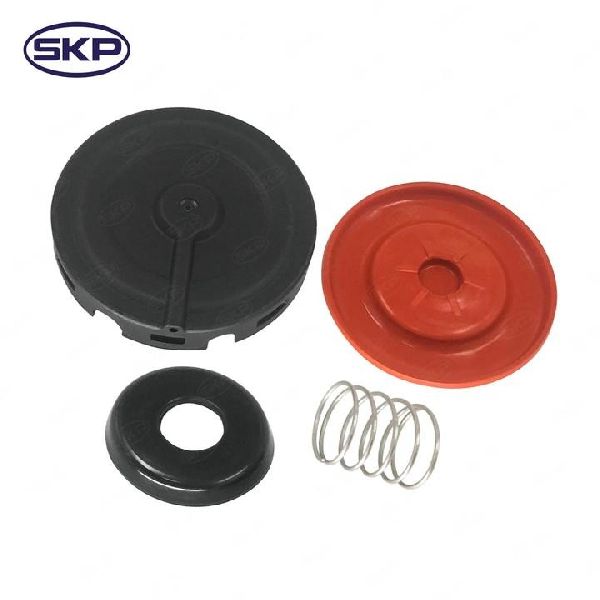
- PCV Valve / Oil Separator Assembly
(OEM #06H103495AK (latest common revision for this generation, supersedes 06H103495E, J, AH, etc.))— This is the overwhelming cause of P0507 on the EA888 engine due to a high failure rate of the internal diaphragm, which creates a large vacuum leak.
Trusted brands: Audi Genuine, Hengst, Vaico
OEM price range: $180-$250
Aftermarket price range: $50-$120
Related Codes That Often Appear With This One
- P0171 — System Too Lean (Bank 1). This code is very common with P0507 because the root cause—a vacuum leak—allows unmetered air into the engine, creating a lean air/fuel mixture that the oxygen sensor detects.
- P2187 — System Too Lean at Idle (Bank 1). This is another Audi/VW-specific lean code that points directly to a vacuum leak being most prominent at idle, which perfectly aligns with the symptoms of a failed PCV valve.
- P0300, P0301, P0302, P0303, P0304 — Random or specific cylinder misfire codes. A severe lean condition caused by a large vacuum leak can prevent proper combustion, leading to misfires, especially at idle.
Technical Service Bulletins (TSBs) & Recalls
- TPI 2025501 / TB 10-12-01: While not directly for P0507, this TSB provides additional testing information for the crankcase ventilation system on 2.0T engines, highlighting the system's complexity and known issues. It details procedures for measuring crankcase pressure, confirming the importance of this system's integrity.
- While no specific TSB for P0507 is widely cited, numerous TSBs exist for related symptoms like oil consumption and timing chain issues on the EA888 engine, which are often diagnosed alongside PCV problems.
Platform-Specific Known Issues
- The PCV valve on the EA888 engine has gone through multiple revisions from the manufacturer to improve reliability. It is crucial to install the latest available part number to prevent premature failure. Part numbers often end in a letter that denotes the revision (e.g., E, J, AH, AK).
- Ignoring a failed PCV valve can lead to excessive crankcase vacuum, which can pull on engine seals and cause them to fail. The most notable and costly consequence is a failed rear main seal, which requires transmission removal to replace.
Mechanic-Grade Diagnostic Values
- Crankcase Vacuum at Idle (measured at oil filler cap) — expected: Less than 1.0 inches of Mercury (inHg) of vacuum.. Failure: A reading of 2.0 inHg or higher indicates a torn diaphragm in the PCV valve, creating excessive crankcase vacuum.
- Long Term Fuel Trim at Idle (Bank 1) — expected: Ideally between -10% and +10%.. Failure: Sustained positive values greater than +15% to +25% strongly suggest the ECM is compensating for a large, unmetered vacuum leak.
Scan Tool Commands That Help
- VCDS (VAG-COM) by Ross-Tech: Throttle Body Adaptation (TBA) — This procedure is mandatory after cleaning or replacing the throttle body. It allows the ECM to relearn the fully closed and open positions of the throttle plate, which is essential for correct idle control. Failure to perform a TBA can cause continued high or erratic idle even after the physical problem is fixed.
- VCDS (VAG-COM) by Ross-Tech: Basic Settings - Group 060 — This is the specific function within VCDS to initiate the Throttle Body Adaptation. The user navigates to [01-Engine], then [Basic Settings-04], enters group '060', and clicks 'Go!'. The tool will display 'ADP RUN' as the throttle cycles and relearns its positions.
Wiring & Ground Locations
- Main Engine to Chassis Ground Strap — Typically located on the driver's side frame rail, connecting the engine block or transmission to the chassis. There may be multiple grounds.. A poor engine ground can cause floating voltages and erratic sensor readings for the entire engine management system, including the throttle body and ECM, potentially leading to incorrect idle control calculations.
- G43 / G44 Ground Points — Located behind the passenger-side (G43) and driver-side (G44) kick panels in the footwell.. These are critical grounding points for numerous modules, including the instrument cluster and Body Control Module (BCM). While not a direct cause, a fault here can create bizarre electrical issues that could mimic engine control problems.
- ECM Ground — The Engine Control Module (ECM) has its own ground wires integrated into its harness, which are bundled and attached to a grounding point on the chassis, often in the plenum area under the windshield or near the battery.. A compromised ECM ground is a severe fault that can cause a wide range of issues, including P0507, as the ECM cannot properly command the throttle body or read sensor inputs accurately.
Real Owner Repair Stories
- AudiWorld Forums User (2010 Audi A4 Premium Plus) — Rough idle, rough acceleration, EPC light, limp mode, and a lean condition.
❌ Tried (didn't work) Replaced MAF sensor, Replaced spark plugs and coils, Replaced the PCV valve (cost $800 at a shop)
✅ What actually fixed it The mechanic diagnosed a leaking rear main seal *after* replacing the PCV valve. The leaking seal was allowing a large amount of unmetered air into the crankcase, which was then pulled into the intake manifold via the new PCV, causing the lean condition and high idle. Replacing the rear main seal was the final required repair. - AudiForums.com User (2006 A4 2.0T (B7, but same engine family and issue)) — P0507 code, idle bouncing to 2,000 RPM, multiple cylinder misfires.
❌ Tried (didn't work) Initial thought was a dirty throttle body or bad sensor.
✅ What actually fixed it The user found that a small cap on the intake manifold had popped off, creating a large vacuum leak. This is a simple fix but easily overlooked. - YouTube channel Speedline Garage (2009 Audi A4 (B8)) — Very bad rear main seal leak, engine bucks badly, random multiple misfires (P0300), lean condition codes.
❌ Tried (didn't work) This was a diagnostic video, not a repair attempt.
✅ What actually fixed it As a temporary 'hack' to pass inspection, the technician disconnected the PCV breather hose from the intake manifold and capped the intake port. This stopped the engine from sucking unmetered air through the failed rear main seal, which immediately resolved the lean codes and misfires, proving the RMS was the source of the massive vacuum leak causing the drivability issues. The permanent fix is replacing the rear main seal.
"I Checked Everything" — The Actual Cause
- A very common scenario for P0507 on the EA888 is a smoke test that shows no leaks, yet the high idle persists. The actual cause is an internal failure of the PCV valve's diaphragm. When the engine is off during a smoke test, the torn diaphragm can remain sealed. However, once the engine is running, the strong intake vacuum physically pulls the torn rubber diaphragm open, creating a massive, unmetered air path directly from the crankcase into the intake manifold. This specific failure mode is why the 'oil cap test' (checking for extreme vacuum at the oil filler cap with the engine running) is the definitive diagnostic for this issue, not a smoke test.
When the Usual Fixes Don't Work
- While a failed PCV valve is the cause of P0507 in over 90% of cases for this vehicle, there are documented instances where the fix was more complex. In one forum case, a user replaced the PCV valve, but the high idle and lean codes remained. The ultimate cause was found to be a failed rear main seal, which had likely been damaged by the excessive vacuum from the previously failed PCV. The new, functioning PCV valve was simply pulling unmetered air through the now-leaking engine seal, perpetuating the problem. This highlights that secondary, consequential failures must be considered if replacing the PCV valve alone does not resolve the code.
OEM Part Supersession History
06H103495E, 06H103495J, 06H103495H→06H103495AC, 06H103495AD, 06H103495AH, and finally 06H103495AK (most common final revision for this generation).— The original parts had a high failure rate due to the rubber diaphragm tearing. Subsequent revisions aimed to improve the durability of the diaphragm material and valve design to better withstand heat and oil vapors.
Model Year Variations Within This Range
- 2009-2016: While the entire 2009-2016 B8/B8.5 generation uses the EA888 Gen 2 engine and suffers from the same fundamental PCV failure, the specific part number for the PCV valve went through many revisions. A 2009 model may have an early revision like 'E' or 'J', while a 2016 model would have come with a later revision like 'AH' or 'AK'. When replacing the part on any year in this range, it is critical to use the latest available revision (e.g., 06H103495AK or newer) to get the most durable version.
Diagnostic Flowchart
Other Known Issues on This Vehicle
Issues unrelated to this code that are worth knowing about as an owner of this generation:
- Excessive Oil Consumption 🔴 High — Very common, especially on 2009-2012 models. Caused by defective piston rings. Can start as early as 30k-50k miles and often worsens over time. (Ref: Subject of multiple class-action lawsuits.)
- Timing Chain Tensioner Failure 🔴 High — A critical issue on early EA888 Gen 2 engines (approx. 2009-2013). The original tensioner design can fail without warning, allowing the timing chain to jump, causing catastrophic engine damage. Failure is common between 60k-100k miles. (Ref: Multiple TSBs issued and a class-action lawsuit settlement extended warranties for some vehicles.)
- Water Pump / Thermostat Housing Failure 🟠 Medium — Extremely common. The original water pump has a plastic housing that cracks or warps, and the seals degrade, causing coolant leaks. Often fails multiple times before 100k miles.
- Intake Valve Carbon Buildup 🟠 Medium — Inevitable on all direct-injection engines. Significant buildup typically occurs every 40k-60k miles, causing misfires, rough idle, and reduced performance. Requires manual 'walnut blasting' to clean.
- Intake Manifold Runner Flap Failure 🟡 Low → Shop Engine Intake Manifold — The motor or position sensor for the intake manifold runner flaps can fail, or the flaps themselves can get stuck due to carbon buildup. This usually triggers a specific fault code and can cause a loss of power.
Used vs. New Parts: Buying Guide for This Vehicle
When a used part is the smart pick: For this specific repair, obtaining a used part is NEVER a good idea. The primary failing component, the PCV valve, is a known wear-and-tear item with a flawed design that was revised multiple times. A used part is likely near the end of its life or is an older, more failure-prone revision.
What to inspect on the donor part:
- Do not use a donor part for this repair.
OEM-only on this vehicle (don't cheap out):
- PCV Valve / Oil Separator Assembly
Aftermarket brands forum-validated for this vehicle:
- Hengst (an OEM supplier for Audi/VW, offering OEM quality without the dealer markup).
Brands owners have reported issues with on this vehicle:
- Unnamed, low-cost aftermarket PCV valves found on sites like eBay or Amazon. Forum and technician consensus is that these parts have extremely high failure rates, sometimes within weeks, due to poor quality diaphragm material that cannot withstand the engine's heat and vacuum.
Real Owner Stories
Aggregated from forums and TSBs cited above. Mileages and costs reflect what owners reported in those sources.
2009-2016 Audi A4 EA888 2.0T
Symptoms: High, surging, or fluctuating idle speed, sometimes bouncing between 800 and 2000 RPM; a small cap on the intake manifold had popped off.
What fixed it: Identified and resolved a vacuum leak caused by a missing cap on the intake manifold.
Source hint: Article Context - common_causes
Audi A4 (B7 Platform)
Symptoms: Vacuum leak resulting in codes P0171 and P0507.
What fixed it: Replacement of the PCV (crankcase pressure regulator valve) as recommended by forum members after performing an oil cap test.
Source hint: AudiWorld Forums: Vacuum Leak - P0171/P0507
Related OBD-II Codes
Frequently Asked Questions
Why is my Audi A4 making a whistling 'tea kettle' noise at idle?
I'm seeing P0507 and P0171 on my EA888 engine; are they related?
What is the 'oil cap test' for the Audi A4 2.0T?
Which PCV valve part number should I use for my 2009-2016 A4?
Can ignoring a P0507 high idle lead to more expensive repairs on this car?
Does TPI 2025501 apply to my high idle issue?
Do I need to do anything special after cleaning my A4's throttle body?
Helpful Videos

We Have This Part in Stock

The information in this article is provided for general reference and educational purposes only. Vehicle specifications, procedures, and part compatibility can vary by production date, trim level, and region. Always consult your vehicle's factory service manual and verify part numbers before purchasing or performing repairs. Safety-critical components such as airbags, seat belts, and braking systems should be installed by a qualified professional.
- Audi A4:
- 🧭 Diagnostic Flowchart
- 🎬 Helpful Videos
- 🛍️ Shop This Part
- What's Unique About the 2009-2016 Audi A4
- Symptoms You May Notice
- Most Likely Causes
- Rare But Worth Checking
- Diagnosis Steps
- Parts You'll Likely Need
- Related Codes That Often Appear With This One
- Technical Service Bulletins (TSBs) & Recalls
- Platform-Specific Known Issues
- Mechanic-Grade Diagnostic Values
- Scan Tool Commands That Help
- Wiring & Ground Locations
- Real Owner Repair Stories
- "I Checked Everything" — The Actual Cause
- When the Usual Fixes Don't Work
- OEM Part Supersession History
- Model Year Variations Within This Range
- Other Known Issues on This Vehicle
- Used vs. New Parts: Buying Guide for This Vehicle
- Real Owner Stories
- 2009-2016 Audi A4 EA888 2.0T
- Audi A4 (B7 Platform)
- Related OBD-II Codes
- Frequently Asked Questions
- 🎟️ Get 5% Off