

P0507 on 2012-2018 Audi A6 3.0T: High Idle Causes and Fixes
On the Audi A6 3.0T, code P0507 is almost always caused by a failed PCV valve, creating a large vacuum leak. This is a common issue requiring supercharger removal to replace the PCV assembly. Expect a significant repair cost at a shop due to labor.
- P0507 on this car is most likely caused by a failed PCV valve located under the supercharger.
- A loud whistling noise from the engine or very strong suction at the oil filler cap are strong indicators of PCV failure.
- The repair is labor-intensive and expensive due to the need to remove the supercharger to access the PCV valve.
- A less common cause is a dirty throttle body, which can be cleaned, but requires a diagnostic tool to perform a reset (adaptation) afterward.
- This is not a safety-critical issue for immediate stopping, but should be addressed promptly to avoid poor performance, bad fuel economy, and potential long-term engine issues.
What's Unique About the 2012-2018 Audi A6
The Audi 3.0T supercharged V6 (engine code EA837) is highly susceptible to PCV (Positive Crankcase Ventilation) valve failure. The PCV assembly, also called the oil separator, is located underneath the supercharger. When its internal diaphragm tears, it creates a massive vacuum leak, which is the primary cause of the P0507 code on this specific engine. This failure is so common that a whistling or metallic grinding noise from the engine bay combined with a P0507 code is a hallmark symptom pointing directly to the PCV valve, as documented in Audi's own Technical Service Bulletins.
Symptoms You May Notice
- Check Engine Light is on
- Engine idle speed is noticeably high (e.g., over 1000 RPM, sometimes up to 1100-1200 RPM).
- Rough or unstable idle, which may feel like misfires.
- A distinct whistling, metallic, or grinding sound from the engine bay, especially when warm.
- Increased oil consumption.
- Engine may stall when coming to a stop.
- Extremely strong suction on the oil filler cap, making it difficult to remove with the engine running.
- Replacing the Mass Airflow (MAF) sensor. A MAF sensor issue would typically set other codes and have different symptoms.
- Replacing oxygen sensors. While a vacuum leak will cause O2 sensors to report a lean condition (often triggering codes like P2187), they are reacting to the problem, not the cause of it.
Most Likely Causes
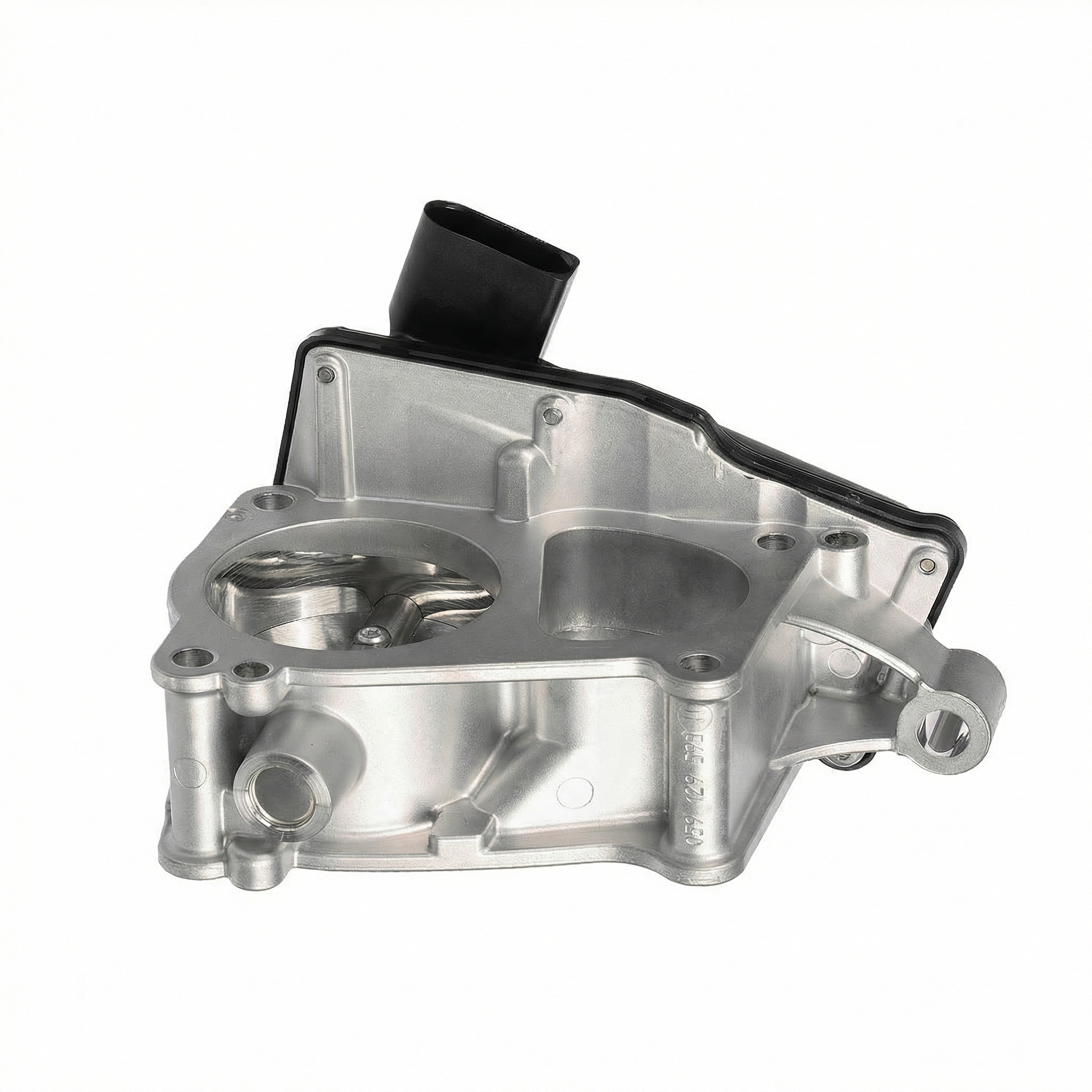
- Failed PCV Valve (Crankcase Breather/Oil Separator) 🔴 High Probability → Shop PCV Valve The diaphragm inside the PCV assembly is a known weak point on the 3.0T engine. It is made of rubber and is prone to tearing over time due to heat and pressure cycles. This creates a large, unmetered vacuum leak directly into the supercharger's intake path, which the ECU cannot compensate for, leading to a high idle.
How to confirm: With the engine running, listen for a loud whistling sound. Carefully try to remove the oil filler cap; if there is extremely strong suction making it difficult to remove, or the engine stumbles/stalls when it's removed, the PCV diaphragm is almost certainly torn. A smoke test will show smoke being drawn into the crankcase through the oil cap opening.
Typical fix: Replace the entire PCV valve assembly. This requires removing the supercharger for access. While the supercharger is off, it is highly recommended to also replace the thermostat, water pump, supercharger gaskets, and perform a carbon cleaning of the intake valves.
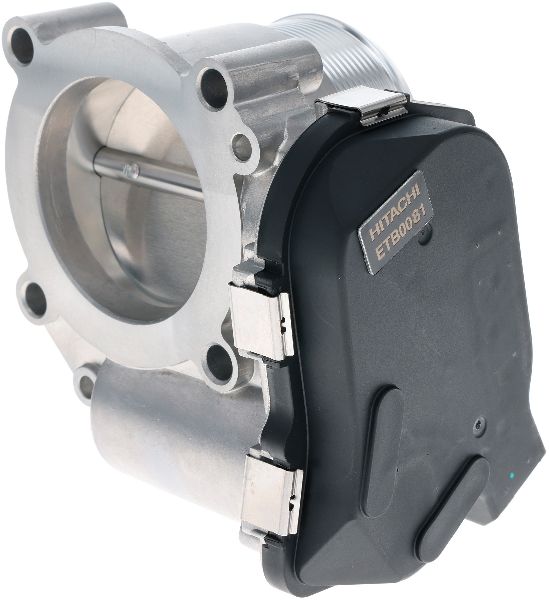
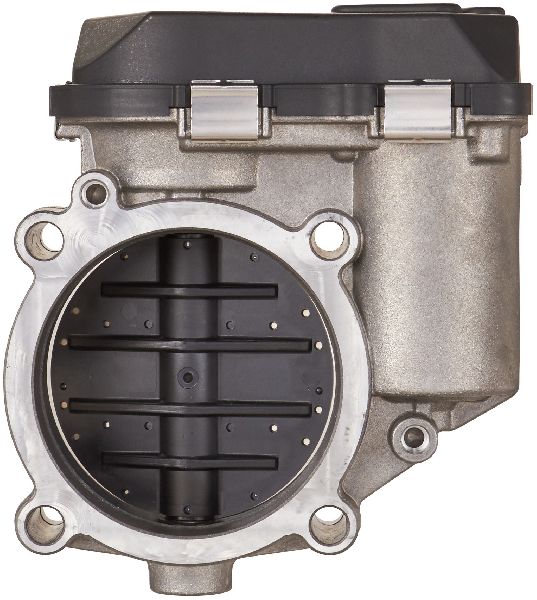
Est. part cost: $150-$300 - Dirty or Faulty Throttle Body 🟡 Medium Probability → Shop Fuel Injection Throttle Body Oil vapor from the (often failing) PCV system can coat the inside of the throttle body with carbon and grime. This buildup can prevent the throttle plate from closing completely at idle, allowing excess air to enter and raising the idle speed.
How to confirm: Remove the air intake hose connected to the throttle body and visually inspect for a thick ring of black carbon buildup around the throttle plate and bore. The plate should be able to move freely without sticking.
Typical fix: Clean the throttle body thoroughly with a dedicated throttle body cleaner and a soft brush/cloth. After cleaning and reinstallation, a throttle body adaptation must be performed using a compatible diagnostic tool (like VCDS or OBDeleven) to reset its learned positions and allow the ECU to relearn the correct idle parameters.
Est. part cost: $10-$20 - Other Vacuum Leaks ⚪ Low Probability While less common than the PCV, other vacuum lines, intake gaskets, or seals can dry out and crack over time, allowing unmetered air to enter the engine. A common area for leaks after a PCV replacement is an improperly seated gasket for the supercharger or lower intake manifolds.
How to confirm: Perform a smoke test. This involves feeding pressurized smoke into the intake system with the engine off. Any leaks will be visible as smoke escapes from the cracked hose or gasket. Pay close attention to the supercharger mounting gaskets and the intake manifold area.
Typical fix: Replace the specific leaking hose, gasket, or seal that was identified during the smoke test.
Est. part cost: $20-$100
Diagnosis Steps
- Scan for all stored fault codes. Note if P2279, P2187, P0171, or P0174 are present with P0507, as this strongly points to a vacuum leak.
- With the engine idling, listen for a distinct, high-pitched whistling or grinding sound from the engine bay, particularly around the supercharger area. This is a classic symptom of a torn PCV diaphragm.
- If a whistle is present, perform the 'oil cap test'. Carefully attempt to remove the engine oil filler cap. If extreme vacuum holds it down, or if removing it causes the engine idle to change drastically or stall, this strongly indicates a failed PCV valve.
- If the oil cap test is inconclusive, remove the intake ducting from the throttle body. Inspect for heavy carbon and oil buildup inside the throttle body and on the throttle plate. Check for smooth operation.
- If no obvious cause is found, perform a professional smoke test on the intake system to check for vacuum leaks from hoses, gaskets, or the PCV system itself.
Parts You'll Likely Need
- PCV Valve / Oil Separator Assembly
(OEM #06E103547AC (supercedes 06E103547Q, 06E103547F, 06E103547C))— This is the most common failure point on the 3.0T engine that directly causes the P0507 code due to a torn internal diaphragm creating a massive vacuum leak. Always use the latest revision part number.
Trusted brands: Audi (Genuine OE), Vaico, URO Parts
OEM price range: $200-$300
Aftermarket price range: $100-$180 - Supercharger Gaskets
(OEM #079129717B)— These are single-use gaskets and must be replaced when the supercharger is removed to access the PCV valve.
Trusted brands: Audi (Genuine OE), Elring, Victor Reinz
OEM price range: $50-$80
Aftermarket price range: $30-$50 - Throttle Body Gasket
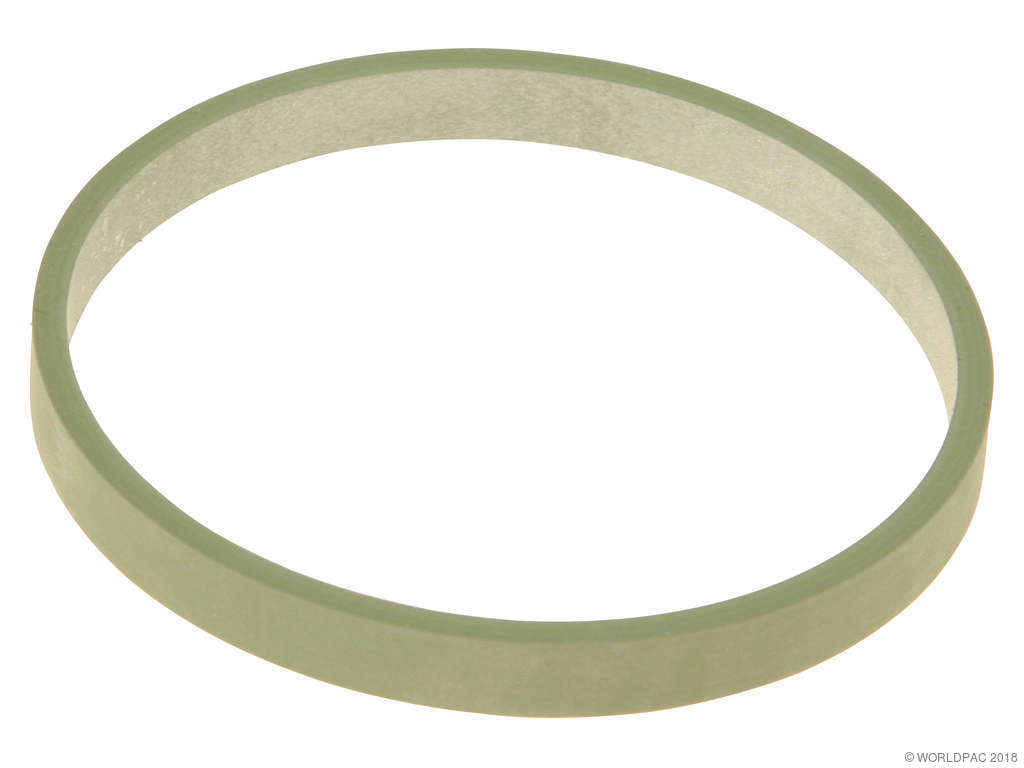
(OEM #079129717D)— Should be replaced if the throttle body is removed for cleaning.
Trusted brands: Audi (Genuine OE), Bosch, Victor Reinz
OEM price range: $10-$20
Aftermarket price range: $5-$10 - PCV Breather Hose
(OEM #06E103207AM)— This hose connects to the PCV and often becomes brittle. It's wise to replace it during the PCV service to prevent future leaks.
Trusted brands: Audi (Genuine OE)
OEM price range: $40-$60
Aftermarket price range: $25-$40
Related Codes That Often Appear With This One
- P2279 — Stands for 'Intake Air System Leak'. This code is frequently triggered alongside P0507 because a failed PCV valve is a major intake leak. Audi's TSB for this issue explicitly lists both codes together.
- P2187 — Stands for 'System Too Lean at Idle'. The unmetered air from the vacuum leak causes the air-fuel ratio to be too lean, which this code reports.
- P0171 / P0174 — These are also 'System Too Lean' codes for Bank 1 and Bank 2, respectively. They are set for the same reason as P2187, as the ECU detects more oxygen in the exhaust than expected.
- P2014 — Stands for 'Intake Manifold Runner Position Sensor/Switch Circuit'. This can sometimes appear if a vacuum leak occurs after a PCV replacement, suggesting a gasket was not sealed correctly during reassembly.
Technical Service Bulletins (TSBs) & Recalls
- TSB 2040644 / A171562: 'MIL on, DTC P2279 and/or P0507 whistling noises from engine compartment'. This TSB directly links the code to a leaking crankcase breather module (PCV valve) and provides diagnostic steps. The bulletin has been revised multiple times, with the latest versions updating labor operations and part numbers.
Platform-Specific Known Issues
- Audi issued Technical Service Bulletin (TSB) 2040644 which describes the symptoms of a whistling noise and DTCs P2279 and/or P0507 caused by a leak in the crankcase breather module (PCV).
- The 2016-2018 'C7.5' facelift models use a revised version of the 3.0T engine (often referred to as CREC) which is generally considered to have fewer issues with timing chain tensioners, though the PCV valve remains a common failure point.
Mechanic-Grade Diagnostic Values
- Long Term Fuel Trim at Idle (Bank 1 and Bank 2) — expected: -5% to +5%. Failure: Consistently high positive values (e.g., +10% to +25%) indicate the ECU is adding excessive fuel to compensate for unmetered air from a vacuum leak, which is the primary cause of P0507.
- Throttle Valve Angle at Idle (Warm Engine) — expected: Approximately 2-4 degrees.. Failure: A value of 0% or a value significantly higher than the typical range could indicate a problem with the throttle body itself or its calibration, though this is less common than a vacuum leak.
- Mass Air Flow (MAF) Sensor Reading at Idle (Warm Engine) — expected: Approximately 1.75 g/s to 3.0 g/s.. Failure: While not a direct cause of P0507, readings that are wildly inconsistent or drop to zero could indicate a faulty MAF sensor or wiring, which would set other codes but could confuse the diagnosis.
Scan Tool Commands That Help
- VCDS (VAG-COM): Engine -> Basic Settings -> Group 060 (Throttle Body Adaptation) — This must be performed after cleaning or replacing the throttle body. It allows the ECU to relearn the closed and open positions of the throttle plate. Failure to do this can cause an erratic or high idle even if the mechanical issue is fixed.
- VCDS (VAG-COM): Engine -> Advanced Measuring Values — Used to monitor live data like fuel trims (search for 'adaptation'), throttle angle, and MAF readings to confirm the presence of a vacuum leak and verify the repair. For UDS protocol engines (most C7s), you must use Advanced Measuring Values instead of the older Measuring Blocks.
Wiring & Ground Locations
- Engine Block Ground Strap — On the C7 platform, a primary engine-to-chassis ground point is located on the right (passenger side in US) of the engine compartment, near the alternator.. A corroded or loose main engine ground can cause a wide range of bizarre electrical issues, including erratic sensor readings and improper operation of electronically controlled components like the throttle body. While not a primary cause of P0507, checking this ground is a crucial step in any complex electrical diagnosis.
- Throttle Body Connector — The electrical connector plugged directly into the electronic throttle body assembly.. The electronic throttle body relies on precise voltage signals to function. Any corrosion or damage to the connector pins or wiring can lead to incorrect throttle plate positioning, potentially contributing to idle speed issues. This is a secondary check after vacuum leaks have been ruled out.
Real Owner Repair Stories
- Reddit user post on r/Audi (2013-2016 Audi S5 (B8.5) 3.0T (same engine and common issues as A6)) — Loss of power, slightly worse MPG, and codes P0507 and P2014.
❌ Tried (didn't work) The user had just completed a DIY PCV replacement, which is the most common fix for P0507.
✅ What actually fixed it A smoke test performed after the PCV job revealed a new vacuum leak from under the supercharger, near the oil filter housing. The user suspected an improperly seated gasket during the reassembly of the supercharger after the PCV replacement. This highlights the importance of careful reassembly and replacing all single-use gaskets.
OEM Part Supersession History
06E103547C, 06E103547F, 06E103547Q→06E103547AC (and later revisions like AH, AK)— Multiple revisions were released to improve the durability of the internal rubber diaphragm and, in some cases, to alter the internal crankcase pressure regulation to address oil consumption concerns.
Heads up: Some later revisions (e.g., updating from 'F' to 'AC' or 'AH') changed the internal pressure regulation (e.g., from 30 mbar to 150 mbar). Using a PCV with the wrong pressure specification for your engine's specific software version can potentially cause oil consumption or other seal issues. It is critical to use the latest revision specified for your VIN.
Model Year Variations Within This Range
- 2016-2018: The 'facelift' C7.5 models use the CREC engine variant, which features a dual-injection system (both direct and port injection). The port injectors spray fuel onto the intake valves, which largely prevents the heavy carbon buildup seen on earlier 2012-2015 direct-injection-only engines. While a dirty throttle body is still possible, severe carbon buildup on the valves is a much less likely cause of running issues on the CREC engine.
Diagnostic Flowchart
Other Known Issues on This Vehicle
Issues unrelated to this code that are worth knowing about as an owner of this generation:
- Water Pump & Thermostat Failure 🔴 High — Very common, often between 60,000-90,000 miles. Plastic housings crack, leading to coolant leaks. A failure can cause overheating. (Ref: No recall, but a known widespread issue. Updated parts are available.)
- Timing Chain Tensioner Rattle 🔴 High — More common on earlier C7 models (2012-2015). A brief rattle on cold starts is the first sign. If ignored, can lead to chain jump and catastrophic engine damage. (Ref: Audi has issued TSBs for similar engines (like the 2.0T) but this remains a concern for the 3.0T.)
- Intake Valve Carbon Buildup 🟠 Medium — A universal issue for all direct-injection engines. Performance degradation is noticeable after 60,000-80,000 miles. Requires manual cleaning (walnut blasting).
- Leaking Upper Timing Chain Covers 🟡 Low — The gaskets for the upper timing chain covers (at the rear of the engine) can leak oil over time. It's a messy but not critical leak.
- Failing Engine Mounts 🟠 Medium — The electronically controlled hydraulic engine mounts can leak fluid and fail, causing increased vibration in the cabin, especially at idle.
Used vs. New Parts: Buying Guide for This Vehicle
When a used part is the smart pick: For this specific P0507 repair, a used part is almost never a smart choice. The primary cause, the PCV valve, is a high-failure-rate wear item. A used PCV valve from a donor vehicle is likely near the end of its own service life and not worth the significant labor cost of installation.
Donor-vehicle mileage cap: roughly under 20000 miles for the part to have meaningful remaining life.
What to inspect on the donor part:
- Not applicable for the PCV valve. Do not install a used PCV valve.
OEM-only on this vehicle (don't cheap out):
- PCV Valve / Oil Separator: Due to the critical function, high failure rate of the original design, and potential incompatibility between revisions, using a Genuine Audi part with the latest part number is very strongly recommended.
Aftermarket brands forum-validated for this vehicle:
- Vaico: Often considered a strong OEM-quality alternative. Forum users have reported that some Vaico parts are identical to the genuine part, just without the Audi logo.
Brands owners have reported issues with on this vehicle:
- URO Parts: While budget-friendly, forum discussions indicate mixed reviews on fitment and long-term durability for their PCV components. Given the high labor cost to access this part, a lower quality part presents a significant risk.
Real Owner Stories
Aggregated from forums and TSBs cited above. Mileages and costs reflect what owners reported in those sources.
2012-2015 Audi A6 3.0T
Symptoms: A brief rattle on cold starts which can eventually lead to catastrophic engine damage if the chain jumps.
What fixed it: Replacement of the timing chain tensioners.
Source hint: known_issues section referencing earlier C7 models (2012-2015)
2012-2018 Audi A7 3.0T Supercharged V6
Symptoms: High idle and vacuum leak symptoms identical to the A6 due to the shared EA837 engine platform.
What fixed it: Replacement of the PCV valve assembly.
Source hint: platform_mates section for the 2012-2018 Audi A7 (C7)
Related OBD-II Codes
Frequently Asked Questions
My 2014 Audi A6 3.0T is making a loud whistling sound and idling high; is there an official Audi bulletin for this?
I have a P0507 on my 2017 A6 'CREC' engine; is the PCV still a likely culprit?
Why is it so hard to pull off my oil cap while the engine is running?
Can I just clean the throttle body to fix the P0507 code on my A6?
What else should I replace if I have to pull the supercharger to fix the PCV valve?
Helpful Videos
Used OEM Parts in Stock
New Aftermarket Parts Available


The information in this article is provided for general reference and educational purposes only. Vehicle specifications, procedures, and part compatibility can vary by production date, trim level, and region. Always consult your vehicle's factory service manual and verify part numbers before purchasing or performing repairs. Safety-critical components such as airbags, seat belts, and braking systems should be installed by a qualified professional.
- Audi A6:
- 🧭 Diagnostic Flowchart
- 🎬 Helpful Videos
- 🛍️ Shop This Part
- What's Unique About the 2012-2018 Audi A6
- Symptoms You May Notice
- Most Likely Causes
- Diagnosis Steps
- Parts You'll Likely Need
- Related Codes That Often Appear With This One
- Technical Service Bulletins (TSBs) & Recalls
- Platform-Specific Known Issues
- Mechanic-Grade Diagnostic Values
- Scan Tool Commands That Help
- Wiring & Ground Locations
- Real Owner Repair Stories
- OEM Part Supersession History
- Model Year Variations Within This Range
- Other Known Issues on This Vehicle
- Used vs. New Parts: Buying Guide for This Vehicle
- Real Owner Stories
- 2012-2015 Audi A6 3.0T
- 2012-2018 Audi A7 3.0T Supercharged V6
- Related OBD-II Codes
- Frequently Asked Questions
- 🎟️ Get 5% Off