

P0507 on 2011-2016 Chevrolet Cruze 1.4L Turbo: High Idle Causes and Fixes
On a 2011-2016 Cruze with the 1.4L Turbo, P0507 almost always means the PCV system has failed. This involves a torn diaphragm in the valve cover and a failed check valve in the intake manifold. Expect to replace the valve cover (~$60-$150) and either replace the intake manifold or install a PCV fix kit. Simply replacing the valve cover is a temporary fix that will fail again quickly.
- P0507 on a 1.4L Cruze is not a simple idle issue; it's a symptom of a major PCV system failure.
- The fix requires two parts: replacing the valve cover AND addressing the failed check valve in the intake manifold (either by replacing the manifold or using a fix kit).
- Simply replacing the valve cover without fixing the intake manifold issue will result in the new valve cover failing again.
- Listen for a distinct hissing sound from the engine and check for a missing orange valve inside the intake manifold port to confirm the diagnosis.
- This is a very common, well-documented problem, and many DIY resources are available.
What's Unique About the 2011-2016 Chevrolet Cruze
On the 1.4L LUJ/LUV turbo engine, P0507 is a classic pattern failure and is rarely caused by a dirty throttle body or a simple sensor issue. It's almost always a symptom of a well-documented cascading failure within the Positive Crankcase Ventilation (PCV) system. The failure involves two key parts: a rubber diaphragm in the valve cover tears, and a small check valve inside the intake manifold breaks and gets ingested by the engine. When the intake check valve fails, the turbocharger forces boost pressure into the crankcase, which then ruptures the PCV diaphragm in the valve cover, creating a massive vacuum leak that triggers the P0507 code.
Generation note: This guide covers the first-generation Chevrolet Cruze (2011-2015) and the 2016 Cruze 'Limited', which was a carryover of the first generation. The 1.4L LUJ/LUV engine is specific to this generation and is known for these PCV issues. The same engine and problem are found in the Chevy Sonic, Trax, and Buick Encore.
Symptoms You May Notice
- Check Engine Light is on
- Engine idle speed is higher than normal (e.g., 1000-1500+ RPM).
- Rough or unstable idle
- Audible hissing or whistling sound from the top of the engine, near the oil cap.
- Engine may stall when coming to a stop
- Increased fuel consumption.
- Oil filler cap is very difficult to remove while the engine is running due to strong crankcase vacuum.
- A high-pitched, bird-like chirp at idle that stops when you pull the oil dipstick out (indicates a failed front crank seal).
- Replacing only the valve cover. If the intake manifold check valve is missing, the new valve cover diaphragm will rupture again very quickly. The root cause in the intake manifold must be addressed.
- Replacing the MAP sensor or other sensors without checking the PCV system first. The sensor codes are usually symptoms of the vacuum leak, not the cause.
Most Likely Causes
- Failed/Missing Intake Manifold Check Valve 🔴 High Probability → Shop Engine Intake Manifold A small, orange plastic check valve inside the intake manifold becomes brittle from heat and oil exposure. It breaks apart and gets sucked into the engine. This is often the root cause that leads to the failure of the valve cover diaphragm.
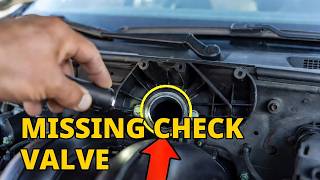
How to confirm: Visually inspect the PCV inlet port on the intake manifold. Shine a light inside; if the small orange, cone-shaped check valve is missing or damaged, the manifold has failed. Sometimes only the flap portion breaks off, leaving the center nub, which is still a failure. A long cotton swab can help clean the area for a better view.
Typical fix: Replace the entire intake manifold. Alternatively, cost-saving aftermarket 'PCV fix kits' are available that allow you to install an external check valve without replacing the manifold.
Est. part cost: $150-$300 for a new manifold, $60-$80 for a fix kit. - Ruptured PCV Diaphragm in Valve Cover 🔴 High Probability → Shop Engine Valve Cover When the intake manifold check valve fails, boost pressure enters the crankcase and ruptures this rubber diaphragm, creating a large vacuum leak. This is almost always a secondary failure caused by the intake manifold issue.
How to confirm: With the engine running, listen for a loud hissing sound coming from the circular PCV regulator cap on the valve cover. You can also try to place your finger over the small vent hole on the cap; if there is strong suction and the engine idle changes, the diaphragm is torn. Another key symptom is extreme vacuum making the oil cap hard to remove at idle.
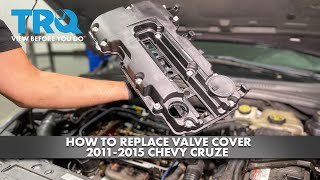
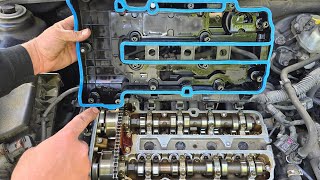
Typical fix: Replace the entire valve cover assembly. The diaphragm is not sold separately by GM. This repair MUST be done in conjunction with addressing the intake manifold check valve to prevent immediate repeat failure.
Est. part cost: $60-$150
Rare But Worth Checking
- Dirty or Faulty Throttle Body: → Shop Fuel Injection Throttle Body While a common cause for high idle on many vehicles, it is much less common on the Cruze 1.4L than the PCV system failure. Check for carbon buildup preventing the throttle plate from closing fully, but only after ruling out the PCV system.
- Other Vacuum Leaks: A cracked PCV hose between the valve cover and turbo inlet, or a leaking intake manifold gasket could also cause a high idle, but these are less frequent than the primary PCV component failures. A smoke test can help identify these leaks.
Diagnosis Steps
- Verify code P0507 with an OBD-II scanner. Note any other codes present, such as P0171 or P1101.
- Start the engine and listen for a loud hissing or sucking sound from the top of the engine, specifically around the circular cap on the valve cover.
- With the engine running, carefully check for strong vacuum at the PCV vent hole on the valve cover. If suction is present, the valve cover diaphragm is torn and the valve cover needs replacement. Confirm by attempting to remove the oil cap; extreme resistance indicates high crankcase vacuum.
- Remove the decorative engine cover and the PCV tube connected to the intake manifold.
- Using a flashlight, look down into the PCV port on the intake manifold. You should see a small, orange, cone-shaped check valve. If it is missing, broken, or just a nub remains, the intake manifold must be replaced or an external PCV fix kit must be installed.
- If the engine produces a high-pitched chirp at idle, remove the oil dipstick. If the noise stops, the front crankshaft seal has failed due to excess crankcase pressure and should be replaced.
- If both PCV components appear intact (which is unlikely), perform a smoke test to check for other vacuum leaks from hoses or gaskets.
- Inspect the throttle body for heavy carbon buildup that could prevent the throttle plate from closing completely.
Parts You'll Likely Need
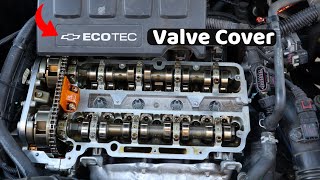
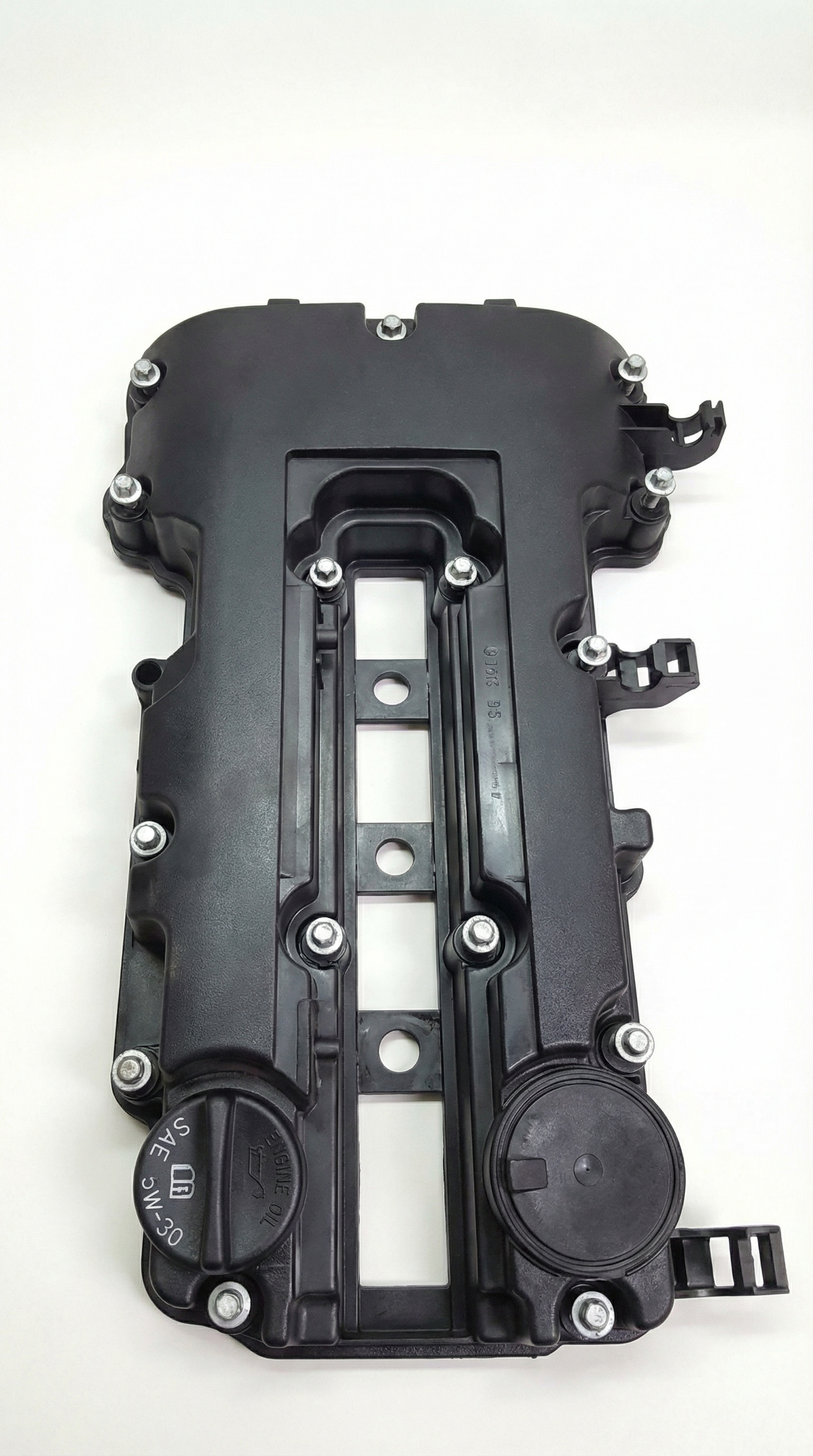
- Camshaft Cover (Valve Cover)
(OEM #25198874 (superseded by 55573746))— The integrated PCV regulator diaphragm tears, causing a massive vacuum leak. It is not serviceable separately. This is a required part of the fix.
Trusted brands: ACDelco, Dorman (p/n 264-968)
OEM price range: $100-$150
Aftermarket price range: $60-$100 - Intake Manifold
(OEM #25200449 (superseded by 55573273))— The internal, non-serviceable PCV check valve fails and gets ingested by the engine. This is the root cause of the entire issue. Replacing the manifold restores this critical valve.
Trusted brands: ACDelco, Dorman (p/n 615-380)
OEM price range: $250-$300
Aftermarket price range: $150-$220 - Aftermarket PCV Fix Kit — As an alternative to replacing the entire intake manifold, these kits provide an external check valve to perform the function of the failed internal one. This is a popular and effective cost-saving repair.
Trusted brands: CruzeKits
Aftermarket price range: $60-$80
Related Codes That Often Appear With This One
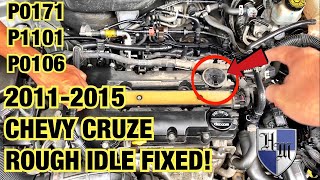
- P0171 — System Too Lean. This code is very common with P0507 because the ruptured PCV diaphragm creates a large vacuum leak, allowing unmetered air into the engine.
- P1101 — Intake Airflow System Performance. This code is often triggered by the abnormal airflow readings caused by the PCV vacuum leak.
- P0106 — Manifold Absolute Pressure (MAP) Sensor Performance. The erratic pressure in the intake manifold from the PCV failure can cause this code to appear.
- P0299 — Turbocharger Underboost. Mentioned in GM service bulletin PIP5197 as a related code that can be caused by the complex PCV system failure.
Technical Service Bulletins (TSBs) & Recalls
- PIP5197: Addresses oil consumption, leaks, and fuel trim codes (including P0171, P0299, P0507) caused by a missing or improperly seated intake manifold non-return valve.
- Special Coverage Adjustment 14882: While for the 2.4L engine, this TSB shows GM's acknowledgement of PCV orifice issues leading to increased crankcase pressure and seal failure, a conceptually similar problem to the 1.4L's failure mode.
Platform-Specific Known Issues
- A cascading PCV system failure is the hallmark issue for the 1.4L Turbo engine. The failure of the intake manifold check valve directly causes the failure of the valve cover diaphragm.
- GM issued several Technical Service Bulletins (TSBs) and special coverage programs related to this issue, acknowledging the high failure rate. For example, TSB PIP5197 directly links codes like P0507 to the missing intake manifold check valve.
- Excessive crankcase pressure from this failure can also damage the front crankshaft seal, causing a high-pitched chirp at idle. The sound can be mistaken for a bad belt or pulley, but can be confirmed by pulling the dipstick to see if the noise stops.
Mechanic-Grade Diagnostic Values
- Long Term Fuel Trim (LTFT) and Short Term Fuel Trim (STFT) at idle — expected: Combined value should be close to 0%, within +/- 10%.. Failure: With the massive vacuum leak from the PCV failure, fuel trims will be highly positive, often maxing out at +25% or higher as the ECM tries to add fuel to compensate for the unmetered air. This is a key indicator that accompanies codes P0507 and P0171.
Scan Tool Commands That Help
- Manual Procedure (No Scan Tool Required): Idle Relearn Procedure — After fixing the vacuum leak or replacing/cleaning the throttle body, the ECM's learned idle position may be incorrect, causing a continued high idle. A manual relearn can reset it. While many sources say the car will relearn on its own, a manual procedure can expedite the process. One common method is to start the engine, let it warm up, let it idle in Park for 3 minutes, turn it off for 60 seconds, then restart and idle for another 3 minutes.
Wiring & Ground Locations
- G103 — On the left (driver's side) shock tower in the engine compartment.. This is a primary engine-related ground. While P0507 on this car is almost never electrical, a corroded or loose G103 could cause erratic behavior from the ECM and sensors, theoretically leading to incorrect idle control. It's a 'last resort' check if the classic PCV failure is not present.
- G102 — Lower right rear of the engine block.. Another critical engine block ground. A poor connection here could affect sensor readings and ECM performance. Verifying this ground is tight and clean is good practice during any major engine work.
- ECM Harness Connectors — On the Engine Control Module (ECM).. For the 1.8L engine (similar architecture), ground connections are found at connector X1 pins 20 & 35, and connector X2 pins 1, 3, & 5. While the 1.4L may differ slightly, this indicates multiple grounds are provided directly to the ECM harness. A fault in any of these could cause issues, though it is extremely unlikely to be the cause of P0507 compared to the PCV system.
Real Owner Repair Stories
- Reddit user in r/cruze (2013 Chevy Cruze 1.4L) — Loud whirring/drone, rough idle, and a massive oil leak from the valve cover area. Received a low oil pressure warning.
❌ Tried (didn't work) Replacing the entire valve cover assembly and spark plugs. The oil leak returned within 30 minutes of the first drive.
✅ What actually fixed it The owner realized after the failed repair that they had not inspected the intake manifold check valve. The conclusion was that the missing check valve caused the immediate failure of the brand-new valve cover, confirming the cascading failure pattern. The final fix requires addressing the intake manifold (either with a replacement or a fix kit) AND the valve cover. - Reddit user in r/cruze (Unknown year Cruze 1.4L) — Recurring valve cover gasket leak.
❌ Tried (didn't work) Replacing the valve cover gasket three times., Replacing the intake manifold with a Dorman replacement part.
✅ What actually fixed it The user reported that even the Dorman replacement intake manifold's check valve failed again. The final, permanent solution was installing an external PCV fix kit from CruzeKits.com, which relocates the check valve externally, making it more robust and serviceable.
Documented NHTSA Reports
- An owner of a related Chevrolet model reported in NHTSA ODI #11721239 that while driving up an incline, the car stopped moving forward and began reversing, accompanied by a suite of codes including P0505, P0507, and P1101.
- NHTSA ODI #10593542 describes a scenario where P0507 appeared alongside a traction control disabled warning and a loss of reverse gear.
OEM Part Supersession History
25198874, 25198498→55573746— GM frequently updates part numbers. While the exact design changes are not published, supersessions often involve minor improvements to materials or manufacturing processes to increase durability.
Heads up: These part numbers are for the valve cover assembly and are generally interchangeable for the 2011-2016 1.4L engine.25200449→55573273, 28289977— Supersession for the intake manifold. Some aftermarket replacements, like Dorman's, claim to have an improved design with a pin to prevent the check valve from being ingested, though forum reports suggest these can still fail.
Heads up: These part numbers should be direct replacements. When ordering, it is always best to verify fitment with the vehicle's VIN.
Diagnostic Flowchart
Other Known Issues on This Vehicle
Issues unrelated to this code that are worth knowing about as an owner of this generation:
- Premature Water Pump Failure 🔴 High — Very common, can occur at low mileage (e.g., 30k-60k miles). Leads to coolant leaks from the passenger side of the engine and potential overheating. (Ref: Special Coverage 14371A / TSB 18-NA-335 extended warranty to 10 years/150,000 miles for this issue on many vehicles.)
- Oil Cooler / Oil Filter Housing Gasket Leaks 🟠 Medium — Common failure after 60,000 miles. Gaskets between the cooler and engine block degrade, causing oil to leak onto the exhaust manifold (burning smell) or mix with coolant ('milkshake' in reservoir).
- Thermostat Housing and Coolant Outlet Cracks 🟠 Medium — The plastic components become brittle with heat cycles and can crack, causing significant coolant leaks. Often occurs around 80k-120k miles.
- Negative Battery Cable Malfunction 🟡 Low — A poor connection at the negative battery terminal causes a wide range of intermittent electrical issues, including flickering lights, radio problems, and no-start conditions. A well-known issue with a simple fix. (Ref: TSB 12-08-48-001G)
- Front Crankshaft Seal Oil Leak / Chirp 🟠 Medium — Often a direct result of the P0507 PCV failure. High crankcase pressure forces the seal to fail, causing an oil leak and a distinct high-pitched 'chirp' at idle.
Used vs. New Parts: Buying Guide for This Vehicle
When a used part is the smart pick: For this specific P0507 repair, using used parts for the primary failure components (valve cover, intake manifold) is strongly discouraged. The failure is due to heat and age degrading plastic and rubber, so a used part from a junkyard is likely near the end of its life or has already failed. Used parts may be considered for unrelated components like a throttle body or ECM if they are determined to be the cause, but not for the PCV system parts.
Donor-vehicle mileage cap: roughly under 10000 miles for the part to have meaningful remaining life.
What to inspect on the donor part:
- For the intake manifold, visually confirm the orange check valve is present and intact before purchase.
- For the valve cover, there is no reliable way to inspect the internal diaphragm without destroying it. Avoid used valve covers entirely.
OEM-only on this vehicle (don't cheap out):
- Valve Cover: While Dorman (264-968) is a widely available aftermarket option, some owners report fitment issues and a shorter service life compared to the OEM ACDelco part. Given the critical function and labor involved, using a new OEM valve cover is the safest choice.
- Intake Manifold: Similar to the valve cover, a new OEM ACDelco manifold is the most reliable option. Aftermarket versions exist but may suffer from the same design flaw as the original.
Aftermarket brands forum-validated for this vehicle:
- CruzeKits: This brand is highly regarded on owner forums for its 'PCV Fix Kit'. This kit provides a more robust, serviceable, external check valve, which is considered by many to be a permanent solution to the intake manifold check valve failure, preventing the entire cascade of problems.
Brands owners have reported issues with on this vehicle:
- Dorman Valve Cover (264-968): Some forum users and reviewers have reported premature failure, oil leaks due to poor fitment (gaps in the gasket channel), and a service life that is significantly shorter than the OEM part.
- Dorman Intake Manifold: While Dorman claims an improved design, some users report that the check valve can still fail in a similar manner to the original part.
Real Owner Stories
Aggregated from forums and TSBs cited above. Mileages and costs reflect what owners reported in those sources.
2011-2016 Chevrolet Cruze 1.4L Turbo
Symptoms: Owner reported a massive list of codes including P0507, P0171, P1101, P0420, P2270, and P015B. The vehicle was experiencing lean conditions and O2 sensor-related codes alongside the high idle.
What fixed it: The owner identified these as 'lean or O2 codes' resulting from the PCV system failure described in the context.
Source hint: youtube_comment from Travis Kuiper in owner_reports
2011-2016 Chevrolet Cruze 1.4L Turbo
Symptoms: Owners on forums frequently describe replacing the valve cover multiple times, only to have the high idle and hissing return because the root cause was overlooked.
What fixed it: Addressing the missing orange intake manifold check valve, which is the root cause that leads to the cascading failure of the valve cover diaphragm.
Source hint: reddit.com/r/cruze forum_citations
Chevrolet Malibu Owner
Symptoms: An owner reported that the car had delayed engagement when shifting from park to drive. After driving up an incline, the vehicle stopped moving forward and began reversing. Diagnostic codes included P0325, P0505, P0507, P0700, P1101, and P2714.
Source hint: NHTSA ODI #11721239
Chevrolet Cavalier Owner
Symptoms: A report noted that the SES light and DTC P1810 appeared, resulting in no reverse gear and the traction control being disabled. Code P0507 was also present.
Source hint: NHTSA ODI #10593542
Related OBD-II Codes
Frequently Asked Questions
Does TSB PIP5197 apply to my 2014 Chevrolet Cruze with code P0507?
Why is my oil cap so hard to remove while the engine is running?
Is there a cheaper alternative to replacing the entire intake manifold on my Cruze?
My Cruze has a high-pitched chirping sound at idle; is this related to P0507?
Can I just replace the valve cover to fix the P0507 high idle?
Does the 2015 Chevrolet Trax suffer from the same P0507 issues as the Cruze?
Helpful Videos
Used OEM Parts in Stock
New Aftermarket Parts Available


The information in this article is provided for general reference and educational purposes only. Vehicle specifications, procedures, and part compatibility can vary by production date, trim level, and region. Always consult your vehicle's factory service manual and verify part numbers before purchasing or performing repairs. Safety-critical components such as airbags, seat belts, and braking systems should be installed by a qualified professional.
- Chevrolet Cruze:
- 🧭 Diagnostic Flowchart
- 🎬 Helpful Videos
- 🛍️ Shop This Part
- What's Unique About the 2011-2016 Chevrolet Cruze
- Symptoms You May Notice
- Most Likely Causes
- Rare But Worth Checking
- Diagnosis Steps
- Parts You'll Likely Need
- Related Codes That Often Appear With This One
- Technical Service Bulletins (TSBs) & Recalls
- Platform-Specific Known Issues
- Mechanic-Grade Diagnostic Values
- Scan Tool Commands That Help
- Wiring & Ground Locations
- Real Owner Repair Stories
- Documented NHTSA Reports
- OEM Part Supersession History
- Other Known Issues on This Vehicle
- Used vs. New Parts: Buying Guide for This Vehicle
- Real Owner Stories
- 2011-2016 Chevrolet Cruze 1.4L Turbo
- 2011-2016 Chevrolet Cruze 1.4L Turbo
- Chevrolet Malibu Owner
- Chevrolet Cavalier Owner
- Related OBD-II Codes
- Frequently Asked Questions
- 🎟️ Get 5% Off