

P0507 on 1995-1999 Chevrolet Suburban 5.7L: High Idle Causes and Fixes
On a 1995-1999 Suburban with the 5.7L V8, code P0507 is most often caused by a vacuum leak or a faulty Idle Air Control (IAC) valve. The most common vacuum leak is from failed lower intake manifold gaskets, a known issue on this engine. A new IAC valve costs $30-$80 for an aftermarket part.
- P0507 on your Suburban means the idle is too high and the computer can't lower it.
- The most likely cause is a vacuum leak. On the 5.7L Vortec, this is very often due to failed intake manifold gaskets.
- The second most likely cause is a dirty or failed Idle Air Control (IAC) valve.
- Start your diagnosis by checking for obvious vacuum leaks, then clean the throttle body and IAC valve before replacing parts.
- Using a scan tool to check IAC counts can quickly confirm a vacuum leak; a '0' count with high idle is the key symptom.
What's Unique About the 1995-1999 Chevrolet Suburban
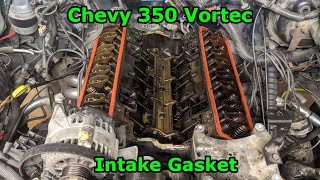
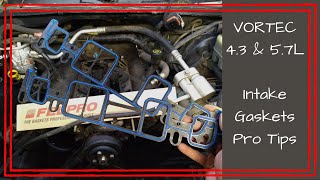
The 1995-1999 Suburban (GMT400 platform) with the 5.7L Vortec L31 V8 is highly susceptible to a specific failure that causes this code: deteriorated lower intake manifold gaskets. The original gaskets use a plastic frame that cracks with age and heat cycles, creating a significant vacuum leak that the Idle Air Control (IAC) system cannot overcome. While vacuum leaks are a common cause for P0507 on any vehicle, the intake gasket failure is a well-documented pattern on this particular engine, making it a primary suspect. The upgraded Fel-Pro gasket set (MS98000T) with a metal frame is the universally recommended fix.
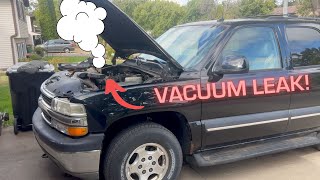
🎬 Watch: Step-by-step guide to replacing the lower intake gaskets.Symptoms You May Notice
- Check Engine Light is illuminated
- Engine idle speed is consistently high (e.g., 1000-1500 RPM in Park)
- Rough or surging idle, sometimes called a "hunting" idle.
- Harsh or loud 'bang' when shifting from Park into Drive or Reverse
- Vehicle feels like it's trying to push forward when stopped at a light
- Increased braking effort required to hold the vehicle at a stop
- Replacing the Throttle Position Sensor (TPS). The TPS reports the throttle plate angle to the PCM; it does not control idle speed. A faulty TPS has different symptoms and codes and will not cause a P0507.
- Replacing the PCM. While a faulty PCM is theoretically possible, it is extremely rare and should only be considered after all other mechanical and wiring issues have been exhaustively ruled out. A wiring fault is more likely than a failed PCM.
Most Likely Causes
- Vacuum Leak (Intake Manifold Gaskets, Hoses) 🔴 High Probability The L31 5.7L Vortec engine is notorious for failure of the lower intake manifold gaskets, which use a plastic carrier that degrades and cracks over time, creating a vacuum leak. After 25+ years, rubber vacuum hoses (like the PCV hose or brake booster line) also become brittle and crack, creating additional leak points.
How to confirm: With the engine running, listen for hissing sounds. Perform a smoke test on the intake system; smoke will visibly escape from the leak source. For the intake gaskets, smoke will often appear from under the intake manifold near the cylinder heads. You can also spray short bursts of brake cleaner or a flammable fluid around suspected areas; a change in idle RPM indicates a leak. High positive long-term fuel trims (+10% or more) on a scan tool also strongly suggest a vacuum leak.
Typical fix: Replace the leaking component. For intake manifold gaskets, this is a significant repair requiring removal of the upper intake (plenum) and throttle body. It is highly recommended to use an upgraded replacement gasket set with a metal frame, like the Fel-Pro MS98000T, to prevent recurrence. Replace any cracked vacuum hoses.
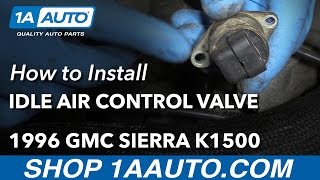
Est. part cost: $10-$150 - Dirty or Faulty Idle Air Control (IAC) Valve 🔴 High Probability → Shop Idle Air Control Valve The IAC valve is a small electric stepper motor with a pintle that extends and retracts to control airflow. Carbon from the crankcase ventilation system builds up in the throttle body and can cause the IAC pintle or its internal passage to stick, preventing it from closing fully. While cleaning can sometimes work, many owners report that the internal motor simply wears out and requires replacement.
How to confirm: Remove the IAC valve from the throttle body (usually two T20 Torx bolts). Inspect the pintle and the port for heavy carbon buildup. You can test the motor's circuit with a multimeter or a scan tool that can command IAC position. However, cleaning is often the first diagnostic step. If cleaning doesn't help, replacement is the next logical step.
Typical fix: Remove and thoroughly clean the IAC valve pintle and the air passage in the throttle body with throttle body cleaner and a small brush. If cleaning doesn't resolve the issue, or if the valve's motor is confirmed to be dead, replace the IAC valve. Use of a genuine ACDelco part is often recommended for longevity.
Est. part cost: $30-$80 - Dirty Throttle Body 🟡 Medium Probability → Shop Fuel Injection Throttle Body
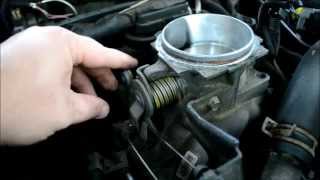
How to confirm: Visually inspect the throttle bore and the edges of the throttle plate. A thick ring of black carbon buildup can prevent the plate from closing completely, creating a small air gap that acts as a vacuum leak.
Typical fix: Clean the throttle body bore and plate with a dedicated throttle body cleaner and a soft rag or brush. Manually move the throttle plate to clean all surfaces. Do not use harsh tools that could scratch the bore. Ensure the IAC passages are also cleaned.
Est. part cost: $5-$15 - Leaking Power Brake Booster ⚪ Low Probability → Shop Power Brake Booster
How to confirm: With the engine running, press the brake pedal; a change in idle or a hissing sound from the driver's footwell suggests a leak. A definitive test is to disconnect the large vacuum hose from the booster, plug the hose, and start the engine. If the idle returns to normal, the booster is leaking internally.
Typical fix: Replace the power brake booster.
Est. part cost: $100-$200
Rare But Worth Checking
- Stuck Open PCV Valve: → Shop PCV Valve A Positive Crankcase Ventilation (PCV) valve that is stuck open can act as a small, unmetered vacuum leak. It's an inexpensive part and easy to check or replace during diagnosis.
- Incorrectly Adjusted or Binding Throttle/Cruise Control Cable: The throttle cable or cruise control cable may be too tight or binding, physically holding the throttle plate open slightly. Ensure there is proper slack in both cables at idle. This is a mechanical issue that a smoke test won't find.
- Wiring Issue to IAC Valve: In rare cases, a broken or shorted wire between the PCM and the IAC valve connector can prevent the computer from controlling the valve, leading to a high idle. This can be diagnosed by testing for signal pulses at the connector with a test light or multimeter while the engine is running.
Diagnosis Steps
- Read the codes with an OBD-II scanner to confirm P0507 and check for any other related codes like P0171, P0174, or P0300.
- Visually inspect the engine bay for obvious issues like disconnected, brittle, or cracked vacuum hoses. Check the PCV and brake booster lines carefully.
- Using a scan tool with live data, observe the IAC position or 'counts' at idle. On these GM trucks, a count of '0' while the idle RPM is high is a strong indicator of a vacuum leak, as the PCM has already done everything it can to close the valve.
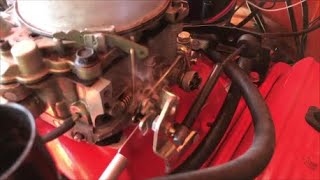
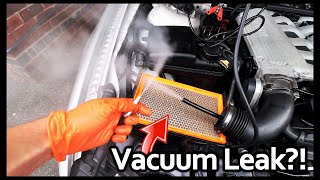
- If a vacuum leak is suspected, perform a smoke test. This is the most effective method. 🎬 Watch: How to perform a smoke test for vacuum leaks. Connect a smoke machine to a main vacuum line and watch for smoke escaping from the intake manifold gaskets, hoses, or throttle body.
- If no smoke tester is available, you can carefully spray short bursts of brake cleaner around the intake manifold gasket edges and vacuum hose connections. A sudden change in engine RPM confirms a leak at that spot.
- Test the power brake booster by pinching off its vacuum supply line. If the idle drops to normal, the booster is faulty.
- If no vacuum leaks are found, remove and inspect the Idle Air Control (IAC) valve and throttle body. Clean both thoroughly with throttle body cleaner.
- Check the throttle and cruise control cables to ensure they are not binding and have slight slack at idle.
- If the original IAC is suspected of being faulty after cleaning, install a new one. After replacement, an idle relearn procedure may be necessary, which can sometimes be accomplished by disconnecting the battery for 30 minutes or through a specific drive cycle.
Parts You'll Likely Need
- Idle Air Control (IAC) Valve
(OEM #ACDelco 217-3028 (supersedes 17113598))— This is one of the most common failure points for a high idle condition after vacuum leaks. The internal motor fails or the pintle gets stuck with carbon. It's often replaced after a thorough cleaning fails to solve the problem.
Trusted brands: ACDelco, Delphi, Standard Motor Products
OEM price range: $70-$150
Aftermarket price range: $30-$80 - Intake Manifold Gasket Set
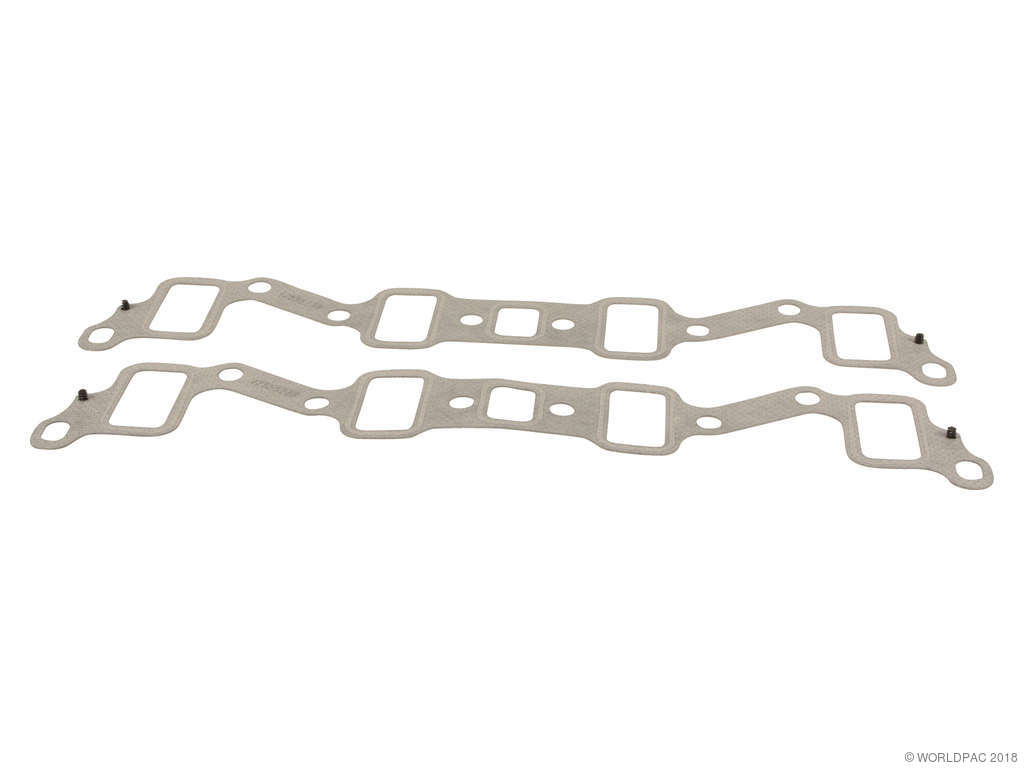
(OEM #Fel-Pro MS98000T (Upgraded Design))
Related Codes That Often Appear With This One
- P0171 — System Too Lean (Bank 1). A vacuum leak introduces extra, unmetered air, causing a lean condition and often appears with P0507.
- P0174 — System Too Lean (Bank 2). Similar to P0171, this indicates a lean condition on the opposite engine bank, often caused by the same vacuum leak.
- P0300 — Random/Multiple Cylinder Misfire Detected. A large vacuum leak can lean out the air/fuel mixture enough to cause misfires on one or more cylinders.
Platform-Specific Known Issues
- The plastic-framed lower intake manifold gaskets on the L31 5.7L Vortec are a well-documented, high-failure-rate item that directly causes vacuum leaks leading to a P0507 code.
Mechanic-Grade Diagnostic Values
- Idle Air Control (IAC) Counts at idle — expected: A small number of counts (e.g., 20-60) at normal warm idle.. Failure: A sustained reading of '0' counts while the engine RPM is still high. This means the PCM is commanding the valve fully closed, but unmetered air is keeping the idle up, strongly suggesting a vacuum leak.
- Desired Idle RPM vs. Actual Idle RPM — expected: Actual RPM should be within 25-50 RPM of Desired RPM on a scan tool.. Failure: Actual RPM is 200+ RPM higher than Desired RPM for a sustained period. This is the direct trigger for the P0507 code on many GM vehicles.
- IAC Valve Motor Winding Resistance — expected: Approximately 40 to 80 ohms between the A-B and C-D pins of the IAC connector.. Failure: A reading of infinity (open circuit) or near zero (short circuit) indicates a failed IAC motor that needs replacement.
- IAC Connector Voltage Pulse (Test Light Check) — expected: When probing the four terminals of the IAC connector (connected to battery positive), a test light should flash or pulse on each circuit as the engine is running and revved.. Failure: If the light does not flash on one or more terminals, it indicates a wiring problem between the PCM and the IAC or a faulty PCM driver circuit.
Scan Tool Commands That Help
- GM Tech 2 (or equivalent professional scanner): IAC System / Engine Output Controls — This bidirectional control allows the technician to manually command the IAC pintle to extend and retract. If the engine RPM responds accordingly, it confirms the IAC motor, wiring, and PCM driver are all working. If the RPM does not change, it isolates the fault to one of those three components. This is a definitive test to perform before replacing an IAC valve.
- GM Tech 2 (or equivalent professional scanner): Idle Learn Reset — After cleaning the throttle body or replacing the IAC valve, the PCM's learned idle values must be reset. This function, found under 'Special Functions' or 'Module Setup', erases the old values and forces the PCM to relearn the new correct idle position.
Wiring & Ground Locations
- G103 — On the front of the passenger side (right) cylinder head, often on a stud near the thermostat housing.. This is a primary engine sensor ground. Corrosion or a loose connection here can cause erratic readings from multiple sensors, potentially confusing the PCM's idle calculations. While not a direct cause of P0507, ensuring this ground is clean and tight is a critical step in diagnosing any engine management issue on a GMT400.
- G104 — On a stud at the rear of the passenger side (right) cylinder head, near the firewall.. This ground serves the Vehicle Control Module (VCM/PCM) and various sensors. A poor connection here can lead to a host of strange electrical issues and is a known trouble spot on high-mileage GMT400 trucks.
- Engine-to-Firewall Ground Straps — Braided metal straps typically running from the back of one or both cylinder heads to the firewall.. These straps ensure the cab and all its electronics have a solid ground reference to the engine block. If they are broken or corroded, the PCM and other modules can behave erratically. This is a common point of failure due to age and engine movement.
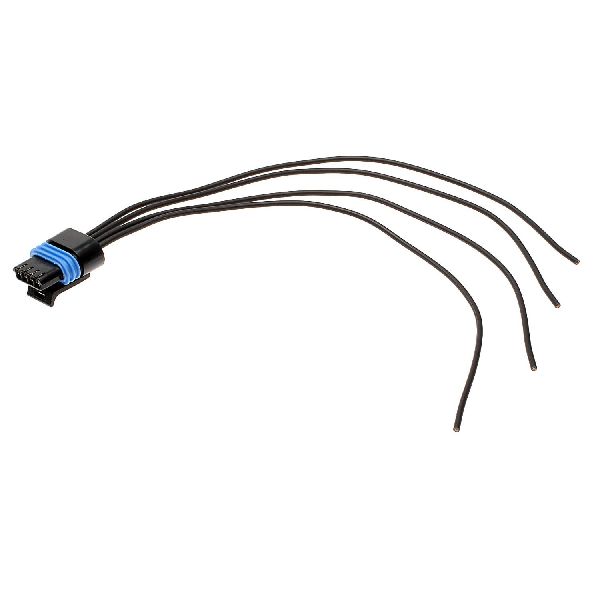
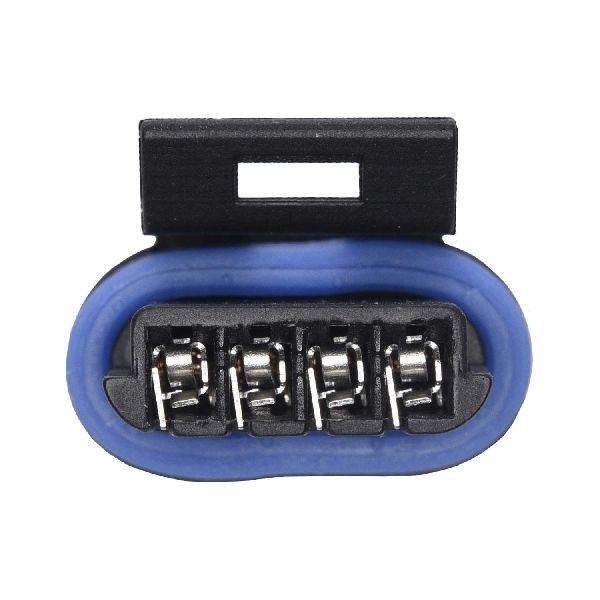
- IAC Valve Connector — The 4-wire connector plugged into the Idle Air Control valve on the throttle body.. The wires in this connector (Pins A, B, C, D) can become brittle and break internally from heat and vibration, causing an open circuit. A definitive test involves checking for pulsing ground signals from the PCM with a test light while the engine is running.
Real Owner Repair Stories
- GM-Trucks.com forum user (Year not specified, GM truck with 5.7L) — P0507, high idle that would not come down.
❌ Tried (didn't work) Cleaning the IAC ports and stepper motor, Replacing the IAC valve (multiple times with aftermarket parts)
✅ What actually fixed it Replacing the entire throttle body assembly with a known-good unit. The owner concluded that either the replacement IAC valves were faulty or there was an issue with the throttle body itself. - Go-Parts compilation of forum data (Mid-2000s GM Truck) — High idle at 1500 RPM with P0507 code.
❌ Tried (didn't work) Replaced throttle position sensor, Replaced idle air valve, Replaced crank/cam sensors, Cleaned throttle body, Performed smoke test (no leaks found)
✅ What actually fixed it The cruise control cable was adjusted too tightly, which was physically holding the throttle plate slightly open. Loosening the cable to provide proper slack resolved the high idle. - Chevrolet Owner Report — An owner reported a high idle condition where the vehicle was delayed when shifting from park to drive, requiring repeated shifting to engage; diagnostic codes included P0507 and P0505 (NHTSA ODI #11721239).
- Chevrolet Owner Report — A driver experienced a P0507 code alongside a P1810, which resulted in the traction control being disabled and a loss of reverse gear (NHTSA ODI #10593542).
"I Checked Everything" — The Actual Cause
- A leaking power brake booster diaphragm can cause a massive vacuum leak that sets P0507. This may not show up on a typical smoke test if the one-way check valve in the booster's vacuum hose is functioning correctly. The definitive test is to disconnect and plug the vacuum hose going to the booster; if the idle returns to normal, the booster is leaking internally and must be replaced.
OEM Part Supersession History
GM 17113598→ACDelco 217-3028— Standard part number update and consolidation.
Heads up: While listed as a fuel injector in some databases, ACDelco 217-3028 is the correct part number for the Idle Air Control Valve for the 1996-1999 5.7L Vortec engine.
Model Year Variations Within This Range
- 1995 only: The 1995 model year used the L05 5.7L engine with Throttle Body Injection (TBI). While it can still set a P0507, the intake manifold design is different and not as prone to the specific gasket failure seen on the 1996-1999 Vortec L31 engine. Diagnosis on a '95 should focus more on the IAC valve, throttle body, and vacuum hoses.
- 1996-1999: These years use the L31 Vortec engine with Central Sequential Fuel Injection (CSFI). This engine is known for the plastic lower intake manifold gasket failure, which should be considered a primary suspect for P0507 on these specific years.
Diagnostic Flowchart
Other Known Issues on This Vehicle
Issues unrelated to this code that are worth knowing about as an owner of this generation:
- Central 'Spider' Fuel Injector (CSFI) Failure 🔴 High — Very common on high-mileage L31 engines. The original poppet valves are prone to sticking, leaking, or clogging, causing misfires (P030X), hard starting, and rough idle. (Ref: A special policy (99066G) was issued for California vehicles, but the problem is widespread. The common fix is to replace the original CSFI unit with an updated Multi-Port Fuel Injection (MPFI) spider assembly.)
- 4L60-E Automatic Transmission Failure 🔴 High — Extremely common, especially after 100,000 miles. The 3-4 clutch pack is a notorious weak point, leading to loss of 3rd and 4th gears. Other common failures include the sun shell and torque converter clutch (TCC) issues.
- In-Tank Fuel Pump Failure 🔴 High — Common failure item, often occurring with little warning. Symptoms include stalling, hesitation under load, or a no-start condition. The pump is part of a module inside the fuel tank.
- Distributor Cap and Rotor Wear 🟠 Medium — The distributor is located at the back of the engine and is prone to moisture intrusion, causing rapid corrosion and carbon tracking on the cap and rotor terminals. This leads to misfires and is a frequent maintenance item.
- Idler Pulley and Belt Tensioner Failure 🟠 Medium — The bearings in the accessory drive idler pulley and tensioner pulley commonly wear out, causing a loud squealing or grinding noise from the front of the engine. Failure can shred the serpentine belt, causing loss of all accessories.
Used vs. New Parts: Buying Guide for This Vehicle
When a used part is the smart pick: For major mechanical components like a power brake booster or a complete throttle body assembly (if the original is damaged), a used part from a reputable auto recycler can be a cost-effective option. These parts are generally robust and not common failure items themselves.
Donor-vehicle mileage cap: roughly under 150000 miles for the part to have meaningful remaining life.
What to inspect on the donor part:
- For a brake booster, check for any signs of brake fluid leakage around the master cylinder mounting flange, which would indicate a failed master cylinder has contaminated the booster.
- For a throttle body, inspect for cleanliness and ensure the throttle plate moves smoothly without binding. Check that the IAC and TPS sensor connectors are not damaged.
- Look for vehicles that appear well-maintained and are from a dry, salt-free climate to minimize corrosion.
OEM-only on this vehicle (don't cheap out):
- Intake Manifold Gaskets: NEVER use a used gasket. Always buy a new, high-quality aftermarket set like the Fel-Pro MS98000T with the metal frame to prevent repeat failures.
Aftermarket brands forum-validated for this vehicle:
- Intake Gaskets: Fel-Pro (specifically MS98000T)
- IAC Valve: ACDelco (OEM), Delphi, Standard Motor Products (SMP)
Brands owners have reported issues with on this vehicle:
- Avoid 'no-name' or unbranded IAC valves from online marketplaces. Forum users frequently report that ultra-cheap electronic parts are often dead-on-arrival or fail quickly, leading to wasted time and money.
Real Owner Stories
Aggregated from forums and TSBs cited above. Mileages and costs reflect what owners reported in those sources.
1998 Chevrolet K3500 5.7L L31 V8
Symptoms: Owner reported a P0507 code and was seeking diagnostic advice for a high idle condition.
What fixed it: The discussion focused on diagnosing vacuum leaks and checking the IAC valve, which are the primary causes for this platform.
Source hint: https://www.gmt400.com/threads/98-k3500-w-p0507-code.192/
1999 Chevrolet Tahoe 5.7L L31 V8
Symptoms: The idle goes high and the vehicle is throwing a P0507 code.
What fixed it: Cleaning or replacing the Idle Air Control (IAC) valve and checking for vacuum leaks in the intake system.
Source hint: https://chevroletforum.com/forum/tahoe-suburban-25/help-idle-goes-high-99-tahoe-5-7-a-15029/
1997 Chevrolet Suburban 5.7L L31 V8 — ~125000 miles
Symptoms: High idle and engine misfire occurring simultaneously with a P0507 code.
What fixed it: Inspection of the intake manifold gaskets and vacuum lines, which are prone to failure on the GMT400 platform.
Source hint: https://www.reddit.com/r/GMT400/comments/17k2g6t/high_idle_p0507_engine_misfire/
Related OBD-II Codes
Frequently Asked Questions
My 1998 Suburban 5.7L has a high idle and P0507; which intake gasket should I use to fix this permanently?
I cleaned my IAC valve but the P0507 code persists on my 1999 Tahoe. What is the next step?
Can a bad brake booster cause the P0507 high idle code on a GMT400 truck?
Why does my Suburban feel like it's pushing forward at stoplights when the P0507 code is active?
Is there a specific scan tool reading that confirms a vacuum leak on the L31 engine?
Does the 'Spider' fuel injector issue cause the P0507 high idle?
Helpful Videos

We Have This Part in Stock


The information in this article is provided for general reference and educational purposes only. Vehicle specifications, procedures, and part compatibility can vary by production date, trim level, and region. Always consult your vehicle's factory service manual and verify part numbers before purchasing or performing repairs. Safety-critical components such as airbags, seat belts, and braking systems should be installed by a qualified professional.
- Chevrolet Suburban:
- 🧭 Diagnostic Flowchart
- 🎬 Helpful Videos
- 🛍️ Shop This Part
- What's Unique About the 1995-1999 Chevrolet Suburban
- Symptoms You May Notice
- Most Likely Causes
- Rare But Worth Checking
- Diagnosis Steps
- Parts You'll Likely Need
- Related Codes That Often Appear With This One
- Platform-Specific Known Issues
- Mechanic-Grade Diagnostic Values
- Scan Tool Commands That Help
- Wiring & Ground Locations
- Real Owner Repair Stories
- "I Checked Everything" — The Actual Cause
- OEM Part Supersession History
- Model Year Variations Within This Range
- Other Known Issues on This Vehicle
- Used vs. New Parts: Buying Guide for This Vehicle
- Real Owner Stories
- 1998 Chevrolet K3500 5.7L L31 V8
- 1999 Chevrolet Tahoe 5.7L L31 V8
- 1997 Chevrolet Suburban 5.7L L31 V8 — ~125000 miles
- Related OBD-II Codes
- Frequently Asked Questions
- 🎟️ Get 5% Off