

P0507 on 2009-2017 Chevrolet Traverse 3.6L: High Idle Causes and Fixes
On the 2009-2017 Traverse 3.6L, P0507 indicates the engine idle is too high, typically 100-200 RPM over spec. The most common causes are a dirty electronic throttle body due to oil contamination and a clogged PCV orifice inside the rear valve cover. Cleaning the throttle body is a necessary first step, but replacing the valve cover is often required for a permanent fix as it contains the non-serviceable PCV orifice.
- P0507 on a 2009-2017 Traverse 3.6L means the idle RPM is too high.
- The most likely cause is a dirty throttle body due to carbon buildup, which requires cleaning.
- A clogged PCV orifice in the valve cover is a very common root cause on this engine and must be inspected if the problem returns after cleaning the throttle body.
- After cleaning or replacing the throttle body, an idle relearn procedure is necessary.
- Checking for vacuum leaks with a smoke machine is a key diagnostic step if cleaning the throttle body doesn't solve the problem.
What's Unique About the 2009-2017 Chevrolet Traverse
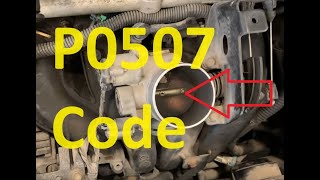
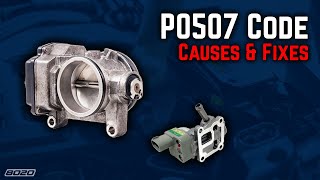
The 3.6L V6 engine in the Traverse does not use a separate Idle Air Control (IAC) valve; idle speed is managed by the electronic throttle body. A significant and well-documented issue on this engine platform is the tendency for the Positive Crankcase Ventilation (PCV) orifice to clog. This tiny, fixed orifice is integrated into the rear (firewall side) valve cover and is not separately serviceable. When it clogs with sludge, crankcase pressure builds and seeks an alternate escape route, often forcing oil vapor into the air intake tube pre-throttle body. This oil coats the throttle body, causing carbon buildup that prevents the blade from closing properly, leading to a high idle that sets the P0507 code. 🎬 Watch: The ultimate guide to diagnosing and fixing P0507 codes. This is often misdiagnosed as solely a throttle body issue, when in fact the PCV problem is the root cause.
Symptoms You May Notice
- Check Engine Light is on
- Engine idle speed is noticeably higher than normal (e.g., 1000-1500 RPM at warm idle in Park)
- Rough or fluctuating idle
- Harsh engagement or 'clunk' when shifting from Park into Drive or Reverse
- Increased fuel consumption
- Vehicle may feel like it's 'pushing' against the brakes when stopped in gear.
- Replacing the throttle body without addressing a clogged PCV system. The new throttle body will eventually become contaminated again if the root cause of the oil vapor (high crankcase pressure from the clogged orifice) is not fixed.
- Replacing sensors like the MAF or throttle position sensor without first performing the basic, high-probability fixes of cleaning the throttle body and inspecting the PCV system.
Most Likely Causes
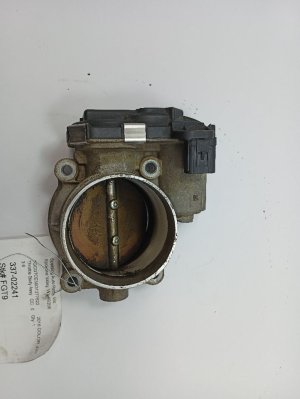
- Dirty/Sticking Throttle Body 🔴 High Probability → Shop Fuel Injection Throttle Body The direct injection design of the LLT engine, combined with the faulty PCV system, allows oil vapors to be ingested into the intake and bake onto the throttle body and plate. This creates a thick layer of carbon buildup that restricts the throttle plate's movement, preventing it from closing fully to lower the idle.
How to confirm: Remove the air intake duct from the throttle body and visually inspect the throttle plate and bore for a significant layer of black, oily carbon buildup. The plate may feel sticky or sluggish if moved by hand (with ignition off).
Typical fix: Thoroughly clean the throttle body plate and bore using a dedicated throttle body cleaner and a soft cloth or brush. Do not spray cleaner directly into an attached throttle body. An idle relearn procedure is required after cleaning.
Est. part cost: $5-$15 - Clogged or Failed PCV Orifice 🔴 High Probability → Shop PCV Valve The PCV orifice on the 3.6L engine is a fixed, small hole integrated into the rear valve cover that is known to become clogged with sludge and carbon, especially with longer oil change intervals or in cold weather. This is a widely documented design flaw. When clogged, it causes excessive crankcase pressure, forcing oil vapor into the intake and contaminating the throttle body.
How to confirm: A sure sign is a throttle body that is heavily coated in fresh oil, not just dry carbon. Another check is to remove the oil fill cap while the engine is running; a significant amount of suction or pressure indicates a crankcase ventilation problem. A professional smoke test can also be used to check for proper crankcase vacuum.
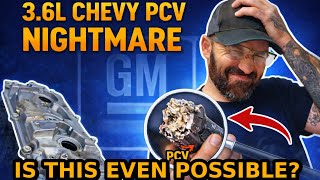
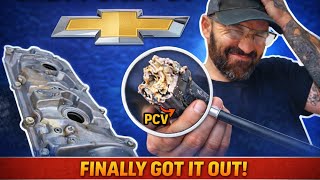
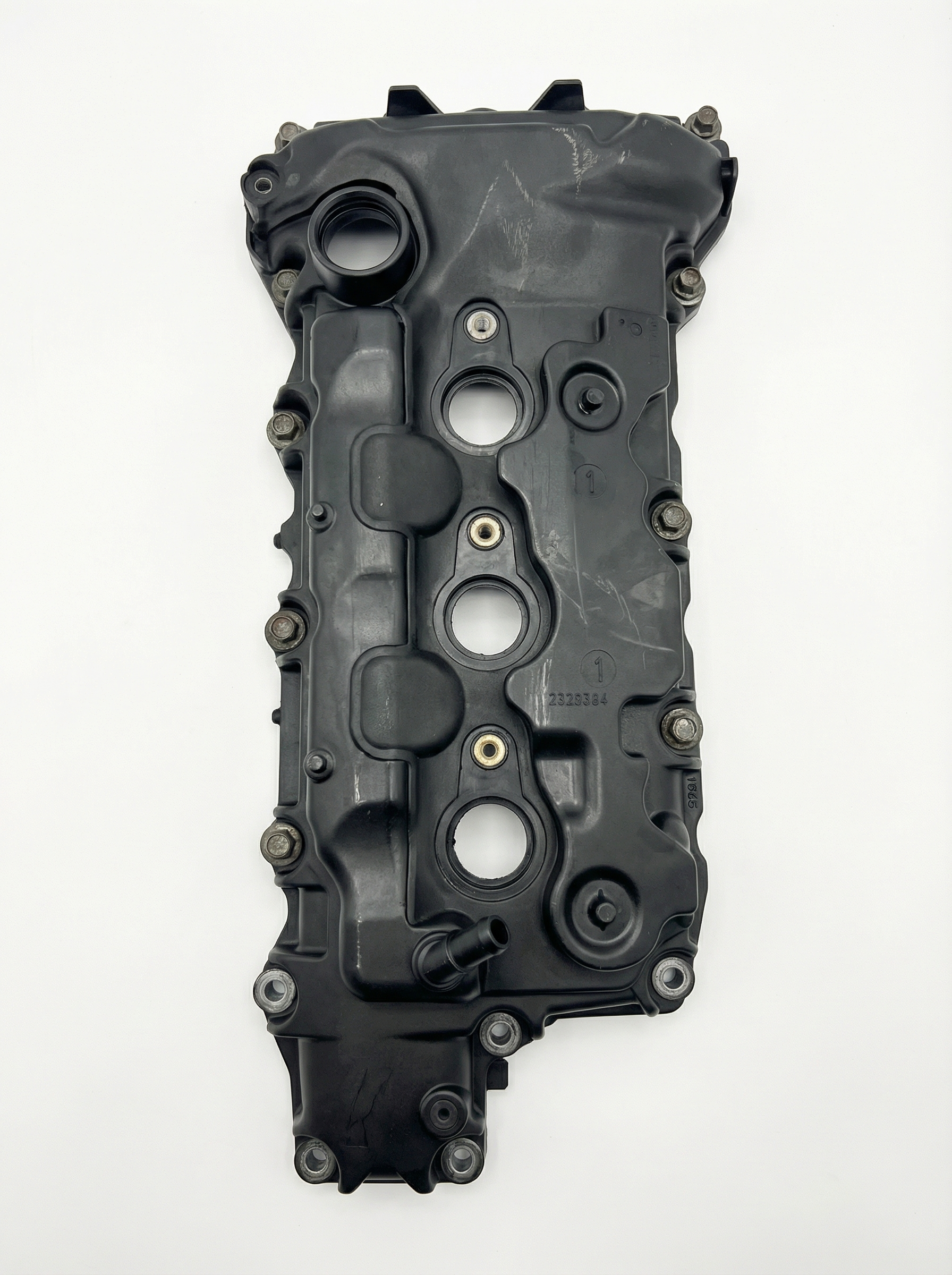
Typical fix: The correct, permanent fix is to replace the entire rear valve cover with an updated part 🎬 See this walkthrough on the difficult PCV valve removal process. (e.g., ACDelco 12648731). Some owners and mechanics on forums report drilling out the clogged orifice to a slightly larger size as a DIY repair, but this is not the OEM-recommended solution and may have other consequences.
Est. part cost: $60-$150 - Vacuum Leak 🟡 Medium Probability Hoses and gaskets become brittle with age and heat cycles. A common source of leaks on the 3.6L V6 is the intake manifold gaskets or small vacuum lines connected to the intake. A cracked PCV hose between the valve cover and the intake tube can also cause a significant unmetered air leak.
How to confirm: A smoke test is the most effective way to find the source of a vacuum leak. A hissing sound may also be audible near the engine when it's running.
Typical fix: Replace the leaking hose or gasket. Intake manifold gaskets should be replaced if the manifold is removed for other service.
Est. part cost: $10-$100
Rare But Worth Checking
- Faulty Throttle Body Assembly: → Shop Fuel Injection Throttle Body If cleaning the throttle body and performing an idle relearn doesn't resolve the issue, and the PCV system is confirmed to be working, the internal electronic motor or position sensor may have failed. In this case, the entire assembly needs to be replaced.
- Faulty Mass Airflow (MAF) Sensor: A MAF sensor that is dirty or failing may provide incorrect airflow readings to the ECM, causing improper idle speed adjustments. Cleaning it with a dedicated MAF sensor cleaner is a simple diagnostic step.
Diagnosis Steps
- Scan for any other DTCs. Codes like P0171/P0174 strongly suggest a vacuum leak.
- Visually inspect the air intake system for any cracks or loose connections between the MAF sensor and the throttle body. Check the PCV hose for cracks.
- With the engine off, remove the intake duct and inspect the throttle body for heavy, oily carbon buildup. If dirty, clean it thoroughly with throttle body cleaner and a rag. Ensure the plate moves freely.
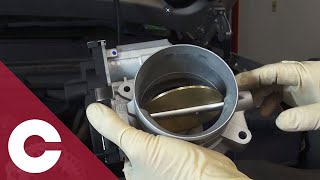
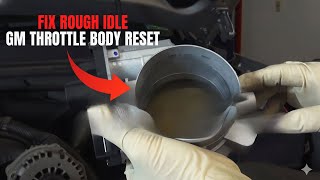
- After cleaning/reinstalling the throttle body, perform an idle relearn procedure. A common method is: Start and idle the engine in Park for 3 minutes. Turn the ignition off for 60 seconds. Start and idle the engine in Park for another 3 minutes. The idle should now be normal. A scan tool can also force a relearn. 🎬 Watch: How to manually reset and relearn your GM throttle body.
- If the high idle persists, investigate the PCV system. With the engine running, remove the oil cap. If there is strong suction or pressure, the PCV orifice in the rear valve cover is likely clogged. The presence of fresh oil in the intake tube is another strong indicator.
- If the PCV system is suspected, the recommended repair is to replace the rear valve cover (ACDelco P/N 12648731).
- If the PCV system seems okay, perform a smoke test to check for vacuum leaks from intake gaskets or other hoses.
- If all else fails, the throttle body's internal electronics may be faulty, requiring replacement of the entire assembly.
Parts You'll Likely Need
- Throttle Body Cleaner
(OEM #ACDelco 10-3012 (or equivalent))— This is required for the most common first step: cleaning carbon buildup from the throttle plate and bore, which can cause it to stick open.
Trusted brands: CRC, Gumout, Berryman
OEM price range: $10-$20
Aftermarket price range: $5-$15 - Engine Valve Cover (Rear/Firewall Side)
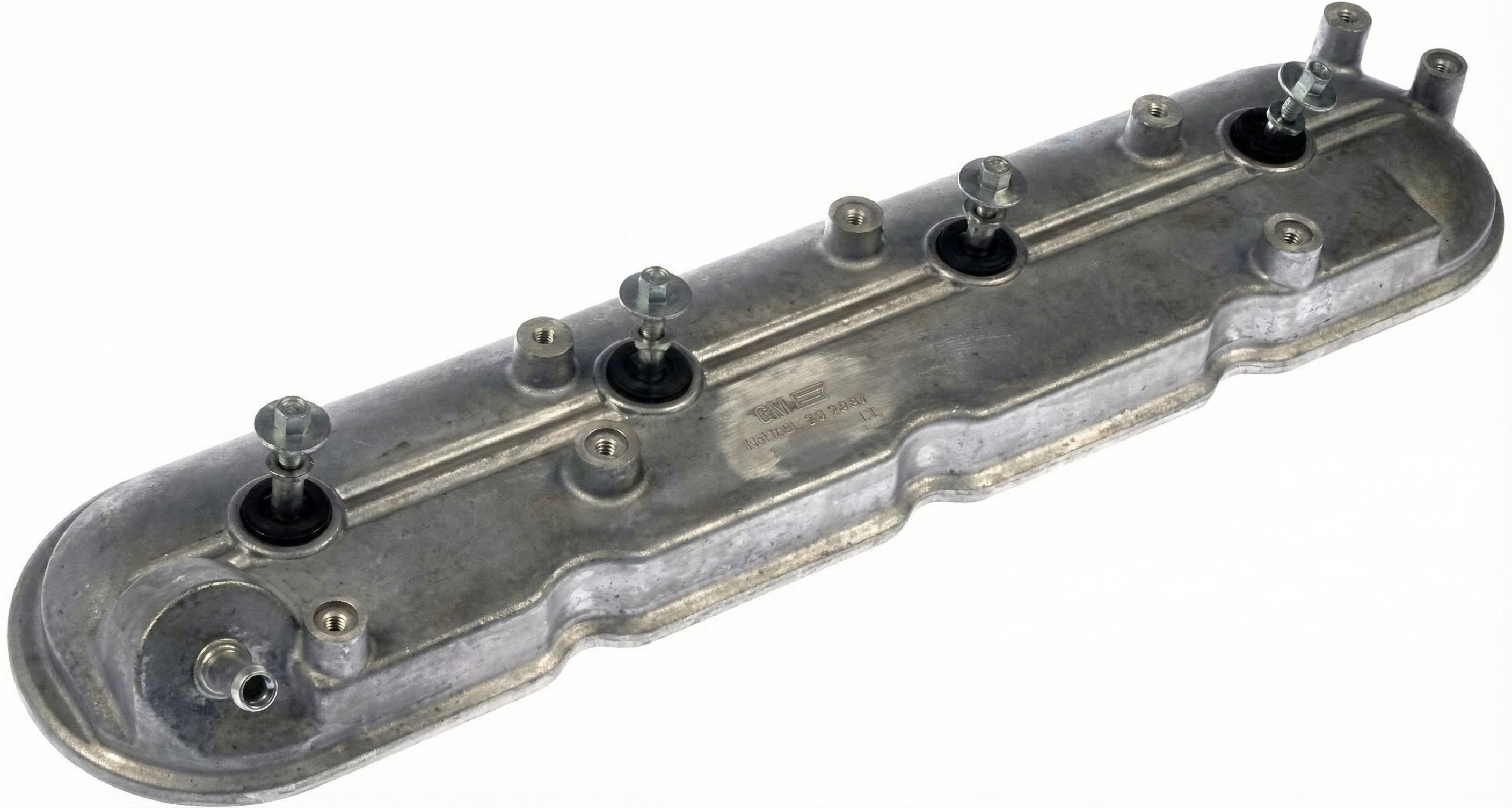
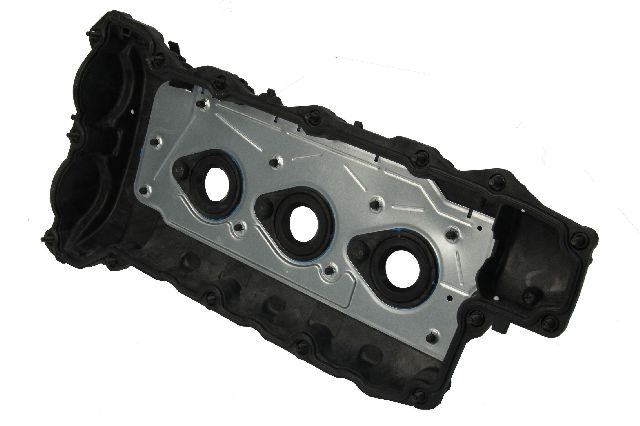
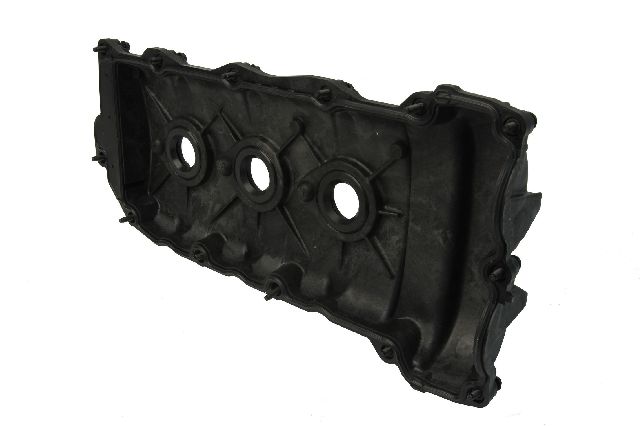
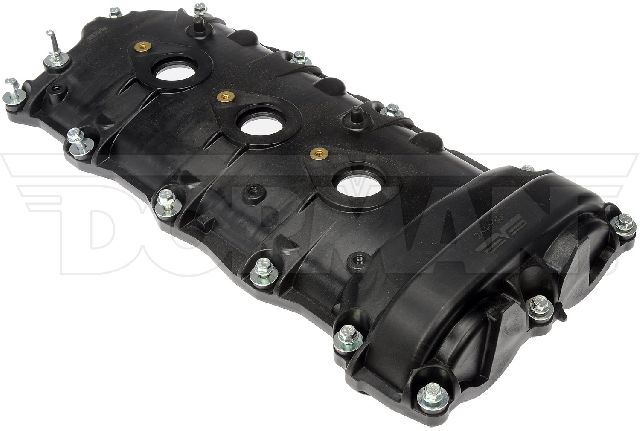
(OEM #12648731 (Supersedes older versions))— The PCV orifice is integrated into this valve cover and is a common failure point that leads to high crankcase pressure and a high idle. The entire cover must be replaced to fix the clogged orifice properly.
Trusted brands: ACDelco (OEM), Dorman
OEM price range: $100-$180
Aftermarket price range: $60-$120 - Throttle Body Assembly
(OEM #12631186 (Superseded by 12694871))— If cleaning does not solve the problem, the electronic motor or position sensor within the throttle body has likely failed, requiring a complete replacement. Note: This part number is for the 2.4L engine but is often confused; the 3.6L V6 uses a different part. Always verify with VIN. A common part number for the 3.6L is 12616995 or 217-3449.
Trusted brands: ACDelco, Bosch, Hitachi
OEM price range: $200-$300
Aftermarket price range: $100-$200
Related Codes That Often Appear With This One
- P0171 — System Too Lean (Bank 1) - Often caused by a vacuum leak, which is also a primary cause for P0507.
- P0174 — System Too Lean (Bank 2) - Often caused by a vacuum leak, which is also a primary cause for P0507.
- P2176 — Throttle Actuator Control System - Idle Position Not Learned. This code can appear after cleaning or replacing the throttle body if the idle relearn procedure is not performed or fails.
Technical Service Bulletins (TSBs) & Recalls
- PIP5163H: Ad
Platform-Specific Known Issues
- A known issue on the 3.6L V6 engine family is the clogging of the fixed PCV orifice in the rear valve cover. This increases crankcase pressure, which can contribute to oil leaks and also force oil vapor into the intake, leading to a heavily contaminated throttle body and a high idle. This is the most probable root cause for P0507 if the throttle body is found to be very oily.
Documented NHTSA Reports
- NHTSA ODI #11721239 describes a scenario where P0507 appeared alongside other codes like P0505 and P0700; the owner reported that the vehicle stopped moving forward and started reversing while driving up an incline.
- NHTSA ODI #10593542 notes that a P0507 code occurred in conjunction with a traction control disabled message and a loss of reverse gear.
Mechanic-Grade Diagnostic Values
- Throttle Actuator Motor Resistance — expected: 2 to 15 Ohms between terminals A and B. Failure: A reading over the limit indicates an open circuit; a reading less than 1 Ohm indicates a short circuit.
- Long Term Fuel Trim (Idle/Decel) — expected: Less than 7%. Failure: Values significantly higher than 7% at idle can indicate a vacuum leak that the ECM is trying to compensate for, which can contribute to a high idle condition.
- Desired vs. Actual Idle RPM (Scan Tool) — expected: Actual RPM should be within 100 RPM of Desired RPM during normal idle.. Failure: When Actual RPM exceeds Desired RPM by 100-200 RPM for a sustained period (e.g., >4 seconds), it will trigger P0507.
Scan Tool Commands That Help
- GM GDS2 / Tech2 or equivalent (Autel, ANCEL): Idle Learn Reset / Throttle Relearn — This function should be used after cleaning or replacing the throttle body to force the ECM to relearn the new closed-throttle position. While a manual relearn exists, the scan tool command is more reliable and can reset learned values directly.
- GM GDS2 / Tech2 or equivalent: Engine Speed Control — This is a bidirectional test that allows a technician to command the engine to specific RPMs (e.g., 600 RPM, 1400 RPM). If the engine speed does not respond correctly or smoothly, it points to an issue with the throttle actuator control system.
Wiring & Ground Locations
- G110 — Located on the right rear of the engine block/cylinder head.. This is a critical shared ground point for the Engine Control Module (ECM) and Transmission Control Module (TCM). A poor connection here can cause a wide range of electrical issues, including erratic sensor readings and incorrect idle control, potentially contributing to a P0507.
- G112 — Rear of the engine, mounted to the rear of the cylinder head.. This is another primary engine ground. Wiring diagrams for the 3.6L engine show this as a key ground point for various engine components and sensors that provide input for idle control.
- G103 / G104 — Primary engine ground points located on the cylinder heads (G103 on Bank 1/passenger side, G104 on Bank 2/driver side).. The ECM's injector and throttle driver circuits require a clean ground reference. A loose or corroded ground at these points can cause erratic voltage and interfere with the ECM's ability to control idle speed.
- ECM Connector X1/X2 — The ECM is located on the left side of the engine compartment. The throttle actuator control (TAC) motor circuits are typically pins 'TAC motor ctrl 1' and 'TAC motor ctrl 2' in the main connectors.. When diagnosing a suspected throttle body failure, technicians may need to check for continuity and voltage at these specific pins on the ECM connector to rule out a wiring issue between the ECM and the throttle body.
Real Owner Repair Stories
- traverseforum.com user (2011 Chevrolet Traverse LT, ~100k miles) — P0507 code, high idle at ~1500 RPM, hard clunk when shifting into gear.
❌ Tried (didn't work) Cleaned the throttle body multiple times., Performed the idle relearn procedure multiple times., Replaced the throttle body with a new unit.
✅ What actually fixed it The problem was finally resolved by replacing the rear valve cover (firewall side). The integrated PCV orifice was completely clogged, causing excessive crankcase pressure and forcing oil past the new throttle body, leading to the persistent high idle. After replacing the valve cover, the idle returned to normal.
OEM Part Supersession History
Multiple older versions→ACDelco 12648731— The original rear valve cover designs were prone to premature clogging of the integrated PCV orifice. The updated part number is intended to have improved resistance to sludging and clogging.12616995, 217-3449→12670834, 12631186— Standard part lifecycle updates, potentially with minor improvements to internal electronics or seals. Dorman offers an OE FIX version with an upgraded butterfly shaft seal to prevent failure from oil contamination.
Heads up: Always verify the correct throttle body part number with the vehicle's VIN, as there were variations between LLT and LFX engines and different vehicle platforms.
Model Year Variations Within This Range
- 2009-2012 (approx.): These models primarily used the LLT engine, which featured an aluminum intake manifold and a Bosch ECM.
- 2013-2017 (approx.): These models transitioned to the LFX engine. While very similar, the LFX features a composite intake manifold, integrated exhaust manifolds within the cylinder heads, and a Delphi ECM. While the P0507 root causes (PCV, throttle body) are the same, part numbers for the intake manifold and related components are different.
Diagnostic Flowchart
Other Known Issues on This Vehicle
Issues unrelated to this code that are worth knowing about as an owner of this generation:
- Premature Timing Chain Stretch 🔴 High — Very common, especially on 2009-2012 models. Often occurs between 70,000 and 120,000 miles. Exacerbated by the original, overly optimistic Oil Life Monitor (OLM) settings. (Ref: Special Coverage Adjustment 11340C / 14582 for 2009 models extended warranty to 10 years/120,000 miles. TSBs 12-06-01-009F and PIP5163H also address this.)
- Cracked 3-5-R Wave Plate (6T70/6T75 Transmission) 🔴 High — Common on earlier models (especially 2009-2011), leading to loss of 3rd, 5th, and Reverse gears, often requiring a transmission rebuild or replacement. (Ref: Special Coverage Adjustment 14404B extended warranty to 10 years/120,000 miles for this specific failure on 2009 models.)
- Power Steering Pump Failure / Leaks 🟠 Medium — Numerous owner complaints of whining, stiffness at low RPMs, or sudden loss of power steering assist. Can be caused by failing pumps or leaking high-pressure lines. (Ref: TSB 13-02-32-001E was issued for leaking power steering lines due to contact with other components.)
- Chafed Fuel Injector Wiring Harness 🟠 Medium — The engine wiring harness is prone to rubbing against engine brackets and fuel lines, causing shorts that trigger various injector circuit codes (e.g., P0261, P0270). (Ref: TSB #PIP4924D documents this issue, advising inspection of the harness for chafing before replacing injectors.)
- Excessive Oil Consumption 🟠 Medium — Some 3.6L engines, particularly earlier LLT versions, may consume excessive oil, which can accelerate timing chain wear if the level is not checked and maintained regularly.
Used vs. New Parts: Buying Guide for This Vehicle
When a used part is the smart pick: A used throttle body from a low-mileage donor vehicle can be a cost-effective option. Since the primary failure mode is contamination, a visually clean used part presents a low risk.
Donor-vehicle mileage cap: roughly under 80000 miles for the part to have meaningful remaining life.
What to inspect on the donor part:
- Inspect the throttle plate and bore for scoring or deep scratches; some carbon is okay if it can be cleaned.
- Ensure the electrical connector pins are straight and free of corrosion.
- Verify it comes from a vehicle of a similar model year to avoid LLT/LFX part incompatibilities.
OEM-only on this vehicle (don't cheap out):
- Engine Valve Cover (Rear): Given that the PCV orifice clogging is a known design flaw, purchasing a new OEM (ACDelco) or reputable aftermarket (e.g., Dorman with updated design) part is critical to ensure a long-term fix. A used valve cover may already be partially clogged or prone to the same failure.
Aftermarket brands forum-validated for this vehicle:
- Throttle Body: Bosch, Hitachi, ACDelco (OEM), Dorman (specifically their OE FIX version with upgraded seals).
- Valve Cover: Dorman is a widely available aftermarket alternative to ACDelco, though user reviews are mixed; some report issues with gasket fitment.
Brands owners have reported issues with on this vehicle:
- Unbranded, 'white box' throttle bodies and valve covers from online marketplaces should be avoided. These often have poor quality control, leading to incorrect fitment, premature electronic failure, or use of materials that can't withstand engine bay temperatures.
Real Owner Stories
Aggregated from forums and TSBs cited above. Mileages and costs reflect what owners reported in those sources.
2009-2017 GMC Acadia (3.6L V6)
Symptoms: Cleaned the throttle body 3 times but the high idle kept returning.
What fixed it: Replaced the rear valve cover.
Source hint: acadiaforum.net
2009-2017 Chevrolet Traverse (3.6L V6)
Symptoms: High idle causing a 'lurch' when shifting into gear; cleaning the throttle body only provided a temporary fix.
What fixed it: Replacing the rear valve cover (with the integrated PCV orifice).
Source hint: traverseforum.com
GM 3.6L V6 (Similar Model)
Symptoms: P0507 code persisted after multiple cleaning attempts and IAC valve swaps.
What fixed it: Replacing the entire throttle body assembly.
Source hint: gm-trucks.com
Related OBD-II Codes
Frequently Asked Questions
Why does my Traverse lurch or clunk when I shift into Drive or Reverse?
I cleaned my throttle body but the P0507 code came back. What is the permanent fix for the 3.6L LLT engine?
Is there a specific idle relearn procedure I should follow after cleaning the throttle body on my Traverse?
Does TSB PIP5163H relate to my high idle issue?
How does a clogged PCV orifice cause a high idle code like P0507?
Can I just drill out the PCV orifice instead of buying a new valve cover?
Helpful Videos
Used OEM Parts in Stock
New Aftermarket Parts Available


The information in this article is provided for general reference and educational purposes only. Vehicle specifications, procedures, and part compatibility can vary by production date, trim level, and region. Always consult your vehicle's factory service manual and verify part numbers before purchasing or performing repairs. Safety-critical components such as airbags, seat belts, and braking systems should be installed by a qualified professional.
- Chevrolet Traverse:
- 🧭 Diagnostic Flowchart
- 🎬 Helpful Videos
- 🛍️ Shop This Part
- What's Unique About the 2009-2017 Chevrolet Traverse
- Symptoms You May Notice
- Most Likely Causes
- Rare But Worth Checking
- Diagnosis Steps
- Parts You'll Likely Need
- Related Codes That Often Appear With This One
- Technical Service Bulletins (TSBs) & Recalls
- Platform-Specific Known Issues
- Documented NHTSA Reports
- Mechanic-Grade Diagnostic Values
- Scan Tool Commands That Help
- Wiring & Ground Locations
- Real Owner Repair Stories
- OEM Part Supersession History
- Model Year Variations Within This Range
- Other Known Issues on This Vehicle
- Used vs. New Parts: Buying Guide for This Vehicle
- Real Owner Stories
- 2009-2017 GMC Acadia (3.6L V6)
- 2009-2017 Chevrolet Traverse (3.6L V6)
- GM 3.6L V6 (Similar Model)
- Related OBD-II Codes
- Frequently Asked Questions
- 🎟️ Get 5% Off