

P0507 on 2000-2005 Dodge Neon: High Idle Causes and Fixes
On a 2000-2005 Dodge Neon, code P0507 is most often caused by a vacuum leak from a cracked hose (especially the PCV or brake booster hose) or a dirty/failed Idle Air Control (IAC) valve. Expect to fix a vacuum leak for under $20 or replace the IAC valve for $40-$100.
- P0507 on a 2000-2005 Neon means the engine is idling too fast and the computer can't slow it down.
- The most likely cause is unmetered air entering the engine from a cracked vacuum hose or a stuck-open Idle Air Control (IAC) valve.
- Start your diagnosis by listening for hissing sounds and visually inspecting all vacuum hoses for cracks, especially the PCV and brake booster hoses.
- Cleaning the throttle body and IAC valve with appropriate cleaner is a low-cost first step that often resolves the issue.
- If cleaning doesn't work, replacing the IAC valve is the next logical step, followed by a thorough search for vacuum leaks with a smoke machine.
What's Unique About the 2000-2005 Dodge Neon
The 2000-2005 Dodge Neon (second generation, PL platform) uses a mechanical throttle cable connected to the gas pedal, not a modern drive-by-wire system. Idle speed is managed by a separate component called the Idle Air Control (IAC) valve, which is mounted on the throttle body. This IAC valve is notoriously prone to getting stuck with carbon buildup, and the vehicle's vacuum hoses become brittle with age, making vacuum leaks and IAC failures the two most common culprits for a P0507 code on this specific car.
Symptoms You May Notice
- Check Engine Light is on
- Engine idles much higher than normal (e.g., 1200-2000 RPM)
- Vehicle 'creeps' or accelerates to speeds of 25 mph+ without touching the gas pedal, especially when in drive.
- Rough or surging/hunting idle speed.
- A hissing sound from the engine bay, indicating a vacuum leak.
- Harsh shifting or clunking when putting an automatic transmission into gear.
- Replacing the Throttle Position Sensor (TPS). A bad TPS usually causes erratic acceleration or different codes, not just a consistent high idle.
- Replacing the entire throttle body when only the IAC valve is bad or the assembly just needs cleaning.
Most Likely Causes
- Vacuum Leak 🔴 High Probability Rubber and plastic hoses become brittle and crack over 20+ years. The PCV and brake booster hoses are common failure points. A loose PCV hose is a very common and simple fix.
How to confirm: With the engine running, listen for a distinct hissing sound. You can also carefully spray a flammable fluid like brake cleaner or a non-flammable alternative like soapy water around vacuum lines and the intake manifold gasket. If the engine's idle speed changes, you've found the leak. A smoke machine is the most definitive tool.
Typical fix: Replace the cracked or disconnected vacuum hose. A common culprit is the PCV valve hose or the brake booster hose.
Est. part cost: $5-$30 - Dirty or Failed Idle Air Control (IAC) Valve 🔴 High Probability → Shop Idle Air Control Valve The IAC valve's plunger and air passage get clogged with carbon buildup over time, causing it to stick open. This is a very common issue on Neons.
How to confirm: A good test is to start the engine and, once the high idle is present, unplug the IAC valve's electrical connector. If the idle speed doesn't change, the valve is likely stuck. Another method is to block the IAC air passage inside the throttle body while the engine is running; if the high idle drops, the IAC is stuck open.
Typical fix: First, try cleaning the IAC valve and its port on the throttle body with throttle body cleaner and a brush. If cleaning doesn't solve the issue, replace the IAC valve.
Est. part cost: $40-$100 - Dirty Throttle Body 🟡 Medium Probability → Shop Fuel Injection Throttle Body Carbon and oil vapor from the PCV system build up around the throttle plate, preventing it from closing completely at idle.
How to confirm: Remove the air intake hose from the throttle body and visually inspect the throttle plate and bore for black, sticky buildup.
Typical fix: Clean the throttle body bore and plate thoroughly with throttle body cleaner and a soft cloth or brush. Be sure to use a cleaner that is safe for throttle bodies, not carburetor cleaner.
Est. part cost: $5-$10 for cleaner - Faulty Positive Crankcase Ventilation (PCV) Valve ⚪ Low Probability The PCV valve is a cheap plastic part that can get stuck open, creating a vacuum leak.
How to confirm: Remove the valve (usually located on the valve cover) and shake it. If it doesn't rattle, it's likely stuck. Given its low cost, it's often replaced as a maintenance item.
Typical fix: Replace the PCV valve.
Est. part cost: $5-$15
Rare But Worth Checking
- Leaking Intake Manifold Gasket: → Shop Engine Intake Manifold While less common than a simple hose, the gasket between the intake manifold and the cylinder head can fail, creating a significant vacuum leak. This is usually confirmed with a smoke test.
Diagnosis Steps
- Read the code with an OBD-II scanner to confirm P0507.
- With the engine running, listen carefully for any hissing sounds around the top of the engine, which would indicate a vacuum leak.
- Visually inspect all vacuum hoses connected to the intake manifold, especially the PCV hose and the large brake booster hose. Check for cracks, swelling, or loose connections. A loose PCV hose is a very common culprit. 🎬 Watch: This mechanic finds and fixes a common Neon vacuum leak.
- Remove the air intake tube from the throttle body. Inspect the throttle bore and plate for carbon buildup.
- Locate and remove the Idle Air Control (IAC) valve on the side of the throttle body. Inspect its plunger and the air passage for heavy carbon deposits.
- If no obvious vacuum leaks are found, perform a more thorough leak test using a smoke machine or by carefully spraying brake cleaner around gasket surfaces and hose connections while listening for a change in idle.
- If leaks are ruled out, the primary suspect becomes the IAC valve. Clean it and the throttle body first. If the problem persists, replace the IAC valve.
Parts You'll Likely Need
- Idle Air Control (IAC) Valve
(OEM #4861355AB)— This is the most common mechanical failure for this code on a Neon. The valve gets stuck open with carbon, causing a persistent high idle.
Trusted brands: Standard Motor Products (AC316), Duralast (AC359), Bosch, Delphi, Holstein (2IAC0028)
OEM price range: $90-$150
Aftermarket price range: $40-$100 - Vacuum Hose — A cracked or disconnected vacuum hose is the other top cause, creating an unmetered air leak that the IAC can't compensate for.
OEM price range: $15-$40
Aftermarket price range: $5-$20 - PCV Valve — A stuck-open PCV valve acts as a vacuum leak. It's an inexpensive part to rule out during diagnosis.
OEM price range: $10-$20
Aftermarket price range: $5-$15
Platform-Specific Known Issues
- Recall #01V154000 (also listed as 01V180000): For some 2000-2001 Dodge Neon models, the brake booster vacuum hose could swell, especially when exposed to oil, and detach from the intake manifold. This results in a loss of power brakes and a high engine idle, triggering P0507. The fix was to replace the brake booster vacuum hose.
Scan Tool Commands That Help
- Manual Procedure (No Scan Tool): Idle Relearn Procedure — Required after replacing the IAC valve or disconnecting the vehicle's battery to allow the PCM to recalibrate the idle. Failure to do this can cause continued high or erratic idle even with a new part.
Wiring & Ground Locations
- G102 — On the left front or left rear of the engine/engine compartment.. This is a primary engine ground. A poor connection here can cause erratic behavior from sensors and actuators controlled by the Powertrain Control Module (PCM), including the IAC valve and its inputs.
- G103 — Located on the cowl in the engine compartment, often near the brake booster.. This ground serves multiple components, including inputs to the Body Control Module (BCM) and Powertrain Control Module (PCM). A loose or corroded G103 can cause a variety of electrical issues that may indirectly affect idle control.
- General Engine Grounds — A ground wire typically runs from the strut tower to the back of the cylinder head, and another from the strut tower to the engine mount.. Ensuring the engine block has a solid ground connection to the chassis is critical for all engine management functions. A weak or broken ground strap can lead to high resistance, causing the PCM and its sensors to malfunction.
Real Owner Repair Stories
- Reddit r/MechanicAdvice (2005 Dodge Neon) — After changing spark plugs and wires, the engine idled high and would accelerate to 25+ mph on its own without throttle input, triggering code P0507.
❌ Tried (didn't work) Initial diagnosis pointed towards a complex issue caused by the recent tune-up.
✅ What actually fixed it A PCV hose connected to the valve cover had been knocked slightly loose during the spark plug job, creating a vacuum leak. Securing the hose resolved the high idle and the P0507 code. - NHTSA ODI #11208215 (Dodge Nitro Reference) — While involving a different model from the same manufacturer, an owner reported that the engine light went on with code P0507, noting that once in a while on acceleration the vehicle feels like it loses speed or stalls.
OEM Part Supersession History
4861355AB→5014116AA— Standard part revision or manufacturer change.
Heads up: The part numbers 4861355AB and 5014116AA are often listed as interchangeable for the 2001-2005 Neon 2.0L, indicating they are compatible replacements for each other.
Model Year Variations Within This Range
- 2000-2005: Throttle bodies on manual transmission Neons are more restrictive (tapering down to ~49mm) than those on automatic transmission models. This was done to smooth out throttle response. While it doesn't directly cause P0507, it's a known variation. Swapping a manual's throttle body for an automatic's is a common, simple performance upgrade.
Diagnostic Flowchart
Used vs. New Parts: Buying Guide for This Vehicle
When a used part is the smart pick: A complete used throttle body assembly from a junkyard can be a good value if your original is physically damaged. It often comes with the IAC and TPS sensors, giving you spares to test with.
Donor-vehicle mileage cap: roughly under 80000 miles for the part to have meaningful remaining life.
What to inspect on the donor part:
- Look for a donor vehicle with a clean engine bay and evidence of regular maintenance.
- Inspect the throttle body for cleanliness; heavy carbon buildup suggests a poorly running engine.
- Check the throttle plate for smooth, snappy operation with no binding.
- If possible, choose a part from a vehicle that was wrecked due to rear-end collision, suggesting the engine was running well at the time of the accident.
Aftermarket brands forum-validated for this vehicle:
- Standard Motor Products (SMP)
- Delphi
- Bosch
Brands owners have reported issues with on this vehicle:
- No-name, unbranded parts sold on marketplace sites at a very low price point are often of poor quality and can fail quickly or be dead-on-arrival.
Real Owner Stories
Aggregated from forums and TSBs cited above. Mileages and costs reflect what owners reported in those sources.
2005 Dodge Neon
Symptoms: After a spark plug change, the car would rev up to 2000 RPMs and accelerate to 25+ mph on its own when letting off the brake from a stop. The Check Engine Light came on with code P0507.
What fixed it: A PCV hose connected to the valve cover was slightly loose.
Source hint: Reddit r/MechanicAdvice
2005 Neon SXT — 118000 miles
Symptoms: A pre-existing high idle problem was present. After a timing belt and water pump replacement, the check engine light came on with code P0507.
What fixed it: The owner did not report a final fix for the P0507 code; after they replaced the IAC themselves, the car developed a new, unrelated electrical problem that became the focus of the discussion.
Source hint: Car Talk Community
Related OBD-II Codes
Frequently Asked Questions
Is there a recall for the high idle P0507 code on my Dodge Neon?
My Neon is accelerating by itself up to 25 mph. Is this related to the P0507 code?
How common is a bad PCV hose as the cause for P0507 on a Neon?
Can I just adjust an idle screw to lower the RPMs on my 2000-2005 Neon?
Should I clean or just replace the Idle Air Control (IAC) valve?
I have a Chrysler PT Cruiser with a P0507 code. Is the diagnosis the same as the Neon?
What's the best way to find a vacuum leak on my Neon without a smoke machine?
Helpful Videos
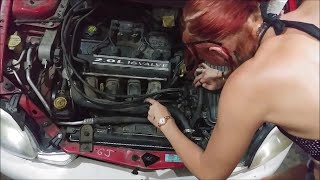
We Have This Part in Stock


The information in this article is provided for general reference and educational purposes only. Vehicle specifications, procedures, and part compatibility can vary by production date, trim level, and region. Always consult your vehicle's factory service manual and verify part numbers before purchasing or performing repairs. Safety-critical components such as airbags, seat belts, and braking systems should be installed by a qualified professional.
- Dodge Neon:
- 🧭 Diagnostic Flowchart
- 🎬 Helpful Videos
- 🛍️ Shop This Part
- What's Unique About the 2000-2005 Dodge Neon
- Symptoms You May Notice
- Most Likely Causes
- Rare But Worth Checking
- Diagnosis Steps
- Parts You'll Likely Need
- Platform-Specific Known Issues
- Scan Tool Commands That Help
- Wiring & Ground Locations
- Real Owner Repair Stories
- OEM Part Supersession History
- Model Year Variations Within This Range
- Used vs. New Parts: Buying Guide for This Vehicle
- Real Owner Stories
- 2005 Dodge Neon
- 2005 Neon SXT — 118000 miles
- Related OBD-II Codes
- Frequently Asked Questions
- 🎟️ Get 5% Off