

P0507 on 2007-2011 Dodge Nitro: Causes and Fixes for High Idle
On a 2007-2011 Dodge Nitro, P0507 is almost always caused by a vacuum leak from a cracked PCV hose or a dirty electronic throttle body. Start by inspecting the PCV hose on the driver's side of the engine and cleaning the throttle body. A new PCV hose and valve are inexpensive, typically under $50.
- P0507 on your Nitro means the idle is too high, most likely due to unmetered air getting into the engine.
- The most common cause is a cracked rubber hose or elbow in the PCV system, located on the driver's side of the engine.
- The second most common cause is a dirty throttle body; cleaning it is a simple and inexpensive diagnostic step.
- Do not replace the expensive throttle body assembly without first ruling out vacuum leaks and trying to clean it.
- After cleaning the throttle body or disconnecting the battery, you may need to perform an idle relearn procedure for the computer to recalibrate.
What's Unique About the 2007-2011 Dodge Nitro
The Dodge Nitro of this era uses an electronic throttle control (ETC) system, meaning it does not have a separate Idle Air Control (IAC) valve like older vehicles. Idle speed is managed directly by the engine computer making small adjustments to the throttle plate. This design makes the system very sensitive to unmetered air from vacuum leaks or physical restrictions (like carbon) that prevent the throttle plate from closing fully. Owners frequently report that brittle plastic and rubber vacuum lines, especially in the PCV system, are the primary culprits for this code. The PCV hose on the 3.7L engine, in particular, has several bends and rubber elbows that are known to crack with age and heat exposure.
Symptoms You May Notice
- Check Engine Light is illuminated
- Engine idle is consistently high (e.g., 1000-1200 RPM, sometimes surging higher)
- A noticeable hissing or sucking sound from the engine bay, especially near the driver's side rear of the engine.
- Rough or surging idle
- Increased effort required on the brake pedal to hold the vehicle at a stop
- Harsh or abrupt engagement when shifting from Park to Drive
- In some cases, the idle may seem normal (e.g. 600-700 RPM) but the code still triggers due to a small, persistent vacuum leak the PCM cannot fully compensate for.
- Replacing the entire electronic throttle body when it only needed cleaning.
- Replacing other sensors (like MAP or O2 sensors) without first checking for vacuum leaks, which are the most common cause.
- Replacing the gas cap for a P0507 code. While a bad gas cap can cause EVAP codes like P0456, it will not cause a high idle code.
Most Likely Causes
- Cracked or Leaking PCV Hose/Elbow 🔴 High Probability → Shop PCV Valve Hose The rubber and plastic components of the PCV system become brittle with age and exposure to engine heat, leading to cracks that create a significant vacuum leak. This is the most widely reported failure on the 3.7L V6 engine across the Nitro and its platform mates like the Jeep Liberty.
How to confirm: Visually inspect the entire PCV hose that runs from the PCV valve (driver's side rear of the engine) to the intake manifold. Pay close attention to the rubber elbows, which often crack underneath where it's hard to see. Flexing the hose can reveal hidden cracks. A smoke test will definitively show a leak if it's not visible.
Typical fix: Replace the damaged PCV hose assembly. It is also recommended to replace the PCV valve at the same time.
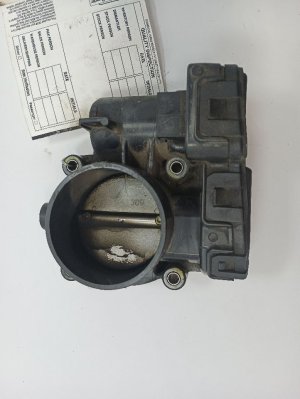
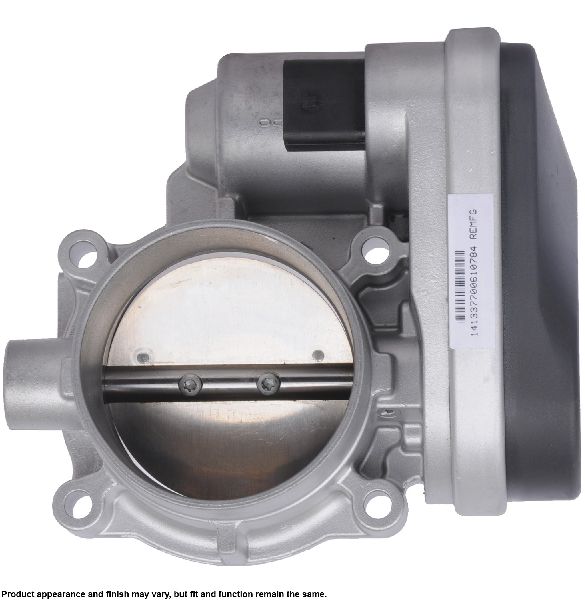
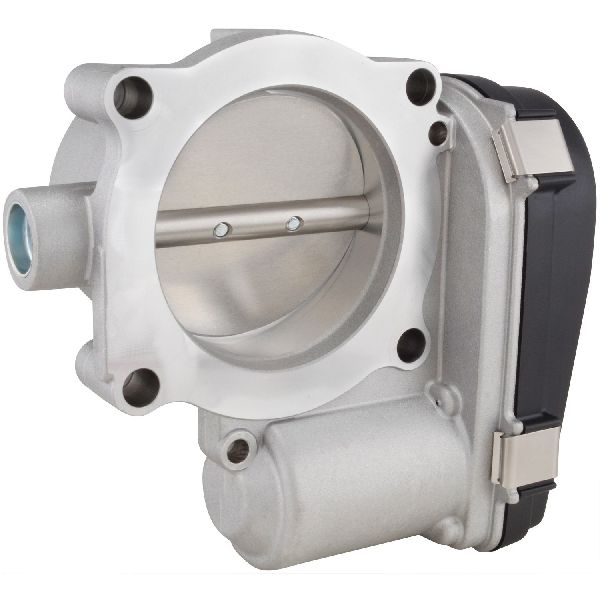
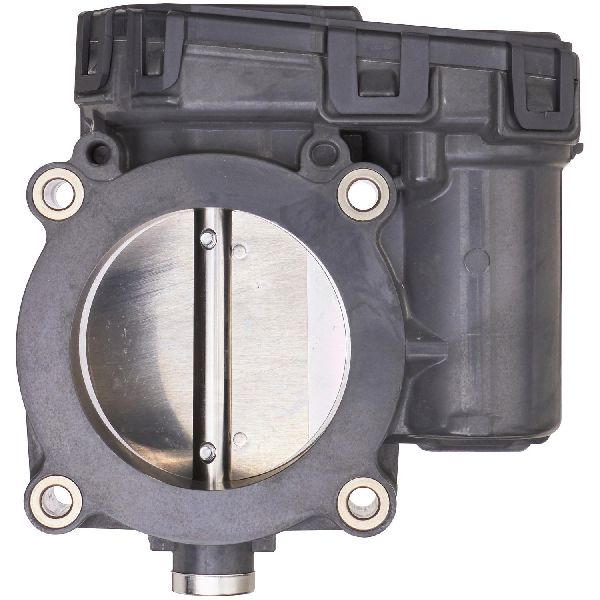
Est. part cost: $25-$60 - Dirty Electronic Throttle Body 🔴 High Probability → Shop Fuel Injection Throttle Body Crankcase vapors are recirculated into the intake system, causing oil and carbon deposits to build up around the throttle plate. This buildup can prevent the plate from closing completely, creating a small gap that allows uncommanded air to enter, raising the idle.
How to confirm: Remove the air intake tube connected to the throttle body. Visually inspect the throttle bore and the edges of the metal throttle plate for a black, sticky film of carbon. The buildup is often heaviest on the back side of the plate.
Typical fix: Clean the throttle body bore and plate using a dedicated throttle body cleaner and a soft cloth or brush. Do not use aggressive tools that could scratch the bore. A throttle relearn procedure should be performed after cleaning.
Est. part cost: $5-$15 - Failed PCV Valve 🟡 Medium Probability → Shop PCV Valve The PCV (Positive Crankcase Ventilation) valve can become stuck open over time, effectively creating a constant vacuum leak. Given its low cost, it's often considered a maintenance item.
How to confirm: Remove the valve and shake it. If it does not rattle, it is likely stuck and needs replacement. Given the low cost, it is often replaced along with the PCV hose as a preventative measure.
Typical fix: Replace the PCV valve. On the 3.7L engine, it is located on the driver's side valve cover. For the 4.0L, it is typically a push-in style on the valve cover.
Est. part cost: $10-$30 - Other Vacuum Leaks ⚪ Low Probability Any vacuum hose or intake manifold gasket can fail with age, but they are less common culprits for this specific code than the PCV system. The brake booster hose is another potential, though less common, point of failure.
How to confirm: Perform a smoke test on the intake system. Smoke will be forced into the intake, and any leaks will be visible as smoke escapes from cracked hoses, bad gaskets, or other failed components. You can also carefully spray a non-flammable brake cleaner around suspected areas while the engine is running; a change in idle RPM indicates a leak.
Typical fix: Replace the specific hose or gasket that is found to be leaking.
Est. part cost: $10-$100
Rare But Worth Checking
- Leaking Brake Booster: → Shop Power Brake Booster
Diagnosis Steps
- Scan the vehicle for any other trouble codes. Address other codes first if they are present.
- With the engine running, listen for hissing sounds around the top of the engine that could indicate a vacuum leak. The PCV hose area on the driver's side is the prime suspect.
- Carefully and thoroughly inspect the PCV hose and its connections between the driver's side valve cover and the intake manifold. A user with a platform-mate Jeep Liberty noted a large crack in the PCV elbow; placing a finger over the crack caused the engine idle to calm down, confirming the leak source.
- If no obvious leaks are found, remove the air intake duct from the throttle body and inspect it for heavy carbon buildup.
- If significant carbon is present, clean the throttle body thoroughly with a dedicated throttle body cleaner and a soft cloth. Do not use carb cleaner. Gently rotate the plate with your finger to clean the edges.
- If the problem persists, perform a smoke test to definitively identify any hard-to-see vacuum leaks from hoses or gaskets.
- Consider replacing the PCV valve as a low-cost, high-probability maintenance item.
- After any repairs involving the throttle body or battery disconnect, perform a throttle relearn procedure. A common method is: Turn the key to 'ON' (engine off) for 10-15 seconds. Slowly press the accelerator pedal to the floor and slowly release it. Turn the key 'OFF' for at least 10 seconds. Start the engine and let it idle for a few minutes to relearn.
Parts You'll Likely Need
- PCV Hose / Tube (3.7L V6)
(OEM #53032993AF)— This is the most likely component to fail and cause a P0507 code on the 3.7L Dodge Nitro. The rubber elbows become brittle and crack, creating a large vacuum leak. This part number supersedes previous versions (AC, AD, AE).
Trusted brands: Mopar, Dorman (46139)
OEM price range: $30-$50
Aftermarket price range: $20-$40 - PCV Hose / Tube (4.0L V6)
(OEM #4892169AA)— The PCV hose for the 4.0L engine can also become brittle and leak, causing the P0507 code. It is a different design from the 3.7L hose.
Trusted brands: Mopar
OEM price range: $40-$60
Aftermarket price range: $25-$45 - PCV Valve (3.7L V6)
(OEM #53032923AA)— A stuck-open PCV valve acts as a vacuum leak. It's a low-cost part and a common failure item that is easy to replace when addressing a P0507 code.
Trusted brands: Mopar, Standard Motor Products (V462)
OEM price range: $15-$30
Aftermarket price range: $10-$20 - Throttle Body Cleaner — Required for cleaning carbon buildup from the throttle plate, which is the second most common cause of this code after vacuum leaks.
Trusted brands: CRC, Berryman
Aftermarket price range: $5-$15
Related Codes That Often Appear With This One
- P0456 — A small EVAP leak code (P0456) can sometimes appear alongside P0507 if the source of the vacuum leak is a cracked hose that is shared by or near the EVAP system, like the purge solenoid hose.
Platform-Specific Known Issues
- Owner Experience: The Hidden Crack: A common story on forums for the Nitro and Jeep Liberty involves an owner who can't find a leak visually. After getting advice, they physically remove and flex the PCV hose, only to find a large crack on the underside of one of the rubber elbows that was impossible to see while installed. Replacing this hose immediately solves the high idle.
- Owner Experience: Deceptively Normal Idle: On a Jeep Liberty forum, an owner reported getting a persistent P0507 code even though their idle seemed perfectly fine at around 650 RPM. After extensive diagnosis with a professional scan tool, they discovered a 'micro leak' at the PCV hose elbow was raising the idle just enough (from a target of 550 RPM) to trigger the code without being obviously high. Replacing the hose resolved the issue.
- Repair Video Confirmation: A YouTube video titled 'Dodge Nitro P0507 code fix' clearly shows a 2010 Nitro that would start and then stall, throwing the P0507 code. The mechanic goes directly to the PCV hose and finds it broken, stating the engine is 'taking in too much air'. After replacing the hose, the idle returns to normal and the code is cleared.
Mechanic-Grade Diagnostic Values
- Manifold Absolute Pressure (MAP) Sensor Voltage at Idle — expected: 0.5V to 1.5V at sea level for a naturally aspirated engine.. Failure: Voltage that is significantly higher at idle may indicate a vacuum leak, as the manifold pressure is closer to atmospheric pressure than it should be.
- Manifold Absolute Pressure (MAP) Sensor Voltage at Key-On, Engine-Off (KOEO) — expected: Approximately 4.6V at sea level. This reading reflects atmospheric (barometric) pressure.. Failure: A reading significantly lower than the expected barometric pressure voltage points to a sensor or wiring issue.
- Short-Term and Long-Term Fuel Trims at Idle — expected: Close to 0% (typically within +/- 5%).. Failure: Consistently high positive fuel trims (e.g., > +10%) indicate the PCM is adding excess fuel to compensate for unmetered air entering the engine, which is a classic symptom of a vacuum leak causing a P0507.
Scan Tool Commands That Help
- Professional Scan Tool (e.g., WiTech): Throttle Body Relearn / ETC Relearn — This function should be used after cleaning or replacing the electronic throttle body. It forces the PCM to recalibrate the home and full-range positions of the throttle plate, which is critical for proper idle control. While a manual procedure exists, a scan tool reset is more reliable.
- Professional Scan Tool (e.g., WiTech): View Live Data: Desired Idle RPM vs. Actual Idle RPM — When diagnosing a P0507, comparing the PCM's target idle speed to the actual engine speed reported by the crankshaft position sensor can confirm the fault condition. A large, persistent discrepancy confirms the engine is not responding to the PCM's commands to lower the idle.
Wiring & Ground Locations
- Electronic Throttle Body Connector (3.7L) — On the throttle body, top of the engine.. Provides power and signal lines for throttle control. Pinout: Pin 1: K22 (TP Signal 1), Pin 2: K122 (TP Signal 2), Pin 3: K124 (ETC Motor +), Pin 4: K922 (TP Sensor Ground), Pin 5: K855 (5V Supply), Pin 6: K126 (ETC Motor -). Checking for 5V supply and good ground is a key diagnostic step.
- Electronic Throttle Body Connector (4.0L) — On the throttle body, top right side of the engine.. Provides power and signal lines for throttle control. Pinout: Pin 1: K124 (ETC Motor +), Pin 2: K126 (ETC Motor -), Pin 3: K855 (5V Supply), Pin 4: K22 (TP Signal 1), Pin 5: K122 (TP Signal 2), Pin 6: K922 (TP Sensor Ground). Note the different pin arrangement compared to the 3.7L.
- Engine Block Ground — Negative battery cable attachment on the engine block.. A poor engine ground can cause erratic sensor readings and incorrect PCM calculations, potentially affecting idle control. A voltage drop test from the negative battery post to the engine block should read less than 0.2V with the engine running.
- Totally Integrated Power Module (TIPM) — In the engine compartment, near the battery.. The TIPM houses the Auto Shutdown (ASD) relay, which supplies battery voltage to the ignition coils and other critical engine components. While not a direct cause of P0507, issues within the TIPM can create widespread electrical problems.
Real Owner Repair Stories
- YouTube channel 'Our Simple Adventures' (2006 Jeep Liberty 3.7L (platform mate) with 170,000 miles) — Engine idling at a minimum of 1600 RPM, sometimes surging to 2500 RPM at a stop. P0507 code was present.
❌ Tried (didn't work) The issue appeared after replacing fuel injectors, during which the PCV hose was accidentally broken.
✅ What actually fixed it Replacing the broken, brittle PCV hose. The break was causing a massive vacuum leak, leading to the extremely high idle. After replacing the hose, the idle returned to a normal 600 RPM. - YouTube channel 'mobilemechanic #automotiveshorts' (2010 Dodge Nitro) — Vehicle would start and then stall. P0507 code was stored.
✅ What actually fixed it A broken PCV hose was found, along with another hole in the boot on the other side. Replacing the complete PCV hose assembly resolved the stalling and the P0507 code.
OEM Part Supersession History
53032993AC, 53032993AD, 53032993AE→53032993AF— Revisions to improve material durability and prevent the cracking and brittleness that caused the original parts to fail.
Heads up: All previous versions are superseded by 53032993AF. When replacing, ensure you are purchasing the latest 'AF' revision.
Model Year Variations Within This Range
- 2007-2011: The 3.7L V6 was primarily paired with a 4-speed (42RLE) automatic transmission, though a 6-speed manual was available in early SXT models (2007-2008). The 4.0L V6 was exclusively paired with a 5-speed (A580/W5A580) automatic transmission. While the P0507 cause is similar, diagnostic steps related to transmission inputs could vary slightly.
- 2009: For the 2009 model year, the suspension and braking systems were revised. The manual transmission was discontinued. This does not directly affect the P0507 code's cause but is a notable change within the generation.
- 2010-2011: Trim levels were renamed to Heat, Detonator, and Shock. The 3.7L engine gained an interactive Decel Fuel Shut Off (iDFSO) feature on 4-speed automatic models, which could subtly influence idle-down behavior.
Diagnostic Flowchart
Real Owner Stories
Aggregated from forums and TSBs cited above. Mileages and costs reflect what owners reported in those sources.
2008 Jeep Liberty 3.7L
Symptoms: Triggered a Check Engine Light with a P0507 code.
What fixed it: Checked the PCV hose based on forum advice and found a large crack in the elbow. Replaced the PCV hose assembly.
Source hint: Reddit: r/JeepLiberty - Check Engine P0507
2007 Jeep Liberty 3.7L
Symptoms: Persistent P0507 code even though the idle seemed perfectly fine at around 650 RPM.
What fixed it: Extensive diagnosis with a professional scan tool revealed a 'micro leak' at the PCV hose elbow raising the idle just slightly above the PCM's target. Replacing the hose resolved the issue.
Source hint: Jeep KJ and KK Liberty Forum - P0507 Code but idle seems fine
2010 Dodge Nitro
Symptoms: Vehicle would start and then immediately stall, throwing the P0507 code.
What fixed it: Mechanic found the PCV hose was broken, causing the engine to take in too much air. Replaced the PCV hose, returning the idle to normal.
Source hint: YouTube video titled 'Dodge Nitro P0507 code fix'
Dodge Nitro / Jeep Liberty 3.7L
Symptoms: High idle with a P0507 code, but couldn't find a vacuum leak visually.
What fixed it: Physically removed and flexed the PCV hose to find a large crack on the underside of one of the rubber elbows that was impossible to see while installed. Replaced the hose.
Source hint: Owner Experience: The Hidden Crack
Related OBD-II Codes
Frequently Asked Questions
Why does my 2007-2011 Dodge Nitro have a P0507 code but the idle seems perfectly normal at 650 RPM?
I hear a hissing sound from the driver's side rear of my 3.7L engine. Is this related to P0507?
I can't see any cracks on my Nitro's PCV hose. Could it still be the cause of my high idle?
What is the throttle relearn procedure for the Dodge Nitro after cleaning the throttle body?
My 2010 Dodge Nitro starts and then stalls, and I have a P0507 code. What should I check first?
Are Jeep Liberty parts compatible for fixing a P0507 code on my Dodge Nitro?
Used OEM Parts in Stock
New Aftermarket Parts Available


The information in this article is provided for general reference and educational purposes only. Vehicle specifications, procedures, and part compatibility can vary by production date, trim level, and region. Always consult your vehicle's factory service manual and verify part numbers before purchasing or performing repairs. Safety-critical components such as airbags, seat belts, and braking systems should be installed by a qualified professional.
- Dodge Nitro:
- 🧭 Diagnostic Flowchart
- 🛍️ Shop This Part
- What's Unique About the 2007-2011 Dodge Nitro
- Symptoms You May Notice
- Most Likely Causes
- Rare But Worth Checking
- Diagnosis Steps
- Parts You'll Likely Need
- Related Codes That Often Appear With This One
- Platform-Specific Known Issues
- Mechanic-Grade Diagnostic Values
- Scan Tool Commands That Help
- Wiring & Ground Locations
- Real Owner Repair Stories
- OEM Part Supersession History
- Model Year Variations Within This Range
- Real Owner Stories
- 2008 Jeep Liberty 3.7L
- 2007 Jeep Liberty 3.7L
- 2010 Dodge Nitro
- Dodge Nitro / Jeep Liberty 3.7L
- Related OBD-II Codes
- Frequently Asked Questions
- 🎟️ Get 5% Off