

P0507 on 2007-2014 Ford Edge 3.5L: High Idle Causes and Fixes
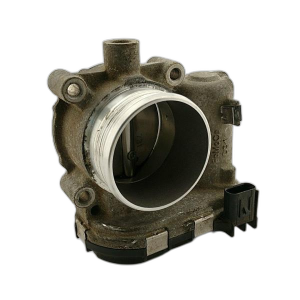
On a 2007-2014 Ford Edge, code P0507 is most often caused by a dirty or failing electronic throttle body. Start by cleaning the throttle body bore and plate with a dedicated cleaner. If that doesn't work, replacement is the likely fix, costing around $150-$250 for the part. This is a very common failure on the 3.5L Cyclone engine, and Ford has issued warranty extensions for it on many models.
- P0507 means the engine is idling too fast on your Ford Edge.
- The most likely cause is a dirty or electronically failing throttle body, a known issue for this engine.
- Start with the cheapest fix: a thorough cleaning of the throttle body bore and plate.
- If cleaning doesn't work, check for vacuum leaks with a smoke test before condemning the throttle body.
- If no leaks are found, replacing the entire electronic throttle body assembly is the standard and most reliable repair.
What's Unique About the 2007-2014 Ford Edge
The 3.5L Cyclone V6 engine family, used across many Ford and Lincoln models, has a well-documented history of electronic throttle body (ETB) failures. The failure is often due to contamination on the internal motor contacts, leading to intermittent electrical connectivity. While a simple cleaning can sometimes resolve the high idle, the issue is often an internal electronic fault within the throttle body assembly itself, a problem Ford has acknowledged through TSBs and Customer Satisfaction Program 13N03, which extended the ETB warranty to 10 years or 150,000 miles for many affected vehicles. Therefore, unlike on other vehicles where a vacuum leak might be the primary suspect, a failing ETB is a very high-probability cause on the Ford Edge.
Generation note: The 2007-2014 range covers the entire first generation of the Ford Edge, including the 2011-2014 facelift. Both versions use the 3.5L Cyclone V6 and an electronic throttle body. The common causes and fixes for P0507 are consistent across this entire generation and its platform mates like the Lincoln MKX.
Symptoms You May Notice
- Check Engine Light is on
- Engine idle speed is noticeably higher than normal (e.g., over 1000 RPM in Park)
- Rough or fluctuating idle
- Engine may stall when coming to a stop or shifting from Park to Reverse
- Increased fuel consumption
- Hard or spongy brake pedal feel, sometimes with a hissing noise, if a vacuum leak at the brake booster is the cause.
- Replacing the Idle Air Control (IAC) Valve. This vehicle does not have an IAC valve; idle is controlled by the electronic throttle body.
Most Likely Causes
- Dirty or Failing Electronic Throttle Body (ETB) 🔴 High Probability → Shop Fuel Injection Throttle Body This engine family has a known high failure rate for the ETB, often due to internal electronic faults from contamination of contacts, not just carbon buildup. Ford issued TSB 10-21-6 and Customer Satisfaction Program 13N03 for this part on the Edge and related models.
How to confirm: First, remove the air intake hose and inspect the throttle body bore and plate for heavy carbon deposits. Clean it thoroughly with a dedicated throttle body cleaner. If the code returns, and vacuum leaks are ruled out, the ETB itself has likely failed internally. A scan tool may show other throttle-related codes like P2111 or P2112.
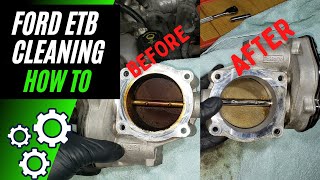
Typical fix: Thoroughly clean the throttle body and plate. If cleaning does not resolve the issue, the entire throttle body assembly must be replaced. 🎬 Watch: Step-by-step throttle body removal and installation guide. After replacement, a throttle body relearn procedure (or KAM reset) should be performed. This can often be done by disconnecting the battery for 15 minutes, though some vehicles may require a scan tool to complete the relearn.
Est. part cost: $10 for cleaner, $150-$300 for a new throttle body - Vacuum Leak 🟡 Medium Probability Hoses, especially those in the PCV system or the brake booster, can become brittle and crack over time, creating a source of unmetered air that raises the idle speed. The brake booster diaphragm is also a known failure point that can cause a vacuum leak. In some Ford models, excessive vacuum can even damage the fuel pump or cause fuel tank leaks, as noted in NHTSA ODI #11509589.
How to confirm: Listen for a distinct hissing sound around the engine bay at idle. Visually inspect all vacuum lines, the air intake tube, and the PCV hoses for cracks or disconnections. Pay special attention to the brake booster and its vacuum line. A smoke test is the most effective way to pinpoint a leak that isn't visually obvious.
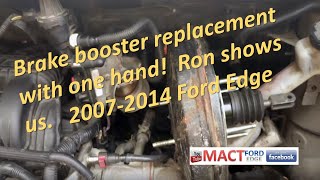
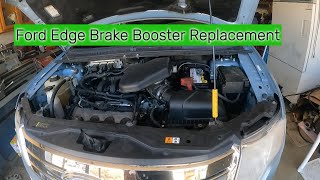
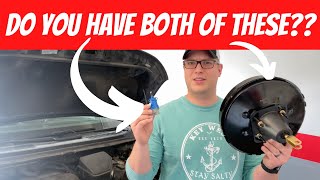
Typical fix: Replace the cracked or leaking hose or gasket. The PCV valve and its hoses are common culprits. If the brake booster is leaking, it will need to be replaced. 🎬 Watch this walkthrough for replacing a leaking brake booster.
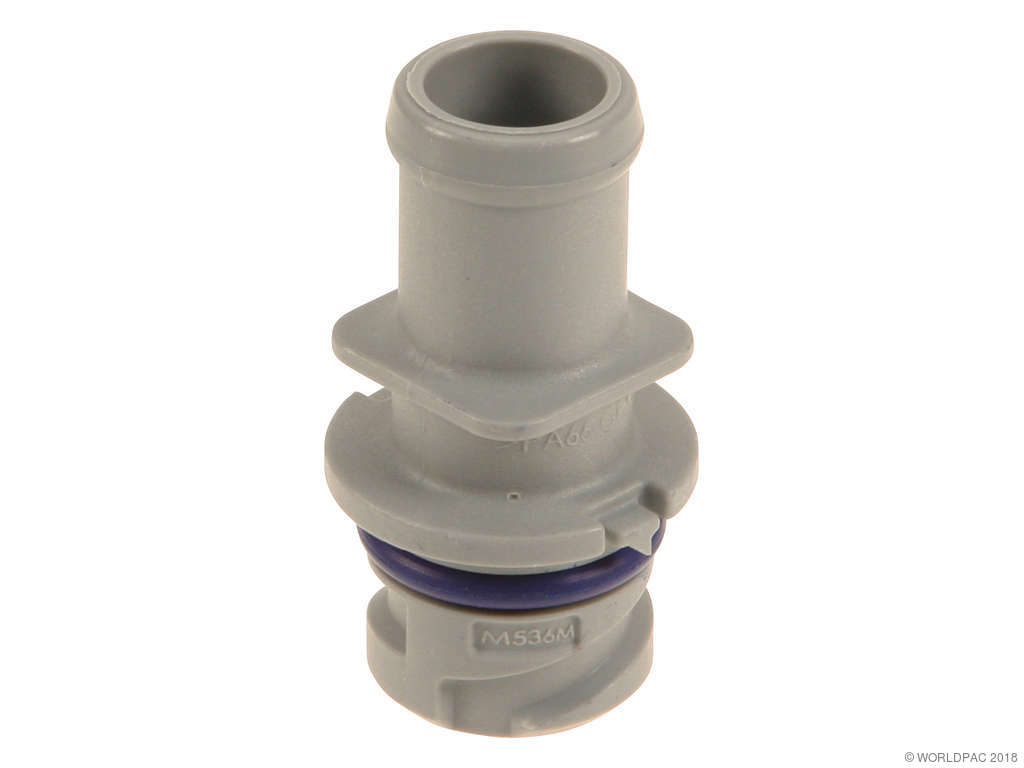
Est. part cost: $20-$80 for hoses or gaskets, $150-$250 for a brake booster - Faulty Positive Crankcase Ventilation (PCV) Valve ⚪ Low Probability A PCV valve that is stuck open will act as a constant vacuum leak, allowing unmetered air into the intake manifold and causing a high idle.
How to confirm: Remove the PCV valve and shake it. If it does not rattle, it is likely stuck and needs replacement. You can also check for strong, uncontrolled suction at the valve with the engine running.
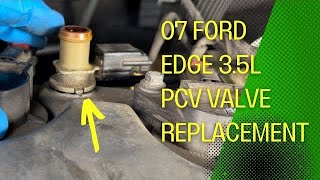
Typical fix: Replace the PCV valve. This is a low-cost and simple maintenance item. 🎬 See how to quickly replace the PCV valve yourself.
Est. part cost: $15-$40
Rare But Worth Checking
- Leaking Intake Manifold Gaskets: → Shop Engine Intake Manifold While less common than a simple hose leak, failed intake manifold gaskets can cause a significant vacuum leak and are harder to diagnose without a smoke test.
- Faulty Powertrain Control Module (PCM): In very rare cases, the PCM itself can fail, causing incorrect idle commands. This should only be considered after all other possibilities have been exhaustively ruled out.
Diagnosis Steps
- Read the freeze frame data with a scan tool to understand the conditions (engine temp, RPM, etc.) when the code was set. Note if other codes like P1450 or P2195 are present, as these have been documented alongside P0507 in Ford vehicles (NHTSA ODI #11440617).
- Visually inspect the entire air intake system from the air filter to the throttle body for any loose connections or cracks.
- Listen for audible hissing noises around the engine that would indicate a vacuum leak. Pay close attention to the PCV hoses, brake booster, and intake manifold area.
- If no obvious leaks are found, perform a smoke test to definitively identify any sources of unmetered air. This is the most reliable method for finding small leaks.
- If no vacuum leaks are present, remove the air intake duct from the throttle body. Inspect the throttle plate and bore for carbon buildup.
- Using a dedicated throttle body cleaner (NOT carburetor cleaner) and a soft cloth or brush, thoroughly clean the throttle plate (both sides) and the bore. Do not spray cleaner directly into the electronics.
- After cleaning, perform a throttle body relearn procedure. This can often be done by disconnecting the battery for 15 minutes or by using a capable scan tool to reset the Keep Alive Memory (KAM). Some vehicles will relearn automatically over several drive cycles.
- If the high idle persists after cleaning and ruling out vacuum leaks, the electronic throttle body assembly is the most likely failed component and should be replaced.
Parts You'll Likely Need
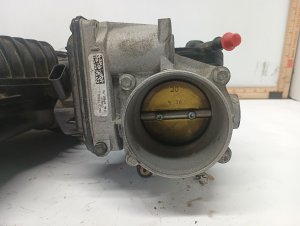
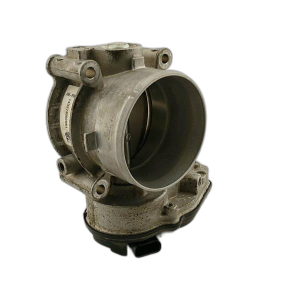
- Electronic Throttle Body Assembly
(OEM #7T4Z-9E926-FA (supersedes 7T4Z-9E926-EA))— This is the most common cause of P0507 on this platform due to a high rate of internal electronic failure, a well-documented issue for the 3.5L Cyclone engine.
Trusted brands: Motorcraft, Hitachi, Bosch, A-Premium
OEM price range: $240-$300
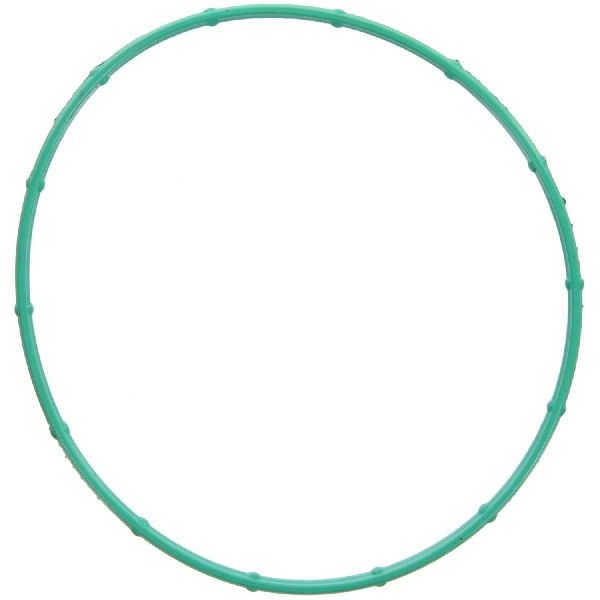
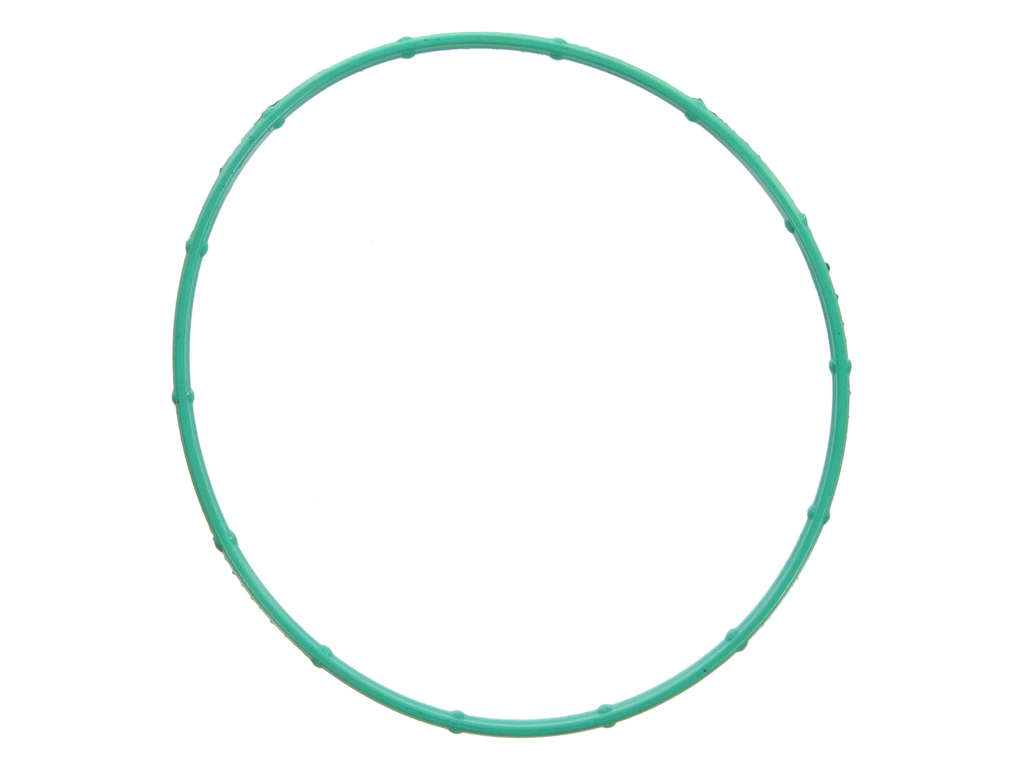
Aftermarket price range: $150-$250 - Throttle Body Gasket — Must be replaced whenever the throttle body is removed for cleaning or replacement to prevent a vacuum leak.
Trusted brands: Motorcraft, Fel-Pro, Mahle
OEM price range: $10-$20
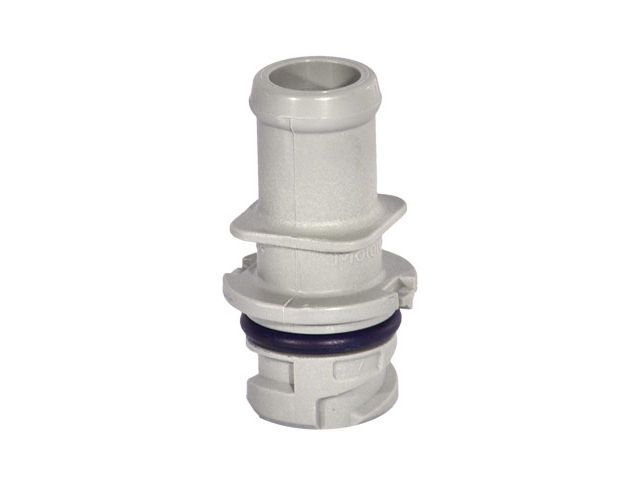
Aftermarket price range: $5-$15 - PCV Valve — A common and inexpensive part that can stick open, causing a vacuum leak that triggers a high idle.
Trusted brands: Motorcraft, Standard Motor Products (SMP)
OEM price range: $20-$40
Aftermarket price range: $15-$30
Related Codes That Often Appear With This One
- P2111 — This code ('Throttle Actuator Control System - Stuck Open') points directly to a mechanical or electronic failure of the throttle body, which is a primary cause of P0507.
- P2112 — This code ('Throttle Actuator Control System - Stuck Closed') can also appear if the throttle body is malfunctioning and is often addressed by the same TSBs as P2111.
- P1450 — This code related to the evaporative emission system has been reported in conjunction with P0507 in Ford diagnostic records (NHTSA ODI #11509589).
Technical Service Bulletins (TSBs) & Recalls
- TSB 10-21-6: Addresses DTCs P2111, P2112, or lower than desired/fluctuating idle on 2010 Edge, MKX, and other models with the 3.5L engine, recommending ETB replacement for engines built within a specific date range.
- Customer Satisfaction Program 13N03: Extended the warranty on the ETB to 10 years/150,000 miles for certain 2009-2013 models due to high failure rates from internal contamination.
- Customer Satisfaction Program 13N02: A separate program extending the warranty on the brake booster (10 years/150,000 miles) for 2010-2013 models, which can be a source of a vacuum leak causing high idle.
Platform-Specific Known Issues
- The electronic throttle body on the 3.5L V6 is a known weak point. Ford issued TSB 10-21-6 and Customer Satisfaction Program 13N03 for various models with this engine due to internal contamination causing failures, establishing a pattern for the component.
- Customer Satisfaction Program 13N03 extended the warranty on the ETB to 10 years or 150,000 miles. Owners who paid for a repair before the program was announced were eligible for reimbursement.
Mechanic-Grade Diagnostic Values
- Idle RPM vs. Desired RPM — expected: Actual RPM should be within approximately 50 RPM of the Desired RPM shown on a scan tool. A typical warm idle is between 600-800 RPM.. Failure: The P0507 code is typically set when the actual engine RPM exceeds the desired (commanded) RPM by 100-200 RPM for a sustained period.
Scan Tool Commands That Help
- Ford IDS / FORScan / Capable OBD-II Scanner: Clear/Reset Keep Alive Memory (KAM) — Use this function after replacing the throttle body or cleaning it thoroughly. This forces the PCM to erase its learned adaptive fuel and idle trims, starting the relearning process from a clean slate. A manual KAM reset can also be performed by disconnecting the battery.
- N/A - Manual Procedure: Throttle Body Relearn / Idle Trim Reset — After cleaning the throttle body or performing a KAM reset, the PCM needs to relearn the idle position. A common procedure is to disconnect the negative battery terminal for at least 15 minutes. After reconnecting, turn the key to 'ON' (without starting) for a minute, then turn off. Start the engine and let it idle uninterrupted for 10-15 minutes, allowing it to reach operating temperature. Some procedures also include letting it idle with the A/C on for a few minutes.
Wiring & Ground Locations
- Powertrain Control Module (PCM) — Located in the engine compartment, at the right front of the vehicle (passenger side).. The PCM is what commands the throttle body and detects the high idle condition. All related sensor data and actuator commands originate or terminate here.
- Electronic Throttle Control (ETC) Motor Connector — Directly on the electronic throttle body assembly, where the engine wiring harness connects.. This 6-pin connector is the sole interface for throttle motor control and position sensing. Corrosion or a poor connection here can cause erratic throttle behavior and trigger various throttle-related codes, including P0507.
- G201 / G205 — G201 is located in the left kick panel. G205 is on the left side of the dash.. These are primary interior ground points. A poor ground connection can cause floating voltages and erratic behavior in modules like the Body Control Module (BCM), which communicates with the PCM.
- Body Control Module (BCM) — Located in the left kick panel, near ground point G201.. The BCM manages various vehicle systems and communicates with the PCM over the CAN bus. While not a direct cause, electrical issues originating from the BCM can sometimes affect PCM operation.
Real Owner Repair Stories
- Ford Edge Forum User (2013 Ford Edge) — Check engine light with P0507, high idle.
❌ Tried (didn't work) Cleaning the throttle body., Replacing the throttle body.
✅ What actually fixed it The issue was ultimately a leaking brake booster. The diaphragm had failed, creating a large vacuum leak that the PCM could not compensate for. Replacing the brake booster resolved the high idle and the P0507 code. - NHTSA Report Anecdote — An owner of a Ford vehicle reported experiencing rough idling at a stopping position, stalling, and the car cutting off in traffic while shifting down, with a scan tool revealing code P0507 (NHTSA ODI #11024843).
"I Checked Everything" — The Actual Cause
- In some cases where a smoke test reveals no vacuum leaks and cleaning the throttle body does not work, the issue has been traced to a faulty power steering pressure switch. A failing switch can send incorrect data to the PCM, causing it to raise the idle unnecessarily. This is often overlooked because it's not part of the air intake system.
OEM Part Supersession History
7T4Z-9E926-EA→7T4Z-9E926-FA— Revision to address internal electronic failures.
Heads up: While this supersession applies to the 3.5L V6, always verify the part number with the vehicle's VIN. The 2.0L EcoBoost and 3.7L V6 engines used in other Edge models or years use different throttle bodies, and they are not interchangeable.
Model Year Variations Within This Range
- 2007-2010 vs 2011-2014: The 3.5L V6 engine was updated for the 2011 model year. 2007-2010 models use variable timing on the intake camshafts only (i-VCT). 2011-2014 models feature Twin Independent Variable Camshaft Timing (Ti-VCT), which adjusts both intake and exhaust camshafts. This resulted in a power increase from ~265 hp to ~285 hp. While the fundamental cause of P0507 (failing ETB) is common to both versions, the engine management software and some components differ.
Diagnostic Flowchart
Other Known Issues on This Vehicle
Issues unrelated to this code that are worth knowing about as an owner of this generation:
- Internal Water Pump Failure 🔴 High — Can occur around 100,000-150,000 miles. Failure is catastrophic as it leaks coolant directly into the engine oil, leading to rapid engine destruction if not caught immediately.
- Power Transfer Unit (PTU) Failure (AWD Models) 🔴 High — Commonly reported between 70,000 and 100,000 miles. The unit overheats due to its location near the exhaust and lack of a drain plug, cooking the fluid and leading to seal and bearing failure. Repair costs are very high.
- Brake Booster Diaphragm Tear 🟠 Medium → Shop Power Brake Booster — Common across 2007-2015 models. Causes a hissing noise when braking and a hard or spongy pedal feel, increasing stopping effort. (Ref: Customer Satisfaction Program 13N02 (Extended Warranty to 10 years/150,000 miles))
- Transmission Failure / Harsh Shifting 🟠 Medium — More prevalent in earlier 2007-2008 models, often occurring around 80,000 miles. Symptoms include sudden shutdown, clunking, and illuminated warning lights. (Ref: TSB 10-21-02 (for Transmission Range Sensor issues))
- Timing Chain Wear / Rattle 🟠 Medium — Can manifest as a rattling noise on startup or rough running. While not as frequent as other issues, it is a known problem for the 3.5L V6. Often associated with a water pump failure which contaminates the oil and damages timing components.
Used vs. New Parts: Buying Guide for This Vehicle
When a used part is the smart pick: For this specific repair, buying a used Electronic Throttle Body is NOT recommended. The part has a very high documented failure rate due to an internal design flaw, not just simple wear. A used part from a salvage yard is highly likely to have the same defect or fail soon after installation.
What to inspect on the donor part:
- Not applicable, avoid used throttle bodies for this platform.
OEM-only on this vehicle (don't cheap out):
- While not strictly 'OEM-only', using a new OEM (Motorcraft) or a reputable Tier 1 aftermarket supplier is strongly advised for the Electronic Throttle Body to ensure longevity.
Aftermarket brands forum-validated for this vehicle:
- Motorcraft (OEM)
- Bosch
- Hitachi
- Standard Motor Products (SMP)
Brands owners have reported issues with on this vehicle:
- Unnamed, no-brand 'white box' parts from online marketplaces should be avoided due to inconsistent quality and a high likelihood of premature failure.
Real Owner Stories
Aggregated from forums and TSBs cited above. Mileages and costs reflect what owners reported in those sources.
2010 Ford Edge 3.5L V6
Symptoms: Stalling and rough or fluctuating idle.
What fixed it: Replacement of the electronic throttle body (ETB).
Source hint: TSB 10-21-6
2010-2013 Ford Edge 3.5L V6 — ~100000 miles
Symptoms: Hissing noise when braking and a hard or spongy pedal feel, contributing to a vacuum leak and high idle.
What fixed it: Replacement of the brake booster under Customer Satisfaction Program 13N02.
Source hint: Customer Satisfaction Program 13N02
Ford Edge 3.5L V6
Symptoms: Symptoms of stalling and rough idle.
What fixed it: Owners often replacing the throttle body to resolve the issue.
Source hint: Ford Edge Forum
Ford Owner Report
Symptoms: An owner reported finding codes P1450, P2195, and P0507 (Idle air control system revolutions per minute higher than expected) after a shop inspection.
What fixed it: Diagnostic records indicate these codes can be related to fuel system vacuum issues (NHTSA ODI #11440617).
Related OBD-II Codes
Frequently Asked Questions
Is there a warranty extension for the throttle body on my 2011 Ford Edge?
My 2010 Edge has a high idle and a hissing sound when I press the brakes. Does a TSB cover this?
Can I just clean the throttle body on my 3.5L Cyclone V6 to fix P0507?
What is the specific Ford part number for the replacement throttle body mentioned in the service bulletins?
How do I reset the idle after I replace the throttle body on my Edge?
I'm seeing P0507 along with P2111; are these related on the 3.5L engine?
Helpful Videos
Used OEM Parts in Stock
New Aftermarket Parts Available


The information in this article is provided for general reference and educational purposes only. Vehicle specifications, procedures, and part compatibility can vary by production date, trim level, and region. Always consult your vehicle's factory service manual and verify part numbers before purchasing or performing repairs. Safety-critical components such as airbags, seat belts, and braking systems should be installed by a qualified professional.
- Ford Edge:
- 🧭 Diagnostic Flowchart
- 🎬 Helpful Videos
- 🛍️ Shop This Part
- What's Unique About the 2007-2014 Ford Edge
- Symptoms You May Notice
- Most Likely Causes
- Rare But Worth Checking
- Diagnosis Steps
- Parts You'll Likely Need
- Related Codes That Often Appear With This One
- Technical Service Bulletins (TSBs) & Recalls
- Platform-Specific Known Issues
- Mechanic-Grade Diagnostic Values
- Scan Tool Commands That Help
- Wiring & Ground Locations
- Real Owner Repair Stories
- "I Checked Everything" — The Actual Cause
- OEM Part Supersession History
- Model Year Variations Within This Range
- Other Known Issues on This Vehicle
- Used vs. New Parts: Buying Guide for This Vehicle
- Real Owner Stories
- 2010 Ford Edge 3.5L V6
- 2010-2013 Ford Edge 3.5L V6 — ~100000 miles
- Ford Edge 3.5L V6
- Ford Owner Report
- Related OBD-II Codes
- Frequently Asked Questions
- 🎟️ Get 5% Off