

P0507 on 2003-2010 Ford Explorer 4.0L V6: High Idle Causes and Fixes
On a 2003-2010 Explorer with the 4.0L V6, code P0507 is most often caused by a vacuum leak from brittle PCV hoses or failed intake manifold gaskets. If not a leak, a faulty Idle Air Control (IAC) valve is the next likely culprit. A new OEM Motorcraft IAC valve costs around $100-$180, while vacuum hoses are much cheaper.
- Assume you have a vacuum leak. Before replacing any parts, perform a smoke test or carefully inspect all vacuum and PCV hoses on the 4.0L V6.
- The most likely leak sources are the intake manifold gaskets and the PCV hose elbows.
- If no vacuum leaks are found, the Idle Air Control (IAC) valve is the next most probable cause.
- Only the 4.0L V6 engine has a separate, replaceable IAC valve. The 4.6L V8 does not.
- When replacing the IAC valve, using the OEM Motorcraft part is strongly recommended to ensure compatibility and longevity.
What's Unique About the 2003-2010 Ford Explorer
The Ford Explorer 4.0L SOHC V6 engine used across these years is notoriously prone to vacuum leaks from very specific points, which is the leading cause of P0507. Unlike other vehicles where an electronic issue might be suspected first, on this platform, the prime suspects are almost always physical air leaks from degraded plastic and rubber components like intake manifold gaskets and PCV hose elbows. It's also critical to know that the optional 4.6L V8 engine in the same Explorer does NOT use a replaceable IAC valve; its idle is managed by the electronic throttle body itself, making this guide specific to the 4.0L V6.
Generation note: This range covers the third generation (2003-2005) and fourth generation (2006-2010) Ford Explorer. Both generations used the same 4.0L SOHC V6 engine, and the common causes and fixes for P0507 are identical across this entire year span. Platform mates like the Mercury Mountaineer (2003-2010) and Ford Ranger (2001-2012) with the same engine share these exact issues.
Symptoms You May Notice
- Check Engine Light is on
- Engine idle speed is noticeably high (e.g., 1000-1500 RPM at a stop).
- Rough, surging, or 'choppy' idle RPM.
- A whistling or hissing sound from the engine bay, indicating a vacuum leak.
- Engine may stall, especially when coming to a stop or shifting into gear.
- Increased fuel consumption due to high idle.
- Vehicle may feel like it's 'pushing' against the brakes when stopped.
- Replacing the Mass Airflow (MAF) sensor. A faulty MAF sensor is not a common cause for a P0507 code on this vehicle, though cleaning it is simple maintenance.
- Replacing O2 sensors. While a vacuum leak will affect O2 sensor readings (often causing P0171/P0174), the sensors themselves are not the root cause of the high idle.
- Assuming a new IAC valve is good. Aftermarket IAC valves are known to be faulty out of the box. Owners strongly recommend using OEM Motorcraft parts to avoid this issue.
Most Likely Causes
- Vacuum Leak (PCV Hoses, Intake Gaskets, etc.) 🔴 High Probability The 4.0L SOHC engine is well-known for intake manifold gasket failures and brittle plastic PCV hoses and elbows that crack with age, creating unmetered air leaks. The PCV elbow at the rear of the intake manifold is a particularly common failure point.
How to confirm: Perform a smoke test on the intake system. 🎬 See how to use a smoke machine to find leaks. This is the most reliable method. Alternatively, carefully spray short bursts of brake cleaner or a propane torch (unlit) around the intake manifold gaskets and vacuum lines; a change in engine RPM indicates a leak. Visually inspect all vacuum hoses for cracks, especially the PCV elbows at the back of the intake.
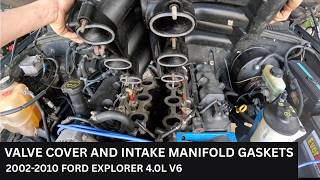
Typical fix: Replace the leaking hose or gasket. The PCV hose assembly is a common replacement. 🎬 Watch: How to fix a PCV vacuum leak for under $5. If intake gaskets are the cause, both upper and lower gaskets must be replaced. 🎬 Watch this complete walkthrough for replacing intake and valve gaskets. Fel-Pro is a popular, reliable aftermarket brand for these gaskets.
Est. part cost: $20-$100 for hoses, $50-$150 for intake gasket set. - Faulty Idle Air Control (IAC) Valve 🟡 Medium Probability → Shop Idle Air Control Valve The IAC valve can become clogged with carbon or its internal motor can fail, causing it to stick open and allow too much air in at idle.
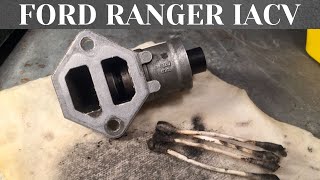
How to confirm: With the engine idling high, disconnect the electrical connector to the IAC valve. If the idle speed drops significantly or the engine stalls, the IAC valve was stuck open and is likely faulty. You can also tap on the IAC valve; a change in idle may indicate it's sticking. Cleaning is often a temporary fix at best.
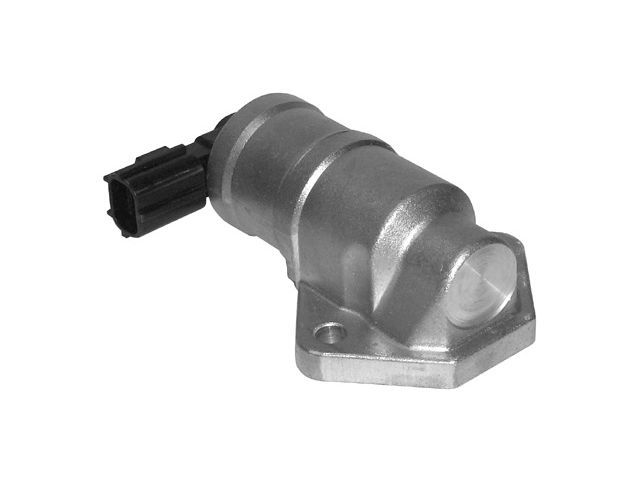
Typical fix: Replacement is the recommended permanent solution. Using the OEM Motorcraft brand is highly recommended by owners for reliability and proper function. The Motorcraft part number is often CX1763, which cross-references to Ford part number 1L2Z9F715AA.
Est. part cost: $50-$180 - Dirty or Sticking Throttle Body ⚪ Low Probability → Shop Fuel Injection Throttle Body
How to confirm: Remove the air intake tube and visually inspect the throttle plate and bore for heavy carbon buildup. Ensure the throttle plate closes completely and moves freely.
Typical fix: Clean the throttle body bore and plate with a dedicated throttle body cleaner and a soft brush or rag. Do not spray cleaner directly into the electronics. This is often done as preventative maintenance when addressing other causes.
Est. part cost: $5-$15 for cleaner.
Rare But Worth Checking
- Leaking EVAP Purge Valve: → Shop Vapor Canister A purge valve stuck open can create a vacuum leak. This would typically set an EVAP-related code as well, but it's a possible contributor to a high idle. In some Ford vehicles, a faulty purge valve can even lead to fuel tank damage from excessive vacuum, as noted in NHTSA ODI #11509589.
- Failing Alternator or Power Steering Pressure Switch: A failing alternator can cause electrical issues, and a faulty power steering pressure switch can send incorrect signals to the PCM, both of which can affect idle speed calculations in rare cases.
- Unseated Oil Dipstick or Loose Oil Filler Cap: On some vehicles, a loose oil cap or unseated dipstick can introduce enough unmetered air into the crankcase to affect idle speed and potentially trigger a P0507, especially if other small leaks are also present.
Diagnosis Steps
- Read the freeze frame data to understand the conditions (engine temp, RPM) when the code was set.
- Visually inspect all accessible vacuum lines for obvious cracks, disconnections, or deterioration. Pay close attention to the PCV hoses and elbows near the firewall and under the intake cover.
- With the engine running, listen for a distinct hissing or whistling sound. Use a mechanic's stethoscope or a simple hose to your ear to pinpoint the source.
- Perform a smoke test on the intake system to definitively identify any vacuum leaks. This is the most effective step for this particular engine.
- If no vacuum leaks are found, locate the Idle Air Control (IAC) valve on the throttle body.
- With the engine idling high, disconnect the IAC electrical connector. If the idle speed drops significantly or the engine stalls, the IAC valve is stuck open and faulty.
- If the above steps do not identify the issue, inspect and clean the throttle body bore and plate.
- As a final, less common check, inspect the charging system and power steering pressure switch signals.
Parts You'll Likely Need
- Idle Air Control (IAC) Valve
(OEM #1L2Z-9F715-AA (Motorcraft CX1763))— This valve is a primary cause of failure, either by sticking from carbon buildup or electronic failure.
Trusted brands: Motorcraft, Bosch, Hitachi
OEM price range: $100-$180
Aftermarket price range: $40-$90 - Intake Manifold Gasket Set (Upper/Lower) — These gaskets are a notorious failure point on the 4.0L SOHC engine, causing significant vacuum leaks that trigger P0507 and lean codes.
Trusted brands: Fel-Pro, Mahle, Victor Reinz
OEM price range: $80-$150
Aftermarket price range: $40-$80 - PCV Valve Hose Assembly — The plastic elbows and rubber hoses in the PCV system become brittle and crack, creating vacuum leaks. This is a very common and inexpensive fix.
Trusted brands: Motorcraft, Dorman
OEM price range: $40-$70
Aftermarket price range: $20-$40
Related Codes That Often Appear With This One
- P0171 — System Too Lean (Bank 1) - A vacuum leak introduces unmetered air, causing a lean condition and high idle simultaneously.
- P0174 — System Too Lean (Bank 2) - A vacuum leak introduces unmetered air, causing a lean condition and high idle simultaneously. Seeing both P0171 and P0174 strongly points to a large vacuum leak affecting both cylinder banks.
- P0506 — Idle Air Control System RPM Lower Than Expected - This code can appear intermittently if the IAC valve is sticking, sometimes causing a low idle and other times a high idle.
- P1450 — Unable to Bleed Up Fuel Tank Vacuum - This code may appear alongside P0507 if there is a fault in the EVAP system, as described in NHTSA ODI #11440617.
Technical Service Bulletins (TSBs) & Recalls
- TSB 03-16-1 (related): While not for P0507 directly, this TSB for lean codes P0171/P0174 on 2002-2005 models identifies leaking intake manifold gaskets as a primary cause, which is also a primary cause for P0507.
- TSB 05-14-4 (related): Addresses DTC P2135 (Throttle Position Sensor Correlation) on 2004-2005 models, which can sometimes accompany idle issues. T
Platform-Specific Known Issues
- The 4.0L SOHC V6 is widely documented to have issues with the plastic intake manifold and its gaskets warping or cracking over time, leading to vacuum leaks.
- A Ford Technical Service Bulletin (TSB 03-16-1) for the related P0174 code on 2002-2005 models directly points to leaking intake manifold port gaskets as a root cause, corroborating this as a major issue for high idle problems.
- Another related TSB, 05-14-4, addresses issues with the throttle position sensor on some 2004-2005 models which can cause other driveability issues but is less commonly a direct cause for P0507 alone.
Mechanic-Grade Diagnostic Values
- Lower Intake Manifold Bolt Torque — expected: Two-step process: First to 120 inch-pounds (10 ft-lbs), then a final torque to 156-172 inch-pounds (approx. 13-14 ft-lbs).. Failure: Improper torque can lead to warped intake components or failed gasket seals, causing vacuum leaks.
- Upper Intake Plenum Bolt Torque — expected: Snug. These bolts thread into plastic and are easily stripped. A common recommendation is 89 inch-pounds.. Failure: Over-tightening will crack the plenum or strip the threads, creating a vacuum leak. Under-tightening will not seal the gasket properly.
- IAC Valve Control Wire Voltage (at PCM) — expected: The PCM provides a pulsing ground to this circuit. Voltage will fluctuate based on commanded duty cycle.. Failure: No voltage or a constant ground/open suggests a wiring issue or a failed PCM driver.
- Long Term Fuel Trim (LTFT) at Idle — expected: Within +/- 5%.. Failure: Consistently positive values greater than +10%, often accompanied by P0171/P0174, strongly indicate a vacuum leak is the root cause of the high idle.
Scan Tool Commands That Help
- Ford IDS / FORScan: KOER (Key On, Engine Running) Self-Test — This test will run a full suite of actuator checks, including commanding the IAC valve through its range, which can help identify a sticking or non-responsive valve that isn't setting a specific circuit code.
- Ford IDS / FORScan: Reset KAM (Keep Alive Memory) — After replacing the IAC valve or fixing a major vacuum leak, resetting the KAM will clear the old learned idle and fuel trim strategies. This forces the PCM to start fresh and learn the new baseline, which is critical for a stable idle.
- Professional Scan Tool: Idle Air Control (IAC) Duty Cycle PID — Monitor this PID live. For a P0507, you would expect the PCM to be commanding a very low duty cycle (e.g., 0-10%) in an attempt to close the valve and lower the idle. If the duty cycle is low but the RPM is still high, it confirms unmetered air is entering the engine from a leak.
Wiring & Ground Locations
- IAC Valve PCM Pin — On older models (pre-~2004 with 60-pin PCM), the IAC control wire is often a White/Light Blue wire at Pin 21. On later models with the larger 104-pin PCM, it is at Pin 83.. This is the specific wire that the PCM uses to send the control signal to the IAC valve. A break or short in this wire between the PCM and the IAC will prevent idle control.
- G102 — Located at the center rear of the engine compartment for the 4.0L engine.. This is a primary engine ground point. A corroded or loose G102 can cause erratic behavior from various engine sensors and actuators, including the IAC valve, leading to incorrect idle speed.
- G104 — Located at the right front corner of the engine compartment.. Another key ground for the engine control system. Poor connection here can lead to floating grounds and unpredictable electronic behavior, potentially affecting idle control.
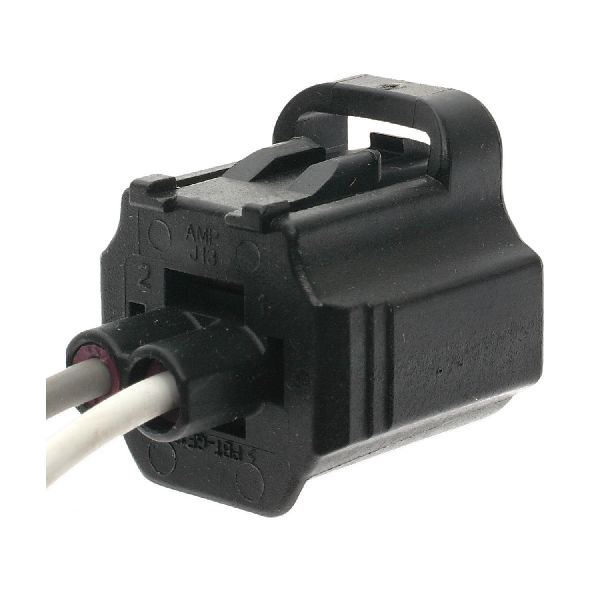
- IAC Valve Connector — A 2-pin connector on the IAC valve itself, located on the throttle body.. One pin receives 12V power with the key on, and the other is the ground-side control from the PCM. Verifying power on the power-side pin is a key first step in diagnosing an unresponsive IAC valve.
Real Owner Repair Stories
- Ford Truck Enthusiasts Forum user (2003 Explorer Sport Trac) — P0507 code, high idle that never drops below 1000 RPM.
❌ Tried (didn't work) Cleaning the Mass Airflow (MAF) sensor., Cleaning the throttle body.
✅ What actually fixed it The user noted a garage had previously adjusted the idle screw. The implication is that the idle screw was adjusted to compensate for a different issue, and once the other issues were resolved, the idle was too high and needed to be set back to its base position. The root cause was likely a vacuum leak or dirty IAC that was later fixed, but the manual adjustment masked the true idle. - Forum user experience (composite) (Ford Explorer 4.0L SOHC) — P0507, P0171, P0174, very high idle, hissing noise.
❌ Tried (didn't work) Replacing the IAC valve with an aftermarket part., Cleaning the throttle body.
✅ What actually fixed it The final fix was replacing the leaking brake booster vacuum hose. The large, unmetered air leak from the booster hose was too significant for the IAC to overcome. This is often missed in a visual inspection if the leak is at the check valve or the grommet where it enters the booster. - NHTSA Report Anecdote — An owner reported experiencing rough idling at a stopping position, stalling, and cutting off in traffic while shifting down, which was diagnosed as a P0507 code related to the idle air control valve and throttle body (NHTSA ODI #11024843).
"I Checked Everything" — The Actual Cause
- In some cases, a smoke test may not reveal a leak if the leak only occurs when the engine is hot and components have expanded. A common example is a hairline crack in the plastic intake manifold itself, which can be missed by a smoke test when cold but opens up with thermal expansion, causing a high idle only after the engine reaches operating temperature.
- A failing power steering pressure switch can falsely signal the PCM that the system is under load (e.g., turning the wheel at a standstill), causing the PCM to command a higher idle RPM to prevent stalling. If the switch is stuck 'on', it will keep the idle high, but this will not show up on a smoke test.
- A failing alternator diode can introduce electrical noise (AC ripple) into the vehicle's DC system. This can confuse the PCM and other modules, leading to erratic behavior, including an inability to properly control the IAC valve. This is an electrical issue, not a vacuum leak.
OEM Part Supersession History
1L2Z-9F715-AA→This part number remains the primary OEM reference, often sold under the Motorcraft part number CX1763.— N/A - Part number has remained stable.
Heads up: Many aftermarket versions of this IAC valve are reported by owners to be defective out of the box or fail quickly. They may cause erratic idle speeds (too high or too low) despite being new. Sticking with the OEM Motorcraft part is highly recommended to avoid repeat repairs.
Model Year Variations Within This Range
- 2006-2010: Some later 4.0L V6 models in this range began to be equipped with an electronic throttle body (ETB) or 'drive-by-wire' system. On these vehicles, there is no separate IAC valve. Idle speed is controlled by the PCM making small adjustments to the throttle plate itself. For these models, a P0507 would point towards a faulty throttle body, a vacuum leak, or a problem with the accelerator pedal position (APP) sensor, not a bad IAC.
- 2003-2005 vs 2006-2010: The 2003-2005 models are 3rd generation, while 2006-2010 are 4th generation. While the 4.0L SOHC engine is fundamentally the same, the PCM and wiring architecture are different. The 4th gen uses a more complex CAN-bus network and a Smart Junction Box (SJB). This can affect diagnostics, particularly when tracing wiring faults for the IAC circuit. Ground locations and PCM pinouts may differ.
Diagnostic Flowchart
Other Known Issues on This Vehicle
Issues unrelated to this code that are worth knowing about as an owner of this generation:
- Timing Chain Cassette Failure 🔴 High — Very common, especially on engines over 100,000 miles. Often presents as a rattling or ticking noise from the front or rear of the engine. Failure can be catastrophic to the engine.
- 5R55S/W Automatic Transmission Failure 🔴 High — Common after 80,000-120,000 miles. Symptoms include harsh shifting, delayed engagement into reverse, flashing O/D light, and gear ratio error codes. Often caused by worn servo bores in the transmission case or solenoid pack failure.
- Cracked Rear Liftgate Panel 🟡 Low — Extremely common on 2002-2010 models. The plastic applique below the rear window cracks, usually starting near the Ford emblem. It is a cosmetic issue but can allow water intrusion. (Ref: Multiple TSBs issued (e.g., 02-25-6, 03-12-6) but no recall.)
- Leaking Thermostat Housing 🟠 Medium — Common failure. The plastic housing develops cracks, leading to coolant leaks, engine overheating, and potential for engine damage if not addressed.
- Wheel Bearing / Hub Assembly Failure 🟠 Medium — Frequently reported. Presents as a humming or grinding noise that changes with vehicle speed. Requires replacement of the entire hub assembly.
Used vs. New Parts: Buying Guide for This Vehicle
When a used part is the smart pick: For this repair, used parts are generally not recommended for the most common failure items. Gaskets, seals, and vacuum hoses should always be purchased new. A used OEM Motorcraft IAC valve or throttle body from a low-mileage, verified-running donor vehicle could be a cost-effective option if the new OEM part is unavailable or too expensive, but it carries risk.
Donor-vehicle mileage cap: roughly under 80000 miles for the part to have meaningful remaining life.
What to inspect on the donor part:
- For an IAC valve, ensure the connector pins are clean and not corroded.
- Check for any physical damage or cracks on the part body.
- If buying a used PCV hose assembly, ensure the plastic is not discolored or brittle and the rubber is still pliable.
OEM-only on this vehicle (don't cheap out):
- Idle Air Control (IAC) Valve: The consensus among owners and technicians is that aftermarket IAC valves for this platform have an extremely high failure rate. Using an OEM Motorcraft part is critical to ensure a lasting repair.
- PCV Valve: While less critical than the IAC, OEM Motorcraft PCV valves are known to have the correct spring rates and flow characteristics. Some aftermarket PCV valves have been reported to cause oil consumption issues on Ford engines.
Aftermarket brands forum-validated for this vehicle:
- Fel-Pro: Widely trusted for intake manifold and valve cover gasket sets.
- Bosch: Generally a reliable alternative for sensors and electronic components if Motorcraft is not available.
Brands owners have reported issues with on this vehicle:
- Dorman (for PCV Hoses): While Dorman makes a wide variety of parts, some owners have reported that their replacement PCV hoses for this engine have a different shape or routing than the original, though they can often be made to work. Quality can be inconsistent compared to the OEM part.
- Unbranded/White-box (for IAC Valve): Avoid generic, no-name IAC valves from online marketplaces, as these are the most likely to be faulty out of the box.
Real Owner Stories
Aggregated from forums and TSBs cited above. Mileages and costs reflect what owners reported in those sources.
2008 Ford Ranger 4.0L V6
Symptoms: High idle speed problem. The owner attempted to clean the throttle body and MAF, and even replaced a leaking EGR valve, but the high idle persisted.
What fixed it: The owner eventually replaced the IAC valve, though they noted the frustrating nature of the diagnosis as initial cleaning and other part replacements did not immediately solve it.
Source hint: Ranger-Forums thread titled 'P0507 High idle speed problem - Ranger-Forums'
2003 Ford Explorer Sport Trac 4.0L V6
Symptoms: Experienced a P0507 code and was advised by forum members to avoid immediately replacing the MAF sensor.
What fixed it: Cleaning the throttle body and checking for vacuum leaks were the primary successful troubleshooting steps recommended.
Source hint: Ford Truck Enthusiasts Forums thread titled 'code p0507'
2002-2010 Ford Explorer 4.0L SOHC
Symptoms: Rough idle and high idle issues caused by unmetered air entering the system.
What fixed it: Locating vacuum leaks using a smoke machine or visual inspection of the PCV elbows and intake manifold gaskets.
Source hint: YouTube video 'Ford Explorer 4.0L SOHC Rough Idle Part 2 Vacuum Leak Hunting'
Related OBD-II Codes
Frequently Asked Questions
Does TSB 03-16-1 apply to my 2003 Ford Explorer with a high idle?
Is there a specific brand of IAC valve I should use for the 4.0L SOHC engine?
Could my P0507 code be related to the Throttle Position Sensor issue mentioned in TSB 05-14-4?
Where is the most common place for a vacuum leak to occur on the Explorer 4.0L?
If I have to replace my intake gaskets, should I do both sets?
Will cleaning the Idle Air Control (IAC) valve fix my high idle permanently?
Helpful Videos
We Have This Part in Stock


The information in this article is provided for general reference and educational purposes only. Vehicle specifications, procedures, and part compatibility can vary by production date, trim level, and region. Always consult your vehicle's factory service manual and verify part numbers before purchasing or performing repairs. Safety-critical components such as airbags, seat belts, and braking systems should be installed by a qualified professional.
- Ford Explorer:
- 🧭 Diagnostic Flowchart
- 🎬 Helpful Videos
- 🛍️ Shop This Part
- What's Unique About the 2003-2010 Ford Explorer
- Symptoms You May Notice
- Most Likely Causes
- Rare But Worth Checking
- Diagnosis Steps
- Parts You'll Likely Need
- Related Codes That Often Appear With This One
- Technical Service Bulletins (TSBs) & Recalls
- Platform-Specific Known Issues
- Mechanic-Grade Diagnostic Values
- Scan Tool Commands That Help
- Wiring & Ground Locations
- Real Owner Repair Stories
- "I Checked Everything" — The Actual Cause
- OEM Part Supersession History
- Model Year Variations Within This Range
- Other Known Issues on This Vehicle
- Used vs. New Parts: Buying Guide for This Vehicle
- Real Owner Stories
- 2008 Ford Ranger 4.0L V6
- 2003 Ford Explorer Sport Trac 4.0L V6
- 2002-2010 Ford Explorer 4.0L SOHC
- Related OBD-II Codes
- Frequently Asked Questions
- 🎟️ Get 5% Off