

P0507 on 2005-2013 Honda Pilot: Idle Speed Too High Causes and Fixes
For a 2005-2013 Honda Pilot, P0507 means the idle is too high. This is most often caused by a dirty throttle body (on 2009-2013 models) or a faulty Idle Air Control (IAC) valve (on 2005-2008 models). A thorough cleaning of the throttle body or cleaning/replacing the IAC valve, followed by a specific idle relearn procedure, usually fixes it.
- The most likely cause for P0507 on a 2005-2013 Pilot is a dirty throttle system component. For 2005-2008, suspect the Idle Air Control (IAC) valve; for 2009-2013, suspect the throttle body itself.
- A vacuum leak from a cracked hose is another common cause across all years.
- Cleaning the throttle body (2009-2013) or cleaning/replacing the IAC valve (2005-2008) are the most common, effective fixes.
- You MUST perform an idle relearn procedure after any cleaning, replacement, or even after disconnecting the battery. Failure to do so will likely cause the code to return.
What's Unique About the 2005-2013 Honda Pilot
The 2005-2013 Honda Pilot spans two generations with different idle control systems. First-generation models (2005-2008) use a separate Idle Air Control (IAC) valve to manage idle speed, which is mounted to the throttle body and has coolant lines running to it. Second-generation models (2009-2013) have an Electronic Throttle Body (ETB) where idle is controlled by the main throttle plate itself, eliminating the separate IAC valve. For both systems, a mandatory 'idle relearn procedure' is required after cleaning or replacing parts to prevent the code from returning. In many cases, a special scan tool function is needed to clear the throttle position learned value before the idle relearn will be successful.
Generation note: This guide covers two generations of the Honda Pilot: - First Generation (2005-2008): Uses a separate Idle Air Control (IAC) valve, typically mounted to the underside of the throttle body. This valve uses engine coolant to prevent icing and can be difficult to access. - Second Generation (2009-2013): Uses an Electronic Throttle Body (ETB) where the main throttle plate controls idle. It does not have a separate IAC valve.
Symptoms You May Notice
- Check Engine Light is on
- Engine idling noticeably higher than normal (e.g., over 1000 RPM when warm)
- Rough or fluctuating idle
- Increased fuel consumption
- Vehicle feels like it's 'creeping' or 'pushing' at stops
- Replacing the throttle body on a 1st Gen (2005-2008) Pilot when only the IAC valve was faulty.
- Replacing sensors like the MAP or O2 sensors before checking for vacuum leaks or a dirty throttle body.
- Replacing parts and failing to perform the idle relearn procedure, leading to the belief that the new part is also faulty.
- Assuming the idle relearn procedure failed when the root cause was the need to first clear the learned TP value with a scan tool.
Most Likely Causes
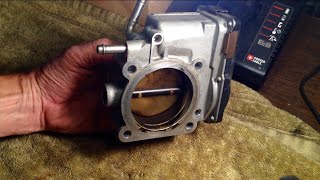
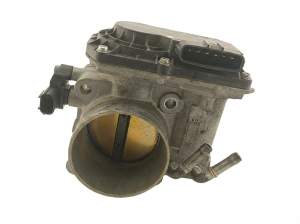
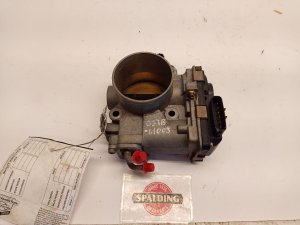
- Dirty Throttle Body 🔴 High Probability → Shop Fuel Injection Throttle Body This is the most common cause on 2nd Gen (2009-2013) models with Electronic Throttle Bodies. Carbon buildup around the throttle plate prevents it from closing fully, allowing excess air to enter and raising the idle.
How to confirm: Visually inspect the throttle body bore and plate for a ring of black carbon buildup after removing the air intake hose. The engine may idle normally after cleaning but throw the P0507 code until the idle relearn is completed.
Typical fix: Clean the throttle body bore and both sides of the throttle plate with a dedicated throttle body cleaner and a soft brush or rag. An idle relearn procedure must be performed afterward.
Est. part cost: $5-$15 for cleaner - Dirty or Failed Idle Air Control (IAC) Valve 🔴 High Probability → Shop Idle Air Control Valve This is a primary cause on 1st Gen (2005-2008) models. The valve gets clogged with carbon and can no longer move freely to regulate idle air. It can also fail electrically.
How to confirm: Remove the IAC valve from the throttle body (usually on the underside) and inspect its passages and pintle for heavy carbon buildup. You can test the windings with a multimeter; resistance between the center pin and each outer pin should be around 12-16 ohms. With the engine warm, disconnecting the electrical connector should cause a noticeable change in idle.
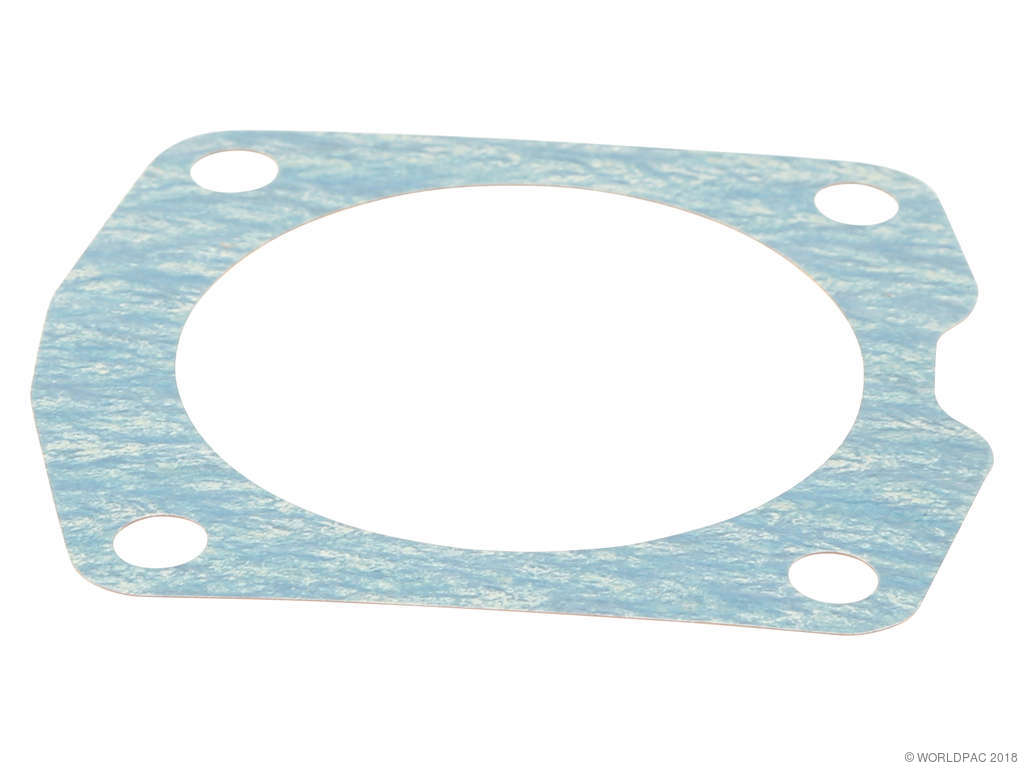
Typical fix: The IAC valve can sometimes be cleaned effectively with throttle body cleaner. If cleaning doesn't work or the valve has failed electrically, it must be replaced. Always use a new gasket and perform an idle relearn. Many owners report that only an OEM or high-quality aftermarket valve (Denso, Hitachi) will work reliably.
Est. part cost: $40-$150 for an aftermarket valve, $200+ for OEM - Vacuum Leak 🟡 Medium Probability Rubber and plastic hoses become brittle with age and heat, leading to cracks. Common leak points include the PCV valve hose, brake booster hose, and intake manifold gaskets. A PCV valve stuck open is a very common source of a vacuum leak on these engines.
How to confirm: Listen for a hissing sound around the engine bay at idle. You can also carefully spray brake cleaner or a propane torch (unlit) around vacuum lines and gasket seams; a change in idle RPM indicates a leak. A professional smoke test is the most reliable method.
Typical fix: Replace the cracked hose or faulty gasket. The PCV valve is an inexpensive and common replacement.
Est. part cost: $10-$50 for hoses, more for gaskets - Failed Idle Relearn Procedure 🟡 Medium Probability This is a procedural error, not a part failure. If the battery was disconnected or the throttle body was cleaned/replaced, the PCM must relearn the idle characteristics. Skipping this step will almost always cause a P0507 code, often accompanied by P2279.
How to confirm: If the code appeared immediately after a repair or battery disconnect, this is the likely cause.
Typical fix: Perform the Honda-specific idle relearn procedure. This typically involves warming the engine to operating temperature (until the radiator fan turns on), then letting it idle with no accessories on for at least 5-10 minutes. 🎬 Watch: How to perform the Honda idle learn procedure For best results, first use a capable scan tool to 'Clear Throttle Position Learned Value' as specified in Honda's service news.
Est. part cost: $0
Rare But Worth Checking
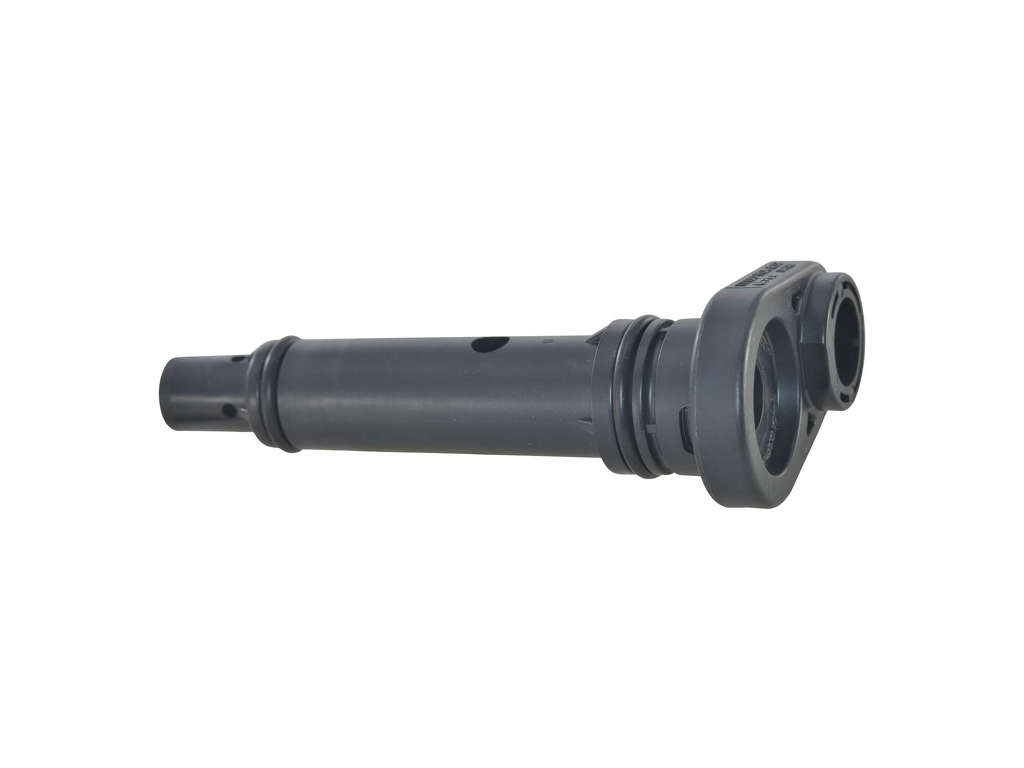
- Faulty PCV Valve: → Shop PCV Valve A Positive Crankcase Ventilation (PCV) valve that is stuck open can act as a significant vacuum leak, causing a high idle. It's an inexpensive and easy part to check and replace during diagnosis.
- Power Steering Pressure Switch: On some Honda models, a faulty power steering pressure switch can send an incorrect signal to the PCM, causing it to raise the idle unnecessarily. This is less common but has been noted in repair databases.
Diagnosis Steps
- Check for other codes. If P2279 is present, it strongly points towards an un-learned throttle body or a large vacuum leak.
- Determine your Pilot's generation. Is it a 2005-2008 (Gen 1 with IAC valve) or 2009-2013 (Gen 2 with ETB)?
- Visually inspect for vacuum leaks. Check all hoses connected to the intake manifold, especially the PCV hose and brake booster hose, for cracks or disconnections. Listen for hissing sounds.
- For 2009-2013 models: Remove the air intake tube and inspect the throttle body. If it's dirty with carbon, clean it thoroughly.
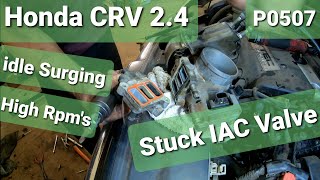
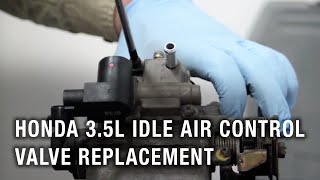
- For 2005-2008 models: Inspect and clean the throttle body first. If the issue persists, locate and clean the Idle Air Control (IAC) valve. Be prepared for coolant to leak from the lines. If cleaning is ineffective, the valve may need replacement. 🎬 Watch: How to replace the Idle Air Control valve
- Check the PCV valve to ensure it is not stuck open. It's often worth replacing as a cheap maintenance item. 🎬 See this detailed walkthrough for replacing the PCV valve
- CRITICAL STEP: After any cleaning or replacement, perform the idle relearn procedure. For best results, use a scan tool (even some aftermarket ones are capable) to go into the ETCS TEST or Functional Tests menu and select 'TP POSITION CHECK' to clear the learned value. Then, clear all codes. Start the engine and hold the RPM at 3,000 (in Park/Neutral) until the engine is fully warm and the radiator fan cycles on at least once. Then, let the engine idle with no loads (A/C, lights, radio off) for at least 5-10 minutes.
- If the code returns, a more thorough search for a hidden vacuum leak using a smoke machine is the next professional step.
Parts You'll Likely Need
- Idle Air Control Valve (IAC)
(OEM #16022-P8A-A03)— This is the most common part to fail or clog on 2005-2008 models, causing the P0507 code. This part number supersedes 16022-P8A-A01 and 16022-P8A-A02.
Trusted brands: Honda (OEM), Denso, Hitachi, Standard Motor Products
OEM price range: $200-$300
Aftermarket price range: $40-$150 - Throttle Body Cleaner — Essential for cleaning carbon buildup from the throttle body on all years, which is a primary cause of the high idle.
Trusted brands: CRC, WD-40 Specialist, Berryman
Aftermarket price range: $5-$15 - PCV Valve
(OEM #17130-RCA-A02)— A stuck open PCV valve can create a vacuum leak, leading to a high idle. It's an inexpensive maintenance item worth replacing during diagnosis. This part number replaces 17130-RCA-A01.
Trusted brands: Honda (OEM), Standard Motor Products
OEM price range: $20-$40
Aftermarket price range: $5-$15
Related Codes That Often Appear With This One
- P2279 — Intake Air System Leak. This code often appears with P0507, especially after cleaning a throttle body, because the PCM interprets the new, cleaner throttle plate position as a major vacuum leak until the idle is relearned.
Technical Service Bulletins (TSBs) & Recalls
- Service News June 2013 - Explicitly states that P0507 or P2279 can occur after throttle body service. It requires clearing the learned TP value with a Honda HDS scan tool (or equivalent aftermarket tool) via the ETCS TEST menu before performing the idle relearn procedure.
Platform-Specific Known Issues
- Owner Experience: Cleaning vs. Replacing IAC Valve (Gen 1): A common story on forums like Piloteers.org involves owners of 2005-2008 models attempting to fix P0507 by cleaning the IAC valve. While this works for some, many report that the fix is temporary or ineffective. The internal motor of the valve can fail in a way that cleaning cannot resolve. Many experienced owners recommend replacing the valve with an OEM or OEM-supplier (like Denso or Hitachi) part rather than attempting to clean the original, especially on higher-mileage vehicles, to avoid having to do the job twice.
Mechanic-Grade Diagnostic Values
- Idle Air Control (IAC) Valve Resistance (2005-2008 models) — expected: Approximately 12.0 to 16.0 Ohms between the center pin (power) and each of the two outer pins (opening/closing coils).. Failure: A reading significantly outside this range, or an open circuit (infinite resistance), indicates a failed coil inside the valve.
- Power Steering Pressure (PSP) Switch Voltage — expected: The switch should show continuity to ground when the steering wheel is turned (high pressure) and be open circuit when the wheel is straight (low pressure).. Failure: If the switch is stuck closed (always showing continuity), it will incorrectly signal the PCM to raise the idle.
Scan Tool Commands That Help
- Honda HDS (or compatible advanced scanner like Autel, XTOOL): ECM/PCM Reset — Use this function after replacing a component like the IAC valve or throttle body to clear all learned values, including fuel trims and idle memory. This is more comprehensive than just clearing DTCs.
- Honda HDS (or compatible advanced scanner): ETCS (TAC) TEST -> TP POSITION CHECK — This is a critical step specifically for 2009-2013 models after cleaning or replacing the electronic throttle body. It clears the learned throttle plate position. Failing to do this before the idle relearn procedure is a primary reason for the P0507 code returning.
Wiring & Ground Locations
- G101 — On the intake manifold plenum. This is a primary ground for many engine sensors.. A loose or corroded G101 ground can cause erratic sensor readings for the entire engine management system, potentially affecting the throttle position sensor, MAP sensor, and others involved in idle control, leading to incorrect idle calculations.
- PCM/ECM Location — Behind the passenger side of the dashboard, accessible after removing the glove box and kick panel.. When diagnosing persistent electrical issues or if a PCM replacement is suspected, knowing its location is key. A bad connection at the PCM connectors themselves can mimic a failed sensor or actuator.
Real Owner Repair Stories
- Piloteers.org forum member (2006 Honda Pilot EX-L 4WD, ~150,000 miles) — P0507 code with high idle, especially after warming up. Idle would sometimes surge.
❌ Tried (didn't work) Cleaned the throttle body multiple times., Performed the manual idle relearn procedure (without a scan tool) several times., Checked for vacuum leaks with carb cleaner and found none.
✅ What actually fixed it The problem was finally resolved by replacing the Idle Air Control (IAC) valve with a new OEM part. The owner noted that after installing the new IAC valve and performing the idle relearn procedure one more time, the idle immediately returned to normal and the code did not come back.
OEM Part Supersession History
16022-P8A-A01, 16022-P8A-A02→16022-P8A-A03— Standard part revision and improvement by the manufacturer.
Heads up: The latest part number, 16022-P8A-A03, is the correct replacement for all 2005-2008 Honda Pilots and is backward compatible with the earlier part numbers.
Model Year Variations Within This Range
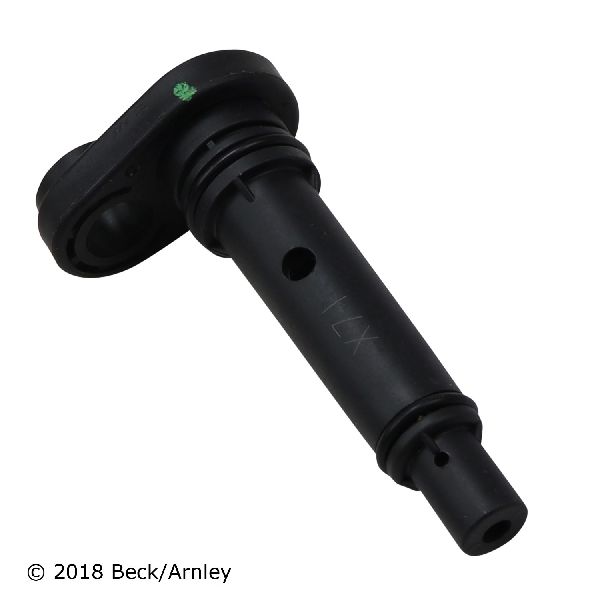
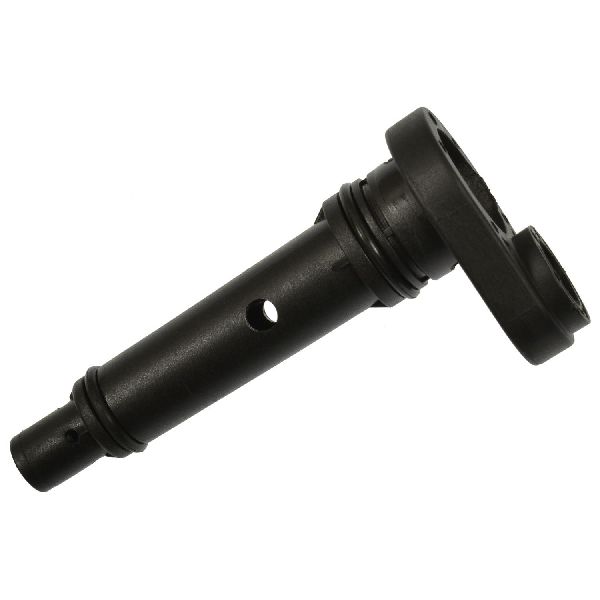
- 2006-2008: The 2006 model year marked a mid-cycle refresh for the first generation. While the idle control system (IAC valve) remained the same as the 2005 model, these later years received freshened styling and curtain side airbags. Importantly for engine management, 2WD models from 2006-2008 gained Variable Cylinder Management (VCM), while AWD models did not. This can introduce different potential vacuum leak sources related to the VCM system (e.g., spool valve gaskets) on 2WD models that are not present on AWD models.
Diagnostic Flowchart
Other Known Issues on This Vehicle
Issues unrelated to this code that are worth knowing about as an owner of this generation:
- Variable Cylinder Management (VCM) Issues 🔴 High — Extremely common on all 2006+ models equipped with VCM. Can lead to fouled spark plugs, excessive oil consumption, and eventual piston ring damage. (Ref: Honda issued a warranty extension (TSB 13-081) for some models, but it has since expired. The issue is well-documented in a class-action lawsuit.)
- Cracked Front Compliance Bushings 🟠 Medium — Very common, especially on 2nd Gen (2009-2015) models. The fluid-filled lower control arm bushings crack and leak, causing sloppy steering feel, clunking noises, and uneven tire wear. Typically noticed around 70,000-100,000 miles. (Ref: No recall, but it is a widely recognized failure point.)
- Automatic Transmission Judder/Shudder 🟠 Medium — Common on 2nd Gen models, particularly those with the 6-speed automatic. A judder can be felt during light acceleration as the torque converter lock-up clutch engages. Often caused by deteriorated transmission fluid. (Ref: Honda released multiple TSBs (e.g., 16-091, 17-014) recommending transmission fluid flushes and/or software updates to address the issue.)
- Failing Transmission Pressure Switches 🟡 Low — Common across many Honda V6 models of this era. Failure of the 3rd and 4th gear pressure switches can cause harsh shifting or a flashing 'D' light. Typically occurs after 100,000 miles. (Ref: No TSB, but a well-known fix in owner communities. Using genuine Honda switches is highly recommended for the repair.)
Used vs. New Parts: Buying Guide for This Vehicle
When a used part is the smart pick: For this repair, a used Electronic Throttle Body (ETB) from a low-mileage 2009-2013 donor vehicle can be a cost-effective option, as they are generally reliable. A used PCV hose or other simple vacuum lines are also acceptable if they are pliable and show no signs of cracking.
Donor-vehicle mileage cap: roughly under 80000 miles for the part to have meaningful remaining life.
What to inspect on the donor part:
- For an ETB, check that the throttle plate moves smoothly by hand (with power off) and isn't scored or damaged.
- For any used part, verify the donor vehicle's mileage and check for signs of heavy corrosion or oil leaks in the engine bay, which might suggest a hard life.
- Ensure electrical connectors are intact with no broken tabs or corroded pins.
OEM-only on this vehicle (don't cheap out):
- Idle Air Control (IAC) Valve (2005-2008): Forum consensus strongly suggests that aftermarket IAC valves are highly unreliable for this platform. Many owners report chasing the P0507 code after installing a cheap aftermarket valve, only to fix it with an OEM Honda or a known OEM supplier part like Denso or Hitachi.
Aftermarket brands forum-validated for this vehicle:
- Denso (for IAC Valve)
- Hitachi (for IAC Valve)
Brands owners have reported issues with on this vehicle:
- Unbranded or generic 'white box' IAC valves from online marketplaces are frequently reported to be faulty out of the box or fail shortly after installation.
Real Owner Stories
Aggregated from forums and TSBs cited above. Mileages and costs reflect what owners reported in those sources.
2005-2008 Honda Pilot — ~150000 miles
Symptoms: Owners reported the IAC valve getting clogged with carbon, preventing it from moving freely to regulate idle air. Some reported the valve failed electrically as well.
What fixed it: Replacing the IAC valve with an OEM or high-quality aftermarket valve (Denso, Hitachi) and using a new gasket.
Source hint: vehicle_specific_issues: Owner Experience: Cleaning vs. Replacing IAC Valve (Gen 1)
2009-2013 Honda Pilot
Symptoms: P0507 or P2279 occurred immediately after a throttle body service or cleaning.
What fixed it: Clearing the learned TP value with a Honda HDS scan tool (or equivalent) via the ETCS TEST menu and then performing the idle relearn procedure.
Source hint: Service News June 2013
2008-2014 Honda Pilot
Symptoms: High idle and P0507 code.
What fixed it: Using a scan tool to perform the TP value reset and subsequent idle air learn.
Source hint: youtube.com/watch?v=L5G35v52MSw - '2008-2014 Honda Pilot Idle Air Learn Code P0507 Step By Step'
Related OBD-II Codes
Frequently Asked Questions
I have a 2011 Honda Pilot and just cleaned my throttle body, but now the idle is even higher and P0507 is back. Did I break it?
My 2006 Pilot has a rough idle and P0507. Should I clean the IAC valve or just replace it?
Can a bad PCV valve cause the P0507 code on my Honda Pilot?
Is there a specific scan tool menu I need to use to fix the high idle after a repair?
Why does my Pilot feel like it is 'pushing' or 'creeping' forward when I am stopped at a red light?
Does the 2005-2008 Pilot use the same idle system as the Acura MDX?
Helpful Videos

Used OEM Parts in Stock
New Aftermarket Parts Available


The information in this article is provided for general reference and educational purposes only. Vehicle specifications, procedures, and part compatibility can vary by production date, trim level, and region. Always consult your vehicle's factory service manual and verify part numbers before purchasing or performing repairs. Safety-critical components such as airbags, seat belts, and braking systems should be installed by a qualified professional.
- Honda Pilot:
- 🧭 Diagnostic Flowchart
- 🎬 Helpful Videos
- 🛍️ Shop This Part
- What's Unique About the 2005-2013 Honda Pilot
- Symptoms You May Notice
- Most Likely Causes
- Rare But Worth Checking
- Diagnosis Steps
- Parts You'll Likely Need
- Related Codes That Often Appear With This One
- Technical Service Bulletins (TSBs) & Recalls
- Platform-Specific Known Issues
- Mechanic-Grade Diagnostic Values
- Scan Tool Commands That Help
- Wiring & Ground Locations
- Real Owner Repair Stories
- OEM Part Supersession History
- Model Year Variations Within This Range
- Other Known Issues on This Vehicle
- Used vs. New Parts: Buying Guide for This Vehicle
- Real Owner Stories
- 2005-2008 Honda Pilot — ~150000 miles
- 2009-2013 Honda Pilot
- 2008-2014 Honda Pilot
- Related OBD-II Codes
- Frequently Asked Questions
- 🎟️ Get 5% Off