

P0507 on 2012-2017 Hyundai Veloster: High Idle Causes and Fixes
On a 2012-2017 Veloster, P0507 is almost always caused by a vacuum leak or a dirty electronic throttle body. Start by inspecting all intake hoses for cracks, then clean the throttle body. This often resolves the high idle issue for less than $20 in cleaning supplies.
- P0507 on a Veloster means the engine is idling too high, and the computer can't fix it.
- The most likely cause is unmetered air entering the engine. Start by checking for cracked vacuum hoses and cleaning the electronic throttle body.
- This vehicle does NOT have a separate Idle Air Control (IAC) valve.
- Consider replacing the PCV valve as part of the repair; it's inexpensive and a potential cause.
- After any repair, you may need to perform an idle relearn procedure by letting the car idle for 10-15 minutes or by temporarily disconnecting the battery.
What's Unique About the 2012-2017 Hyundai Veloster
The 2012-2017 Veloster uses an electronic throttle body (ETB) to control idle speed, meaning it does not have a separate Idle Air Control (IAC) valve like many older vehicles. Therefore, troubleshooting should focus on issues that cause unmetered air to enter the engine or that prevent the electronic throttle plate from closing properly. Carbon and oil buildup on the throttle body is a frequent issue in Hyundai's GDI engines, making a thorough cleaning a high-priority diagnostic step. On turbo models, it's not uncommon to find a slight residue of oil in the intake tract leading to the throttle body, which can contribute to this buildup over time.
Symptoms You May Notice
- Check Engine Light is illuminated
- Engine idle speed is consistently high (e.g., 1000-1500 RPM)
- Rough or fluctuating idle
- Increased effort required on the brake pedal to hold the vehicle at a stop
- A noticeable 'lurch' when shifting from Park into Drive or Reverse
- Increased fuel consumption
- A hissing sound from the engine bay, indicating a vacuum leak
- Replacing the accelerator pedal position sensor (APP sensor). While related to the throttle system, a faulty APP sensor usually presents with different codes and symptoms.
- Looking for an Idle Air Control (IAC) valve. This vehicle does not have one; idle is managed by the main electronic throttle body.
Most Likely Causes
- Vacuum Leak 🔴 High Probability Rubber and plastic hoses can become brittle and crack over time with exposure to engine heat. The large intake boot is a common failure point.
How to confirm: Visually inspect all vacuum lines, the main air intake boot between the air filter and throttle body, and the PCV hoses for cracks or disconnections. Listen for a distinct hissing noise with the engine running. The most accurate method is to use a smoke machine to inject smoke into the intake system and watch for where it escapes.
Typical fix: Replace the cracked or broken hose or leaking gasket. Common culprits include the PCV hose and the main intake snorkel.
Est. part cost: $10-$75 - Dirty Electronic Throttle Body (ETB) 🔴 High Probability → Shop Fuel Injection Throttle Body Gasoline Direct Injection (GDI) engines, like the one in the Veloster, are known for oil and carbon buildup in the intake system, including the throttle body, due to the PCV system routing. This buildup can prevent the throttle plate from closing completely at idle.
How to confirm: Remove the air intake hose connected to the throttle body and visually inspect the throttle plate and bore for a layer of black carbon/oil residue. The plate may feel sticky when moved by hand (with the engine off).
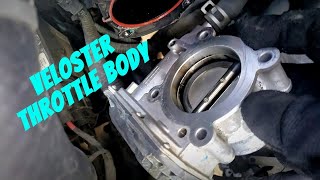
Typical fix: Clean the throttle body bore and plate thoroughly using a dedicated throttle body cleaner and a soft cloth or brush. 🎬 Watch: How to remove and clean your Veloster throttle body. An idle relearn procedure may be required afterward.
Est. part cost: $10-$20 - Faulty PCV (Positive Crankcase Ventilation) Valve 🟡 Medium Probability → Shop PCV Valve The PCV valve is a wear item that can get stuck open over time, especially if oil change intervals are extended. A stuck-open valve acts as a significant, unmetered vacuum leak.
How to confirm: A stuck-open PCV valve will act as a constant vacuum leak. Given its low cost, it's often replaced as a maintenance item during diagnosis. You can remove the valve and shake it; if it doesn't rattle, it's likely stuck.
Typical fix: Replace the PCV valve. It is a simple, inexpensive part to change. 🎬 See this quick walkthrough on replacing the PCV valve.
Est. part cost: $15-$40 - Faulty Purge Control Solenoid Valve (PCSV) ⚪ Low Probability → Shop Vapor Canister Purge Solenoid The PCSV can fail and stick open, creating a vacuum leak from the fuel tank's EVAP system. This is a known issue on many Hyundai models.
How to confirm: This issue is often accompanied by an EVAP system code (like P0441). You can test the valve with a hand vacuum pump and by applying voltage to see if it opens and closes correctly. A common failure mode is for it to be stuck open, allowing constant vapor flow. 🎬 Watch: How to locate and replace the purge control valve.
Typical fix: Replace the purge control solenoid valve.
Est. part cost: $35-$60
Rare But Worth Checking
- Faulty Electronic Throttle Body: → Shop Fuel Injection Throttle Body If cleaning the throttle body and confirming there are no vacuum leaks does not solve the issue, the internal motor or position sensor of the throttle body itself may have failed. Replacement of the entire assembly would be necessary.
- ECM/TCU Software Issue: On the related 2016-2017 Tucson with the 1.6T engine, Hyundai issued TSB 21-AT-005H to fix P0507 with a software update. While not specific to the Veloster, it suggests a software glitch could be a possible, though rare, cause.
Diagnosis Steps
- Read all fault codes with an OBD-II scanner. Note any other codes that are present, especially EVAP codes like P0441.
- With the engine running, observe the live data for engine RPM to confirm it is higher than the target idle speed (target is typically ~650-750 RPM when warm).
- Perform a thorough visual inspection of the engine bay. Look for any obviously cracked, disconnected, or collapsed rubber hoses, paying close attention to the large air intake boot and smaller vacuum lines connected to the intake manifold. Listen for an audible hissing sound.
- For a definitive diagnosis of vacuum leaks, perform a smoke test on the intake system.
- If no vacuum leaks are found, turn the engine off. Remove the air intake tube from the throttle body.
- Inspect the throttle plate and the inside of the throttle body for black carbon buildup.
- Clean the throttle body using a dedicated throttle body cleaner and a microfiber rag. Gently open the plate with your finger to clean the edges and bore. Do not spray cleaner directly into the electrical components.
- While working in the area, inspect and consider replacing the PCV valve due to its low cost and potential to cause this issue. Shake the old valve; if it doesn't rattle, it has failed.
- Reassemble the intake. Perform an idle relearn procedure: disconnect the negative battery terminal for 15-30 minutes. Reconnect it, start the engine without touching the accelerator, and let it idle for 10-15 minutes to allow the ECM to relearn idle trims. Some owners report needing a few drive cycles for the idle to fully stabilize.
- If the high idle persists, the issue may be a faulty purge valve (especially if EVAP codes are present) or a failed electronic throttle body assembly.
Parts You'll Likely Need
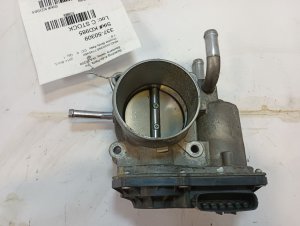
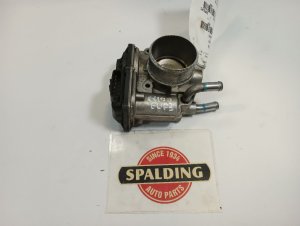
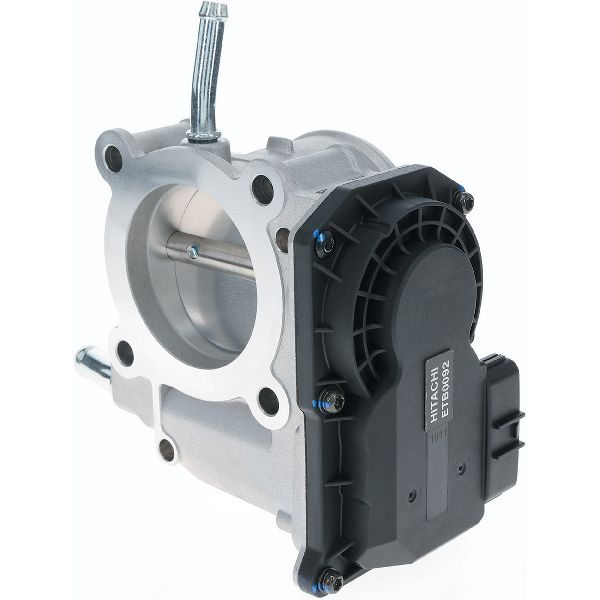
- Electronic Throttle Body
(OEM #35100-2B300 (Non-Turbo), 35100-2B320 (Turbo))— This part controls the engine's idle. It can fail internally or become too dirty to function correctly. Cleaning is the first step, but replacement is necessary if cleaning doesn't work or the electronics have failed.
Trusted brands: Hyundai (OEM), Hitachi, Spectra Premium, Cardone
OEM price range: $200-$300
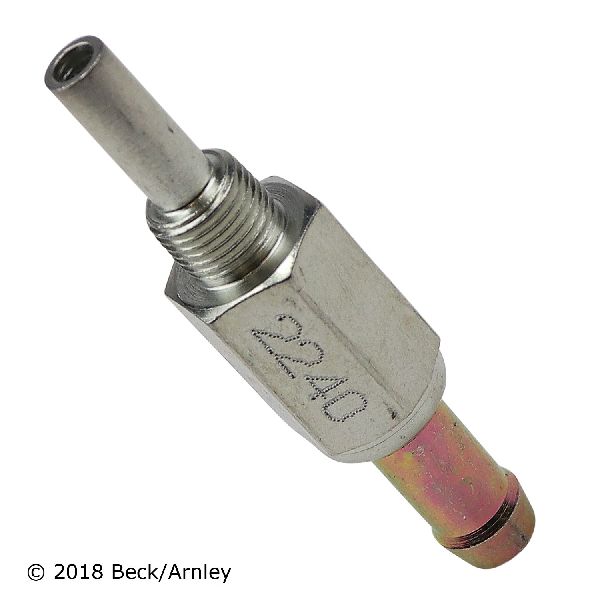
Aftermarket price range: $80-$180 - PCV Valve
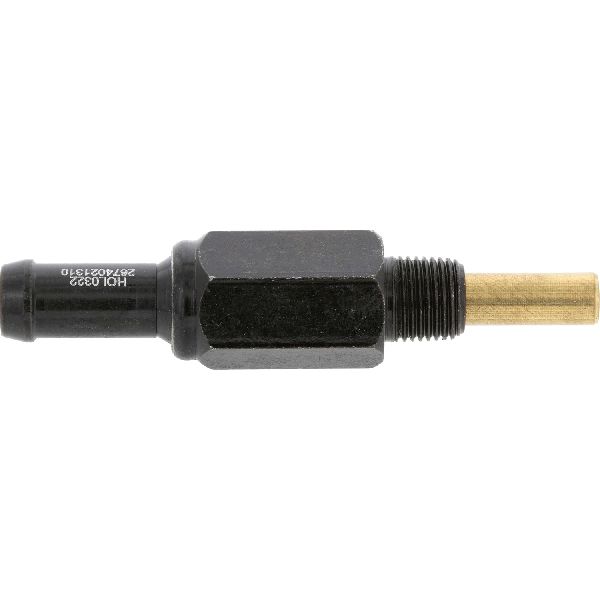
(OEM #26740-2G000 (supersedes 26740-32804))— A faulty PCV valve can stick open, creating a vacuum leak that leads to a high idle. It's an inexpensive and common maintenance item that should be checked or replaced.
Trusted brands: Hyundai (OEM), Standard Motor Products
OEM price range: $25-$40
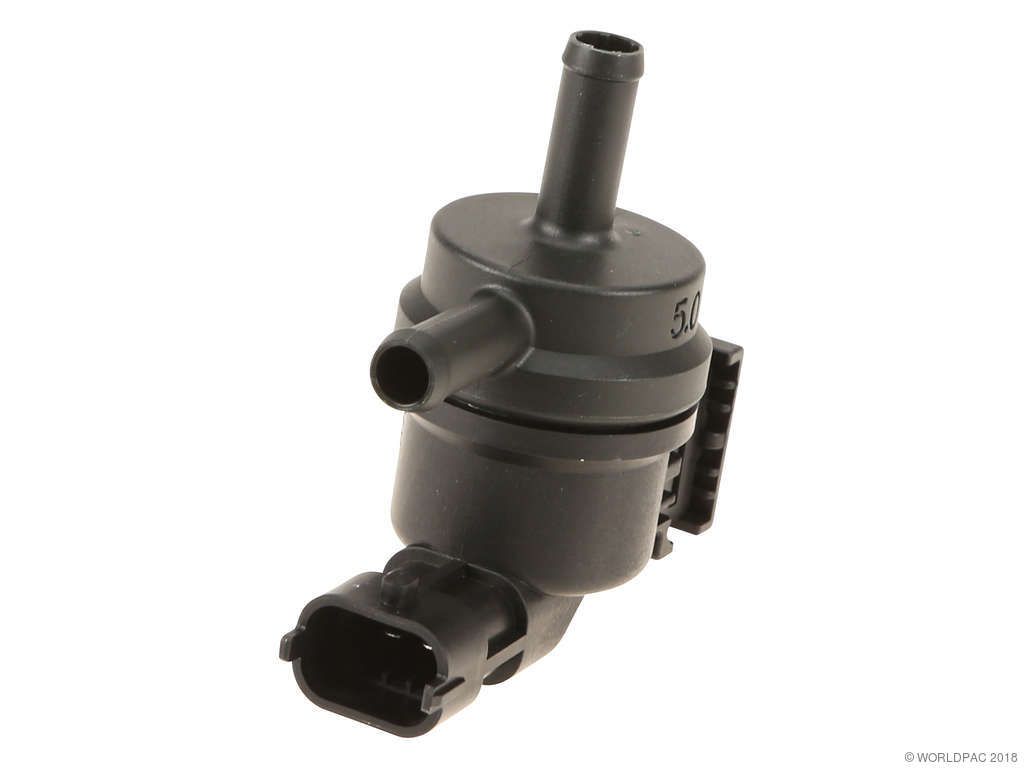
Aftermarket price range: $10-$20 - Purge Control Solenoid Valve
(OEM #28910-26900 (supersedes 28910-3C200))— If stuck open, this valve creates a vacuum leak from the EVAP system. It's a prime suspect if P0507 is present with other EVAP-related codes like P0441.
Trusted brands: Hyundai (OEM), Carquest Premium, Dorman
OEM price range: $40-$60
Aftermarket price range: $25-$55
Related Codes That Often Appear With This One
- P0441 — Incorrect Purge Flow. A stuck-open purge control solenoid valve can cause both a high idle (P0507) and an EVAP system flow fault.
Technical Service Bulletins (TSBs) & Recalls
- TSB 21-AT-005H: While for the 2016-2017 Tucson 1.6T, this TSB is relevant as it addresses DTC P0507. The fix involves an ECM and TCU software update, and in some cases, replacement of the dual-clutch assembly. This shows Hyundai has addressed P0507 via software on a related powertrain.
Platform-Specific Known Issues
- On Veloster Turbo models, some owners report finding a small amount of oil inside the intake pipe leading to the throttle body. While a minor film is normal due to the PCV system, excessive oil could indicate turbocharger seal issues that might contribute to faster carbon buildup.
- A Reddit user with a 2012 Veloster experiencing P0507 and P0441 was advised by multiple people that the purge valve was the most likely culprit, confirming the link between these two codes.
Mechanic-Grade Diagnostic Values
- Scan Tool Live Data: Target vs. Actual Idle RPM — expected: Target and Actual RPM should be nearly identical (e.g., both at 650 RPM) when the engine is warm and at idle.. Failure: Actual RPM is consistently 100-200+ RPM higher than Target RPM, and the ECU cannot command it lower.
- Scan Tool Live Data: Absolute Throttle Position % (Key-On, Engine-Off) — expected: Should be a low, stable percentage when the pedal is not pressed. Forcing the throttle plate fully closed by hand should result in the lowest possible reading (e.g., ~10-12%).. Failure: The minimum throttle position is higher than expected (e.g., will not drop below 11-12%), indicating a physical obstruction (carbon) or a worn throttle body not returning to its home position.
- Throttle Position Sensor (TPS) Voltage at Idle — expected: On a related Hyundai system, TPS 1 voltage was ~0.78V and TPS 2 was ~0.5V at idle. Values should be stable.. Failure: Voltages that are erratic, jumpy, or do not change smoothly as the throttle is opened and closed indicate a failing sensor within the throttle body assembly.
- Electronic Throttle Body Connector Pin 1 Voltage (Key-On, Engine-Off) — expected: ~5V reference voltage from the ECU.. Failure: No voltage or significantly lower voltage indicates a wiring or ECU problem.
- Electronic Throttle Body Connector Pin 3 Voltage (Key-On, Engine-Off) — expected: Near 0V (Ground).. Failure: Voltage reading significantly above 0V indicates a bad ground connection.
Scan Tool Commands That Help
- Hyundai GDS (Global Diagnostic System) or advanced aftermarket scanner: Reset Adaptive Values / Throttle Adaptation — This function should be used after cleaning or replacing the electronic throttle body. It forces the ECU to erase its previously learned idle trim and throttle plate angle values and relearn them based on the clean or new part's baseline position. This can resolve a high idle that persists after the physical repair.
Wiring & Ground Locations
- GGGG02 (or G02) — Behind the left end (driver's side) of the front fascia/bumper.. This is a primary chassis ground point for various engine compartment components. A corroded or loose connection here can cause erratic behavior in sensors and actuators, including the electronic throttle body, leading to incorrect idle control.
- Electronic Throttle Body Connector — 6-pin connector directly on the electronic throttle body assembly.. This is the single point of failure for all power, ground, and signal wires to the throttle body. Testing for 5V reference, ground, and signal voltage at these pins is a critical step to differentiate a wiring problem from a failed throttle body unit itself.
Real Owner Repair Stories
- Reddit user Separate_Lime_7127 (Modern Hyundai with GDI engine (Sonata, but principle applies directly to Veloster)) — Recurring P0507 code, high idle around 1100 RPM.
❌ Tried (didn't work) TSB software update performed by dealer, Sensor replacement
✅ What actually fixed it Replacing the entire valve cover, which had the PCV valve integrated into it. This fixed an internal, unmetered vacuum leak. The user noted the car stalled a few times post-repair while the ECU relearned idle. - Pine Hollow Auto Diagnostics (YouTube) (2016 Hyundai Santa Fe (GDI engine, similar ETB system)) — P0507 pending code, idle at 800 RPM instead of target 650 RPM, after other engine work.
❌ Tried (didn't work) Checking for vacuum leaks (fuel trims were perfect, indicating no leak), Resetting ECU by disconnecting battery
✅ What actually fixed it The electronic throttle body was physically worn and not closing completely, evident by a scan tool showing it wouldn't drop below 11% absolute position. Manually forcing the throttle plate open and closed repeatedly with lubricant temporarily freed it up and allowed idle to return to normal, confirming the throttle body itself was the point of failure and needed replacement for a permanent fix.
"I Checked Everything" — The Actual Cause
- A leaking brake booster diaphragm. This will cause a hissing sound when the brake pedal is pressed and can introduce a significant vacuum leak that raises idle. A smoke test of the intake manifold may not reveal this leak, as the leak is on the other side of the booster's one-way check valve. The test is to listen for idle changes or hissing specifically when applying the brakes.
- A PCV valve that is integrated into the valve cover has failed internally. This creates a vacuum leak that is internal to the engine's crankcase system and will not be detected by an external smoke test on the intake manifold. The only fix is to replace the entire valve cover assembly.
When the Usual Fixes Don't Work
- While cleaning the throttle body is a primary fix, there are cases where it causes the P0507 code to appear. This happens when the ECU has adapted over time to a dirty throttle plate by learning a specific idle position. When the carbon is removed, that learned position now allows too much air, causing a high idle. In these instances, performing a throttle body relearn procedure is the actual fix, not replacing more parts.
OEM Part Supersession History
26740-32804→26740-2G000— Updated design for the PCV valve. This is a common supersession across many Hyundai/Kia models.
Diagnostic Flowchart
Other Known Issues on This Vehicle
Issues unrelated to this code that are worth knowing about as an owner of this generation:
- Connecting Rod Bearing Failure 🔴 High — Affects certain 2015-2016 models. Can lead to catastrophic engine failure. Often presents as a knocking noise. (Ref: NHTSA Recall 20V-746 (Hyundai Recall 198) was issued to replace the engine if bearing damage is found and to install a Knock Sensor Detection System (KSDS).)
- Dual-Clutch Transmission (DCT) Problems 🟠 Medium — Common across all years with the DCT. Symptoms include hesitation from a stop, shuddering, rough shifting, and in some cases, complete failure to engage gears. (Ref: A class-action lawsuit was filed for 2016-2017 models regarding DCT defects. TSB 21-AT-005H for the related Tucson also involved a TCU update to address P0507.)
- Engine Pre-Ignition (2013 Turbo) 🔴 High — Specific to 2013 Turbo models, can cause excessive cylinder pressure and engine damage. (Ref: NHTSA Recall 19V-281 (Hyundai Recall 182) was issued to update the engine management software.)
- High Engine Oil Consumption 🟠 Medium — Reported across multiple model years, often attributed to premature wear of piston rings. Can lead to engine damage if oil levels are not monitored closely.
- Shattering Panoramic Sunroof 🟡 Low — Primarily affected 2012 models where the sunroof assembly may have been weakened during factory installation. (Ref: NHTSA Recall 12V-588 (Hyundai Recall 107) was issued to inspect and replace the sunroof glass assembly.)
- ABS Module Fire Risk 🔴 High — Affects 2011-2015 models. The ABS module can leak brake fluid internally, causing an electrical short and potential engine compartment fire, even when parked. (Ref: NHTSA Recall 23V-701 (Hyundai Recall 251) advises parking outside and away from structures until the recall repair (fuse replacement) is completed.)
Used vs. New Parts: Buying Guide for This Vehicle
When a used part is the smart pick: For a major component like the Electronic Throttle Body (ETB), a used part from a low-mileage, rear-ended donor vehicle can be a cost-effective option. Hoses, intake boots, and solenoids can also be sourced used, provided the rubber and plastic are pliable and free of cracks.
Donor-vehicle mileage cap: roughly under 50000 miles for the part to have meaningful remaining life.
What to inspect on the donor part:
- For a used throttle body, inspect the bore for scoring or damage. Ensure the plate moves smoothly without binding.
- Check all plastic and rubber hoses for brittleness, swelling, or cracking, especially at the connection points.
- Verify the part number on the used component matches the OEM number for your specific vehicle (Turbo vs. Non-Turbo).
- Ask for the donor vehicle's VIN to check for accident history and mileage.
OEM-only on this vehicle (don't cheap out):
- PCV Valve: Given its low cost and critical function, buying a new OEM or reputable aftermarket part is strongly recommended over a used one. The failure rate is too high to risk a used part.
- Gaskets: Always use new gaskets when replacing components like the throttle body to ensure a proper seal.
Aftermarket brands forum-validated for this vehicle:
- Hitachi (Often the OEM supplier for the throttle body)
- Spectra Premium (Throttle Bodies)
- Standard Motor Products (PCV Valves, Purge Solenoids)
Brands owners have reported issues with on this vehicle:
- Unbranded, no-name electronic throttle bodies from online marketplaces are a significant risk due to poor internal electronics and lack of quality control, often failing shortly after installation.
Real Owner Stories
Aggregated from forums and TSBs cited above. Mileages and costs reflect what owners reported in those sources.
2012 Hyundai Veloster
Symptoms: Experiencing P0507 high idle along with an EVAP system code P0441.
What fixed it: Replacement of the purge valve, which was identified as the most likely culprit for the combined codes.
Source hint: Reddit user advice mentioned in vehicle_specific_issues
Related OBD-II Codes
Frequently Asked Questions
I have a 2012 Veloster with P0507 and P0441; what is the most likely fix?
Does TSB 21-AT-005H apply to my Veloster's P0507 code?
Can I perform an idle relearn on my Veloster without a scan tool?
Why is my Veloster GDI engine prone to throttle body issues causing P0507?
Is there a recall for engine issues that might be related to my high idle?
Could a hissing sound in my engine bay be causing the P0507 code?
Helpful Videos

Used OEM Parts in Stock
New Aftermarket Parts Available


The information in this article is provided for general reference and educational purposes only. Vehicle specifications, procedures, and part compatibility can vary by production date, trim level, and region. Always consult your vehicle's factory service manual and verify part numbers before purchasing or performing repairs. Safety-critical components such as airbags, seat belts, and braking systems should be installed by a qualified professional.
- Hyundai Veloster:
- 🧭 Diagnostic Flowchart
- 🎬 Helpful Videos
- 🛍️ Shop This Part
- What's Unique About the 2012-2017 Hyundai Veloster
- Symptoms You May Notice
- Most Likely Causes
- Rare But Worth Checking
- Diagnosis Steps
- Parts You'll Likely Need
- Related Codes That Often Appear With This One
- Technical Service Bulletins (TSBs) & Recalls
- Platform-Specific Known Issues
- Mechanic-Grade Diagnostic Values
- Scan Tool Commands That Help
- Wiring & Ground Locations
- Real Owner Repair Stories
- "I Checked Everything" — The Actual Cause
- When the Usual Fixes Don't Work
- OEM Part Supersession History
- Other Known Issues on This Vehicle
- Used vs. New Parts: Buying Guide for This Vehicle
- Real Owner Stories
- 2012 Hyundai Veloster
- Related OBD-II Codes
- Frequently Asked Questions
- 🎟️ Get 5% Off