

P0507 on 2010-2013 Kia Forte: Causes and Fixes for High Idle Speed
On a 2010-2013 Kia Forte, code P0507 is almost always caused by a dirty electronic throttle body or a vacuum leak. The most common and effective fix is to thoroughly clean the throttle body and replace the inexpensive PCV valve. This is a DIY-friendly job with a difficulty of 2/5.
- P0507 on a 2010-2013 Forte means the engine is idling too high.
- The most likely cause is a dirty throttle body. Start by cleaning it thoroughly.
- The PCV valve is a cheap, common failure point that can cause this code; replace it as part of the diagnosis.
- Always check for cracked or loose vacuum hoses.
- An idle relearn procedure is often required after repairs.
What's Unique About the 2010-2013 Kia Forte
The 2010-2013 Kia Forte uses an Electronic Throttle Body (ETB) for both the 2.0L and 2.4L Theta II engines, meaning it does not have a separate Idle Air Control (IAC) valve like some older vehicles. The Theta II GDI engine, in particular, is known for issues with carbon and oil deposit buildup in the intake system. A faulty PCV system allows excessive oil vapor into the intake, which bakes onto the throttle plate, preventing it from closing fully. Therefore, diagnosis must focus on issues that let in un-metered air, such as a dirty throttle plate, a bad PCV valve, or vacuum leaks, rather than looking for a non-existent IAC valve.
Symptoms You May Notice
- Check Engine Light is on
- Engine idle speed is higher than normal (e.g., 1000-1500 RPM when warm)
- Idle speed may surge or fluctuate
- A slight push or lurch when stopped in gear
- Harsh engagement when shifting from Park to Drive or Reverse
- Increased fuel consumption
- A hissing noise from the engine bay, indicating a vacuum leak
- Replacing the throttle position sensor (TPS) by itself. The TPS is integrated into the electronic throttle body on this vehicle and is not the typical cause of a high idle; the issue is usually carbon buildup or a vacuum leak.
- Searching for or trying to replace a separate Idle Air Control (IAC) valve. This vehicle does not have one; the function is built into the electronic throttle body.
Most Likely Causes
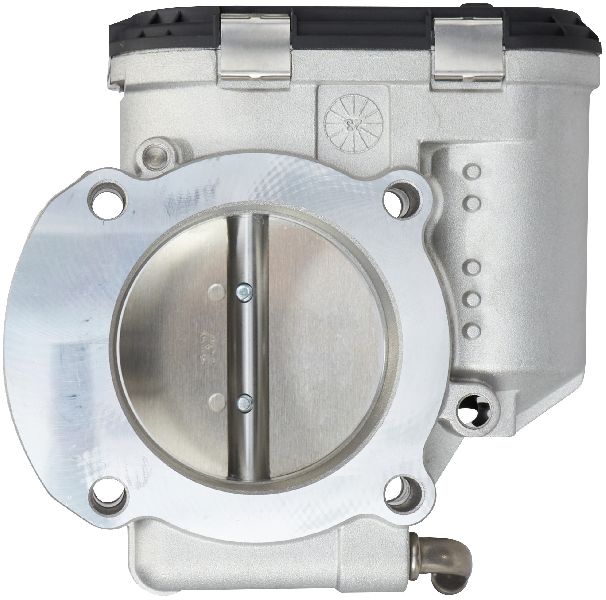
- Dirty Electronic Throttle Body 🔴 High Probability → Shop Fuel Injection Throttle Body The PCV system routes oil vapors and blow-by gases into the intake, which can deposit carbon and grime on the throttle plate and bore over time. This buildup prevents the plate from closing completely, allowing excess air to enter the engine and raising the idle.
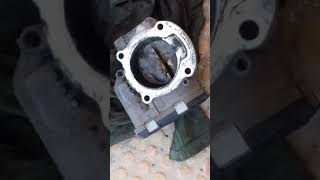
How to confirm: Remove the air intake hose from the throttle body and visually inspect the throttle plate and the inside of the throttle body bore for a black, sticky layer of carbon. The buildup is often heaviest on the back side of the plate.
Typical fix: Thoroughly clean the throttle body plate and bore using a dedicated throttle body cleaner and a soft cloth or brush. An idle relearn procedure is recommended after cleaning.
Est. part cost: $5-$15 for cleaner - Vacuum Leak 🟡 Medium Probability Over time, rubber vacuum hoses can become brittle, crack, or split due to heat and age. Common leak points include the PCV hose, brake booster hose, and the intake air duct itself, which can crack and allow unmetered air in.
How to confirm: Listen for a hissing sound around the engine bay at idle. The most effective method is to use a smoke machine to introduce smoke into the intake system and watch for where it escapes. Spraying brake cleaner around suspected areas and listening for a change in idle RPM can also pinpoint a leak.
Typical fix: Replace the cracked or broken vacuum hose or gasket. Hoses are typically inexpensive and easy to replace.
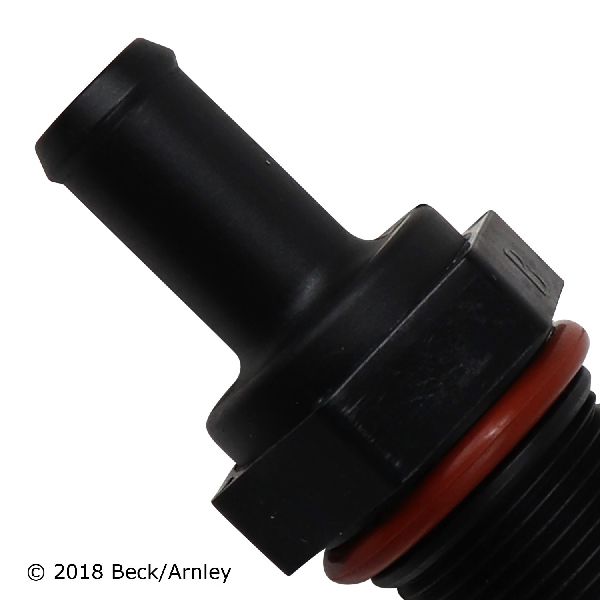
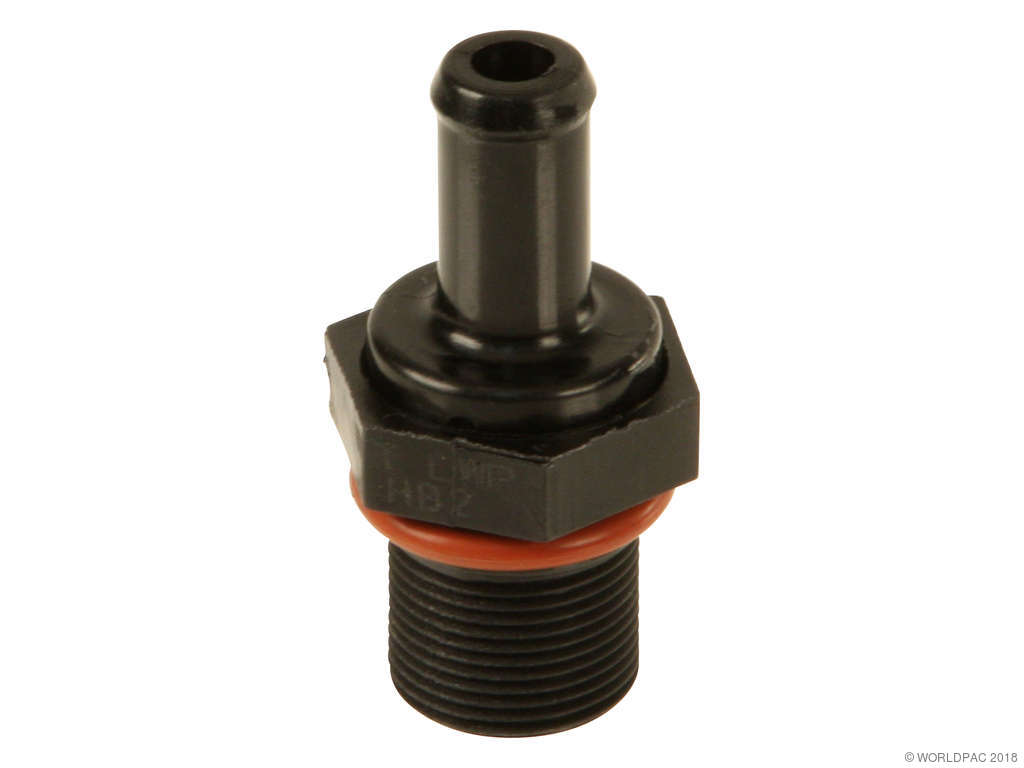
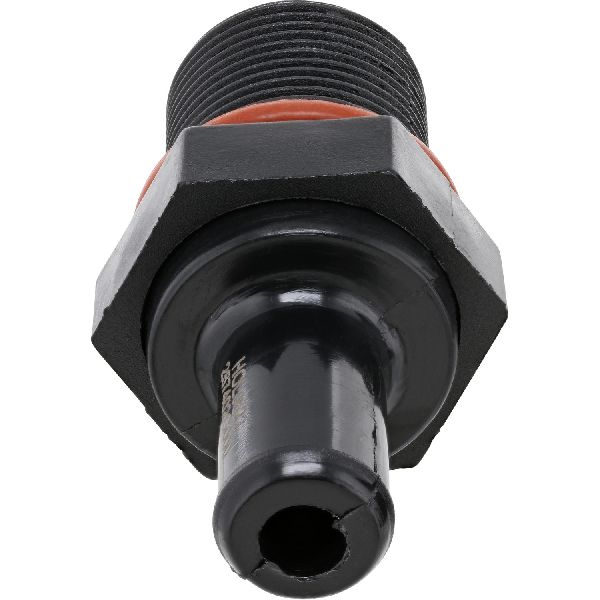
Est. part cost: $10-$50 for hoses - Faulty PCV Valve 🟡 Medium Probability → Shop PCV Valve The Positive Crankcase Ventilation (PCV) valve can get stuck open with oil and sludge buildup. When stuck open, it creates a constant vacuum leak, drawing unmetered air into the intake manifold and contributing to the carbon buildup on the throttle body.
How to confirm: Remove the PCV valve. If it rattles when shaken, it is likely good. If it is silent, stuck, or full of sludge, it has failed. Given its low cost, replacement is often recommended as a preventative measure.
Typical fix: Replace the PCV valve. It is typically threaded into the valve cover and connected to a hose. A 13/16-inch or 21mm socket is often required. 🎬 See how to replace a faulty PCV valve on this engine.
Est. part cost: $10-$25
Rare But Worth Checking
- Failed Vapor Canister Purge Valve: → Shop Vapor Canister If this emissions component gets stuck open, it can create a vacuum leak that leads to a high idle. This would often be accompanied by other EVAP-related trouble codes.
- Failing Alternator: In rare cases, a failing alternator can cause erratic voltage, making the PCM struggle to maintain a stable idle. This is usually accompanied by other electrical symptoms like dimming lights or a battery warning light.
- Faulty Power Steering Pressure Switch: A faulty power steering pressure switch can send an incorrect signal to the PCM, causing it to raise the idle unnecessarily. This is less common but has been noted as a potential cause.
Diagnosis Steps
- Read the code with an OBD-II scanner to confirm P0507 and check for any other pending or active codes.
- With the engine running, listen carefully for any obvious hissing sounds from the engine bay that would indicate a large vacuum leak.
- Inspect all visible vacuum lines, especially the PCV hose and the main air intake duct, for cracks, splits, or loose connections.
- Remove the air intake duct from the throttle body. Inspect the throttle plate and bore for carbon buildup. Pay close attention to the edges of the plate and where it seats in the bore.
- If dirty, clean the throttle body thoroughly with throttle body cleaner and a soft cloth. Manually move the plate to clean the edges. 🎬 Watch: Two different methods for cleaning your throttle body. Do not spray cleaner directly into electrical components.
- Locate and inspect the PCV valve. It is an inexpensive part and a common failure point, so replacement is recommended if its condition is unknown. A 13/16" or 21mm socket is typically needed for removal.
- If the above steps do not resolve the issue, perform a smoke test to find hard-to-see vacuum leaks from components like the intake manifold gasket or brake booster.
- After any cleaning or part replacement, perform an idle relearn procedure. A common method is to disconnect the negative battery terminal for 15-30 minutes, reconnect it, start the engine, let it warm up to operating temperature, and then let it idle in Park/Neutral for 5-10 minutes without any electrical load (no A/C, lights, etc.).
- Clear the trouble code with the scanner and perform a test drive to see if the P0507 code returns.
Parts You'll Likely Need
- Electronic Throttle Body
(OEM #35100-2G200)— This part is only needed if cleaning does not resolve the issue and the internal electronic motor has failed. However, cleaning is the fix in most cases.
Trusted brands: Kia (OEM), Spectra Premium, Cardone
OEM price range: $350-$450
Aftermarket price range: $75-$180 - PCV Valve
(OEM #26740-2G000)— A common failure point that gets stuck open, creating a vacuum leak. It is an inexpensive part that is wise to replace during diagnosis.
Trusted brands: Kia (OEM), Beck/Arnley, Standard Motor Products (SMP)
OEM price range: $15-$25
Aftermarket price range: $8-$15 - Throttle Body Cleaner — Required for the most common fix, which is cleaning the carbon buildup from the throttle plate and bore.
Trusted brands: CRC, Berryman, Gumout
Aftermarket price range: $5-$15
Related Codes That Often Appear With This One
- P0171 - System Too Lean (Bank 1): Can appear with P0507 if a significant vacuum leak is the root cause.
Platform-Specific Known Issues
- Owner Experience: High Idle Solved by PCV Valve and Throttle Cleaning: → Shop PCV Valve On ForteForums.com, a user with a 2012 Forte described a P0507 code and an idle of ~1100 RPM. After cleaning the throttle body, the idle improved but was still high. They then replaced the PCV valve (part # 26740-2G000), which was found to be stuck. After replacing the valve and performing an idle relearn, the idle returned to a normal ~750 RPM and the code was resolved.
Scan Tool Commands That Help
- Kia GDS (Global Diagnostic System) or equivalent: Reset for ETC (Electronic Throttle Control) Adaptive Values — This function is critical after cleaning or replacing the electronic throttle body. It clears the learned values the PCM has stored for the old/dirty throttle plate position, forcing it to relearn the new closed-throttle position. Failure to perform this reset is a common reason for the P0507 code to persist after a repair.
- Manual Procedure (No Scan Tool): Manual Throttle Position Relearn — If a scan tool is not available after cleaning the throttle body or disconnecting the battery. The procedure involves a specific sequence of turning the ignition key to the 'ON' position (without starting the engine) for a set time, then 'OFF', repeated multiple times to force the ECU to relearn the throttle's closed position.
Wiring & Ground Locations
- Electronic Throttle Body Connector — On the electronic throttle body assembly, where the engine wiring harness connects.. This is a 6-pin connector. A poor connection, corrosion, or damaged wiring at this pigtail can cause erratic throttle behavior and trigger idle-related codes. The connector provides power to the throttle motor and relays position data back to the PCM.
- BCM (Body Control Module) — Located in the center of the dash, behind the radio.. While not a direct cause, the BCM is a central hub for vehicle electronics. Major wiring harnesses connect here, and it can be a reference point for tracing electrical faults that might indirectly affect the engine control system.
- Engine Control Module (ECM) Grounds — Wiring diagrams show multiple ground points for the ECM and its sensors, typically located on the engine block, chassis, and near the battery.. A poor ECM ground can cause a host of unpredictable issues, including incorrect sensor readings and faulty actuator control, which could potentially lead to a high idle situation that the PCM cannot correct.
Real Owner Repair Stories
- Matt's Bucket blog post (2004 Nissan Murano (different vehicle, but identical P0507 cause/symptom after throttle body cleaning)) — P0507 code and high idle (800-850 RPM) immediately after cleaning the throttle body.
❌ Tried (didn't work) Standard Idle Air Volume Learning (IAVL) procedure (attempted 10 times)., Disconnecting MAF and throttle body connectors, starting the car, then reconnecting and clearing codes (this provided only a temporary fix).
✅ What actually fixed it Disconnecting the negative battery cable and leaving it disconnected for a full 24 hours. This fully erased the ECM's volatile memory, including the learned idle air volume values, forcing a fresh relearn upon reconnection. The idle returned to a normal ~650 RPM and the code did not return over 2000 miles. - NHTSA ODI #11509196: In a cross-manufacturer reference involving another Kia model, an owner reported that code P0507 kept causing the engine light to turn on. Despite replacing the air filter, MAP sensor, and having the throttle body relearned, the issue persisted.
OEM Part Supersession History
26740-2G000→26740-2G000 (no supersession found)— This PCV valve part number appears to be consistent for the Theta II engine in this application.35100-2G200→35100-2G200 (no supersession found)— This throttle body part number is consistently listed for the 2010-2013 Forte 2.0L and 2.4L engines.
Heads up: Hyundai and Kia share this OEM part number; the part may come in either a red Kia box or a blue Hyundai box, but the component is identical.
Model Year Variations Within This Range
- 2010-2013: The Theta II engine family (both 2.0L G4KD and 2.4L G4KE) used in this generation of Forte does not have hydraulic lifters. This means valve clearance adjustments are required as part of major service intervals (approx. every 60,000 miles), which is a maintenance item often overlooked that can affect overall engine performance and idle quality.
Diagnostic Flowchart
Other Known Issues on This Vehicle
Issues unrelated to this code that are worth knowing about as an owner of this generation:
- Catastrophic Engine Failure (Theta II) 🔴 High — Widespread across 2.0L and 2.4L engines. Caused by manufacturing debris leading to connecting rod bearing failure. Can occur at various mileages, often preceded by knocking noises or high oil consumption. (Ref: Multiple recalls and a class-action lawsuit have been issued. (e.g., NHTSA Recall 17V224000 for Kia, 15V568000 for Hyundai).)
- Degrading Steering Coupler 🟠 Medium — Very common. The flexible rubber coupler in the electronic power steering column wears out, causing a distinct clicking or knocking sound when turning the wheel. (Ref: Kia issued TSB CHA074 REV 2 for this issue, but it was not a full recall for the Forte, unlike some other Kia/Hyundai models.)
- Engine Knocking / Piston Slap 🟠 Medium — Common issue, particularly on the 2.0L engine, related to scuffing between the piston and cylinder wall. It is most noticeable on cold starts. (Ref: Subject of a class-action lawsuit filed in Canada.)
- Brake Light Switch Failure 🟡 Low — A faulty brake pedal stopper pad can deteriorate, causing the brake lights to stay on and potentially allowing the vehicle to be shifted out of park without depressing the brake. (Ref: Covered by NHTSA Recall 16V336000.)
Used vs. New Parts: Buying Guide for This Vehicle
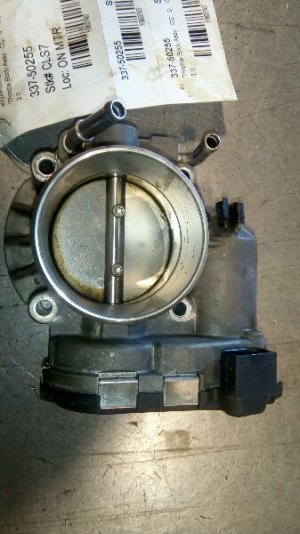
When a used part is the smart pick: A used OEM throttle body from a low-mileage donor vehicle can be a cost-effective choice if the original has a confirmed electronic failure. Since the primary failure mode for P0507 is carbon buildup, a used part should be thoroughly cleaned before installation. For parts like vacuum hoses or the PCV valve, new is always recommended due to their low cost and the high failure rate of aged rubber and plastic.
Donor-vehicle mileage cap: roughly under 75000 miles for the part to have meaningful remaining life.
What to inspect on the donor part:
- Check for minimal scoring or scratches inside the throttle body bore.
- Ensure the electrical connector pins are clean, straight, and free of corrosion.
- Verify the butterfly valve moves without binding (if possible to test manually, though caution is advised).
- Ask for the VIN of the donor car to check its service history or recall status if possible.
OEM-only on this vehicle (don't cheap out):
- Electronic Throttle Body: While some aftermarket brands are available, forums often suggest that OEM units have the highest reliability and avoid compatibility issues with the PCM that can sometimes arise with cheaper alternatives.
Aftermarket brands forum-validated for this vehicle:
- Spectra Premium (Throttle Body)
- Standard Motor Products (PCV Valve, Connectors)
- Beck/Arnley (PCV Valve)
Brands owners have reported issues with on this vehicle:
- Unbranded, no-name electronic throttle bodies from online marketplaces are frequently cited as problematic, often failing quickly or having incorrect calibration out of the box.
Real Owner Stories
Aggregated from forums and TSBs cited above. Mileages and costs reflect what owners reported in those sources.
2012 Kia Forte
Symptoms: The vehicle had a P0507 code and was idling at approximately 1100 RPM. Cleaning the throttle body alone did not fully resolve the high idle.
What fixed it: Replaced a stuck PCV valve (part # 26740-2G000) and performed an idle relearn, which returned the idle to a normal 750 RPM.
Source hint: ForteForums.com thread titled 'P0507 Code'
2015 Kia Forte 2.0L
Symptoms: High idle between 1500-2000 RPM; the issue persisted even after the throttle body was replaced.
What fixed it: The community recommended checking for vacuum leaks specifically related to the A/C system load.
Source hint: Reddit r/AskMechanics
Related OBD-II Codes
Frequently Asked Questions
My 2012 Kia Forte is idling at 1100 RPM and has a P0507 code. What is the most likely fix?
Is there a specific procedure I need to follow after cleaning the throttle body on my Forte?
What size tools do I need to replace the PCV valve on a 2010-2013 Kia Forte?
Are there any recalls for the 2010-2013 Kia Forte that might be related to engine issues?
My Forte makes a clicking sound when I turn the steering wheel; is this related to the P0507 high idle?
Can a vacuum leak cause the P0507 code on my Kia?
Helpful Videos
Used OEM Parts in Stock
New Aftermarket Parts Available


The information in this article is provided for general reference and educational purposes only. Vehicle specifications, procedures, and part compatibility can vary by production date, trim level, and region. Always consult your vehicle's factory service manual and verify part numbers before purchasing or performing repairs. Safety-critical components such as airbags, seat belts, and braking systems should be installed by a qualified professional.
- Kia Forte:
- 🧭 Diagnostic Flowchart
- 🎬 Helpful Videos
- 🛍️ Shop This Part
- What's Unique About the 2010-2013 Kia Forte
- Symptoms You May Notice
- Most Likely Causes
- Rare But Worth Checking
- Diagnosis Steps
- Parts You'll Likely Need
- Related Codes That Often Appear With This One
- Platform-Specific Known Issues
- Scan Tool Commands That Help
- Wiring & Ground Locations
- Real Owner Repair Stories
- OEM Part Supersession History
- Model Year Variations Within This Range
- Other Known Issues on This Vehicle
- Used vs. New Parts: Buying Guide for This Vehicle
- Real Owner Stories
- 2012 Kia Forte
- 2015 Kia Forte 2.0L
- Related OBD-II Codes
- Frequently Asked Questions
- 🎟️ Get 5% Off