

P0507 on 2009-2013 Mazda 6: Causes and Fixes for High Idle Speed
On a 2009-2013 Mazda 6, code P0507 is most often caused by a dirty electronic throttle body that needs cleaning and a subsequent idle relearn procedure. This is a simple DIY fix costing under $20. If that doesn't work, suspect a vacuum leak or a faulty PCV valve, the replacement of which can be labor-intensive depending on the engine (2.5L vs 3.7L).
- The most likely and easiest first step to fix P0507 on a 2009-2013 Mazda 6 is to thoroughly clean the electronic throttle body.
- Do not confuse the persistent high idle of a P0507 code with the normal, temporary high idle that occurs for a minute after a cold start.
- If cleaning the throttle body doesn't work, the next most likely causes are a vacuum leak or a faulty PCV valve.
- Be aware that replacing the PCV valve may be a complex job requiring removal of the intake manifold, depending on your specific engine.
What's Unique About the 2009-2013 Mazda 6
The 2009-2013 Mazda 6 uses an electronic throttle body, which means there is no separate Idle Air Control (IAC) valve like on older vehicles. Idle speed is controlled by the PCM making small adjustments to the throttle plate itself. This makes a dirty throttle body a very common cause for this code. Additionally, the two primary engines have very different PCV valve service considerations. On the 2.5L I4 engine, the PCV valve is located underneath the intake manifold, making what is usually a simple replacement a much more labor-intensive job. On the 3.7L V6 (a Ford Cyclone engine), the PCV system is often integrated into the valve cover, requiring replacement of the entire cover if the valve fails.
Symptoms You May Notice
- Check Engine Light is on
- Engine idle speed is higher than normal (e.g., over 1000 RPM in Park)
- Fluctuating or surging idle
- Rough or unstable idle
- Harsh engagement when shifting into Drive or Reverse
- Increased fuel consumption
- Normal high idle during cold start. Mazda vehicles use an accelerated warm-up strategy that holds a high idle (1500-2000 RPM) for a minute or two after a cold start to warm up the catalytic converter faster. This is normal operation and will not set a P0507 code. The code is for a persistently high idle after the engine is fully warmed up.
Most Likely Causes
- Dirty Electronic Throttle Body 🔴 High Probability → Shop Fuel Injection Throttle Body The electronic throttle body controls idle speed directly. Over time, carbon and oil residue from the PCV system can build up around the throttle plate and bore, preventing the plate from closing completely. This small gap allows excess air to leak past, causing the high idle.
How to confirm: Visually inspect the inside of the throttle body by removing the air intake hose. Look for a ring of black carbon buildup where the throttle plate closes.
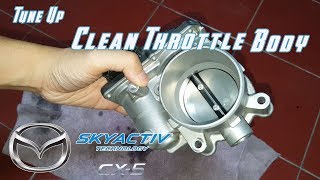
Typical fix: Remove the throttle body and clean it thoroughly with a dedicated throttle body cleaner and a soft brush or microfiber cloth. 🎬 Watch: Step-by-step guide to cleaning your Mazda throttle body Do not use aggressive tools that could scratch the bore. Replace the throttle body gasket upon reinstallation. An idle relearn procedure must be performed afterward.
Est. part cost: $10-$25 - Vacuum Leak 🟡 Medium Probability Hoses and gaskets become brittle with age and heat cycles. A leak in any vacuum hose, the intake manifold gasket, or other sealed components allows unmetered air into the engine, raising the idle.
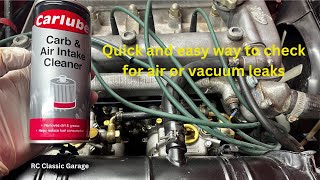
How to confirm: Perform a visual inspection of all vacuum lines for cracks or loose connections. A professional smoke test is the most effective method, where a mechanic pumps smoke 🎬 See how to quickly test for vacuum leaks yourself into the intake system and looks for where it escapes.
Typical fix: Replace the cracked hose, failed gasket, or leaking component.
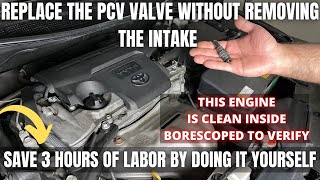
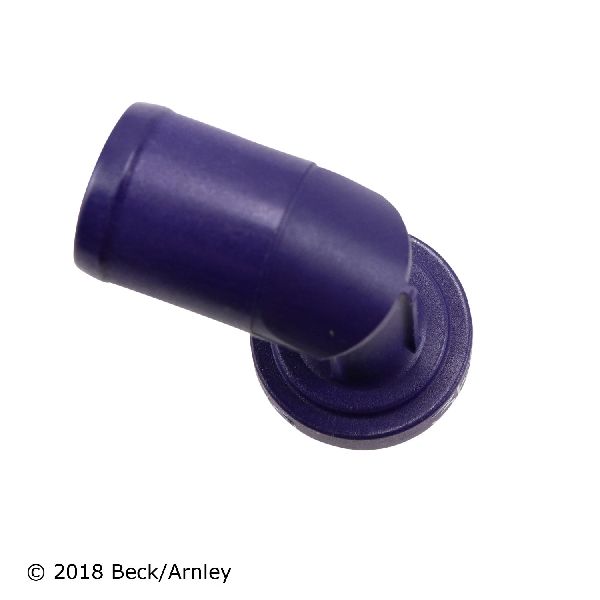
Est. part cost: $5-$150 - Faulty PCV Valve 🟡 Medium Probability → Shop PCV Valve The Positive Crankcase Ventilation (PCV) valve can get stuck open, creating a significant and constant vacuum leak that pulls unmetered air and crankcase gases into the intake manifold.
How to confirm: On the 3.7L V6, the valve is more accessible on the valve cover. On the 2.5L I4, the valve is buried under the intake manifold, making inspection difficult without disassembly. A stuck-open valve is a prime suspect if throttle body cleaning doesn't resolve the P0507 code.
Typical fix: Replace the PCV valve. If it is located under the intake manifold on the 2.5L engine, this is a significant job that also requires replacing the intake manifold gaskets.
Est. part cost: $15-$120 (Part is cheap, but labor can be high for the 2.5L)
Rare But Worth Checking
- Leaking EVAP Purge Solenoid: → Shop Vapor Canister If the evaporative emissions purge solenoid sticks open, it can create a vacuum leak that may lead to a high idle.
- Faulty Power Steering Pressure Switch: This switch signals the PCM to slightly increase idle when the steering wheel is turned at low speeds. A faulty switch could incorrectly signal for a higher idle at all times.
Diagnosis Steps
- Verify the code with an OBD-II scanner. Note any other codes present and check freeze frame data.
- Check for a persistently high idle after the engine is fully warmed up. Differentiate this from the normal cold-start high idle.
- Visually inspect the engine bay for any obvious vacuum leaks, such as disconnected, cracked, or brittle hoses.
- Remove the air intake duct from the throttle body. Inspect the throttle bore and plate for heavy carbon buildup. If dirty, this is your most likely cause.
- If the throttle body is clean, or if cleaning it does not solve the issue, the next step is to professionally test for vacuum leaks using a smoke machine. This is the most reliable way to find small leaks in gaskets or hoses.
- If no vacuum leaks are found, suspect the PCV valve. Given the difficulty of access on the 2.5L engine, this is often a part that is replaced once other, easier-to-check causes are ruled out.
- Perform Idle Relearn Procedure: After cleaning the throttle body or performing any repairs, this step is crucial. Disconnect the negative battery terminal for at least 10 minutes. Reconnect it, turn the ignition to 'ON' (without starting the engine) for one minute, then turn it 'OFF' for one minute. Finally, start the engine and let it idle without touching the accelerator for 10-15 minutes as it warms up to allow the PCM to relearn the idle parameters. 🎬 Watch: How to perform a proper idle relearn procedure
Parts You'll Likely Need
- Throttle Body Cleaner — This is the most common fix. Cleaning carbon buildup from the throttle plate and bore often resolves the high idle issue.
Trusted brands: CRC, Berryman, Gumout
Aftermarket price range: $8-$15 - Throttle Body Gasket
(OEM #L501-13-655 (for 2.5L I4), CY01-13-655 (for 3.7L V6))— The gasket should always be replaced when the throttle body is removed for cleaning to prevent vacuum leaks.
Trusted brands: Fel-Pro, Mahle, Mazda OE
OEM price range: $15-$30
Aftermarket price range: $5-$15 - PCV Valve
(OEM #L501-13-890A (for 2.5L I4), AJ95-13-890A (for 3.7L V6))— A common failure point that can get stuck open, causing a vacuum leak. Note: For the 3.7L, this part may be serviced as part of the valve cover.
Trusted brands: Standard Motor Products, WVE, Mazda OE
OEM price range: $25-$50
Aftermarket price range: $10-$25 - Intake Manifold Gasket Set — Required if the PCV valve is located under the intake manifold on the 2.5L engine, as the manifold must be removed for access.
Trusted brands: Fel-Pro, Mahle, Victor Reinz
OEM price range: $40-$80
Aftermarket price range: $20-$50
Related Codes That Often Appear With This One
- P0171 — A P0171 (System Too Lean) code is often seen with P0507 because the underlying cause for both is frequently a vacuum leak, which introduces extra, unmetered air.
Technical Service Bulletins (TSBs) & Recalls
- TSB 01-007/13: While this TSB primarily addresses DTC P2135 (Throttle Position Sensor Correlation), it involves procedures related to throttle body inspection and replacement, which can be relevant to resolving persistent idle issues.
Platform-Specific Known Issues
- On the 2.5L I4 engine, the PCV valve is integrated into the oil separator plate located underneath the intake manifold, significantly increasing the labor time for replacement compared to older designs where it was easily accessible.
- On the 3.7L V6 engine, the PCV valve is typically located in the valve cover. While easier to access than on the 2.5L, a failure could necessitate replacing the entire valve cover assembly if the valve itself is not separately serviceable.
Mechanic-Grade Diagnostic Values
- Throttle Position Sensor (TPS) Signal Voltage — expected: Approximately 0.45V - 0.55V at closed throttle (idle), rising smoothly to ~4.5V at wide-open throttle.. Failure: Voltage is erratic, jumps, has dead spots as the throttle is opened, or the closed-throttle voltage is high (e.g., 0.8V+).
- Long Term Fuel Trim (LTFT) at Idle — expected: Within +/- 5% of 0%.. Failure: Consistently high positive values (e.g., +10% or more) indicate the PCM is compensating for unmetered air, a classic symptom of a vacuum leak that causes P0507.
Scan Tool Commands That Help
- Professional OBD-II Scan Tool (e.g., Mazda IDS, Autel, Snap-on): Idle Air Control (IAC) Functional Test / Output Control — On older models with a separate IAC, this command allows the technician to directly open and close the valve to see if it responds and affects engine RPM. For the 2009-2013 Mazda 6 with an electronic throttle body, a similar bidirectional test can command the throttle plate to specific angles to test the motor's function.
Wiring & Ground Locations
- G1 — Right front of the engine compartment.. A poor ground here can affect various components in the engine bay. Ensuring this point is clean and tight is a crucial step in ruling out electrical issues.
- G2 — Left front of the engine compartment.. This is a primary ground point for components on the driver's side of the engine bay, potentially including sensors that provide data to the PCM.
- G4 (2.5L Engine) — Right rear of the engine.. A critical engine ground. A corroded or loose connection here can cause erratic sensor readings and PCM behavior, potentially leading to incorrect idle control.
- Throttle Body Ground (DIY) — An additional ground wire run from one of the throttle body mounting bolts directly to the battery negative terminal or a chassis ground point.. Because the intake manifold on the 2.5L engine is plastic, the throttle body's ground path relies on small wires in the harness. Some owners report that adding a dedicated, redundant ground wire can improve throttle response and stability by ensuring a perfect ground connection for the electronic throttle control.
Real Owner Repair Stories
- Mazdas247 Forum user 'smetzger' (2003 Mazda Protege5 (similar electronic throttle principles)) — Persistent P0507 code, high idle.
❌ Tried (didn't work) Replaced PCV valve and spark plugs, Cleaned throttle body, Checked for vacuum leaks (none found), Swapped IAC valve with a known-good unit from another car
✅ What actually fixed it Replacing the vehicle's battery. The old battery was likely causing voltage instability, which confused the ECU's idle calculations. After the new battery was installed, the idle was noticeably lower and the code did not return. - Reddit user in r/MechanicAdvice (2009 Mazda 6, 2.5L I4, R-Title Flood Car, 90k miles) — Jump start led to a 2,000 RPM idle, P0507, and 21 other codes. History of parasitic battery drain.
❌ Tried (didn't work) Initial jump start was difficult.
✅ What actually fixed it The final diagnosis from a trusted mechanic pointed to one of two expensive faults: a failed throttle body or a failed main computer (PCM/ECU). This story highlights how severe electrical system problems, especially on a car with a flood history, can manifest as a P0507 code.
"I Checked Everything" — The Actual Cause
- In one documented case on a similar Mazda, after cleaning the throttle body and finding no vacuum leaks, the persistent P0507 was finally resolved by replacing a weak car battery. The electrical instability was causing the ECU to miscalculate idle parameters, proving the issue was electrical, not a vacuum leak.
- A leaking brake booster or its check valve can cause a significant vacuum leak that triggers a P0507, but may be missed during a standard smoke test if the test is not performed correctly to include the booster circuit. The symptom is often a hissing sound when the brake pedal is pressed.
When the Usual Fixes Don't Work
- While cleaning the throttle body is the most common fix, there are multiple owner accounts where this did not solve the problem. In one case, a new battery was the ultimate solution, pointing to an electrical issue. In another, a faulty EVAP purge solenoid was the culprit, which was discovered after capping the vacuum line from the solenoid to the intake manifold and seeing the idle return to normal.
OEM Part Supersession History
ca6013655, zzj113655→CY01-13-655— Part consolidation and potential minor design updates.
Heads up: These part numbers are for the throttle body gasket on the 3.7L V6 engine.1f7013890, zzc013890→L356-13-890— Part consolidation across multiple vehicle platforms.
Heads up: This is the PCV valve for the 2.5L I4 engine. The part may be listed as included with the oil separator assembly.
Model Year Variations Within This Range
- 2009-2013: The most significant variation is the engine: the 2.5L I4 (L5-VE) and the 3.7L V6 (Ford MZI/Cyclone). All diagnostic procedures and parts, especially the PCV valve location (under intake for 2.5L, on valve cover for 3.7L) and throttle body gasket part numbers, are different between these two engines.
Diagnostic Flowchart
Other Known Issues on This Vehicle
Issues unrelated to this code that are worth knowing about as an owner of this generation:
- Sticky / Melting Dashboard Surface 🟠 Medium — Very common, especially in vehicles exposed to high heat and humidity. Mazda issued a warranty extension program (SSP A0) to cover replacement. (Ref: Mazda Special Service Program (SSP) A0)
- VVT Actuator Rattle on Cold Start (2.5L) 🟠 Medium — A brief but noticeable rattle from the passenger side of the engine on cold startup can indicate a failing Variable Valve Timing (VVT) actuator. If left unaddressed, it can lead to timing chain issues.
- Internal Water Pump Failure (3.7L V6) 🔴 High — The V6 engine has a timing-chain driven water pump located internally. When it fails, coolant mixes with the engine oil, which can cause catastrophic engine damage if not caught immediately.
- Warped Front Brake Rotors 🟡 Low — Many owners report premature warping of the front brake rotors, leading to a pulsation or steering wheel shake when braking from higher speeds.
Used vs. New Parts: Buying Guide for This Vehicle
When a used part is the smart pick: A complete throttle body assembly from a low-mileage, accident-free donor car can be a cost-effective alternative to a new OEM unit, as aftermarket versions can sometimes have calibration or longevity issues. Other mechanical parts like the intake manifold are also safe to source used.
Donor-vehicle mileage cap: roughly under 80000 miles for the part to have meaningful remaining life.
What to inspect on the donor part:
- Check for zero corrosion on the electrical connector pins.
- Ensure the throttle plate moves freely by hand and is not scored or bent.
- Verify the donor car was not in a severe front-end collision.
- If possible, get the part from a region with mild weather to avoid issues related to heat degradation or road salt corrosion.
OEM-only on this vehicle (don't cheap out):
- While not strictly required, using an OEM throttle body assembly is often recommended to avoid potential compatibility and calibration problems with the vehicle's PCM.
Aftermarket brands forum-validated for this vehicle:
- Gaskets: Fel-Pro, Mahle, Victor Reinz
- PCV Valve: Standard Motor Products (SMP), Beck/Arnley, WVE
Brands owners have reported issues with on this vehicle:
- Ultra-cheap, unbranded electronic throttle bodies from online marketplaces should be avoided, as they are frequently reported to fail prematurely or have incorrect sensor calibrations out of the box.
Real Owner Stories
Aggregated from forums and TSBs cited above. Mileages and costs reflect what owners reported in those sources.
2009-2013 Mazda 6
Symptoms: Idle Control System RPM: Higher than Expected; troubleshooting journey involving high idle.
What fixed it: Cleaning a dirty throttle body.
Source hint: mazdas247.com: Thread 'Woes of P0507 Idle Control System RPM: Higher than Expected'
2013 Mazda 6
Symptoms: Owner seeking to improve idle quality and smoothness.
What fixed it: Cleaning the throttle body and MAF sensor.
Source hint: reddit.com/r/mazda6: Thread 'Relearn the throttle on a 2013?'
2009-2013 Mazda 6
Symptoms: P0507 code triggered even though the idle RPMs seemed normal to the driver.
What fixed it: Addressing small deviations in the computer's expected idle value (the PCM's specific parameters).
Source hint: reddit.com/r/mazda6: Thread 'CEL false code p0507?'
Related OBD-II Codes
Frequently Asked Questions
Does TSB 01-007/13 apply to my Mazda 6 if I have a P0507 code?
Why is the PCV valve replacement more expensive on my 2.5L I4 Mazda 6 compared to the V6?
Is there a specific procedure I need to follow after cleaning my throttle body to clear the high idle?
Can a dirty MAF sensor cause issues alongside the P0507 code on a 2013 Mazda 6?
My dashboard is melting; is this related to the P0507 idle issue?
Could the VVT rattle on my 2.5L engine be causing the P0507 high idle?
Helpful Videos
We Have This Part in Stock



The information in this article is provided for general reference and educational purposes only. Vehicle specifications, procedures, and part compatibility can vary by production date, trim level, and region. Always consult your vehicle's factory service manual and verify part numbers before purchasing or performing repairs. Safety-critical components such as airbags, seat belts, and braking systems should be installed by a qualified professional.
- Mazda 6:
- 🧭 Diagnostic Flowchart
- 🎬 Helpful Videos
- 🛍️ Shop This Part
- What's Unique About the 2009-2013 Mazda 6
- Symptoms You May Notice
- Most Likely Causes
- Rare But Worth Checking
- Diagnosis Steps
- Parts You'll Likely Need
- Related Codes That Often Appear With This One
- Technical Service Bulletins (TSBs) & Recalls
- Platform-Specific Known Issues
- Mechanic-Grade Diagnostic Values
- Scan Tool Commands That Help
- Wiring & Ground Locations
- Real Owner Repair Stories
- "I Checked Everything" — The Actual Cause
- When the Usual Fixes Don't Work
- OEM Part Supersession History
- Model Year Variations Within This Range
- Other Known Issues on This Vehicle
- Used vs. New Parts: Buying Guide for This Vehicle
- Real Owner Stories
- 2009-2013 Mazda 6
- 2013 Mazda 6
- 2009-2013 Mazda 6
- Related OBD-II Codes
- Frequently Asked Questions
- 🎟️ Get 5% Off