

P0507 on 1999-2003 Mazda Protege: Causes and Fixes for High Idle
P0507 on a Mazda Protege most often means there is a vacuum leak or the Idle Air Control (IAC) valve is dirty or faulty. Start by checking for cracked vacuum hoses (especially the PCV hose) and cleaning the throttle body and IAC valve. A replacement IAC valve costs between $30 and $180. In some cases, a weak battery or alternator can also trigger this code.
- P0507 means the engine is idling too high, and the computer can't lower it.
- The most likely cause on a 1999-2003 Protege is a cracked vacuum hose. Always check for vacuum leaks first.
- The second most likely cause is a dirty or failed Idle Air Control (IAC) valve, located on the throttle body.
- Cleaning the throttle body and IAC valve is a good, low-cost diagnostic step.
- This is a DIY-friendly repair with a difficulty of 2 out of 5.
What's Unique About the 1999-2003 Mazda Protege
The 1999-2003 Mazda Protege (third generation, BJ chassis) uses a cable-actuated throttle with a separate Idle Air Control (IAC) valve to manage idle speed. Unlike newer cars with electronic throttle control, this system is very sensitive to unmetered air entering the engine (vacuum leaks). Owners frequently report that brittle or cracked vacuum hoses are the primary culprit for a P0507 code, often more so than a failed IAC valve itself. A thorough inspection for vacuum leaks is therefore the most critical first step on this specific vehicle. Additionally, the screws for the VTCS butterfly valves inside the intake manifold have been known to loosen, which can create an internal air leak or, in worst-case scenarios, fall into the engine.
Symptoms You May Notice
- Check Engine Light is on
- Engine idle speed is consistently high (e.g., 1500-2500 RPM).
- Idle speed surges or is erratic.
- When coming to a stop, the idle takes a few seconds to drop down.
- RPMs may flare up between shifts on manual transmission models.
- Engine may stall when RPMs drop suddenly after a period of high idle.
- Replacing the IAC valve without first checking for vacuum leaks. A vacuum leak is the most common cause of unmetered air and high idle, and a new IAC valve will not fix it.
Most Likely Causes
- Vacuum Leak 🔴 High Probability Hoses from this era are prone to becoming brittle and cracking with age and heat cycles. The PCV hose and other small vacuum lines connected to the intake manifold are common failure points. The large rubber intake boot between the air filter box and throttle body can also crack, allowing unmetered air in after the MAF sensor.
How to confirm: Visually inspect all vacuum hoses connected to the intake manifold for cracks or disconnections. A common method is to spray carburetor cleaner or a propane torch (unlit) around suspected leak areas with the engine running; a change in idle RPM indicates a leak. The most effective method is to perform a smoke test, which will force smoke through the intake system and reveal any leaks.
Typical fix: Replace the cracked or broken vacuum hose(s).
Est. part cost: $10-$40 - Dirty or Faulty Idle Air Control (IAC) Valve 🔴 High Probability → Shop Idle Air Control Valve The IAC valve can become clogged with carbon deposits over time, causing the internal plunger to stick. This prevents it from closing properly to lower the idle speed.
How to confirm: Remove the IAC valve from the top of the throttle body. Inspect it for heavy carbon buildup. You can try cleaning it thoroughly with throttle body cleaner. A functional valve should have a resistance between 7.7 and 9.3 ohms when tested across its terminals at room temperature. An open circuit indicates a faulty valve.
Typical fix: First, attempt to clean the valve. If cleaning doesn't resolve the issue or if the valve fails an electrical test, it must be replaced.
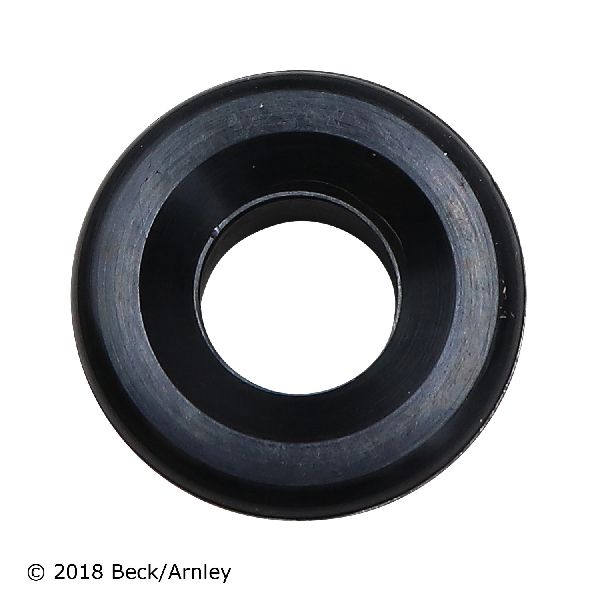
Est. part cost: $30-$180 - Dirty Throttle Body 🟡 Medium Probability → Shop Fuel Injection Throttle Body
How to confirm: Remove the air intake hose from the throttle body and inspect the throttle plate and bore for black carbon buildup. This buildup can prevent the throttle plate from closing completely, allowing excess air to enter.
Typical fix: Clean the throttle body bore and plate with a dedicated throttle body cleaner and a soft brush or rag. A new throttle body gasket may be needed.
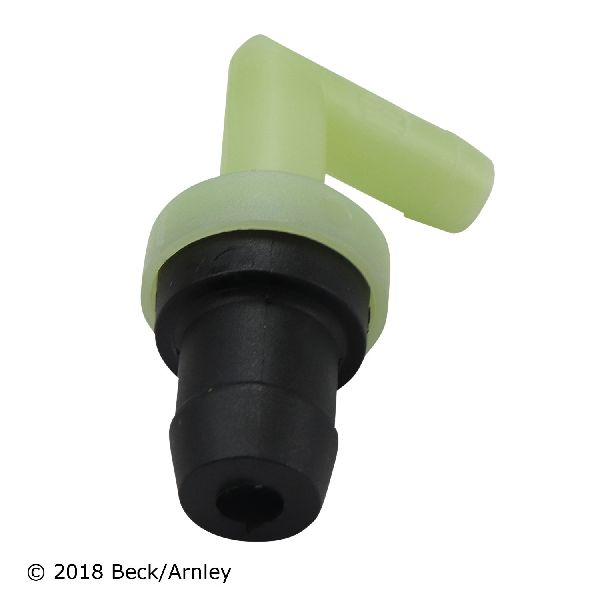
Est. part cost: $5-$20 - Faulty PCV Valve or Hose 🟡 Medium Probability → Shop PCV Valve The Positive Crankcase Ventilation (PCV) valve can get stuck open, creating a constant vacuum leak. The hose connected to it can also crack, which is a very common failure point.
How to confirm: Remove the PCV valve and shake it; a good valve should rattle. If it's stuck open or closed, it needs replacement. Inspect the hose for cracks or mushiness.
Typical fix: Replace the PCV valve and/or hose. This is an inexpensive and easy maintenance item.
Est. part cost: $15-$35
Rare But Worth Checking
- Leaking Intake Manifold Gasket: → Shop Engine Intake Manifold This would be a significant vacuum leak, often causing more severe running issues and potentially a P0171 (System Too Lean) code. A smoke test is the best way to confirm this.
- Misadjusted or Binding Throttle Cable: The throttle cable could be too tight or sticking, preventing the throttle plate from returning to its fully closed position. One owner found this to be the cause after replacing other parts.
- Faulty Power Steering Pressure Switch: This switch signals the ECU to raise the idle when the steering wheel is turned. If it fails, it might send a constant signal to raise the idle. A forum user suggested disconnecting it to see if the idle drops.
- Weak Battery / Alternator: Low system voltage can cause a variety of erratic electronic behaviors, including false sensor readings and incorrect idle control. In at least two documented forum cases, replacing a failing battery resolved a persistent P0507 code after other attempted fixes failed.
Diagnosis Steps
- Read the code with an OBD-II scanner and confirm P0507 is present. Note any other codes, especially P0171.
- With the engine running, observe the idle RPM. Confirm it is higher than the typical warm idle speed (usually around 750 RPM).
- Perform a thorough visual inspection of all vacuum lines connected to the intake manifold. Pay close attention to the PCV hose and the large rubber intake boot for cracks or loose connections.
- For a definitive diagnosis of vacuum leaks, perform a smoke test on the intake system.
- Remove the air intake ducting and inspect the throttle body and plate for carbon buildup. Clean if necessary, replacing the gasket.
- Remove the Idle Air Control (IAC) valve. Inspect for carbon buildup and clean it. Test the resistance across the terminals; it should be between 7.7 and 9.3 ohms. Replace if out of spec or if cleaning doesn't help.
- Check the throttle cable to ensure it is not binding and has a small amount of slack, allowing the throttle plate to close completely.
- Inspect the PCV valve by shaking it (it should rattle) and check its connecting hose for damage.
- If the battery is old or you've experienced other electrical issues, have the battery and alternator tested. Low voltage can cause erroneous codes.
Parts You'll Likely Need
- Idle Air Control (IAC) Valve
(OEM #FSN5-20-660B)— This valve is the primary component for controlling idle speed. It frequently gets stuck or fails due to carbon buildup, leading directly to P0507.
Trusted brands: Mazda (OEM), Standard Motor Products, Delphi
OEM price range: $150-$200
Aftermarket price range: $30-$90 - Vacuum Hose(s) — A cracked vacuum hose is the most common source of unmetered air that causes a high idle on this vehicle. They become brittle with age.
Trusted brands: Continental, Gates
OEM price range: $15-$50
Aftermarket price range: $10-$30 - PCV Valve
(OEM #FS01-13-890)— A stuck-open PCV valve acts as a vacuum leak. It's an inexpensive part that is often overlooked.
Trusted brands: Mazda (OEM), Standard Motor Products, Beck/Arnley
OEM price range: $20-$40
Aftermarket price range: $10-$20
Related Codes That Often Appear With This One
- P0171 - System Too Lean (Bank 1): This code often accompanies P0507 when the root cause is a significant vacuum leak, as the unmetered air causes the air/fuel mixture to become lean.
Platform-Specific Known Issues
- VTCS/VICS Screw Ingestion: The intake manifold contains butterfly valves for the VTCS and VICS systems. The small Phillips head screws holding these butterfly plates to their shafts have been known to back out over time due to vibration and heat cycles. If they fall out, they can be ingested by the engine, causing severe damage to the valves, pistons, and cylinder head. While not a direct cause of P0507, it's a critical preventative maintenance check for any owner working on the intake system. Some owners apply Loctite to the screws or remove the VTCS plates entirely.
Mechanic-Grade Diagnostic Values
- Idle Air Control (IAC) Valve Coil Resistance — expected: 7.7 - 9.3 Ω at 23°C (73°F). Failure: An open circuit (infinite resistance) or a reading outside the specified range.
- Throttle Position Sensor (TPS) Output Voltage — expected: Approx. 0.5V at closed throttle and approx. 4.5V at wide-open throttle.. Failure: Voltage that is erratic, does not change smoothly with throttle movement, or is outside the expected range at closed throttle.
Scan Tool Commands That Help
- Generic OBD-II Scanner / Manual Procedure: ECU Reset / Idle Relearn Procedure — After cleaning the throttle body or replacing the IAC valve, the ECU's learned idle trim may be incorrect for the new/cleaner component, causing a continued high idle. A reset forces the ECU to relearn the base idle position. The common procedure is to disconnect the negative battery terminal for at least 15 minutes to clear the ECU's memory. After reconnecting, start the engine and let it idle up to operating temperature (10-15 minutes) without touching the accelerator.
Wiring & Ground Locations
- G4 / G5 — At the rear of the engine.. These are primary engine ground points. A poor connection here can cause erratic behavior from various engine sensors, including the IAC valve and TPS, leading to incorrect idle control.
- G6 — At the left front inner fender panel.. This is a major chassis ground point. Corrosion or a loose connection here can affect the entire engine management system and contribute to electrical issues that may trigger a P0507.
- G14 — Lower left rear of the engine.. Another critical engine ground point. Ensuring this connection is clean and tight is essential for stable sensor readings and proper actuator function.
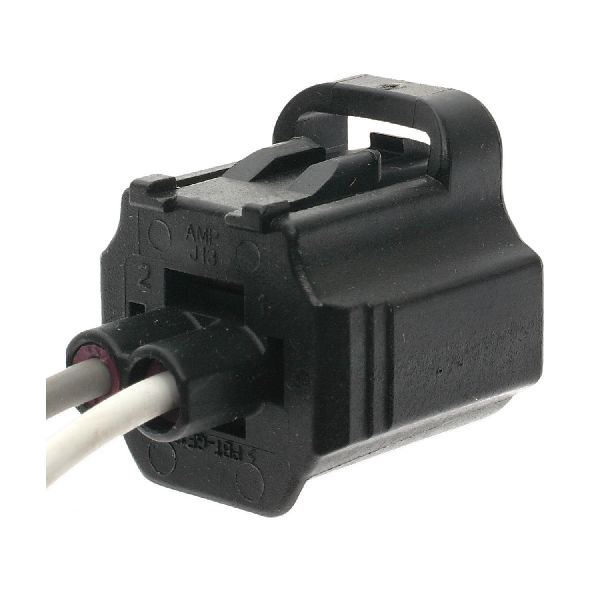
- IAC Valve Connector — On top of the throttle body, connected to the IAC valve.. The IAC valve is controlled by the PCM via this 2-pin connector. The pins can be used to test the coil's resistance. A damaged connector or wiring here will directly cause a loss of idle control.
Real Owner Repair Stories
- ClubProtege.com forum user 'smetzger' (Mazda Protege (year not specified, but in 3rd gen forum)) — P0507 code, high cold start RPM (2000), warm idle at 800-900 RPM.
❌ Tried (didn't work) Checked for vacuum leaks (none found), Tested IAC valve resistance (checked out OK at 9 ohms), Cleaned throttle body and replaced gasket
✅ What actually fixed it Replacing the car battery. - Mazdas247.com forum user 'smetzger' (2003 Protege5, 131k miles) — P0507 code.
❌ Tried (didn't work) Replaced PCV valve and spark plugs, Cleaned throttle body, Checked for vacuum leaks, Tested IAC valve resistance (was within spec), Swapped the entire throttle body and IAC valve from another identical car (code did not follow the parts)
✅ What actually fixed it A repair shop replaced the IAC valve, which solved the problem, suggesting an intermittent fault not detectable by basic resistance tests or part swapping in that instance. - Mazda Forum user 'aftrburnrs' (2002 Protege5 Manual) — P0507 code, idle shoots to 2600 RPM when cold, RPMs flare between shifts.
❌ Tried (didn't work) Cleaned the Idle Air Control Valve, Replaced the Idle Air Control Valve
✅ What actually fixed it The accelerator cable was not allowing the throttle to close completely. Adjusting the cable fixed the high idle.
"I Checked Everything" — The Actual Cause
- In one documented case, a user performed multiple checks for vacuum leaks and found none. They also cleaned the throttle body and tested the IAC valve's resistance, which was in spec. The P0507 code persisted until the car's battery was replaced, which ultimately resolved the issue, indicating that low or unstable system voltage was causing the ECU to incorrectly manage the idle.
OEM Part Supersession History
FSN5-20-660A→FSN5-20-660B— Likely an internal revision for improved reliability or manufacturing process.
Heads up: The parts are interchangeable. FSN5-20-660B is the correct service replacement for vehicles originally equipped with the 'A' revision.
Model Year Variations Within This Range
- 1999-2000 vs 2001-2003: For 1999-2000 models, the top-trim ES engine was a 1.8L four-cylinder. In 2001, this was replaced by the 2.0L FS-DE engine across the upper trims (LX, ES), which remained through 2003. While the idle control concept is the same, some associated parts and their locations may differ slightly between the 1.8L and 2.0L engines.
Diagnostic Flowchart
Other Known Issues on This Vehicle
Issues unrelated to this code that are worth knowing about as an owner of this generation:
- Premature Rust 🔴 High — Extremely common, especially on the rear quarter panels, wheel wells, and underbody. Often starts appearing after 5-7 years.
- Automatic Transmission (FN4A-EL) Failure 🔴 High — Commonly reported between 60,000 and 150,000 miles. Symptoms include delayed engagement into Drive when cold, harsh shifting, and complete failure. (Ref: Internal service bulletins mentioned premature forward-clutch failure due to a rough finish on the clutch drum.)
- Variable Tumble Control System (VTCS) Issues 🟠 Medium — The butterfly valves in the intake manifold can rattle on cold starts, and in some cases, the small screws holding them can back out and fall into the engine, causing catastrophic damage. (Ref: A TSB was reportedly issued for the VICS (Variable Inertia Charging System) screws, which are in the same manifold.)
- Sticking/Clogged EGR Valve 🟠 Medium — Carbon buildup can cause the EGR valve to stick open, leading to stalling at idle and poor performance.
- Oil Consumption 🟡 Low — The FS-DE engine is known to start consuming oil after 100,000 miles (150,000 km).
- Failing Ignition Coils 🟡 Low — Ignition coil packs are a frequent failure item, leading to misfires.
Used vs. New Parts: Buying Guide for This Vehicle
When a used part is the smart pick: A used throttle body assembly from a junkyard can be a cost-effective choice, as it often includes the IAC valve and TPS. Given that a new OEM IAC valve can be expensive, a low-mileage used assembly can provide all the necessary components for a fraction of the price. Vacuum hoses and PCV valves should always be purchased new due to their low cost and high failure rate from age-related brittleness.
Donor-vehicle mileage cap: roughly under 120000 miles for the part to have meaningful remaining life.
What to inspect on the donor part:
- Check the throttle plate and bore for excessive carbon buildup or scoring.
- Inspect the IAC valve for physical damage or signs of being tampered with.
- Look for cracks or brittleness on any included plastic or rubber components.
- If possible, test the resistance of the included IAC valve and TPS before purchase.
Aftermarket brands forum-validated for this vehicle:
- Standard Motor Products (For IAC Valve and TPS)
- Beck/Arnley (For PCV Valve and IAC Valve)
- Delphi (For IAC Valve)
Brands owners have reported issues with on this vehicle:
- Unbranded, no-name IAC valves from online marketplaces may have poor quality control and fail prematurely. While tempting due to low cost, forum discussions often show these parts failing to resolve the issue or failing within a short period.
Real Owner Stories
Aggregated from forums and TSBs cited above. Mileages and costs reflect what owners reported in those sources.
1999-2003 Mazda Protege FS-DE 2.0L
Symptoms: The owner experienced a persistent P0507 code. They checked the IAC valve resistance (which was 7.7-9.3 ohms), cleaned a filthy throttle body, and searched for vacuum leaks.
What fixed it: A new battery ultimately solved the code, demonstrating how system voltage affects the ECU.
Source hint: ClubProtege.com - P0507 and IAC Valve
1999-2003 Mazda Protege FS-DE 2.0L
Symptoms: The owner replaced the PCV valve and cleaned the throttle body. The IAC valve resistance was within the correct specification, but the P0507 code would not go away.
What fixed it: Replacing the IAC valve resolved the issue, suggesting the original part had an intermittent mechanical failure.
Source hint: Mazdas247.com - Woes of P0507 Idle Control System RPM: Higher than Expected
1999-2003 Mazda Protege FS-DE 2.0L
Symptoms: The engine had a very high idle of 2600 RPM when cold and a P0507 code. Replacing the IAC valve did not improve the condition.
What fixed it: The owner discovered the throttle cable was misadjusted, which prevented the throttle plate from fully closing.
Source hint: Mazda Forum - P0507 Idle Control System RPM High
Related OBD-II Codes
Frequently Asked Questions
What is the correct resistance specification for the Idle Air Control (IAC) valve on my 2.0L Protege?
My Protege has a high idle and a P0507 code, but the IAC valve tested fine. Could it still be the valve?
Could a weak battery cause a P0507 code on my 1999-2003 Mazda Protege?
Where are the most common vacuum leak points on the FS-DE 2.0L engine?
I'm working on my intake manifold to fix a P0507; is there anything else I should check?
Can the throttle cable adjustment affect my idle speed and trigger P0507?
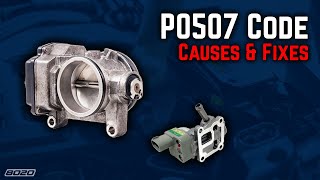
Helpful Videos

We Have This Part in Stock


The information in this article is provided for general reference and educational purposes only. Vehicle specifications, procedures, and part compatibility can vary by production date, trim level, and region. Always consult your vehicle's factory service manual and verify part numbers before purchasing or performing repairs. Safety-critical components such as airbags, seat belts, and braking systems should be installed by a qualified professional.
- Mazda Protege:
- 🧭 Diagnostic Flowchart
- 🎬 Helpful Videos
- 🛍️ Shop This Part
- What's Unique About the 1999-2003 Mazda Protege
- Symptoms You May Notice
- Most Likely Causes
- Rare But Worth Checking
- Diagnosis Steps
- Parts You'll Likely Need
- Related Codes That Often Appear With This One
- Platform-Specific Known Issues
- Mechanic-Grade Diagnostic Values
- Scan Tool Commands That Help
- Wiring & Ground Locations
- Real Owner Repair Stories
- "I Checked Everything" — The Actual Cause
- OEM Part Supersession History
- Model Year Variations Within This Range
- Other Known Issues on This Vehicle
- Used vs. New Parts: Buying Guide for This Vehicle
- Real Owner Stories
- 1999-2003 Mazda Protege FS-DE 2.0L
- 1999-2003 Mazda Protege FS-DE 2.0L
- 1999-2003 Mazda Protege FS-DE 2.0L
- Related OBD-II Codes
- Frequently Asked Questions
- 🎟️ Get 5% Off