

P0507 on 2003-2012 Mazda RX-8: High Idle Causes and Fixes
On a Mazda RX-8, code P0507 is almost always caused by a vacuum leak from a cracked or disconnected hose. The Renesis engine has many vacuum lines that get brittle with heat. Common culprits include the accordion intake tube and small hoses under the intake manifold. A thorough inspection and smoke test is the best diagnostic approach. After repair, an NVRAM reset (the '20-brake-stomp' method) is often required. Expect to spend under $50 on new vacuum hoses for a DIY fix.
- P0507 on an RX-8 means the idle is too high, and the most likely culprit is a vacuum leak.
- The engine's heat makes vacuum hoses brittle; inspect them all carefully, especially the ones connected to the intake manifold.
- Before buying any parts, clean the Mass Airflow (MAF) sensor and the throttle body, as this is a cheap and effective diagnostic step.
- A smoke test is the most efficient way to find a hidden vacuum leak.
- For manual cars, if the idle only acts up when using the clutch, check the clutch and neutral switch wiring.
What's Unique About the 2003-2012 Mazda RX-8
The Renesis rotary engine in the RX-8 generates significant heat in the engine bay, which accelerates the aging process of rubber and plastic components. This makes the numerous vacuum hoses used for the intake and emissions systems particularly prone to cracking and causing leaks. The most common point of failure is the flexible accordion intake tube between the MAF sensor and the throttle body. While the P0507 code is generic, on the RX-8 it almost always points to unmetered air entering the engine, forcing the computer to struggle with maintaining a proper idle.
Generation note: The RX-8 was produced in two series: Series I (2003-2008) and Series II (2009-2012). While the fundamental causes of P0507 are the same for both, there are differences in the intake manifold design and vacuum hose routing. The diagnostic principles are identical, but the exact location of a leak may differ slightly. The NVRAM reset procedure also differs between Series I and Series II models.
Symptoms You May Notice
- Check Engine Light is on
- Engine idle speed is noticeably high (e.g., 1000-1500 RPM when warm)
- Erratic or hunting idle, especially when coming to a stop
- Rough idling
- Increased fuel consumption
- In some cases, the engine may stall after a period of high idling or after the battery is disconnected and reconnected.
- Replacing the throttle body when it only needs cleaning.
- Replacing the MAF sensor when the actual problem is a simple vacuum leak elsewhere, like the accordion tube.
- Assuming a major engine problem without first performing a smoke test to rule out vacuum leaks.
- Failing to perform an NVRAM reset after a repair, leading to the belief that the fix was unsuccessful because the idle remains high or erratic.
Most Likely Causes
- Vacuum Leak 🔴 High Probability The Renesis engine's high operating temperatures cause the many vacuum hoses in the engine bay to become brittle, crack, and leak over time. The most common culprits are the accordion intake tube, the vacuum nipple on the upper intake manifold for the brake booster, and the small hoses running under the manifold.
How to confirm: Perform a thorough visual inspection of all vacuum lines, paying close attention to the accordion tube for cracks in its ribs. The most effective method is to use a smoke machine to introduce smoke into the intake system and watch for where it escapes. A DIY alternative is to carefully spray short bursts of brake cleaner or a flammable fluid around suspected leak points and listen for a change in engine RPM, but this should be done with extreme caution due to fire risk.
Typical fix: Replace the cracked or broken vacuum hose(s). It is often recommended to replace multiple aging hoses at once. The accordion tube (Part N3H1-13-221A) is a very frequent replacement item. The intake manifold gaskets can also be a source of leaks.
Est. part cost: $10-$50 for hoses, $30-$60 for intake gaskets, $40-$70 for accordion tube - Dirty or Faulty Mass Airflow (MAF) Sensor 🟡 Medium Probability Oil from aftermarket air filters or general contamination can coat the MAF sensor element, causing it to inaccurately measure the air entering the engine. This leads to incorrect fuel calculations and can affect idle.
How to confirm: Remove the MAF sensor from the intake tube. Visually inspect the small wires inside for contamination. A more definitive test is to monitor MAF readings (g/s) with an OBD-II scanner; readings that are unusually low at idle may indicate a problem. A healthy RX-8 should read between 3.8 and 5.0 g/s at warm idle.
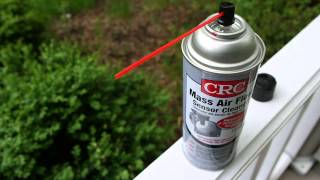
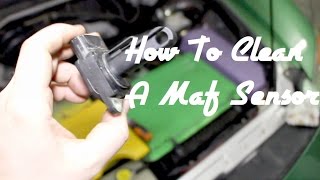
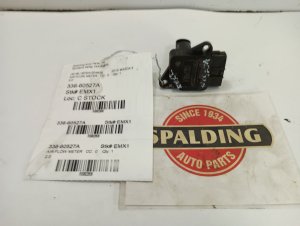
Typical fix: Clean the sensor wires carefully using only dedicated MAF sensor cleaner spray. Do not touch the wires. If cleaning doesn't resolve the issue, the sensor may need to be replaced. The OEM part is Mazda L321-13-215, often a Denso unit. 🎬 Watch: How to clean your RX-8's MAF sensor properly.
Est. part cost: $10 for cleaner, $80-$150 for a new sensor - Dirty Throttle Body 🟡 Medium Probability → Shop Fuel Injection Throttle Body
How to confirm: Remove the intake tube connected to the throttle body and inspect the throttle plate and bore for carbon buildup. Significant buildup can prevent the plate from closing completely at idle.
Typical fix: Clean the throttle body bore and plate with a dedicated throttle body cleaner and a soft cloth. Be careful not to move the plate aggressively on this electronic throttle body. Disconnecting the battery before cleaning is recommended. After cleaning, an idle relearn procedure or NVRAM reset may be necessary.
Est. part cost: $10-$15 for cleaner - Faulty Neutral or Clutch Switch (Manual Transmission) ⚪ Low Probability
How to confirm: This is more difficult to diagnose. Symptoms may include the idle revving up only when the clutch is depressed or the car is in neutral. A scan tool may show a fault code for the clutch switch circuit.
Typical fix: Inspect the wiring to the switch for damage, as one owner found a pinched wire was the cause. If the switch itself is faulty, it will need to be replaced.
Est. part cost: $40-$80
Rare But Worth Checking
- Leaking Brake Booster: → Shop Power Brake Booster A leak in the brake booster or its vacuum line can create a significant vacuum leak. This can be tested by pumping the brakes at idle; if the idle surges or becomes very rough, the booster may be at fault. The check valve on the booster hose can also fail.
- Stuck Intake Valve (SSV, APV, VDI): The Renesis engine has several valves in the intake manifold (Secondary Shutter Valve, Auxiliary Port Valve, Variable Dynamic Intake). If one of these valves or its solenoid fails and sticks open, it can affect airflow and idle quality, though this usually presents with other codes as well.
- Faulty Eccentric Shaft Position Sensor: This sensor provides the PCM with engine speed and position. A faulty sensor can cause erratic timing and idle instability. An NVRAM reset is recommended after replacing this sensor.
Diagnosis Steps
- Read the freeze frame data with an OBD-II scanner to see the engine conditions when the code was set. Note the RPM and engine temperature.
- Perform a thorough visual inspection of the engine bay, focusing on all vacuum hoses connected to the intake accordion, throttle body, and upper intake manifold. Pay special attention to the accordion tube for cracks.
- With the engine running, listen for hissing sounds that would indicate a vacuum leak.
- Clean the Mass Airflow (MAF) sensor using dedicated MAF cleaner spray. 🎬 See this walkthrough on cleaning a Mass Airflow sensor.
- Inspect and clean the electronic throttle body of any carbon buildup.
- If a leak is still suspected but not found, perform a smoke test. This is the most reliable way to locate small, hard-to-see leaks in hoses or gaskets.
- After any repairs, perform the NVRAM/KAM reset. For Series 1 (2004-2008), turn the key to 'ON' (do not start engine) and pump the brake pedal 20 times within 8 seconds. The oil pressure needle should sweep to confirm success on later models. For Series 2 (2009-2012), the procedure involves disconnecting the negative battery cable for at least a minute and pressing the brake pedal once.
- After the reset, start the car and let it idle for 10-20 minutes to relearn idle trims.
- For manual transmission cars, investigate the clutch and neutral switches if the idle only becomes erratic when the clutch is used or the car is in gear.
Parts You'll Likely Need
- Vacuum Hose Kit/Assortment — This is the most frequent cause of P0507 on the RX-8 due to hoses becoming brittle and cracking from engine heat.
Trusted brands: Generic automotive vacuum hose
OEM price range: $50-$100 for specific molded hoses
Aftermarket price range: $10-$30 for bulk hose - Intake Air Hose (Accordion Tube)
(OEM #N3H1-13-221A)— This specific part is a notorious failure point for vacuum leaks due to developing cracks in the flexible ribs.
Trusted brands: Mazda OE
OEM price range: $40-$70
Aftermarket price range: $30-$50 - Mass Airflow (MAF) Sensor
(OEM #L321-13-215)— If cleaning the MAF sensor doesn't resolve incorrect readings, replacement is the next step.
Trusted brands: Denso (OEM Manufacturer), Mazda OE
OEM price range: $120-$180
Aftermarket price range: $50-$100 - Upper Intake Manifold Gasket
(OEM #N3H1-13-111)— If a vacuum leak is traced to the intake manifold, the gasket will need to be replaced when the manifold is removed for service or to access hoses underneath.
Trusted brands: Mazda OE, Fel-Pro
OEM price range: $20-$30
Aftermarket price range: $10-$20
Related Codes That Often Appear With This One
- P0171 — System Too Lean (Bank 1). A vacuum leak introduces unmetered air, causing the engine to run lean. The PCM tries to compensate by adding more fuel, but if the leak is large enough, it will set both a P0171 and a P0507.
- P0335 — Crankshaft Position Sensor 'A' Circuit. A faulty Eccentric Shaft Position sensor can cause erratic idle and stalling, which may be accompanied by a P0507 if the idle becomes unstable and high.
Platform-Specific Known Issues
- Owner Story: On RX8Club.com, a user with P0507 found their issue was intermittent. After cleaning the MAF and checking visible hoses, the problem persisted. The fix was an NVRAM reset, which they noted made the car 'fine for a while' before the issue returned, suggesting the underlying leak was still present but the reset temporarily cleared the learned bad idle behavior. This highlights the importance of fixing the root cause before relying on a reset.
- Owner Story: Another RX8Club.com thread confirms the P0507 triggers at ~200 RPM above target. A user's freeze frame data showed the code set at 1023 RPM. The advice given was to check for a pinched vacuum hose near the airbox and clean the MAF sensor due to visible oil blowback, a common issue.
- Owner Story: Multiple owners report that after disconnecting the battery for any reason (e.g., stereo installation, battery replacement), the car will refuse to idle and stall immediately. The fix is to perform the NVRAM reset and then let the car idle for 15-20 minutes to relearn. Some owners had to hold the throttle manually to keep the car from dying during this relearn period.
Mechanic-Grade Diagnostic Values
- Mass Airflow (MAF) Sensor Reading at Warm Idle — expected: 3.8 - 5.0 g/s. Failure: Readings significantly higher (indicating a potential sensor fault) or lower (indicating a vacuum leak downstream of the sensor) than the expected range.
- Throttle Position Sensor 1 (TP1) Voltage — expected: 0.4V - 0.8V at 0% throttle (closed), increasing to 3.8V - 4.0V at 100% throttle (wide open).. Failure: Voltage outside of the expected range at closed throttle, or non-linear/erratic voltage increase as the pedal is depressed.
- Throttle Position Sensor 2 (TP2) Voltage — expected: 1.18V - 4.30V (range varies with throttle position, acts as a redundant check for TP1).. Failure: Voltage that does not correlate correctly with TP1 or is stuck at a specific value.
- Eccentric Shaft Position Sensor Resistance — expected: 950 - 1,250 Ohms at room temperature.. Failure: Resistance reading outside of this specification indicates a faulty sensor coil.
Scan Tool Commands That Help
- Mazda IDS (or equivalent professional scanner): KAM Reset — This function is the dealer-tool equivalent of the manual NVRAM/KAM reset procedures. It should be used after replacing components like the MAF sensor, eccentric shaft sensor, or throttle body, or after fixing a significant vacuum leak to clear learned fuel trims and sensor profiles.
- Mazda IDS (or equivalent professional scanner): PID Monitoring (TP1, TP2, MAF, RPM) — Used during diagnosis to view live data from key sensors. This allows a technician to see if the MAF reading is plausible, if the throttle position sensors are reporting closed throttle correctly at idle, and to confirm the reported RPM matches the high idle condition.
Wiring & Ground Locations
- Engine Block to Chassis Ground — A ground strap is typically located from the lower intake manifold to the chassis frame rail.. A poor engine ground can cause erratic sensor readings for the MAF, throttle body, and eccentric shaft sensor, leading to incorrect PCM calculations and potential high idle.
- PCM Connector 1J — Pin 1J on the first connector of the Powertrain Control Module (PCM).. This is the signal wire for Throttle Position Sensor 1 (TP1). It should be checked for correct voltage (0.4-0.8V at idle) to ensure the PCM knows the throttle is closed.
- PCM Connector 1M — Pin 1M on the first connector of the Powertrain Control Module (PCM).. This is the signal wire for the redundant Throttle Position Sensor 2 (TP2). It is checked in conjunction with TP1 to verify throttle plate position.
- Main Harness Grounds — Multiple ground points exist on the chassis. Key locations include two under the airbox/battery tray, one near the brake booster, and two on the passenger side near the strut tower and washer bottle.. The sensors and actuators that control idle speed rely on these grounds. Corrosion or looseness at these points can introduce electrical noise and faulty signals.
- Eccentric Shaft Position Sensor Connector — Located on the front of the engine, near the main pulley.. The wiring harness to this sensor is sensitive. A short to ground on terminal A or B can cause a P0335 code and lead to severe idle instability, which could trigger a P0507.
Real Owner Repair Stories
- rx8club.com forum user (2004 Mazda RX-8) — High idle (around 1200 RPM), P0507 code present.
❌ Tried (didn't work) Cleaning the MAF sensor, Cleaning the throttle body, Performing the NVRAM reset
✅ What actually fixed it The user performed a smoke test and found no leaks. Upon closer inspection, they discovered a small, hairline crack in one of the plastic vacuum nipples on the upper intake manifold. The crack was so fine it didn't leak smoke noticeably but would open up under engine vacuum. Replacing the intake manifold (or repairing the nipple) resolved the high idle. - rx8club.com forum user (2007 Mazda RX-8 6-speed) — Goofy idle, wanting to stall, codes P0172 (System Too Rich) and P0335 (CKP Sensor), later P2097 (Post Catalyst Fuel Trim Too Rich). While not P0507, the root cause is relevant to idle stability.
❌ Tried (didn't work) Cleaning the Eccentric Shaft Position (ESS) sensor., Resetting NVRAM (provided a temporary fix).
✅ What actually fixed it The user found continuity between one of the ESS sensor wires and the engine block, indicating a short to ground in the wiring harness. This faulty signal from the ESS was causing the erratic idle and fuel trim issues. The fix required repairing or replacing the engine wiring harness.
"I Checked Everything" — The Actual Cause
- A common edge case is a failure of the one-way check valve inside the brake booster vacuum hose. The valve can fail in a way that it allows unmetered air to be drawn into the intake manifold from the booster, but it may not show up during a low-pressure smoke test. The symptom is often a high idle that gets worse or changes when the brake pedal is pumped repeatedly while idling.
Model Year Variations Within This Range
- 2003-2008 (Series 1): The NVRAM reset procedure involves turning the key to 'ON' and pumping the brake pedal 20 times within 8 seconds. On later S1 models, the oil pressure gauge will sweep to confirm the reset.
- 2009-2012 (Series 2): The NVRAM reset procedure is different, requiring the negative battery cable to be disconnected for at least one minute, followed by pressing the brake pedal once before reconnecting. This also necessitates re-initializing the power windows and DSC steering angle sensor.
- 2009-2012 (Series 2): The intake manifold design and vacuum hose routing differ from the Series 1. While the failure principles (brittle hoses) are the same, the exact location and shape of the hoses will be different, requiring year-specific parts if ordering pre-molded hoses.
Diagnostic Flowchart
Other Known Issues on This Vehicle
Issues unrelated to this code that are worth knowing about as an owner of this generation:
- Premature Apex Seal Wear / Compression Loss 🔴 High — Very common, especially on engines over 60,000 miles. Poor maintenance, weak ignition, or inadequate lubrication accelerates wear. Symptoms include rough idle, hard starting (especially when hot), and significant power loss.
- Ignition Coil Failure 🔴 High — Extremely common. OEM coils have a short lifespan (often failing by 30,000 miles) due to engine bay heat. Failing coils lead to misfires, which can destroy the catalytic converter and accelerate engine wear.
- Engine Flooding 🟠 Medium — Common if the car is shut off before reaching operating temperature. A weak ignition system, battery, or starter motor dramatically increases the risk. While preventable, it can leave an owner stranded.
- Weak Starter Motor (Early Models) 🟠 Medium — Early 2003-2005 models were equipped with a slower, 1.2kW starter (N3H1) that struggles to start engines with even minor compression loss. Mazda later issued upgraded, faster starters (N3H1-A, N3Z1) that are a common and necessary upgrade. (Ref: A service bulletin was issued to allow owners to upgrade to the faster starter motor.)
- High Oil Consumption 🟠 Medium — This is a characteristic of the Renesis engine, which is designed to inject oil into the combustion chamber for lubrication. However, owners must be vigilant about checking and topping off oil levels, as running low can quickly lead to engine damage.
- Catalytic Converter Failure 🟠 Medium — Often a secondary failure caused by a weak ignition system. Unburnt fuel from misfires enters the exhaust and overheats the catalyst, leading to a blockage, power loss, and potential engine damage.
Used vs. New Parts: Buying Guide for This Vehicle
When a used part is the smart pick: For this repair, obtaining a used throttle body or a complete used intake manifold from a low-mileage donor car can be a cost-effective option if those parts are confirmed as the cause of the leak. These are generally robust mechanical parts with low failure rates.
Donor-vehicle mileage cap: roughly under 80000 miles for the part to have meaningful remaining life.
What to inspect on the donor part:
- For a throttle body, check that the throttle plate moves smoothly and isn't scored or damaged.
- For an intake manifold, inspect all plastic vacuum nipples for any signs of cracking or brittleness. Ensure no bolts are stripped and gasket surfaces are clean.
- Avoid parts from cars that show signs of major engine bay fire, flood, or heavy front-end collision damage.
OEM-only on this vehicle (don't cheap out):
- Eccentric Shaft Position Sensor: Aftermarket versions have a high failure rate and can cause persistent starting and idling issues. Stick with Mazda OE or the original manufacturer (often Denso).
- Mass Airflow (MAF) Sensor: While some aftermarket brands work, many cause incorrect fuel trims. Denso (the OEM supplier) or Mazda OE are highly recommended for reliable performance.
Aftermarket brands forum-validated for this vehicle:
- Denso for MAF and other sensors.
- Fel-Pro for intake gaskets.
Brands owners have reported issues with on this vehicle:
- Unbranded, 'white-box' electronic sensors (MAF, E-Shaft Sensor, Throttle Body) from online marketplaces are frequently reported on forums as being dead-on-arrival or failing shortly after installation.
Real Owner Stories
Aggregated from forums and TSBs cited above. Mileages and costs reflect what owners reported in those sources.
2004-2008 Mazda RX-8 13B-MSP
Symptoms: The P0507 code was intermittent. The owner cleaned the MAF and checked visible hoses, but the high idle persisted.
What fixed it: An NVRAM reset temporarily cleared the behavior, though it was noted that the underlying vacuum leak likely still needed to be addressed as the issue eventually returned.
Source hint: RX8Club.com: 'NVX, P0507 code' - https://www.rx8club.com/canadian-forum-42/nvx-p0507-code-161041/
2004-2008 Mazda RX-8 13B-MSP
Symptoms: The Check Engine Light triggered at 1023 RPM (roughly 200 RPM over target). There was visible oil blowback on the MAF sensor.
What fixed it: Cleaning the MAF sensor and checking for a pinched vacuum hose near the airbox.
Source hint: RX8Club.com: 'CE Light on (P0507)' - https://www.rx8club.com/series-i-trouble-shooting-95/ce-light-p0507-144679/
2003-2012 Mazda RX-8 13B-MSP
Symptoms: After a battery replacement or stereo installation, the car would refuse to idle and stalled immediately.
What fixed it: Performed an NVRAM reset and let the car idle for 15-20 minutes to relearn idle trims; some owners had to manually hold the throttle during the process.
Source hint: RX8Club.com: 'Fix for engine stall after battery disconnect' - https://www.rx8club.com/series-i-trouble-shooting-95/fix-engine-stall-after-battery-disconnect-228993/
Related OBD-II Codes
Frequently Asked Questions
Why does my RX-8 stall immediately after I disconnected the battery, and is it related to P0507?
What are the specific MAF sensor readings I should look for on my RX-8 to diagnose a high idle?
Is there a specific part on the intake that frequently causes P0507 on the 2003-2012 models?
How do I perform the '20-brake-tap' NVRAM reset mentioned for the Series 1 RX-8?
Can a faulty clutch switch really cause a P0507 high idle code on a manual RX-8?
Does the P0507 code trigger as soon as the idle is slightly off?
Helpful Videos
We Have This Part in Stock

The information in this article is provided for general reference and educational purposes only. Vehicle specifications, procedures, and part compatibility can vary by production date, trim level, and region. Always consult your vehicle's factory service manual and verify part numbers before purchasing or performing repairs. Safety-critical components such as airbags, seat belts, and braking systems should be installed by a qualified professional.
- Mazda RX-8:
- 🧭 Diagnostic Flowchart
- 🎬 Helpful Videos
- 🛍️ Shop This Part
- What's Unique About the 2003-2012 Mazda RX-8
- Symptoms You May Notice
- Most Likely Causes
- Rare But Worth Checking
- Diagnosis Steps
- Parts You'll Likely Need
- Related Codes That Often Appear With This One
- Platform-Specific Known Issues
- Mechanic-Grade Diagnostic Values
- Scan Tool Commands That Help
- Wiring & Ground Locations
- Real Owner Repair Stories
- "I Checked Everything" — The Actual Cause
- Model Year Variations Within This Range
- Other Known Issues on This Vehicle
- Used vs. New Parts: Buying Guide for This Vehicle
- Real Owner Stories
- 2004-2008 Mazda RX-8 13B-MSP
- 2004-2008 Mazda RX-8 13B-MSP
- 2003-2012 Mazda RX-8 13B-MSP
- Related OBD-II Codes
- Frequently Asked Questions
- 🎟️ Get 5% Off