

P0507 on 2014-2023 Mini Cooper: Causes and Fixes for High Idle RPM
On a 2014-2023 Mini Cooper with the 2.0L B48/B46 engine, code P0507 is most often caused by a failed fuel tank breather valve (EVAP purge valve) or a faulty PCV system creating a vacuum leak. Replacing the breather valve is a common, relatively inexpensive DIY fix that many owners have successfully performed.
- P0507 on your Mini Cooper means the idle is too high, most likely due to un-metered air entering the engine.
- The two most probable causes are a bad Fuel Tank Breather Valve (a simple fix) or a failed PCV system within the valve cover (a more involved repair).
- Before buying any parts, test for a bad PCV valve (oil cap test) and a faulty breather valve (clamping the line).
- A smoke test is the most reliable way to find hidden vacuum leaks if the cause isn't immediately obvious.
- Do not assume the throttle body is bad; it is rarely the root cause on this vehicle for this specific code.
What's Unique About the 2014-2023 Mini Cooper
While P0507 is a generic code, on the F-series Mini Cooper with the B48 engine, the causes are quite specific. Unlike older cars with a separate Idle Air Control (IAC) valve, this engine's idle is managed by the electronic throttle body. Owners have frequently traced this code not to the throttle body itself, but to other components creating a vacuum leak, most notably a failing fuel tank breather valve or a compromised PCV system integrated into the valve cover.
Generation note: The 2014-2023 model years cover the third-generation Mini Hardtop/Hatch, known as the F-series (F55, F56, F57). All models within this range equipped with the 2.0L Turbo engine use the B48/B46 platform, so the causes and fixes are consistent across this generation. The B48 was used in 2014 and early 2015 models, with the B46 (a SULEV version) being introduced in later 2015/2016 models for the US market; however, they are mechanically very similar regarding this fault.
Symptoms You May Notice
- Check Engine Light is on
- Engine idle speed is noticeably high (e.g., 1000-1500 RPM) when warm
- Idle may fluctuate or surge, especially in traffic or at a drive-through.
- Slightly rough or unstable idle
- Increased fuel consumption
- Whistling or sucking noise from the engine bay
- Replacing the throttle body assembly without first checking for vacuum leaks. A vacuum leak from the fuel tank breather valve or PCV system is a much more common and less expensive cause for P0507 than a failed throttle body.
Most Likely Causes
- Failed Fuel Tank Breather Valve (EVAP Purge Valve) 🔴 High Probability This specific part has been identified by numerous F56 Mini Cooper S owners as a direct cause for P0507. The valve can fail and stick open, creating a constant vacuum leak from the fuel tank's EVAP system into the intake manifold.
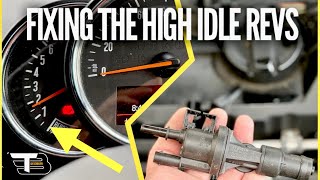
How to confirm: With the engine idling high, disconnect the electrical connector and the vapor line from the valve to the intake manifold. If the idle speed drops to normal, the valve is stuck open and needs replacement. You can also try clamping the line shut to see if it corrects the idle. A YouTube video by user 'tweedbean' demonstrates this exact diagnosis and fix. 🎬 Watch: How to diagnose and replace the fuel tank breather valve.
Typical fix: Replace the fuel tank breather valve. It is located on top of the engine under the plastic cover and is easy to access and replace with simple push-and-release hose clamps.
Est. part cost: $50-$100 - Failed PCV System (Torn Diaphragm) 🔴 High Probability The B48 engine, like many modern BMW/Mini engines, integrates the PCV diaphragm into the valve cover. This diaphragm can tear with age and heat, creating a large, un-metered vacuum leak. This is a well-documented failure mode on BMW's modular engines.
How to confirm: With the engine running at idle, try to remove the oil filler cap. If you feel very strong suction making the cap difficult to remove, or hear a loud sucking/whistling noise, the PCV diaphragm is likely torn. A smoke test will also confirm a leak from the valve cover area. Symptoms can also include increased oil consumption and oil leaks from seals due to high crankcase pressure.
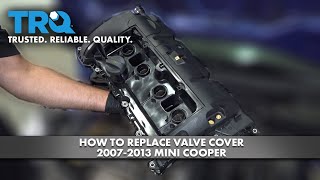
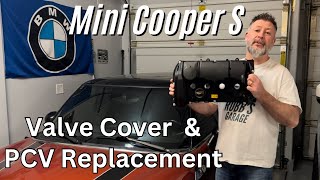
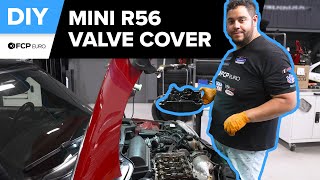
Typical fix: The PCV diaphragm is not sold separately by the OEM, requiring the entire valve cover assembly to be replaced. However, some aftermarket companies offer a replacement diaphragm and cap, which is a much cheaper but more delicate repair. 🎬 See how to repair the PCV valve without replacing the cover.
Est. part cost: $300-$500 - Vacuum Leak (Other) 🟡 Medium Probability Turbocharged engines have complex intake plumbing. Hoses can crack, and gaskets can fail over time, allowing un-metered air to enter the engine. A common failure point on tuned B48 engines is the plastic charge pipe, which can crack under increased boost pressure. Intake manifold gaskets can also fail.
How to confirm: Perform a smoke test on the intake system. A smoke machine forces low-pressure smoke into the intake, and any leaks will be visible as smoke escapes from cracked hoses (like the charge pipe), gaskets, or seals. 🎬 Watch: How to perform a smoke test to find vacuum leaks.
Typical fix: Replace the specific hose, gasket, or seal that is found to be leaking.
Est. part cost: $20-$250 - Dirty Throttle Body ⚪ Low Probability → Shop Fuel Injection Throttle Body Carbon and oil residue from the PCV system can build up around the throttle plate, preventing it from closing completely at idle. This allows a small amount of extra air to bypass the plate, raising the idle speed.
How to confirm: Remove the intake pipe connected to the throttle body and visually inspect the throttle plate and bore for black carbon buildup. This is often done after ruling out the more common breather valve and PCV issues.
Typical fix: Clean the throttle body bore and plate carefully with a throttle body cleaner and a soft cloth. Replace the throttle body gasket upon reinstallation. After cleaning, it may be necessary to reset engine adaptations with a scan tool or manual procedure.
Est. part cost: $5-$15 (for cleaner and gasket)
Rare But Worth Checking
- Carbon Buildup on Intake Valves: As a direct-injection engine, the B48 is susceptible to carbon buildup on the intake valves, which are not cleaned by fuel spray. Severe buildup can disrupt airflow and cause idle issues, though this typically occurs at higher mileage (80,000km+). This usually requires a professional cleaning service (e.g., walnut blasting).
- Faulty MAP/TMAP Sensor: The Manifold Absolute Pressure (MAP) or Temperature/Manifold Absolute Pressure (TMAP) sensors can become contaminated with oil from the PCV system, causing them to send incorrect data to the DME. This is more likely if significant PCV issues are present or if other codes, like P112F on related BMW models, are present.
Diagnosis Steps
- Read the code with an OBD-II scanner and note any other codes present, such as P0171 (System Too Lean).
- Visually inspect the engine bay for any obvious disconnected hoses or cracked plastic components.
- Test the fuel tank breather (EVAP purge) valve. This is the most common culprit. With the engine idling high, clamp the hose leading from the valve to the intake manifold or disconnect it to see if the idle returns to normal.
- Check for a failed PCV diaphragm by attempting to remove the oil cap while the engine is running. Strong suction or a loud whistling noise indicates a likely failure.
- If the above steps do not identify the issue, perform a smoke test on the entire intake system to check for less obvious vacuum leaks from hoses, gaskets (like the intake manifold gasket), or the charge pipe.
- Inspect the throttle body for carbon buildup. If dirty, remove and clean it thoroughly.
- Using a scan tool, monitor live data for the throttle position sensor and MAP sensor to ensure they are reading correctly at idle.
- If all else fails, especially on a higher mileage vehicle, use a borescope to inspect the intake valves for heavy carbon buildup.
Parts You'll Likely Need
- Fuel Tank Breather Valve
(OEM #13907621174)— This is the most frequently reported failure point on the F-series Mini Cooper that directly causes the P0507 code by creating a vacuum leak. It's a simple and quick DIY replacement.
Trusted brands: Bosch, Genuine Mini/BMW
OEM price range: $70-$100
Aftermarket price range: $40-$70 - Valve Cover
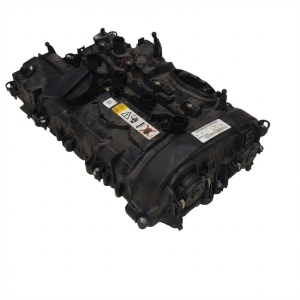
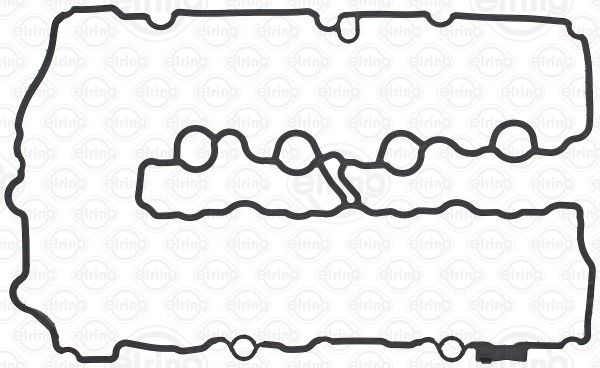
(OEM #11127645173 (confirm with VIN))— The PCV diaphragm is integrated into the valve cover. When it fails, the entire assembly must be replaced to fix the resulting vacuum leak.
Trusted brands: Genuine Mini/BMW, Vaico, Elring
OEM price range: $400-$500
Aftermarket price range: $200-$350 - Intake Manifold Gasket
(OEM #11618512968 (confirm with VIN))— If a smoke test reveals a leak between the intake manifold and the cylinder head, this gasket must be replaced.
Trusted brands: Elring, Victor Reinz, Genuine Mini/BMW
OEM price range: $30-$50
Aftermarket price range: $15-$30
Related Codes That Often Appear With This One
- P0171 — System Too Lean (Bank 1). A vacuum leak, which is a primary cause of P0507, allows un-metered air into the engine, creating a lean air/fuel mixture that can trigger P0171.
- 21A02D — Combustion control: valve lift correction when idling. This BMW-specific code can appear alongside idle issues on the B48, sometimes pointing towards a software issue or the need to reset adaptations after a repair.
- P112F — Manifold Absolute Pressure to Throttle Angle - Too High. This code can appear with idle dipping or fluctuation issues on the B48, often pointing towards a vacuum leak that the DME is trying to compensate for.
Technical Service Bulletins (TSBs) & Recalls
- SI M11 05 16: While not directly for P0507, this Service Action addresses premature wear of the crankshaft guide bearing on 2014-2015 F55/F56 models, which could in rare cases cause engine noise and DME faults related to the crankshaft sensor. This is a known issue for early F56 models.
Platform-Specific Known Issues
- Owner Experience: Successful Breather Valve Replacement: A user on North American Motoring with a 2016 MCS F56 reported experiencing a high, fluctuating idle (1000-1500 RPM) when warm, which triggered the P0507 code. After research, they identified the Fuel Tank Breather Valve as the likely cause. They purchased the part (PN 13907621174) for $180 CAD, replaced it in 15 minutes by simply removing the engine cover, and cleared the code, which resolved the issue completely.
- Reddit User Confirms Breather Valve Fix: A user on Reddit with a 1.5L 3-cylinder Mini (B38 engine, which shares architecture with the B48) experienced revving at idle. After a garage couldn't find the issue, they researched online and found the fuel tank breather valve (Bosch PN 0 280 142 524 for their engine)
Mechanic-Grade Diagnostic Values
- Idle RPM (Warm Engine) — expected: 650 - 800 RPM. Failure: Consistently 100-200+ RPM higher than the specified range.
- Fuel Tank Breather Valve (EVAP Purge Valve) Operation — expected: Should be closed at idle. A clicking sound indicates it is being pulsed by the DME, which is normal under certain conditions but not constantly open at idle.. Failure: Valve is stuck open, allowing un-metered air to flow at idle. Clamping the line from the valve to the intake should cause the idle to drop to normal.
Hidden / Shadow Codes Worth Checking
- 11A401: Fuel high pressure during fuel injection release: Pressure too low. While not directly an idle control code, fuel delivery issues can cause the DME to struggle with stable idle, and this code may be stored in shadow memory. (see via BMW-specific diagnostic software like ISTA or advanced scanners (BimmerLink, etc.).)
- 11B401: Fuel high pressure or after enabling injection (2nd ambient condition set after delay): Pressure too low. Similar to 11A401, this indicates a potential fuel pressure problem that could manifest as idle instability. (see via BMW-specific diagnostic software like ISTA or advanced scanners.)
- 133710: Valvetronic, eccentric shaft adaptation: lower stop reached. This code indicates a problem with the Valvetronic system's ability to adapt, which can directly cause idle problems. The fix may be cleaning intake valves or replacing the Valvetronic motor. (see via BMW-specific diagnostic software like ISTA.)
Scan Tool Commands That Help
- ISTA: Delete engine adaptation value (Service Functions -> Power train -> Engine Electronics -> Adjustment functions) — This is critical after replacing components that affect air/fuel mixture, such as the throttle body, fuel tank breather valve, or valve cover (PCV). It forces the DME to relearn the baseline for idle control, fuel trims, and Valvetronic positions.
- ISTA: Valvetronic servomotor adaptation — Required after replacing the Valvetronic motor or eccentric shaft to teach the system the end stops. Failure to do this will result in rough running and idle issues.
- Generic OBD-II Scanner with Bi-Directional Control: EVAP Purge/Vent Solenoid Test — To functionally test the fuel tank breather valve. The command will cycle the valve open and closed, and you should hear it click, confirming electrical function (though it doesn't rule out a mechanical jam).
Wiring & Ground Locations
- Engine Ground Strap — Typically bolted from the right-side engine mount (passenger side in US) to the chassis frame rail in the engine compartment.. A poor engine ground can cause erratic behavior in all engine sensors and actuators, including the electronic throttle body and various solenoids. While not a direct cause of P0507, it can create unstable electrical conditions leading to incorrect readings and high idle.
- Main Loom Earth Point — On some Mini models, a key ground point for the front wiring loom is on the bulkhead cross member.. This point grounds many components controlled by the DME. Corrosion or looseness here can lead to a host of electrical gremlins, including idle control problems.
Real Owner Repair Stories
- North American Motoring user 'Eric Spurrell' (2016 Mini Cooper S (F56)) — High idle RPMs (1000-1500) when the engine was warm, such as in traffic, followed by a Check Engine Light with code P0507.
✅ What actually fixed it Replaced the Fuel Tank Breather Valve (Part No. 13907621174). The replacement took 15 minutes and completely resolved the high idle and cleared the code. - Bimmerpost user 'LOWCAM' (BMW F-chassis with 140k km (approx. 88k miles)) — Slightly high idle (780-800 RPM), very slight misfire at idle, occasional hard start, and an RPM dip to 450-500 when tapping the throttle from idle.
❌ Tried (didn't work) Initial diagnosis pointed towards common idle issues.
✅ What actually fixed it The car had a Valvetronic code (133710 - lower stop reached). The ISTA test plan instructed the user to clean the intake valves. After using a CRC intake valve cleaner, the issue was fixed. The Valvetronic system itself was not damaged.
OEM Part Supersession History
11127645173 (Valve Cover)→This part number has had several revisions. It is critical to confirm the latest part number with a dealer using the vehicle's VIN before ordering.— Likely minor manufacturing improvements to address PCV diaphragm longevity or material composition.13907621174 (Fuel Tank Breather Valve)→This part number appears stable for the specified model years, but it is always best practice to verify with a VIN.
Model Year Variations Within This Range
- 2014-early 2015 vs. late 2015-2023 (US Market): Early models used the B48 engine. Later models, primarily for the US market, switched to the B46, a SULEV (Super Ultra Low Emission Vehicle) version. For the purpose of diagnosing P0507, the PCV system, breather valve, and throttle body architecture are functionally identical.
- 2018/2019+ (LCI - Life Cycle Impulse): The B48 engine received a technical update (B48TU) around 2018, featuring changes like a lighter, forged crankshaft, a one-part timing chain, and an upgraded 350-bar fuel injection system. While these changes improve efficiency and durability, the fundamental causes for P0507 (vacuum leaks from PCV/breather valve) remain the same.
- 2020+ (JCW Clubman/Countryman): The higher-output John Cooper Works models from 2020 onward use a heavily revised B48 engine (B48A20T1) with a lower compression ratio, reinforced internals, and a larger turbo. While it shares the B48 designation, its components and tuning are significantly different, though the principles of vacuum leak diagnosis still apply.
Diagnostic Flowchart
Other Known Issues on This Vehicle
Issues unrelated to this code that are worth knowing about as an owner of this generation:
- Premature Engine Mount Failure 🔴 High — Common issue, especially after 3-5 years. The hydraulic mounts degrade, leak fluid, and collapse, causing significant cabin vibration at idle and clunking noises.
- Crankshaft Bearing Wear (Early Models) 🔴 High — Affected 2014-2015 models with manual transmissions. A service campaign (SI M11 05 16) was issued to inspect and replace the crankshaft guide bearing. In some cases, it required a full engine replacement. (Ref: SI M11 05 16)
- Cracked Oil Filter Housing 🟠 Medium — The plastic oil filter housing can develop cracks at higher mileage (50k-100k miles), leading to oil leaks. This is different from older BMWs where the gasket was the primary failure point.
- Coolant Vent Line Breakage 🟠 Medium — A BMW TSB from 2022 noted that the plastic coolant ventilation line from the cylinder head to the expansion tank is prone to breaking at the quick-disconnect fitting, causing a rapid loss of coolant. (Ref: BMW TSB issued Feb 2022)
Used vs. New Parts: Buying Guide for This Vehicle
When a used part is the smart pick: For this repair, used parts are generally not recommended for the primary failure items. The fuel tank breather valve and the PCV diaphragm (within the valve cover) are wear items that fail due to age, heat, and use. A used part from a donor vehicle is likely to have a similar level of wear and a short remaining lifespan.
Donor-vehicle mileage cap: roughly under 30000 miles for the part to have meaningful remaining life.
What to inspect on the donor part:
- For a valve cover, inspect the PCV diaphragm area for any signs of cracking or oil residue, which indicates the beginning of a failure.
- Ensure all plastic hose connections and mounting points are intact and not brittle.
- Ask for the donor vehicle's mileage; a low-mileage part is the only one worth considering.
OEM-only on this vehicle (don't cheap out):
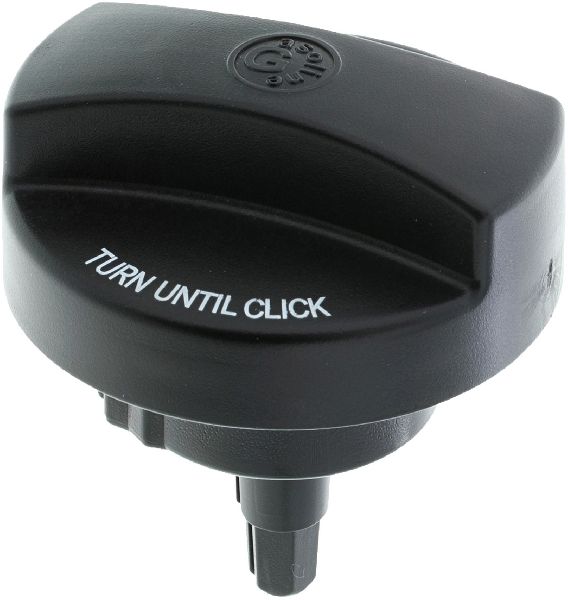
- Valve Cover Assembly: While aftermarket options exist, the integrated PCV system is critical. A low-quality aftermarket valve cover can lead to immediate or premature failure, repeating the repair. Genuine BMW/Mini or high-quality OE-supplier (e.g., Elring) is strongly advised.
Aftermarket brands forum-validated for this vehicle:
- Bosch (for Fuel Tank Breather Valve - often the OEM supplier)
- Elring, Vaico (for Valve Cover / Gaskets)
- BimmerNetwork (for aftermarket PCV diaphragm repair kits, offering a cheaper alternative to a full valve cover replacement)
Brands owners have reported issues with on this vehicle:
- Unnamed, no-brand valve covers from online marketplaces are a significant risk due to the complexity of the integrated PCV system.
Real Owner Stories
Aggregated from forums and TSBs cited above. Mileages and costs reflect what owners reported in those sources.
2016 Mini Cooper S F56 B48
Symptoms: High, fluctuating idle (1000-1500 RPM) when warm, especially noticeable in traffic; Check Engine Light with code P0507.
What fixed it: Replaced the Fuel Tank Breather Valve (Part No. 13907621174). The repair took 15 minutes by removing the engine cover.
Cost: $130-$140 (converted from $180 CAD)
Source hint: North American Motoring (northamericanmotoring.com) thread involving a 2016 MCS F56
2014-2023 Mini Cooper (B38/B48 architecture)
Symptoms: Engine revving at idle; a garage was unable to find the issue initially.
What fixed it: Replacement of the fuel tank breather/purge valve (Bosch PN 0 280 142 524).
Source hint: Reddit (r/MINI) thread confirming the fuel tank breather/purge valve as a simple DIY solution
Related OBD-II Codes
Frequently Asked Questions
Does Service Action SI M11 05 16 apply to my 2014-2015 Mini Cooper F56?
Can I replace just the PCV diaphragm on my B48 engine to fix the P0507 code?
What is the specific part number for the Fuel Tank Breather Valve on a 2016 Mini Cooper S?
Is there a simple way to test if the Fuel Tank Breather Valve is causing my high idle?
Why is my Mini Cooper idling at 1000-1500 RPM when the engine is warm?
Could a cracked charge pipe be causing my P0507 code?
Helpful Videos
Used OEM Parts in Stock
New Aftermarket Parts Available



The information in this article is provided for general reference and educational purposes only. Vehicle specifications, procedures, and part compatibility can vary by production date, trim level, and region. Always consult your vehicle's factory service manual and verify part numbers before purchasing or performing repairs. Safety-critical components such as airbags, seat belts, and braking systems should be installed by a qualified professional.
- Mini Cooper:
- 🧭 Diagnostic Flowchart
- 🎬 Helpful Videos
- 🛍️ Shop This Part
- What's Unique About the 2014-2023 Mini Cooper
- Symptoms You May Notice
- Most Likely Causes
- Rare But Worth Checking
- Diagnosis Steps
- Parts You'll Likely Need
- Related Codes That Often Appear With This One
- Technical Service Bulletins (TSBs) & Recalls
- Platform-Specific Known Issues
- Mechanic-Grade Diagnostic Values
- Hidden / Shadow Codes Worth Checking
- Scan Tool Commands That Help
- Wiring & Ground Locations
- Real Owner Repair Stories
- OEM Part Supersession History
- Model Year Variations Within This Range
- Other Known Issues on This Vehicle
- Used vs. New Parts: Buying Guide for This Vehicle
- Real Owner Stories
- 2016 Mini Cooper S F56 B48
- 2014-2023 Mini Cooper (B38/B48 architecture)
- Related OBD-II Codes
- Frequently Asked Questions
- 🎟️ Get 5% Off