

P0507 on 2007-2017 Mitsubishi Lancer: High Idle Causes and Fixes
P0507 on a Mitsubishi Lancer most often means the engine's idle speed is too high. This is commonly caused by a dirty or failed Idle Air Control (IAC) valve, or a vacuum leak. Cleaning the throttle body and IAC valve, followed by an idle relearn procedure, is a good first step.
- P0507 means your Lancer's idle is stuck higher than the computer wants it to be, usually 200+ RPM over target.
- The most likely cause is a dirty or faulty Idle Air Control (IAC) valve located on the throttle body.
- Start your diagnosis by cleaning the throttle body and the IAC valve; this often fixes the problem.
- After cleaning or replacing parts, you MUST perform an idle relearn procedure for the computer to adapt.
- If cleaning doesn't work, check for vacuum leaks (especially the PCV valve and hose) using a smoke machine.
- Replacing the IAC valve (Part #1450A132 or MD628318) is a common and effective fix if cleaning fails.
What's Unique About the 2007-2017 Mitsubishi Lancer
The 2007-2017 Mitsubishi Lancer generation uses an electronic throttle control system, but still relies on a separate Idle Air Control (IAC) valve to make fine adjustments to the idle speed. This IAC valve is a very common point of failure; it can get stuck or clogged with carbon buildup, leading directly to the P0507 code. While vacuum leaks are a possible cause on any vehicle, the IAC valve is a particularly frequent culprit on these Lancers, a fact corroborated by numerous owner experiences in online forums. After cleaning or replacing the throttle body or IAC, a specific idle relearn procedure is often necessary for the ECU to adapt to the change.
Generation note: The 2007-2017 model years cover the eighth generation of the Mitsubishi Lancer (often designated CY/CZ). While various engines were offered (4A91, 4B10, 4B11, 4B12), the idle control system architecture is similar, making the causes and fixes for P0507 generally consistent across the non-turbo models in this range. The issue is also seen on the related Lancer Evolution models. The 4B10, 4B11, and 4B12 engines all use the same 57mm throttle body.
Symptoms You May Notice
- Check Engine Light is on
- Engine idle speed is noticeably higher than normal (e.g., 1000-1500 RPM, sometimes surging to 2200 RPM)
- Rough or unstable, fluctuating idle
- Increased fuel consumption
- Harsh engagement of the transmission
- Car feels difficult to slow down or control at low speeds
- Replacing the throttle position sensor (TPS). A faulty TPS usually causes different codes and symptoms. The ECM checks that the TPS is normal before setting a P0507.
- Replacing the Mass Airflow (MAF) sensor. While a dirty MAF can cause idle issues, it typically won't cause a persistent high idle characteristic of P0507. Cleaning it is simple maintenance but unlikely to be the sole fix for this code.
Most Likely Causes
- Dirty or Failed Idle Air Control (IAC) Valve 🔴 High Probability → Shop Idle Air Control Valve The IAC valve is a small electric motor that controls the amount of air bypassing the throttle plate. It's highly prone to carbon buildup, which can cause its pintle to stick open, allowing too much air into the engine at idle. This is the most frequently cited cause in owner forums for the Lancer platform.
How to confirm: Remove the IAC valve from the throttle body and inspect its pintle and the air passages for heavy carbon deposits. You can test the motor with a multimeter or, with an advanced scan tool, command it to open and close. Sometimes cleaning is not enough if the internal motor has failed.
Typical fix: Thoroughly clean the IAC valve and the port on the throttle body with throttle body cleaner and a soft brush. If cleaning doesn't resolve the issue, the IAC valve needs to be replaced. An idle relearn procedure is recommended after service.
Est. part cost: $25-$220 - Vacuum Leak 🟡 Medium Probability Over time, rubber vacuum hoses can crack, and intake gaskets can fail, creating a path for unmetered air to enter the engine after the mass airflow sensor. Common leak points include the PCV hose, brake booster hose, and intake manifold gaskets.
How to confirm: Perform a smoke test to find the source of the leak. This is the most definitive method. Alternatively, you can visually inspect all vacuum hoses connected to the intake manifold for cracks or disconnections and listen for hissing sounds with the engine running.
Typical fix: Replace the leaking hose or gasket. Hoses are typically inexpensive and easy to replace.
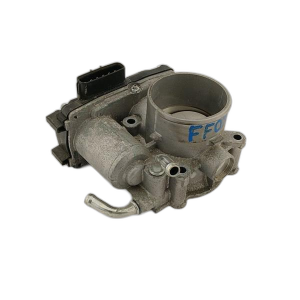
Est. part cost: $10-$100 - Dirty Throttle Body 🟡 Medium Probability → Shop Fuel Injection Throttle Body Carbon and oil vapor from the PCV system can build up around the throttle plate, preventing it from closing completely. This creates a small opening that lets in extra air, which the IAC cannot compensate for, leading to a high idle.
How to confirm: Remove the intake boot and visually inspect the throttle plate and bore for a ring of black carbon buildup.
Typical fix: Clean the throttle body bore and plate with a dedicated throttle body cleaner and a soft brush, being careful not to damage any coatings. An idle relearn procedure is required after cleaning to reset the learned throttle position values.
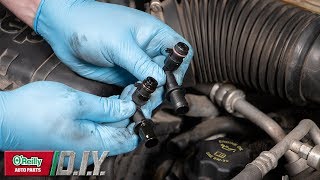
Est. part cost: $5-$15 - Faulty PCV Valve ⚪ Low Probability → Shop PCV Valve If the Positive Crankcase Ventilation (PCV) valve sticks open, it can create a significant vacuum leak, allowing unmetered air into the intake manifold. It's a simple maintenance item that is often overlooked.
How to confirm: Remove the PCV valve and shake it. If it doesn't rattle, it's likely stuck. You can also check its hose for suction at idle. A stuck open valve will essentially act as a constant vacuum leak.
Typical fix: Replace the PCV valve. It's an inexpensive and easy part to replace. Using an OEM valve is often recommended.
Est. part cost: $10-$30
Rare But Worth Checking
- Faulty Engine Control Module (ECM): This is extremely rare. The official Mitsubishi diagnostic procedure lists a faulty ECM as a potential cause, but all other possibilities, especially vacuum leaks and IAC/throttle body issues, should be exhausted before considering this.
- Power Steering Pressure Switch Failure: The power steering pressure switch signals the ECM when the steering is being turned at low speeds, prompting the ECM to slightly increase idle speed to prevent stalling. If this switch fails and sends a constant signal, it could contribute to a high idle. This is a less common cause.
Diagnosis Steps
- Check for other stored DTCs. If other codes are present, diagnose them first.
- Visually inspect the engine bay for any obvious vacuum leaks, such as disconnected, cracked, or brittle hoses, paying close attention to the PCV and brake booster lines.
- With the engine running, listen for a hissing sound that would indicate a vacuum leak.
- Remove the intake ducting and inspect the throttle body for carbon buildup. Clean if necessary.
- Remove and inspect the Idle Air Control (IAC) valve. Clean the valve and its passages thoroughly.
- Check the PCV valve for proper operation by shaking it (it should rattle) and ensuring its hose is clear.
- If the problem persists, perform a smoke test to definitively rule out any hard-to-find vacuum leaks.
- If all mechanical and vacuum components check out, test the IAC valve circuit for proper voltage and ground.
- After any cleaning or part replacement on the intake system, perform an Idle Relearn Procedure.
- As a last resort, consider the possibility of a faulty ECM per the manufacturer's diagnostic tree.
Parts You'll Likely Need
- Idle Air Control (IAC) Valve
(OEM #1450A132 (supersedes MD628318 for some applications))— This is the most common failure point for the P0507 code on this vehicle due to carbon buildup causing it to stick.
Trusted brands: Mitsubishi Genuine, Standard Motor Products, Duralast, Walker
OEM price range: $150-$250
Aftermarket price range: $25-$100 - PCV Valve
(OEM #1035A422)— A cheap and easy-to-replace part that can cause a significant vacuum leak if it fails by sticking open.
Trusted brands: Mitsubishi Genuine, Standard Motor Products
OEM price range: $20-$40
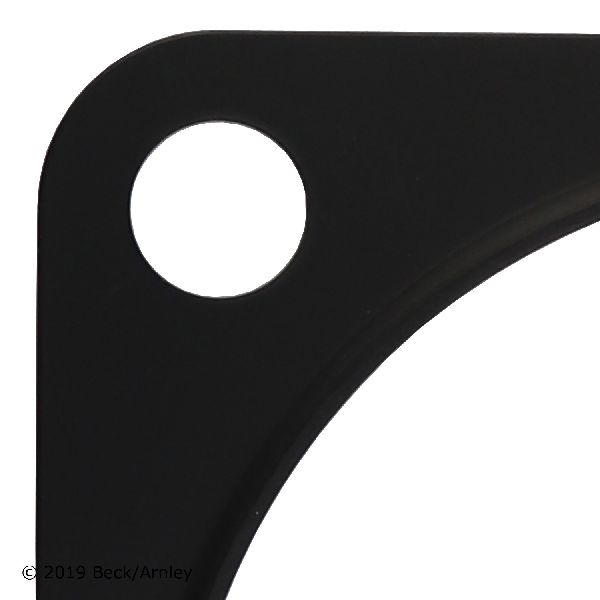
Aftermarket price range: $10-$25 - Throttle Body Gasket — Should be replaced whenever the throttle body is removed for cleaning or IAC valve service to prevent vacuum leaks.
Trusted brands: Fel-Pro, Mahle, Mitsubishi Genuine
OEM price range: $10-$20
Aftermarket price range: $5-$15 - Throttle Body Cleaner — Required for cleaning the throttle body plate and IAC valve passages, which is the first and most common repair step.
Trusted brands: CRC, WD-40, Gumout
Aftermarket price range: $5-$15
Platform-Specific Known Issues
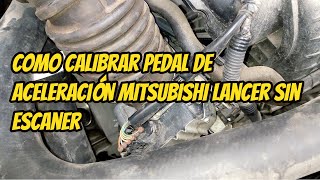
- Idle Relearn Procedure is Critical: Unlike some vehicles that can self-learn, the Lancer often requires a specific manual idle relearn procedure after disconnecting the battery or cleaning/replacing 🎬 See how to perform a manual idle relearn without a scanner. the throttle body or IAC valve. Failure to do this can result in a persistent high idle even after the root cause is fixed. The procedure typically involves a sequence of idling the engine for set periods with accessories off.
Mechanic-Grade Diagnostic Values
- IAC Valve Coil Resistance — expected: 28 - 33 Ohms at room temperature. Failure: A reading outside this range indicates a faulty coil in the IAC motor.
- IAC Valve Connector Voltage (Key On, Engine Off) — expected: Approximately 12V (Battery Voltage). Failure: No voltage suggests a wiring issue, blown fuse, or a problem with the ECM power supply.
- Scan Tool Live Data: Target vs. Actual Idle Speed — expected: Actual idle speed should be within ~50 RPM of the target idle speed once the engine is warm.. Failure: The P0507 code is set when the actual idle speed is 200+ RPM higher than the target idle speed for 10 seconds.
Scan Tool Commands That Help
- Mitsubishi MUT-III (or advanced aftermarket): Actuation Test for IAC Valve — This function allows a technician to command the IAC valve to open and close, audibly and by observing RPM changes, to verify if the valve motor and its circuit are functioning. This can isolate a stuck valve from an electrical fault.
- Mitsubishi MUT-III (or advanced aftermarket): Throttle Valve Learned Value Reset — This service function should be performed after cleaning or replacing the throttle body or IAC valve. It clears the old learned values for idle airflow, forcing the ECU to relearn the new baseline and preventing a persistent high idle after the repair.
Wiring & Ground Locations
- G11 (Except Evolution) — On the left side of the cylinder head, located under the throttle cable bracket.. This is a primary ground point for the engine sensors. A corroded or loose connection here can cause erratic sensor readings, potentially affecting the ECU's ability to properly control idle.
- G10 (Except Evolution) — At the rear of the cylinder head.. Another critical engine ground. Ensuring this and other grounds are clean and tight is a crucial step before replacing expensive components, as poor grounding can mimic sensor or module failures.
- Intake Manifold Ground — A ground strap is often attached from the intake manifold to the chassis or firewall.. The throttle body and IAC are mounted to the intake manifold. A poor ground connection for the manifold can affect the electrical reference for these components, leading to improper operation.
Real Owner Repair Stories
- EvolutionM forum user 'wjamyers' (Mitsubishi Lancer Evolution (similar idle control system)) — Sudden high idle (2200 RPM) and P0507 code at the end of a long drive.
❌ Tried (didn't work) Replacing the Idle Air Control (IAC) valve did not immediately fix the issue.
✅ What actually fixed it The user performed a boost leak test and found a significant leak. After fixing the leak and replacing the PCV valve with an OEM part, the idle was still high. However, after two days of driving, the ECU adapted, the Check Engine Light turned off, and the idle settled at 1000 RPM. The final conclusion was a combination of a vacuum/boost leak and a faulty PCV valve.
OEM Part Supersession History
MD628318→1450A132— Part revision and consolidation across multiple platforms (Chrysler, Dodge, Mitsubishi).
Heads up: While many aftermarket parts list compatibility with both numbers, using a genuine Mitsubishi part or a reputable OEM equivalent is highly recommended. Cheap aftermarket IAC valves are a common source of repeat failures.
Model Year Variations Within This Range
- 2007-2017: While the non-turbo 4B10, 4B11, and 4B12 engines all use the same 57mm throttle body, the ECU's software (ROM) may differ. This can affect how aggressively the throttle plate is controlled and how the idle relearn procedure behaves, but the physical causes of P0507 remain consistent.
Diagnostic Flowchart
Other Known Issues on This Vehicle
Issues unrelated to this code that are worth knowing about as an owner of this generation:
- CVT Transmission Overheating and Failure 🔴 High — Common, especially on earlier models (2008-2014). Can manifest as hesitation, whining, or a 'Slow Down' warning light. Failure can occur before 125k miles. (Ref: A recall was issued for some 2015-2016 models for CVT hesitation. Software updates and regular fluid changes with OEM fluid are critical.)
- A/C Compressor Relay Failure 🟠 Medium — A common issue where the A/C blows warm or intermittently. The relay that controls the compressor clutch fails. A TSB was also issued for the A/C light blinking due to serpentine belt slippage. (Ref: TSB-11-55-002 addresses A/C performance issues, and owners often swap the horn relay to test the A/C relay.)
- Clear Coat / Paint Chipping 🟡 Low — Widespread complaints of soft clear coat that chips easily from road debris, particularly on the hood and front bumper.
- Engine Stalling 🟠 Medium — Some owners report the engine stalling at idle or when slowing down. This can be related to a dirty throttle body or faulty MAP sensor, separate from the P0507 high idle issue.
- Brake Booster Check Valve Failure 🔴 High → Shop Power Brake Booster — A defective brake booster vacuum check valve can cause a loss of power assist after extended periods of driving without braking, leading to a hard pedal feel.
Used vs. New Parts: Buying Guide for This Vehicle
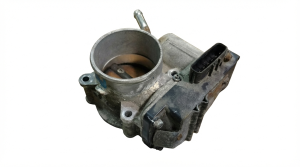
When a used part is the smart pick: A complete used OEM throttle body assembly from a low-mileage donor vehicle can be a cost-effective choice, as a new OEM unit is very expensive. This often includes the IAC and TPS, potentially solving the issue in one step. However, it carries the risk of inheriting a similar problem.
Donor-vehicle mileage cap: roughly under 75000 miles for the part to have meaningful remaining life.
What to inspect on the donor part:
- Inspect the throttle bore for excessive carbon buildup or scoring.
- Ensure the throttle plate moves smoothly without binding.
- Check electrical connectors for corrosion or damage.
- If possible, get the part from a vehicle that was not wrecked in the front.
OEM-only on this vehicle (don't cheap out):
- PCV Valve: Aftermarket PCV valves can have incorrect flow rates, failing to resolve the vacuum leak issue. An OEM valve is inexpensive and reliable.
- Idle Air Control (IAC) Valve: While many aftermarket options exist, forums are filled with stories of cheap IAC valves failing quickly or being dead-on-arrival. If buying new, a genuine Mitsubishi or a trusted brand like Standard Motor Products is a safer investment.
Aftermarket brands forum-validated for this vehicle:
- Standard Motor Products (for IAC Valve)
- Hitachi (for Throttle Body)
Brands owners have reported issues with on this vehicle:
- Unbranded, low-cost IAC valves and throttle bodies from online marketplaces are frequently reported to cause persistent issues.
Real Owner Stories
Aggregated from forums and TSBs cited above. Mileages and costs reflect what owners reported in those sources.
2003 Mitsubishi Lancer Evolution (similar system)
Symptoms: Idle varying from 900-1500 RPM and triggering the P0507 code.
What fixed it: The community identified the Idle Air Control (IAC) sensor as the likely culprit, a common failure for this platform.
Source hint: EvolutionM - 'P0507 Idle System High'
2003 Mitsubishi Lancer OZ Rally
Symptoms: High idle triggering P0507; owner investigated vacuum leaks and the PCV valve.
What fixed it: Cleaning or replacing the IAC and checking for vacuum leaks were the primary diagnostic steps confirmed to resolve the issue.
Source hint: EvolutionM - '03_lancer_OZ..PO507??'
2007-2017 Mitsubishi Lancer (General)
Symptoms: Persistent idle problems after performing service or disconnecting the battery.
What fixed it: Following the factory service manual idle relearn procedure: warming the engine, cycling the ignition, and letting it idle for 15 minutes.
Source hint: EvolutionM - 'Idle relearn procedure'
2007-2017 Mitsubishi Lancer (General)
Symptoms: P0507 code persisted even after swapping in a known-good IAC valve from another car.
What fixed it: The diagnostic progression moved to performing a boost leak test (vacuum leak check) and inspecting for a stuck-open PCV valve.
Source hint: EvolutionM - 'P0507'
Related OBD-II Codes
Frequently Asked Questions
Why is my Lancer idling as high as 2200 RPM after I cleaned the throttle body?
Can a faulty PCV valve cause the P0507 code on my Lancer?
Is the Idle Air Control (IAC) valve a common failure point for the 2007-2017 Lancer?
What should I use to clean the IAC valve and throttle body on my Mitsubishi?
My Lancer feels difficult to slow down at low speeds; is this related to P0507?
Does the Lancer share this high idle issue with other vehicles?
Helpful Videos

Used OEM Parts in Stock
New Aftermarket Parts Available

The information in this article is provided for general reference and educational purposes only. Vehicle specifications, procedures, and part compatibility can vary by production date, trim level, and region. Always consult your vehicle's factory service manual and verify part numbers before purchasing or performing repairs. Safety-critical components such as airbags, seat belts, and braking systems should be installed by a qualified professional.
- Mitsubishi Lancer:
- 🧭 Diagnostic Flowchart
- 🎬 Helpful Videos
- 🛍️ Shop This Part
- What's Unique About the 2007-2017 Mitsubishi Lancer
- Symptoms You May Notice
- Most Likely Causes
- Rare But Worth Checking
- Diagnosis Steps
- Parts You'll Likely Need
- Platform-Specific Known Issues
- Mechanic-Grade Diagnostic Values
- Scan Tool Commands That Help
- Wiring & Ground Locations
- Real Owner Repair Stories
- OEM Part Supersession History
- Model Year Variations Within This Range
- Other Known Issues on This Vehicle
- Used vs. New Parts: Buying Guide for This Vehicle
- Real Owner Stories
- 2003 Mitsubishi Lancer Evolution (similar system)
- 2003 Mitsubishi Lancer OZ Rally
- 2007-2017 Mitsubishi Lancer (General)
- 2007-2017 Mitsubishi Lancer (General)
- Related OBD-II Codes
- Frequently Asked Questions
- 🎟️ Get 5% Off