

P0507 on 2007-2013 Mitsubishi Outlander: High Idle Speed Causes and Fixes
On a 2007-2013 Mitsubishi Outlander, code P0507 usually means the engine idle speed is too high. The most common causes are a vacuum leak from a cracked hose, a faulty PCV valve, or a dirty/faulty electronic throttle body. Cleaning the throttle body and performing an idle relearn procedure is a common first step.
- P0507 on your Outlander means the engine is idling too fast.
- The most likely causes are a dirty throttle body, a vacuum leak (check the PCV system first), or a failed idle relearn after a battery change.
- Do not replace any parts before checking for simple vacuum leaks and cleaning the throttle body.
- An idle relearn procedure is almost always necessary after servicing the throttle body or disconnecting the battery.
What's Unique About the 2007-2013 Mitsubishi Outlander
The 2007-2013 Mitsubishi Outlander, with either the 2.4L 4B12 or 3.0L 6B31 engine, uses an electronic throttle body (drive-by-wire) system instead of an older-style Idle Air Control (IAC) valve. This means that unlike older vehicles where a separate valve would be cleaned or replaced, troubleshooting P0507 on this Outlander focuses on the throttle body assembly itself, potential vacuum leaks (especially from the PCV system), and ensuring the correct idle relearn procedure is performed after any service. The entire throttle body unit is responsible for managing idle, so carbon buildup or electronic failure within it are primary suspects.
Generation note: This year range covers the second generation (2007-2012) and the first year of the third generation (2013) Outlander. Both generations use an electronic throttle control system, so the causes and diagnostic steps for P0507 are broadly similar for both the 2.4L I4 and 3.0L V6 engines offered. However, always verify part numbers for your specific model year and engine, as they differ.
Symptoms You May Notice
- Check Engine Light is on
- Engine idling higher than normal (e.g., over 1000 RPM when warm, sometimes as high as 1500-2000 RPM)
- Rough or fluctuating idle
- Harsh gear engagement when shifting from Park to Drive or Reverse
- Increased fuel consumption
- Engine takes a long time to return to idle after acceleration
- Replacing the throttle position sensor (TPS) by itself. On modern electronic throttle bodies, the TPS is often integrated and not the root cause; the issue is more likely carbon buildup or a fault in the actuator motor.
- Looking for an Idle Air Control (IAC) valve. Vehicles in this year range use an electronic throttle body and do not have a separate IAC valve.
- Replacing O2 sensors. While other codes might point to O2 sensors, P0507 is almost always related to unmetered air or the throttle control system itself.
Most Likely Causes
- Dirty or Faulty Electronic Throttle Body 🔴 High Probability → Shop Fuel Injection Throttle Body Carbon and oil vapor from the PCV system can build up on the back of the throttle plate and in the throttle bore. This buildup can prevent the throttle plate from closing completely, allowing extra air to enter and causing a high idle.
How to confirm: Remove the air intake hose connected to the throttle body and visually inspect the throttle plate and bore for black carbon deposits. The plate should be clean and able to move freely. Manually moving the plate during cleaning can sometimes cause issues with the idle relearn process.
Typical fix: Clean the throttle body using a dedicated throttle body cleaner and a soft cloth or brush. 🎬 Watch: A step-by-step guide to cleaning your throttle body. Do not use aggressive solvents like carb cleaner. An idle relearn procedure is often required after cleaning or replacement. If cleaning doesn't work, the entire assembly may need replacement.
Est. part cost: $5 (cleaner) - $350 (new assembly) - Vacuum Leak 🔴 High Probability Rubber and plastic vacuum hoses, the air intake tube, and intake gaskets become brittle and crack over time with exposure to engine heat, creating a source for unmetered air.
How to confirm: With the engine running, listen for a distinct hissing sound around the engine bay. You can also carefully spray short bursts of brake cleaner or use a smoke machine's output around vacuum lines, the intake manifold gasket, and the brake booster hose. 🎬 Watch: How to find and fix common vacuum hose leaks. A change in engine idle when spraying a specific area indicates the location of the leak.
Typical fix: Replace the cracked or leaking vacuum hose or gasket. Hoses are often inexpensive and easy to replace.
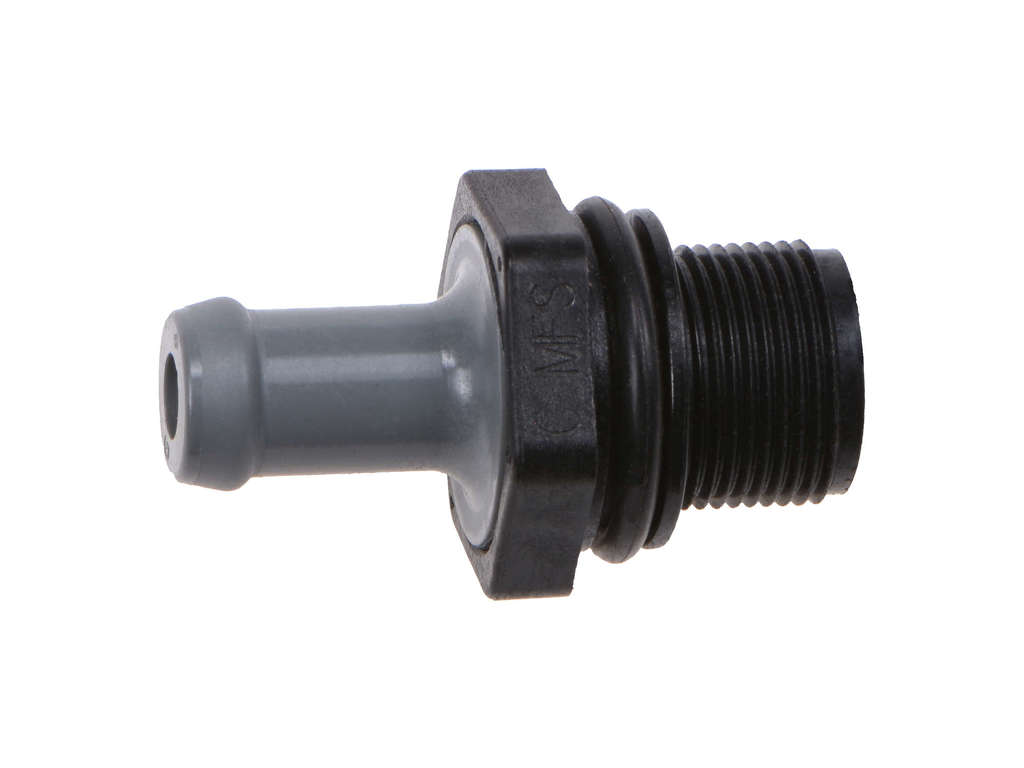
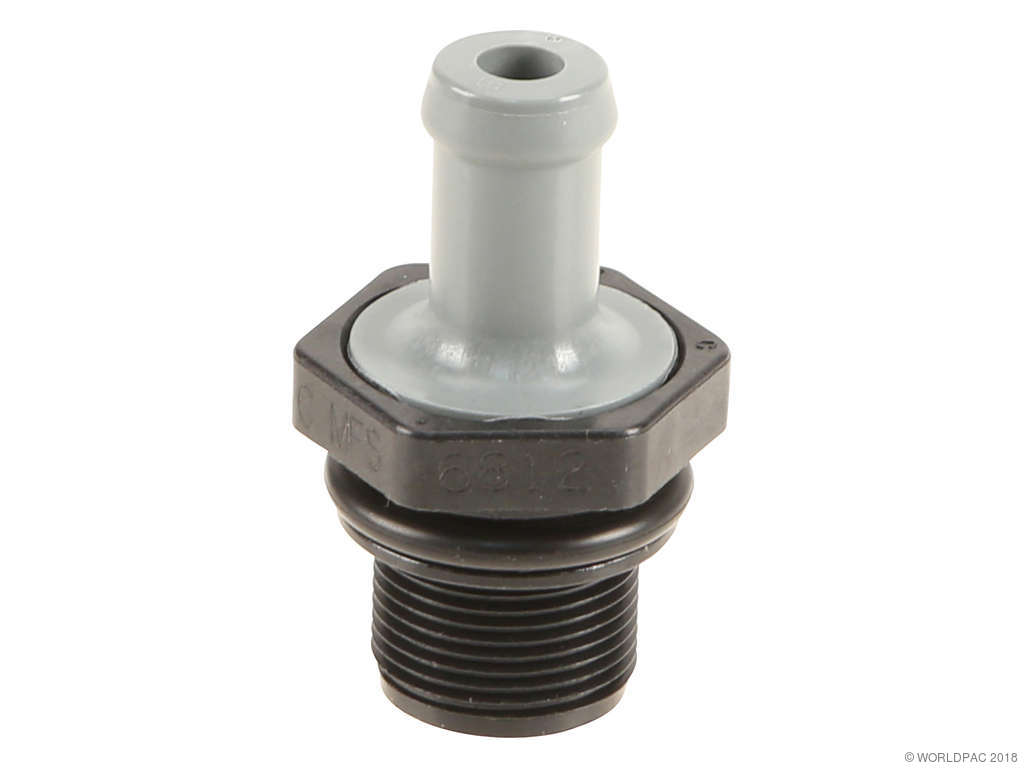
Est. part cost: $5-$50 - Faulty or Clogged PCV Valve 🟡 Medium Probability → Shop PCV Valve The Positive Crankcase Ventilation (PCV) valve can get stuck open, creating a significant vacuum leak that the ECM cannot compensate for. Sludge and oil deposits can cause it to fail.
How to confirm: Locate the PCV valve. On the 2.4L engine, it is often threaded into the valve cover. Remove it and shake it. If it rattles, it is likely good. If it is silent or feels gummy, it is likely stuck and needs replacement. You can also check for suction at the valve 🎬 See how to properly diagnose and replace a PCV valve. with the engine running.
Typical fix: Replace the PCV valve. This is typically an inexpensive and simple part to change, though its location on the 3.0L V6 can be more challenging.
Est. part cost: $10-$40 - Failed Idle Relearn Procedure 🟡 Medium Probability After disconnecting the battery or cleaning the throttle body, the ECM's learned idle position is lost. If the relearn procedure is not performed correctly, the idle can remain high.
How to confirm: This is a likely cause if the P0507 code appeared immediately after a battery replacement or throttle body service.
Typical fix: Perform the manufacturer-specific idle relearn procedure. This often involves a sequence of turning the key to 'ON', waiting, starting the engine and letting it idle for a set time, and sometimes driving at low speeds. In some cases, a scan tool like the Mitsubishi M.U.T.-III is required to perform a 'Learned value reset'.
Est. part cost: $0
Rare But Worth Checking
- Faulty ECM: The Engine Control Module (ECM) itself can fail, but this is extremely rare. All other possibilities, especially vacuum leaks and throttle body issues, should be exhaustively ruled out before considering an ECM replacement.
- Power Steering Pressure Switch Issue: While less common, a faulty power steering pressure switch can sometimes send incorrect signals to the ECM, causing it to raise the idle unnecessarily. This might be considered if you've had recent power steering leaks or repairs.
Diagnosis Steps
- Retrieve the P0507 code using an OBD-II scanner and note any other codes present. Freeze frame data can show engine conditions when the code was set.
- Perform a thorough visual inspection. Check the air intake tube for cracks between the MAF sensor and the throttle body. Inspect all visible vacuum hoses for cracks, splits, or loose connections.
- With the engine running, listen carefully for any hissing sounds that would indicate a vacuum leak.
- If no obvious leaks are found, perform a smoke test. This is the most effective way to find small leaks in gaskets or hidden hoses. Pay close attention to the brake booster and its check valve.
- Inspect and test the PCV valve. Locate it (threaded into the valve cover on the 2.4L), remove it, and shake it. If it doesn't rattle, replace it. It's an inexpensive part and a common failure point.
- Remove the air intake duct from the throttle body. Inspect the throttle plate and bore for heavy carbon buildup.
- If dirty, clean the throttle body thoroughly with a dedicated throttle body cleaner and a soft brush. Avoid moving the throttle plate manually if possible.
- After any service, clear the code and perform the Idle Relearn Procedure. A common procedure is: Turn key to ON for 2 minutes, turn OFF. Start the engine and let it idle for 5-10 minutes to warm up. Drive at low speeds (under 25 mph) for another 5 minutes. If this fails, a dealer-level scan tool may be needed to perform a 'Learned value reset'.
- If the high idle persists after these steps, the issue may be a faulty throttle body assembly requiring replacement or a rare ECM fault.
Parts You'll Likely Need
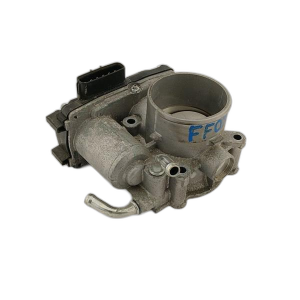
- Electronic Throttle Body Assembly
(OEM #1450A101 (for 2.4L 4B12 engine, verify for your specific year))— If cleaning the throttle body and performing a relearn does not resolve the high idle, the internal electronic motor or sensors may have failed, requiring replacement of the entire unit.
Trusted brands: Mitsubishi (OEM), Hitachi, Bosch
OEM price range: $300-$800
Aftermarket price range: $150-$350 - PCV Valve
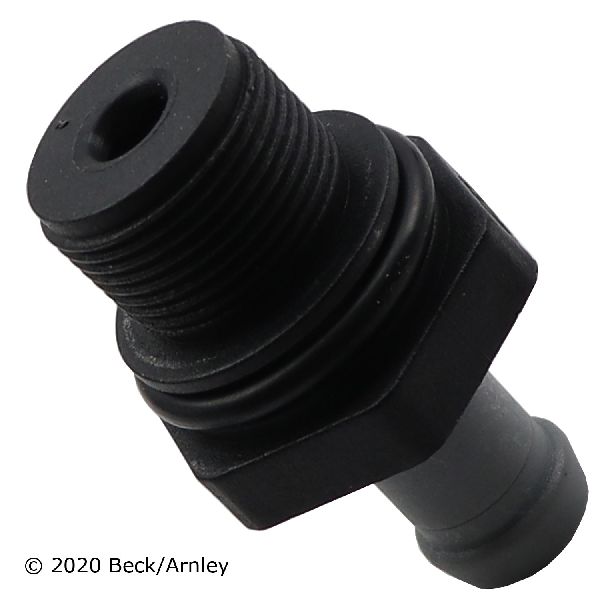
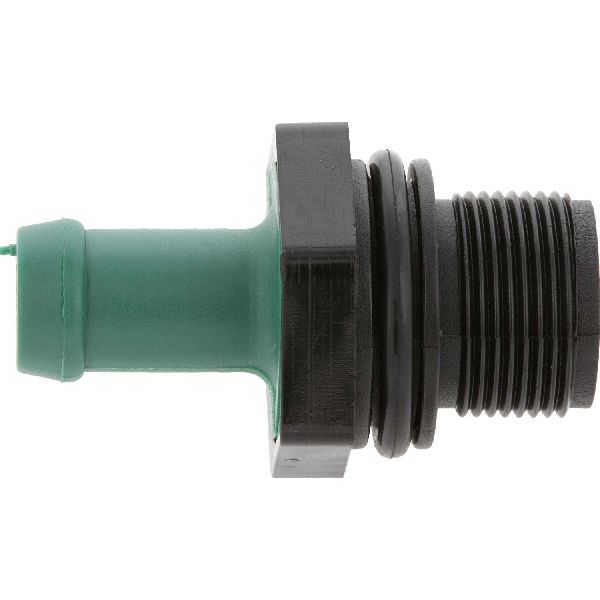
(OEM #1035A422 (fits many Mitsubishi engines, including 4B12 and 6B31, but always verify))— A PCV valve that is stuck open will cause a significant vacuum leak, leading to a high idle. It's an inexpensive part that is often replaced as preventative maintenance or during diagnosis.
Trusted brands: Mitsubishi (OEM), Standard Motor Products, Denso
OEM price range: $20-$40
Aftermarket price range: $10-$25 - Vacuum Hoses — Cracked or disconnected vacuum hoses are a primary cause of unmetered air entering the engine, which directly leads to a P0507 code.
OEM price range: $15-$50
Aftermarket price range: $5-$20
Related Codes That Often Appear With This One
- P0420 (Catalyst System Efficiency Below Threshold) - A persistent high idle can affect the air/fuel mixture, potentially leading to this code over time, though they are not directly related.
Platform-Specific Known Issues
- Idle Relearn Procedure is Critical: Many owner experiences confirm that simply cleaning the throttle body or replacing the battery without performing the correct idle relearn procedure will cause a persistent P0507 code and high idle. The manual procedure sometimes fails, requiring a scan tool.
- Threaded PCV Valve on 2.4L Engine: → Shop PCV Valve Unlike many vehicles where the PCV valve is pushed into a grommet, on the 2.4L 4B12 engine, the valve is often a plastic, threaded part that screws into the valve cover and requires a large socket (e.g., 23mm) to remove.
Mechanic-Grade Diagnostic Values
- Power Steering Pressure Switch Activation (Older Models) — expected: Switch activates between 1.5–2.0 MPa.. Failure: Switch does not change state (open/closed) within the specified pressure range.
- DTC P0507 Set Condition: Idle Speed Deviation — expected: Actual idle speed should be within 200 RPM of target idle speed.. Failure: Actual idle speed is higher than the target idle speed by 200 r/min or more for 10 seconds.
- DTC P0507 Set Condition: Battery Voltage — expected: Greater than 10 volts.. Failure: Voltage below 10 volts may prevent the monitor from running correctly.
Scan Tool Commands That Help
- Mitsubishi M.U.T.-III: Special Function -> Learned value reset -> All learned value — This command is critical after cleaning or replacing the throttle body assembly, or after replacing the ECM. It erases the old idle control data and forces the system to relearn the proper throttle plate position for idle.
Wiring & Ground Locations
- G6 — Left side of engine.. A poor ground at this location could affect various engine sensors or the throttle body itself, leading to erratic behavior or incorrect readings that could trigger a P0507. This location was identified on a 2011 Outlander Sport, which shares architecture with the Outlander.
- G1 / G15 — Behind the right (G1) and left (G15) headlight assemblies.. These are primary grounding points for the engine bay harness. Corrosion or looseness here can cause a wide range of electrical issues, including problems with the electronic throttle control system. This location was identified on a 2011 Outlander Sport.
Real Owner Repair Stories
- Reddit user TheAnthonyE on r/mitsubishi (2013 Mitsubishi Outlander GT V6) — Loping idle and improper fuel trims after replacing the battery.
❌ Tried (didn't work) Simply starting the car and driving off after the battery replacement.
✅ What actually fixed it A specific manual idle relearn procedure: With a cold engine, disconnect the negative battery terminal for a minute, reconnect it, turn the key to 'ON' (without starting) for 1-2 minutes, turn off, then start the car and let it idle for 5 minutes. Followed by driving at low speeds (under 25 mph) for 5 minutes before driving at higher speeds.
OEM Part Supersession History
4630a055→4630A347— Part revision or supplier change for the brake booster check valve.1450A195→1450A101— Possible part revision for the throttle body assembly.
Heads up: This supersession is noted by an aftermarket supplier and should be confirmed with an OEM parts catalog before purchasing.
Model Year Variations Within This Range
- 2007-2012: These are all second-generation Outlanders. Parts and procedures are generally consistent within this range for the same engine.
- 2013: The 2013 model is the first year of the third generation, featuring a redesigned, lighter body and different interior. While the 2.4L and 3.0L engines were carried over, component access, wiring harness routing, and some auxiliary parts may differ from the 2007-2012 models.
Diagnostic Flowchart
Other Known Issues on This Vehicle
Issues unrelated to this code that are worth knowing about as an owner of this generation:
- CVT / Automatic Transmission Failure 🔴 High — Reported across multiple model years (including 2008-2009, 2011). Symptoms include whining that increases with acceleration or sudden deceleration. Regular fluid changes are critical.
- Premature Lower Control Arm Wear 🟠 Medium — Commonly reported, leading to squeaking noises over bumps and uneven tire wear. Requires replacement of the control arm assembly. (Ref: Related to Recall 16V458000 for suspension corrosion, though not a direct match for wear.)
- Water Pump Failure 🟠 Medium — Can lead to coolant leaks, typically on the passenger side of the engine bay. On the 3.0L V6 (6B31), the water pump is driven by the timing belt, making replacement during a timing belt service crucial.
- Corroding Windshield Wiper Linkage 🔴 High — Affects all 2007-2013 models. Water can enter the wiper assembly, causing corrosion and potential failure of the wipers, especially during precipitation. (Ref: NHTSA Recall 17V461000)
- Erratic Blower Motor Fan Operation 🟡 Low — The fan may only work on certain speeds or stop working entirely. This is usually caused by a failed blower motor resistor, a common and relatively easy part to replace.
- Broken TPMS Valve Stems 🟡 Low — Some owners of early second-gen models reported the metal valve stems for the Tire Pressure Monitoring System becoming brittle and breaking off when checking air pressure or spontaneously.
Used vs. New Parts: Buying Guide for This Vehicle
When a used part is the smart pick: For a major component like the Electronic Throttle Body assembly, a used part from a reputable salvage yard can offer significant cost savings over a new OEM unit. Other simple mechanical parts like brackets or mounts are also ideal candidates for used purchase.
Donor-vehicle mileage cap: roughly under 80000 miles for the part to have meaningful remaining life.
What to inspect on the donor part:
- For a throttle body, check for clean electrical connector pins with no corrosion.
- Inspect the throttle bore for scoring or damage, though some carbon is expected.
- Verify the donor vehicle's mileage and ensure it was not involved in a front-end collision that could have damaged the component.
OEM-only on this vehicle (don't cheap out):
- Engine Control Module (ECM) - Due to programming and security requirements, a new or specialist-refurbished ECM is required.
Aftermarket brands forum-validated for this vehicle:
- Hitachi (Often the OEM supplier for electronic parts)
- Bosch
- Denso (For PCV Valve)
Brands owners have reported issues with on this vehicle:
- No-name, unbranded electronic throttle bodies from online marketplaces are a gamble; they often have high failure rates or cause inconsistent idle behavior.
Real Owner Stories
Aggregated from forums and TSBs cited above. Mileages and costs reflect what owners reported in those sources.
2007 Mitsubishi Outlander 3.0L V6
Symptoms: Engine idling extremely high, between 1500-2000 RPM, immediately after the throttle body was cleaned.
What fixed it: Performed a throttle body reset/relearn procedure to recalibrate the ECM's idle values.
Source hint: Mitsubishi Forum (mitsubishi-forums.com) - Thread titled 'Throttle body reset or relearn procedure?'
2013 Mitsubishi Outlander GT V6
Symptoms: High idle issues that began specifically after the vehicle's battery was replaced.
What fixed it: Followed a manual step-by-step idle relearn process involving specific key positions and idling times.
Source hint: Reddit (r/mitsubishi) - 'Idle or throttle position relearn procedure' thread
2015 Mitsubishi Outlander Sport GT
Symptoms: The engine was experiencing a fluctuating idle.
What fixed it: Cleaning the dirty throttle body to remove carbon buildup on the plate and bore.
Source hint: Reddit (r/MitsubishiOutlander) - thread about fluctuating idle
Related OBD-II Codes
Frequently Asked Questions
Why did my 2007 Outlander 3.0L start idling at 1500-2000 RPM immediately after I cleaned the throttle body?
I just replaced the battery in my 2013 Outlander GT V6 and now the idle is too high. Is something broken?
Is the PCV valve on my Outlander 2.4L a simple pull-out part?
Can I use standard carburetor cleaner to fix the P0507 code on my Outlander's throttle body?
How can I check for vacuum leaks on my Outlander without professional tools?
Helpful Videos
Used OEM Parts in Stock
New Aftermarket Parts Available


The information in this article is provided for general reference and educational purposes only. Vehicle specifications, procedures, and part compatibility can vary by production date, trim level, and region. Always consult your vehicle's factory service manual and verify part numbers before purchasing or performing repairs. Safety-critical components such as airbags, seat belts, and braking systems should be installed by a qualified professional.
- Mitsubishi Outlander:
- 🧭 Diagnostic Flowchart
- 🎬 Helpful Videos
- 🛍️ Shop This Part
- What's Unique About the 2007-2013 Mitsubishi Outlander
- Symptoms You May Notice
- Most Likely Causes
- Rare But Worth Checking
- Diagnosis Steps
- Parts You'll Likely Need
- Related Codes That Often Appear With This One
- Platform-Specific Known Issues
- Mechanic-Grade Diagnostic Values
- Scan Tool Commands That Help
- Wiring & Ground Locations
- Real Owner Repair Stories
- OEM Part Supersession History
- Model Year Variations Within This Range
- Other Known Issues on This Vehicle
- Used vs. New Parts: Buying Guide for This Vehicle
- Real Owner Stories
- 2007 Mitsubishi Outlander 3.0L V6
- 2013 Mitsubishi Outlander GT V6
- 2015 Mitsubishi Outlander Sport GT
- Related OBD-II Codes
- Frequently Asked Questions
- 🎟️ Get 5% Off