

P0507 on 2014-2020 Nissan Rogue: High Idle Causes and Fixes
On a 2014-2020 Nissan Rogue, P0507 is almost always caused by a dirty electronic throttle body. The fix is to clean the throttle body and perform an 'Idle Air Volume Learning' procedure, which is a specific sequence of key turns and pedal presses. This is a common, low-cost DIY repair that resolves over 50% of cases.
- P0507 on a 2014-2020 Rogue almost always points to a dirty throttle body.
- Do not replace any parts before cleaning the throttle body first.
- The 'Idle Air Volume Learning' (IAVL) procedure is NOT optional. You must perform it after cleaning the throttle body or disconnecting the battery.
- The IAVL can be done without special tools using a specific, timed sequence of pedal presses and key turns.
- If cleaning and relearning don't work, perform a smoke test to check for vacuum leaks before condemning the throttle body.
What's Unique About the 2014-2020 Nissan Rogue
The Nissan Rogue, like many modern Nissans, is particularly sensitive to changes in the air intake system. The primary unique issue is the absolute necessity of performing an 'Idle Air Volume Learning' (IAVL) procedure after cleaning the throttle body or even after disconnecting the battery. Skipping this step will almost guarantee the P0507 code returns or the high idle persists, which is a common frustration for DIYers unfamiliar with this Nissan-specific requirement. Many forum posts and mechanic videos emphasize that this relearn is not optional.
Symptoms You May Notice
- Check Engine Light is on
- Engine idle speed is noticeably high (e.g., 1000-1500 RPM in Park, when it should be ~650-750 RPM when warm)
- Rough or surging idle, where the RPMs fluctuate up and down
- Vehicle may feel like it's slightly pushing forward when stopped, requiring more brake pressure
- Increased fuel consumption
- Hard starting in some cases
- Replacing the throttle body when it only needed cleaning and a relearn.
- Cleaning the throttle body but failing to perform the Idle Air Volume Learning procedure, leading to the belief that the problem is elsewhere.
- Assuming a vacuum leak exists without performing a smoke test, leading to unnecessary replacement of hoses and gaskets.
Most Likely Causes
- Dirty Electronic Throttle Body 🔴 High Probability → Shop Fuel Injection Throttle Body Carbon and oil vapor from the PCV system can build up on the throttle plate and bore over time. This buildup prevents the throttle plate from closing completely, allowing excess air to leak past it, which the ECM cannot control. This is the most common cause of P0507 on this platform.
How to confirm: Remove the air intake tube connected to the throttle body. Visually inspect the throttle plate and the inside of the throttle body for a dark, sticky layer of grime. The buildup is often most significant on the back side of the plate and the bore where it rests at idle.
Typical fix: Clean the throttle body thoroughly with a dedicated throttle body cleaner and a soft, lint-free cloth. After cleaning, an 'Idle Air Volume Learning' procedure is mandatory.
Est. part cost: $5-$15 for cleaner and a gasket - Idle Air Volume Learning (IAVL) Required 🔴 High Probability Nissan's ECM is programmed to require a specific relearn procedure anytime the throttle body is cleaned, replaced, or the battery is disconnected for an extended period. Without this, the ECM's learned values for the throttle plate's closed position are incorrect, leading to a high idle.
How to confirm: This is confirmed if the P0507 code appeared immediately after cleaning the throttle body, replacing the battery, or if the idle is high after these services were performed.
Typical fix: Perform the manual IAVL procedure, which involves a timed sequence of ignition cycles and accelerator pedal presses. 🎬 See this walkthrough of the manual idle re-learn procedure. Alternatively, a repair shop can perform it instantly with a Nissan-compatible scan tool 🎬 Watch: How to perform the relearn using a scan tool. (like CONSULT-III).
Est. part cost: $0 - Vacuum Leak 🟡 Medium Probability Rubber and plastic hoses can become brittle and crack over time with engine heat and age, allowing unmetered air to enter the intake manifold. Common culprits include the PCV hose, brake booster hose, or the intake manifold gasket itself.
How to confirm: With the engine running, listen for hissing sounds around the intake manifold, PCV valve, and brake booster hose. A smoke test is the most effective way to pinpoint the source of a leak that isn't visually obvious.
Typical fix: Replace the cracked or broken vacuum hose or gasket that is causing the leak.
Est. part cost: $10-$50 for hoses
Rare But Worth Checking
- Faulty PCV Valve: → Shop PCV Valve A PCV (Positive Crankcase Ventilation) valve that is stuck open can act as a controlled vacuum leak, causing a high idle. It's an inexpensive part to check and replace during diagnosis. Shaking the valve should produce a rattle; if it doesn't, it's likely stuck.
- Faulty Electronic Throttle Body: → Shop Fuel Injection Throttle Body While rare, the electronic motor or position sensor within the throttle body can fail. This typically happens if cleaning and relearning do not solve the issue. NHTSA ODI #11727964 describes a case where the P0507 code was directly linked to a fractured internal gear in the Electric Throttle Control Actuator. If the throttle body is faulty, it must be replaced as a complete unit.
- Low Battery Voltage: As noted in Nissan TSB NTB21-049, low battery voltage can cause erratic behavior in the engine control systems, potentially triggering P0507. The official procedure begins with testing the battery before attempting other fixes. The IAVL procedure requires battery voltage to be above 12.9V at idle to even begin.
Diagnosis Steps
- Read the code with an OBD-II scanner to confirm P0507 is present. Note any other codes, especially P0101.
- Check battery voltage; it should be above 12.9V at idle. A weak battery can cause this code and will prevent the relearn procedure from working.
- Visually inspect the engine bay for any obvious vacuum leaks, such as disconnected or cracked hoses, particularly the PCV hose and intake air tube.
- Remove the intake tube from the throttle body and inspect for carbon buildup. If dirty, this is your most likely cause.
- Clean the throttle body using throttle body cleaner and a lint-free rag. Do NOT force the throttle plate open manually. Turn the ignition to 'ON' (engine off) and have a helper press the gas pedal to open the plate for cleaning.
- Reassemble the intake and ensure all connections are secure.
- Perform the full three-part Idle Relearn Procedure. This is critical. It consists of (a) Accelerator Pedal Released Position Learning, (b) Throttle Valve Closed Position Learning, and (c) Idle Air Volume Learning. The IAVL portion involves a precise sequence of timed key turns and pedal presses. It may take a few tries to get the timing right.
- Clear the code and start the engine. Let it idle for several minutes to see if the idle settles to the correct RPM (typically ~650-750 RPM when warm).
- If the high idle persists, perform a smoke test to definitively check for vacuum leaks that are not visually apparent.
- If no leaks are found and the relearn procedure was done correctly multiple times, suspect a faulty throttle body unit itself.
Parts You'll Likely Need
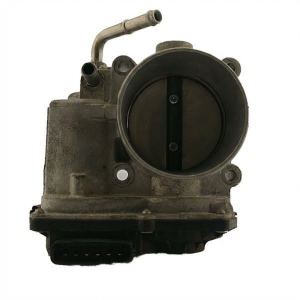
- Electronic Throttle Body
(OEM #16119-3TA0A)— This is the component that controls idle speed. While it often just needs cleaning, if the internal electronics fail, it must be replaced as a complete unit.
Trusted brands: Hitachi (OEM supplier), Aisan, Bosch
OEM price range: $400-$600
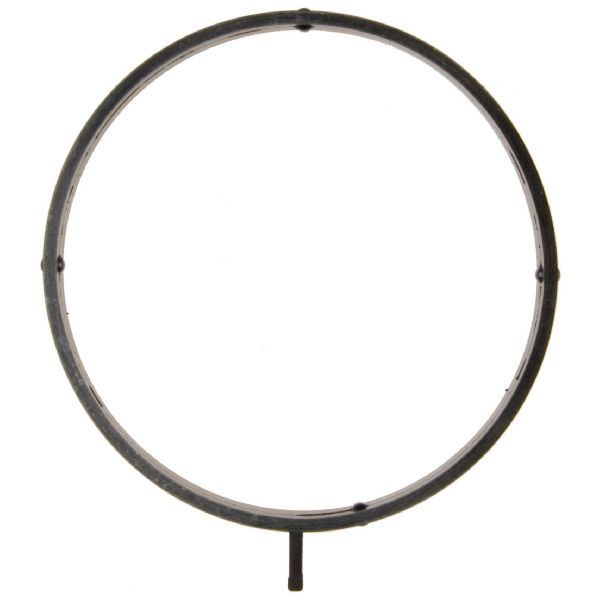
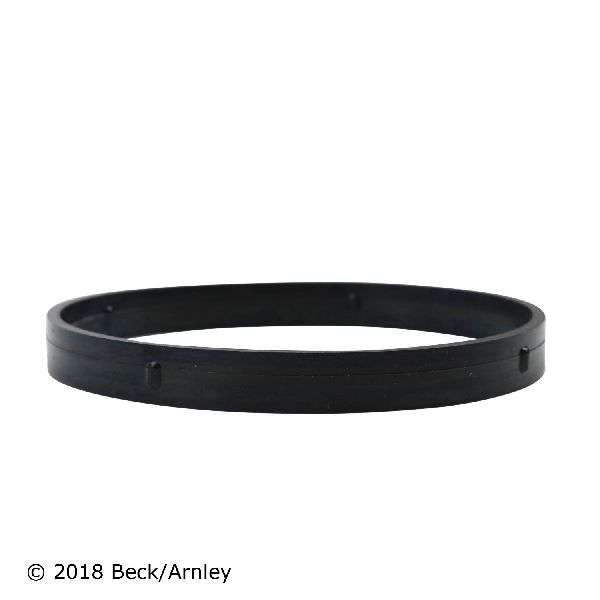
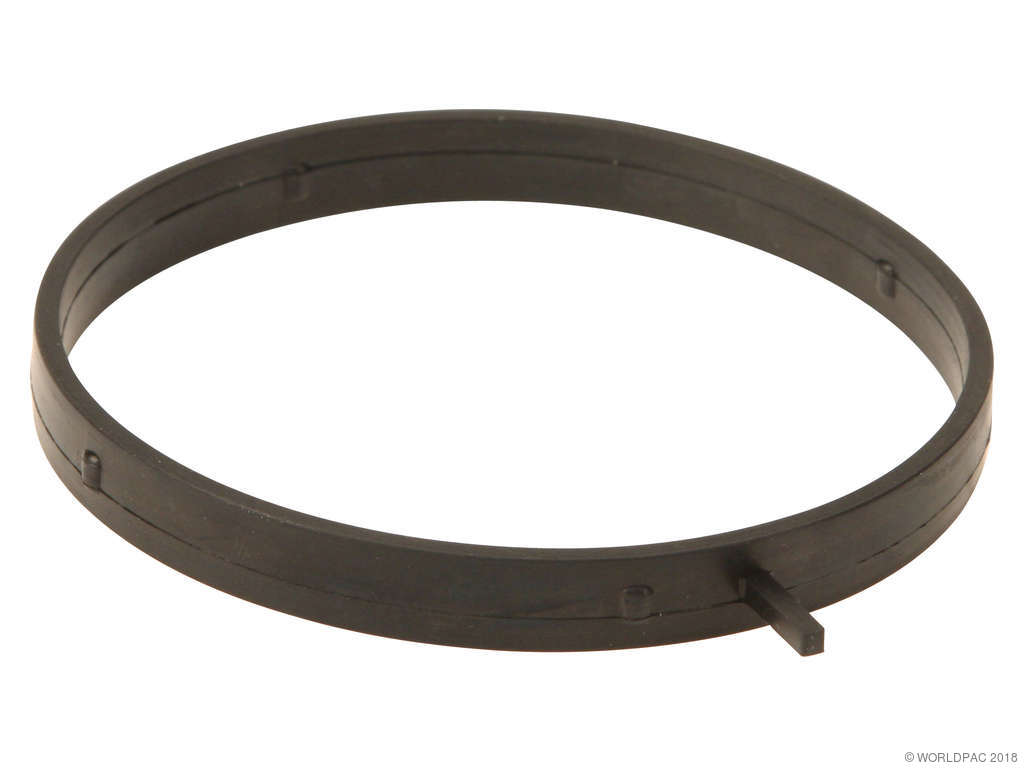
Aftermarket price range: $150-$250 - Throttle Body Gasket
(OEM #16175-3TA0A)— It is best practice to replace the gasket whenever the throttle body is removed for cleaning or replacement to ensure a proper seal against vacuum leaks.
Trusted brands: Fel-Pro (Part #61543), Mahle, Beck/Arnley
OEM price range: $10-$20
Aftermarket price range: $5-$15
Related Codes That Often Appear With This One
- P0101 — A Mass Air Flow (MAF) Sensor code can appear with P0507 if there's a major vacuum leak, as the amount of air entering the engine doesn't match what the MAF sensor is reading. Nissan TSB NTB21-049 specifically groups these two codes together and recommends performing an IAVL as part of the fix.
- P0012, P0196, and P161F — As noted in NHTSA ODI #11710327, these codes (related to cam timing, oil temperature, and the immobilizer) have been documented appearing alongside P0507 in some engine control system malfunctions.
Technical Service Bulletins (TSBs) & Recalls
- NTB21-049 - MIL ON with DTC P0101 and/or P0507 Stored in the ECM
Platform-Specific Known Issues
- Nissan TSB NTB21-049 addresses DTC P0507 and/or P0101. The prescribed fix is to first test the battery, erase DTCs, let the engine idle for 20 minutes under specific conditions, and then perform the Idle Air Volume Learning (IAVL) procedure using a CONSULT tool, highlighting how common this software-based fix is.
Mechanic-Grade Diagnostic Values
- Idle Air Volume Learning - Pre-Condition: Battery Voltage — expected: > 12.9V (at idle). Failure: If voltage is below 12.9V, the IAVL procedure will be cancelled or will not start.
- Idle Air Volume Learning - Pre-Condition: Engine Coolant Temperature — expected: 70 - 100°C (158 - 212°F). Failure: If the engine is too cold or too hot, the IAVL procedure will not complete successfully.
- Idle Air Volume Learning - Confirmation — expected: Scan tool displays 'CMPLT' (Complete) in the WORK SUPPORT screen for 'IDLE AIR VOL LEARN'.. Failure: The status does not change to 'CMPLT' after 20 seconds, or the procedure aborts.
- Electronic Throttle Body Connector — expected: 6-Pin Male Connector. Failure: N/A - Informational
Scan Tool Commands That Help
- Nissan CONSULT-III / Compatible Advanced Scan Tool: Idle Air Vol Learn — This is the primary service function used to reset the engine's idle parameters after cleaning or replacing the throttle body. It is found under Engine > Special Functions or Engine > WORK SUPPORT. Using the scan tool is faster and more reliable than the manual pedal-dance method.
- Nissan CONSULT-III: Throttle Valve Closed Position Learning — This is one of the three preliminary relearn steps that should be performed before the main Idle Air Volume Learn. It ensures the ECM knows the physical closed position of the throttle plate. The scan tool can confirm this by listening for the throttle motor to cycle when the ignition is turned off.
Real Owner Repair Stories
- BobIsTheOilGuy forum user 'The Critic' (2011 Nissan Rogue (similar platform/engine)) — P0507 code, high idle that creeps up over a day or two after being reset.
❌ Tried (didn't work) Replaced PCV valve and hose, Cleaned throttle body and MAF sensor, Performed manual idle relearn procedure multiple times (only worked temporarily), Checked for vacuum leaks (none found)
✅ What actually fixed it The user, a professional tech, noted several advanced solutions for when the relearn fails to 'stick'. These include: 1) Reflashing the ECM to the latest calibration, as some software versions have glitches preventing the relearn from being stored permanently. 2) In a rare case on a 350Z, the ECM itself had an internal fault and required replacement to accept the relearn.
"I Checked Everything" — The Actual Cause
- In some cases where a smoke test reveals no leaks and the throttle body is clean, a faulty brake booster check valve can be the culprit. If the internal diaphragm fails, it can create an intermittent vacuum leak that is difficult to detect with a standard smoke test but still allows enough unmetered air to cause a high idle. The OEM part number for a potentially related valve is 47478-AX600.
OEM Part Supersession History
16119-3TA0A→N/A— This part number appears to be stable for the 2014-2020 Rogue 2.5L. However, it is also used on the 2013-2018 Altima 2.5L, indicating a widely used component.
Heads up: Be aware of different throttle body part numbers for the Rogue Sport (2.0L engine) and later generation Rogues (2021+), which are not interchangeable.
Model Year Variations Within This Range
- 2014-2020: The 2.5L QR25DE engine was used exclusively as the non-hybrid option for the entire second generation (T32). While there was a facelift in 2017, it did not significantly alter the engine or throttle control system related to this code. The causes and fixes are consistent across the entire 2014-2020 range for the 2.5L engine.
Diagnostic Flowchart
Other Known Issues on This Vehicle
Issues unrelated to this code that are worth knowing about as an owner of this generation:
- CVT Transmission Failure 🔴 High — Widespread issue, with failures often reported between 80,000-120,000 miles. Symptoms include shuddering, hesitation, and complete loss of power. (Ref: Multiple class-action lawsuits have been filed regarding this issue for 2014-2016 models.)
- A/C Compressor Failure 🟠 Medium — Commonly reported, especially on earlier models of this generation (2014-2016). The compressor may fail, sometimes sending metal debris through the system, requiring a costly replacement of multiple components.
- Automatic Emergency Braking (AEB) Malfunction 🔴 High — Reported on 2017-2018 models, where the system may engage unexpectedly, causing the vehicle to brake suddenly without an obstacle present. (Ref: NHTSA investigation and multiple complaints filed.)
- EVAP System Clogs 🟡 Low — Some owners report issues with the EVAP canister or vent valve getting clogged, which can lead to difficulty refueling (gas pump clicks off repeatedly).
- Poor Interior Heating at Idle 🟡 Low — Owners may notice the heater blows warm air while driving but turns cool or lukewarm when stopped at idle. This can be caused by air pockets in the cooling system.
Used vs. New Parts: Buying Guide for This Vehicle
When a used part is the smart pick: A used OEM throttle body from a low-mileage (<80,000 miles) donor vehicle is often a better choice than a new, cheap aftermarket part. Since the failure is often electronic, a used part with verified low mileage can be a cost-effective and reliable repair.
Donor-vehicle mileage cap: roughly under 80000 miles for the part to have meaningful remaining life.
What to inspect on the donor part:
- Check for the absence of heavy carbon buildup on the throttle plate; it indicates better engine health of the donor car.
- Ensure the connector pins are clean, straight, and free of corrosion.
- If possible, get the part from a reputable recycler that offers a short warranty.
- Avoid parts from vehicles that show signs of a major front-end collision.
OEM-only on this vehicle (don't cheap out):
- Electronic Throttle Body
Aftermarket brands forum-validated for this vehicle:
- Hitachi (often the OEM supplier)
- Aisan
- Bosch
Brands owners have reported issues with on this vehicle:
- Unbranded or 'white-box' parts from online marketplaces.
- Some user reports suggest early failure or incompatibility with store brands like Duralast for this specific electronic part on Nissans.
Real Owner Stories
Aggregated from forums and TSBs cited above. Mileages and costs reflect what owners reported in those sources.
2014-2020 Nissan Rogue (QR25DE)
Symptoms: High idle and surging RPMs after performing maintenance.
What fixed it: Performed the manual 'Idle Relearn Procedure' consisting of a timed sequence of key turns and pedal presses.
Source hint: YouTube - 'Fixed "Idle Relearn Procedure" High Idle Surges P0507 Nissan Murano, Maxima, Altima' by The Flat Rate Mechanic
2014-2020 Nissan Rogue (QR25DE)
Symptoms: High idle speed after the throttle body was serviced.
What fixed it: Idle Air Volume Learning (IAVL) procedure after ensuring the engine was warmed up and all accessories were turned off.
Source hint: YouTube - 'Nissan P0507 Idle Control System - Idle Relearn Procedure' by Falcon's Hobbies
Documented NHTSA Reports
NHTSA ODI #11710327
Symptoms: An owner reported a "chassis control system error" warning and multiple codes including P0507 (idle control), P0012 (cam timing), and P0196 (oil temp sensor) after a recall service was performed.
NHTSA ODI #11727964
Symptoms: A diagnostic result for DTC P0507-00 was found to be directly linked to a fractured internal gear in the Electric Throttle Control Actuator.
Related OBD-II Codes
Frequently Asked Questions
My 2017 Nissan Rogue has a high idle and a P0101 code along with P0507. Is there a specific technical service bulletin for this?
I just cleaned my Rogue's throttle body and now the idle is surging between 1000-1500 RPM. Did I break it?
Can I perform the Idle Air Volume Learning procedure myself on my Rogue, or do I need to go to a dealer?
Why is my Rogue pushing forward at stoplights when the P0507 code is active?
Is it true that a weak battery can cause a P0507 idle code on a Nissan?
I'm worried about moving the throttle plate by hand while cleaning it. What is the recommended way for a Rogue?
Helpful Videos
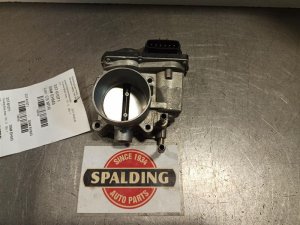
Used OEM Parts in Stock
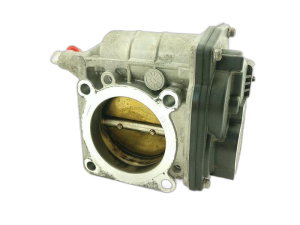
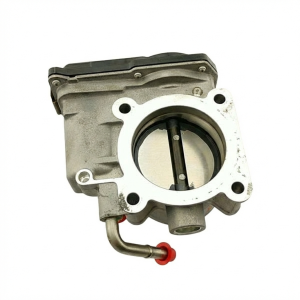
New Aftermarket Parts Available


The information in this article is provided for general reference and educational purposes only. Vehicle specifications, procedures, and part compatibility can vary by production date, trim level, and region. Always consult your vehicle's factory service manual and verify part numbers before purchasing or performing repairs. Safety-critical components such as airbags, seat belts, and braking systems should be installed by a qualified professional.
- Nissan Rogue:
- 🧭 Diagnostic Flowchart
- 🎬 Helpful Videos
- 🛍️ Shop This Part
- What's Unique About the 2014-2020 Nissan Rogue
- Symptoms You May Notice
- Most Likely Causes
- Rare But Worth Checking
- Diagnosis Steps
- Parts You'll Likely Need
- Related Codes That Often Appear With This One
- Technical Service Bulletins (TSBs) & Recalls
- Platform-Specific Known Issues
- Mechanic-Grade Diagnostic Values
- Scan Tool Commands That Help
- Real Owner Repair Stories
- "I Checked Everything" — The Actual Cause
- OEM Part Supersession History
- Model Year Variations Within This Range
- Other Known Issues on This Vehicle
- Used vs. New Parts: Buying Guide for This Vehicle
- Real Owner Stories
- 2014-2020 Nissan Rogue (QR25DE)
- 2014-2020 Nissan Rogue (QR25DE)
- Documented NHTSA Reports
- NHTSA ODI #11710327
- NHTSA ODI #11727964
- Related OBD-II Codes
- Frequently Asked Questions
- 🎟️ Get 5% Off