

P0507 on 2000-2006 Nissan Sentra: High Idle Causes and Fixes
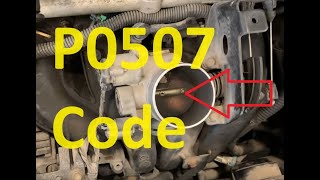
On a 2000-2006 Nissan Sentra, P0507 is most often caused by a dirty or failing electronic throttle body. Carbon buildup prevents the throttle plate from fully closing. Cleaning the throttle body and performing a specific multi-step Idle Air Volume Learning procedure is the most common fix. A replacement throttle body costs between $100 and $300.
- P0507 on a 2000-2006 Sentra almost always points to an issue with unmetered air entering the engine when it should be at a stable, low idle.
- The most likely culprit is a dirty electronic throttle body that is physically stuck slightly open due to carbon buildup.
- Before replacing any parts, thoroughly clean the throttle body and its plate.
- After cleaning or replacing the throttle body, you MUST perform the Idle Air Volume Learning procedure for the repair to be successful.
- If cleaning the throttle body doesn't solve the issue, your next step should be to check for vacuum leaks from old, cracked hoses or gaskets.
What's Unique About the 2000-2006 Nissan Sentra
For the 2000-2006 (B15 generation) Nissan Sentra, particularly those with the 1.8L QG18DE and 2.5L QR25DE engines, the electronic throttle body is a very common failure point leading to the P0507 code. Unlike older cars with a separate Idle Air Control (IAC) valve, these Sentras integrate idle control into the electronic throttle body assembly. Carbon buildup inside the throttle body prevents the throttle plate from closing completely, allowing excess unmetered air in and causing a high idle. Simply cleaning the throttle body is not enough; it must be followed by a specific, and sometimes tricky, "Idle Air Volume Learning" procedure to reset the base idle, as outlined in Nissan Technical Service Bulletin NTB05-066a.
Symptoms You May Notice
- Check Engine Light is on
- Engine idle speed is higher than normal (e.g., over 1000 RPM in Park/Neutral)
- Rough or fluctuating idle
- Vehicle may lurch when shifting into gear from Park
- Engine may stall, especially when coming to a stop or when electrical loads (like A/C) are turned off.
- Increased fuel consumption
- Hard starting, requiring multiple cranks before the engine finally runs.
- Replacing the Mass Airflow (MAF) sensor. While a dirty MAF can cause performance issues, it is not a primary cause of a consistently high idle with a P0507 code. Owners often replace this part with no change to the P0507 code.
- Replacing O2 sensors. Faulty oxygen sensors typically trigger other codes and affect fuel mixture, but do not directly cause a high idle.
Most Likely Causes
- Dirty or Failing Electronic Throttle Body 🔴 High Probability → Shop Fuel Injection Throttle Body Carbon and sludge build up around the throttle plate and bore, preventing it from closing fully. This is a widely documented issue on both the QR25DE and QG18DE engines and is the subject of Nissan TSB NTB05-066a. Additionally, cross-manufacturer data in NHTSA ODI #11727964 suggests that a P0507 can be directly linked to a fractured internal gear in the Electric Throttle Control Actuator.
How to confirm: Remove the air intake hose from the throttle body and visually inspect for a ring of heavy black carbon deposits around the throttle plate and bore. The plate may feel sticky or not close smoothly. On a scan tool, the 'Actual Idle RPM' will be consistently higher than the 'Target Idle RPM'.
Typical fix: Thoroughly clean the throttle body with a dedicated cleaner and a soft cloth. Do NOT spray cleaner directly into the assembly, as it can damage electronics. If cleaning doesn't work, the entire throttle body assembly must be replaced. A successful Idle Air Volume Learning procedure is required after cleaning or replacement.
Est. part cost: $5-$15 for cleaner, $100-$300 for a new throttle body assembly - Vacuum Leak 🟡 Medium Probability Rubber vacuum hoses and intake gaskets become brittle and crack with age and heat exposure, allowing unmetered air to enter the engine and raise the idle speed.
How to confirm: With the engine running, listen for hissing sounds around the intake manifold. You can also carefully spray brake cleaner or starting fluid around gasket surfaces and vacuum lines; a jump in engine RPM indicates a leak. A professional smoke test is the most definitive method. 🎬 See how to find and fix vacuum leaks yourself.
Typical fix: Replace the cracked hose or leaking gasket. Common culprits include the PCV hose and the intake manifold gasket.
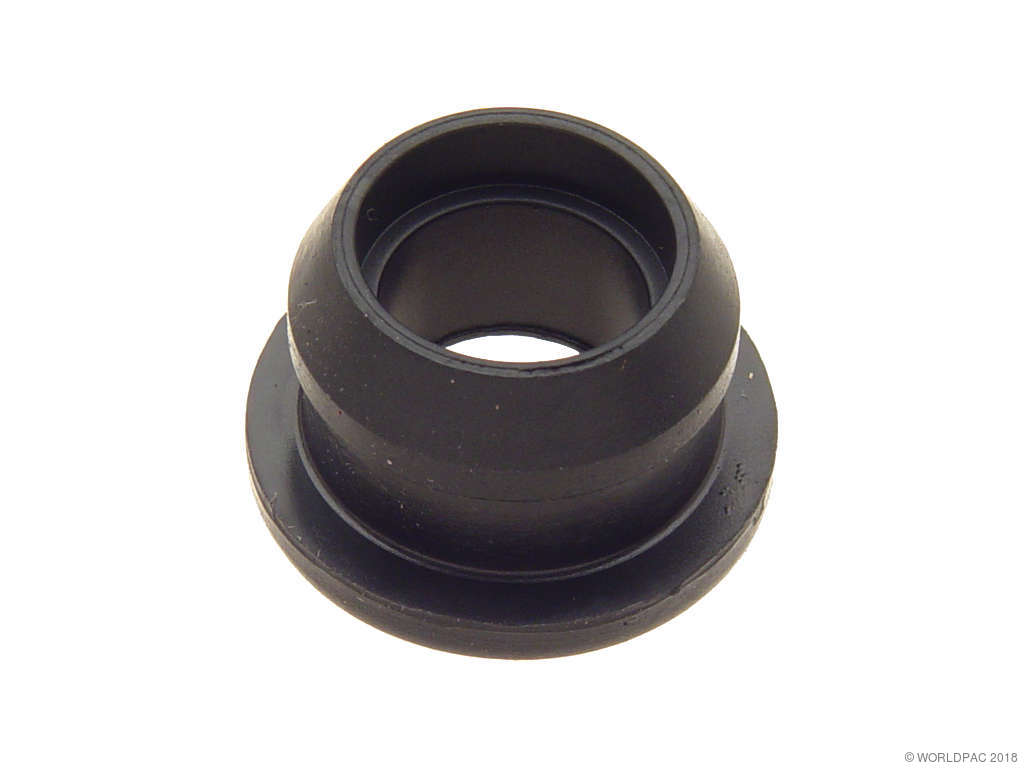
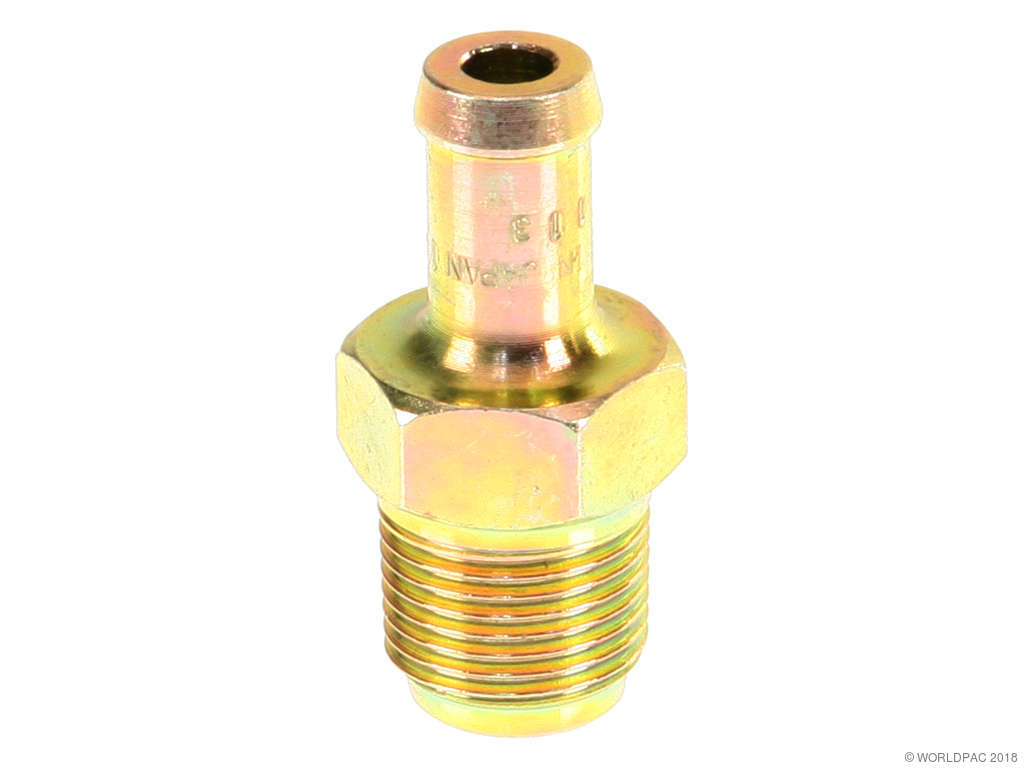
Est. part cost: $10-$50 - Faulty PCV Valve ⚪ Low Probability → Shop PCV Valve The Positive Crankcase Ventilation (PCV) valve can get stuck open, creating a constant vacuum leak that raises the idle speed. While a possible cause, it is far less common than the throttle body issue.
How to confirm: Remove the PCV valve and shake it. If it rattles, it is likely good. If it is silent or gummy, it is stuck and needs replacement. Note that on the QR25DE engine, the PCV valve is difficult to access as it is located under the intake manifold.
Typical fix: Replace the PCV valve. It is an inexpensive part, though labor can be involved on the 2.5L engine.
Est. part cost: $10-$25
Rare But Worth Checking
- Poor Electrical Connection at Throttle Body: → Shop Fuel Injection Throttle Body A confirmed repair on a 2006 Sentra involved fixing poor connections in the throttle body's electrical connector before the idle relearn procedure would work correctly.
Diagnosis Steps
- Read the code with an OBD-II scanner to confirm P0507 is present and check for any other codes. Manufacturer service bulletin #NTB21-080 notes that P0507 may be stored in the ECM alongside P0223 (TP SEN 1) or P2135.
- Visually inspect all vacuum hoses connected to the intake manifold for cracks, disconnection, or brittleness. Pay close attention to the PCV hose and brake booster line.
- Inspect the air intake tube between the MAF sensor and the throttle body for any rips or loose clamps. Manufacturer bulletin #NTB21-049 highlights that P0507 (ISC System) is frequently stored alongside P0101 (MAF Sensor) codes.
- Remove the air intake tube from the throttle body and inspect the throttle plate and bore for carbon buildup.
- If significant carbon is present, disconnect the battery, remove the throttle body, and clean it thoroughly using throttle body cleaner and a soft rag. Do not spray directly on electrical components. Reinstall with a new gasket.
- Reconnect the battery and perform the three-part Idle Air Volume Learning procedure. This can be done manually or with a capable bi-directional scan tool. The manual steps are: a. Accelerator Pedal Released Position Learning: Turn key ON (engine off), wait 2+ seconds. Turn key OFF, wait 10+ seconds. Repeat. b. Throttle Valve Closed Position Learning: With key ON, turn it OFF and wait 10+ seconds until you hear the throttle valve motor stop moving. c. Idle Air Volume Learning (The 'Pedal Dance'): Engine must be fully warmed up. Turn all accessories OFF. Turn key ON (engine off), wait 3 seconds. Press and release the accelerator pedal fully 5 times in 5 seconds. Wait 7 seconds. Press and hold the pedal down for ~20 seconds until the Check Engine Light stops blinking and stays solid. Within 3 seconds of the light going solid, release the pedal and start the engine. Let it idle for 20 seconds. 🎬 Watch this video to master the electronic throttle relearn procedure.
- If the relearn procedure fails or the idle remains high, check for vacuum leaks more thoroughly using a smoke machine.
- Check the PCV valve to ensure it is not stuck open.
- If all else fails, the electronic throttle body assembly may have an internal electronic fault and require replacement.
Parts You'll Likely Need
- Electronic Throttle Body Assembly
(OEM #16119-AE013 (For 2.5L QR25DE engine) or 16119-AU003 (For 1.8L QG18DE engine). Always verify by VIN.)— This is the most common point of failure for the P0507 code on this vehicle due to carbon buildup and internal component wear.
Trusted brands: Hitachi (OEM supplier), Bosch, Standard Motor Products
OEM price range: $250-$400
Aftermarket price range: $100-$250 - Throttle Body Gasket — Should always be replaced whenever the throttle body is removed for cleaning or replacement to prevent vacuum leaks.
Trusted brands: Fel-Pro, Mahle, Nissan OEM
OEM price range: $10-$20
Aftermarket price range: $5-$15 - PCV Valve — A stuck PCV valve can cause a vacuum leak, leading to a high idle. It's an inexpensive part to rule out, though labor can be high on the 2.5L engine.
Trusted brands: Standard Motor Products, WVE, Nissan OEM
OEM price range: $15-$30
Aftermarket price range: $10-$20
Technical Service Bulletins (TSBs) & Recalls
- NTB05-066a: Specifically for 2002-2006 Sentra and 2002-2006 Altima models with the QR25DE engine, this TSB addresses the P0507 code. It instructs technicians to clean the throttle body of carbon deposits and then perform the Idle Air Volume Learning procedure to correct the high idle condition. This bulletin directly confirms the primary cause and repair for this platform.
- Bulletin #NTB21-049: A manufacturer service bulletin for related Nissan models confirms that P0507 (ISC System) may be stored in the ECM alongside P0101 (MAF sensor) codes, requiring specific testing of the system.
- Bulletin #NTB21-080: This bulletin notes that the MIL may be ON with P0507 stored in conjunction with P0223 or P2135, indicating potential issues within the throttle position sensor circuits.
Platform-Specific Known Issues
- The Idle Air Volume Learning procedure is critical after cleaning or replacing the throttle body. It can be difficult to perform manually and may require multiple attempts or a professional scan tool. Success requires the engine to be fully warmed up and all electrical accessories (lights, A/C, stereo) to be off.
Mechanic-Grade Diagnostic Values
- Throttle Position Sensor (TPS) 1 Voltage — expected: ~0.45V at closed throttle, ~4.5V at wide-open throttle.. Failure: Voltage outside of this range, or not changing smoothly as the pedal is depressed, indicates a faulty sensor.
- Throttle Control Motor Resistance — expected: Approximately 1 - 15 Ω at 77°F (25°C) between terminals 3 and 6 of the throttle body connector.. Failure: Resistance outside this range indicates a fault in the motor windings.
Scan Tool Commands That Help
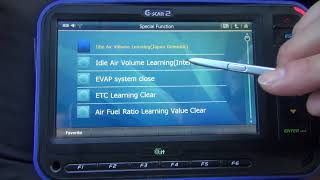
- Nissan CONSULT or capable bi-directional scanner: Idle Air Volume Learning (IAVL) — This function is mandatory after cleaning or replacing the electronic throttle body. It commands the ECM to relearn the base idle airflow. Failure to perform this will almost always leave the P0507 code active with a high idle.
- Nissan CONSULT or capable bi-directional scanner: Throttle Valve Closed Position Learning — This should be performed before the IAVL. It teaches the ECM the voltage reading for a fully closed throttle plate. If this value is incorrect, the IAVL may fail.
- Nissan CONSULT or capable bi-directional scanner: Accelerator Pedal Released Position Learning — This is the first step in the relearn sequence, teaching the ECM the voltage from the accelerator pedal position sensor when the pedal is not pressed.
Wiring & Ground Locations
- Engine Ground (QR25DE) — A key ground point runs from a thermostat housing bolt to the chassis frame rail near the passenger side. Another runs from the alternator to the timing cover.. A poor engine ground can cause erratic behavior in all engine sensors, including the electronic throttle body, leading to incorrect idle control and relearn procedure failures.
- Throttle Body Ground — On some performance-oriented setups (like the SE-R Spec V), an additional ground wire is run from one of the throttle body mounting bolts to the passenger side strut tower.. Ensures the electronic throttle body has a stable ground reference, which is critical for the internal motor and position sensors to function correctly.
- Electronic Throttle Control Actuator Connector (M54) — The 6-pin connector that plugs directly into the throttle body assembly.. This is a known failure point. Poor connections or corrosion on these pins can interrupt signals between the ECM and the throttle body, causing high idle and preventing the relearn procedure from completing successfully.
Real Owner Repair Stories
- ALLDATA Repair Case Study (2006 Nissan Sentra) — High, unstable idle with DTC P0507 present.
❌ Tried (didn't work) Initial scan and verification of APP and TPS voltages., Performing the Accelerator Pedal Released Position Learning and Throttle Valve Closed Position learning procedures once.
✅ What actually fixed it The technician first found and repaired poor electrical connections in the throttle body connector. When the idle was still high, they had to perform the learning procedures three more times before the throttle functioned properly and the idle returned to specifications. - NHTSA ODI #11725159 — An owner reported that their vehicle stalled in slow traffic after a long drive, with the engine code P0507 appearing. Two weeks later, the car stopped without warning while accelerating on the highway.
- NHTSA ODI #11558644 — A report describes a vehicle experiencing multiple engine codes simultaneously, including P0507 for the idle air control system along with P061B and P0101.
"I Checked Everything" — The Actual Cause
- In a documented repair, a 2006 Sentra with P0507 had a high idle that was not caused by a vacuum leak. The initial cause was a poor electrical connection at the throttle body. Even after repairing the connector, the idle remained high. The final fix required performing the multi-step idle relearn procedure three consecutive times before the ECM would accept the new parameters and control the idle correctly.
OEM Part Supersession History
16119-AE013→16119-AE01A, then 16119-AE01C. Now discontinued by Nissan.— Revisions to internal components or materials.
Heads up: This part is for the 2.5L QR25DE engine only. It is not interchangeable with the 1.8L QG18DE throttle body (16119-AU003).16119-AU003→16119-AU00A. Now discontinued by Nissan.— Revisions to internal components or materials.
Heads up: This part is for the 1.8L QG18DE engine only. It is not interchangeable with the 2.5L QR25DE throttle body (16119-AE013). Even if they physically look similar, the electronic calibrations may differ.
Model Year Variations Within This Range
- 2000-2006: The primary difference affecting this code is the engine. Base models used the 1.8L QG18DE engine for the entire generation. The sporty SE model used a 2.0L SR20DE from 2000-2001. From 2002-2006, the SE-R and SE-R Spec V models were introduced, using the 2.5L QR25DE engine. The 1.8L and 2.5L engines use different, non-interchangeable throttle bodies.
- 2004-2006: A mid-generation facelift occurred for the 2004 model year, resulting in minor cosmetic changes and revised trim names (e.g., GXE became 1.8S), but the primary engine options (1.8L and 2.5L) and the causes of P0507 remained the same.
Diagnostic Flowchart
Other Known Issues on This Vehicle
Issues unrelated to this code that are worth knowing about as an owner of this generation:
- QR25DE Pre-Catalyst Disintegration 🔴 High — Common on 2002-2006 models. The ceramic material in the exhaust manifold's pre-catalyst breaks apart and can be sucked back into the engine, scoring cylinder walls and leading to catastrophic engine failure and extreme oil consumption. (Ref: Nissan issued recalls and TSBs (e.g., NTB08-023) to reprogram the ECU, but many owners opt to replace the manifold with an aftermarket header to permanently eliminate the risk.)
- QR25DE Head Gasket Failure 🔴 High — A well-documented weakness, particularly on 2002-2006 models, often occurring between 80,000 and 150,000 miles. Symptoms include unexplained coolant loss, overheating, and white smoke from the exhaust.
- QR25DE Intake Power Valve Screws Loosening 🔴 High — Screws holding the butterfly valves inside the intake manifold can loosen and fall into the combustion chamber, causing severe engine damage. Primarily affects 2002-2005 models. (Ref: Subject of a class-action lawsuit and a recall/service campaign in some regions.)
- QR25DE Excessive Oil Consumption 🟠 Medium — Often a symptom of the pre-catalyst failure damaging piston rings, but also a standalone issue. Some 2006 models were subject to a voluntary recall campaign for high oil consumption that could lead to engine replacement. (Ref: Voluntary Recall Campaign for some 2006 models.)
- QG18DE Crankshaft/Camshaft Position Sensor Failure 🟠 Medium — Common on the 1.8L engine, leading to intermittent stalling, hard starting, or a no-start condition. The engine may shut off abruptly while driving. (Ref: Recalls were issued for this problem on some Nissan models, but owners report VIN-specific eligibility issues.)
Used vs. New Parts: Buying Guide for This Vehicle
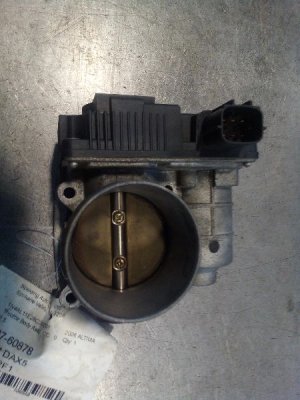
When a used part is the smart pick: For the electronic throttle body, a used OEM part from a low-mileage donor vehicle is often a more reliable and cost-effective choice than a new, non-OEM aftermarket part. Nissan electronics can be sensitive, and many aftermarket units have compatibility issues that prevent the idle relearn procedure from working correctly.
Donor-vehicle mileage cap: roughly under 80000 miles for the part to have meaningful remaining life.
What to inspect on the donor part:
- Verify the part number stamped on the housing matches your original part exactly (e.g., 16119-AE013 vs 16119-AU003).
- Inspect the electrical connector pins for any signs of green or white corrosion, or any bent pins.
- Look inside the throttle bore. Minor carbon is okay and can be cleaned, but avoid any parts with deep scoring or visible damage to the throttle plate or bore.
- Ensure the throttle plate moves when pushed gently and springs back shut crisply (with battery disconnected).
OEM-only on this vehicle (don't cheap out):
- Electronic Throttle Body
Aftermarket brands forum-validated for this vehicle:
- Hitachi (Original OEM supplier)
- Bosch
Brands owners have reported issues with on this vehicle:
- Unbranded or 'white-box' parts from online marketplaces are a significant gamble due to high failure rates and incompatibility with Nissan's idle relearn procedure.
Real Owner Stories
Aggregated from forums and TSBs cited above. Mileages and costs reflect what owners reported in those sources.
2002-2006 Nissan Sentra QR25DE
Symptoms: Idle higher than expected.
What fixed it: Cleaning the throttle body and performing the 'pedal dance' relearn procedure, which often requires several attempts to succeed.
Source hint: b15sentra.net: Multiple threads, such as one titled 'P0507 - Idle higher than expected...'
2004 Nissan Sentra 1.8L
Symptoms: P0507 code present; owner analyzed fuel trims to find the root cause.
What fixed it: The diagnostic process pointed toward a vacuum leak after the owner had already tried replacing the MAF and throttle body.
Source hint: ScannerDanner Forum: A thread on a 2004 Sentra 1.8L with P0507
2002-2006 Nissan Sentra
Symptoms: High idle and P0507 code; owner was deciding between a vacuum leak or a throttle body issue.
What fixed it: Checking intake plumbing for leaks and inspecting the throttle body for carbon buildup.
Source hint: nissanforums.com: A thread titled 'P0507 Help'
Related OBD-II Codes
Frequently Asked Questions
Does Nissan TSB NTB05-066a apply to my 2004 Sentra with the 2.5L engine?
Can I clean the electronic throttle body on my QR25DE or QG18DE engine myself?
Why does my Sentra lurch when I shift it into gear from Park?
Is the PCV valve easy to replace on the 2.5L Sentra to fix a high idle?
What is the 'Pedal Dance' I keep reading about for the Nissan Sentra?
Why does my engine stall when I turn off the A/C or come to a stop?
Helpful Videos
![NISSAN Electronic Throttle Body [ETB] | EASY RE-LEARN Procedure](https://img.youtube.com/vi/hUlGxqylpCs/mqdefault.jpg)
Used OEM Parts in Stock
New Aftermarket Parts Available


The information in this article is provided for general reference and educational purposes only. Vehicle specifications, procedures, and part compatibility can vary by production date, trim level, and region. Always consult your vehicle's factory service manual and verify part numbers before purchasing or performing repairs. Safety-critical components such as airbags, seat belts, and braking systems should be installed by a qualified professional.
- Nissan Sentra:
- 🧭 Diagnostic Flowchart
- 🎬 Helpful Videos
- 🛍️ Shop This Part
- What's Unique About the 2000-2006 Nissan Sentra
- Symptoms You May Notice
- Most Likely Causes
- Rare But Worth Checking
- Diagnosis Steps
- Parts You'll Likely Need
- Technical Service Bulletins (TSBs) & Recalls
- Platform-Specific Known Issues
- Mechanic-Grade Diagnostic Values
- Scan Tool Commands That Help
- Wiring & Ground Locations
- Real Owner Repair Stories
- "I Checked Everything" — The Actual Cause
- OEM Part Supersession History
- Model Year Variations Within This Range
- Other Known Issues on This Vehicle
- Used vs. New Parts: Buying Guide for This Vehicle
- Real Owner Stories
- 2002-2006 Nissan Sentra QR25DE
- 2004 Nissan Sentra 1.8L
- 2002-2006 Nissan Sentra
- Related OBD-II Codes
- Frequently Asked Questions
- 🎟️ Get 5% Off