

P0507 on 1999-2005 Saab 9-5: High Idle Causes and Fixes
On a 1999-2005 Saab 9-5, code P0507 is almost always caused by cracked or broken vacuum hoses. A thorough inspection and replacement of brittle vacuum lines, often with more durable 4mm silicone tubing, is the most likely fix. If hoses are intact, cleaning the electronic throttle body is the next step. A faulty PCV system or a cracked brake booster vacuum hose are other strong possibilities.
- P0507 on a 1999-2005 Saab 9-5 means the idle is too high, most likely due to a vacuum leak.
- Start your diagnosis by carefully inspecting all the small 4mm rubber vacuum hoses; they are a known failure point and should be replaced with silicone.
- This car does NOT have an Idle Air Control (IAC) valve. Do not waste time looking for one.
- If vacuum hoses are good, inspect the PCV system and the large brake booster vacuum hose before assuming the throttle body is the problem.
- Upgrading to the latest PCV system kit (OEM #55561200) is a popular and durable preventative repair.
What's Unique About the 1999-2005 Saab 9-5
Unlike many vehicles from this era that use a separate Idle Air Control (IAC) valve, the 1999-2005 Saab 9-5 with the B235 engine uses an electronic throttle body managed by the Trionic 7 system. The computer directly controls the idle speed by making tiny adjustments to the main throttle plate, meaning there is no IAC valve to clean or replace. The most common cause of a high idle on these cars is unmetered air entering the engine through the extensive network of vacuum hoses, which become brittle and crack with age and engine heat.
Symptoms You May Notice
- Check Engine Light is illuminated
- Engine idles higher than normal (often 1000-1500 RPM, but can surge to 2000)
- Rough, hunting, or surging idle speed
- Vehicle feels like it is 'creeping' forward at a stop, requiring more brake pressure to hold it still
- Harsh shifting when engaging Drive or Reverse
- Hissing sound from the engine bay, indicating a vacuum leak
- With a large leak, such as a disconnected brake booster hose, the idle can be extremely high and the engine may stall
- Replacing the Mass Airflow (MAF) sensor. A faulty MAF sensor typically causes other codes and different drivability issues, not just a high idle.
- Looking for an Idle Air Control (IAC) valve. This vehicle does not have one; idle is managed by the electronic throttle body.
Most Likely Causes
- Cracked, broken, or disconnected vacuum hoses 🔴 High Probability → Shop Vacuum Hose The B235 engine uses a complex network of rubber vacuum hoses that control the EVAP system, boost control valve, and other components. After 15-20+ years, the original rubber becomes hard and brittle from engine heat, leading to cracks and breaks. Even a small pinhole leak can trigger the code.
How to confirm: Visually inspect all vacuum lines, especially the small-diameter ones around the throttle body, intake manifold, and running to the EVAP purge valve on the firewall. A smoke test is the most effective method. Alternatively, with the engine running, carefully spray a flammable liquid like brake cleaner or unlit propane around the hoses; a change in idle RPM indicates a leak.
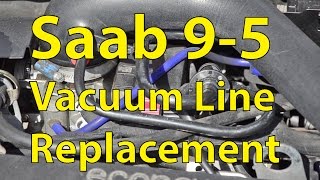
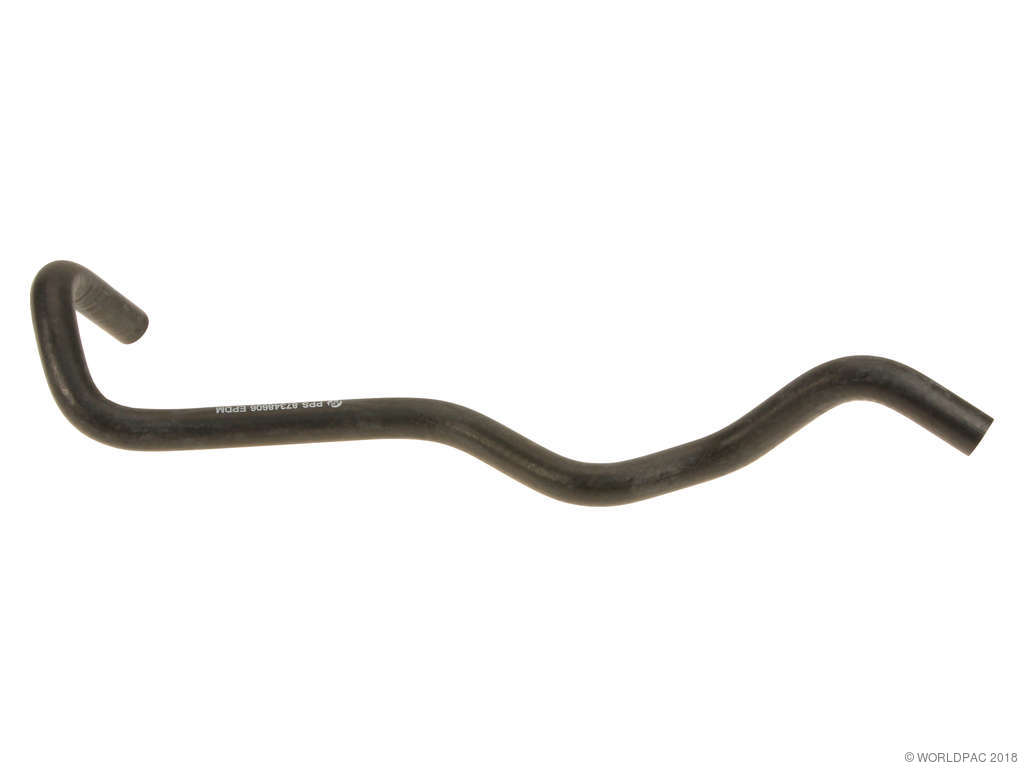
Typical fix: Replace all suspect vacuum hoses. Many owners upgrade to more durable 4mm inner diameter silicone vacuum tubing, which is sold by the foot or meter and is more resistant to heat and oil. 🎬 Watch: Step-by-step guide to replacing your vacuum lines with silicone.
Est. part cost: $20-$50 - Dirty or sticking electronic throttle body 🟡 Medium Probability → Shop Fuel Injection Throttle Body The PCV (Positive Crankcase Ventilation) system routes oil vapors back into the intake. Over time, these vapors mix with dirt and form carbon deposits around the throttle plate and bore, preventing it from closing fully at idle.
How to confirm: Remove the intake pipe connected to the throttle body and inspect the throttle plate and bore for black, sticky residue. Check if the plate moves smoothly by hand (with the ignition off).
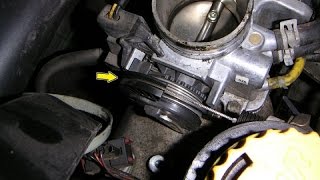
Typical fix: Remove the throttle body or clean it in place carefully. Use dedicated throttle body cleaner and a soft, lint-free cloth. Do not spray cleaner directly into the electronics. Manually moving the plate can sometimes trigger a 'limp home mode', which may require a reset procedure (disconnecting the battery or a specific pedal dance). 🎬 See how to clean the throttle body and reset limp mode.
Est. part cost: $10-$20 for cleaner - Leaking PCV (Positive Crankcase Ventilation) system 🟡 Medium Probability The PCV system on early B235 engines is a known weak point, with rubber hoses that soften, collapse, and check valves that fail, creating a significant vacuum leak. Saab issued several updates to this system over the years.
How to confirm: Inspect the PCV hoses, especially the check valves and the lines running from the valve cover to the oil trap (PCV box). The hoses may feel soft or 'squidgy' when degraded. A failed check valve can allow boost pressure into the crankcase.
Typical fix: Replace the faulty PCV hoses and check valves. It is highly recommended to install the latest PCV update kit (often called PCV kit #6) for a permanent solution.
Est. part cost: $60-$100 for a complete update kit
Rare But Worth Checking
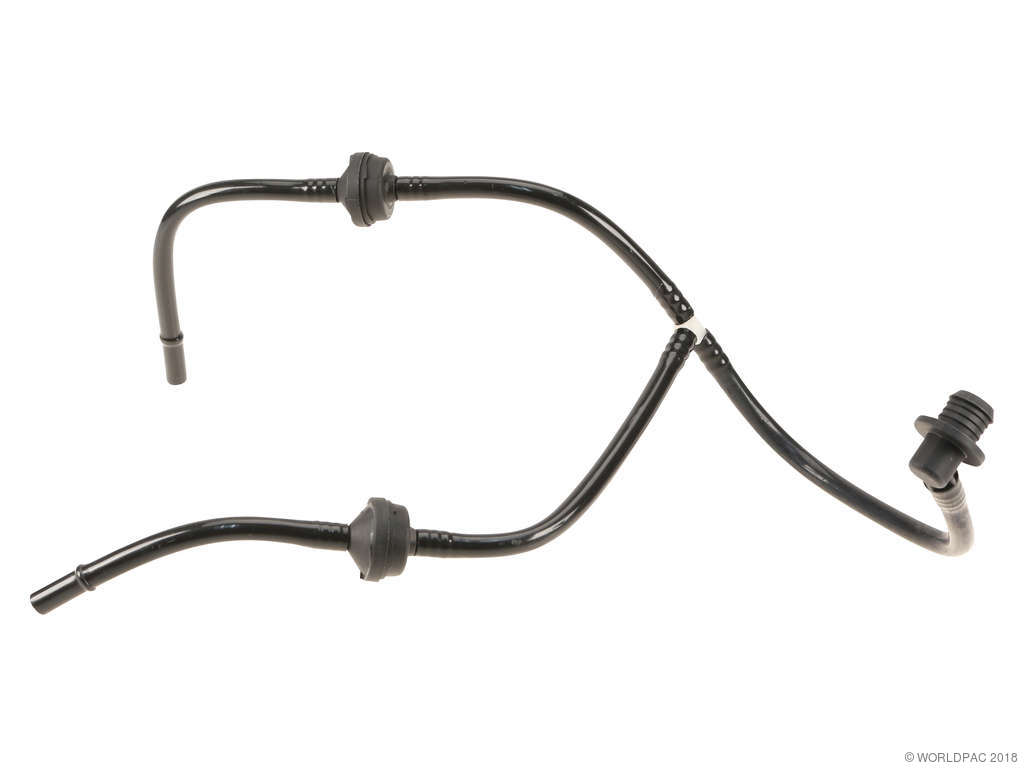
- Leaking brake booster vacuum hose: → Shop Power Brake Booster The large, semi-rigid vacuum hose running from the intake manifold to the brake booster can crack, especially at the check valve or connection points. This creates a very large vacuum leak, causing a dramatically high idle and potentially a stiff brake pedal.
- Faulty electronic throttle body: → Shop Fuel Injection Throttle Body While cleaning often works, the throttle body itself can fail electronically or mechanically. If cleaning and an idle reset don't work, and no vacuum leaks are present, the unit may need replacement. Replacing it with a new unit may require calibration with a Saab-specific Tech 2 scanner.
- Leaking intake manifold gasket: → Shop Engine Intake Manifold While less common than hose failures, the gasket between the intake manifold and the cylinder head can fail, creating a vacuum leak. This would typically be found with a smoke test.
Diagnosis Steps
- Read the trouble codes with an OBD-II scanner to confirm P0507 and check for any other related codes.
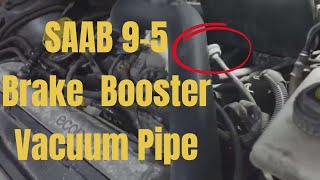
- Perform a thorough visual inspection of all vacuum hoses. Pay close attention to the 4mm lines connected to the intake manifold, throttle body, brake booster check valve, and EVAP purge valve. 🎬 Watch: How to replace a cracked brake booster vacuum pipe. Gently wiggle the hoses to see if they are brittle or cracked.
- If a visual inspection is inconclusive, perform a smoke test to pressurize the intake system. Smoke will emerge from any leaks. As an alternative, carefully spray short bursts of a flammable cleaner around suspected leak points with the engine idling; a noticeable change in engine RPM will pinpoint the leak.
- Specifically inspect the large brake booster vacuum hose (Part #5331095 for automatic models) for cracks, especially near the check valve and fittings.
- Inspect the PCV system hoses for softness, swelling, or collapse. Check that the one-way check valves are functioning correctly.
- If no vacuum leaks are found, remove the air intake hose from the throttle body. Inspect the throttle bore and plate for heavy carbon buildup.
- If dirty, clean the throttle body carefully using a dedicated throttle body cleaner and a soft cloth. Avoid spraying the electronic components.
- After performing repairs, clear the code with a scanner. Perform a throttle body reset if needed by disconnecting the battery for 30 minutes or following the specific key-on/pedal-press procedure. Conduct a test drive to ensure the idle speed is normal (typically around 750-850 RPM when warm).
Parts You'll Likely Need
- Vacuum Hose (Silicone) — This is the most frequent cause of P0507. The original rubber hoses degrade. 4mm inner diameter silicone is the community-accepted durable replacement.
Trusted brands: GenuineSaab, do88, Abbott Racing
OEM price range: N/A
Aftermarket price range: $20-$50 for enough length to replace all lines - PCV System Update Kit
(OEM #55561200)— The original PCV system is a known failure point causing sludge and vacuum leaks. This kit includes updated hoses and check valves for a permanent fix.
Trusted brands: Saab (OEM), Professional Parts Sweden (21341200)
OEM price range: $80-$120
Aftermarket price range: $60-$90 - Electronic Throttle Body
(OEM #9188336 (verify by VIN))— If cleaning does not resolve the high idle, or if the internal electronics have failed, the entire unit must be replaced. A new unit may require calibration with a Tech 2 scanner.
Trusted brands: Bosch (OEM), Used OEM
OEM price range: $400-$600
Aftermarket price range: $100-$250 (Used or Remanufactured) - Brake Booster Vacuum Hose (Auto Trans)
(OEM #5331095)— This specific, pre-formed hose assembly is a common failure point that causes a major vacuum leak.
Trusted brands: Saab (OEM)
OEM price range: $40-$70
Aftermarket price range: $30-$50
Related Codes That Often Appear With This One
- P1230 - Throttle Valve / Pedal Position Sensor Signal Not In Range
- P1231 - Throttle Valve Control Signal Not In Range
- P1251 - Throttle Valve Control Motor Stuck Open / Position Fully Closed
- P1261 - Throttle Valve Malfunction
Platform-Specific Known Issues
- Real Repair Story: The Hunt for the P0507 Leak: A user on a Reddit forum described a classic P0507 scenario on their 1999 Saab 9-5. The car developed a high idle and threw the code. The owner first suspected the large, obvious brake booster hose, which had indeed broken at the check valve—a common failure point. After a temporary fix with electrical tape didn't solve the issue completely, a deeper inspection revealed multiple small, brittle vacuum lines had also cracked. Replacing all the small vacuum lines with new silicone tubing ultimately resolved the high idle and cleared the code, highlighting that multiple small leaks can add up to a significant problem.
Mechanic-Grade Diagnostic Values
- Throttle Position Sensor 1 Voltage (Pins 6-9) — expected: 0.065V - 1.090V at closed throttle; 3.930V - 4.775V at wide open throttle.. Failure: Voltage outside of these ranges or not changing smoothly indicates a faulty sensor.
- Throttle Position Sensor 2 Voltage (Pins 8-9) — expected: 3.910V - 4.935V at closed throttle; 0.025V - 1.070V at wide open throttle.. Failure: This sensor's voltage should move inversely to Sensor 1. The sum of both sensor voltages should always be ~5V. A deviation indicates a fault.
- Throttle Motor Resistance (Pins 10-5) — expected: 1.13 ± 0.1 Ohms at 20°C (68°F).. Failure: Significantly higher or lower resistance suggests a problem with the internal motor windings.
- Live Data: 'Idling speed difference' (Tech 2 Scanner) — expected: Close to 0 RPM when idling correctly.. Failure: A persistent positive value (e.g., +200 RPM or more) confirms the condition for setting code P0507.
Scan Tool Commands That Help
- Saab Tech 2: Idle Speed Adjustment — This function can be used to slightly increase or decrease the target idle RPM. A user demonstrated increasing the idle by 50 RPM to resolve a low-idle vibration issue, showing the ECU's ability to be commanded. For P0507, a technician could use this to confirm the ECU is attempting to control idle before suspecting a mechanical fault or vacuum leak.
- Saab Tech 2: Read 'Idling speed difference' — This live data parameter directly shows the deviation between the requested idle speed and the actual measured RPM, confirming the fault condition that triggers P0507.
- Saab Tech 2: Throttle Body Adaptation/Reset — After cleaning or replacing the throttle body, a reset may be required to make the Trionic 7 ECU relearn the closed and open positions. This is often necessary if the car enters 'limp-home' mode.
Wiring & Ground Locations
- G7 — On the side of the intake manifold, near cylinder 4 for 4-cylinder petrol engines.. This is a primary grounding point for engine sensors. A poor connection here can cause erratic sensor readings for the Trionic 7 system, potentially affecting idle control calculations.
- G2 / G25 — G2 is on the left-hand structural member behind the headlamp. G25 is on the gearbox. They are the main battery ground points.. A compromised main ground can cause a host of difficult-to-diagnose electronic issues, including problems with the ECU and electronic throttle body.
- Throttle Body Connector (10-pin) — Directly on the electronic throttle body unit.. This is the single connection for all power, ground, and signal wires for the throttle motor and dual position sensors. Key pins for testing are Pin 9 (sensor ground), Pins 6 & 8 (TPS signal outputs), and Pins 5 & 10 (motor).
Real Owner Repair Stories
- Reddit user in r/saab (2003 Saab 9-5 Aero) — Engine revs to 3000 RPM immediately after starting, followed by a rough idle.
❌ Tried (didn't work) Thorough check of the entire intake system for air leaks (none found), Replaced the MAF sensor, Reflashed the ECU software
✅ What actually fixed it The problem was resolved by replacing the throttle body with a second-hand unit. The root cause was determined to be that the original throttle body's return spring had been tampered with by a non-Saab mechanic, destroying its factory calibration.
"I Checked Everything" — The Actual Cause
- In one documented case, a 2003 9-5 Aero with a 3000 RPM high idle passed an intake leak inspection (implying a smoke test or similar method showed no leaks). The actual cause was not unmetered air, but a faulty throttle body where the return spring's calibration had been physically altered. This type of mechanical failure inside the throttle body will not be found by a smoke test.
OEM Part Supersession History
9188336→5950191— Model year update/redesign.
Heads up: Part number 9188336 is for 1999-2003 models. Part number 5950191 is for 2004-2009 models. They are not interchangeable.
Model Year Variations Within This Range
- 1999-2003 vs 2004-2005: The electronic throttle body is different between these year ranges. Early models (1999-2003) use part number 9188336 (or equivalent). Later models (2004+) use part number 5950191. It is critical to order the correct part for the vehicle's model year as they are not compatible.
Diagnostic Flowchart
Used vs. New Parts: Buying Guide for This Vehicle
When a used part is the smart pick: A used electronic throttle body from a reputable dismantler is a very common and sensible repair strategy, as new OEM units are expensive. Given that the primary failure mode for vacuum hoses and PCV kits is rubber degradation, those parts should always be purchased new.
Donor-vehicle mileage cap: roughly under 120000 miles for the part to have meaningful remaining life.
What to inspect on the donor part:
- Verify the part number matches your original (especially considering the 2003/2004 split).
- Ask if the donor car was running and if it had any throttle-related fault codes.
- Visually inspect for any physical damage, corrosion on the connector pins, or signs that it has been tampered with.
- Ensure the throttle plate moves by hand (gently) and returns crisply via its spring.
OEM-only on this vehicle (don't cheap out):
- Electronic Throttle Body: While a used OEM (Bosch) part is acceptable, avoid no-name, new aftermarket electronic throttle bodies, as their long-term reliability is questionable.
Aftermarket brands forum-validated for this vehicle:
- PCV Kits: Professional Parts Sweden (Proparts) is a well-regarded alternative to Genuine Saab.
- Vacuum Hoses: Silicone hose from brands like do88, GenuineSaab, or even generic 4mm silicone tubing is considered an upgrade over the stock rubber.
Brands owners have reported issues with on this vehicle:
- Be cautious of unbranded electronic components like throttle bodies from online marketplaces, as quality control can be poor.
Real Owner Stories
Aggregated from forums and TSBs cited above. Mileages and costs reflect what owners reported in those sources.
1999 Saab 9-5
Symptoms: The car developed a high idle and threw the P0507 code. The owner also noted a broken brake booster hose check valve.
What fixed it: After a temporary fix on the brake booster hose didn't solve the issue, a deeper inspection revealed multiple small, brittle vacuum lines had also cracked. Replacing all the small vacuum lines with new silicone tubing ultimately resolved the high idle.
Source hint: Real Repair Story: The Hunt for the P0507 Leak
Saab 9-5 (B235 engine)
Symptoms: Extremely high idle, possibly stalling. The P0507 code was present.
What fixed it: The owner found their large brake booster vacuum line was completely broken, which is a significant leak source. Replacing this hose resolved the issue.
Source hint: Reddit (r/saab)
Saab 9-5 (B235 engine)
Symptoms: High or surging idle speed with a P0507 code.
What fixed it: The issue was resolved by replacing a faulty electronic throttle body that had a miscalibrated spring.
Source hint: Reddit (r/saab)
Related OBD-II Codes
Frequently Asked Questions
What is the normal idle speed for my 1999-2005 Saab 9-5, and what does P0507 mean?
I've heard about a 'PCV update kit #6' on Saab forums. Is this something I should install to fix P0507?
What's the most effective way to find a vacuum leak on this car?
Are there any special precautions for cleaning the electronic throttle body on my Saab 9-5?
My Saab 9-5 is 'creeping' forward at stops and shifting harshly into gear. Is this related to the P0507 code?
Should I replace all the small vacuum hoses at once, even if only one is leaking?
Helpful Videos
We Have This Part in Stock



The information in this article is provided for general reference and educational purposes only. Vehicle specifications, procedures, and part compatibility can vary by production date, trim level, and region. Always consult your vehicle's factory service manual and verify part numbers before purchasing or performing repairs. Safety-critical components such as airbags, seat belts, and braking systems should be installed by a qualified professional.
- Saab 9-5:
- 🧭 Diagnostic Flowchart
- 🎬 Helpful Videos
- 🛍️ Shop This Part
- What's Unique About the 1999-2005 Saab 9-5
- Symptoms You May Notice
- Most Likely Causes
- Rare But Worth Checking
- Diagnosis Steps
- Parts You'll Likely Need
- Related Codes That Often Appear With This One
- Platform-Specific Known Issues
- Mechanic-Grade Diagnostic Values
- Scan Tool Commands That Help
- Wiring & Ground Locations
- Real Owner Repair Stories
- "I Checked Everything" — The Actual Cause
- OEM Part Supersession History
- Model Year Variations Within This Range
- Used vs. New Parts: Buying Guide for This Vehicle
- Real Owner Stories
- 1999 Saab 9-5
- Saab 9-5 (B235 engine)
- Saab 9-5 (B235 engine)
- Related OBD-II Codes
- Frequently Asked Questions
- 🎟️ Get 5% Off