

P0507 on 2007-2009 Saturn Aura: High Idle Causes and Fixes
On a 2007-2009 Saturn Aura, P0507 means the engine is idling higher than the computer expects. The most common causes are a dirty throttle body or a vacuum leak from old hoses or gaskets. Cleaning the throttle body is a common first step and often resolves the issue. An idle relearn procedure is often required after cleaning.
- P0507 on a Saturn Aura means the engine is idling too fast.
- The most likely cause is a dirty throttle body, which you can often fix by cleaning it.
- The second most likely cause is a vacuum leak from an old, cracked hose or gasket. A smoke test is the best way to find these leaks.
- This vehicle uses an electronic throttle, so there is no separate Idle Air Control (IAC) valve to worry about.
- If you also have a P0171 (System Too Lean) code, it strongly suggests a vacuum leak is the root cause of both problems.
What's Unique About the 2007-2009 Saturn Aura
The Saturn Aura, being a GM vehicle from this era, uses an electronic throttle body to manage idle speed, meaning it does not have a separate Idle Air Control (IAC) valve like some older vehicles. Therefore, diagnosis focuses on what could be causing uncommanded airflow. The most frequent culprits are vacuum leaks from aging rubber hoses and gaskets, or carbon buildup inside the electronic throttle body that prevents the throttle plate from closing completely. After addressing these issues, a throttle relearn procedure is often necessary for the PCM to recalibrate the new correct idle position.
Symptoms You May Notice
- Check Engine Light is on
- Engine idle speed is noticeably high (e.g., over 1000 RPM when warm and in Park)
- Engine may surge or race when coming to a stop
- Rough or unstable idle
- Increased fuel consumption
- Harsh engagement when shifting from Park to Drive or Reverse
- A hissing sound from the engine bay, indicating a vacuum leak
- Replacing the Mass Airflow (MAF) sensor without proper diagnosis. A dirty MAF sensor can cause other issues, but it is not a primary cause of a P0507 high idle.
- Replacing the throttle body when it only needs cleaning and an idle relearn procedure.
Most Likely Causes
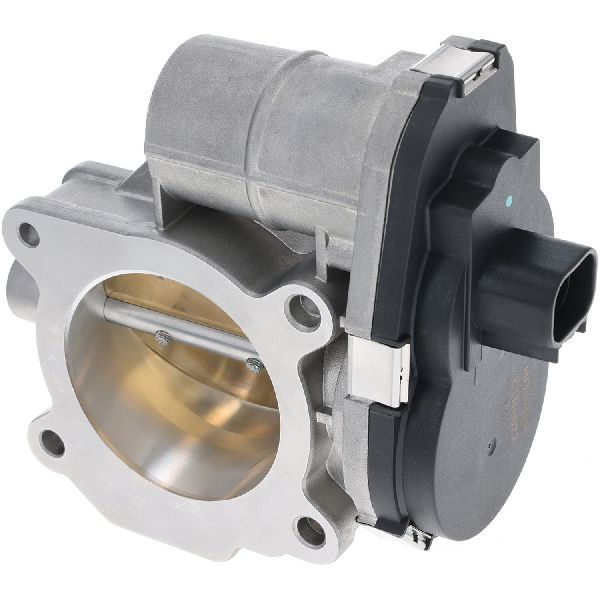
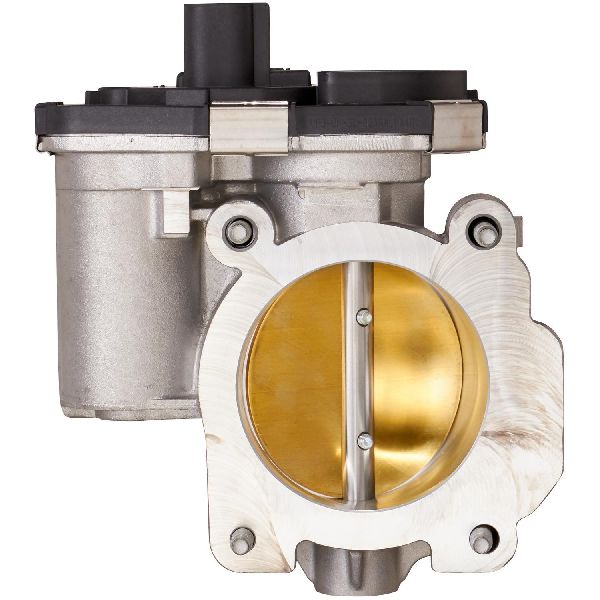
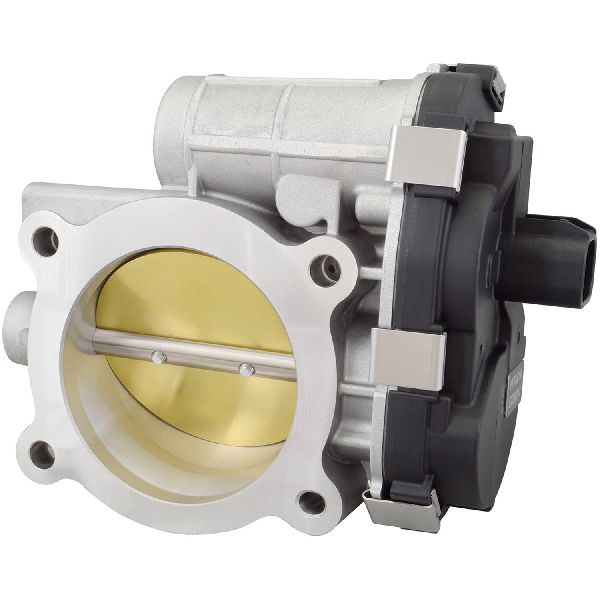
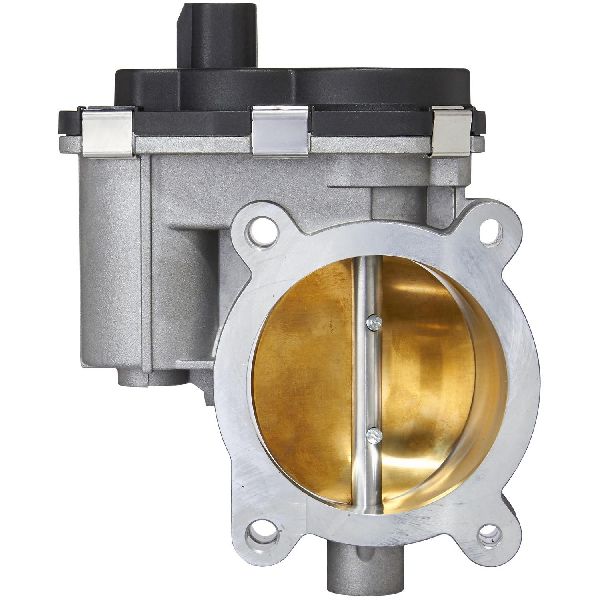
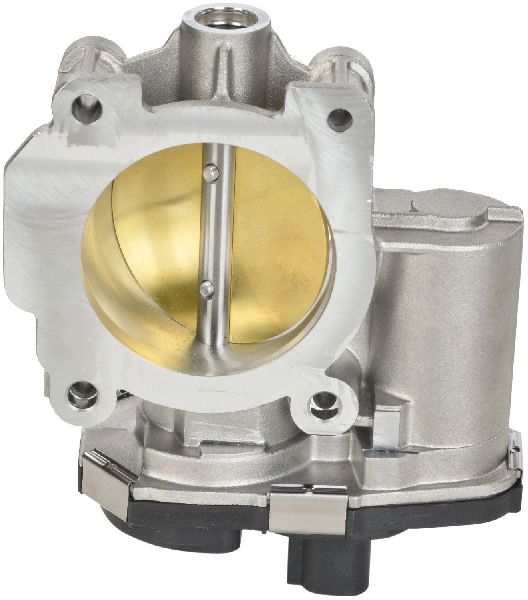
- Dirty Throttle Body 🔴 High Probability → Shop Fuel Injection Throttle Body Over time, carbon and oil deposits from the PCV system can build up around the throttle plate, preventing it from closing fully. This allows a small amount of extra air to enter the engine, raising the idle speed.
How to confirm: Visually inspect the throttle body bore and plate for black, sticky carbon buildup. This requires removing the air intake tube connected to the throttle body.
Typical fix: Clean the throttle body thoroughly with a dedicated throttle body cleaner and a soft cloth or brush. After cleaning, an idle relearn procedure is almost always necessary to restore proper idle speed.
Est. part cost: $5-$15 for cleaner - Vacuum Leak 🔴 High Probability Hoses and gaskets become brittle and crack with age and exposure to heat. Common leak points include the PCV hose (especially where it connects to the intake manifold), intake manifold gaskets, and the brake booster hose.
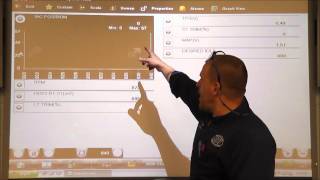
How to confirm: Perform a smoke test to introduce smoke into the intake system and watch for leaks. Alternatively, 🎬 See how a mechanic diagnoses a GM high idle vacuum leak. with the engine running, carefully spray short bursts of carb cleaner or use an unlit propane torch around suspected vacuum lines and gaskets; a change in idle speed indicates a leak. A split in a PCV hose is a very common failure point.
Typical fix: Replace the cracked hose or faulty gasket that is causing the leak.
Est. part cost: $10-$100 - Faulty PCV System 🟡 Medium Probability The Positive Crankcase Ventilation (PCV) valve or its associated hoses can fail, get stuck open, or crack, creating a significant vacuum leak. The plastic hoses become brittle and often crack at the connection points.
How to confirm: Inspect the PCV valve and hoses for cracks or blockages. A stuck-open valve or a cracked hose can often be identified by a loud hissing sound or found easily with a smoke test.
Typical fix: Replace the PCV valve and any damaged hoses. This is often an inexpensive and simple repair.
Est. part cost: $15-$50
Rare But Worth Checking
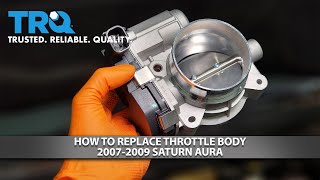
- Failing Electronic Throttle Body: → Shop Fuel Injection Throttle Body While cleaning usually solves throttle-related issues, the electronic motor or position sensor within the throttle body can fail, requiring a complete replacement. 🎬 See this walkthrough on how to replace the throttle body. This is less common than just being dirty. GM acknowledged a high failure rate for the throttle position sensor on these vehicles under a special warranty program that is now expired.
- Leaking Power Brake Booster: → Shop Power Brake Booster The diaphragm inside the brake booster can rupture, causing a large vacuum leak. This is often accompanied by a hissing sound when the brake pedal is pressed and a hard brake pedal feel.
- Corroded IP-to-Body Harness Connector: GM TSB #07-06-04-019F notes that water leaks into the driver's side kick panel can corrode the main instrument panel-to-body harness connector. While this TSB is primarily for code P2138 (Accelerator Pedal Position Sensor), severe corrosion could theoretically affect other systems and cause erratic engine behavior, though it's not a primary cause of P0507.
Diagnosis Steps
- Check for other stored trouble codes. If other codes are present, especially sensor or lean condition codes, address them first.
- Visually inspect all vacuum hoses connected to the intake manifold for cracks, disconnection, or brittleness. Pay close attention to the PCV hose and the brake booster line. A common failure is a split in the PCV hose where it connects to the intake.
- With the engine off, remove the air intake duct from the throttle body. Inspect the throttle plate and bore for carbon buildup.
- If dirty, clean the throttle body thoroughly using a dedicated cleaner and a soft rag. Do not force the throttle plate open aggressively on an electronic throttle body.
- After cleaning or replacing the throttle body, perform an Idle Relearn Procedure. A common method for GM vehicles is to start the engine and let it idle in Park for 3 minutes, turn the ignition off for 60 seconds, then start and idle again for 3 minutes. The idle should normalize.
- If the idle is still high, the next step is to check for vacuum leaks more definitively using a smoke machine. This is the most reliable method to find hidden leaks from gaskets or small cracks in hoses.
- Inspect the PCV valve to ensure it is not stuck open.
- If no vacuum leaks are found and the throttle body is clean and has been relearned, the issue may be with the electronic throttle body itself, though this is less common.
Parts You'll Likely Need
- Throttle Body Cleaner — This is required to clean the carbon buildup inside the throttle body, which is the most common cause of P0507.
Trusted brands: CRC, Gumout
Aftermarket price range: $5-$15 - PCV Valve Hose
(OEM #12617908 (for 2.4L))— A stuck or leaking PCV valve, or more commonly a cracked hose, can create a vacuum leak, leading to a high idle. It's an inexpensive part to replace during diagnosis.
Trusted brands: ACDelco, Standard Motor Products
OEM price range: $20-$40
Aftermarket price range: $10-$25 - Electronic Throttle Body Assembly
(OEM #12631186 (for 2.4L))— If cleaning does not resolve the issue and the internal electronics have failed, the entire assembly must be replaced.
Trusted brands: ACDelco, Hitachi
OEM price range: $200-$350
Aftermarket price range: $100-$250
Related Codes That Often Appear With This One
- P0171 — System Too Lean (Bank 1). A vacuum leak, the primary cause of P0507, introduces unmetered air, which creates a lean air/fuel mixture and can trigger a P0171 code.
Platform-Specific Known Issues
- Owners on SaturnFans forums frequently report that cleaning the throttle body and performing an idle relearn procedure resolves the P0507 code.
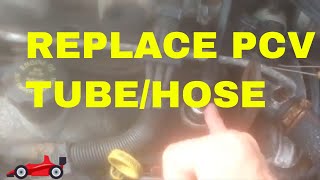
- The plastic PCV hose for the 2.4L engine is known to become brittle and crack at the elbow connecting to the intake manifold, 🎬 Watch: How to replace a brittle or cracked PCV hose. creating a vacuum leak that is a textbook cause for this code.
Mechanic-Grade Diagnostic Values
- Idle Air Control (IAC) Position — expected: On a scan tool, a healthy GM engine at warm idle with no loads should show IAC counts around 30.. Failure: If the idle is high and the IAC count is at or near 0, it's a strong sign of a vacuum leak. The computer is commanding the valve fully closed but cannot lower the engine speed.
- Desired Idle RPM vs. Actual Idle RPM — expected: The 'Desired' and 'Actual' RPM values on a scan tool should match closely at warm idle.. Failure: With P0507, the 'Actual' RPM will be 100-200+ RPM higher than the 'Desired' RPM, and the PCM will be unable to close the gap.
Scan Tool Commands That Help
- Tech2/GDS2 or equivalent professional scanner: Idle Learn Reset / Throttle Relearn — This function should be used after cleaning or replacing the electronic throttle body to force the ECM to learn the new closed-throttle position and idle airflow values immediately.
- Manual Procedure (No Scan Tool): Idle Relearn Procedure — If a scan tool is not available, a manual relearn can be performed. The most common method is: 1. Start engine and idle in Park for 3 minutes. 2. Turn ignition OFF for 60 seconds. 3. Start engine and idle in Park for another 3 minutes. The idle should normalize. A drive cycle may be needed if the idle is still incorrect.
Wiring & Ground Locations
- G105 — For the 2.4L engine, it's at the left front of the engine. For the 3.6L engine, it's at the center rear of the engine.. This is a primary engine ground. A poor connection here can cause erratic behavior from various engine sensors and the ECM.
- G106 / G107 — G106 is at the left rear of the engine (2.4L) and G107 is at the right front of the engine.. These are additional engine block grounds. Corrosion or looseness can lead to incorrect sensor readings and intermittent issues that are hard to diagnose.
- Throttle Body Connector — Directly on the electronic throttle body assembly.. This 6-pin connector carries all signals for throttle control (motor control, position sensors, 5V reference, and low reference/ground). Corrosion or a loose connection here will cause throttle-related codes and performance issues.
Real Owner Repair Stories
- Saturn Forum user (2002 Saturn SL1 (different model, but same GM family and code)) — Check engine light with code P0507, idle RPM would not go below 1200.
❌ Tried (didn't work) Cleaning the throttle body
✅ What actually fixed it The final cause was a bad intake manifold gasket. A dealer diagnosed it for a fee, and an independent mechanic replaced the gasket for a total of $200, which resolved the high idle.
"I Checked Everything" — The Actual Cause
- In a documented case on a similar GM vehicle, a P0507 with high idle and IAC counts at zero pointed to a vacuum leak, but fuel trims were normal (a common trait on MAP-based engines with vacuum leaks). The cause was not a typical hose or gasket, but a leaking power brake booster. This can be missed by a smoke test if the booster's internal check valve seals against the smoke. The leak was confirmed by pinching off the vacuum line to the booster, which caused the idle to immediately return to normal.
OEM Part Supersession History
12631186→12694871— Standard part revision and update by the manufacturer.
Heads up: For the 2.4L engine, 12694871 is the current replacement for the original 12631186 throttle body. Using the superseded number may result in getting old stock.
Model Year Variations Within This Range
- 2007-2008: The 2.4L I4 engine (introduced in 2008) and the 3.5L V6 engine were paired with a 4-speed automatic transmission (4T45-E).
- 2009: For the 2009 model year, the 2.4L I4 engine was upgraded to a more modern 6-speed automatic transmission (6T40), which improved fuel economy and performance. The 3.5L V6 was discontinued. The 3.6L V6 retained its 6-speed auto (6T70).
Diagnostic Flowchart
Other Known Issues on This Vehicle
Issues unrelated to this code that are worth knowing about as an owner of this generation:
- 3-5-R Transmission Wave Plate Failure (3.6L V6) 🔴 High — Very common on vehicles with the 6T70/6T75 6-speed automatic transmission, often occurring between 70,000 and 120,000 miles. Leads to loss of 3rd, 5th, and Reverse gears. (Ref: GM Special Coverage Adjustment #14404B extended the warranty to 10 years/120,000 miles, but has since expired for all models by date.)
- Stretched Timing Chains (3.6L V6) 🔴 High — Extremely common on the LY7 engine, often appearing after 80,000 miles. Causes codes like P0008, P0009, P0017, P0018. Repair is very expensive. (Ref: GM TSB #12-06-01-009F acknowledges the issue and lists updated parts. Special Coverage #11340C also applied but has expired.)
- Sudden Loss of Electric Power Steering (EPS) 🔴 High — Widespread enough to trigger a major safety recall. Can happen at any time while driving, causing a sudden increase in steering effort. (Ref: NHTSA Recall #14V153000 (GM #14115).)
- Fractured Transmission Shift Cable End Tab 🟠 Medium — Common on models with the 4-speed automatic transmission. The cable end can break, causing a mismatch between the gear shifter position and the actual transmission gear. (Ref: NHTSA Recall #12V480000 (GM #12106).)
- Brake Light Malfunction / BCM Voltage Fluctuation 🟠 Medium — A recall was issued for increased resistance in a Body Control Module (BCM) connection, which could cause brake lights to work incorrectly and disable stability/traction control. (Ref: NHTSA Recall #14V252000 (GM #13036).)
- Blown High-Speed Cooling Fan Fuse 🟡 Low — A common complaint where the 30-amp fuse for the engine's high-speed cooling fan blows, which can lead to overheating if not noticed.
Used vs. New Parts: Buying Guide for This Vehicle
When a used part is the smart pick: A used electronic throttle body from a reputable salvage yard can be a cost-effective option, especially from a low-mileage, rear-ended donor vehicle. Since many are replaced when they only need cleaning, a used part can have significant life left.
Donor-vehicle mileage cap: roughly under 80000 miles for the part to have meaningful remaining life.
What to inspect on the donor part:
- Check the electrical connector for any bent, corroded, or broken pins.
- Look into the throttle bore; avoid parts with deep scoring or gouges in the metal.
- Ensure the butterfly valve moves smoothly by hand (if possible) without binding.
- Verify the part number matches your original part or its known supersession.
OEM-only on this vehicle (don't cheap out):
- While not strictly required, using an OEM (ACDelco) or a top-tier aftermarket throttle body is recommended due to the known electronic failure issues on this platform. Cheaper, no-name units may have a higher failure rate.
Aftermarket brands forum-validated for this vehicle:
- Dorman (specifically their OE FIX line which claims to improve on the original design)
- Standard Motor Products (SMP)
- Hitachi
- Cardone (A1 Cardone)
Real Owner Stories
Aggregated from forums and TSBs cited above. Mileages and costs reflect what owners reported in those sources.
2008 Saturn Aura XR
Symptoms: The mechanic cleaned the throttle body to address a MAP sensor issue, but the car developed a persistent high idle speed (P0507) afterward.
What fixed it: The context indicates that cleaning the throttle body is the primary step, but an idle relearn procedure is required to normalize the speed after the cleaning is performed.
Source hint: SaturnFans.com owner report in article context
2007-2009 Saturn Aura 2.4L
Symptoms: High idle caused by a vacuum leak from a brittle plastic component.
What fixed it: Replacing the plastic PCV hose that had cracked at the elbow connecting to the intake manifold.
Source hint: vehicle_specific_issues
2007-2009 Saturn Aura
Symptoms: High idle speed and P0507 code.
What fixed it: Cleaning the throttle body and performing an idle relearn procedure.
Source hint: https://www.saturnfans.com/forums/showthread.php?t=213826
Related OBD-II Codes
Frequently Asked Questions
Is there a specific recall for the high idle issue on my 2007-2009 Saturn Aura?
My 2.4L Aura has a high idle and a hissing sound; what is the most likely culprit?
I cleaned my throttle body to fix the P0507 code, but the idle is still high. What did I miss?
Can a transmission issue cause the engine to surge when I'm coming to a stop?
Is the P0507 code covered under the same extended warranty as the timing chain issues?
Helpful Videos
Used OEM Parts in Stock
New Aftermarket Parts Available


The information in this article is provided for general reference and educational purposes only. Vehicle specifications, procedures, and part compatibility can vary by production date, trim level, and region. Always consult your vehicle's factory service manual and verify part numbers before purchasing or performing repairs. Safety-critical components such as airbags, seat belts, and braking systems should be installed by a qualified professional.
- Saturn Aura:
- 🧭 Diagnostic Flowchart
- 🎬 Helpful Videos
- 🛍️ Shop This Part
- What's Unique About the 2007-2009 Saturn Aura
- Symptoms You May Notice
- Most Likely Causes
- Rare But Worth Checking
- Diagnosis Steps
- Parts You'll Likely Need
- Related Codes That Often Appear With This One
- Platform-Specific Known Issues
- Mechanic-Grade Diagnostic Values
- Scan Tool Commands That Help
- Wiring & Ground Locations
- Real Owner Repair Stories
- "I Checked Everything" — The Actual Cause
- OEM Part Supersession History
- Model Year Variations Within This Range
- Other Known Issues on This Vehicle
- Used vs. New Parts: Buying Guide for This Vehicle
- Real Owner Stories
- 2008 Saturn Aura XR
- 2007-2009 Saturn Aura 2.4L
- 2007-2009 Saturn Aura
- Related OBD-II Codes
- Frequently Asked Questions
- 🎟️ Get 5% Off