

P0507 on 2003-2007 Saturn Ion: Causes and Fixes for High Idle Speed
On a 2003-2007 Saturn Ion, code P0507 is most often caused by a vacuum leak (especially a failed intake manifold gasket) or a dirty/faulty Idle Air Control (IAC) valve. Cleaning the throttle body and IAC valve is a good first step, but be prepared to check for vacuum leaks. Forcing the throttle plate open during cleaning can cause a persistent high idle that requires a specific relearn procedure.
- P0507 on your Saturn Ion means the engine is idling too high.
- The most likely causes are a vacuum leak (check the intake manifold gasket first), a dirty IAC valve, or a dirty throttle body.
- Start with the cheapest and easiest fixes: clean the throttle body and the Idle Air Control (IAC) valve.
- Be aware: Manually opening the throttle plate during cleaning can cause a new high idle problem that requires a 'relearn' procedure.
- A scan tool showing IAC counts near '0' is a strong indicator of a vacuum leak.
- If you replace the intake manifold gasket, use an upgraded version with a steel carrier (like Fel-Pro MS 96351) for better longevity.
What's Unique About the 2003-2007 Saturn Ion
The 2003-2007 Saturn Ion with the 2.2L Ecotec engine uses a hybrid system common in the early 2000s: it has an electronic throttle pedal but uses a separate, replaceable Idle Air Control (IAC) valve mounted on the throttle body to manage idle speed. This is different from many newer vehicles that integrate this function into an electronic throttle body motor. Forum discussions among owners specifically point to a known issue with leaking intake manifold gaskets on this platform, which is a very common cause for the P0507 code. Additionally, manually forcing the throttle plate open during cleaning can confuse the PCM's learned values, resulting in a persistent high idle (1500-2000 RPM) that requires a relearn procedure or several days of driving to resolve.
Symptoms You May Notice
- Check Engine Light is on
- Engine idle speed is consistently high (e.g., 1000-1500+ RPM)
- Engine may surge or 'hunt' for idle when coming to a stop
- Rough or unstable idle
- Increased fuel consumption
- Harsh engagement when shifting an automatic transmission into gear.
- Engine may stall, especially after a period of high idle fluctuation.
- Replacing the throttle position sensor (TPS). The TPS reports the throttle angle but does not directly control idle speed. A faulty TPS usually has its own set of codes.
Most Likely Causes
- Vacuum Leak (Intake Manifold Gasket) 🔴 High Probability Saturn forums are replete with owner experiences confirming the intake manifold gasket is a common failure point on the 2.2L Ecotec engine, leading directly to a vacuum leak that causes a high idle and code P0507. The original gasket often used a plastic carrier which can warp or crack over time; upgraded aftermarket gaskets use a more durable steel carrier.
How to confirm: Perform a smoke test by introducing smoke into the intake system and watching for leaks, especially around the intake manifold where it meets the cylinder head. Alternatively, with the engine running, carefully spray short bursts of brake cleaner or a flammable fluid around the gasket area; a change in idle RPM indicates a leak. A scan tool showing IAC counts near zero also strongly points to a vacuum leak.
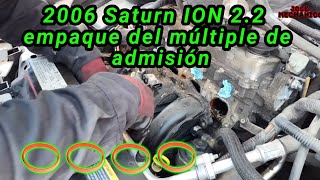
Typical fix: Replace the intake manifold gaskets. 🎬 Watch: Step-by-step guide to replacing the intake manifold gasket. A popular and recommended upgrade is the Fel-Pro PermaDryPlus set (MS 96351) which features a more robust steel carrier.
Est. part cost: $15-$40 - Dirty or Faulty Idle Air Control (IAC) Valve 🔴 High Probability → Shop Idle Air Control Valve
How to confirm: Remove the IAC valve from the throttle body. Inspect the pintle (plunger) and the air passage for heavy carbon buildup. The valve can be cleaned with throttle body cleaner. If cleaning doesn't resolve the issue, the valve's internal motor may have failed. The screws holding the valve can be very tight and may require an impact driver to remove without stripping them.
Typical fix: First, attempt to clean the IAC valve and its port on the throttle body. If the problem persists, replace the IAC valve.
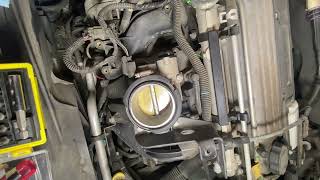
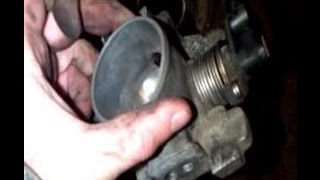
Est. part cost: $40-$100 - Dirty Throttle Body / Lost Calibration 🟡 Medium Probability → Shop Fuel Injection Throttle Body Carbon buildup around the throttle plate can prevent it from closing completely, allowing unmetered air to pass. Critically, on this platform, manually forcing the plate open during cleaning can cause the PCM to lose its calibration, resulting in a very high idle even after cleaning.
How to confirm: Remove the air intake tube from the throttle body and visually inspect the throttle plate and bore for black carbon buildup. If the high idle began immediately after cleaning the throttle body, the calibration is likely lost.
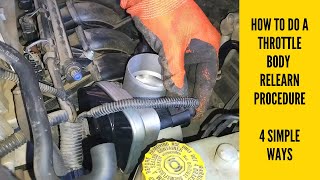
Typical fix: Clean the throttle body bore and plate using a dedicated throttle body cleaner and a soft brush or rag. A new throttle body gasket may be needed. IMPORTANT: After cleaning or replacement, an 'Idle Relearn Procedure' is often necessary. This can sometimes be achieved by letting the PCM 're-learn' over several days of driving, or by performing a manual reset.
Est. part cost: $5-$15 (for cleaner and gasket) - Leaking PCV Valve or Hoses ⚪ Low Probability → Shop PCV Valve
How to confirm: Inspect the Positive Crankcase Ventilation (PCV) valve and all associated rubber hoses for cracks, brittleness, or loose connections. A failed PCV system can create a vacuum leak. The valve can be removed and shaken; if it doesn't rattle, it is likely stuck.
Typical fix: Replace the faulty PCV valve and any damaged hoses. This is often an inexpensive and simple part to replace.
Est. part cost: $10-$25
Rare But Worth Checking
- Leaking Power Brake Booster: The booster operates on engine vacuum, and a leak in its diaphragm can create a massive vacuum leak, causing a high idle. This can be tested by pinching off the vacuum hose to the booster and observing if the idle speed changes.
- PCM Calibration Issue: In some cases on the related GM Delta platform, an updated Engine Control Module (ECM) software flash was required to address persistent idle issues. TSB #06-06-04-033 was issued for the Chevy Cobalt to recalibrate the MAF sensor, which could be a last-resort fix.
Diagnosis Steps
- Confirm the P0507 code is present using an OBD-II scanner. Check for any other codes like P0171.
- Connect a scanner with live data capabilities. Observe the idle RPM and the Idle Air Control (IAC) valve position (often shown as 'counts' or 'steps'). If the IAC count is at or near 0, the PCM is trying to close the valve completely and cannot lower the idle, strongly indicating a vacuum leak. A normal IAC count on these engines is around 30 at idle.
- Perform a thorough visual inspection of all vacuum lines connected to the intake manifold for any obvious cracks, disconnections, or signs of wear.
- Perform a smoke test to definitively identify any vacuum leaks. Pay close attention to the intake manifold gasket area, PCV hoses, and the brake booster line.
- If a leak is found at the intake manifold gasket, replace the gasket set. Consider using an upgraded Fel-Pro gasket.
- If no vacuum leaks are found, inspect and clean the throttle body bore and plate.
- Remove and clean the Idle Air Control (IAC) valve's pintle and the corresponding air passages within the throttle body.
- If the issue persists after cleaning, or if the IAC valve was the suspected cause, replace the IAC valve.
- After any service to the throttle body or IAC, perform an Idle Relearn Procedure: Start the engine and let it idle in Park for 3 minutes. Turn the engine off for at least 60 seconds. Restart the engine. The idle should now be stable. A few drive cycles may be required for the PCM to fully adapt.
Parts You'll Likely Need
- Intake Manifold Gasket Set
(OEM #89017825)— A known weak point on this platform that causes a vacuum leak, which is a primary trigger for P0507. The aftermarket Fel-Pro PermaDryPlus (MS 96351) is a recommended upgrade.
Trusted brands: Fel-Pro (PermaDryPlus recommended), ACDelco, Mahle
OEM price range: $20-$40
Aftermarket price range: $15-$30 - Idle Air Control (IAC) Valve
(OEM #17113536, 217-1806 (ACDelco))— This valve directly controls idle speed and is a common failure point due to carbon buildup or electrical failure.
Trusted brands: ACDelco, Delphi, Standard Motor Products (SMP)
OEM price range: $70-$120
Aftermarket price range: $30-$70 - Throttle Body Gasket
(OEM #24577209)— Should be replaced whenever the throttle body is removed for cleaning or service to prevent new vacuum leaks.
Trusted brands: ACDelco, Fel-Pro
OEM price range: $5-$10
Aftermarket price range: $2-$5
Related Codes That Often Appear With This One
- P0171 (System Too Lean): Often appears with P0507 because a vacuum leak, the root cause of the high idle, also introduces unmetered air that makes the fuel mixture lean.
Technical Service Bulletins (TSBs) & Recalls
- GM TSB #06-06-04-033: While not for the Ion specifically, this TSB for the platform-mate Chevrolet Cobalt addresses reprogramming the ECM to recalibrate the MAF sensor. This could be a potential fix for persistent idle issues if all mechanical causes have been ruled out.
Platform-Specific Known Issues
- The intake manifold gasket is a frequently cited failure point on Saturns with the 2.2L Ecotec engine, making it a high-probability cause for a vacuum leak and the P0507 code.
- Manually forcing the throttle plate open during cleaning can de-calibrate the PCM, causing a persistent high idle that requires a specific relearn procedure or several days of driving to correct itself.
Mechanic-Grade Diagnostic Values
- Idle Air Control (IAC) Valve Coil Resistance — expected: 40 to 80 Ohms between each of the two coil pairs (e.g., between Pin A and Pin B, and between Pin C and Pin D).. Failure: A reading that is open (infinite resistance) or significantly outside the 40-80 Ohm range indicates a failed coil in the IAC motor.
Wiring & Ground Locations
- G107 — At the rear of the engine.. This is a primary engine ground. A poor connection here can cause erratic signals for sensors monitored by the Engine Control Module (ECM), potentially affecting idle control calculations.
- G105 — Under the battery tray.. This is a major chassis and engine component ground. Corrosion or a loose connection here can lead to a host of difficult-to-diagnose electrical issues, including incorrect sensor readings that could contribute to a high idle.
- IAC Valve ECM Pins — At the Engine Control Module (ECM) connector, located on the left side of the engine compartment.. For advanced diagnosis, you can test continuity and signals directly at the ECM. The pins are designated IAC Coil A High, IAC Coil A Low, IAC Coil B High, and IAC Coil B Low, corresponding to the 4 wires on the IAC valve connector.
Real Owner Repair Stories
- iATN (International Automotive Technicians Network) post (2005 Saturn Ion-1 2.2L) — Vehicle initially had a low idle and was almost dying when coming to a stop.
❌ Tried (didn't work) Technician removed and cleaned carbon buildup from the throttle body.
✅ What actually fixed it This story is a cautionary tale. After cleaning the throttle body, the idle became too fast (1600 RPM) and would not drop, inducing the P0507 condition. This highlights the known issue where servicing the throttle body can cause a lost calibration that requires a specific relearn procedure to fix. - YouTube user 'bluecord' (2003 Saturn Ion) — High revs at start, almost dying, general idle control problems.
❌ Tried (didn't work) Cleaning the original IAC valve.
✅ What actually fixed it Replacing the IAC valve, but with a critical extra step: the pintle (plunger) on the new valve had to be manually adjusted to a specific extension length before installation. Installing it as-is out of the box caused the engine to rev extremely high. The fix was to match the new valve's pintle extension to the old one.
Model Year Variations Within This Range
- 2007 only: The 2.2L L61 engine in 2007 models received a power increase from 140 to 145 hp and was equipped with the more advanced Engine Control Unit (ECU) from the 2.4L engine. This may affect diagnostic software logic and potential for software-related fixes compared to 2003-2006 models.
- 2005-2007: For the 2005 model year, the previous 5-speed automatic and CVT options were discontinued and replaced by the 4-speed 4T45-E automatic transmission. This changes the context of the 'harsh gear engagement' symptom.
Diagnostic Flowchart
Used vs. New Parts: Buying Guide for This Vehicle
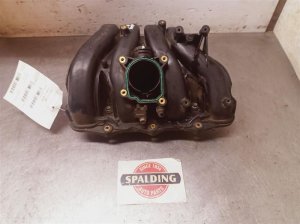
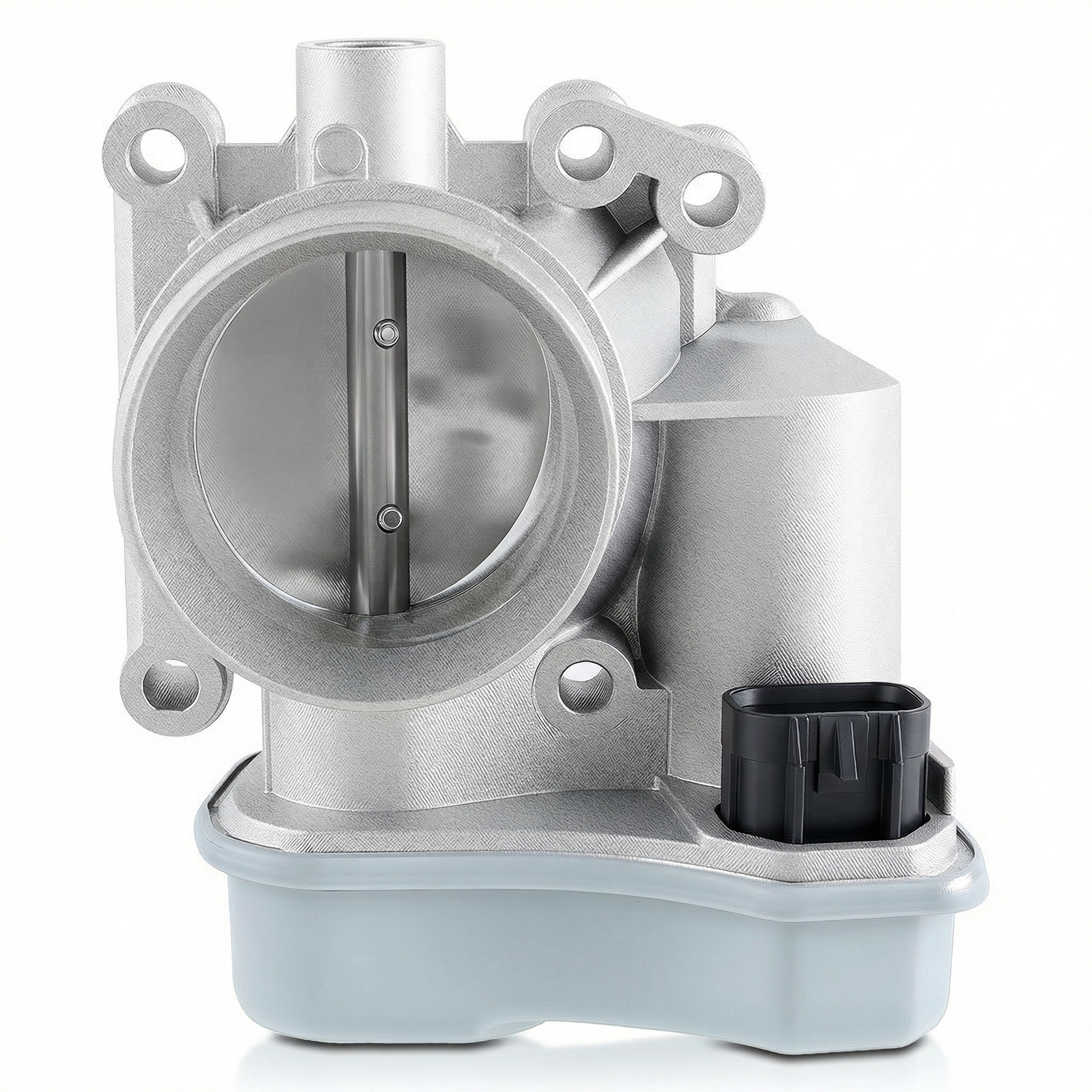
When a used part is the smart pick: A complete throttle body assembly from a junkyard can be a good value, as it's primarily a durable metal housing. This is a viable option if the original is physically damaged.
Donor-vehicle mileage cap: roughly under 100000 miles for the part to have meaningful remaining life.
What to inspect on the donor part:
- Check for a clean throttle plate and bore with minimal carbon.
- Ensure the electrical connectors for the TPS and IAC are free of corrosion or damage.
- Verify the throttle plate moves smoothly by hand without binding.
- Ask for the donor vehicle's mileage if possible.
Aftermarket brands forum-validated for this vehicle:
- Intake Manifold Gasket: Fel-Pro (specifically the PermaDryPlus MS 96351).
- Idle Air Control (IAC) Valve: Delphi (a Tier 1 OE supplier), Standard Motor Products (SMP).
Brands owners have reported issues with on this vehicle:
- Unbranded, 'white-box' parts from online marketplaces can have poor quality control and are best avoided for critical electronic components like the IAC valve.
Real Owner Stories
Aggregated from forums and TSBs cited above. Mileages and costs reflect what owners reported in those sources.
1997 Saturn — 102000 miles
Symptoms: The car set a P0507 code due to a failing intake manifold gasket, which was a recurring issue for the owner.
What fixed it: The intake manifold gasket was replaced. The owner noted it failed again at 160,000 miles.
Source hint: Saturn Forum - It's baaack, P0507
2002 Saturn SL1
Symptoms: The owner had a P0507 code and initially tried replacing the IAC valve, which did not solve the problem.
What fixed it: The problem was confirmed to be a bad intake manifold gasket. The repair resolved the code.
Cost: $200-$590
Source hint: Saturn Forum - p0507?
Chevrolet Cobalt (platform mate)
Symptoms: The engine idle jumped to 1500-2000 RPM immediately after the throttle body was cleaned.
What fixed it: The issue was a lost calibration in the adaptive PCM. The fix was to perform an idle relearn procedure or simply allow the computer to relearn the correct idle position over a few days of driving.
Source hint: Cobalt SS Network - High Idle after Cleaning Throttle Body Fix/Solution/Answers
Related OBD-II Codes
Frequently Asked Questions
I just cleaned the throttle body on my Saturn Ion and now it idles at 1500 RPM. What did I do wrong?
For a P0507 code on my 2.2L Ecotec, what is the most likely cause?
I'm replacing the intake manifold gasket on my Ion. Is there an upgraded part I should use?
How can I check for a vacuum leak on my Ion without a smoke machine?
What is a normal IAC count for a 2003-2007 Saturn Ion at idle?
The screws on my Idle Air Control (IAC) valve are stuck. Is there a trick to removing them?
Helpful Videos
Used OEM Parts in Stock
New Aftermarket Parts Available





The information in this article is provided for general reference and educational purposes only. Vehicle specifications, procedures, and part compatibility can vary by production date, trim level, and region. Always consult your vehicle's factory service manual and verify part numbers before purchasing or performing repairs. Safety-critical components such as airbags, seat belts, and braking systems should be installed by a qualified professional.
- Saturn Ion:
- 🧭 Diagnostic Flowchart
- 🎬 Helpful Videos
- 🛍️ Shop This Part
- What's Unique About the 2003-2007 Saturn Ion
- Symptoms You May Notice
- Most Likely Causes
- Rare But Worth Checking
- Diagnosis Steps
- Parts You'll Likely Need
- Related Codes That Often Appear With This One
- Technical Service Bulletins (TSBs) & Recalls
- Platform-Specific Known Issues
- Mechanic-Grade Diagnostic Values
- Wiring & Ground Locations
- Real Owner Repair Stories
- Model Year Variations Within This Range
- Used vs. New Parts: Buying Guide for This Vehicle
- Real Owner Stories
- 1997 Saturn — 102000 miles
- 2002 Saturn SL1
- Chevrolet Cobalt (platform mate)
- Related OBD-II Codes
- Frequently Asked Questions
- 🎟️ Get 5% Off