

P0507 on 2010-2014 Subaru Legacy: High Idle Causes and Fixes
On a 2010-2014 Subaru Legacy, code P0507 is most often caused by a dirty electronic throttle body that needs cleaning. The second most likely cause is a vacuum leak. After any repair, a specific idle relearn procedure is required. A DIY cleaning costs under $25; a shop repair can range from $150 to $600.
- For a 2010-2014 Legacy, P0507 almost always points to an issue that allows unmetered air into the engine at idle.
- Start with the cheapest and most common fixes: cleaning the throttle body and performing a proper idle relearn procedure.
- Always replace the throttle body gasket when removing it to prevent introducing a new vacuum leak.
What's Unique About the 2010-2014 Subaru Legacy
Unlike older Subarus that used a separate Idle Air Control (IAC) valve, the 2010-2014 Legacy integrates idle control into the electronic throttle body. This design makes the system sensitive to carbon buildup on the throttle plate and bore, which physically prevents the throttle from closing completely. Consequently, the most common fix for P0507 on this platform is not replacing a separate valve, but thoroughly cleaning the throttle body and performing a precise idle relearn procedure. A significant change occurred for the 2013 model year, when the EJ25 engine was replaced by the FB25 engine, which has different PCV system routing and throttle body components.
Symptoms You May Notice
- Check Engine Light is on
- Engine idle speed is higher than normal (e.g., 1000-1500 RPM in Park/Neutral)
- Engine RPM surges or hangs when coming to a stop
- Slight lurching when stopped in gear
- Increased fuel consumption
- Engine may hesitate or stall at times
- Replacing the throttle body assembly when it only needed to be cleaned.
- Searching for a separate Idle Air Control (IAC) valve, which this vehicle does not have.
- Replacing sensors like the MAF or O2 sensors without first checking for vacuum leaks or a dirty throttle body.
Most Likely Causes
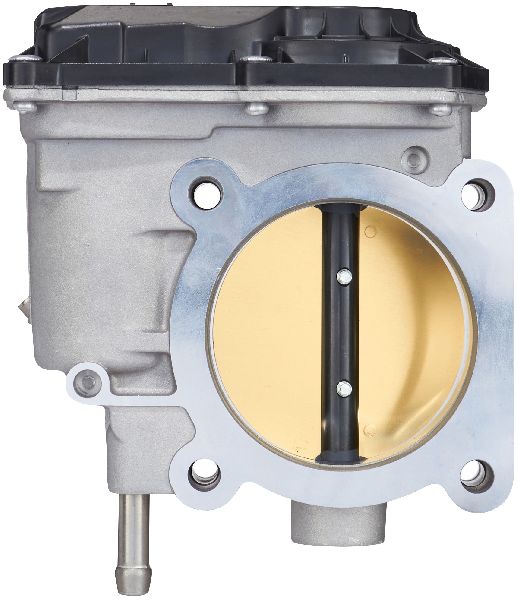
- Dirty Electronic Throttle Body 🔴 High Probability → Shop Fuel Injection Throttle Body The electronic throttle body is sensitive to carbon and oil vapor buildup from the PCV system, which can restrict the throttle plate's movement and prevent it from fully closing at idle. This is a very common cause for P0507 on modern electronic throttle vehicles.
How to confirm: Visually inspect the throttle plate and bore for a ring of black carbon buildup after removing the air intake duct. The buildup is often most significant on the back side of the plate and around the edges where it seats at idle.
Typical fix: Remove the throttle body, clean it thoroughly with dedicated throttle body cleaner and a soft brush (do not use harsh carb cleaner), reinstall with a new gasket, and perform the idle relearn procedure.
Est. part cost: $5-$15 for cleaner and a new gasket. - Vacuum Leak 🟡 Medium Probability Hoses and gaskets become brittle with age and heat cycles. Common leak points include the intake manifold gaskets, PCV hoses, or the main air intake boot between the mass airflow sensor and the throttle body.
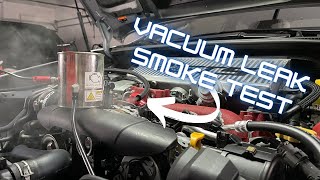
How to confirm: Perform a smoke test. 🎬 See how to perform a smoke test to find vacuum leaks. This involves introducing pressurized smoke into the intake system and watching for where it escapes. A visual inspection may sometimes reveal cracked or disconnected hoses. Listening for a hissing sound near the engine at idle can also indicate a leak.
Typical fix: Replace the leaking hose or gasket.
Est. part cost: $10-$100 depending on the specific hose or gasket. - Improper or Failed Idle Relearn Procedure 🟡 Medium Probability
How to confirm: If the battery was recently disconnected or the throttle body was cleaned/replaced and the idle is now high, it's highly likely the relearn procedure was not performed or completed correctly. This is a frequent occurrence reported in owner forums.
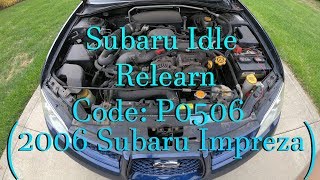
Typical fix: Carefully follow the multi-step idle relearn procedure. 🎬 Watch: A mechanic demonstrates the step-by-step idle relearn process. This involves a sequence of turning the key on, starting the engine and letting it idle with no loads for a specific duration, and specific key-off/on cycles.
Est. part cost: $0 - Faulty PCV Valve ⚪ Low Probability → Shop PCV Valve
How to confirm: Remove the PCV valve and shake it. If it does not rattle, it is likely stuck open, creating a vacuum leak. You can also check for suction at the valve with the engine running. A stuck-open PCV valve is a common, though less frequent, cause of P0507.
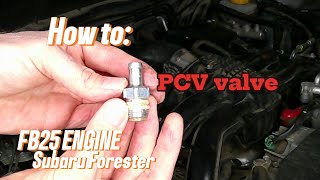
Typical fix: Replace the PCV valve. This is an inexpensive and simple maintenance item. 🎬 Watch: How to quickly replace a faulty PCV valve.
Est. part cost: $15-$40
Rare But Worth Checking
- Faulty Electronic Throttle Body: → Shop Fuel Injection Throttle Body If cleaning the throttle body and confirming there are no vacuum leaks does not resolve the issue, the internal motor or position sensor of the throttle body itself may have failed. This is less common than a simple cleaning being required.
Diagnosis Steps
- Scan for other DTCs. Address any other codes first, as they could be the root cause, especially sensor-related codes.
- Visually inspect the air intake system for any obvious cracks in hoses or loose connections between the air filter box and the throttle body.
- Remove the air intake duct from the throttle body and inspect for heavy carbon buildup. If dirty, remove the throttle body for a thorough cleaning. Always use a new gasket upon reinstallation.
- After cleaning the throttle body or if the battery has been recently disconnected, perform the Subaru-specific idle relearn procedure.
- Idle Relearn Procedure (Example): Turn off all accessories (lights, A/C, radio). Turn the key to 'ON' for 10-15 seconds to allow the throttle body to cycle. Start the engine and let it idle without touching the accelerator for 10 minutes. Turn the engine off and wait 20-30 seconds. Turn the key to 'ON' again for 10-15 seconds. Start the engine and let it idle for another 5 minutes. Turn off and wait 20 seconds before a final restart and test drive.
- If the high idle persists, perform a smoke test to definitively identify any vacuum leaks in the intake manifold, gaskets, or vacuum lines.
- Check the PCV valve for proper operation and replace if it's stuck.
- If all else fails, the electronic throttle body assembly may be faulty and require replacement.
Parts You'll Likely Need
- Throttle Body Gasket
(OEM #16175AA380 (for 2010-2012 2.5L models) or 16175AA430 (for 2013-2014 2.5L models))— Should be replaced whenever the throttle body is removed for cleaning to prevent vacuum leaks.
Trusted brands: Subaru OE, Fel-Pro, Mahle
OEM price range: $8-$15
Aftermarket price range: $3-$10 - Electronic Throttle Body Assembly
(OEM #16112AA350 (for 2010-2012 2.5L models))— Replaced only if it is confirmed to be electronically faulty after cleaning and vacuum leak checks have failed to solve the problem.
Trusted brands: Subaru OE, Hitachi
OEM price range: $450-$600
Aftermarket price range: $250-$400 - PCV Valve
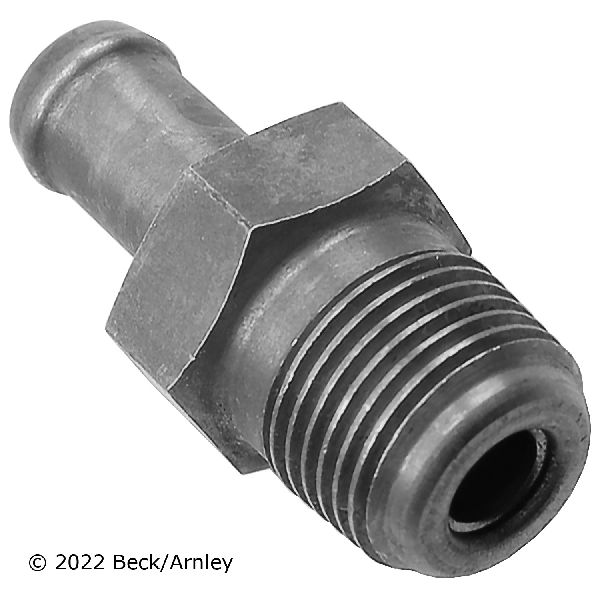
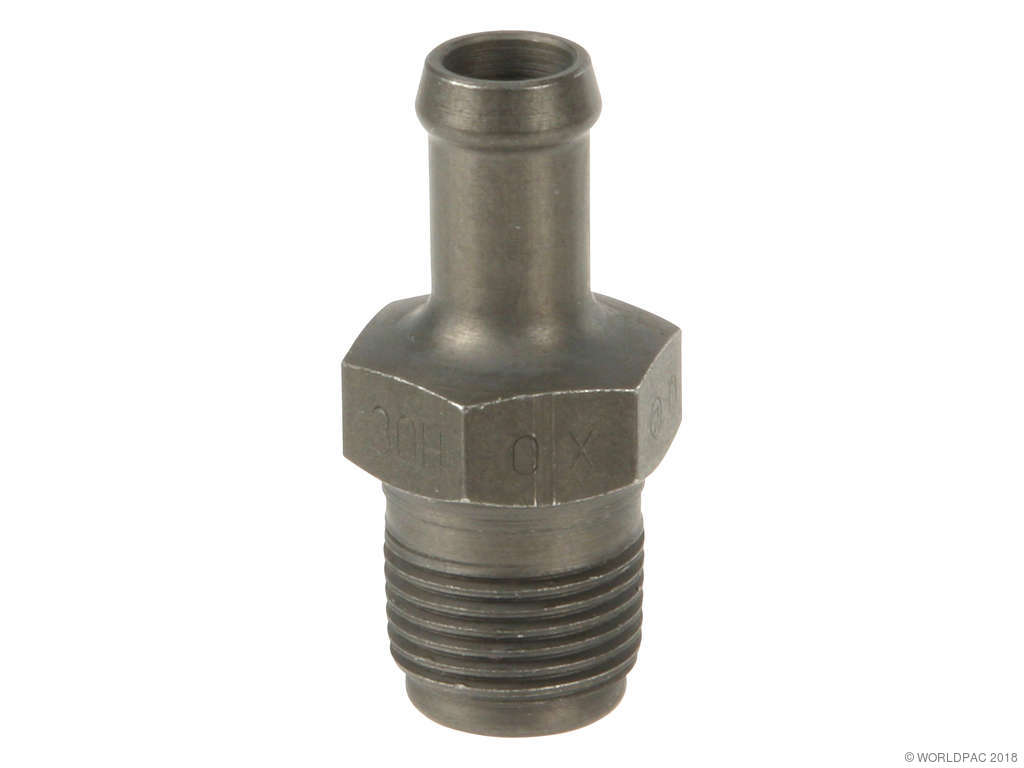
(OEM #11810AA100)— A stuck PCV valve can cause a vacuum leak, leading to a high idle. It's an inexpensive maintenance part to rule out.
Trusted brands: Subaru OE, Standard Motor Products
OEM price range: $25-$40
Aftermarket price range: $10-$20
Platform-Specific Known Issues
- A common trigger for P0507 on this platform is disconnecting the battery for any reason (e.g., replacement) and failing to perform the idle relearn procedure afterward. The ECU's learned idle trim is lost, and it defaults to a state that can result in a high idle until it relearns.
Mechanic-Grade Diagnostic Values
- Desired Idle RPM vs. Actual Idle RPM — expected: Actual RPM should be within 25-50 RPM of Desired RPM at stable operating temperature with no loads.. Failure: P0507 typically sets when Actual RPM is consistently 100-200 RPM or more above Desired RPM.
- Throttle Position Sensor 1 (TPS1) Voltage at Idle — expected: Approximately 0.5V - 0.8V with the throttle plate fully closed (Key On, Engine Off).. Failure: A reading significantly higher than 0.8V at closed throttle may indicate carbon buildup preventing the plate from seating, or a faulty sensor.
- Short-Term Fuel Trim (STFT) and Long-Term Fuel Trim (LTFT) at Idle — expected: Combined values should be less than +/- 10%.. Failure: Sustained positive fuel trims (e.g., +15% or higher) at idle strongly suggest a vacuum leak, as the ECU is adding fuel to compensate for unmetered air.
- Alternator AC Ripple Voltage — expected: Less than 0.5V AC (500mV) with the engine idling.. Failure: AC voltage exceeding 0.5V indicates failing alternator diodes, which can introduce electrical noise into the system, confusing the ECU and potentially causing erratic idle behavior.
Scan Tool Commands That Help
- Subaru Select Monitor (SSM) or equivalent professional scanner: Idle Air Volume Learning / Throttle Body Reset — This function is used to force the ECU to relearn the throttle's closed position and proper idle airflow characteristics. It is often required after replacing the throttle body or when the manual relearn procedure fails to resolve a high idle after a battery disconnect or cleaning.
Wiring & Ground Locations
- Main Engine Ground — On many Subaru engines of this era, the main engine-to-chassis ground strap bolts to the top of the engine block, often sharing a bolt with the starter.. A poor or corroded main ground can cause erratic behavior in all engine electronics, including the ECU and electronic throttle body, leading to incorrect sensor readings and improper idle control.
- ECM Location — The Engine Control Module (ECM) is typically located on the right side of the dash, accessible from the passenger footwell.. Verifying the connectors are secure at the ECM is a valid step if communication issues are suspected or other electrical gremlins are present with the P0507 code.
- Electronic Throttle Body Connector — A 6-pin male connector directly on the electronic throttle body assembly.. This is the primary connection for both the motor that moves the throttle plate and the sensors that report its position. Corrosion or a loose connection here can directly cause idle control faults.
Real Owner Repair Stories
- Reddit user in r/WRX (2016 Subaru WRX (similar electronic throttle control system)) — P0507 code appeared after cleaning the MAF sensor. Idle was erratic, revving up and down.
❌ Tried (didn't work) Cleaning the MAF sensor again.
✅ What actually fixed it Found a small vacuum hose near the bypass valve had popped off. Reconnecting the hose resolved the high idle and the P0507 code. - Reddit user in r/WRX (2019 Subaru WRX with 37k miles and an IAG Air/Oil Separator (AOS)) — Sudden high idle at 1500 RPM, P0507 code. Car would lurch forward when slowing down as RPMs bounced.
❌ Tried (didn't work) Dealer replaced a coolant hose, performed a hot oil flush, and replaced the rear O2 sensor ($900 spent)., Owner replaced the MAF sensor.
✅ What actually fixed it The owner suspected a faulty check valve in the aftermarket AOS was the cause, as this is a known failure point that can create a vacuum leak. The thread concludes with another user confirming a disconnected hose near the bypass valve fixed their identical issue.
"I Checked Everything" — The Actual Cause
- In some cases reported on forums, a smoke test may not reveal a very small or intermittent leak. One such case can be a failing PCV valve that only sticks open under certain vacuum conditions, or a failing alternator diode causing electrical noise that makes the ECU command a higher idle. In these instances, the problem is not unmetered air in the traditional sense but another system fault causing the same symptom.
Model Year Variations Within This Range
- 2010-2012: These models use the EJ253 2.5L engine. The correct throttle body is part number 16112AA350 and the corresponding gasket is 16175AA380.
- 2013-2014: These models use the newer FB25B 2.5L engine. This engine has a different intake manifold, PCV system design, and uses a different throttle body and gasket (part number 16175AA430). The PCV valve is also in a different location and may be threaded into the block rather than just clamped on a hose.
Diagnostic Flowchart
Other Known Issues on This Vehicle
Issues unrelated to this code that are worth knowing about as an owner of this generation:
- Excessive Oil Consumption (FB25 Engine) 🔴 High — Common in 2013-2014 models with the FB25 engine. Owners report consuming a quart of oil every 1,000-3,000 miles. The issue stems from faulty piston rings. (Ref: TSB 02-157-14R. This TSB revised the repair from replacing piston rings to replacing the entire engine short block assembly for verified cases.)
- CVT Transmission Shudder/Stalling 🔴 High — Prevalent in 2010-2012 models. Owners report shuddering, vibration, or stalling, especially at low speeds or when coming to a stop. Can lead to costly transmission replacement. (Ref: TSB 16-90-13R addresses a condition where the torque converter can cause low RPM or stalling when stopping. Subaru also extended the CVT warranty for many of these vehicles.)
- CVT Fluid Seepage 🟠 Medium — Affects models up to 2015. Seepage can occur from the CVT oil pump chain cover due to a failing gasket seal. (Ref: TSB 16-103-16R details the issue and repair procedure.)
Used vs. New Parts: Buying Guide for This Vehicle
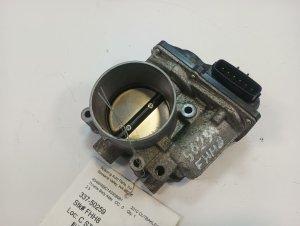
When a used part is the smart pick: A used electronic throttle body from a low-mileage donor vehicle can be a cost-effective alternative to a new OEM unit, which is very expensive. Since the most common failure is simply carbon buildup, a clean, used part is often perfectly functional. Other parts like hoses or intake components are also good candidates for used purchase.
Donor-vehicle mileage cap: roughly under 75000 miles for the part to have meaningful remaining life.
What to inspect on the donor part:
- For a throttle body, inspect the connector for any bent or corroded pins.
- Check the throttle plate for any deep scratches or gouges that would prevent a good seal.
- Ensure the donor vehicle was not in a front-end collision that could have damaged the throttle body.
- Verify the part number on the used unit matches the one required for your specific model year (EJ vs. FB engine).
OEM-only on this vehicle (don't cheap out):
- While not strictly required, using an OEM throttle body gasket is highly recommended for a few dollars more to ensure a perfect seal and avoid a frustrating repeat of the problem.
Aftermarket brands forum-validated for this vehicle:
- Fel-Pro (Gaskets)
- Mahle (Gaskets)
- Standard Motor Products (PCV Valve)
Brands owners have reported issues with on this vehicle:
- No-name, unbranded electronic throttle bodies from online marketplaces should be avoided. They often have high failure rates, poor calibration, and can cause more issues than they solve.
Real Owner Stories
Aggregated from forums and TSBs cited above. Mileages and costs reflect what owners reported in those sources.
2010-2014 Subaru Outback 2.5L
Symptoms: High idle after maintenance.
What fixed it: Cleaned the TB (throttle body), installed a new gasket, and performed the 10-minute relearn procedure.
Source hint: subaruoutback.org
2010-2014 Subaru Legacy
Symptoms: High idle specifically after the battery was disconnected for replacement.
What fixed it: Followed a multi-step idle relearn process (key on/off cycles and specific idling durations).
Source hint: LegacyGT.com thread titled 'How to relearn idle after battery disconnect.'
2010-2014 Subaru Legacy
Symptoms: High idle and P0507 code.
What fixed it: Identified vacuum leaks using a smoke test.
Source hint: Reddit (r/WRX, r/SubaruForester)
Related OBD-II Codes
Frequently Asked Questions
I just replaced the battery in my 2012 Legacy and now the idle is surging. Is this related to P0507?
Can I use standard carburetor cleaner to fix the P0507 code on my Subaru?
My 2014 Legacy with the FB25 engine has a high idle and uses a lot of oil. Is there a TSB for this?
Is the P0507 code related to the CVT shuddering I feel when coming to a stop?
How can I tell if my PCV valve is causing the high idle?
What is the specific idle relearn sequence for a 2010-2014 Legacy?
Helpful Videos
Used OEM Parts in Stock
New Aftermarket Parts Available


The information in this article is provided for general reference and educational purposes only. Vehicle specifications, procedures, and part compatibility can vary by production date, trim level, and region. Always consult your vehicle's factory service manual and verify part numbers before purchasing or performing repairs. Safety-critical components such as airbags, seat belts, and braking systems should be installed by a qualified professional.
- Subaru Legacy:
- 🧭 Diagnostic Flowchart
- 🎬 Helpful Videos
- 🛍️ Shop This Part
- What's Unique About the 2010-2014 Subaru Legacy
- Symptoms You May Notice
- Most Likely Causes
- Rare But Worth Checking
- Diagnosis Steps
- Parts You'll Likely Need
- Platform-Specific Known Issues
- Mechanic-Grade Diagnostic Values
- Scan Tool Commands That Help
- Wiring & Ground Locations
- Real Owner Repair Stories
- "I Checked Everything" — The Actual Cause
- Model Year Variations Within This Range
- Other Known Issues on This Vehicle
- Used vs. New Parts: Buying Guide for This Vehicle
- Real Owner Stories
- 2010-2014 Subaru Outback 2.5L
- 2010-2014 Subaru Legacy
- 2010-2014 Subaru Legacy
- Related OBD-II Codes
- Frequently Asked Questions
- 🎟️ Get 5% Off