

P0507 on 2011-2015 Toyota Highlander Hybrid: High Idle Causes and Fixes
On a 2011-2015 Highlander Hybrid, P0507 is most often caused by a dirty electronic throttle body or a vacuum leak from a cracked hose or bad gasket. Cleaning the throttle body is a common, low-cost first step. A stuck-open PCV valve is another frequent culprit.
- P0507 means the engine is idling higher than the computer expects.
- The most likely causes on your Highlander are a dirty throttle body or a vacuum leak from an old hose or gasket.
- Start your diagnosis by inspecting for obvious vacuum leaks and cleaning the electronic throttle body.
- This is a DIY-friendly repair for those with basic tools; a professional diagnosis may be needed for hard-to-find vacuum leaks.
- Be aware that your 2011-2015 Highlander could be a 2nd or 3rd generation model, so double-check parts for your specific year.
What's Unique About the 2011-2015 Toyota Highlander
The 2011-2015 Highlander range spans two different vehicle generations, which can affect parts and procedures. The 2GR-FXE engine uses a modern electronic throttle body, so causes are different from older vehicles with mechanical throttles and separate idle air control valves. The most common culprits for a high idle on this platform are unmetered air entering the engine (vacuum leak) or a physical restriction preventing the throttle plate from closing fully (carbon buildup).
Generation note: The 2011-2015 year range covers two Highlander generations: the 2nd generation (XU40, 2011-2013) and the 3rd generation (XU50, 2014-2015). While the 2GR-FXE engine is used in both, there are significant body and interior differences, and some parts like intake hoses or gaskets may not be interchangeable. Always verify parts using your vehicle's specific year and VIN.
Symptoms You May Notice
- Check Engine Light is on.
- Engine idle speed is noticeably higher than normal (e.g., over 1000 RPM when warm).
- Engine may surge or have a fluctuating idle.
- Slightly increased fuel consumption.
- In some cases, a rough or unstable idle.
- Vehicle may be hard to start.
- Replacing the Mass Airflow (MAF) sensor. A dirty MAF sensor typically causes other issues and codes, not a simple high idle.
- Replacing oxygen sensors. O2 sensors report on the air/fuel mixture but do not directly control the idle speed target.
Most Likely Causes
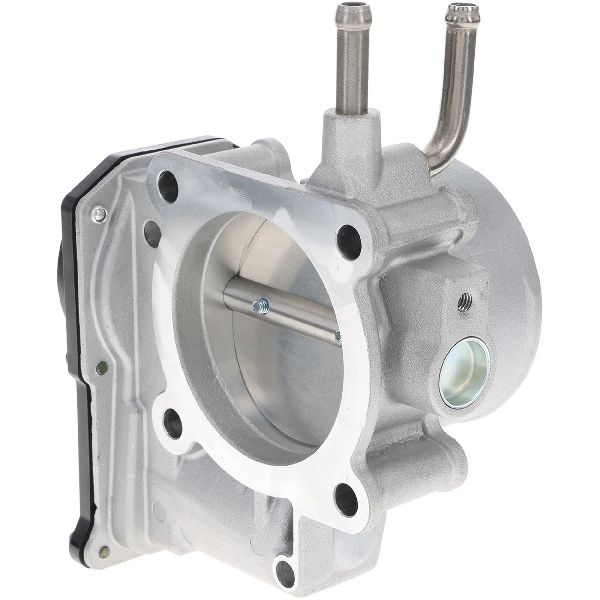
- Dirty or Sticking Electronic Throttle Body 🔴 High Probability → Shop Fuel Injection Throttle Body Over time, carbon and oil residue from the PCV system can build up around the throttle plate and bore. This buildup can prevent the plate from closing completely, allowing excess air to enter and causing a high idle. This is a very common issue on many modern vehicles.
How to confirm: Remove the air intake hose from the throttle body and visually inspect for a ring of black carbon buildup around the throttle plate and bore. The plate should be able to move freely without sticking.
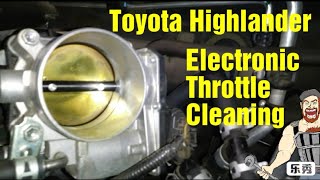
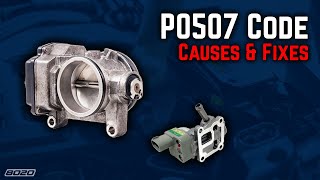
Typical fix: Carefully clean the throttle body bore and plate with a dedicated throttle body cleaner and a soft, lint-free cloth or soft brush. 🎬 Watch: Step-by-step guide to cleaning your Highlander's electronic throttle body. A new throttle body gasket is recommended upon reinstallation to prevent vacuum leaks.
Est. part cost: $5-$20 for cleaner and a new gasket. - Vacuum Leak 🔴 High Probability Rubber and plastic components in the engine bay degrade over time with heat and age. Hoses can become brittle and crack, and intake manifold gaskets can shrink or fail, creating a path for unmetered air to enter the engine.
How to confirm: Visually inspect all vacuum hoses connected to the intake manifold for cracks or disconnection. Listen for a hissing sound with the engine running. For hard-to-find leaks, a smoke test is the most effective method. 🎬 See how to quickly test for vacuum leaks in 6 minutes. Spraying brake cleaner around suspected areas and listening for a change in idle RPM can also pinpoint a leak.
Typical fix: Replace the cracked hose or leaking gasket. Common sources include the PCV hose, brake booster hose, or the intake manifold gaskets.
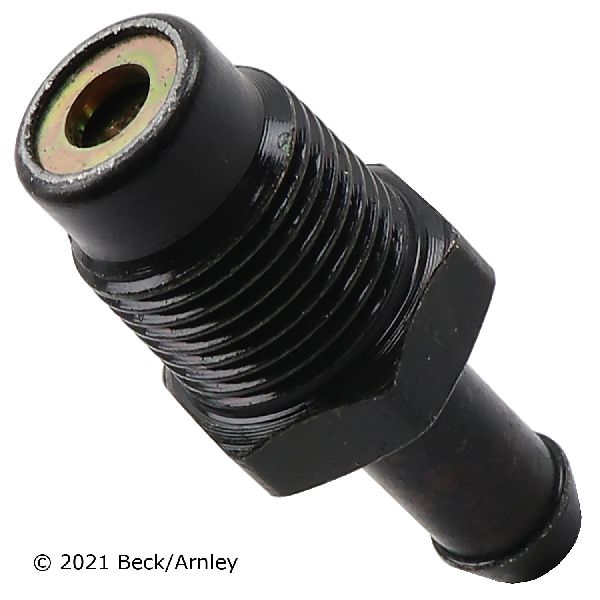
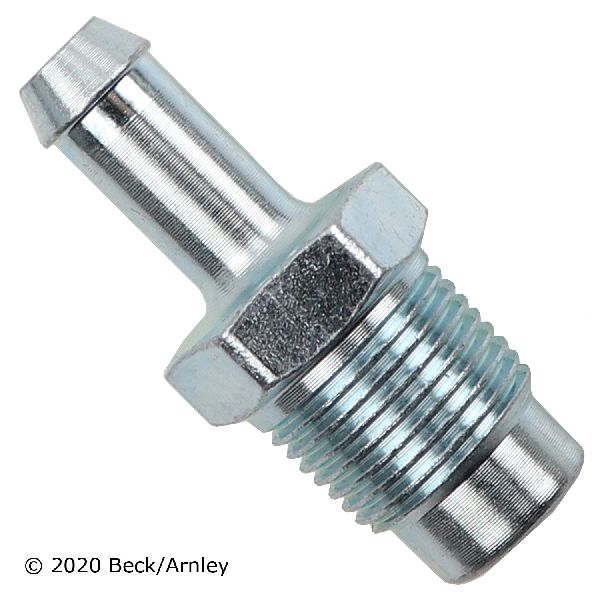
Est. part cost: $10-$150 depending on the source of the leak. - Faulty PCV Valve 🟡 Medium Probability → Shop PCV Valve The Positive Crankcase Ventilation (PCV) valve can get stuck open, creating a significant vacuum leak that the ECM cannot compensate for, leading to a high idle. This is a common maintenance item that is often overlooked.
How to confirm: Remove the PCV valve and shake it. If it doesn't rattle, it is likely stuck. Also, inspect the hose connected to it for cracks or deterioration. With the engine running, you can pinch the hose leading to the valve; if the idle speed changes, the valve is likely flowing and may be stuck open.
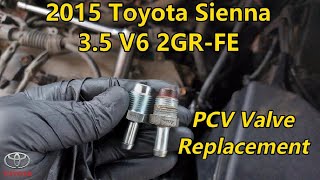
Typical fix: Replace the PCV valve and its grommet. This is an inexpensive and easy part to replace as part of regular maintenance. 🎬 Watch this walkthrough for replacing the PCV valve on the 2GR engine.
Est. part cost: $10-$40
Rare But Worth Checking
- Faulty Electronic Throttle Body Assembly: → Shop Fuel Injection Throttle Body While cleaning usually resolves the issue, the internal motor or position sensors can fail. If cleaning and an idle relearn procedure do not fix the code, and there are no vacuum leaks, the throttle body itself may need replacement.
- ECM Software Issue: In very rare cases, the engine control logic may be faulty. Check for any available Technical Service Bulletins (TSBs) related to idle control or ECM software updates for your specific model year.
- EVAP System Leak: A leak in the evaporative emissions system, such as a cracked canister or a faulty purge valve, can sometimes introduce unmetered air/fuel vapor and cause a high idle, though this will often be accompanied by other EVAP-specific codes.
Diagnosis Steps
- Check for any other stored trouble codes with an OBD-II scanner.
- Visually inspect the engine bay for any obvious disconnected or cracked vacuum hoses, especially the lines going to the intake manifold and brake booster.
- With the engine running, listen carefully for any hissing sounds that would indicate a vacuum leak.
- Remove the air intake duct from the throttle body. Inspect the throttle plate and bore for carbon buildup.
- If dirty, clean the throttle body thoroughly using a dedicated throttle body cleaner and a soft cloth. Do not use harsh tools or carb cleaner. For electronic throttles, it's safest to have a helper press the gas pedal (with the ignition on but engine off) to open the plate rather than forcing it by hand.
- Inspect the PCV valve and its hose. The PCV valve for the 2GR-FXE is typically located on the valve cover. Ensure the valve rattles when shaken and the hose is not cracked or mushy.
- If no obvious cause is found, perform a smoke test to definitively identify any hard-to-find vacuum leaks in the intake system.
- After any repair, clear the codes. Most modern Toyotas do not require a specific idle relearn procedure; disconnecting the battery for 15 minutes or simply driving the vehicle for a few cycles (including periods of idling) will allow the ECM to relearn idle trims.
Parts You'll Likely Need
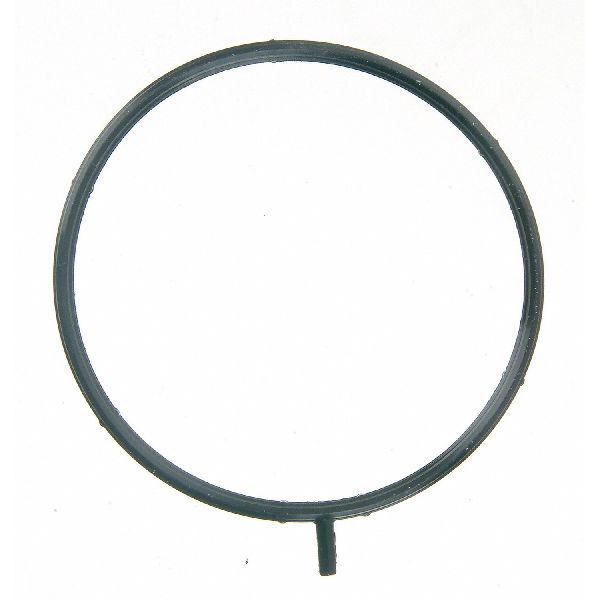
- Electronic Throttle Body Gasket
(OEM #22271-0P020 (replaces 22271-31040))— Should be replaced whenever the throttle body is removed for cleaning to prevent a vacuum leak.
Trusted brands: Toyota OE, Fel-Pro (61083), Mahle
OEM price range: $6-$10
Aftermarket price range: $4-$8 - PCV Valve
(OEM #12204-31100)— A common maintenance item that can get stuck open, causing a vacuum leak and a P0507 code.
Trusted brands: Toyota OE, Standard Motor Products (SMP), Beck/Arnley
OEM price range: $9-$15
Aftermarket price range: $5-$12 - Intake Manifold Gasket Set — If a smoke test reveals a leak at the intake manifold, the gaskets will need to be replaced.
Trusted brands: Toyota OE, Fel-Pro
OEM price range: $50-$80
Aftermarket price range: $30-$60
Platform-Specific Known Issues
- source — A user on the ScannerDanner forum described a P0507 code appearing after other service. High long-term fuel trims (LTFT at +11.7%) pointed towards a vacuum leak as the underlying cause, which is a classic symptom accompanying a P0507.
- source — On North American Motoring, a user with a P0507 code was advised that a mild vacuum leak is a primary suspect, as the throttle body cannot close enough to compensate for the extra, unmetered air entering the system.
Mechanic-Grade Diagnostic Values
- Long-Term Fuel Trim (LTFT) at Idle — expected: -10% to +10% (ideally close to 0%). Failure: Consistently positive values above +10% strongly suggest a vacuum leak, as the ECM is adding fuel to compensate for unmetered air. The value should decrease towards 0% as engine RPM increases.
- Short-Term Fuel Trim (STFT) at Idle — expected: Fluctuating between -10% and +10%. Failure: If STFT is consistently high and positive along with LTFT, it confirms the ECM is actively trying to correct a lean condition (too much air).
- Throttle Control Motor Resistance — expected: 0.3 to 100 Ω (at 20°C / 68°F). Failure: A reading outside this range indicates a fault in the throttle body's internal motor, requiring replacement of the assembly.
- Throttle Position Sensor Live Data ('THROTTLE POS') — expected: 60% or more. Failure: With the accelerator pedal fully depressed (engine off, ignition on), a reading of less than 60% indicates a problem with the throttle position sensor, which is integrated into the throttle body.
Scan Tool Commands That Help
- Toyota Techstream: Reset Memory / Learning Value Reset — After cleaning the throttle body or repairing a vacuum leak, use this function to clear the old fuel trim and idle adaptations from the ECM's memory. This forces the computer to relearn the new baseline values more quickly. The path is typically: Powertrain / Engine and ECT / Utility / Reset Memory (or Learning Value Reset).
Wiring & Ground Locations
- Engine Harness Grounds — The 2GR-FE engine family typically has primary engine harness grounds on the valve covers (one front, one rear) and on the side of the cylinder head, often located underneath the throttle body assembly.. A poor ground connection for the ECM or its sensors can cause erratic sensor readings and incorrect idle control. While not a primary cause of P0507, checking that these grounds are clean and tight is a crucial step if electronic issues are suspected.
- ECM Signal Ground — On related Toyota models, the ECM's signal ground (Pin 5 at the DLC) and the main ECM ground point terminate at the cylinder block on the intake side. This ground point is sometimes designated 'EE'.. A fault at this specific ground point can directly impact the ECM's ability to correctly read sensor inputs and control outputs like the electronic throttle, potentially leading to idle control faults.
- ECM Connectors (2012 Highlander) — The ECM connectors for a 2012 model are identified as B48, B49, D60, and D61, providing specific points for advanced electrical testing.. Technicians needing to perform pin-out testing for voltage or resistance at the ECM require these connector identifiers to locate the correct wires from a wiring diagram.
OEM Part Supersession History
22271-31040→22271-0P020— Standard part update/revision by Toyota.
Heads up: The new part number 22271-0P020 is backward compatible with vehicles that used 22271-31040. Using the older part number on a newer (2014+) model may result in an improper fit.
Model Year Variations Within This Range
- 2011-2013 (XU40) vs 2014-2015 (XU50): While the primary causes are the same, the throttle body gasket part number was superseded. The original part 22271-31040 is listed for models up to 2013, while the replacement 22271-0P020 fits the entire 2011-2015 range and beyond. Always confirm by VIN, but be aware that a gasket for a 2012 may not be the correct one for a 2014 if ordering old stock.
Diagnostic Flowchart
Other Known Issues on This Vehicle
Issues unrelated to this code that are worth knowing about as an owner of this generation:
- VVT-i Oil Line Rupture (on earlier 2GR-FE engines) 🔴 High — Common on 2GR-FE engines produced before ~2010. A rubber section of the high-pressure oil line degrades and can burst, causing rapid oil loss and catastrophic engine failure. Most 2011+ models should have the updated all-metal line, but it's a critical check for any used 2GR engine. (Ref: Limited Service Campaign (LSC) issued for earlier models to replace the rubber hose with a metal pipe (part #15772-31030).)
- Water Pump Failure 🟠 Medium — The water pump on the 2GR engine family is a known failure point, sometimes failing as early as 60,000-80,000 miles. The primary symptom is a slow coolant leak leaving pink, crusty residue around the pump pulley on the passenger side of the engine. If ignored, it can lead to overheating. (Ref: TSB-0103-20 exists to help technicians differentiate between minor weeping and a true leak requiring replacement.)
- Inverter Failure (Hybrid Models) 🔴 High — More common on the 2nd generation (pre-2014) Highlander Hybrids, but can still occur. The inverter, which converts DC from the battery to AC for the motors, can fail due to heat stress on its internal components (Intelligent Power Module). This is a very expensive repair, often costing several thousand dollars. (Ref: Recalls were issued for 2006-2010 models, but not for the 2011-2015 range.)
- Squeaky Rear Suspension (3rd Gen) 🟡 Low — Affects 2014-2019 models. A creaking or squeaking noise can develop from the rear suspension, especially when going over bumps in colder weather. The noise often originates from the rear control arm bushings.
Used vs. New Parts: Buying Guide for This Vehicle
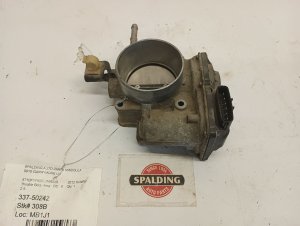
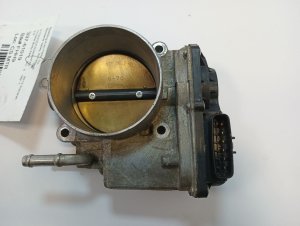
When a used part is the smart pick: For this specific code, buying used parts is generally not recommended as the primary fixes are either cleaning a component (throttle body) or replacing inexpensive wear items (gaskets, PCV valve, vacuum hoses). A used electronic throttle body could be considered if a new one is cost-prohibitive, but it carries the risk of having the same carbon buildup or electronic wear as the original part.
Donor-vehicle mileage cap: roughly under 75000 miles for the part to have meaningful remaining life.
What to inspect on the donor part:
- For a used throttle body, inspect the throttle plate for deep scoring or damage beyond normal carbon.
- Check for any signs of physical damage to the plastic electronic housing or connector.
- Ask for the donor vehicle's mileage; lower is always better.
- Avoid parts from vehicles that show signs of engine sludge or poor maintenance (e.g., thick, black oil residue in the intake).
OEM-only on this vehicle (don't cheap out):
- Electronic Throttle Body: While some aftermarket units may work, the calibration and sensor quality of an OEM (Denso for Toyota) or a reputable OEM supplier is critical for proper idle control. Using a cheap aftermarket throttle body can introduce new, hard-to-diagnose idle problems.
Aftermarket brands forum-validated for this vehicle:
- PCV Valve: Standard Motor Products (SMP), Beck/Arnley
- Gaskets: Fel-Pro, Mahle
Brands owners have reported issues with on this vehicle:
- Unbranded, no-name electronic throttle bodies from online marketplaces are a significant risk and should be avoided.
Real Owner Stories
Aggregated from forums and TSBs cited above. Mileages and costs reflect what owners reported in those sources.
2011-2015 Toyota Highlander 2GR-FXE
Symptoms: The user described a P0507 code appearing after other service, noting high long-term fuel trims (LTFT at +11.7%).
What fixed it: The high fuel trims pointed towards a vacuum leak as the underlying cause of the high idle.
Source hint: ScannerDanner forum titled 'P0507 and rpm idle high'
2011-2015 Toyota Highlander 2GR-FXE
Symptoms: The owner was dealing with a P0507 code where the throttle body could not close enough to compensate for extra air.
What fixed it: The issue was identified as a mild vacuum leak allowing unmetered air into the system.
Source hint: North American Motoring forum thread 'Idle issues with P0507 code'
Related OBD-II Codes
Frequently Asked Questions
Does my 2011-2015 Highlander Hybrid require a specific idle relearn procedure after cleaning the throttle body?
I see pink crusty residue near my engine's passenger side; could this be related to my P0507 high idle?
Should I check the VVT-i oil line on my 2011 Highlander to prevent engine failure?
Can a faulty PCV valve cause the P0507 code on the 2GR-FXE engine?
Is there a specific cleaner I should use for the electronic throttle body on my Highlander Hybrid?
Helpful Videos
Used OEM Parts in Stock
New Aftermarket Parts Available


The information in this article is provided for general reference and educational purposes only. Vehicle specifications, procedures, and part compatibility can vary by production date, trim level, and region. Always consult your vehicle's factory service manual and verify part numbers before purchasing or performing repairs. Safety-critical components such as airbags, seat belts, and braking systems should be installed by a qualified professional.
- Toyota Highlander:
- 🧭 Diagnostic Flowchart
- 🎬 Helpful Videos
- 🛍️ Shop This Part
- What's Unique About the 2011-2015 Toyota Highlander
- Symptoms You May Notice
- Most Likely Causes
- Rare But Worth Checking
- Diagnosis Steps
- Parts You'll Likely Need
- Platform-Specific Known Issues
- Mechanic-Grade Diagnostic Values
- Scan Tool Commands That Help
- Wiring & Ground Locations
- OEM Part Supersession History
- Model Year Variations Within This Range
- Other Known Issues on This Vehicle
- Used vs. New Parts: Buying Guide for This Vehicle
- Real Owner Stories
- 2011-2015 Toyota Highlander 2GR-FXE
- 2011-2015 Toyota Highlander 2GR-FXE
- Related OBD-II Codes
- Frequently Asked Questions
- 🎟️ Get 5% Off