

OBD-II Code P0508: Idle Air Control System Circuit Low
What P0508 means, why it triggers, and how to fix it
- Heavy carbon buildup in the throttle body or a failed Idle Air Control (IAC) valve causes 80% of P0508 codes.
- Expect the engine to stall frequently at stoplights, accompanied by a fluctuating idle speed between 400 and 1,200 RPM.
- Driving over 100 miles with a severe P0508 misfire dumps unburnt fuel into the exhaust, risking a $1,500+ catalytic converter replacement.
- Spend $15 on throttle body cleaner and perform a free idle relearn procedure before spending $200+ on a new IAC valve.
What Does P0508 Mean?
The Powertrain Control Module (PCM) detects the electrical circuit controlling the engine's idle speed has a lower-than-normal voltage. The computer cannot control the engine's speed when your foot is off the gas pedal, causing an abnormally low idle, rough idle, or stalling.
Technical definition: The SAE/OBD-II definition is "Idle Air Control (IAC) System Circuit Low". The PCM registers a voltage in the IAC control circuit below the manufacturer's specified range (typically under 0.2V). This occurs when the PCM commands the circuit high but reads a low voltage, indicating a short to ground or a dead component.
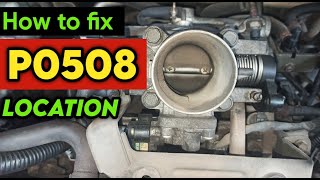
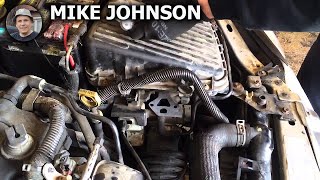
🎬 See how to troubleshoot and fix low IAC circuit issues.Can I Drive With P0508?
Yes, But With Caution. You can drive with this code, but the engine stalls frequently at low speeds or when stopping, increasing the risk of a rear-end collision. Driving over 100 miles with a severe idle issue dumps unburnt fuel into the exhaust, overheating and destroying the catalytic converter—a repair costing $800 to $2,500. Get it diagnosed immediately to avoid stalling and costly component damage.
Common Causes
- Carbon Buildup in Throttle Body and IAC Passages (Very Common) — Heavy carbon deposits restrict airflow, forcing the IAC valve to work outside its normal range or stick completely. This is the root cause in most cases and must be addressed before replacing parts. 🎬 Watch: A quick breakdown of common P0508 engine code causes.
- Faulty Idle Air Control (IAC) Valve (Very Common) — The internal motor fails electronically (e.g., a shorted coil winding) or jams mechanically, preventing it from adjusting airflow. 🎬 Watch: Step-by-step guide to replacing a faulty IAC valve.
- Vacuum Leaks (Common) — A cracked vacuum hose, intake manifold gasket, or throttle body gasket introduces unmetered air. This throws off the air-fuel mixture, causing idle problems the PCM misinterprets as an IAC circuit fault.
- Wiring Harness or Connector Issues (Common) — Wires routing to the IAC valve fray, short to ground, or break from heat and vibration. A loose or corroded connector pin causes the low voltage reading.
- Skipped Idle Relearn Procedure (Less Common) — Many vehicles require a specific 'idle relearn' procedure to recalibrate the system after throttle body service. Skipping this step triggers a P0508 code even with perfect parts.
- Poor Ground Connection (Less Common) — A corroded engine ground strap creates high electrical resistance, leading to intermittent low voltage readings on sensor circuits, including the IAC.
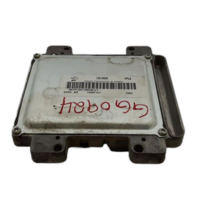
- Faulty Powertrain Control Module (PCM) (Rare) — A failed driver circuit inside the computer stops it from sending the correct voltage signal to the IAC valve. This requires professional diagnosis.
Symptoms
- Engine Stalls at Idle — The engine dies when coming to a stop, immediately after starting, or when releasing the throttle quickly.
- Rough, Fluctuating, or Low Idle — RPMs bounce up and down ('idle hunting') or idle consistently below 600 RPM, causing heavy cabin vibrations.
- Check Engine Light is On — The Malfunction Indicator Lamp (MIL) illuminates, confirming the PCM stored a fault.
- Unusual Engine Bay Noises — A distinct whistling or hissing sound near the throttle body indicates a vacuum leak.
- Hard Starting Condition — The engine cranks longer than usual or sputters upon startup due to incorrect initial airflow.
- Reduced Fuel Economy — Efficiency drops 5-15% as the PCM dumps extra fuel to compensate for the incorrect air mixture.
Diagnostic Flowchart
Tap your situation to follow the diagnostic path that matches what you're seeing on this code.
Common Fixes & Costs
- Clean the Throttle Body and IAC Valve — Parts: $10-$20, Labor: $150-$250, ~1 hr book time (DIY)
- Perform an Idle Relearn Procedure — Parts: $0, Labor: $50-$100, ~0.5 hr book time (DIY)
- Replace the Idle Air Control (IAC) Valve — Parts: $60-$400, Labor: $50-$150, ~0.8 hr book time (Intermediate)
- Repair or Replace Damaged Wiring/Connector — Parts: $10-$60, Labor: $100-$250, ~1.5 hr book time (Intermediate)
- Replace the Powertrain Control Module (PCM) — Parts: $600-$900, Labor: $200-$300, ~1.5 hr book time (Professional)
DIY vs Professional
- Clean the Throttle Body and IAC Valve — Beginner:
- Perform an Idle Relearn Procedure — Beginner:
- Replace the Idle Air Control (IAC) Valve — Beginner:
- Repair or Replace Damaged Wiring/Connector — Beginner:
- Replace the Powertrain Control Module (PCM) — Beginner:
Used vs. New Parts: Buying Guide
When a used part is worth it: A used OEM IAC valve from a low-mileage donor vehicle is more reliable than a cheap aftermarket part. Aftermarket IAC valves have notoriously high failure rates out of the box.
Donor-vehicle mileage cap: roughly under 80000 miles for the part to have meaningful remaining life.
Donor quality checklist:
- Verify the donor vehicle was not scrapped for engine performance issues.
- Match the OEM part number exactly; visual similarities guarantee nothing.
- Choose sellers with 30-day return policies.
Decision logic:
- If The vehicle is a Honda, Toyota, or Mitsubishi. → Buy a new OEM part or a low-mileage used OEM part. Avoid new aftermarket entirely.
- If Budget is tight and the new OEM part exceeds $250. → A used OEM part from a reputable auto dismantler is the best value.
- If The IAC valve is integrated into the throttle body. → Purchase a complete used throttle body assembly from a low-mileage car.
Warranty tradeoff: Used Parts: 30-90 day warranty (part only). New Aftermarket: 1-year warranty, but high likelihood of failure requires repeat labor. New OEM: 1-year/12,000-mile warranty, highest reliability.
Worst-case if a used part fails: $200-$500 if a cheap aftermarket part fails, requiring repeat diagnostic and labor fees.
What Happens If You Wait — Timeline
- 0-2 weeks: Check Engine Light illuminates. Intermittent rough idle occurs, especially when cold. Engine cranks slightly longer than normal. (MPG impact: 0-3%% · Added cost: $0)
- 2 weeks - 2 months: Idle 'hunts' (fluctuates wildly). Occasional stalling occurs when coming to a stop or turning on the A/C. (MPG impact: 3-7%% · Added cost: $20-50 in wasted fuel.)
- 2-6 months: Stalling becomes frequent and dangerous. Erratic air-fuel mixtures lead to misfires (P0300) and begin overheating the catalytic converter. (MPG impact: 7-15%% · Added cost: $50-150 in wasted fuel, plus high risk of catalytic converter damage.)
- 6+ months: Continued misfires destroy the catalytic converter. The check engine light flashes. The vehicle is unsafe to drive. (MPG impact: 15-25%% · Added cost: $1200-$2800 for catalytic converter and O2 sensor replacement.)
Cost of Not Fixing It
- Immediate (0-1 month): Frequent engine stalling in traffic creates a significant safety hazard. Fuel economy drops 5-15% as the PCM struggles to maintain idle. (Added cost: $20-$60 per month in wasted fuel.)
- Short-Term (1-3 months): Engine misfires (P0300) develop due to erratic air/fuel mixtures, indicated by a flashing check engine light. Raw fuel enters the exhaust. (Added cost: $0 initially, but signals imminent catastrophic damage.)
- Long-Term (3+ months): The catalytic converter melts internally due to overheating from unburnt fuel. Oxygen sensors and spark plugs foul completely. (Added cost: $1200-$2800 for catalytic converter and sensor replacement.)
Diagnosis Steps
- Scan Codes and Review Freeze Frame Data
Connect an OBD-II scanner. Confirm P0508 is active and note related codes (e.g., P0509, P0300). Review freeze frame data for exact engine conditions (RPM, temperature) when the fault triggered to establish a baseline.
Tools: OBD-II Scanner (Beginner) - Visually Inspect Wiring and Vacuum Hoses
Inspect the IAC electrical connector for corrosion or pushed-out pins. Trace the wiring harness for chafing or melting. Check all vacuum hoses connected to the intake manifold for cracks, swelling, or loose fittings.
Tools: Flashlight, Inspection mirror (Beginner) - Clean the Throttle Body and IAC Passages
Remove the air intake hose. Clean the throttle plate, bore, and IAC passages using dedicated throttle body cleaner and a soft brush. A sticky IAC pintle causes this code. Note: Perform an 'Idle Relearn Procedure' after cleaning.
Tools: Screwdriver/ratchet set, Throttle body cleaner, Soft brush/rag (Intermediate) - Test for Vacuum Leaks with a Smoke Machine
Feed smoke into the intake system via a vacuum port. Watch for smoke escaping from cracked hoses, bad gaskets, or the throttle body shaft. Vacuum leaks are frequently misdiagnosed as bad IAC valves.
Tools: Smoke machine (Intermediate) - Test IAC Valve Resistance and Circuit Voltage
Disconnect the IAC valve. Use a multimeter to measure resistance between the motor terminals (typically 6-30 ohms). Next, turn the ignition on (engine off) and check the harness connector for a 5V-12V reference voltage and a solid ground. Readings outside manufacturer specs confirm a dead valve or wiring short.
Tools: Multimeter, Vehicle-specific repair manual (Advanced) - Analyze Live Data PIDs
Using a scan tool, monitor 'IAC Position' or 'IAC Counts'. At a normal warm idle with A/C off, counts should be 10-40. If counts are 0, the PCM is closing the valve completely (indicating a vacuum leak). If counts are maxed out (e.g., 160), the PCM is opening the valve fully to prevent stalling (indicating a restriction or dead valve).
Tools: Scan tool with live data capability (Advanced) - Perform a Voltage Drop Test on the Ground Circuit
With the engine running, connect the positive multimeter lead to the ground pin on the IAC connector and the negative lead to the battery's negative post. A reading above 100 millivolts (0.1V) indicates excessive resistance in the ground circuit requiring repair.
Tools: Multimeter with needle probes (Advanced) - Analyze the PCM Command Signal with a Lab Scope
Use a lab scope to observe the PCM's command signal to the IAC valve. For P0508, a flat line near ground or a noisy waveform confirms the fault lies with a wiring short, a dragging IAC valve, or a blown PCM driver circuit.
Tools: Automotive oscilloscope (lab scope) (Professional)
When This Code Triggers (Freeze-Frame Conditions)
- Engine Coolant Temp: 175-210°F (Engine at full operating temperature; symptoms are most noticeable when warm.)
- Engine RPM: 400-1200 RPM (At idle or during deceleration; RPM fluctuates wildly or drops too low, causing a stall.)
- Vehicle Speed: 0 mph (Vehicle is stopped or coming to a stop, when the IAC system is most active.)
- Throttle Position: 0% (Throttle plate is closed (foot off the gas pedal), and the PCM is attempting to manage idle speed.)
Related Codes
- P0509 — Indicates 'Idle Air Control System Circuit High'. P0508 means low voltage (short to ground), while P0509 means high voltage (open circuit or short to power). Diagnosis steps are identical.
- P0505 — A general 'Idle Air Control System Malfunction' performance code. P0508 is the specific electrical cause, and P0505 is the resulting performance effect.
- P0507 — Means 'Idle Air Control System RPM Higher Than Expected'. Triggers alongside P0508 if the low voltage fault causes the IAC pintle to stick open, allowing too much air.
- P0300 — A 'Random/Multiple Cylinder Misfire' code. If P0508 causes severe stalling, it disrupts combustion and triggers misfires. A flashing check engine light indicates imminent catalytic converter damage.
Climate & Environmental Factors
- High Altitude: Less dense air exposes underlying idle control issues. A marginal IAC valve or small vacuum leak unnoticeable at sea level causes stalling and triggers P0508 at 5,000+ feet.
- Cold Weather: The PCM commands the IAC valve open further during cold starts. A valve sticky from carbon buildup struggles to respond in freezing temperatures, leading to immediate stalling.
How to Talk to a Mechanic About This Code
Say this: "I have a P0508 code with the engine stalling at idle. I request a diagnostic starting with a throttle body cleaning and a smoke test for vacuum leaks before quoting a new idle air control valve."
This signals you are an informed consumer. It directs the shop to perform cost-effective diagnostic steps first, preventing them from blindly replacing an expensive part.
Avoid saying:
- 'My car is acting weird, can you fix it?'
- 'My check engine light is on, just do whatever it takes.'
- 'A guy online said I need a new computer.'
Questions to ask before authorizing the repair:
- What were the results of the smoke test for vacuum leaks?
- Did you test the IAC valve's resistance and check for voltage at the connector?
- If recommending an IAC valve replacement, how exactly did the old one fail?
- Does this repair require an idle relearn procedure, and is it included in the quote?
Where to Take It: Dealer vs Independent vs Chain
- Dealer:
Recommended only if initial diagnosis at an independent shop points to a failed PCM.
Best for: Vehicles under warranty, Complex electrical issues requiring PCM replacement or reprogramming, Known manufacturer-specific quirks
Downsides: Highest labor rate, Often recommends replacing the entire throttle body assembly instead of just the IAC valve (Typical cost: +50% vs. baseline) - Independent Shop:
Best fit. A reputable independent mechanic handles all common causes of P0508 efficiently.
Best for: Out-of-warranty vehicles, Common codes like P0508 with well-documented causes (carbon, vacuum leaks), Getting the best balance of expertise and cost
Downsides: Diagnostic capabilities vary; look for ASE-certified technicians specializing in electrical diagnostics (Typical cost: +0% vs. baseline) - Chain Shop:
Avoid for full diagnosis. They frequently default to replacing parts without proper electrical testing.
Best for: Simple, clear-cut repairs like battery replacements
Downsides: Technician skill varies greatly, High pressure to upsell parts, Lacks advanced diagnostic tools for electrical faults (Typical cost: -10% vs. baseline)
When to Walk Away From the Repair
If the total estimated repair cost for the P0508 code exceeds 50% of your car's private-party value, seriously consider selling or trading it in.
- Car worth $4500, fix is $550: Fix it. This repair cost is well below the threshold and restores a critical safety function.
- Car worth $3000, fix is $1200: Borderline. If the PCM is the cause, the cost is likely not worth it. Get a second opinion.
- Car worth $1800, fix is $1200: Walk away. The repair cost is a massive portion of the car's value, making it a poor investment.
What Scan Tool You Need for This Code
Minimum: A scanner that reads codes and displays live engine data (PIDs) like Engine RPM, Commanded Throttle, and IAC Position/Duty Cycle.
A $20 code reader only confirms P0508 is present. It won't show live data needed to verify if the computer is commanding the IAC valve to move, which is crucial for distinguishing a bad valve from a wiring problem.
Budget: BlueDriver Pro or ANCEL BD310 (~$100) — Connects to your smartphone via Bluetooth. Graphs live data, helping you see if the IAC responds to changes in engine load (like turning the A/C on).
Mid-range: Foxwell NT510 Elite or XTOOL D7 (~$350) — Offers bidirectional control. You can directly command the IAC valve to open or close from the tool, definitively testing its mechanical and electrical function without removing it.
Professional: Autel MaxiCOM MK808S (~$500) — Provides full bidirectional control, initiates OEM-specific idle relearn procedures, and offers advanced graphing. Removes all guesswork from the diagnosis.
Rent vs buy: For a one-time diagnosis, borrow a basic OBD-II scanner from an auto parts store. To view live data or perform your own repairs regularly, buying a budget scanner is a mandatory investment.
How to Clear the Code After You Fix It
- Use an OBD-II scan tool to clear the P0508 code.
- Ensure the fuel tank is between 1/4 and 3/4 full.
- Perform a complete OBD-II drive cycle to allow readiness monitors to run.
Drive cycle (~30 minutes): Start with a cold engine. Idle for 3 minutes with A/C and defroster on. Drive for 15 minutes with mixed stop-and-go city traffic. Include 5 minutes of steady highway driving at 55-60 mph. Allow the vehicle to cool down.
Readiness monitors affected: Catalyst (CAT) monitor, Evaporative System (EVAP) monitor, Oxygen (O2) Sensor monitor
Before emissions retest: drive at least 100 miles to fully set monitors.
Watch out for:
- Disconnecting the battery does not clear the code from permanent memory and resets all readiness monitors to 'Not Ready'.
- The code returns immediately if the underlying electrical short or vacuum leak is not repaired.
- Taking the vehicle for an emissions test before the drive cycle completes results in an automatic failure.
Will This Fail Emissions / State Inspection?
Yes — this code typically fails an OBD-II emissions inspection.
- California: Automatic failure. An active Check Engine Light for P0508 fails the smog check. All required readiness monitors must be set to 'Ready'.
- New York: Automatic failure. The NYS vehicle inspection includes an OBD-II scan; an illuminated MIL results in immediate failure.
- Texas: Automatic failure in the 17 counties requiring emissions testing. An illuminated Check Engine Light fails the OBD portion of the inspection.
Most Commonly Affected Vehicles
- Dodge/Chrysler Grand Caravan, PT Cruiser, Neon (2001-2010) — Particularly with 3.3L V6 and 2.4L engines. Known for IAC motor failures that occasionally short out the PCM driver circuit.
- Jeep Wrangler, Grand Cherokee (4.0L) (1999-2006) — The 4.0L inline-6 is highly prone to IAC valve failures and vacuum leaks. Heat soak issues on injector #3 are often misdiagnosed as IAC faults.
- Honda Accord, Civic (2003-2012) — P0508 is often caused by carbon buildup. An idle relearn procedure is mandatory after any service. Cleaning the valve has a 90% success rate.
- Toyota Camry, Corolla (2000-2008) — High incidence of P0508 due to heavy carbon buildup. The code frequently appears after DIY throttle body cleaning if the mandatory idle relearn is skipped.
- Ford Focus, Ranger, Explorer (1998-2011) — P0508 is common but frequently caused by vacuum leaks from deteriorated PCV valve elbows and intake gaskets, rather than the IAC valve itself.
- Chevrolet/GM Silverado, Tahoe, Malibu (1999-2007) — Traced back to a bad ground connection (G103/G104) at the rear of the cylinder head on Vortec engines, causing an intermittent low voltage signal.
- Subaru Forester, Outback, Impreza (2005-2012) — Appears frequently due to a failing throttle body assembly gasket creating a vacuum leak, or a sticking IAC valve.
Manufacturer-Specific Notes
- Chrysler/Dodge/Jeep: A failing IAC motor shorts out and destroys the driver circuit within the PCM. Technicians test the PCM driver after replacing a failed IAC valve to ensure the new part isn't instantly ruined. Additionally, per TSB 18-031-03, a rough idle on 4.0L engines after a hot restart is caused by fuel vaporizing in the #3 injector, not an IAC fault.
- Honda/Acura: The IACV is integrated with the throttle body and uses coolant lines to prevent icing. After cleaning or replacement, the idle relearn procedure is mandatory: start the engine with no electrical load, hold RPMs at 3,000 until the radiator fan engages, then idle for five minutes.
- Ford: On 4.0L engines, a deteriorated PCV valve elbow or intake manifold gasket creates a massive vacuum leak mimicking an IAC fault. Always check these $15 rubber components before condemning a $100 IAC valve.
- GM/Chevrolet: On Vortec engines, an intermittent P0508 traces to a corroded ground connection at the back of the passenger-side cylinder head (ground pack G103 or G104). Cleaning this ground point resolves the code permanently.
Real Owner Stories
2005 Jeep Wrangler 4.0L at 100k miles
Check Engine Light illuminated with a high idle, stalling, and a distinct whistling sound from the engine bay.
What they tried:
- Taped a cracked CCV hose, temporarily solving the problem.
- Replaced the IAC valve, but the code returned after 30 miles.
Outcome: The owner replaced the IAC valve twice before realizing the whistling noise indicated a massive vacuum leak. Replacing the cracked intake manifold gasket permanently fixed the P0508 code.
Lesson: A whistling noise guarantees a vacuum leak. Never replace an IAC valve without smoke-testing the intake system first.
2004 Jeep Liberty 3.7L with 105k miles
Persistent P0508 code and occasional no-start condition requiring a battery disconnect to resolve.
What they tried:
- Replaced the IAC valve and rewired the connector.
- Replaced the throttle body and TPS.
- Replaced the PCM.
Outcome: After replacing every IAC-related component, the code returned. The owner finally checked fuel pressure, finding it at 62 PSI. Replacing the faulty fuel pressure regulator stabilized the idle and cleared the code.
Lesson: Other system failures (like excessive fuel pressure) cause idle instability that the PCM struggles to control, triggering false IAC codes.
2010 Toyota Camry after throttle body cleaning
P0508 code appeared immediately after a DIY throttle body cleaning service.
What they tried:
- Assumed the IAC valve broke during cleaning.
- Took the vehicle to a mechanic for diagnosis.
Outcome: The mechanic found the throttle body gasket was pinched during reassembly, creating a vacuum leak. After installing a new $5 gasket and performing the idle relearn, the code cleared.
Lesson: If a code appears immediately after a repair, your repair caused it. Double-check reassembly and gaskets before buying new parts.
How to Prevent This Code From Triggering
- Clean the throttle body and IAC passages. (Every 30,000 miles or every 2 years.) — Carbon buildup is the leading cause of IAC valve failure. Regular cleaning prevents deposits from jamming the valve.
- Replace the engine air filter. (Every 15,000-30,000 miles.) — A dirty air filter increases intake vacuum pressure, pulling more oil vapors through the PCV system and accelerating carbon buildup on the IAC valve.
- Inspect vacuum hoses and PCV system. (Annually.) — Rubber hoses become brittle and crack over time. Catching vacuum leaks early prevents idle problems and false P0508 codes.
Frequently Asked Questions
Can I just clean the Idle Air Control (IAC) valve instead of replacing it?
Yes, cleaning the IAC valve and throttle body passages solves the problem frequently, especially on Honda and Toyota models. If the code returns after a thorough cleaning and idle relearn, the valve's internal motor is dead and requires replacement.
Is it safe to drive with a P0508 code?
No. The engine stalls unexpectedly when you slow down or stop, creating a severe hazard in traffic. Prolonged driving also dumps unburnt fuel into the exhaust, destroying the catalytic converter.
How much does it cost to fix a P0508 code?
A DIY throttle body cleaning costs under $20, while a professional cleaning runs $150-$250. Replacing the IAC valve ranges from $110 to $550 for parts and labor. A rare PCM replacement exceeds $1,000.
What are the most common misdiagnosis mistakes for P0508?
The biggest mistake is replacing the IAC valve without cleaning the throttle body or checking for vacuum leaks first. Another common pitfall is forgetting the vehicle-specific 'idle relearn' procedure, causing the code to persist.
What is an idle relearn procedure and is it always necessary?
An idle relearn recalibrates the PCM to find the correct idle position after battery disconnection or throttle body service. For most modern Japanese vehicles, this step is mandatory to restore a stable idle and clear codes.
What's the difference between an IAC valve and an electronic throttle body?
An IAC valve bypasses a cable-operated throttle plate to control idle air. Vehicles built after 2005 typically use an Electronic Throttle Body (ETB) controlled directly by a motor. ETB systems lack a separate IAC valve; the computer simply adjusts the main throttle plate.
My check engine light is flashing with the P0508 code. What does that mean?
A flashing check engine light indicates a severe engine misfire (like P0300) actively destroying your catalytic converter. The P0508 fault is causing an erratic idle that disrupts combustion. Pull over immediately and tow the vehicle to a shop.
Key Takeaways
- Heavy carbon buildup in the throttle body or a failed Idle Air Control (IAC) valve causes 80% of P0508 codes.
- Expect the engine to stall frequently at stoplights, accompanied by a fluctuating idle speed between 400 and 1,200 RPM.
- Driving over 100 miles with a severe P0508 misfire dumps unburnt fuel into the exhaust, risking a $1,500+ catalytic converter replacement.
- Spend $15 on throttle body cleaner and perform a free idle relearn procedure before spending $200+ on a new IAC valve.
Helpful Videos


![What is P0508 Engine Code [Quick Guide]](https://img.youtube.com/vi/U3FUPDOqN7w/mqdefault.jpg)
Shop the Parts Behind P0508
Below are the parts most often responsible for code P0508, ranked by how frequently each one is the actual culprit (per the diagnosis above). Tap any to see what we have for your vehicle.



The information in this article is provided for general reference and educational purposes only. Vehicle specifications, procedures, and part compatibility can vary by production date, trim level, and region. Always consult your vehicle's factory service manual and verify part numbers before purchasing or performing repairs. Safety-critical components such as airbags, seat belts, and braking systems should be installed by a qualified professional.
- 🧭 Diagnostic Flowchart
- 🎬 Helpful Videos
- 🛍️ Shop This Part
- What Does P0508 Mean?
- Can I Drive With P0508?
- Common Causes
- Symptoms
- Common Fixes & Costs
- DIY vs Professional
- Used vs. New Parts: Buying Guide
- What Happens If You Wait — Timeline
- Cost of Not Fixing It
- Diagnosis Steps
- When This Code Triggers (Freeze-Frame Conditions)
- Related Codes
- Climate & Environmental Factors
- How to Talk to a Mechanic About This Code
- Where to Take It: Dealer vs Independent vs Chain
- When to Walk Away From the Repair
- What Scan Tool You Need for This Code
- How to Clear the Code After You Fix It
- Will This Fail Emissions / State Inspection?
- Most Commonly Affected Vehicles
- Manufacturer-Specific Notes
- Real Owner Stories
- 2005 Jeep Wrangler 4.0L at 100k miles
- 2004 Jeep Liberty 3.7L with 105k miles
- 2010 Toyota Camry after throttle body cleaning
- How to Prevent This Code From Triggering
- Frequently Asked Questions
- Can I just clean the Idle Air Control (IAC) valve instead of replacing it?
- Is it safe to drive with a P0508 code?
- How much does it cost to fix a P0508 code?
- What are the most common misdiagnosis mistakes for P0508?
- What is an idle relearn procedure and is it always necessary?
- What's the difference between an IAC valve and an electronic throttle body?
- My check engine light is flashing with the P0508 code. What does that mean?
- Key Takeaways
- 🎟️ Get 5% Off