

P0513 on 2015-2020 Cadillac Escalade ESV: Incorrect Immobilizer Key Fixes
On a 2015-2020 Escalade ESV, code P0513 usually points to an electrical fault preventing the key from being recognized, not a bad key. The most common fixes involve repairing a bad Body Control Module (BCM) ground (G218) or fixing corroded wiring under the driver's sill plate, as outlined in manufacturer TSBs. These issues are common across the entire GM K2XX platform.
- P0513 on a 2015-2020 Escalade is more likely an electrical problem than a key problem.
- Always check for TSBs PIT5405C (BCM Ground G218) and PIT5391F (Sill Plate Wiring) before replacing any parts.
- The issue is common to the entire GM K2XX platform, including Tahoe, Suburban, Yukon, Silverado, and Sierra.
- A no-start or start-and-stall is the primary symptom, making the vehicle undrivable.
- Fixing the issue is often inexpensive in terms of parts (cleaning a ground or splicing a wire) but can be labor-intensive.
What's Unique About the 2015-2020 Cadillac ESCALADE ESV
While P0513 universally points to a key recognition issue, on this specific generation of Cadillac Escalade and its platform mates (Chevy Tahoe/Suburban, GMC Yukon), the problem is frequently not the key itself. Multiple Technical Service Bulletins (TSBs) from GM point to specific, known electrical issues as the root cause. These include a poor ground connection (G218) for the Body Control Module (BCM) and corroded wiring in the driver's side sill plate area, which interrupt communication and trigger this anti-theft code.
Diagnostic Flowchart
Tap your situation to follow the diagnostic path that matches what you're seeing on this vehicle.
Symptoms You May Notice
- Engine cranks but will not start
- Engine starts and immediately stalls
- Check Engine Light is on
- Security light on the dashboard is on or flashing
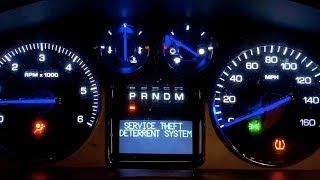
- Message on dash like "Service Theft Deterrent System& 🎬 See this video for troubleshooting the Service Theft Deterrent message.quot;
- Other warning messages may appear, such as "Service 4WD" (per TSB #PIT5391A)
- Multiple other electrical issues may occur simultaneously, like the IPC/Radio/HVAC going blank (per TSB #PIT5405C)
- Replacing the key fob without checking for TSBs or electrical faults.
- Replacing the ignition switch when the issue is a ground or wiring problem elsewhere.
- Replacing the BCM or PCM before verifying their power and ground circuits are intact.
- Assuming it's a dead battery without investigating the underlying electrical fault that may have caused the battery to drain.
Most Likely Causes
- Poor Body Control Module (BCM) Ground (G218) 🔴 High Probability → Shop Body Control Module TSB #PIT5405C specifically calls out this ground as a common failure point. The front dash insulator mat can get trapped between the ground eyelet and the chassis, causing a poor connection and a host of electrical issues, including P0513. This is a widely discussed issue in owner forums for K2XX platform vehicles.
How to confirm: Locate ground G218, which is typically found under the driver's side dashboard, near the A-pillar or just under the dash speaker. Visually inspect for a trapped insulator mat or corrosion. Perform a voltage drop test on the ground circuit to confirm its integrity; the drop should not exceed 200 mV while cranking.
Typical fix: Remove the ground nut (often 10mm), cut away any trapped insulation mat, clean the contact surfaces of the eyelet and chassis with a wire brush or sandpaper, and securely re-fasten the ground. 🎬 Watch: How to locate and fix the G218 ground connection.
Est. part cost: $0-$10 - Damaged or Corroded Wiring in Driver's Sill Plate 🔴 High Probability TSB #PIT5391F identifies this as a recurring problem. Water intrusion from clogged sunroof drains or weather seals, or physical damage from foot traffic, can compromise the wiring harnesses that run along the driver's side floor. TSBs specifically mention an open or high resistance in circuit 5199 as a cause.
How to confirm: Remove the driver's side sill plate trim and peel back the carpet to inspect the wiring harnesses (often in a plastic channel) for signs of corrosion (green or white powder), chafing, or broken wires. Pay close attention to any factory splice points within the harness and specifically inspect circuit 5199.
Typical fix: Cut out the damaged section of wire, splice in a new piece of wire using weatherproof butt connectors, and seal with heat shrink tubing to prevent future moisture intrusion. Repair any water leaks to prevent recurrence.
Est. part cost: $10-$30 - Defective Key Fob ⚪ Low Probability → Shop Keyless Entry Transmitter
How to confirm: Try starting the vehicle with a spare key. If the spare key works, the original key fob is likely the issue. Replacing the battery in the problematic key fob is a simple first step. If the vehicle still doesn't start, place the key fob in the designated transmitter pocket in the center console to bypass a weak battery issue.
Typical fix: Replace the battery in the key fob (typically a CR2032). If that fails, the key fob itself may need to be replaced and programmed to the vehicle by a dealer or qualified locksmith.
Est. part cost: $5-$400
Rare But Worth Checking
- Faulty Body Control Module (BCM): → Shop Body Control Module While possible, the BCM itself is rarely the point of failure. The wiring and grounds connected to it are far more likely to be the cause. All wiring issues should be exhaustively ruled out before condemning the BCM. If replacement is necessary, it will require programming by a dealer or specialist.
- Faulty Immobilizer Antenna Ring: → Shop Antenna The antenna ring around the ignition switch or start button reads the key's transponder chip. A failure here can cause P0513, but it is less common than the documented wiring and ground issues on this platform. The antenna may be integrated into the ignition switch or be a separate component.
Diagnosis Steps
- Scan all vehicle modules for any stored DTCs. Note all codes, especially communication (U-codes) and Body (B-codes), as they can point to the root cause.
- Check for Technical Service Bulletins (TSBs) related to P0513 or the other stored codes. Specifically search for PIT5405C, PIT5391F, and 21-NA-204.
- Based on TSB #PIT5405C, locate and inspect the BCM ground G218. It is located on the driver's side, under the dash near the A-pillar. Check for trapped insulation, corrosion, or looseness. Clean and secure the connection regardless of appearance.
- Based on TSB #PIT5391F, remove the driver's side sill plate and peel back the carpet to inspect the wiring harness for any signs of water damage, corrosion, or chafing. Pay special attention to circuit 5199 if identifiable.
- Test the key fobs. Try starting the vehicle with a known-good spare key. Place the fob in the designated transmitter pocket (often in the center console) if the battery is suspected to be weak.
- If P0513 is present with multiple B-prefix Environment ID codes (like B39xx), refer to GM Bulletin 21-NA-204. Do NOT replace modules; this condition may require dealer intervention.
- If no wiring or ground faults are found, and the spare key also fails, further diagnosis of the immobilizer antenna and BCM circuits with a multimeter or oscilloscope may be necessary.
- Only consider replacing modules like the BCM after all wiring, ground, and key-related issues have been ruled out. BCM replacement requires special programming.
Parts You'll Likely Need
- Wiring Repair Supplies — The most common fixes involve repairing existing wiring harnesses, not replacing major components. This includes butt connectors, wire, and heat shrink.
Trusted brands: 3M
Aftermarket price range: $10-$30 - Body Control Module (BCM)
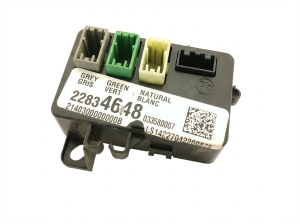
(OEM #13595894, 13587700, 13594764)— This is a last resort part. It is only replaced if it is proven to be faulty after all wiring and ground issues have been eliminated. Part numbers can vary by year and options, so VIN verification is required. Replacement requires programming.
Trusted brands: ACDelco (Genuine GM)
OEM price range: $300-$500
Aftermarket price range: $200-$400
Related Codes That Often Appear With This One
- P262B — Often set alongside P0513 due to the same electrical wiring issues under the driver's sill plate, as noted in TSB #PIT5391F.
- U0073, U0140, U0100, etc. — A wide range of communication (U-prefix) codes are listed in TSB #PIT5405C as being caused by the poor BCM ground at G218. Their presence strongly suggests a systemic electrical problem rather than a single component failure.
- C0364, U0403 — These 4WD system codes can appear with P0513 when the underlying cause is an electrical fault, as mentioned in TSB #PIT5391A.
- B3924, B3925, B3978, B3979, B389A — These 'Environment ID' codes in the BCM may be present with P0513 after a low voltage event. Their presence points to BCM data corruption, not a wiring or component fault, per GM Bulletin 21-NA-204.
Technical Service Bulletins (TSBs) & Recalls
- PIT5391F: Addresses P0513 caused by damaged/corroded wiring (specifically circuit 5199) in the driver sill plate area.
- PIT5405C: Points to a bad BCM ground (G218) as the cause for P0513 and a multitude of other communication and electrical system codes.
- PIT5391A: An earlier version of the sill plate TSB, mentioning P0513 in a cluster of DTCs related to various electrical malfunctions.
Platform-Specific Known Issues
- A poor BCM ground at location G218, often caused by an insulator mat being trapped under the ground terminal, is a documented cause of P0513 and numerous other communication codes. (TSB #PIT5405C)
- Damaged or corroded wiring in the harness located under the driver's sill plate is another known cause that can trigger P0513 and other electrical codes. TSB #PIT5391F specifically points to this area and circuit 5199.
Mechanic-Grade Diagnostic Values
- Voltage Drop on BCM Ground G218 — expected: < 200mV. Failure: A reading higher than 200mV during engine crank indicates a poor ground connection.
- Continuity/Resistance of Circuit 5199 — expected: < 1.0 Ohm. Failure: High resistance or an open circuit (O.L.) indicates damage to the wire, typically under the driver's sill plate.
- Voltage at KR73 Ignition Run Relay — expected: Battery voltage present when commanded ON.. Failure: No voltage when commanded ON suggests a problem with the control circuit (5199) or the relay itself.
Hidden / Shadow Codes Worth Checking
- B389A 00, B3924 00, B3978 00, etc.: These are 'Environment ID' codes stored in the Body Control Module (BCM). When three or more are present and current along with P0513, it often indicates BCM data corruption from a low voltage event, not a hardware failure. (see via A professional scan tool like the GM GDS2 is required to view current and history codes within the BCM.)
Scan Tool Commands That Help
- GDS2 (GM Dealer Tool): Immobilizer Learn — Use ONLY when adding a new key or replacing certain components AFTER confirming no underlying electrical faults exist. Crucially, GM Bulletin 21-NA-204 advises NOT to perform this procedure if P0513 is accompanied by multiple BCM Environment ID codes, as it will not fix the issue and may complicate diagnosis.
- GDS2 (GM Dealer Tool): BCM Programming/Setup — This is required when replacing the Body Control Module. The new module must be programmed to the vehicle's VIN and security configuration. Some aftermarket vendors offer a 'cloning' service where data from the old BCM is transferred to the new one, making it plug-and-play.
Wiring & Ground Locations
- G218 — Under the driver's side of the dashboard, typically near the A-pillar kick panel area.. This is the primary ground for the Body Control Module (BCM). A poor connection here, often due to trapped insulation, can cause P0513 and a wide array of other communication codes. (TSB PIT5405C)
- Circuit 5199 — Runs in the wiring harness under the driver's side door sill plate. It connects the BCM to the Underhood Fuse Block.. This circuit provides the control signal for the KR73 Ignition Run Relay. Corrosion or damage here causes an open/high resistance, preventing the relay from activating, leading to a no-start and P0513.
- Underhood Fuse Block (X50A), Connector X4, Pin M5 — The main fuse block in the engine bay.. This is a specific terminal location for Circuit 5199 mentioned in TSBs. A backed-out or corroded terminal here can cause the same issue as a damaged wire in the sill plate.
- Left I/P Fuse Block (X51L), Connector X1, Pin 42 — The fuse block inside the cabin, on the driver's side.. Another specific terminal location for Circuit 5199 that is a known point of failure according to GM TSBs.
- Key Fob Transmitter Pocket — A dedicated slot inside the center console storage area.. If the key fob battery is dead, placing the fob in this pocket allows the vehicle's immobilizer antenna to read the transponder chip directly, enabling the engine to start.
Real Owner Repair Stories
- Tahoe Yukon Forum user 'newTahoeguy' (2013 Tahoe SSV (Similar K2XX platform electrical architecture)) — Intermittent no crank/no start, loss of all cabin power, P0513 code stored once.
❌ Tried (didn't work) Replacing ignition switch, replacing mega fuse.
✅ What actually fixed it The vehicle would start when jumping the negative battery terminal directly to the engine block. This confirmed the root cause was a bad main ground cable between the battery and the engine block or a corroded connection at either end.
"I Checked Everything" — The Actual Cause
- In cases related to GM Bulletin 21-NA-204, standard diagnostic checks for wiring and grounds will pass, and spare keys will not work. A technician might assume the BCM is faulty, but the actual cause is BCM data corruption following a low voltage event (like a jump start or battery replacement). The fix is not parts replacement but a dealer-level software/data reset, often requiring contact with GM's Technical Assistance Center (TAC).
When the Usual Fixes Don't Work
- While the most common causes for P0513 on this platform are physical wiring and ground faults (G218, sill plate), there is a notable counter-scenario. GM Bulletin 21-NA-204 describes a situation where P0513 appears with a cluster of BCM 'Environment ID' codes (e.g., B3978, B389A) after a low voltage event. In this specific case, the cause is BCM data corruption, not a physical fault. The bulletin explicitly warns technicians *not* to replace modules or perform standard immobilizer relearns, as these actions will not resolve the issue and may complicate the repair, which requires dealer-level intervention with GM's Technical Assistance Center.
OEM Part Supersession History
13595894 (BCM)→N/A— This part number is frequently cited for replacement, but no direct supersession was found. The critical factor is programming, not just the part number.
Heads up: A used or new BCM with a matching part number will NOT work if simply installed. It must be programmed to the vehicle's VIN and security settings using a GM dealer tool (GDS2) or by using a 'cloning' service that transfers the data from the original module.
Model Year Variations Within This Range
- 2015-2019 vs 2020: The key fob part number may be different. For example, GM P/N 135278953 is cited for 2015-2019 models, while 1359952 is cited for 2020.
- 2015-2020: The BCM electrical connectors, while appearing identical, were sourced from different manufacturers (e.g., JST vs. TNE) over the production run. The internal terminals and their orientation (up/down) for proper locking are different. This is a critical trap for anyone performing a pin-level wiring repair at the BCM.
Helpful Videos
We Have This Part in Stock

The information in this article is provided for general reference and educational purposes only. Vehicle specifications, procedures, and part compatibility can vary by production date, trim level, and region. Always consult your vehicle's factory service manual and verify part numbers before purchasing or performing repairs. Safety-critical components such as airbags, seat belts, and braking systems should be installed by a qualified professional.
- Cadillac ESCALADE ESV:
- 🧭 Diagnostic Flowchart
- 🎬 Helpful Videos
- 🛍️ Shop This Part
- What's Unique About the 2015-2020 Cadillac ESCALADE ESV
- Symptoms You May Notice
- Most Likely Causes
- Rare But Worth Checking
- Diagnosis Steps
- Parts You'll Likely Need
- Related Codes That Often Appear With This One
- Technical Service Bulletins (TSBs) & Recalls
- Platform-Specific Known Issues
- Mechanic-Grade Diagnostic Values
- Hidden / Shadow Codes Worth Checking
- Scan Tool Commands That Help
- Wiring & Ground Locations
- Real Owner Repair Stories
- "I Checked Everything" — The Actual Cause
- When the Usual Fixes Don't Work
- OEM Part Supersession History
- Model Year Variations Within This Range
- 🎟️ Get 5% Off